Weather Warm fronts Cold fronts M.r Harper  Jan 10
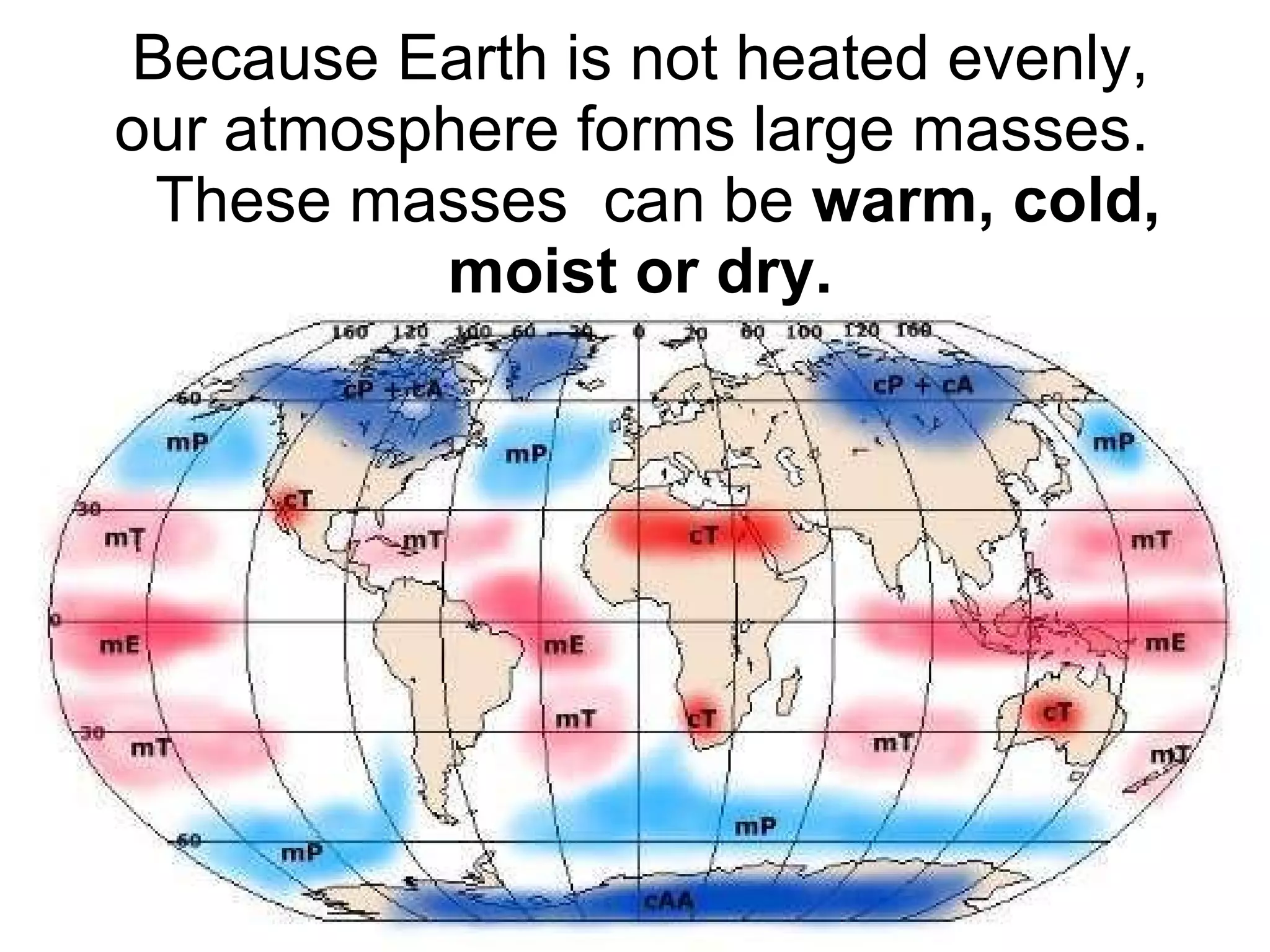
Because Earth is not heated evenly, our atmosphere forms large masses.  These masses  can be  warm, cold, moist or dry.
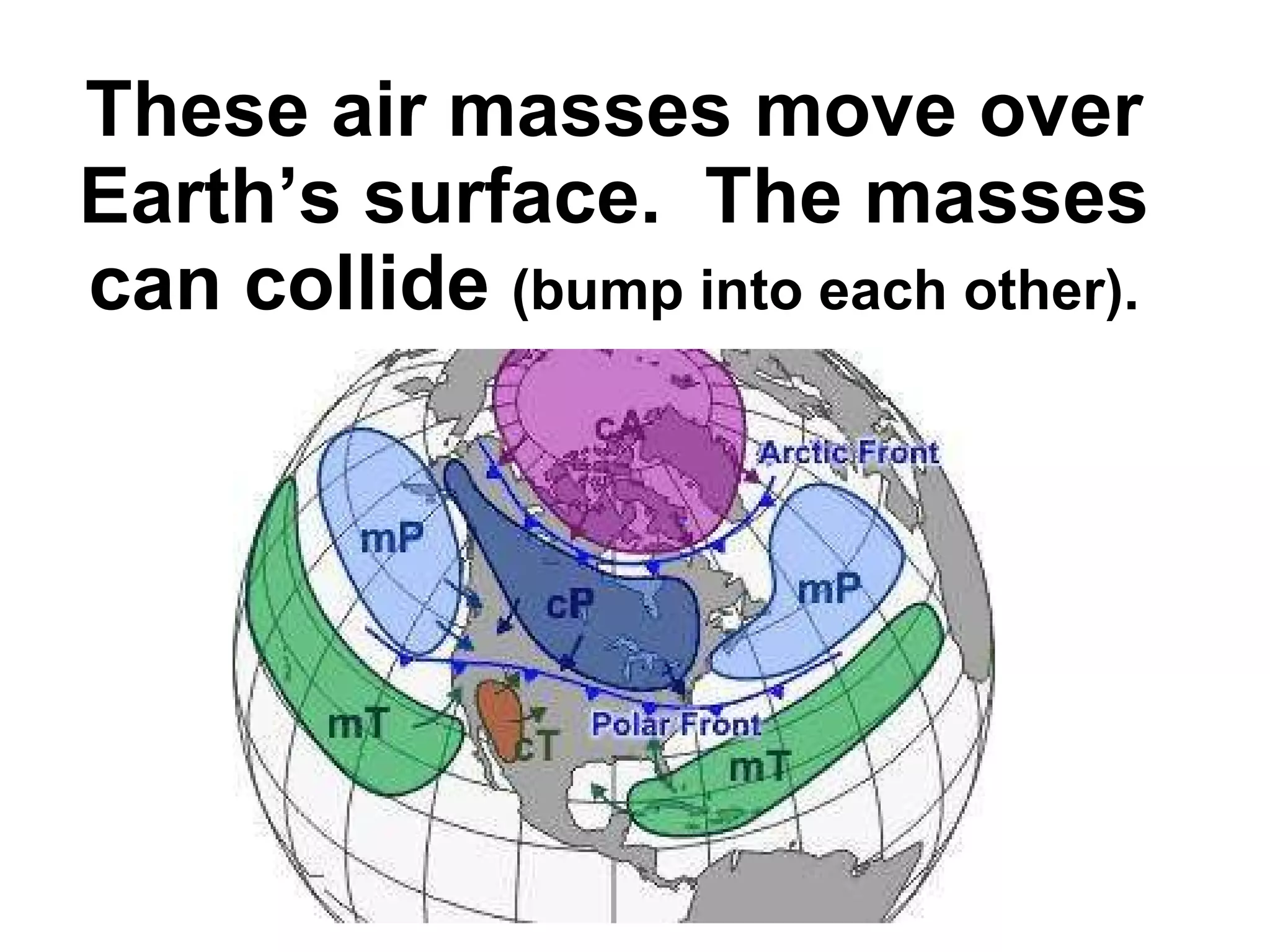
These air masses move over Earth’s surface.  The masses can collide  (bump into each other).
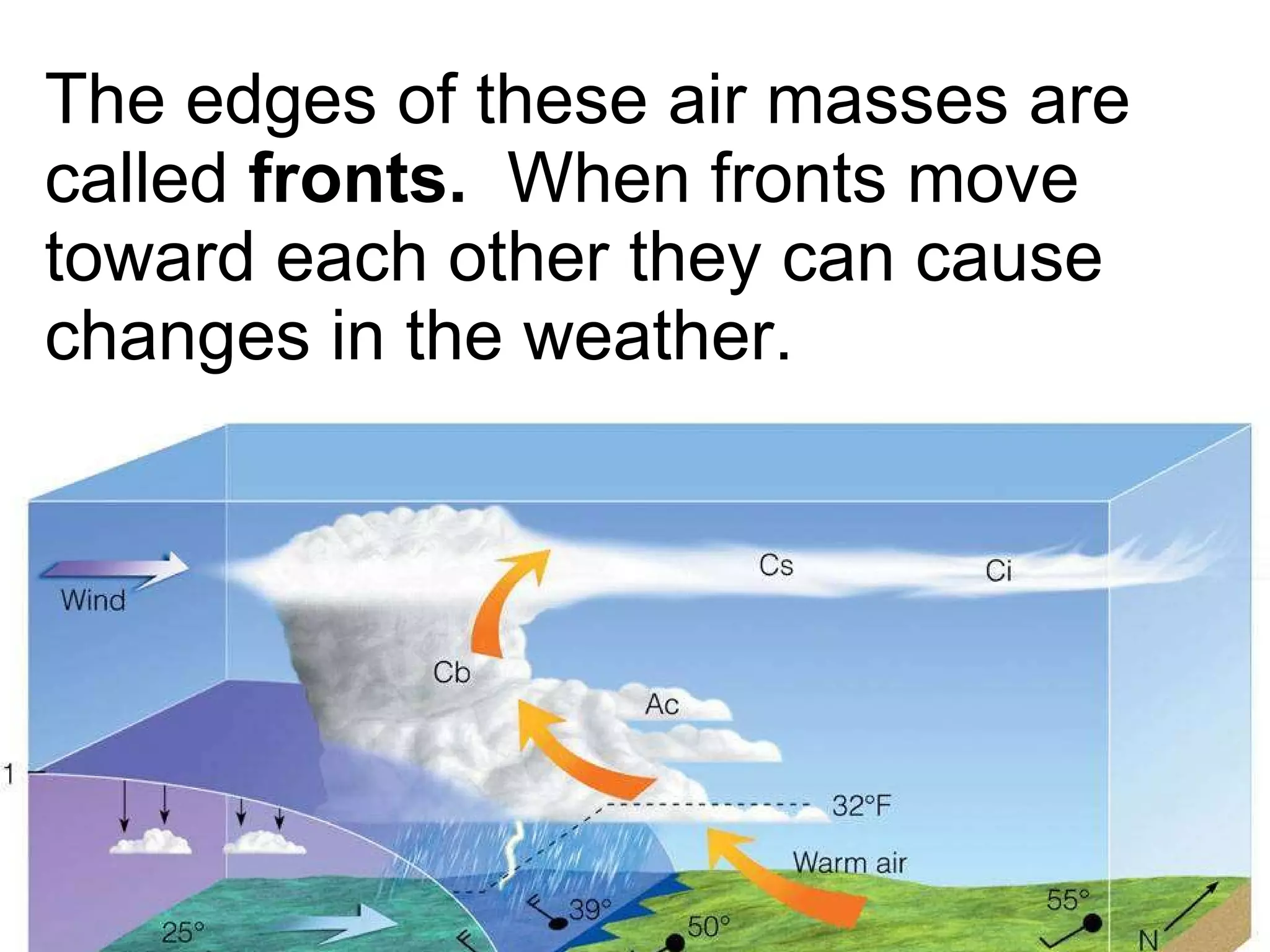
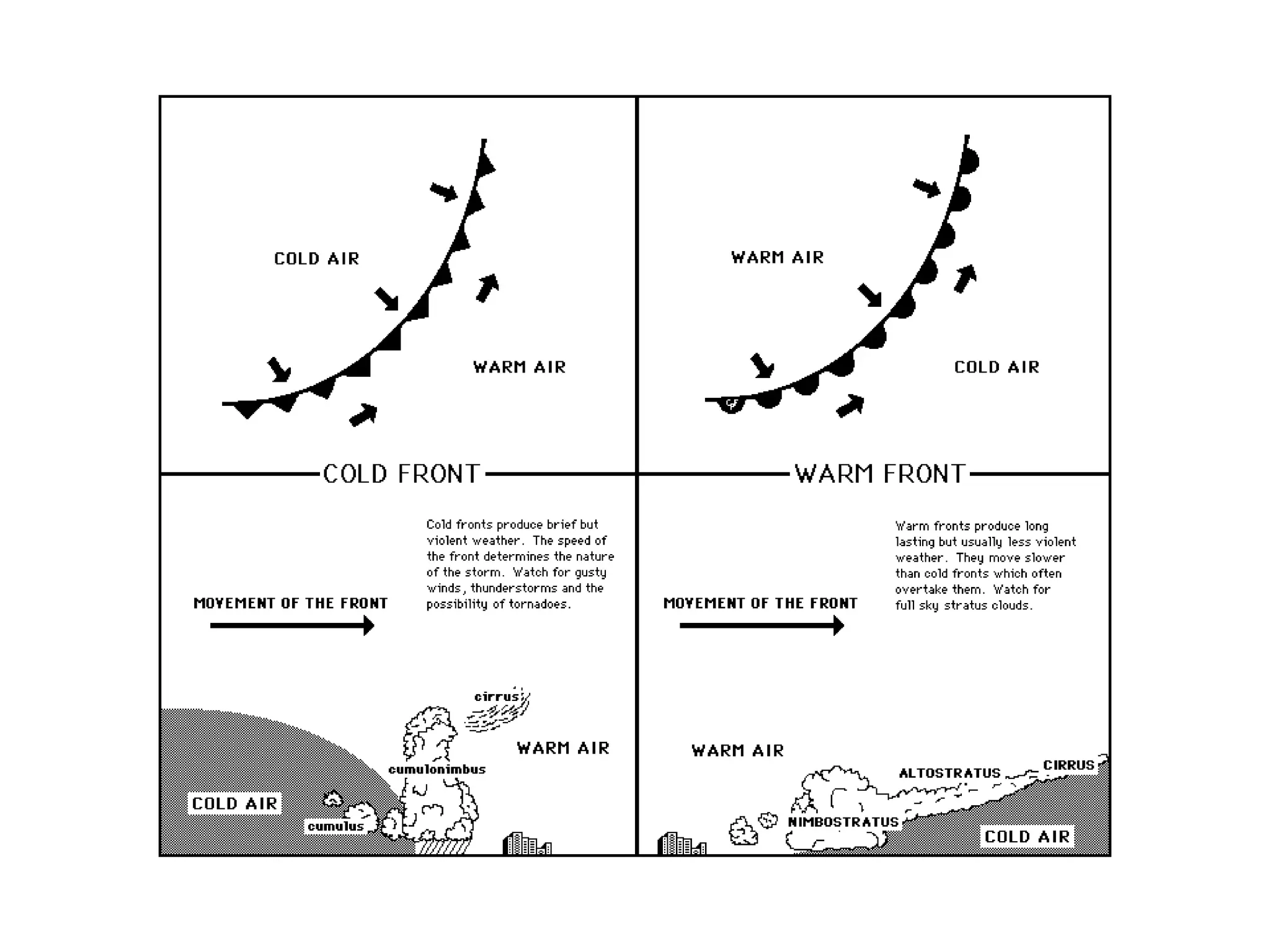
The edges of these air masses are called  fronts.  When fronts move toward each other they can cause changes in the weather.
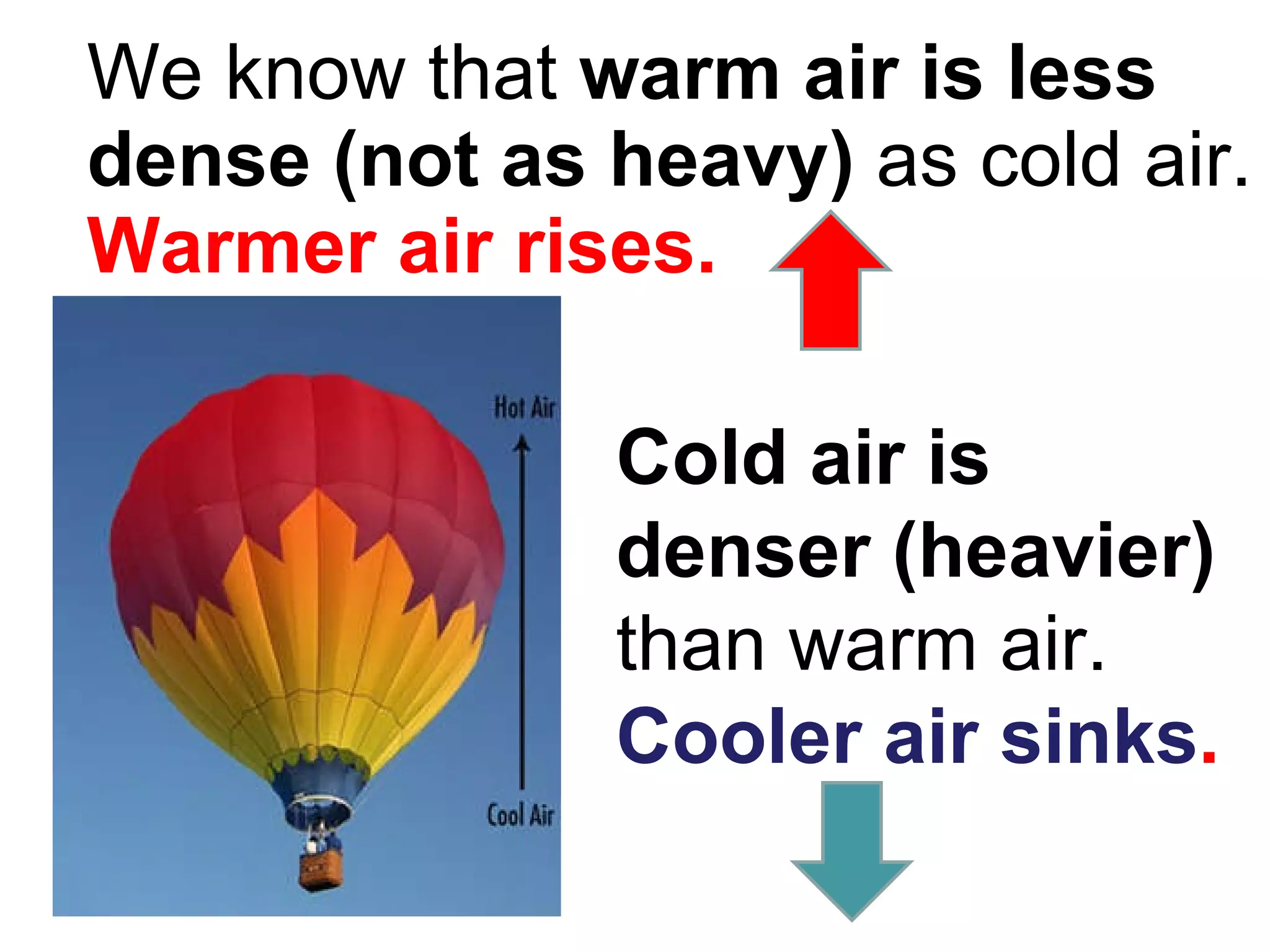
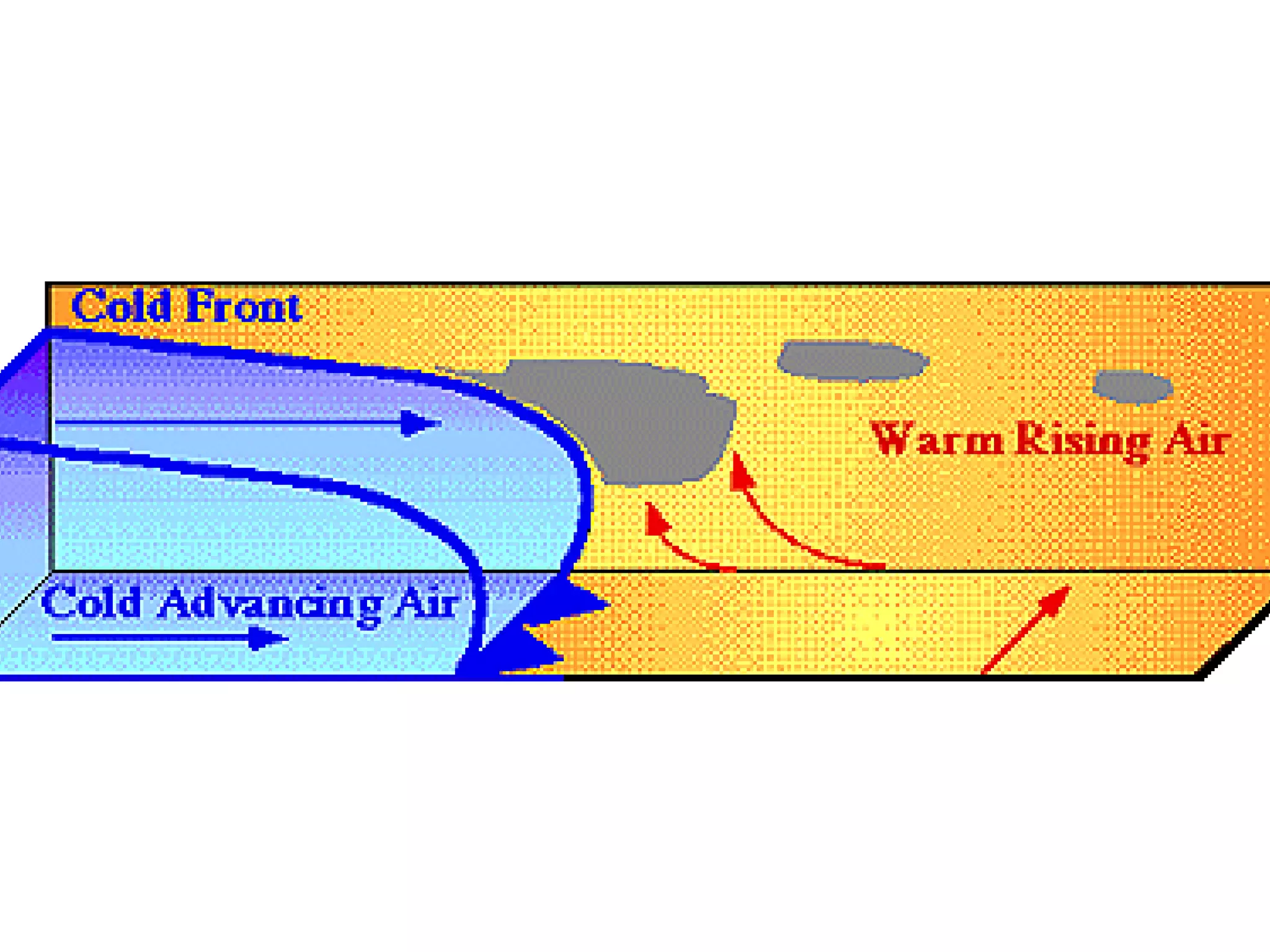
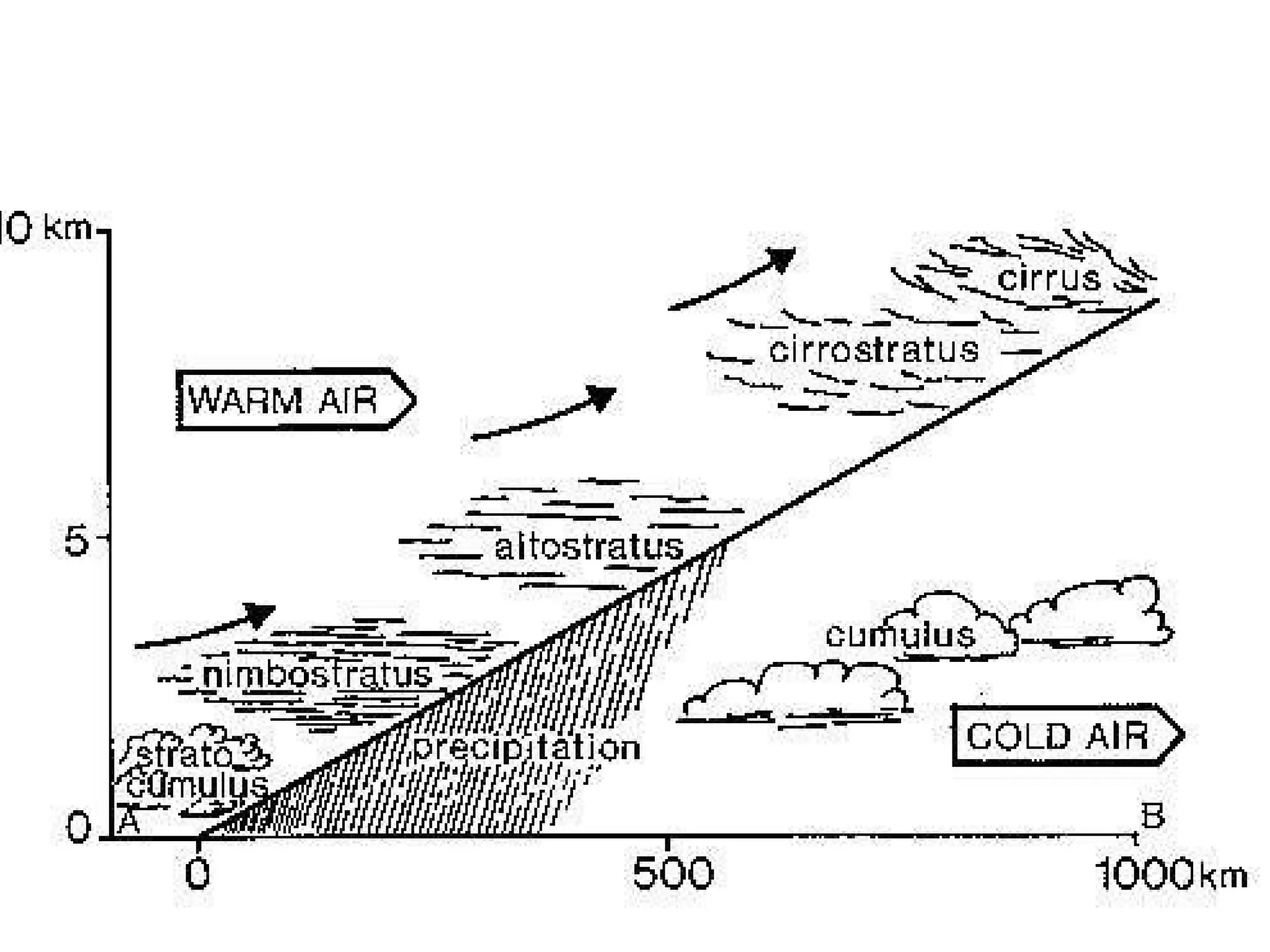
We know that  warm air is less dense (not as heavy)  as cold air. Warmer air rises.  Cold air is denser (heavier)  than warm air.   Cooler air sinks .
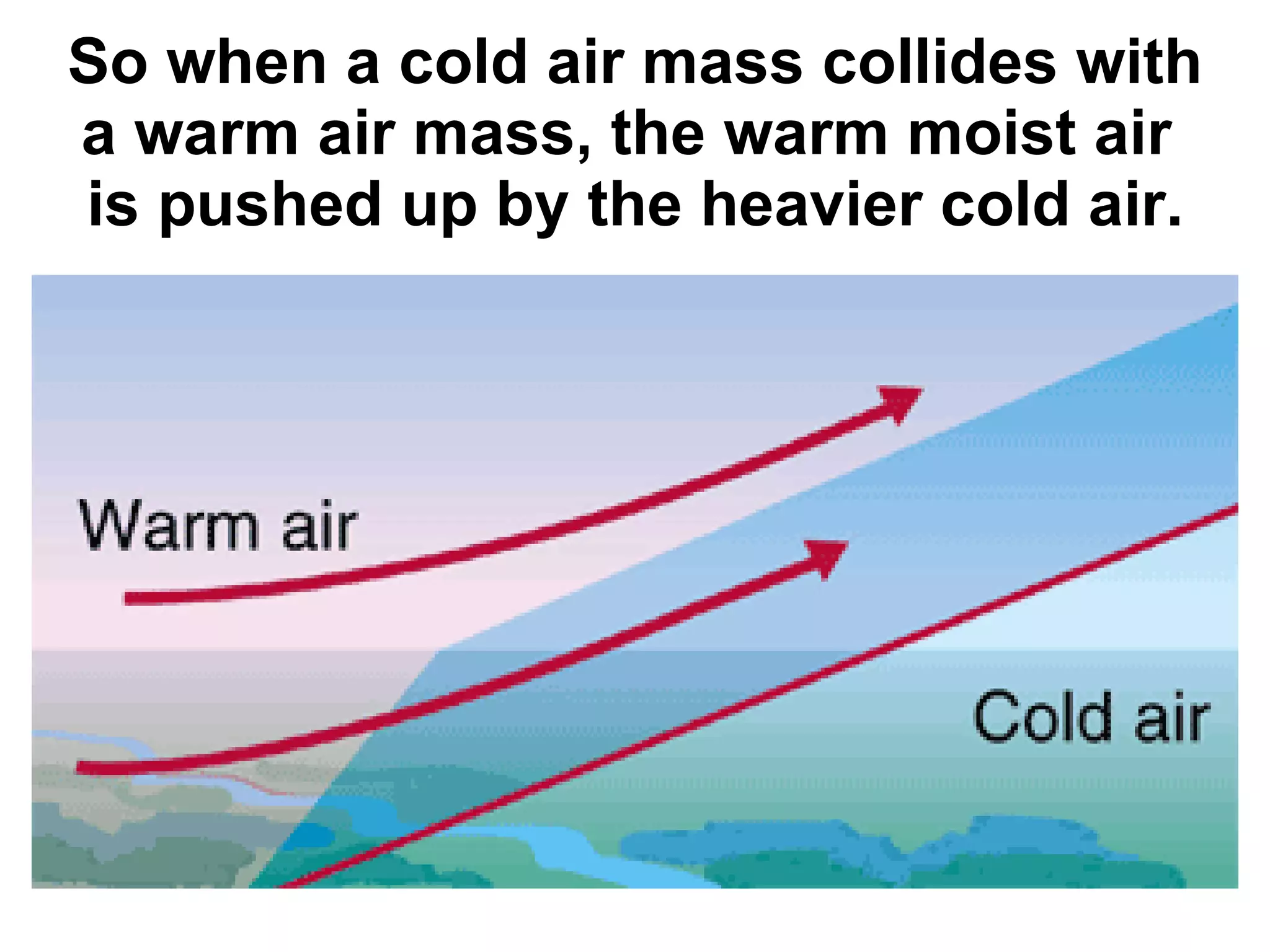
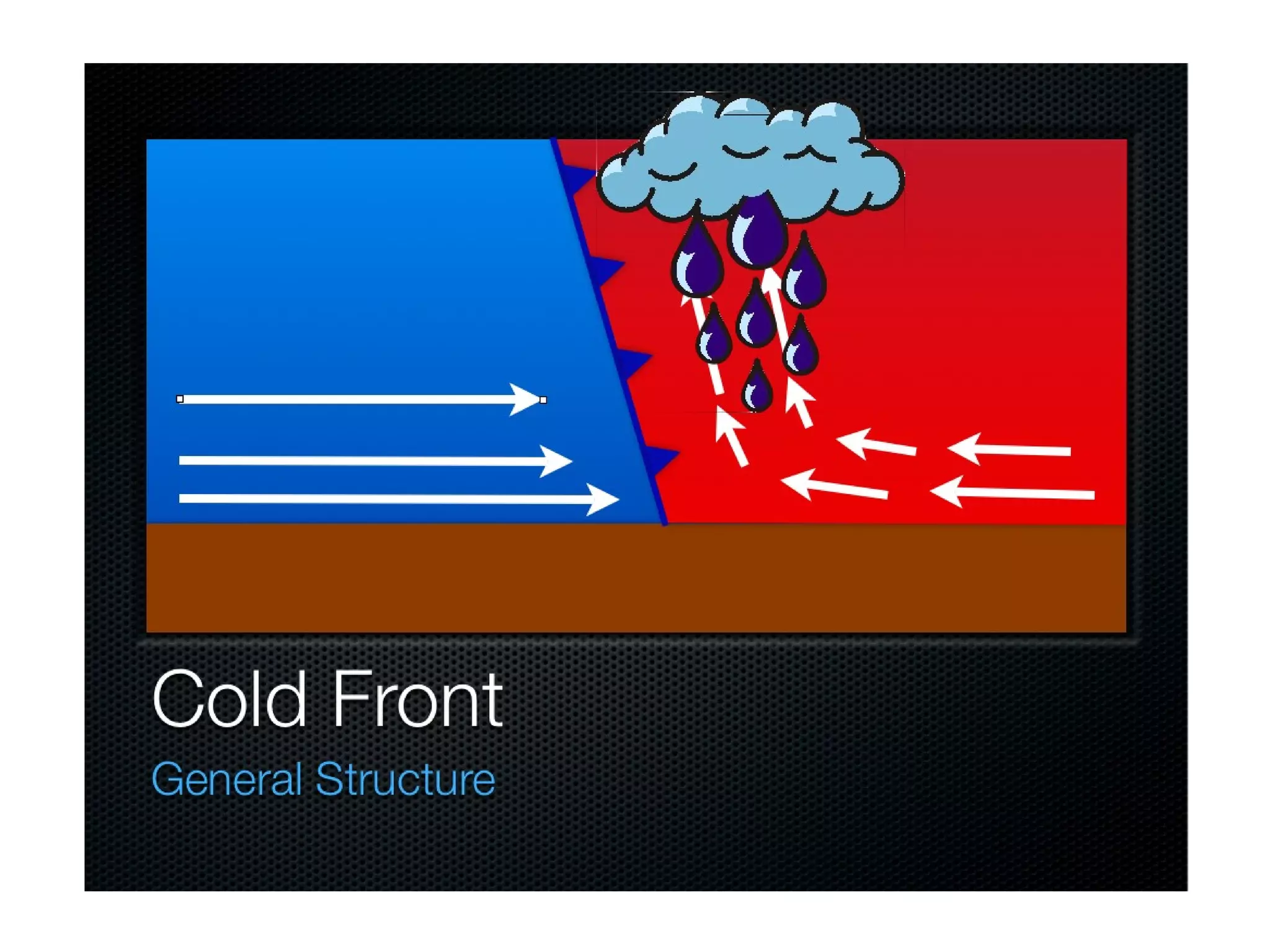
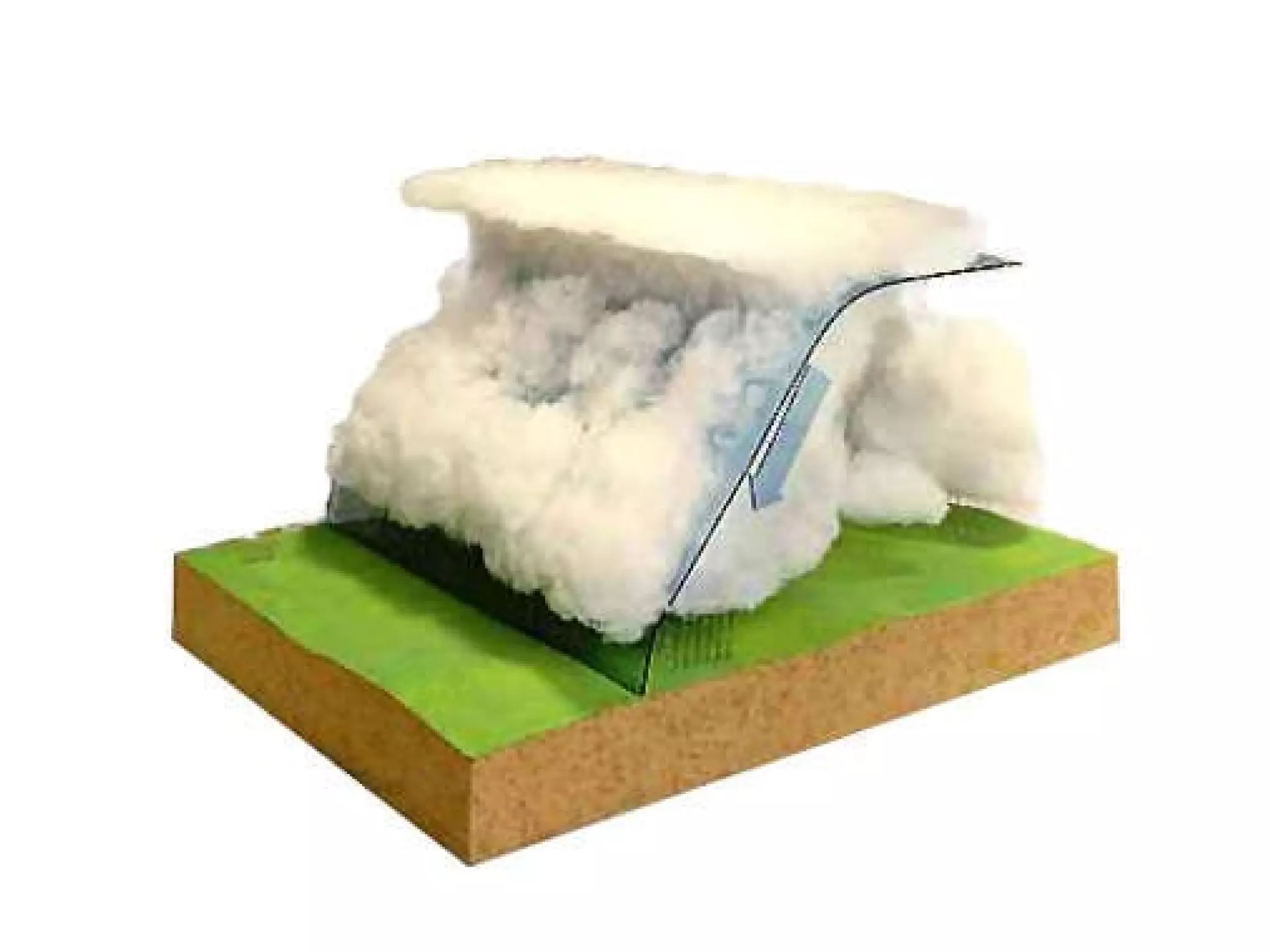
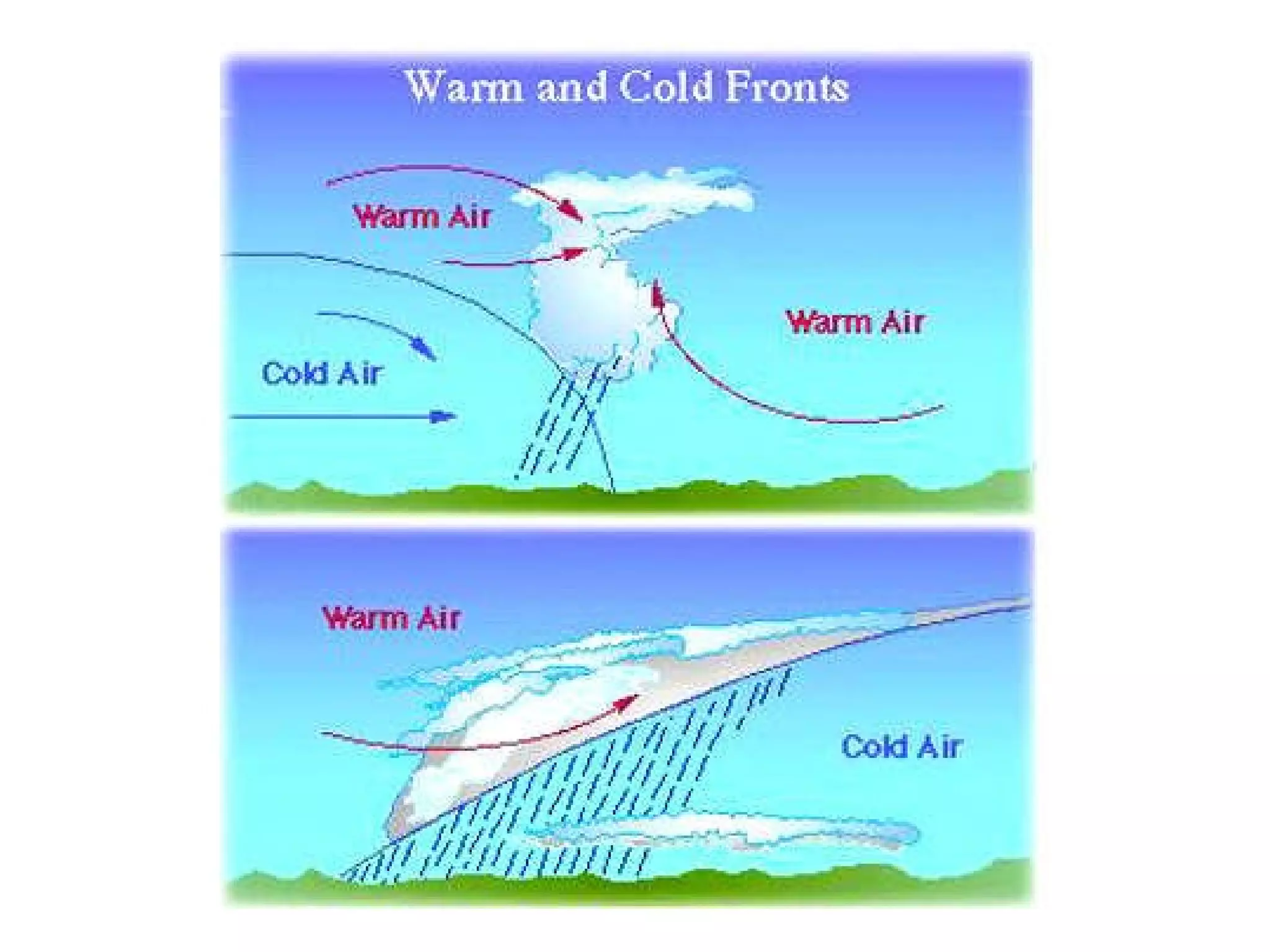
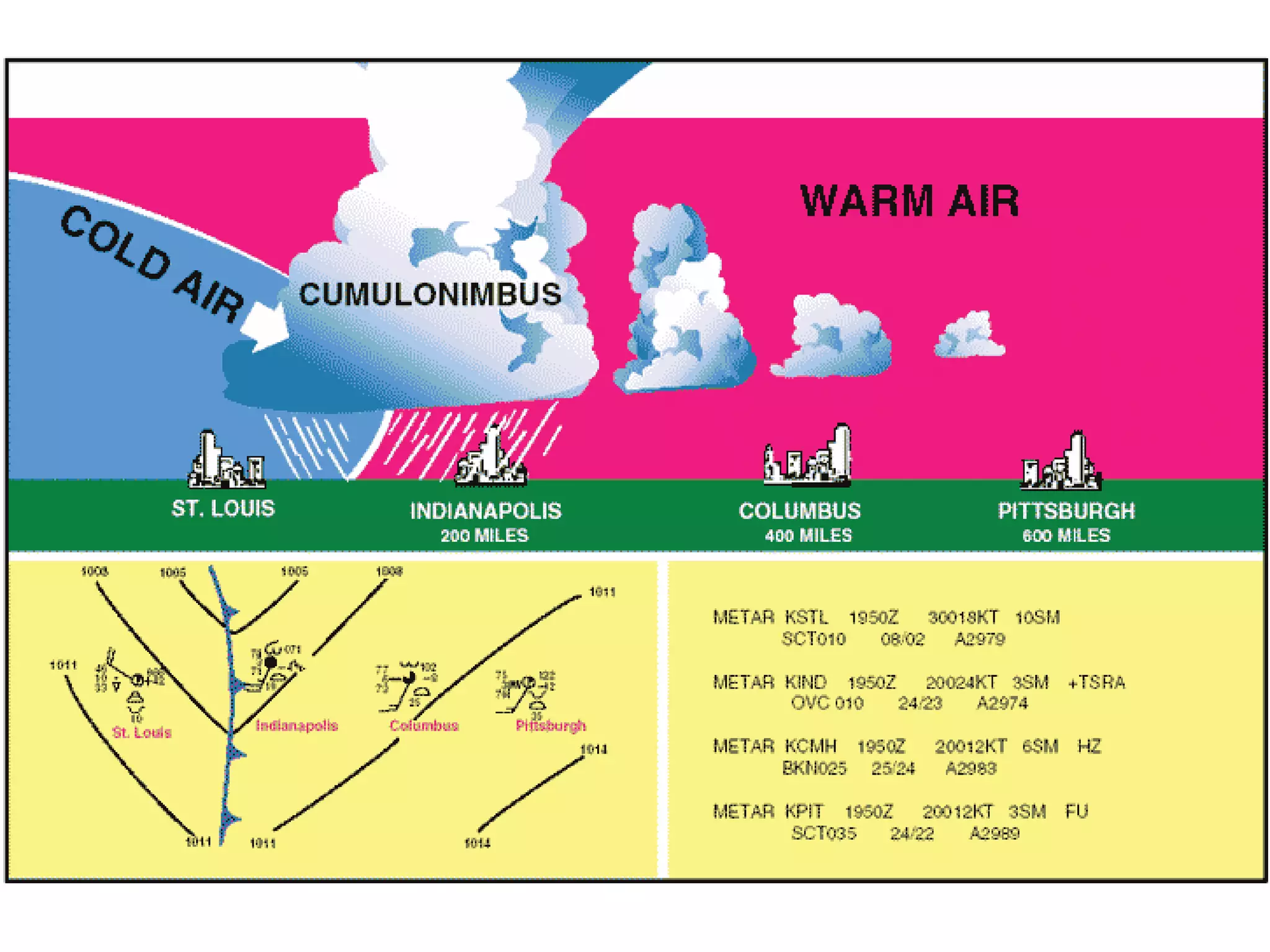
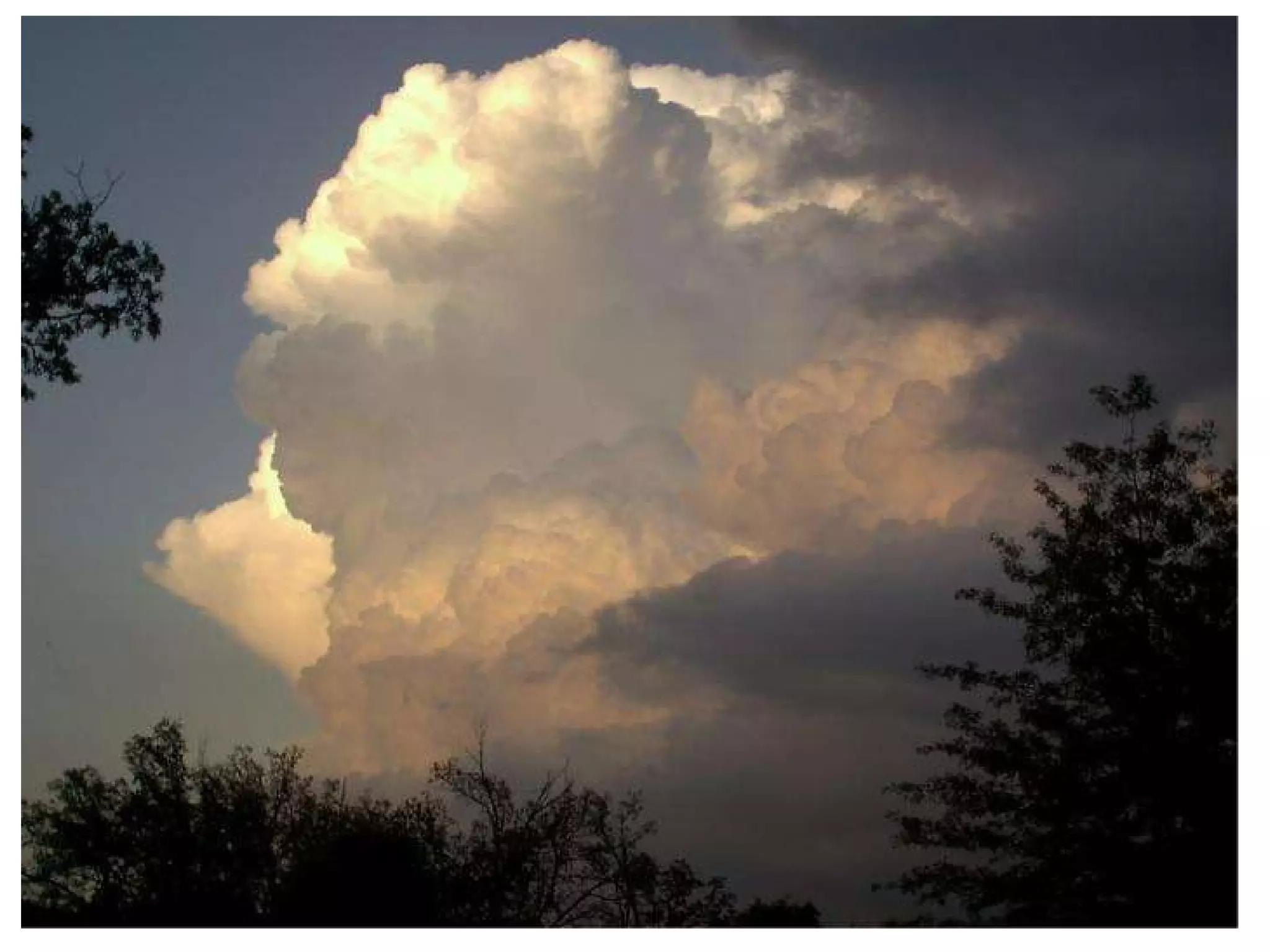
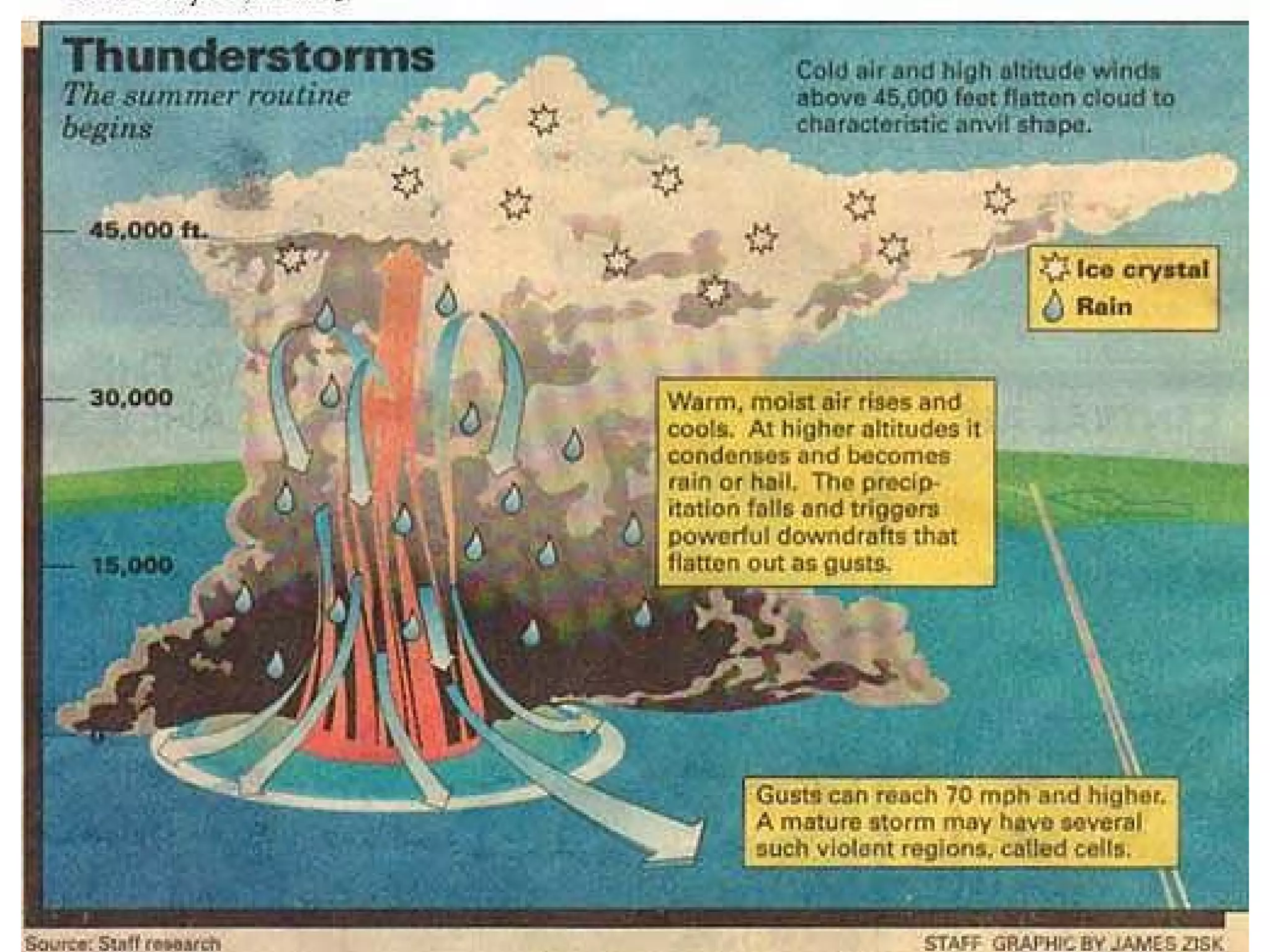
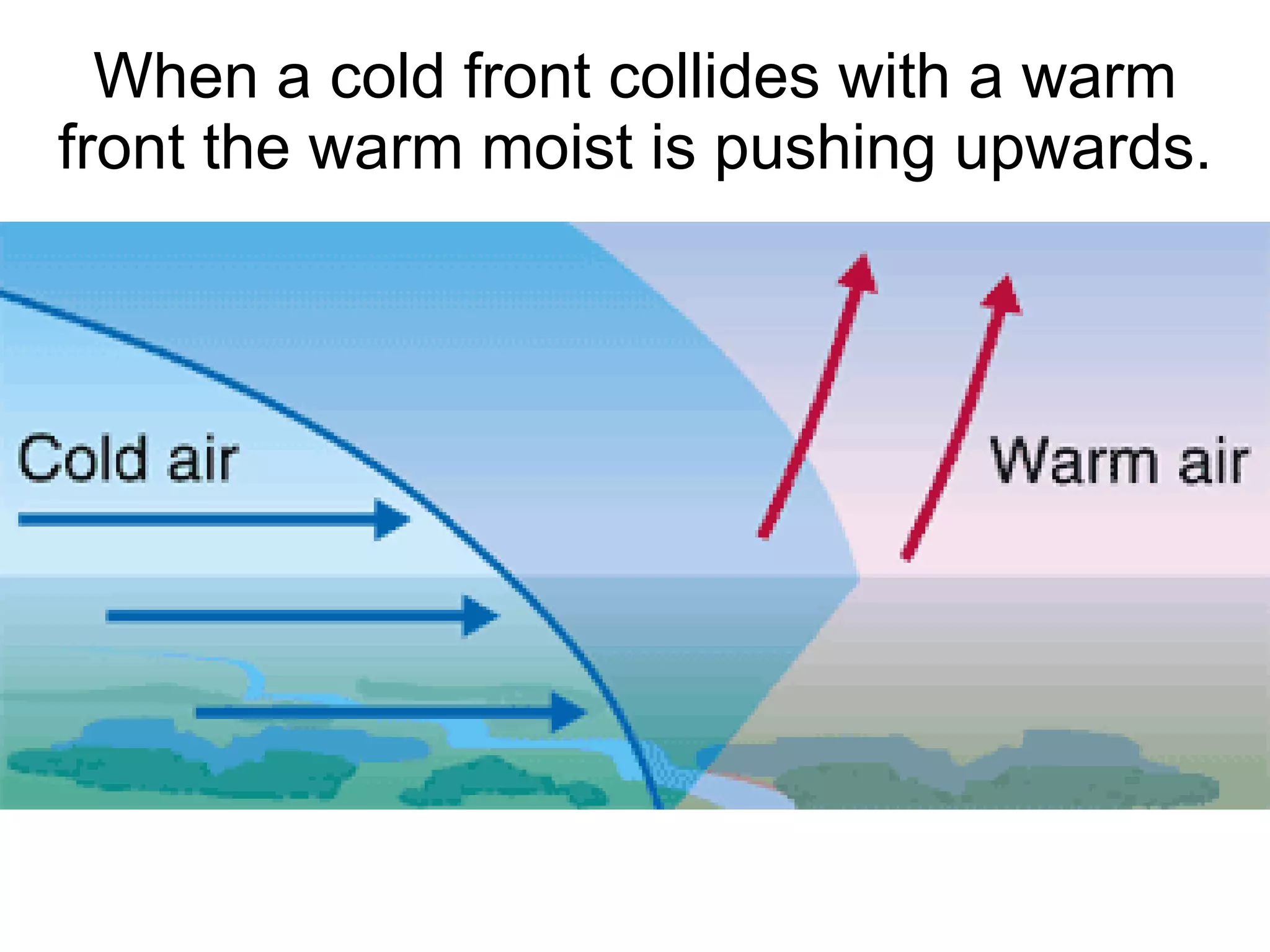
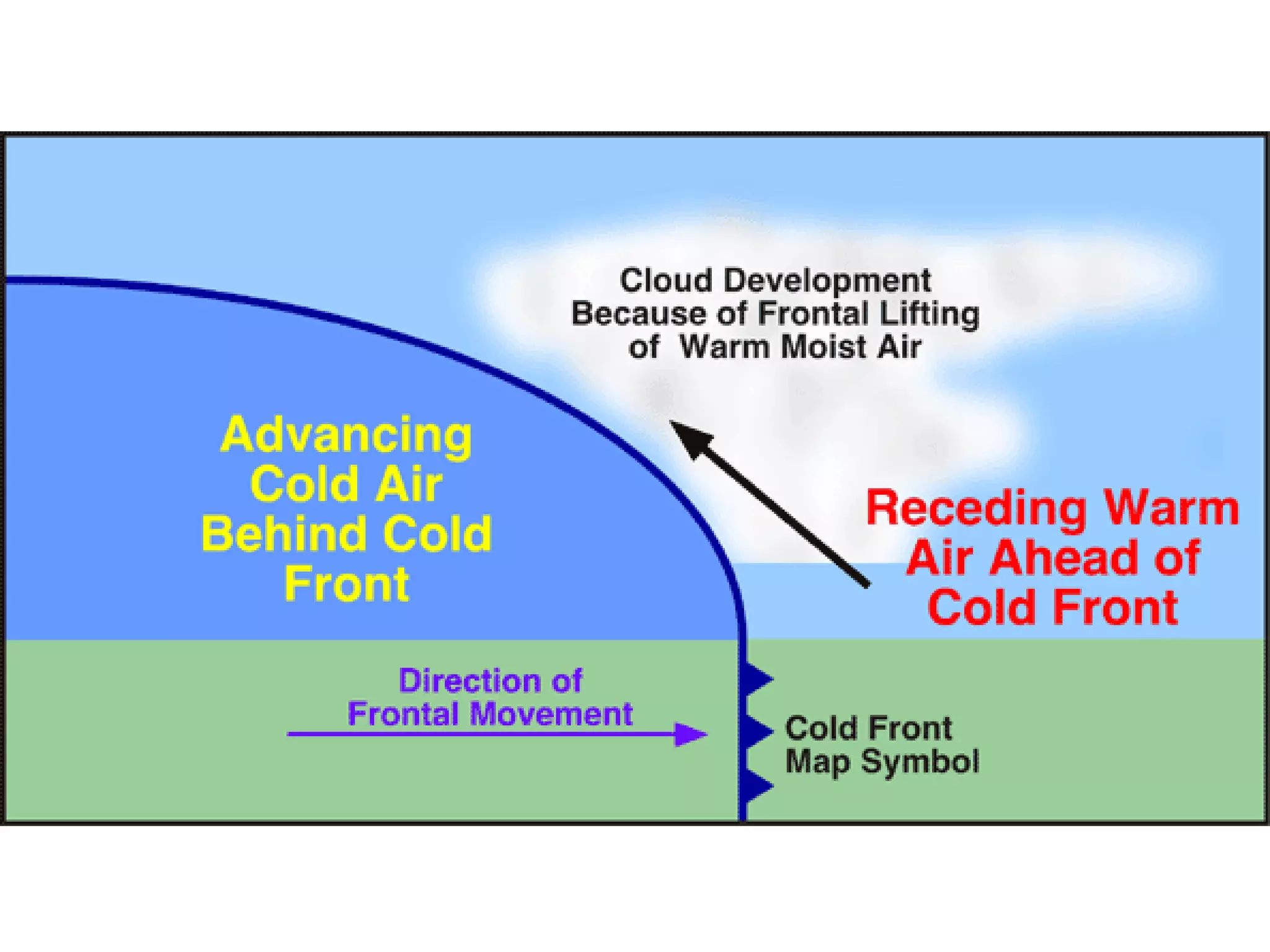
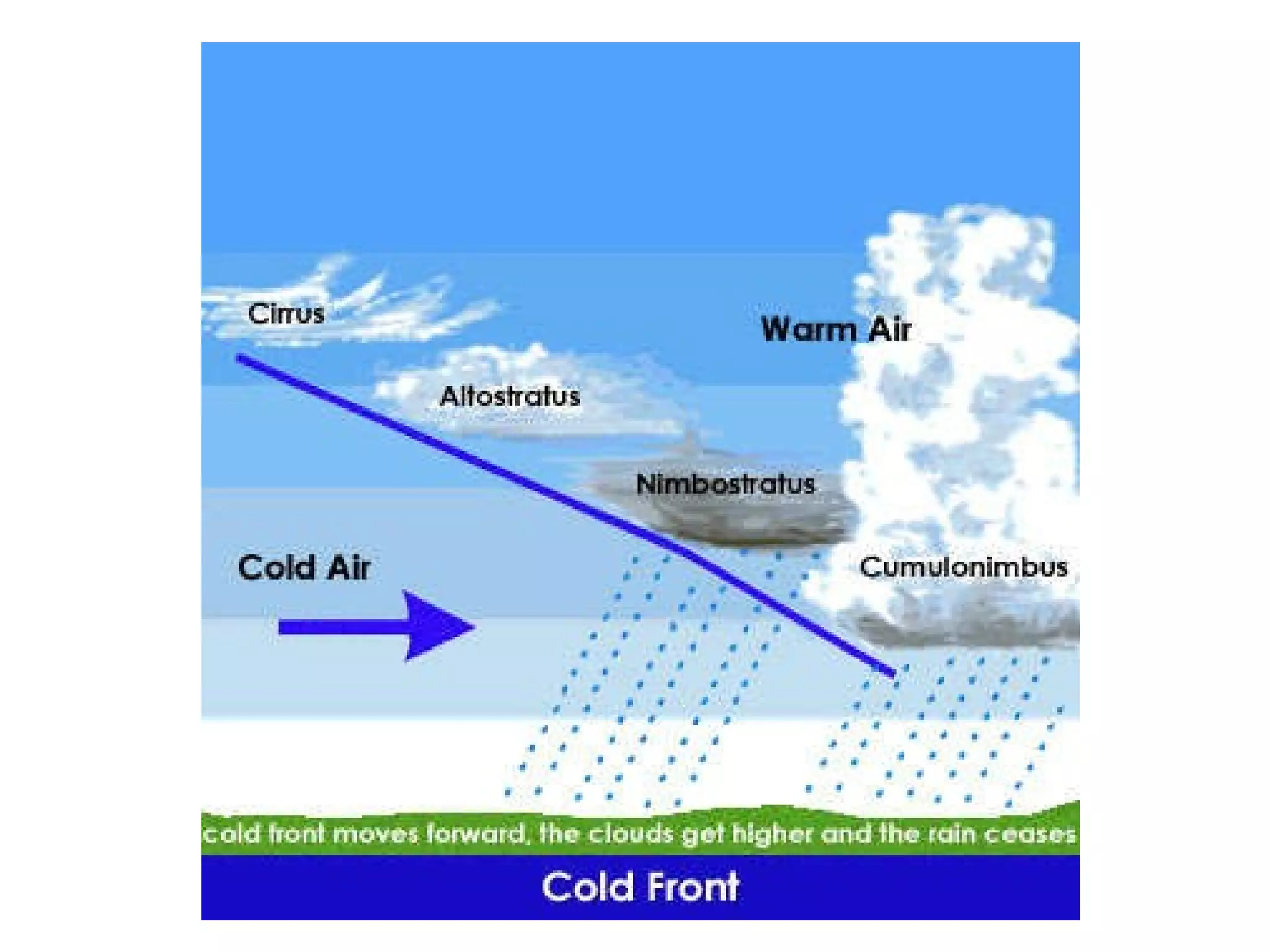
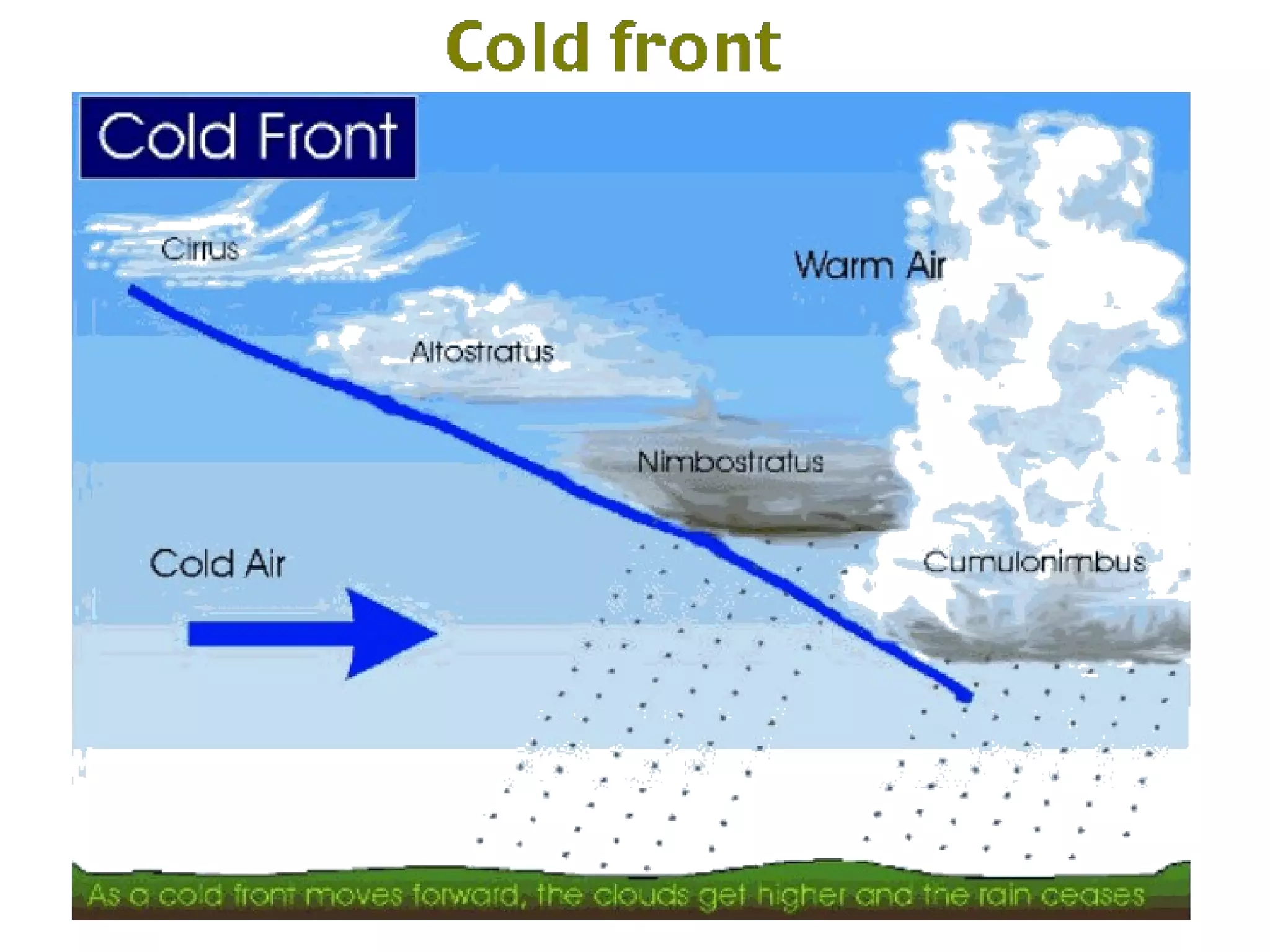
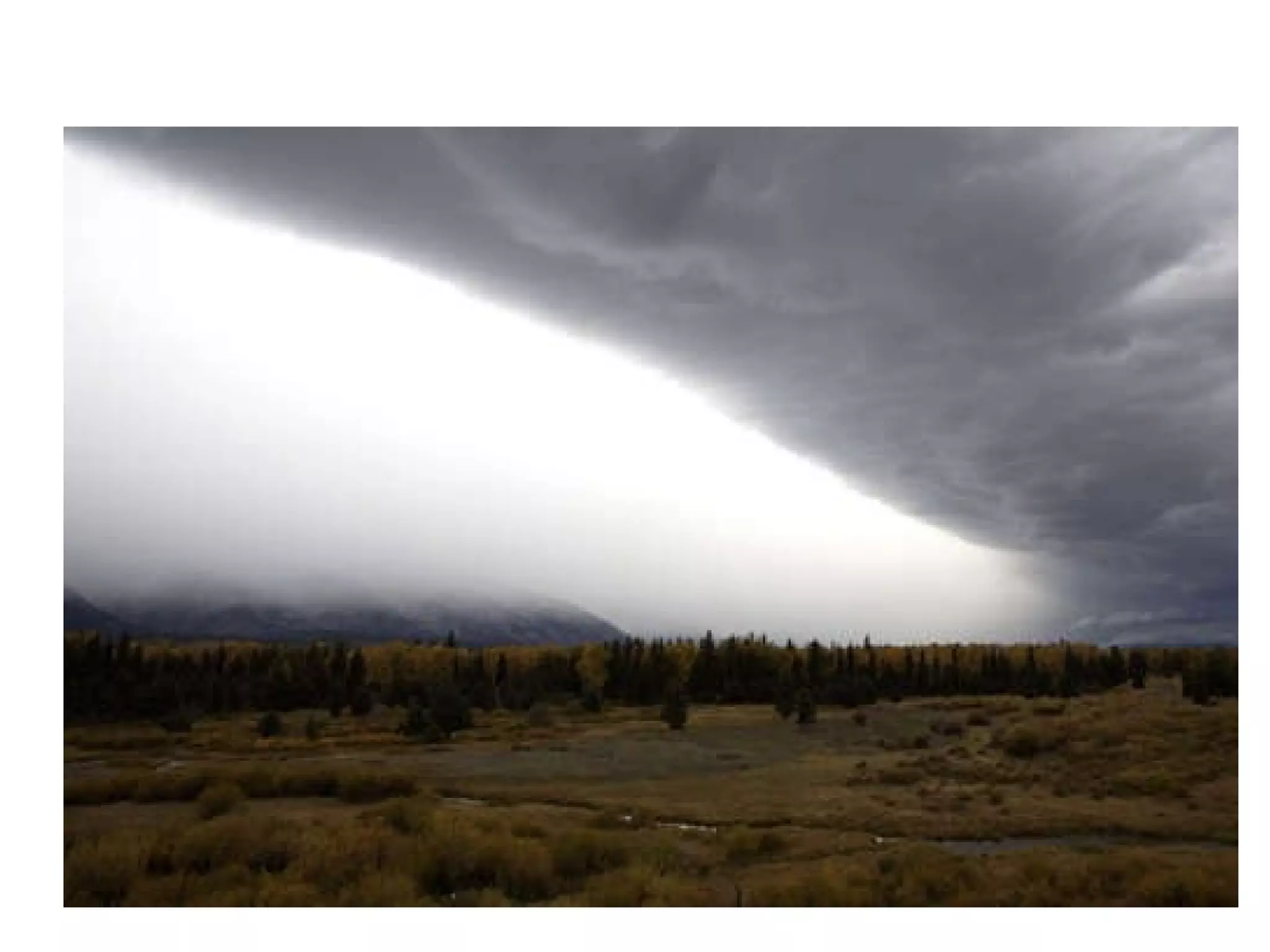
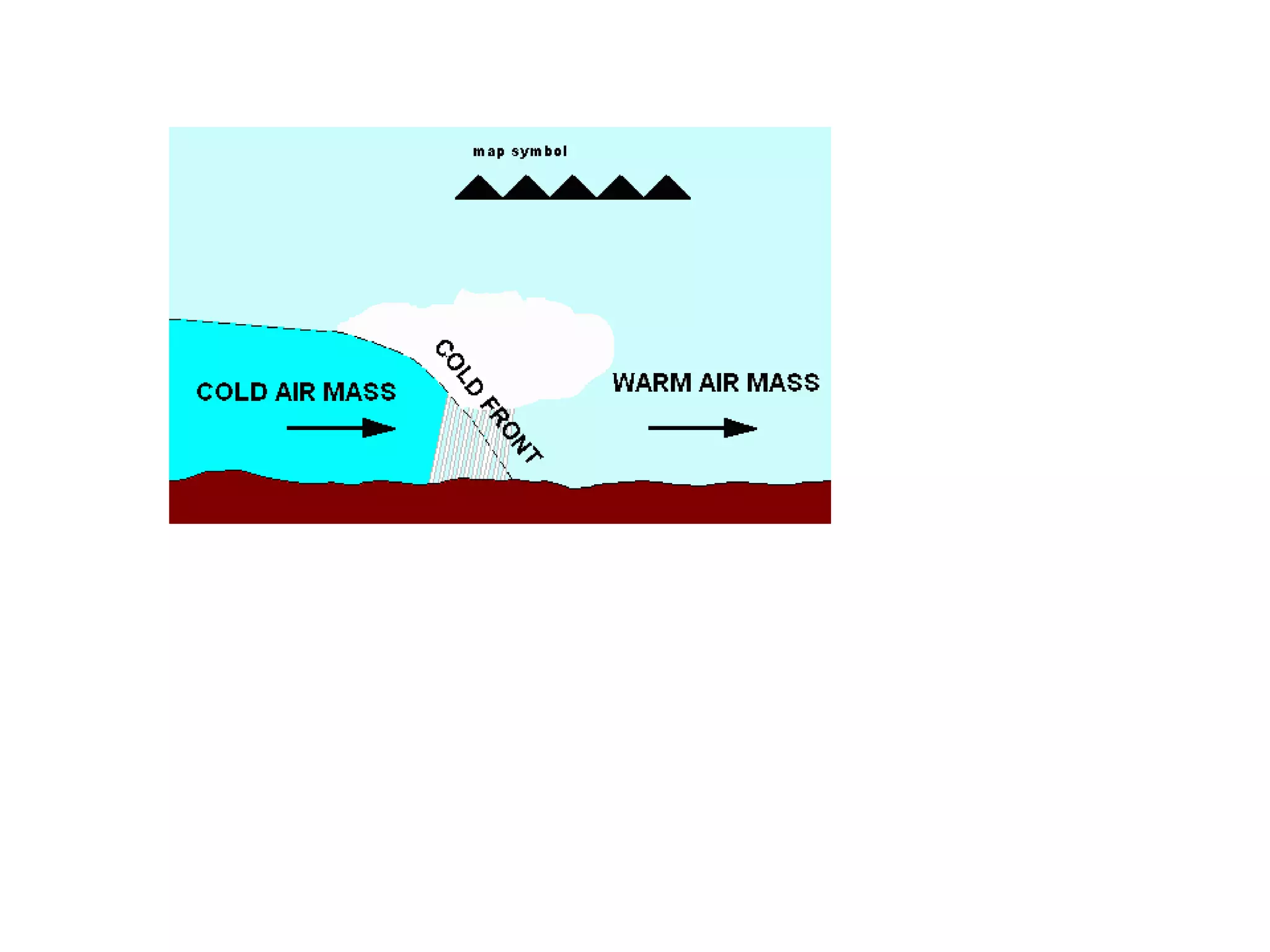
So when a cold air mass collides with a warm air mass, the warm moist air  is pushed up by the heavier cold air.
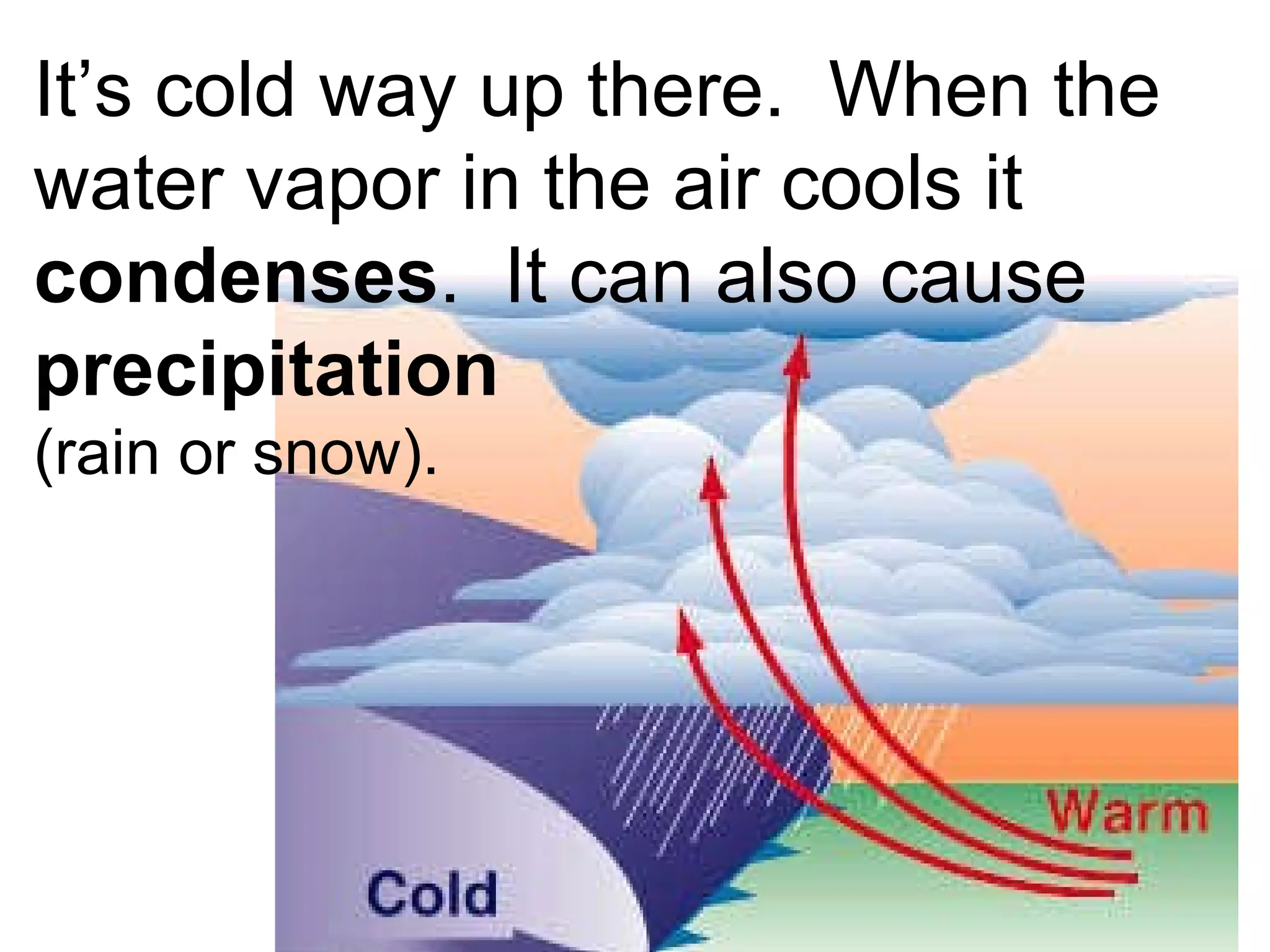
It’s cold way up there.  When the water vapor in the air cools it  condenses .  It can also cause  precipitation  (rain or snow).
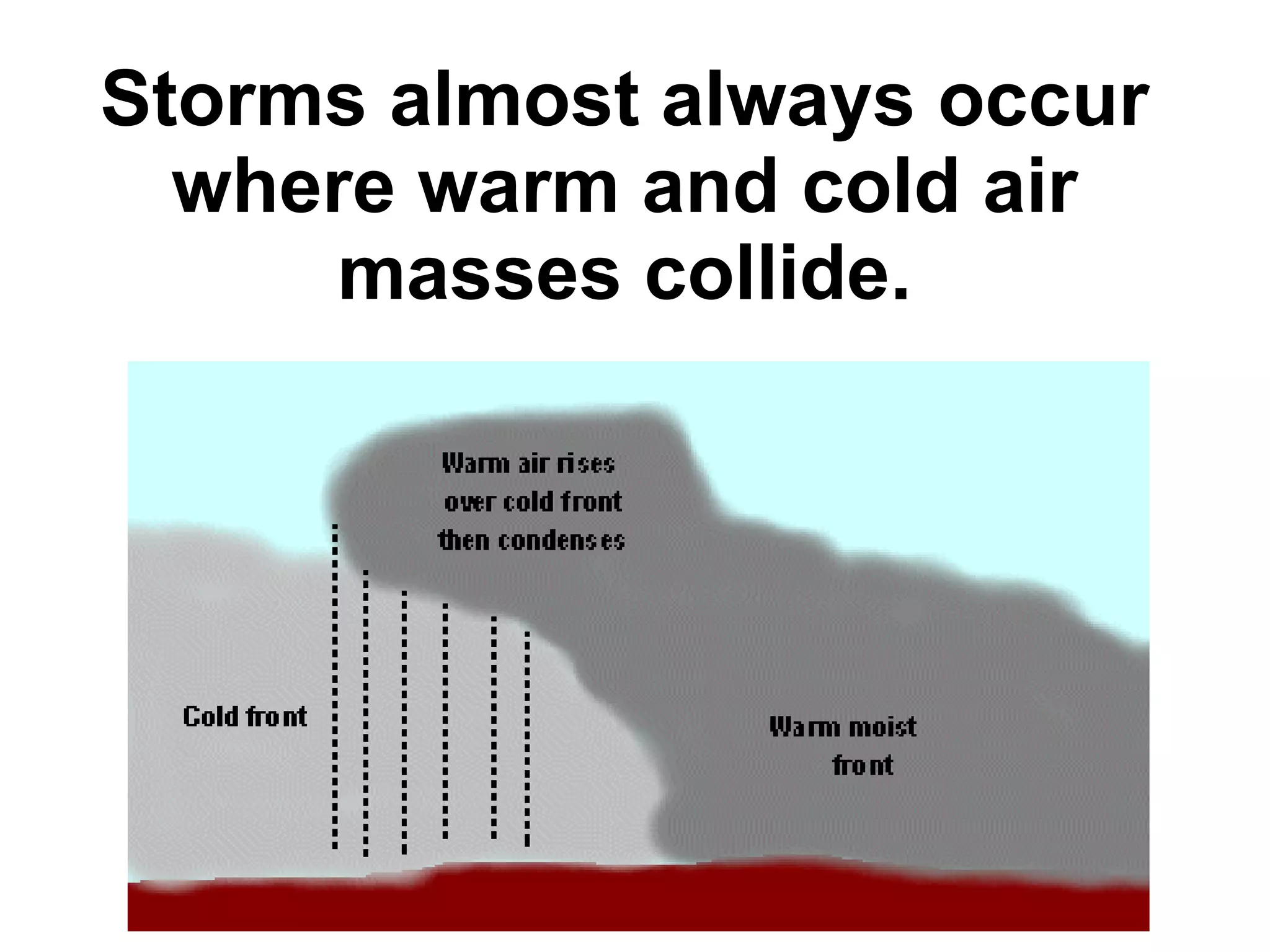
Storms almost always occur where warm and cold air masses collide.
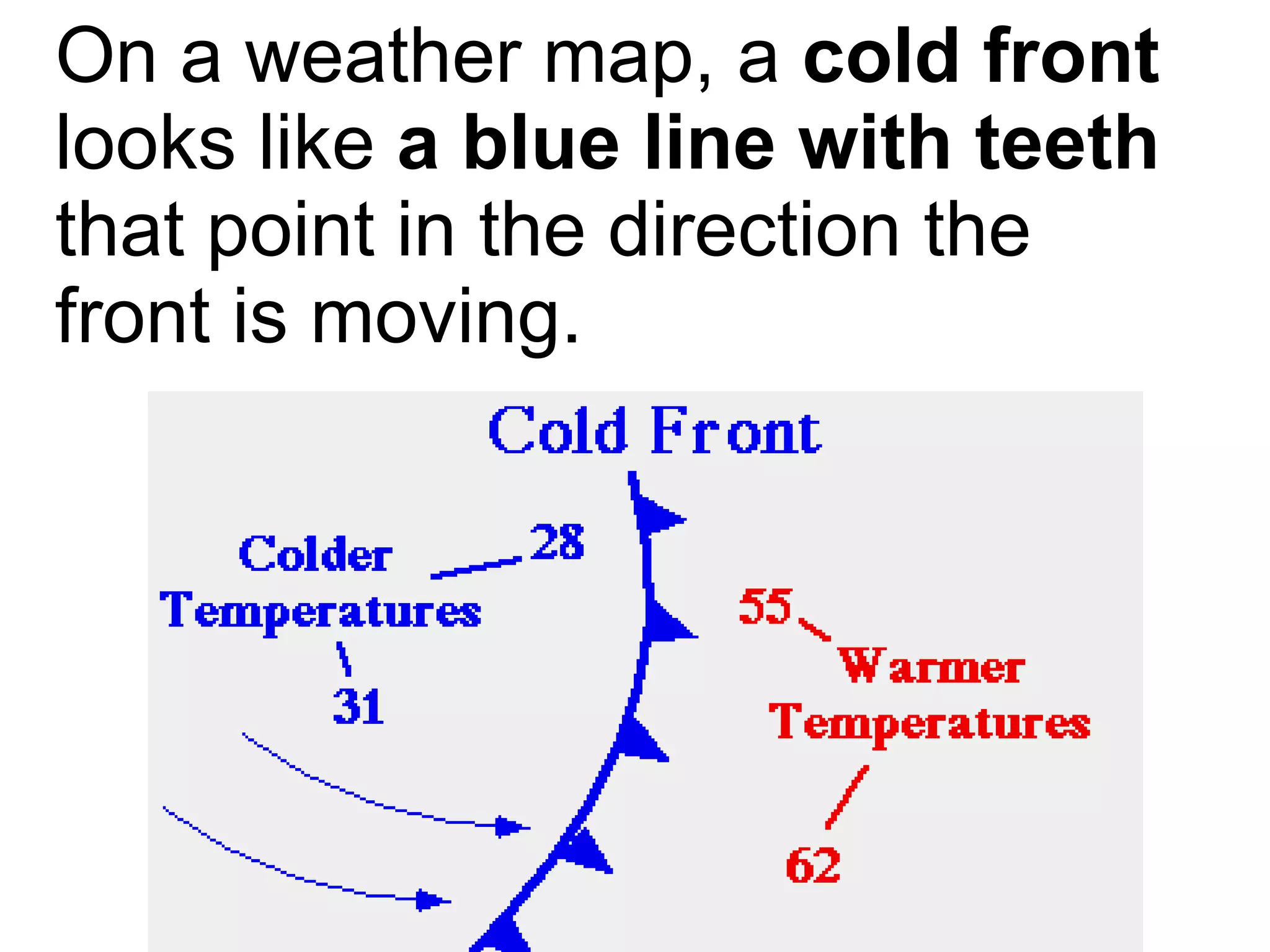
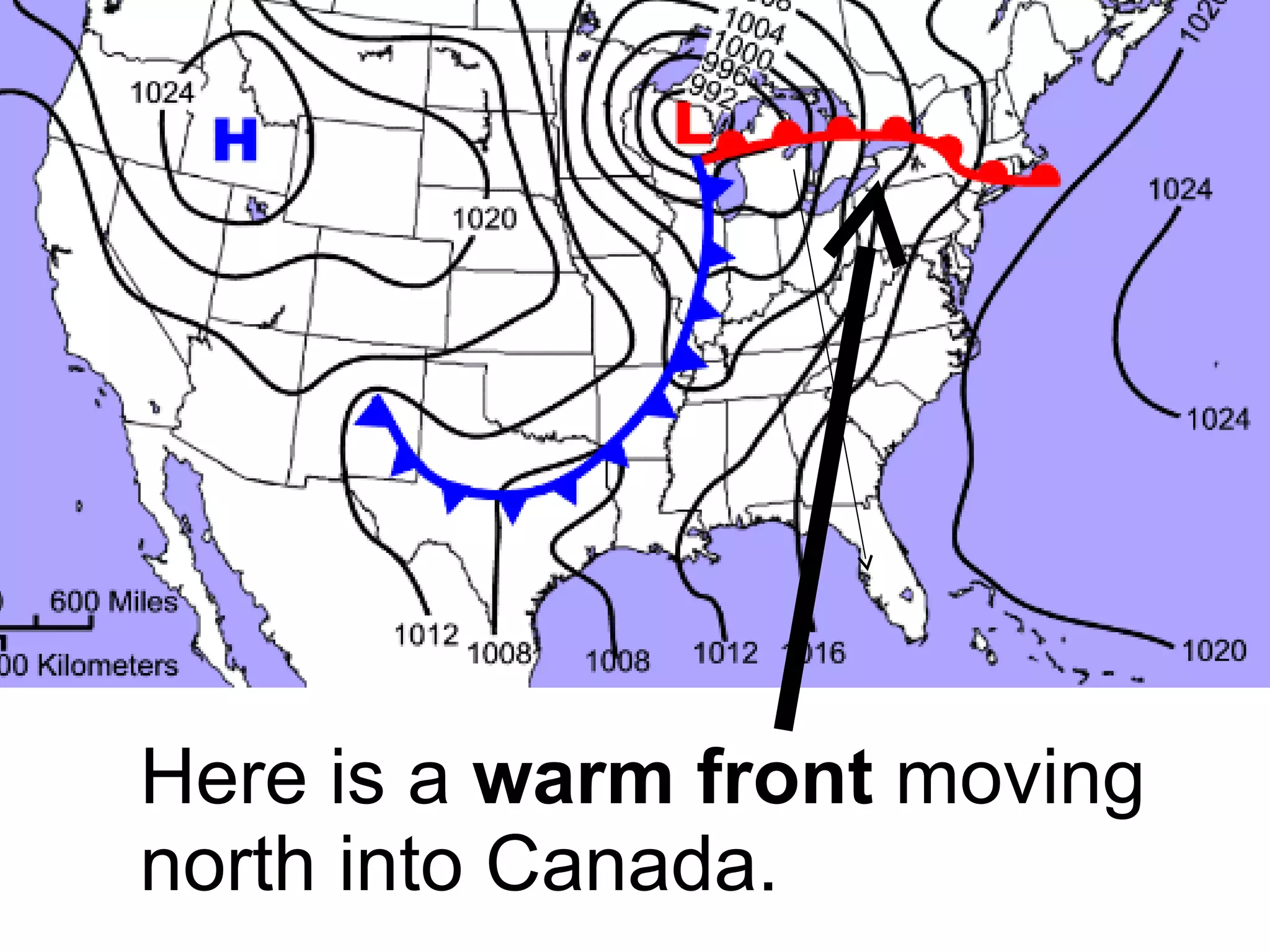
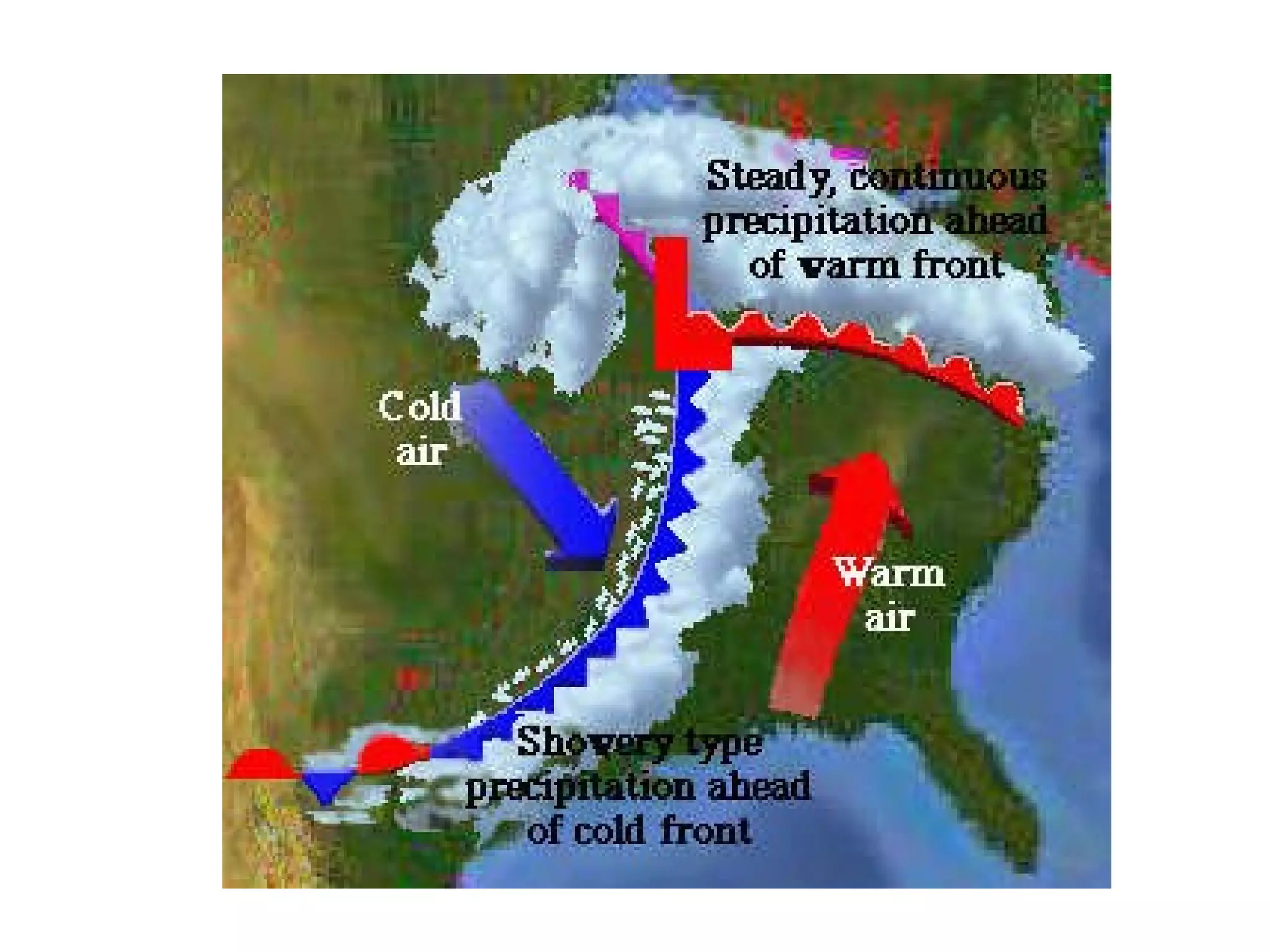
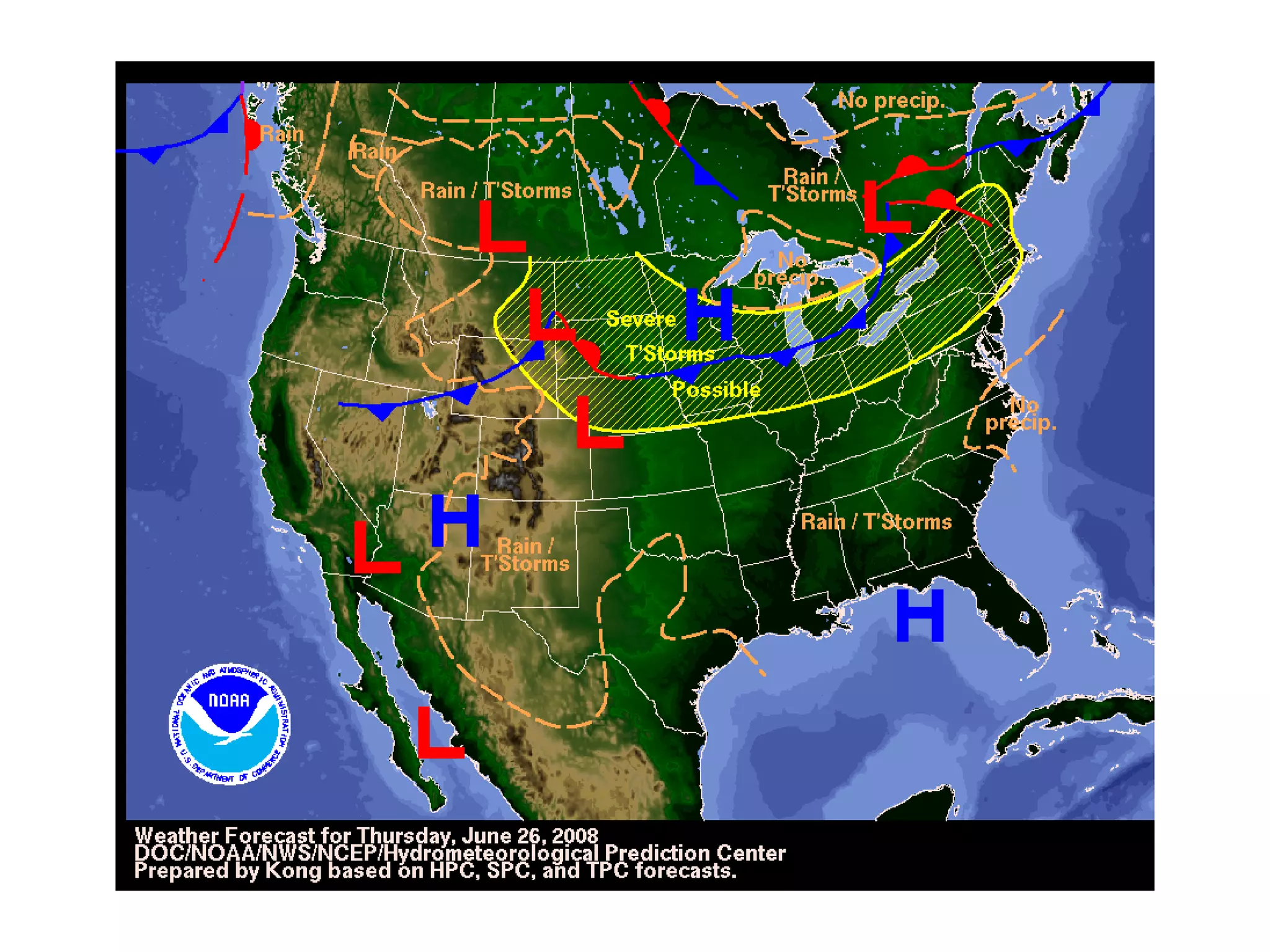
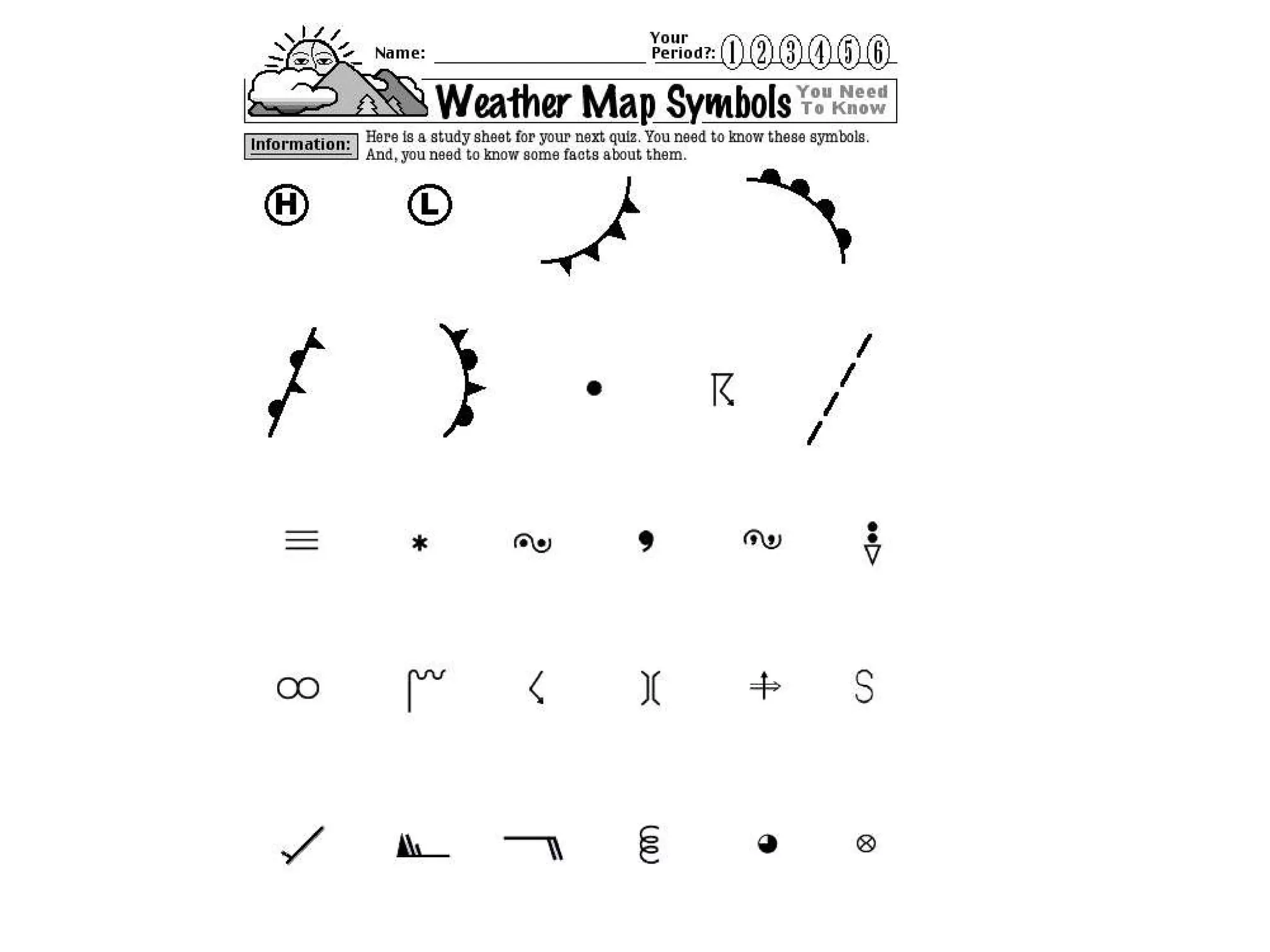
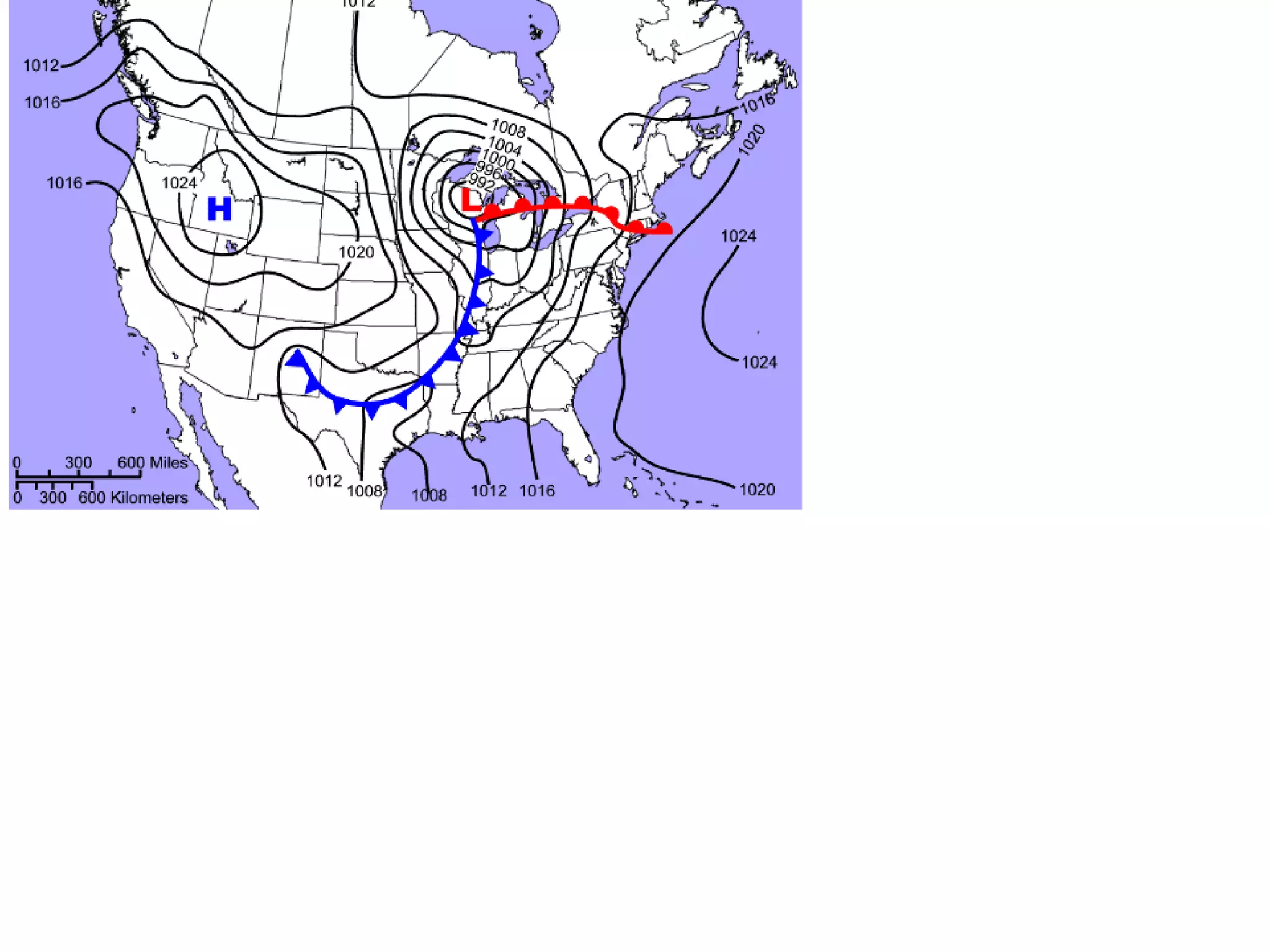
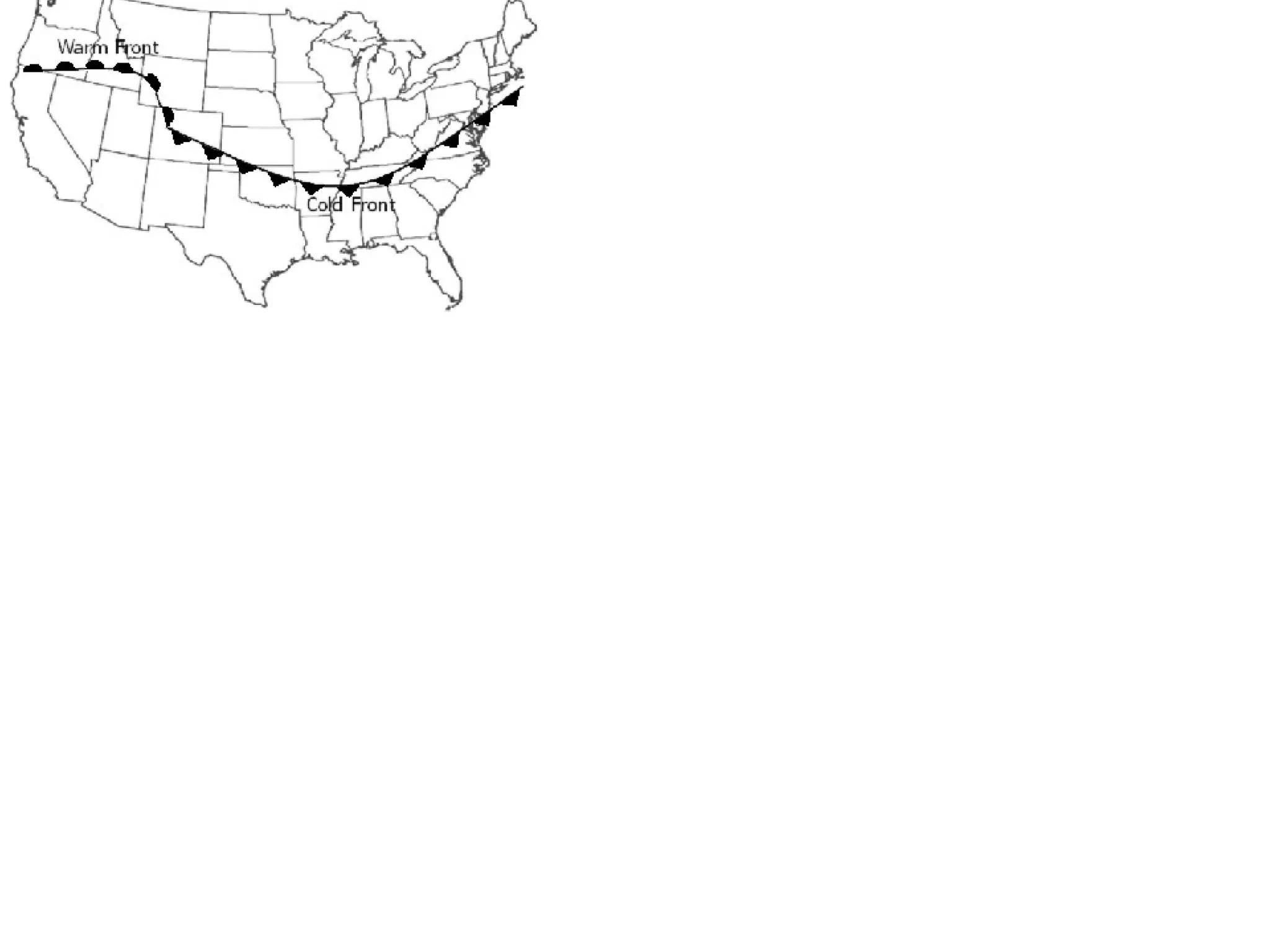
On a weather map, a  cold front  looks like  a blue line with teeth  that point in the direction the front is moving.
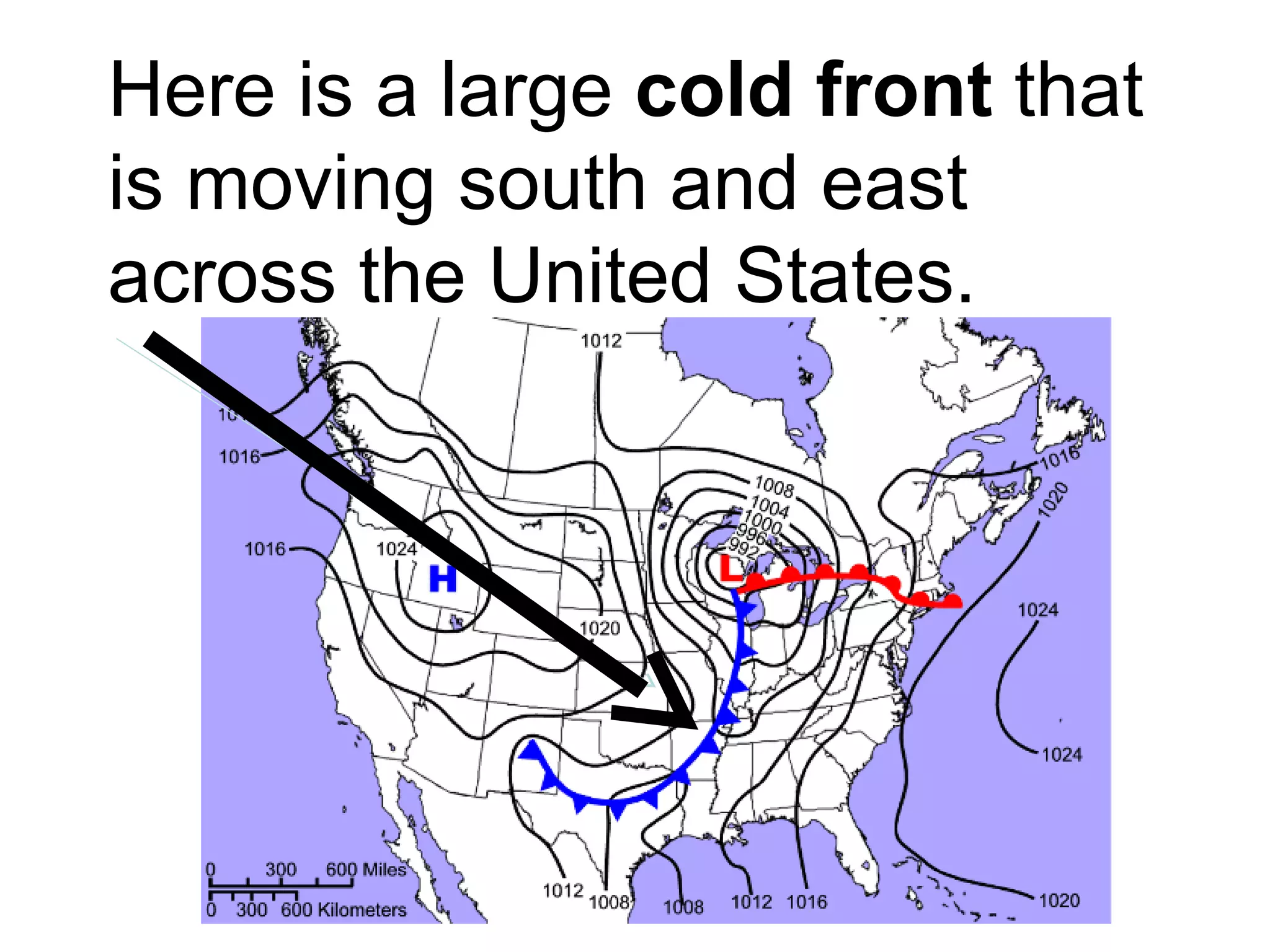
Here is a large  cold front  that is moving south and east across the United States.
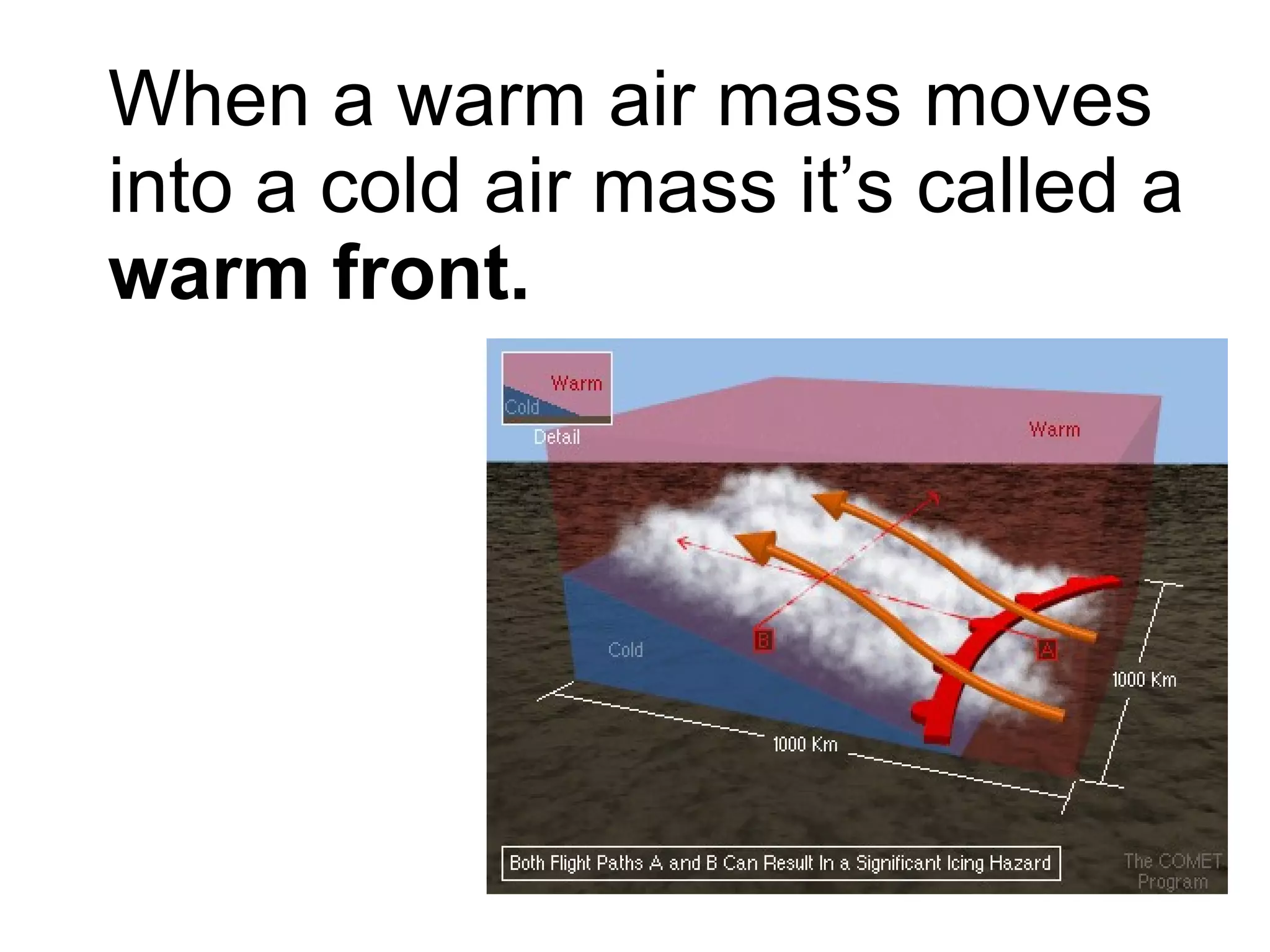
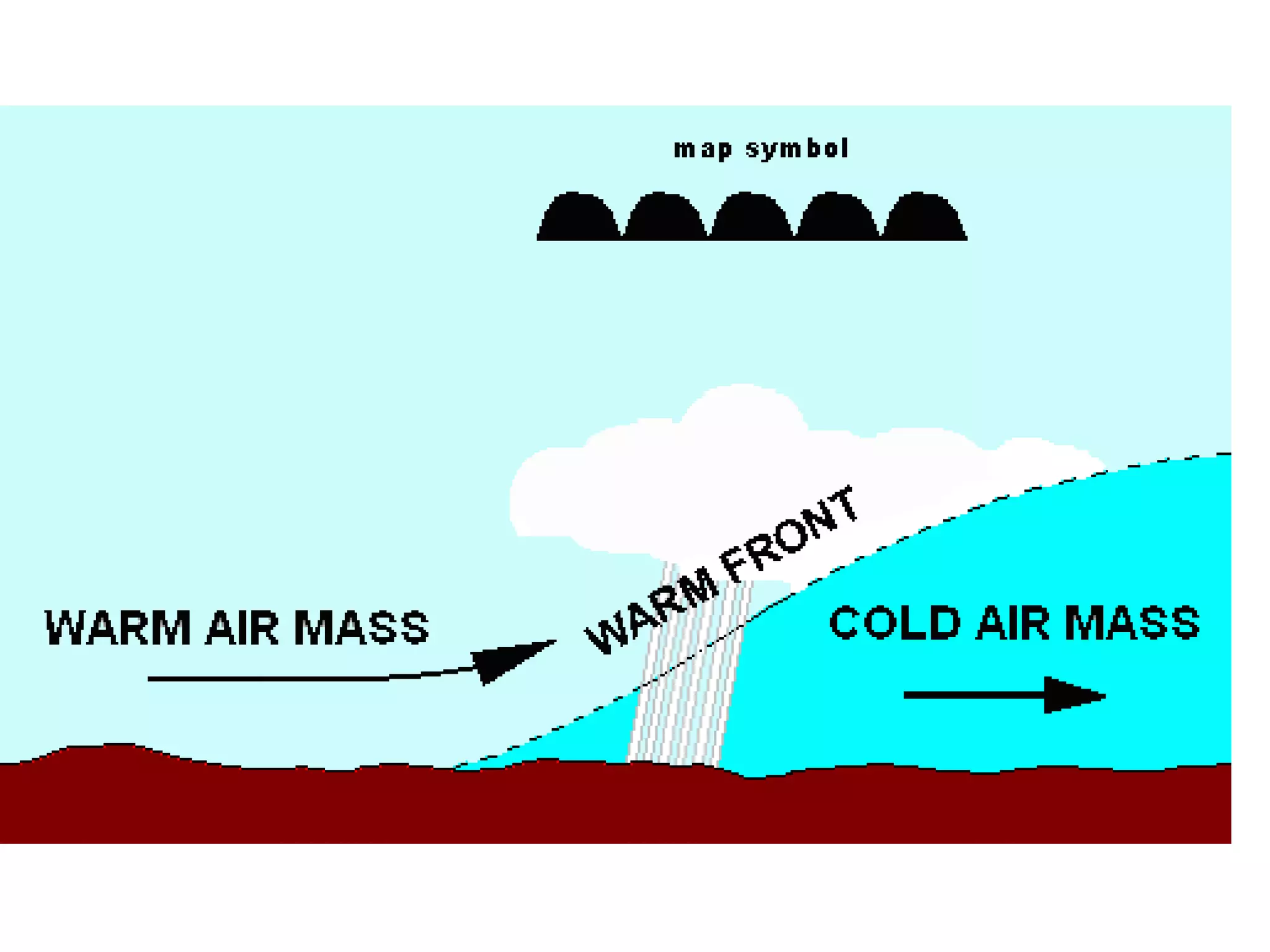
When a warm air mass moves into a cold air mass it’s called a  warm front.
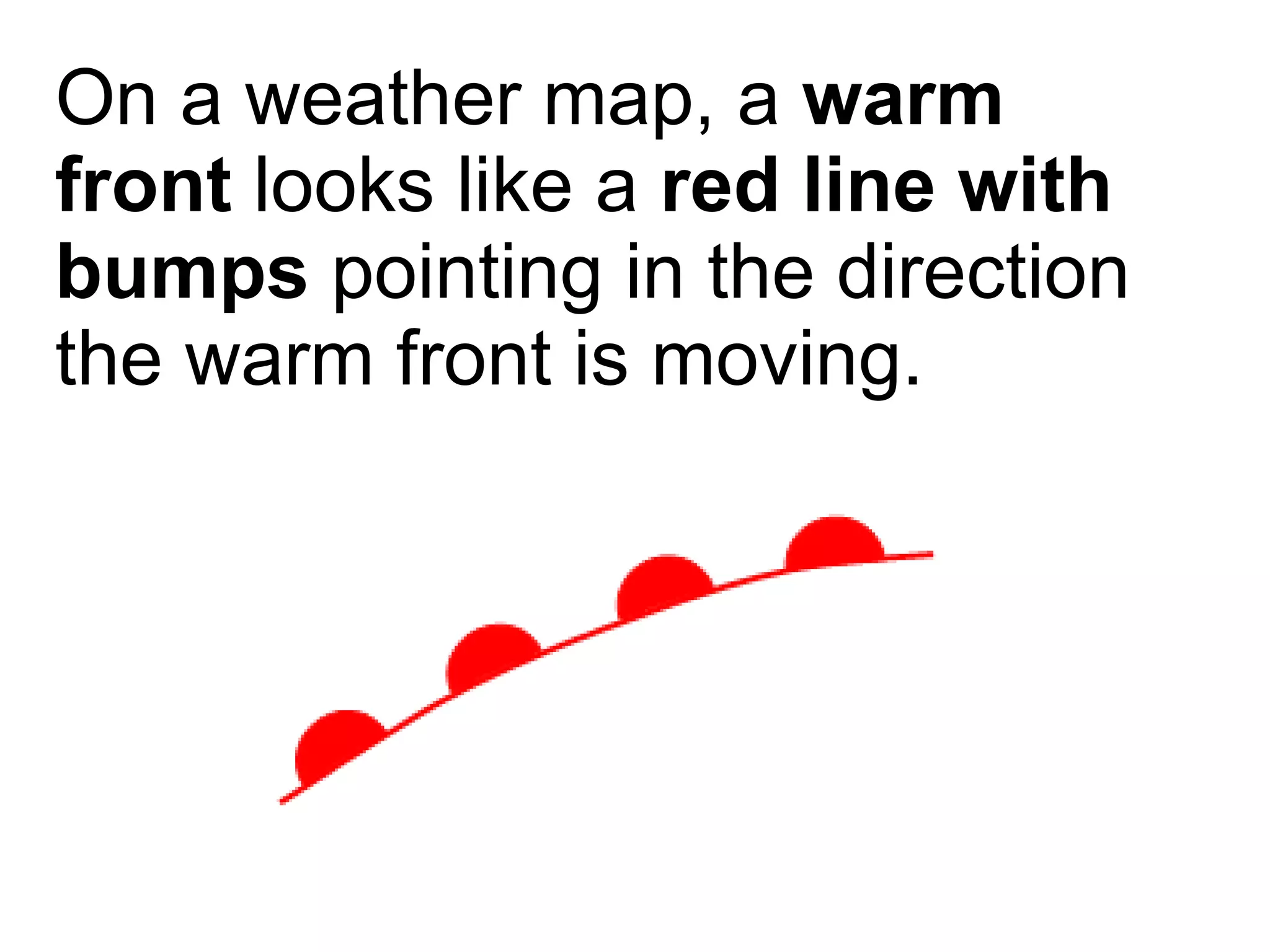
On a weather map, a  warm front  looks like a  red line with bumps  pointing in the direction the warm front is moving.
Here is a  warm front  moving north into Canada.


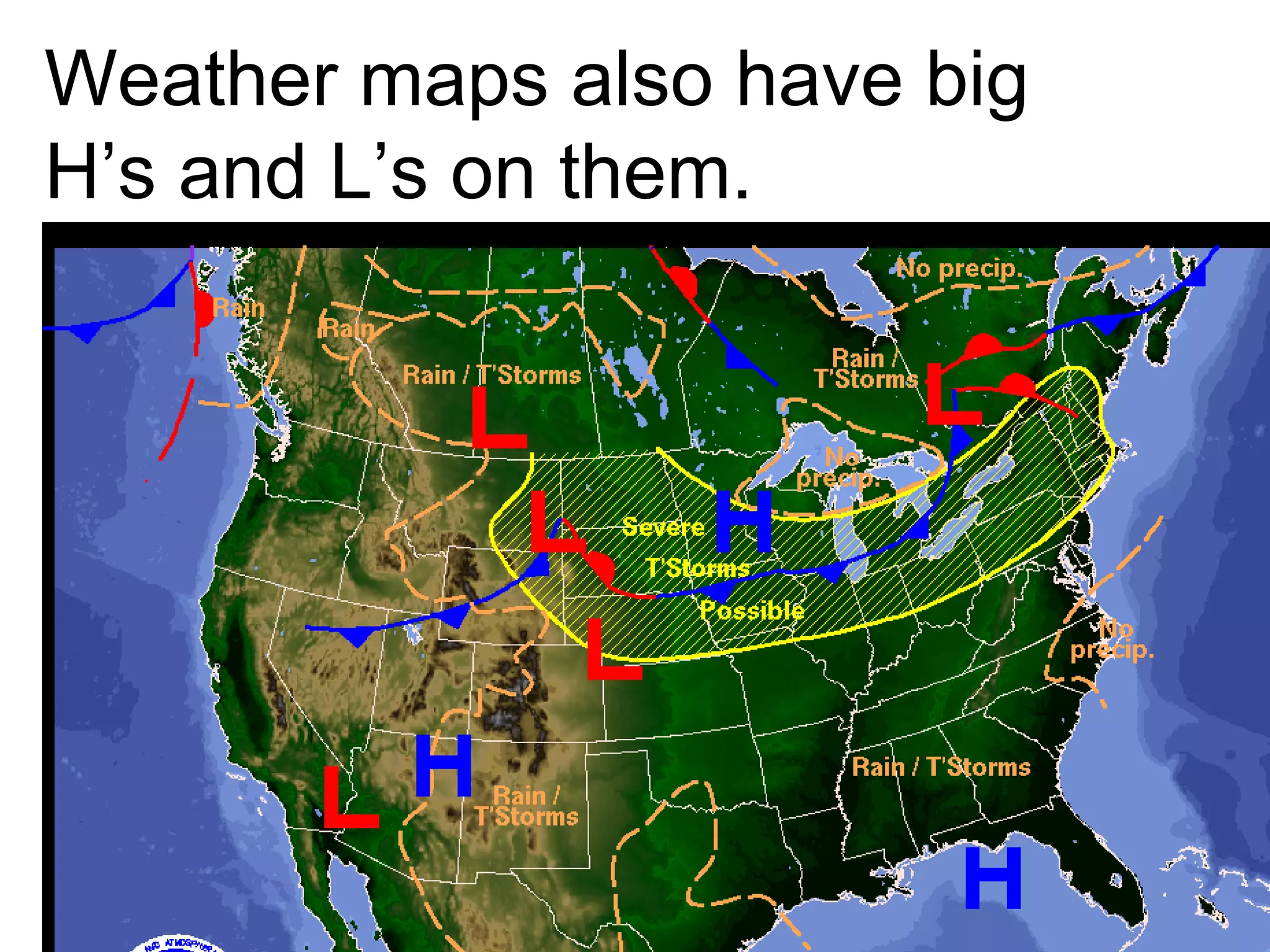
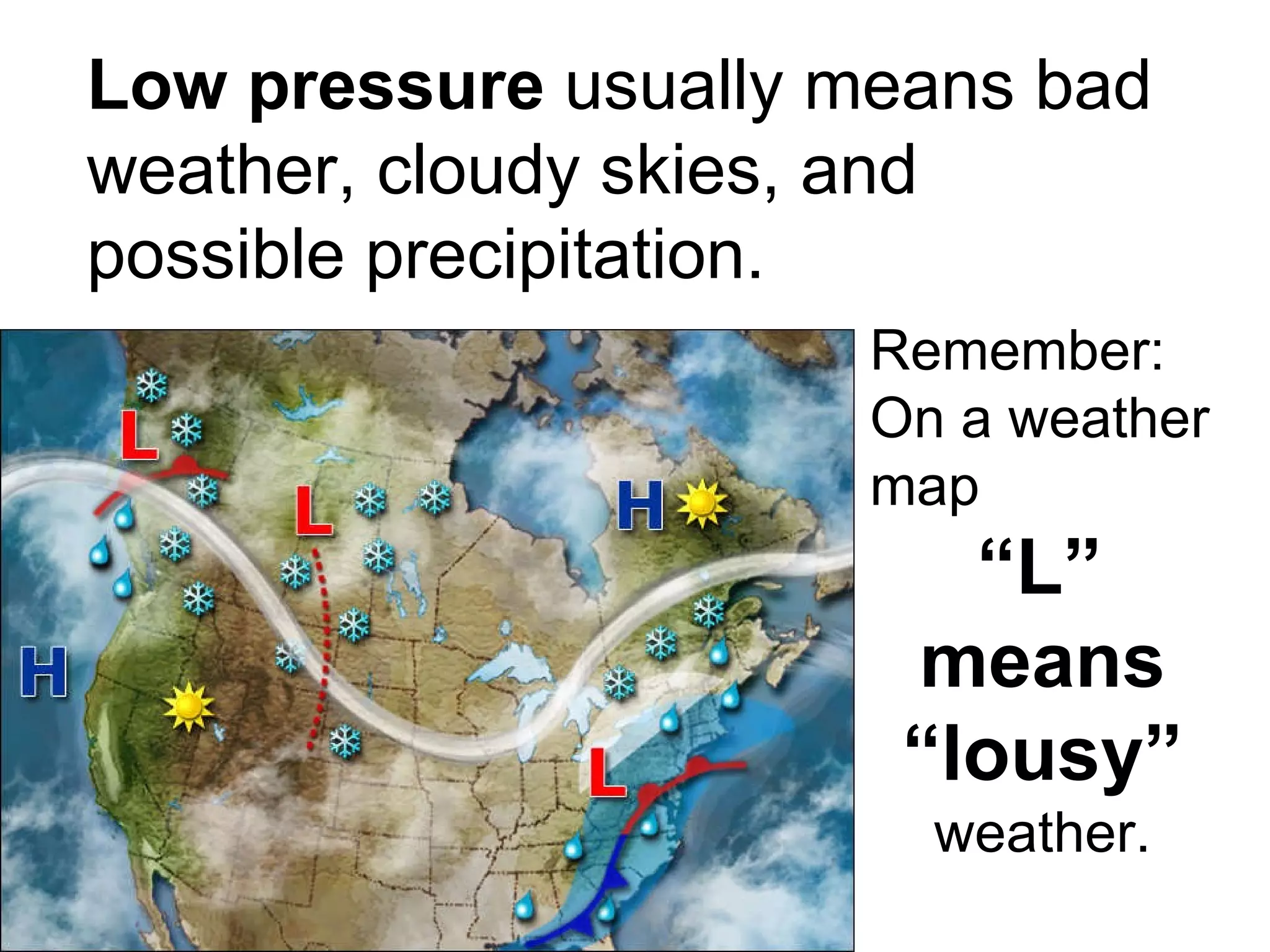
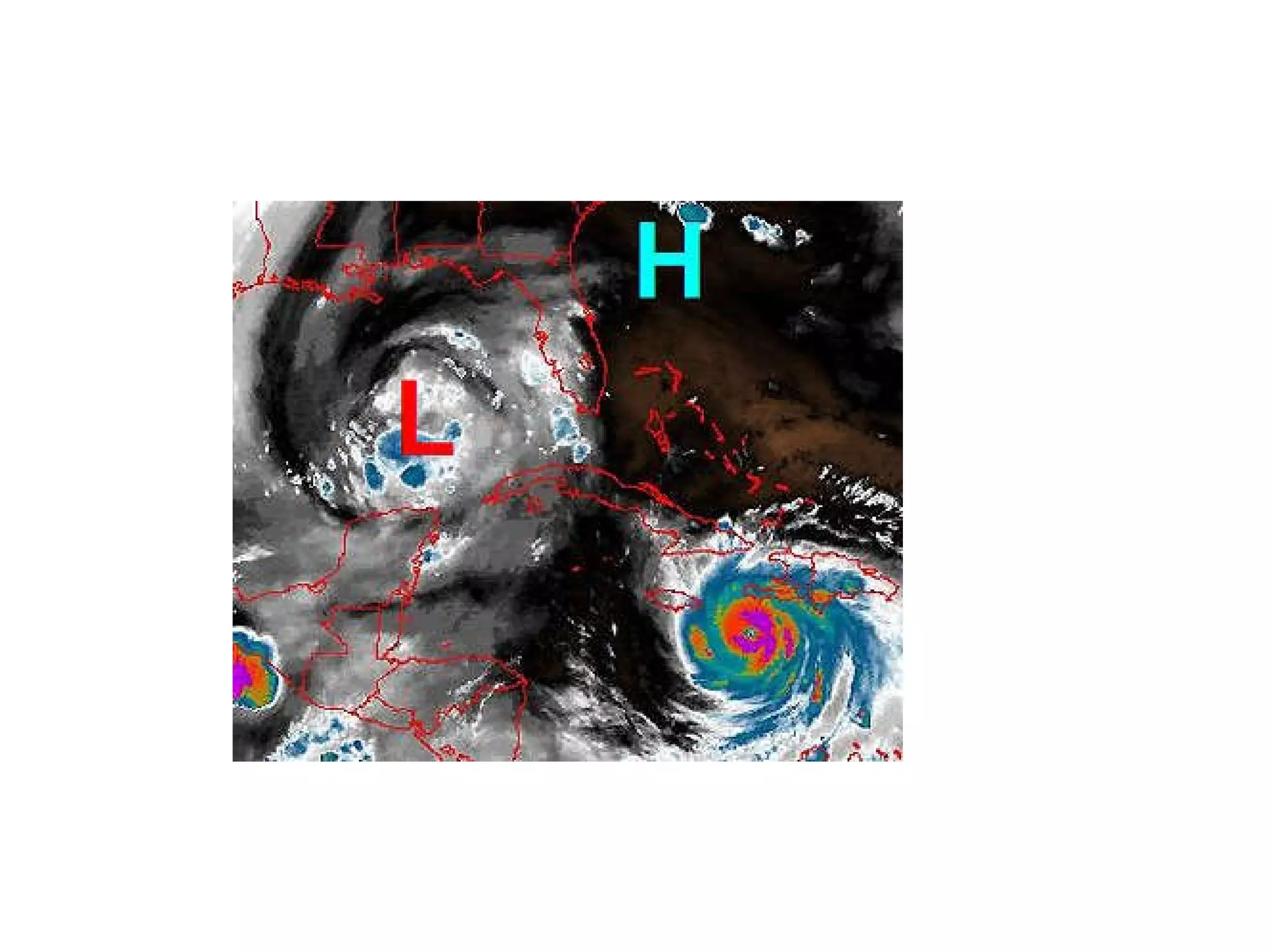
Weather maps also have big H’s and L’s on them.
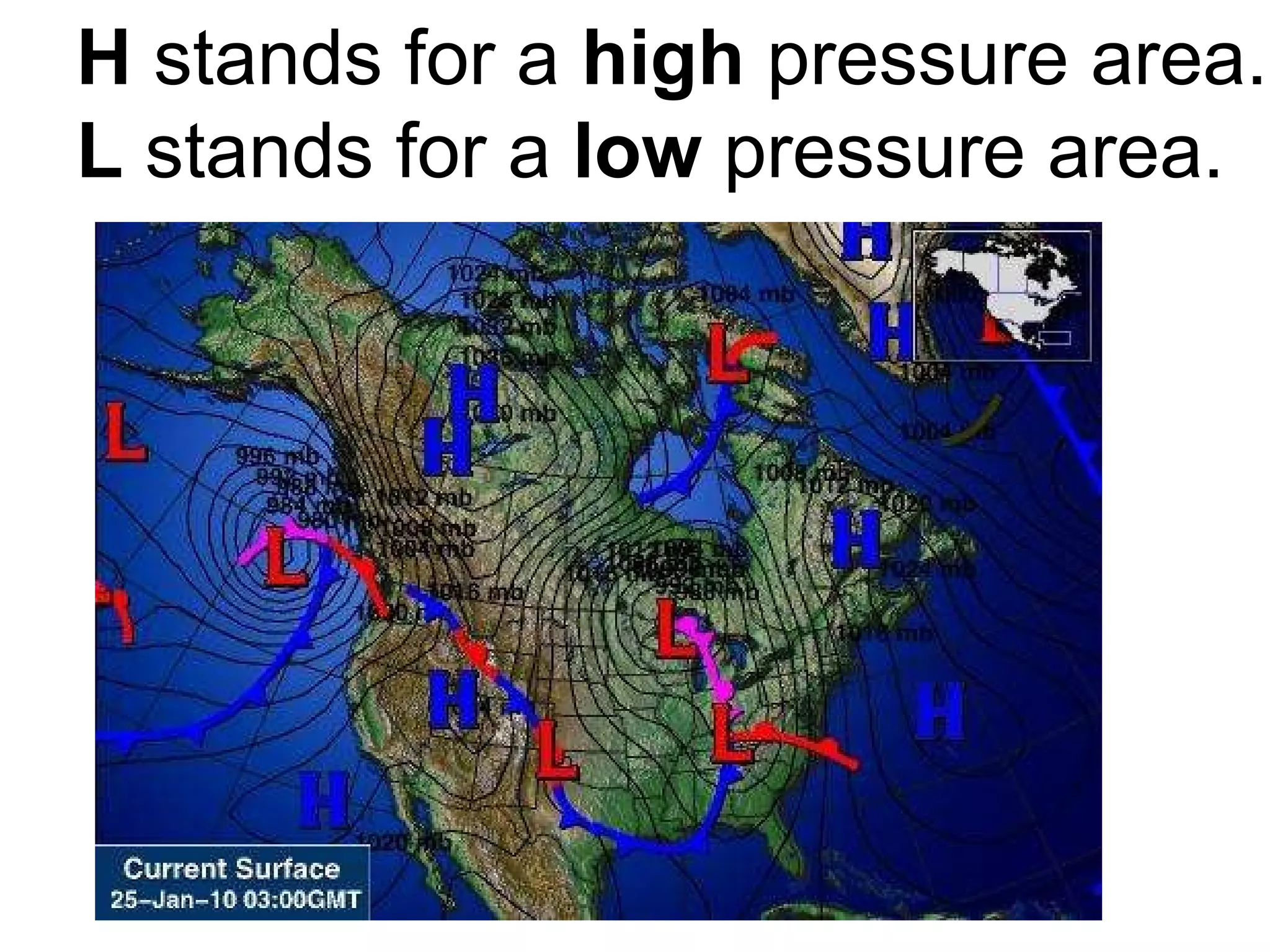
H  stands for a  high  pressure area. L  stands for a  low  pressure area.
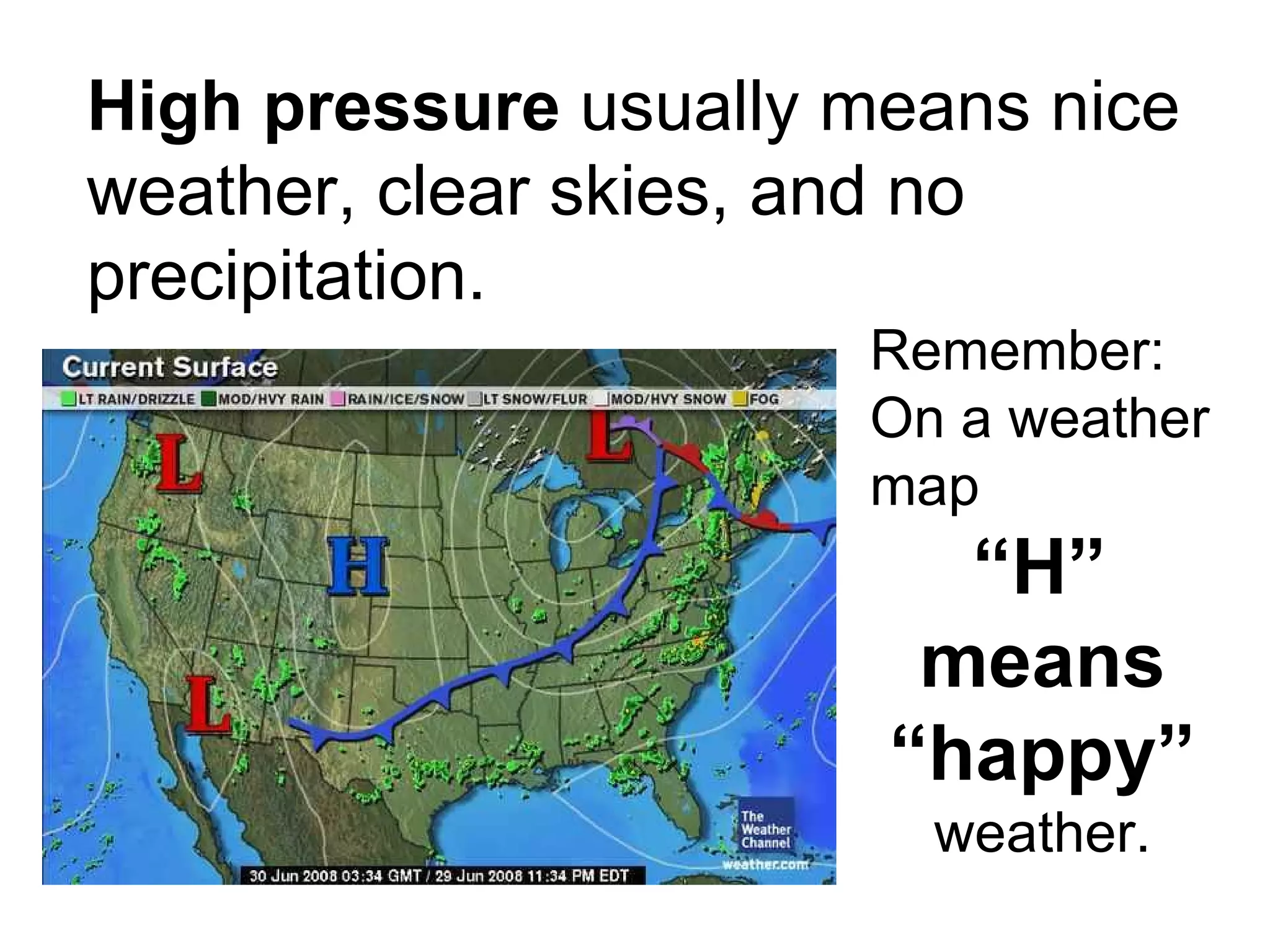
High pressure  usually means nice weather, clear skies, and no precipitation. Remember:  On a weather map “ H”  means “happy”  weather.
Low pressure  usually means bad weather, cloudy skies, and possible precipitation. Remember:  On a weather map “ L”  means “lousy”  weather.
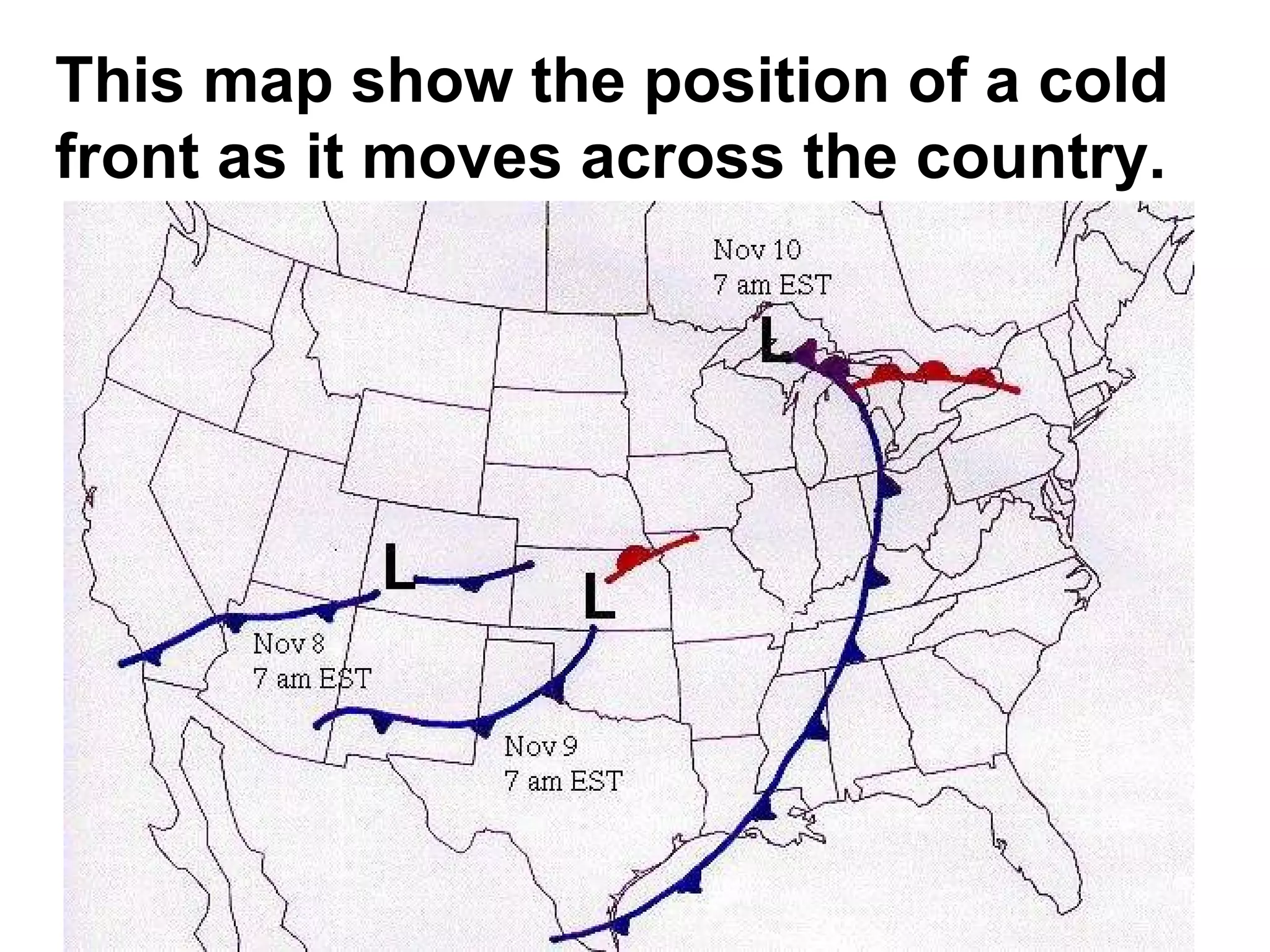
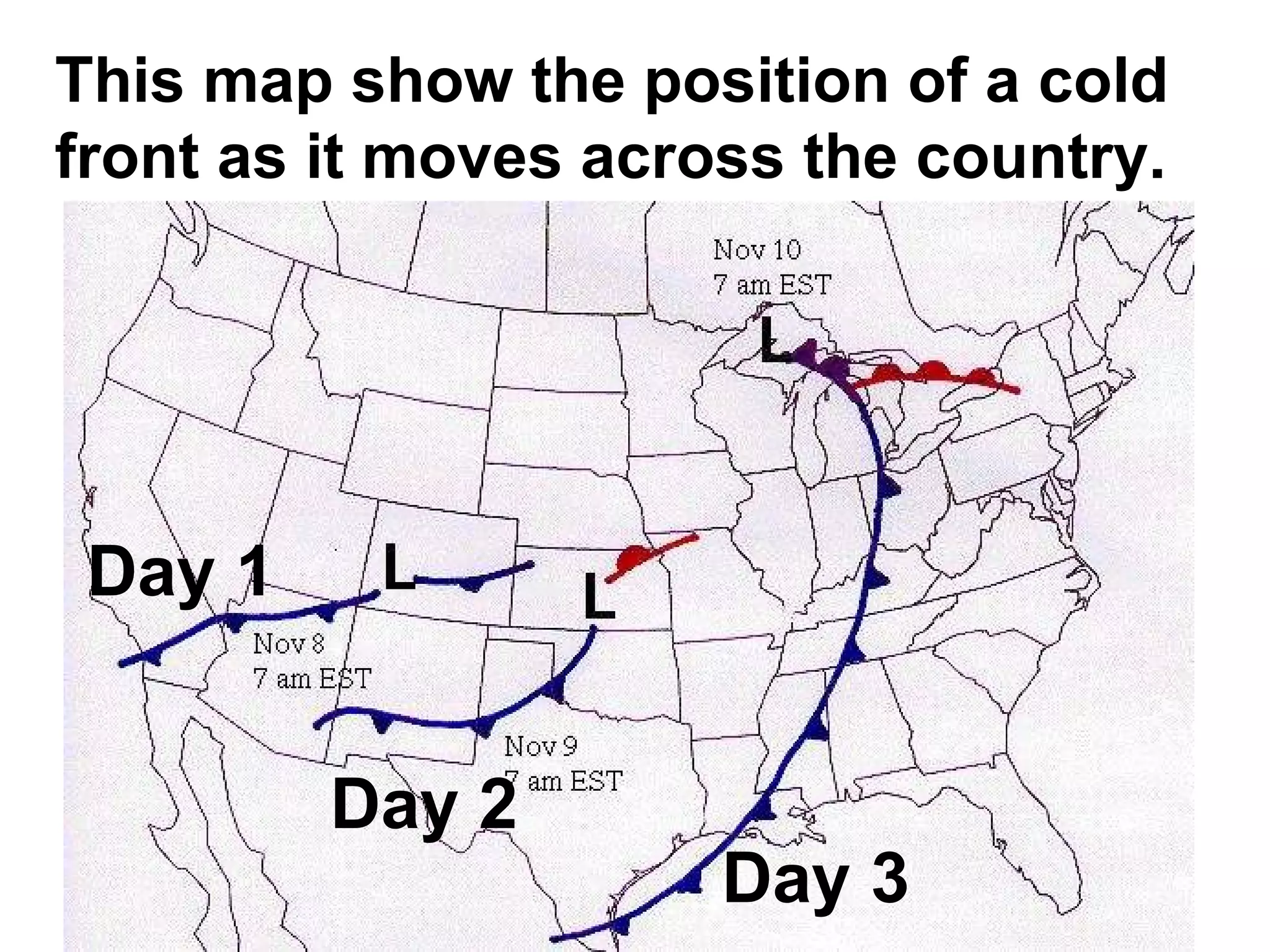
This map show the position of a cold front as it moves across the country.
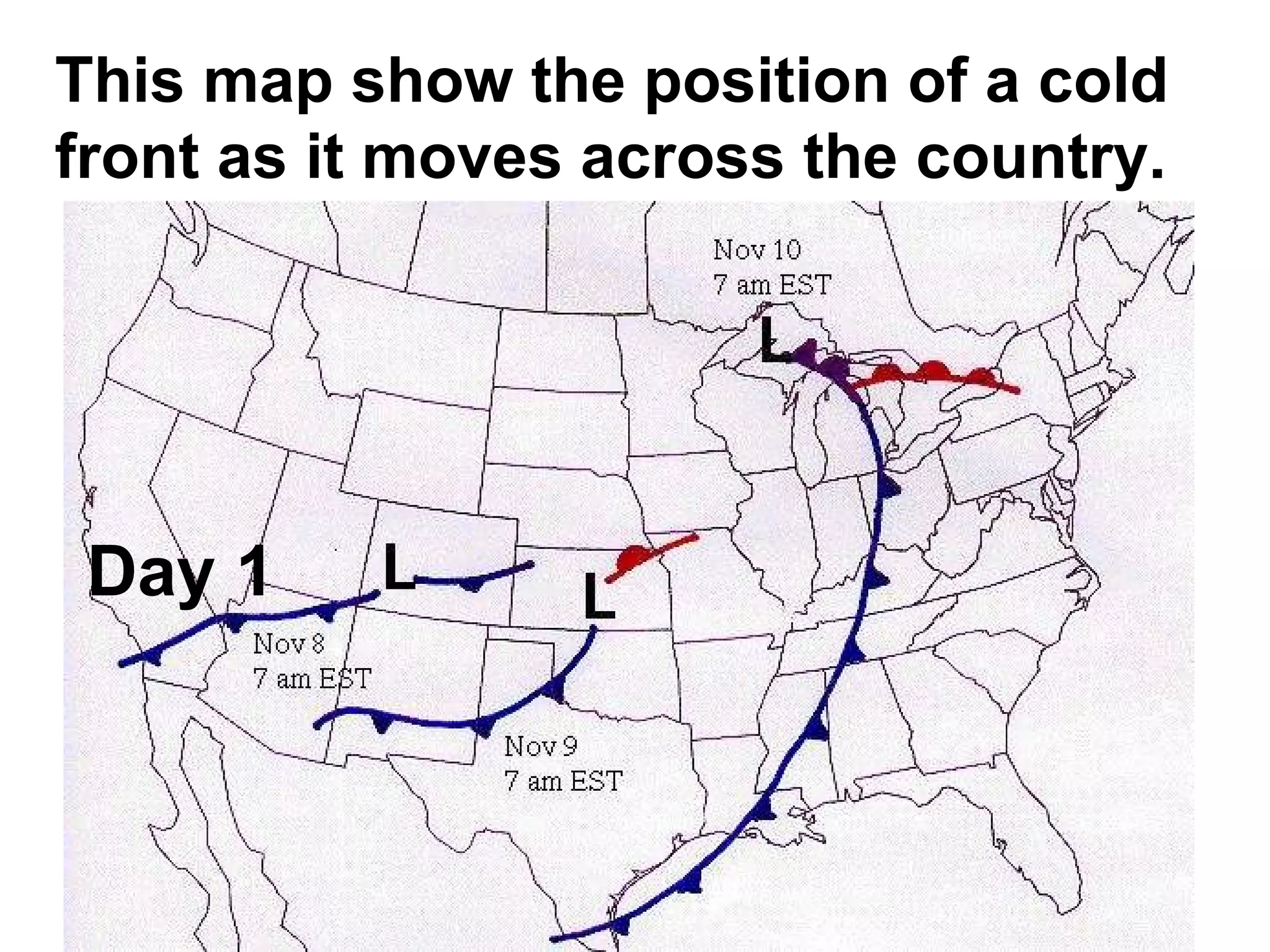
This map show the position of a cold front as it moves across the country. Day 1
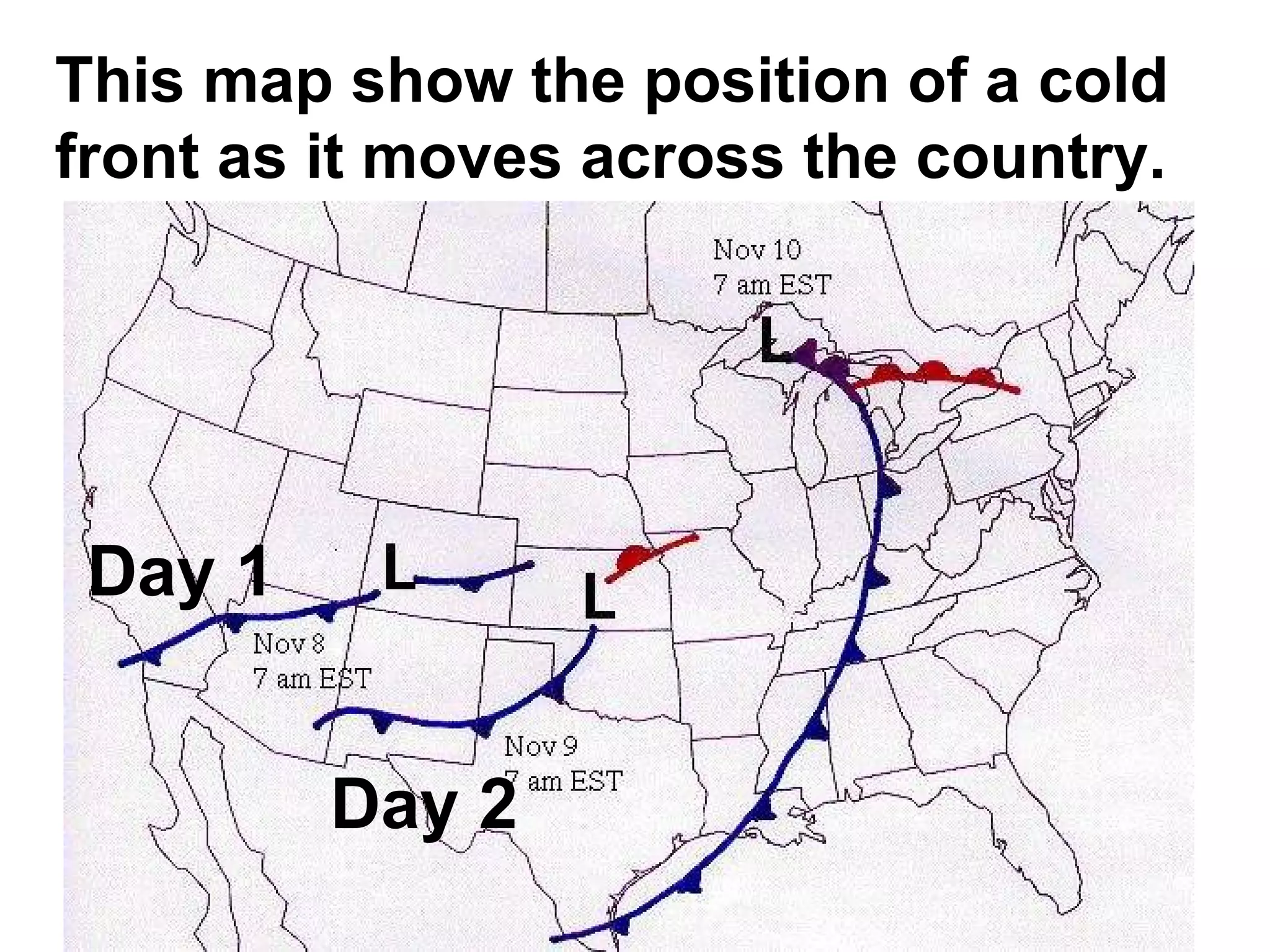
This map show the position of a cold front as it moves across the country. Day 1 Day 2
This map show the position of a cold front as it moves across the country. Day 1 Day 2 Day 3
 
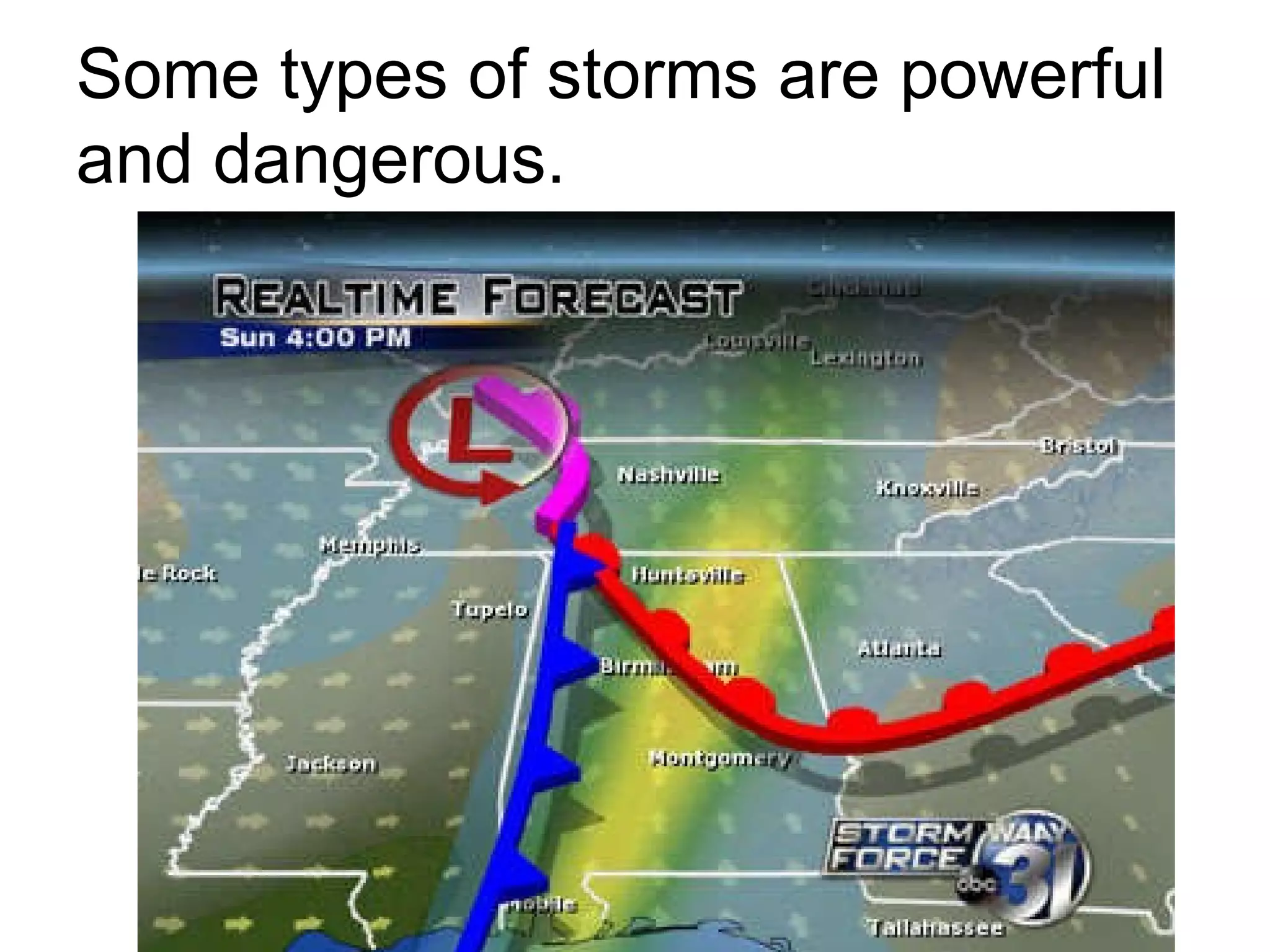
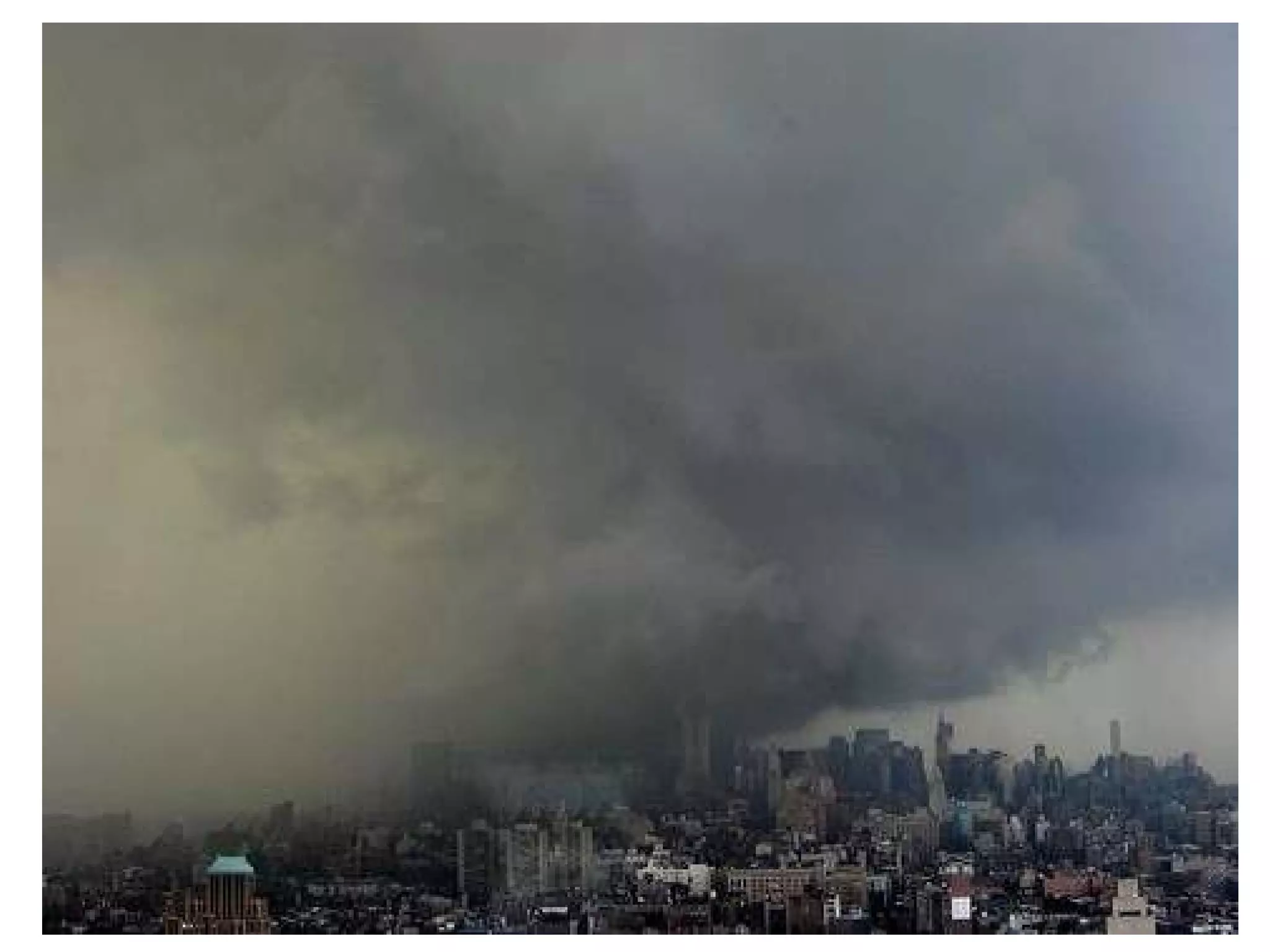
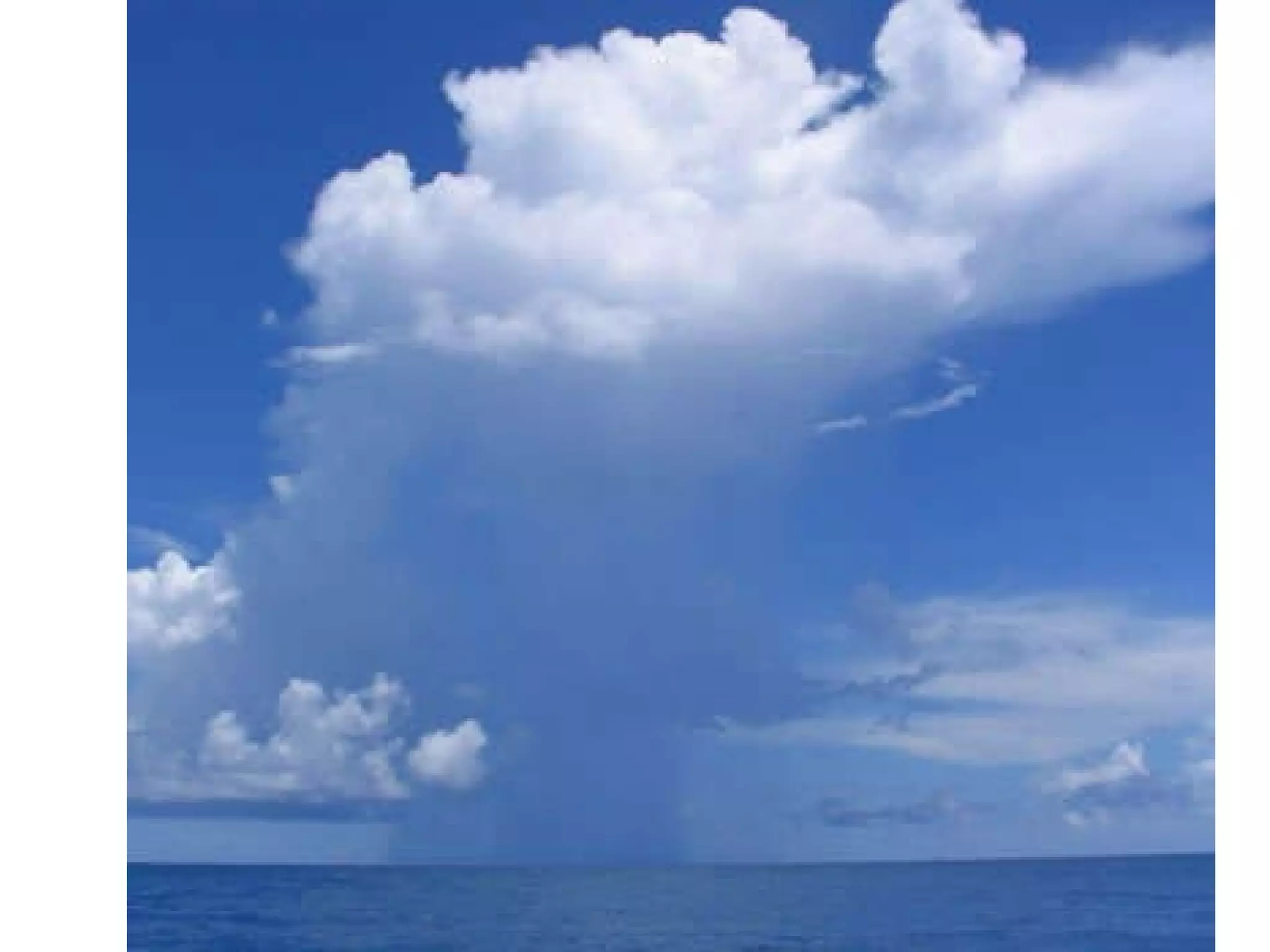
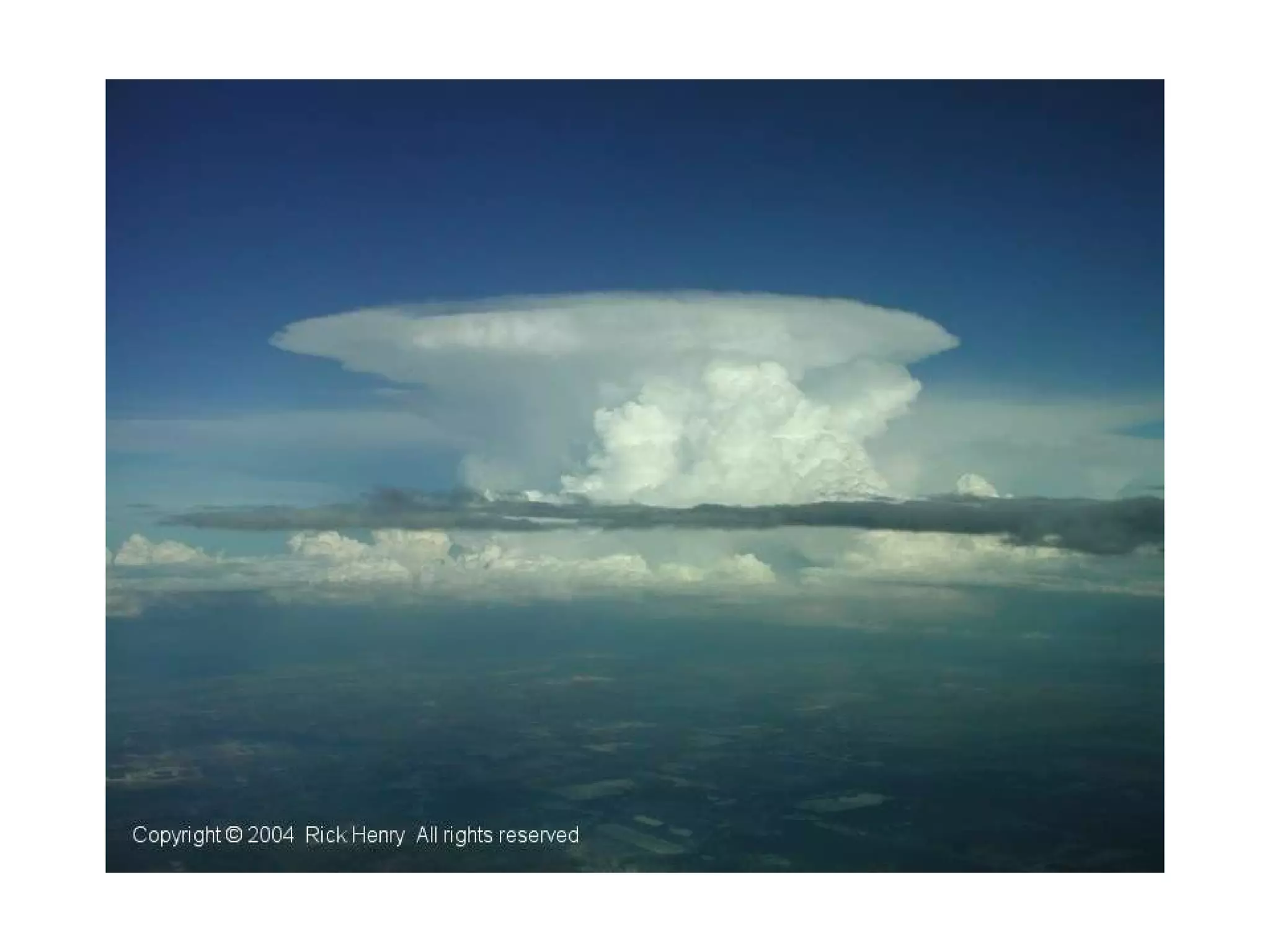
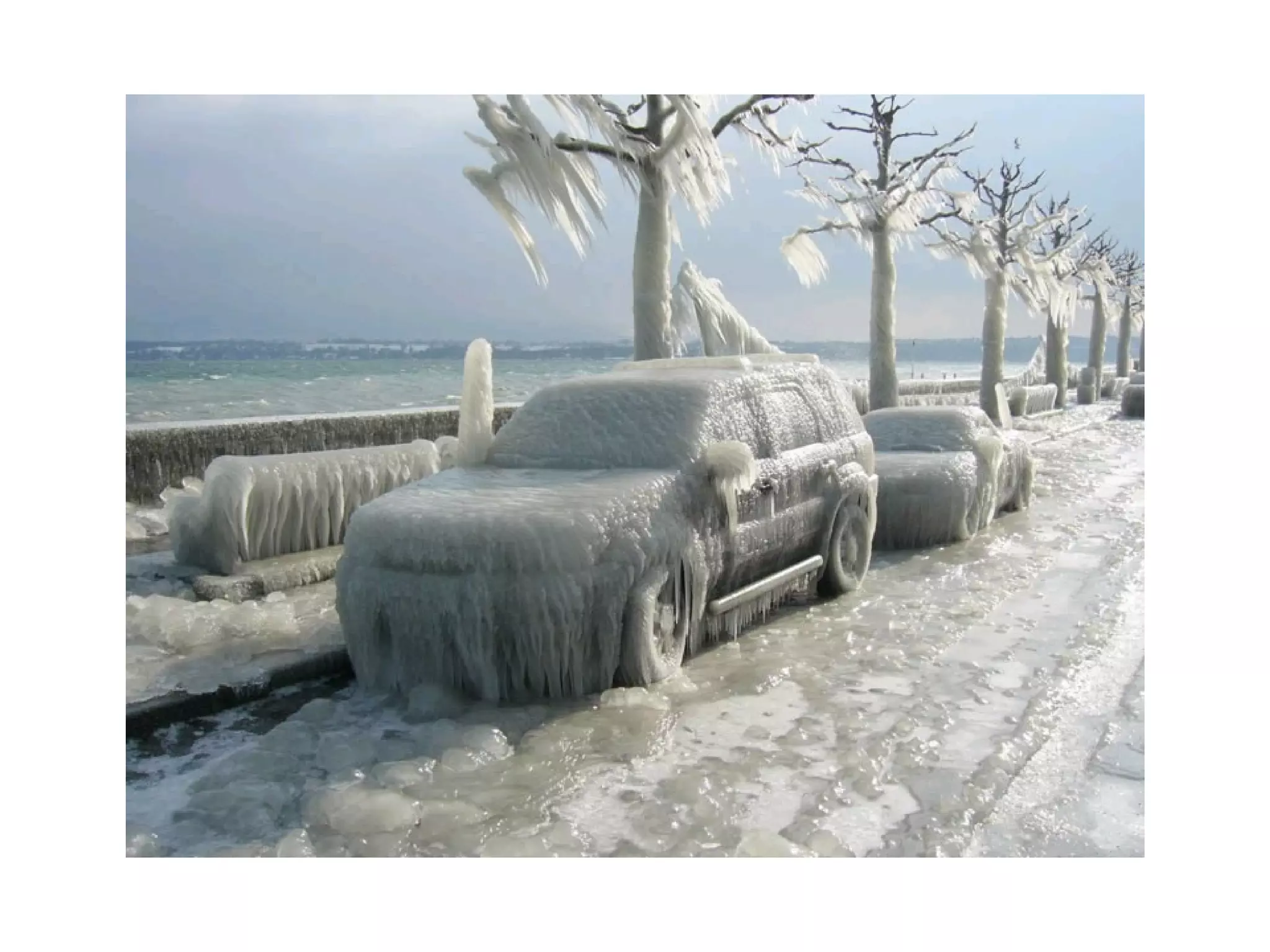
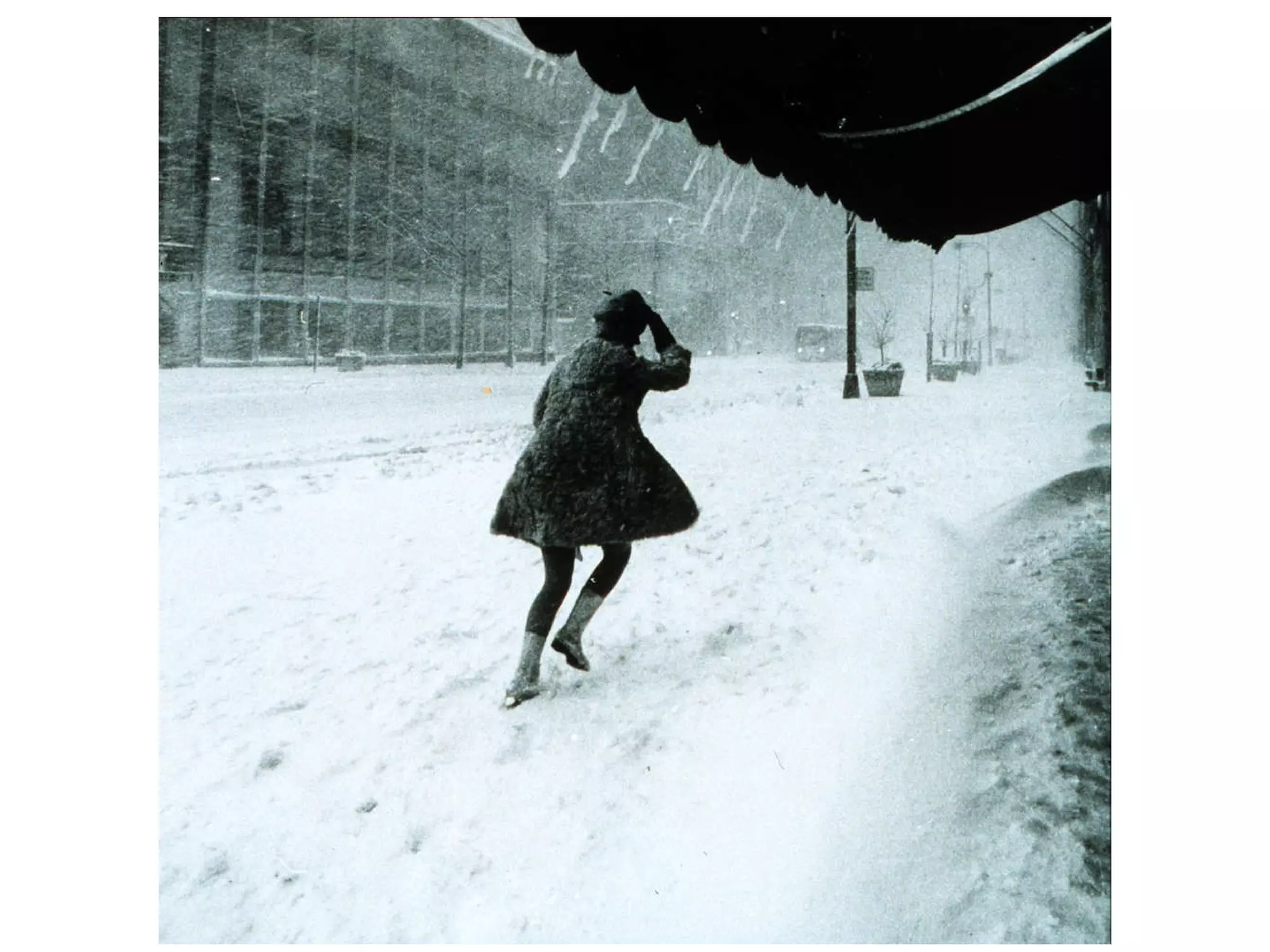
Some types of storms are powerful and dangerous.


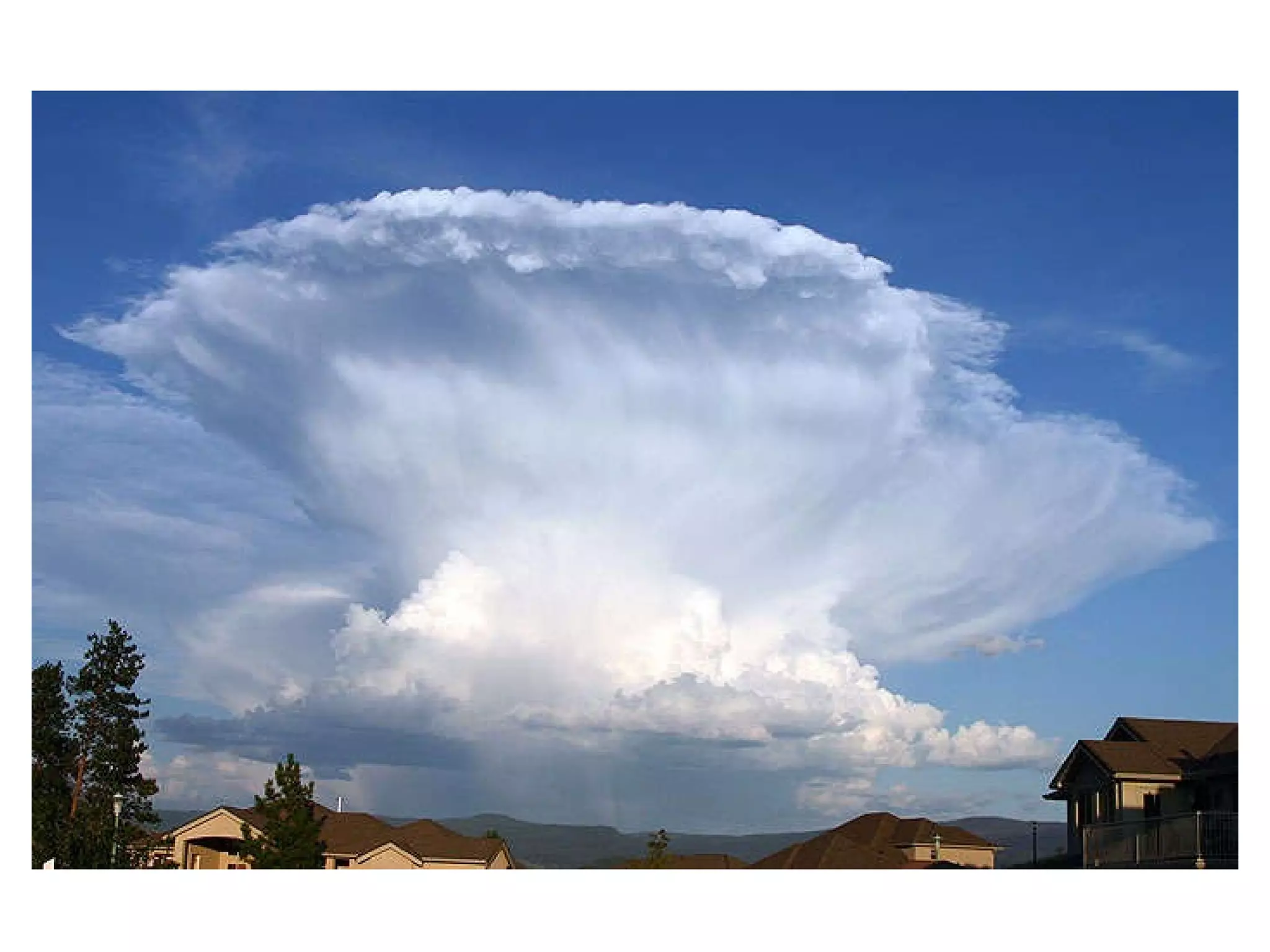
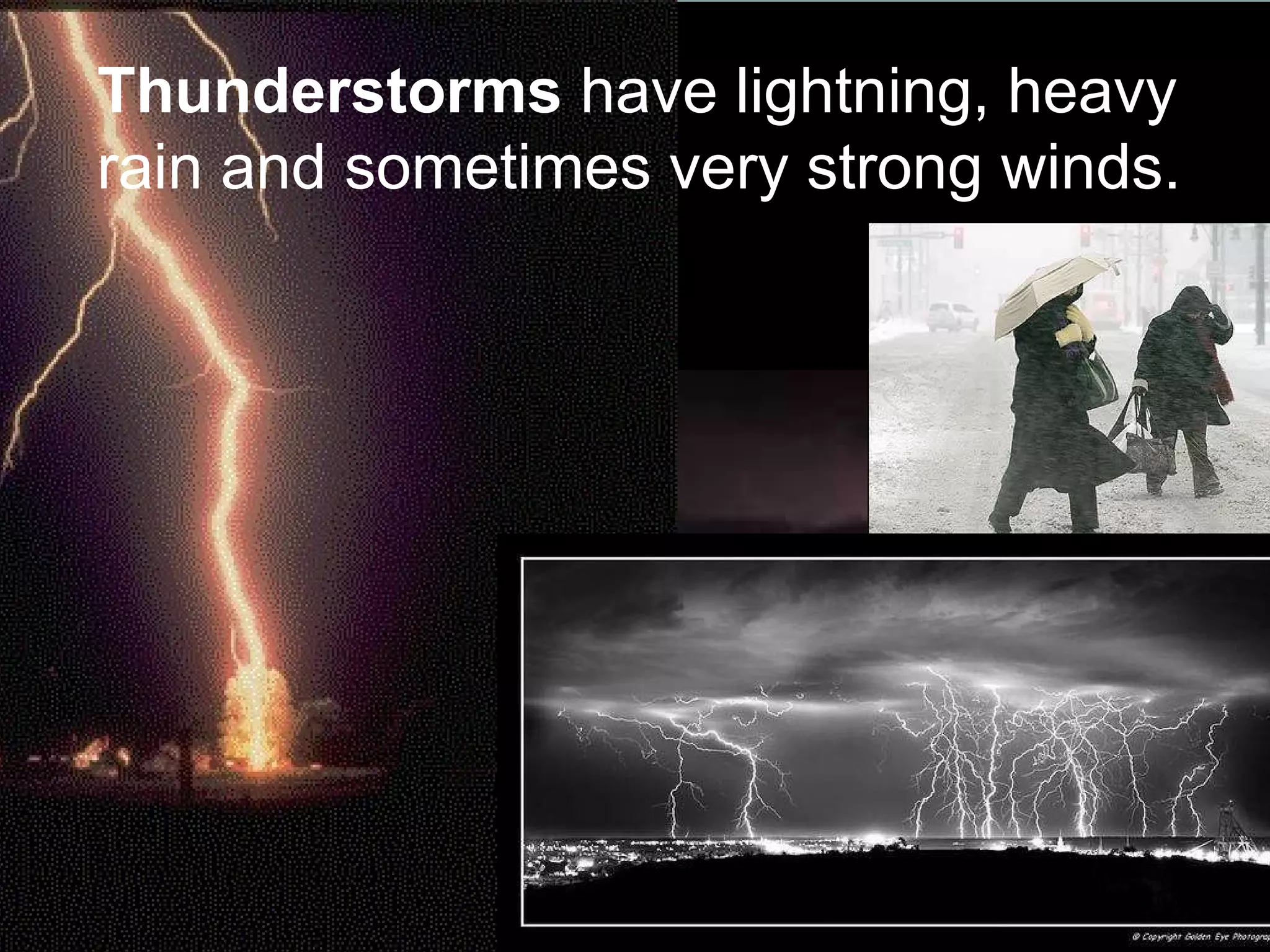
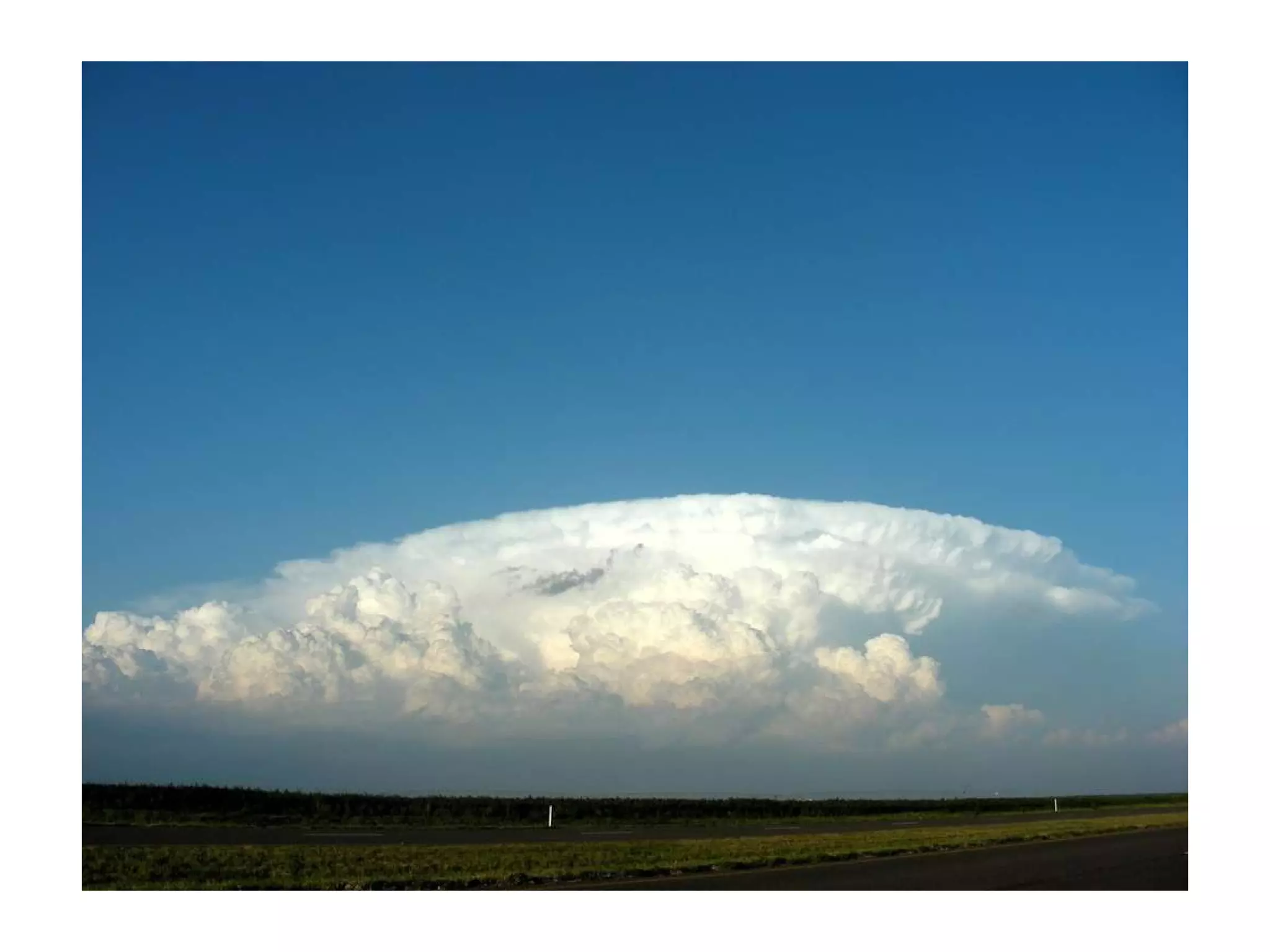
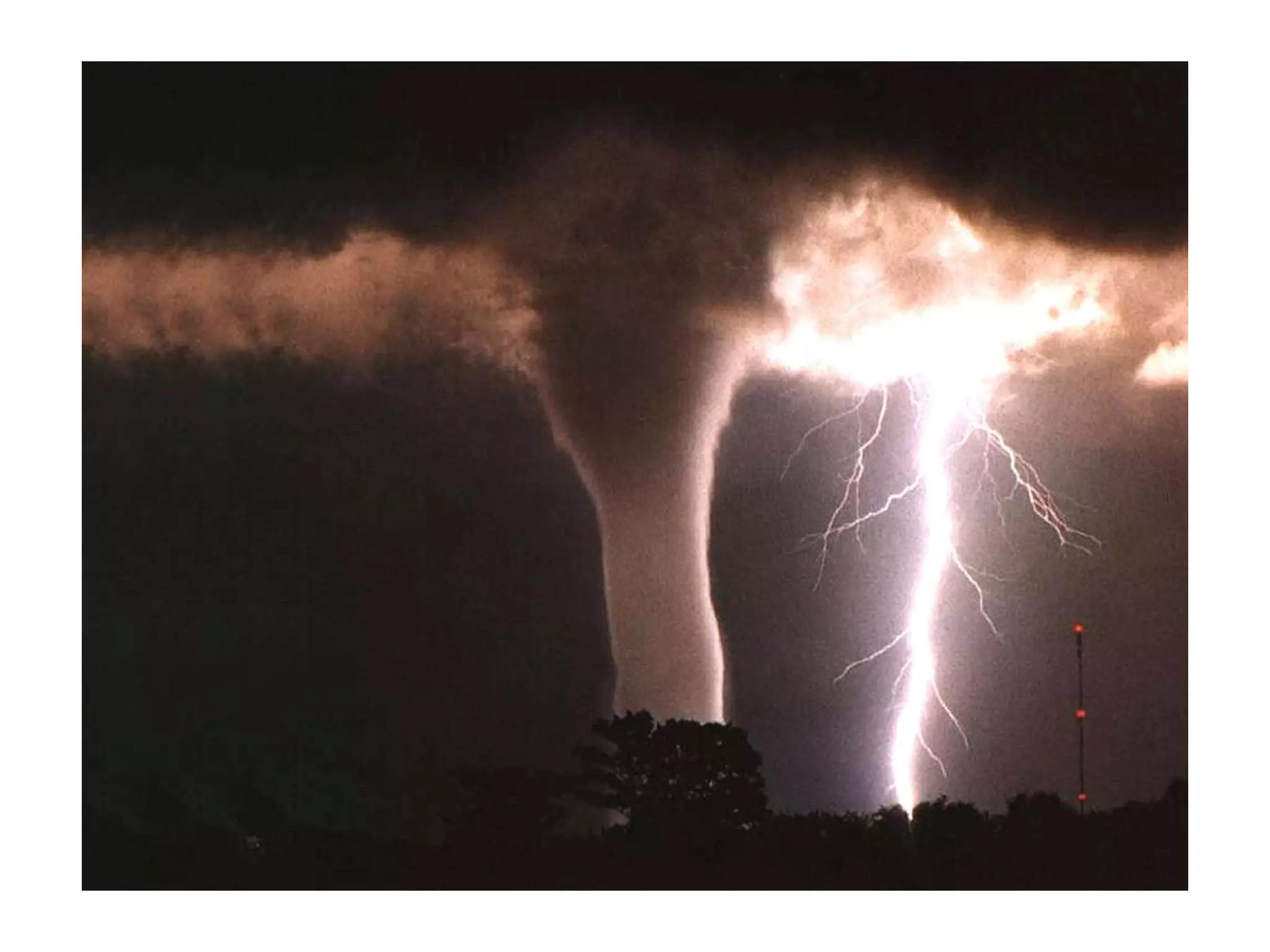
Thunderstorms  have lightning, heavy rain and sometimes very strong winds.
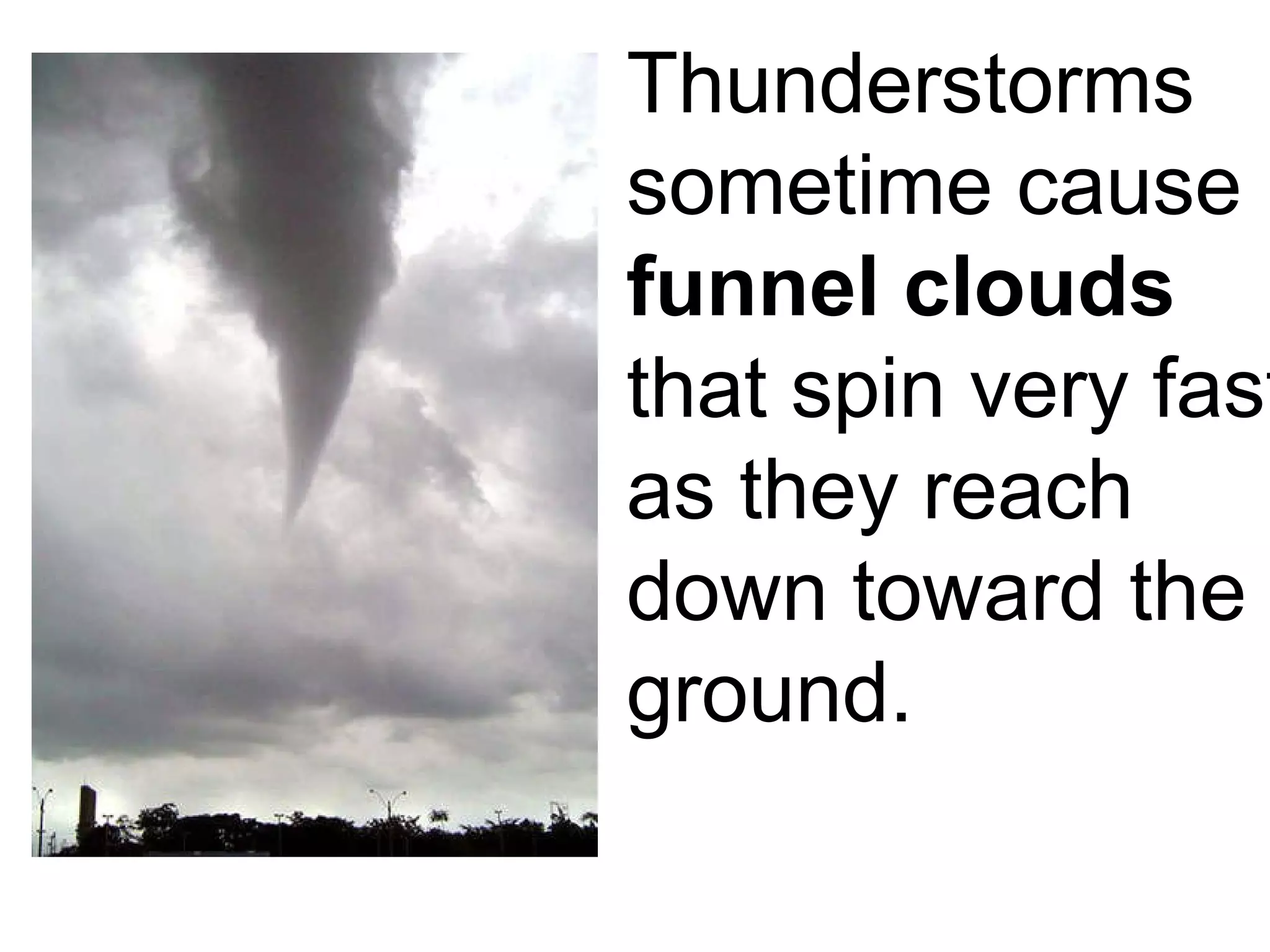
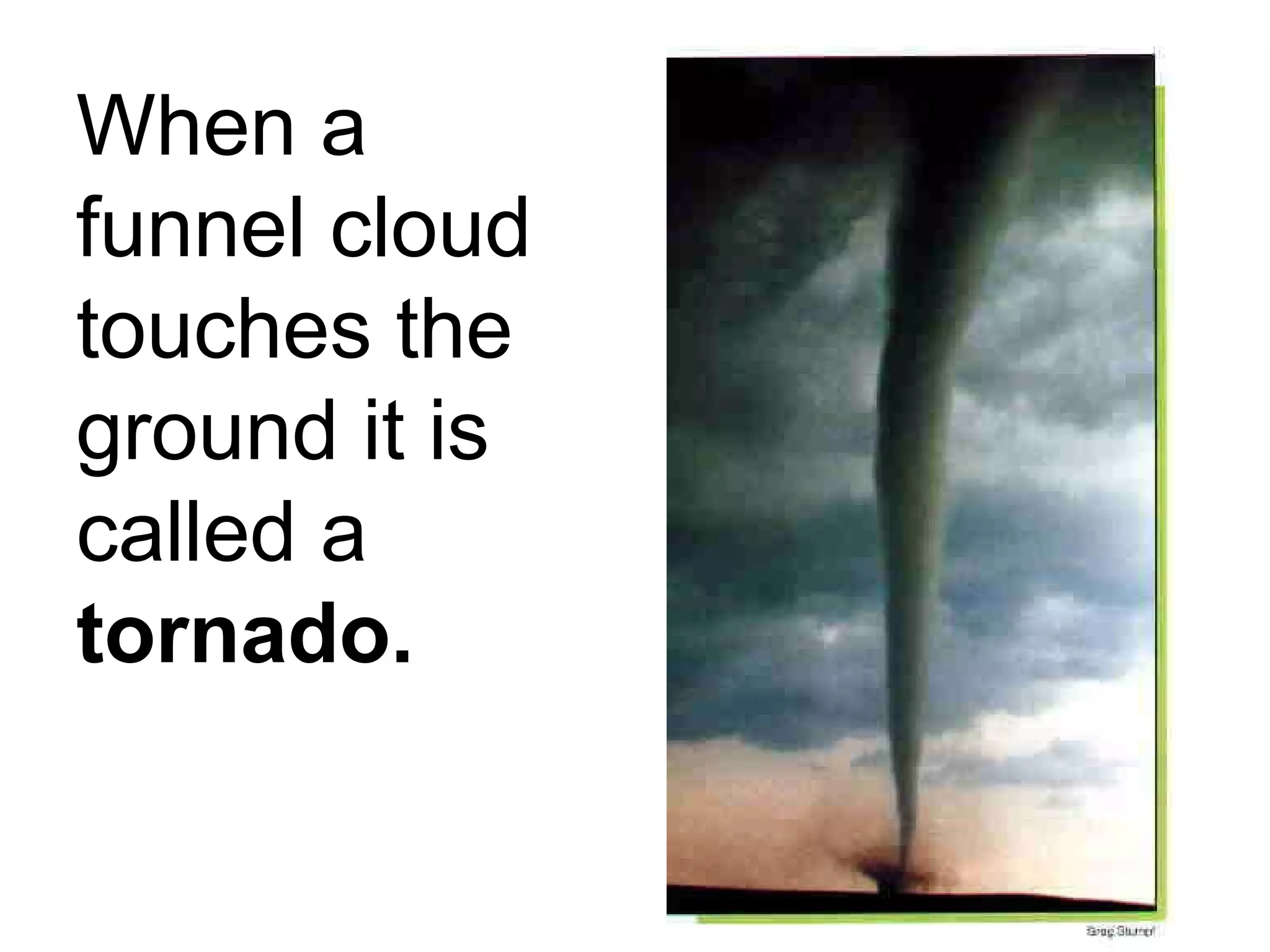
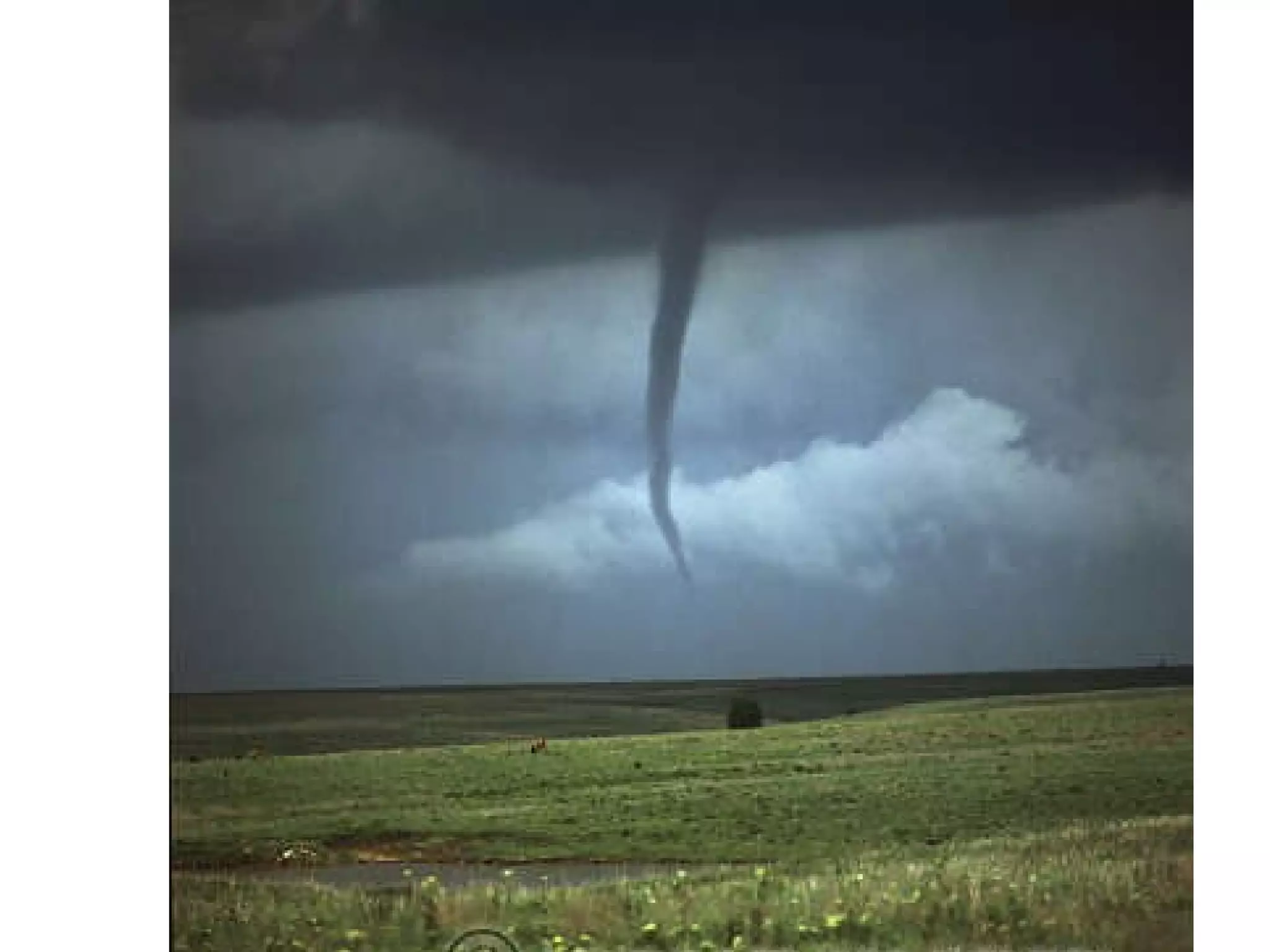
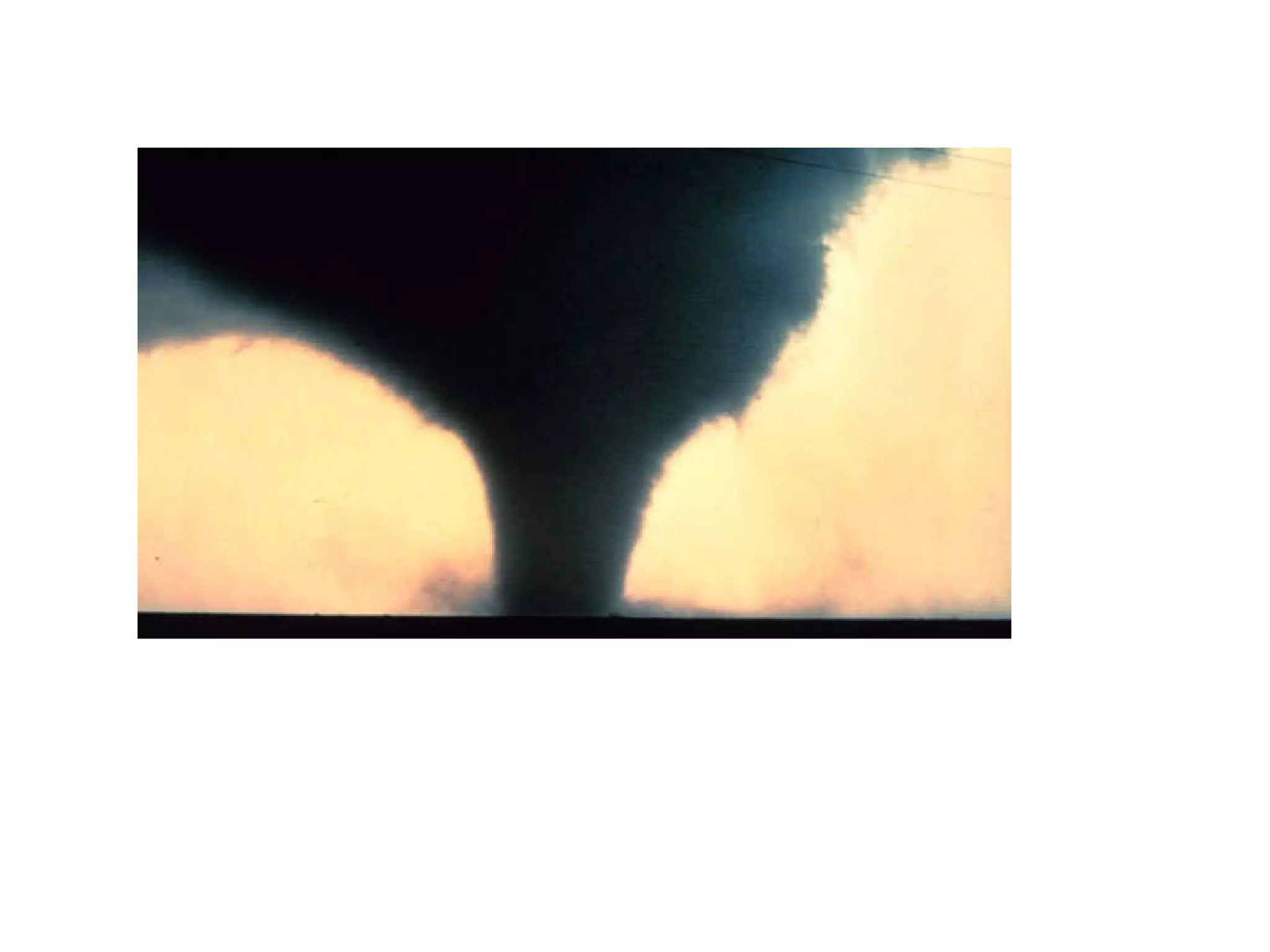
Thunderstorms sometime cause  funnel clouds  that spin very fast as they reach down toward the ground.
The are called funnel clouds because they are always shaped like a funnel.
When a funnel cloud touches the ground it is called a  tornado.

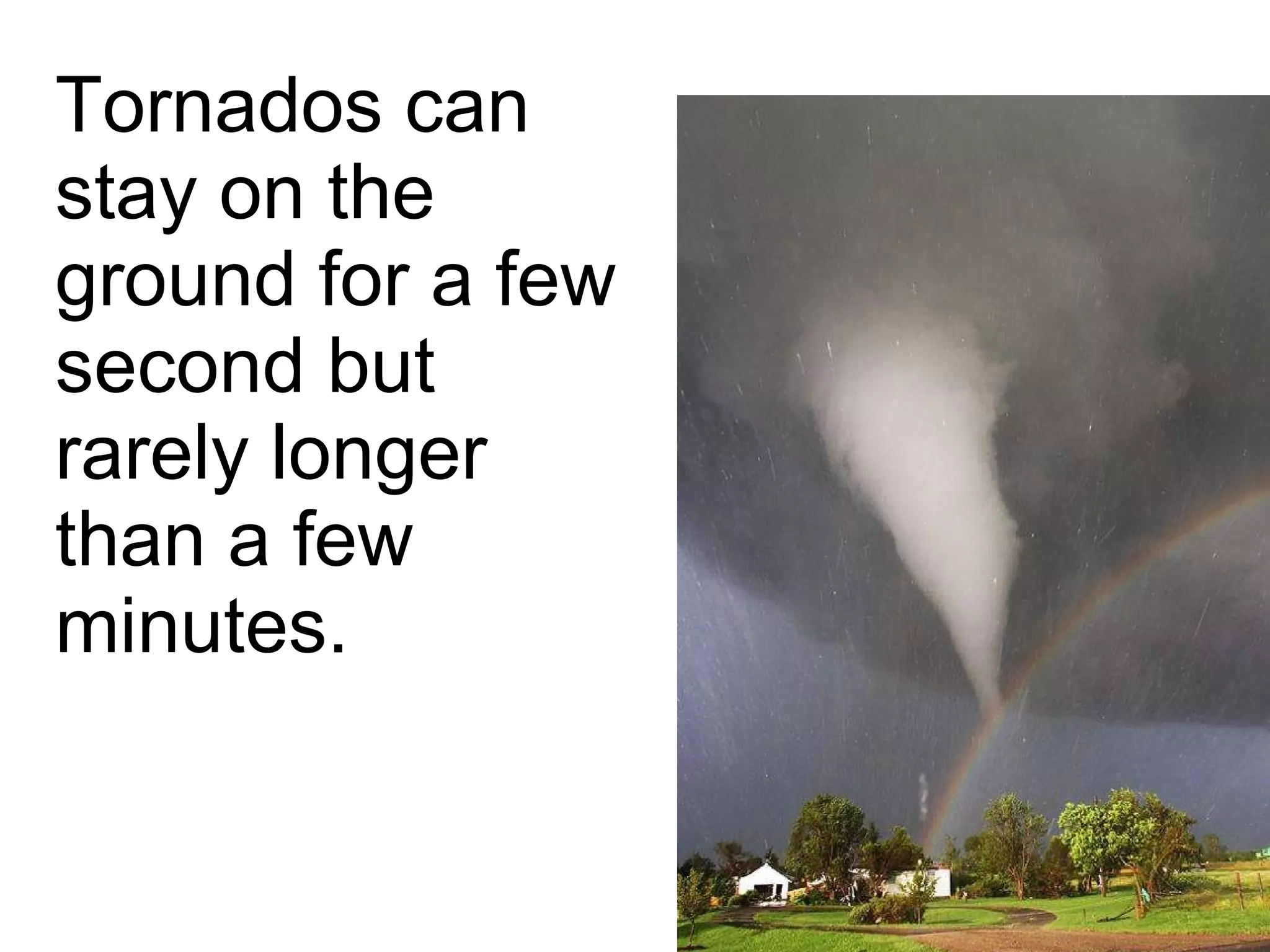
Tornados can stay on the ground for a few second but rarely longer than a few minutes.
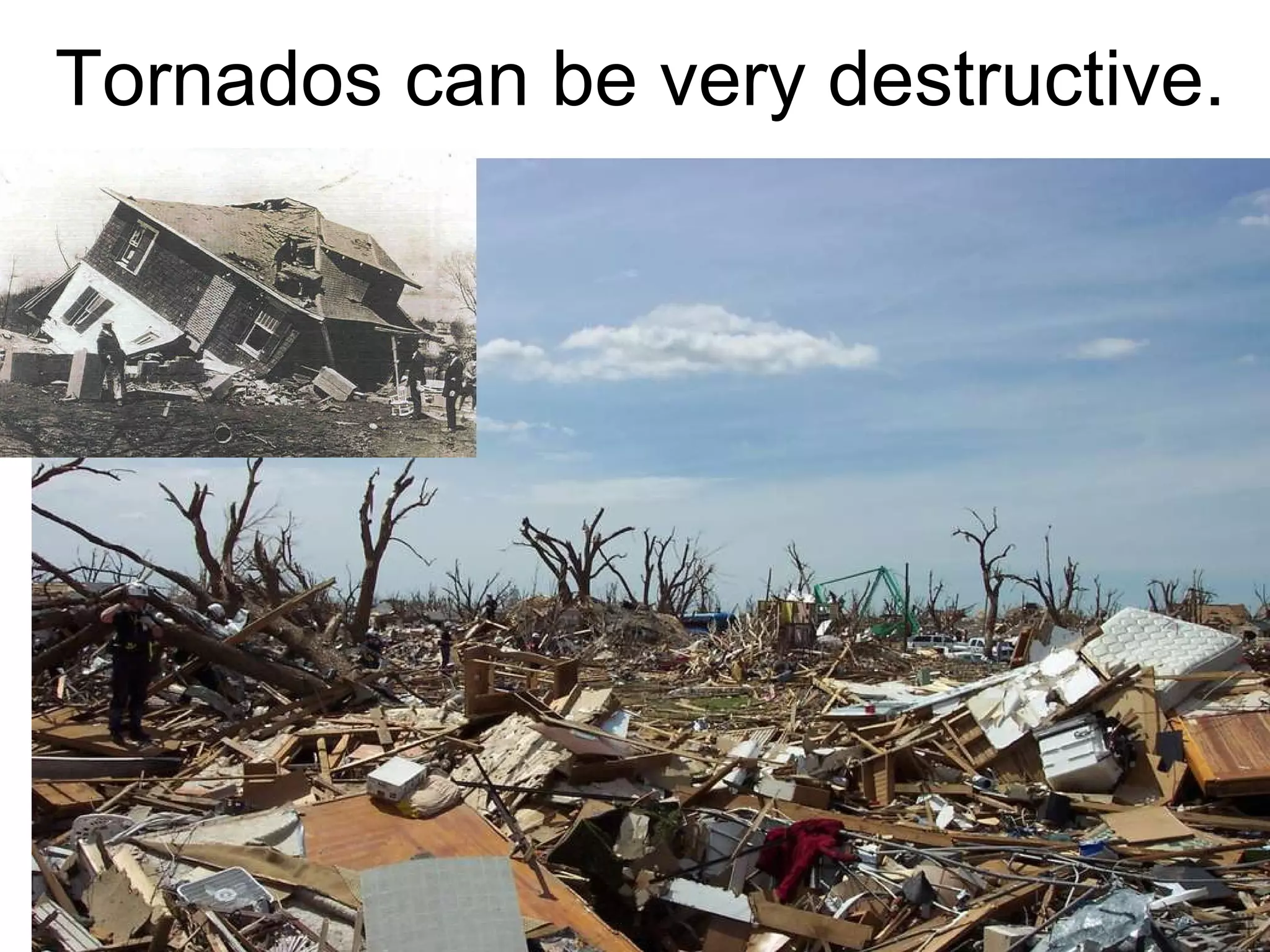
But during that time tornados can be very dangerous.
Tornados can be very destructive.
 
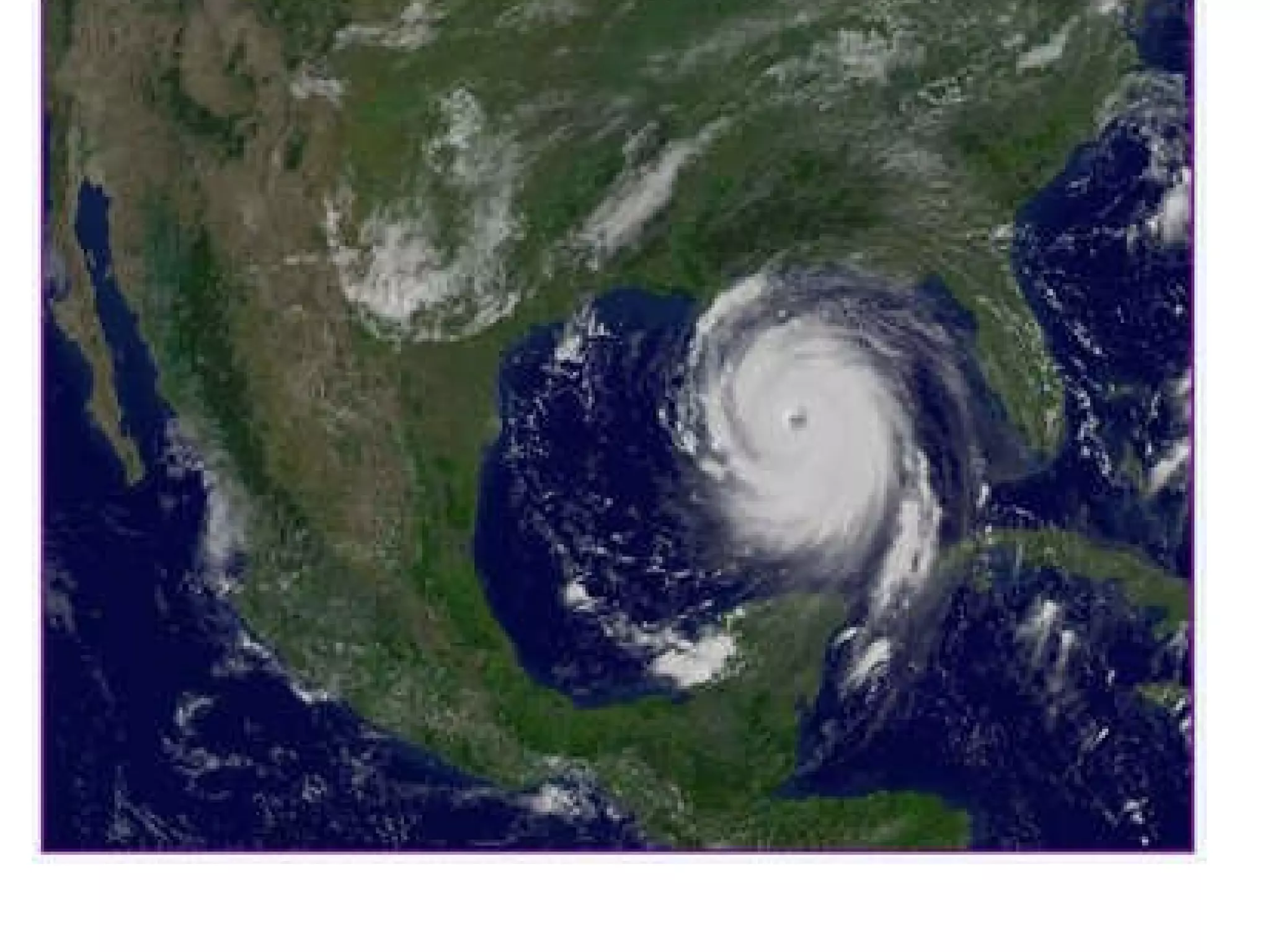
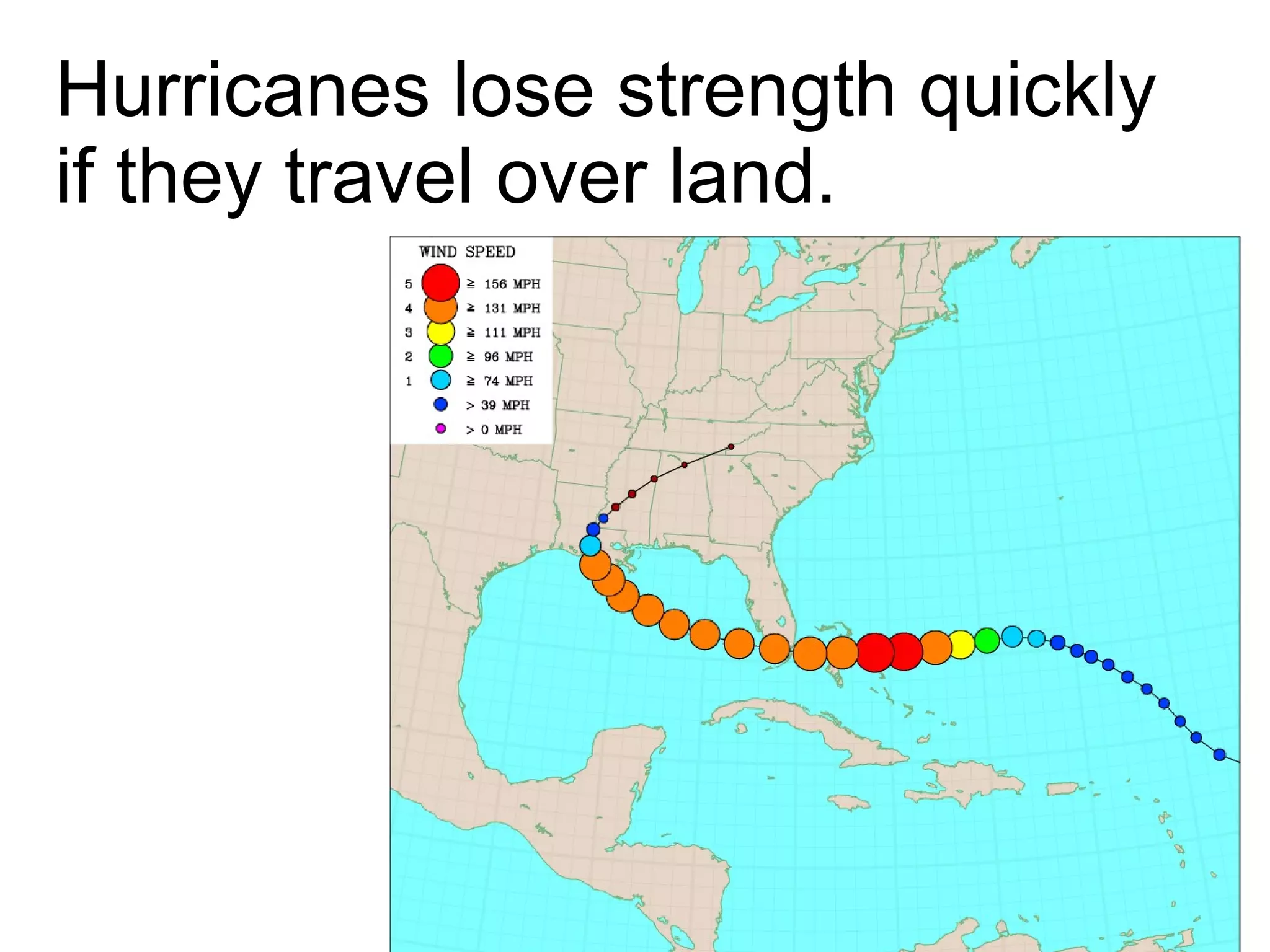
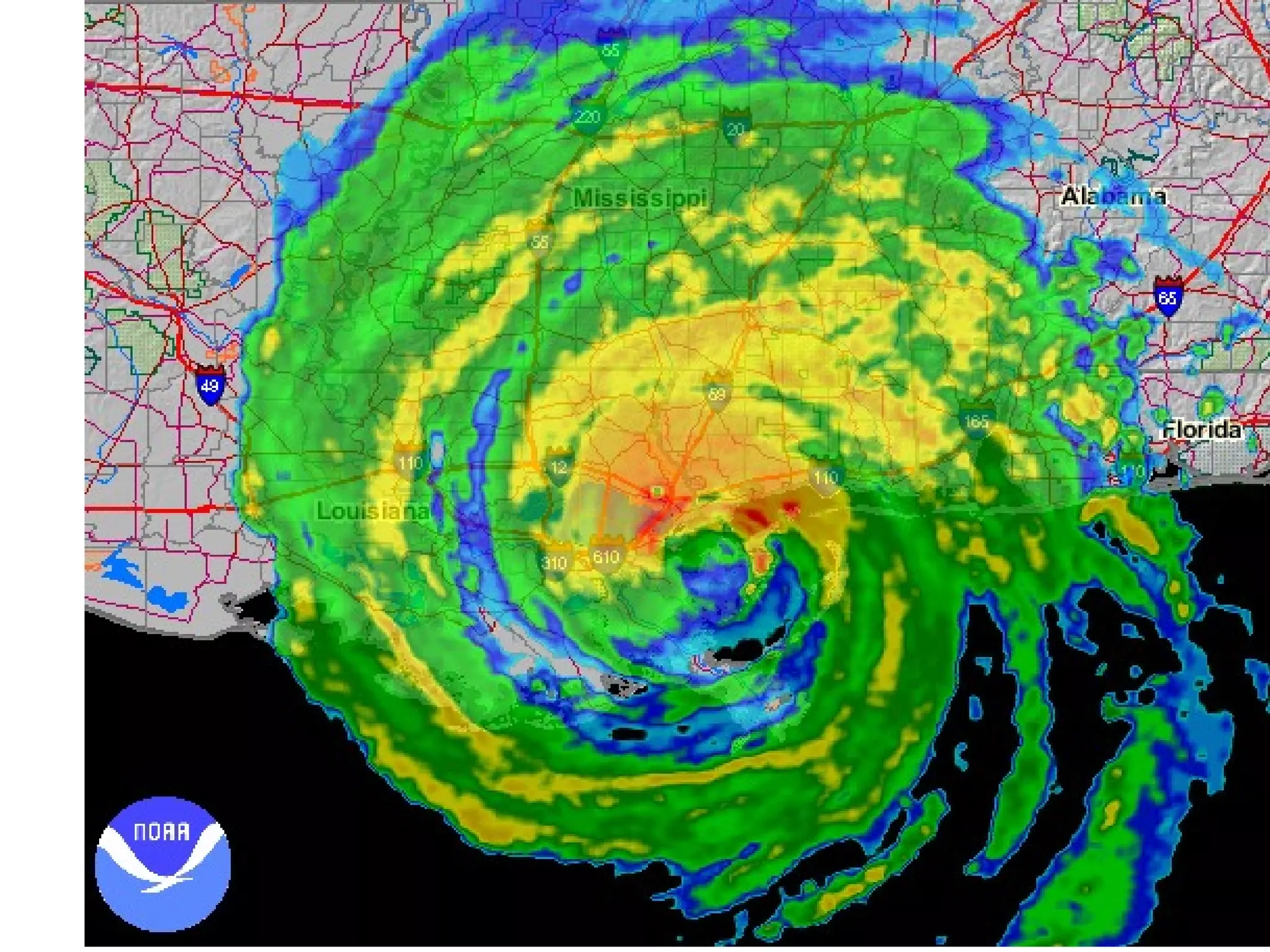
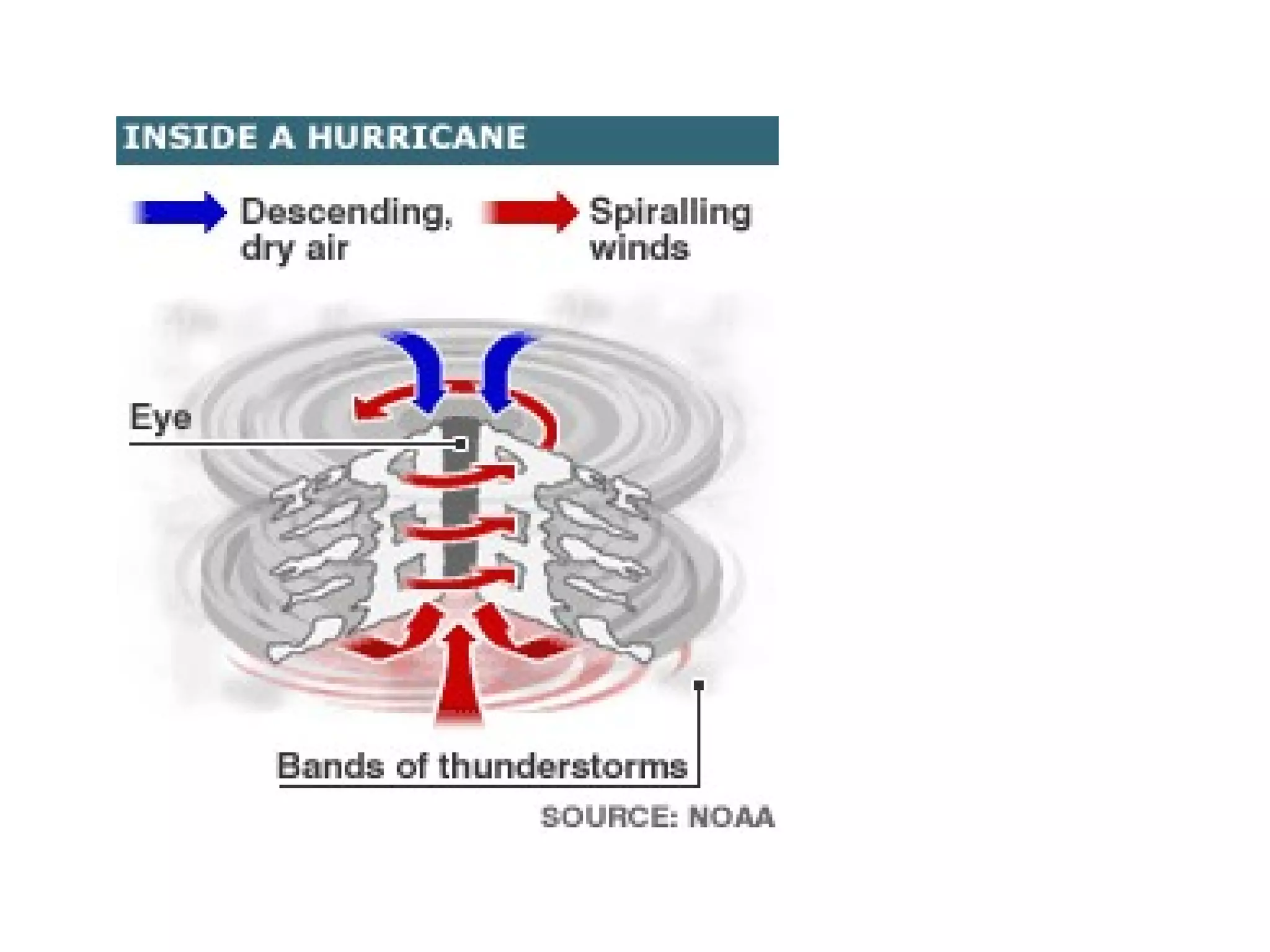
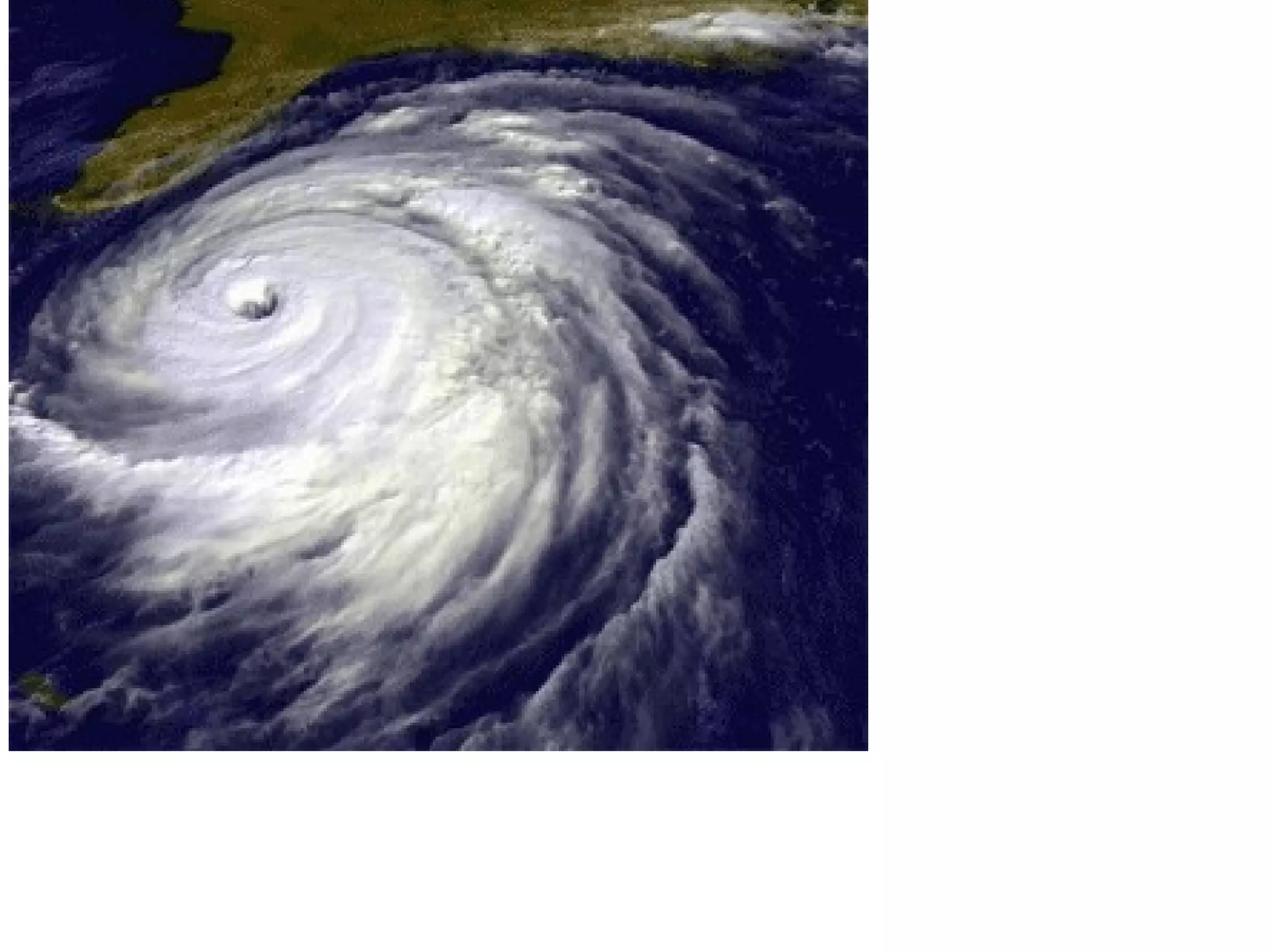
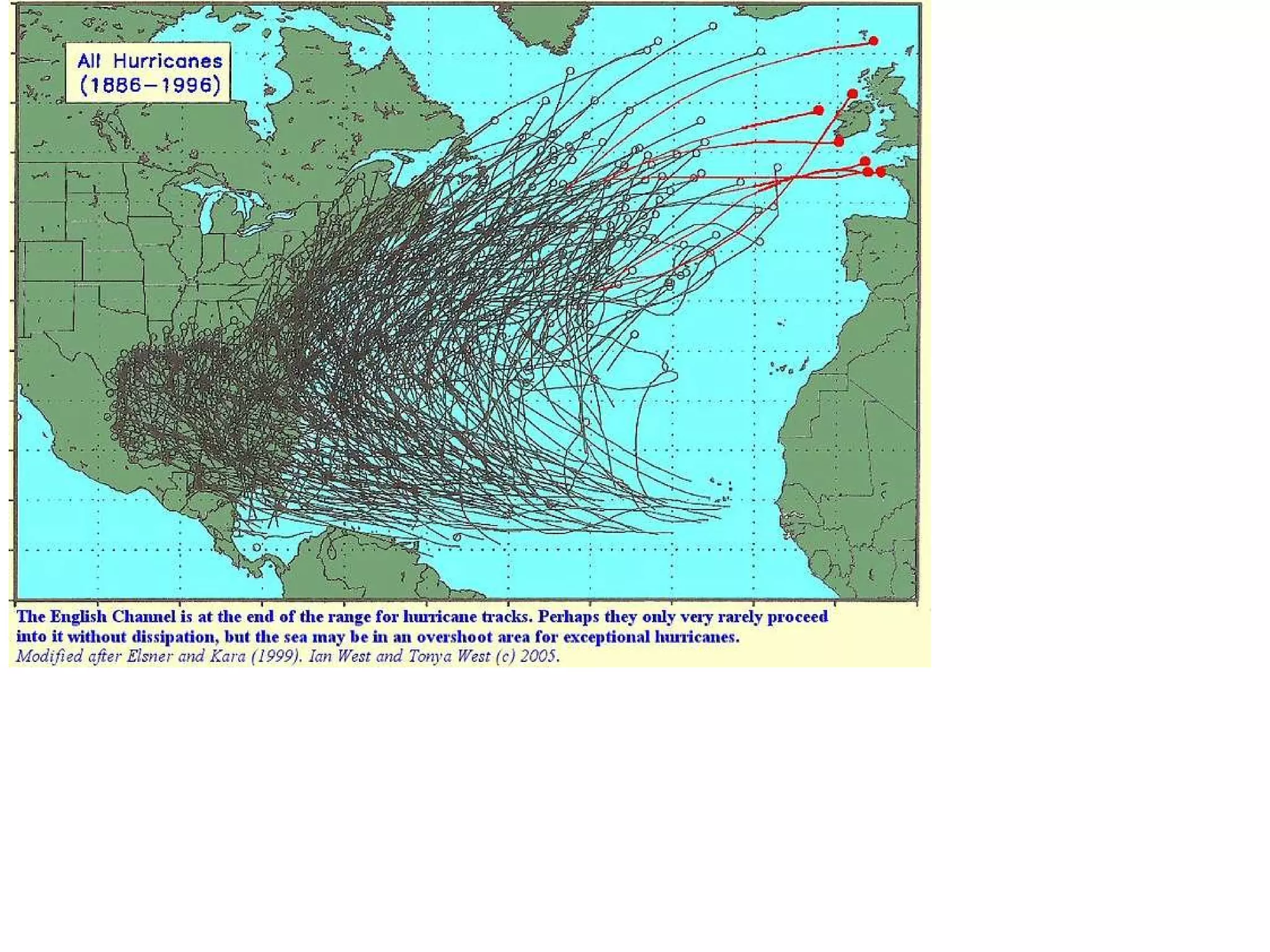
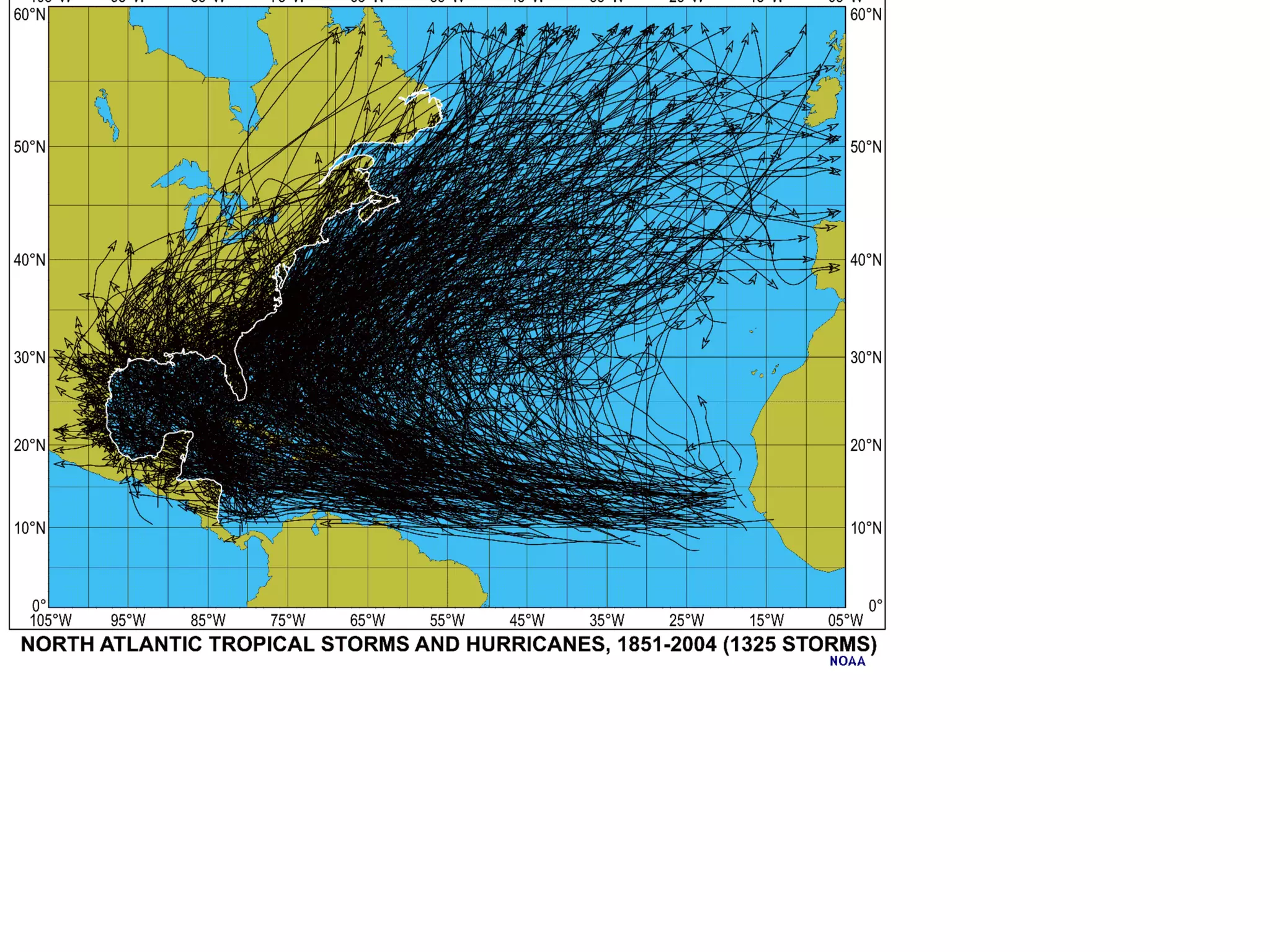
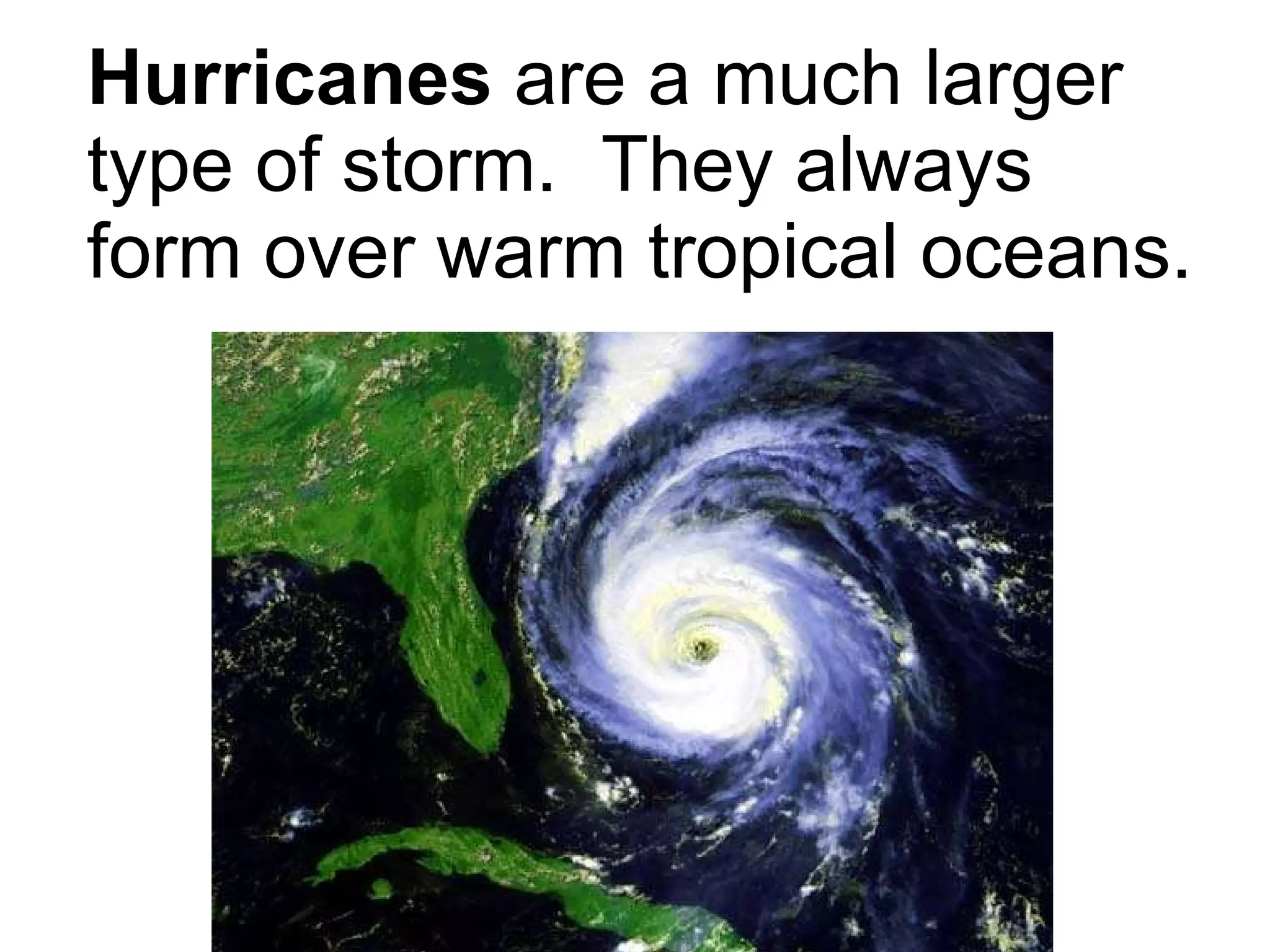
Hurricanes  are a much larger type of storm.  They always form over warm tropical oceans.

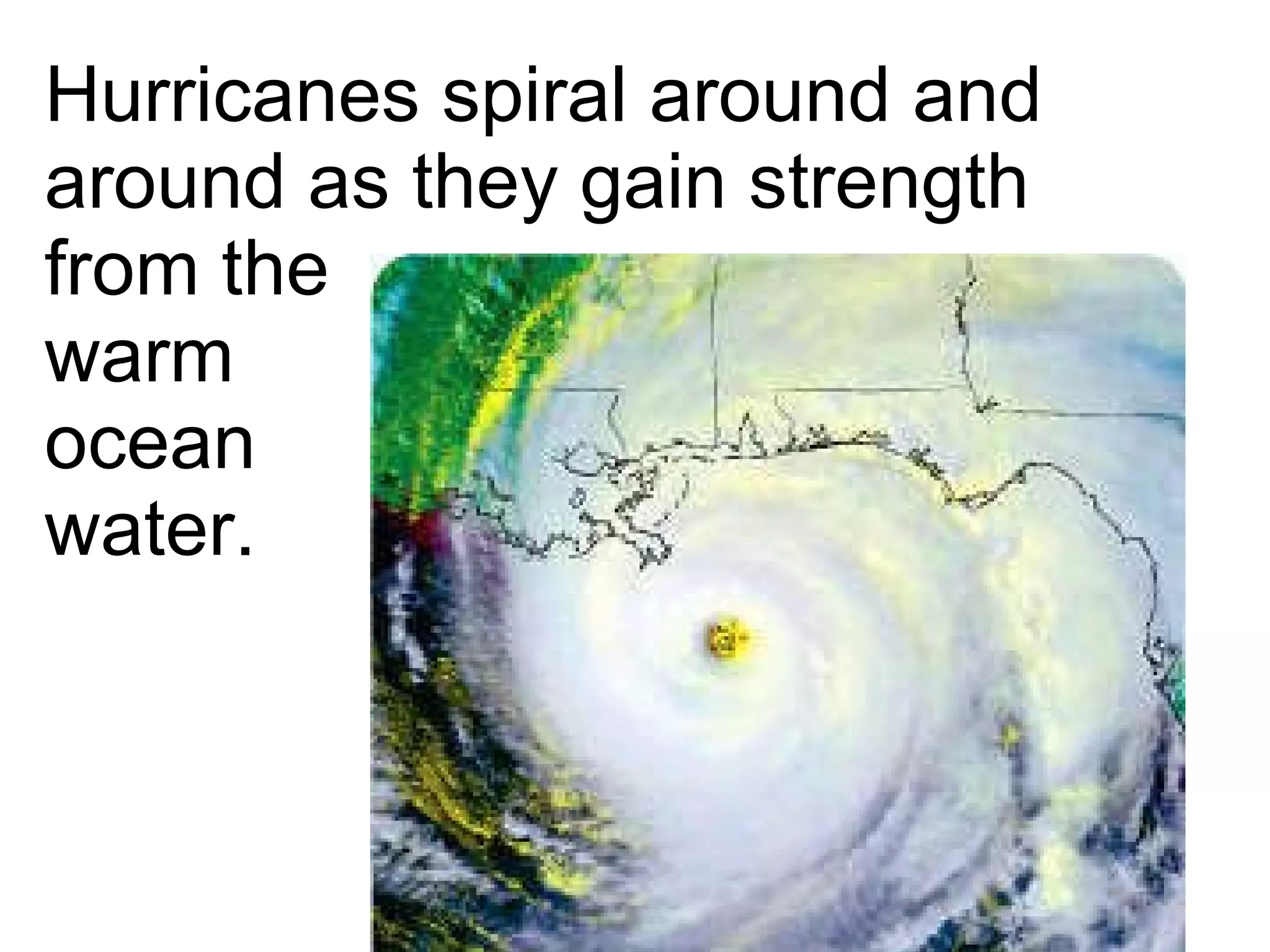
Hurricanes spiral around and around as they gain strength from the warm  ocean  water.
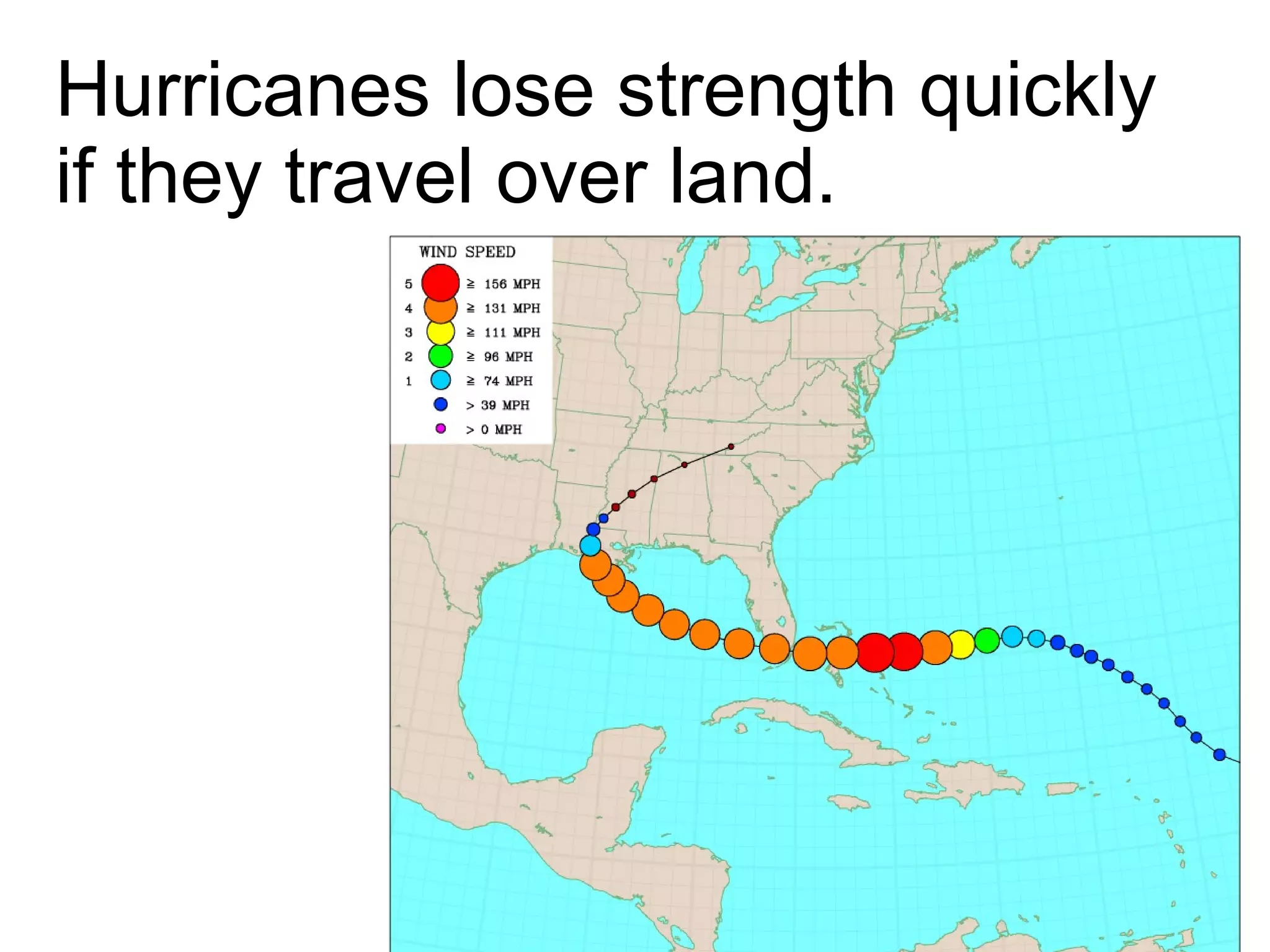
Hurricanes lose strength quickly if they travel over land.
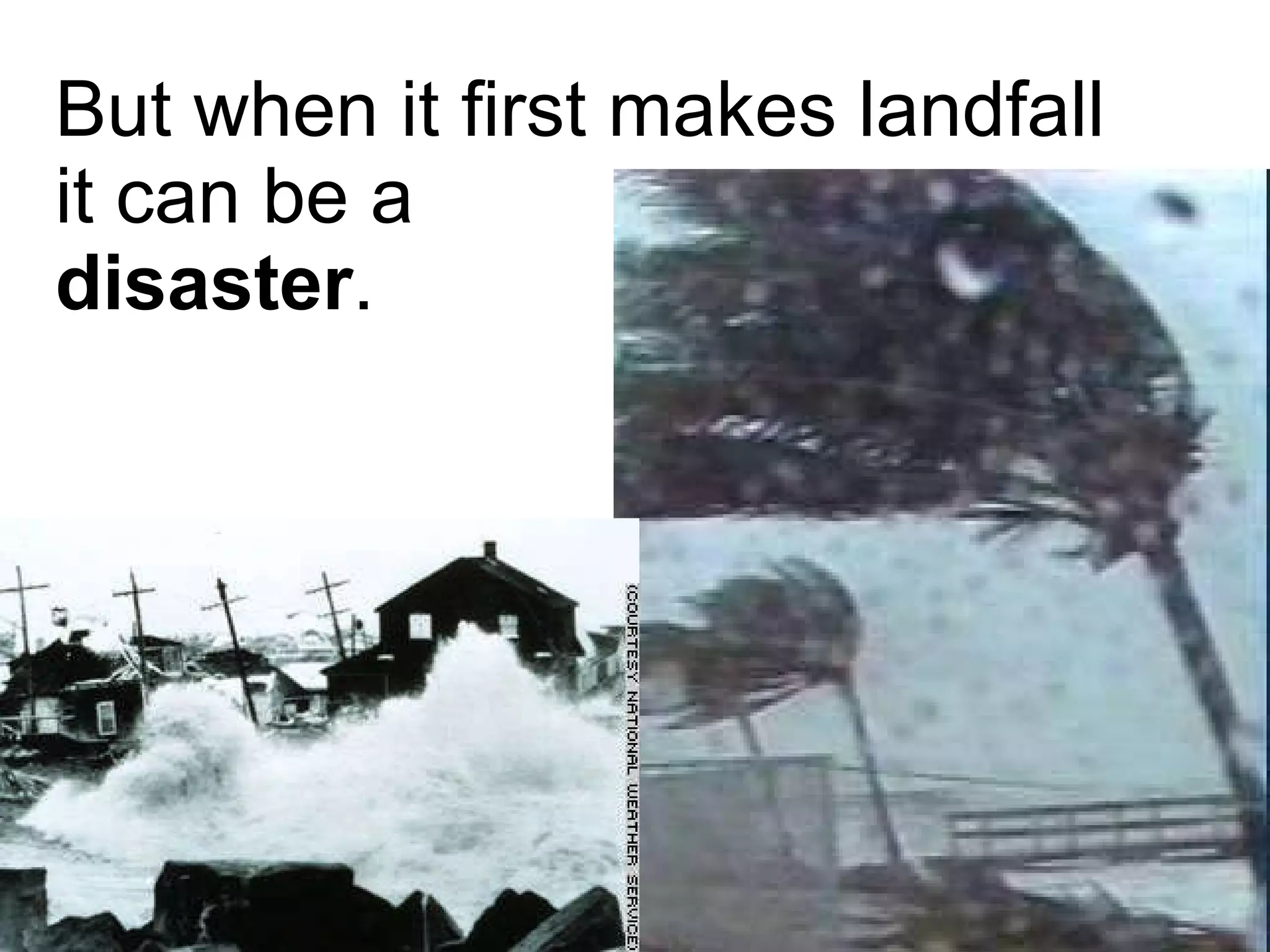
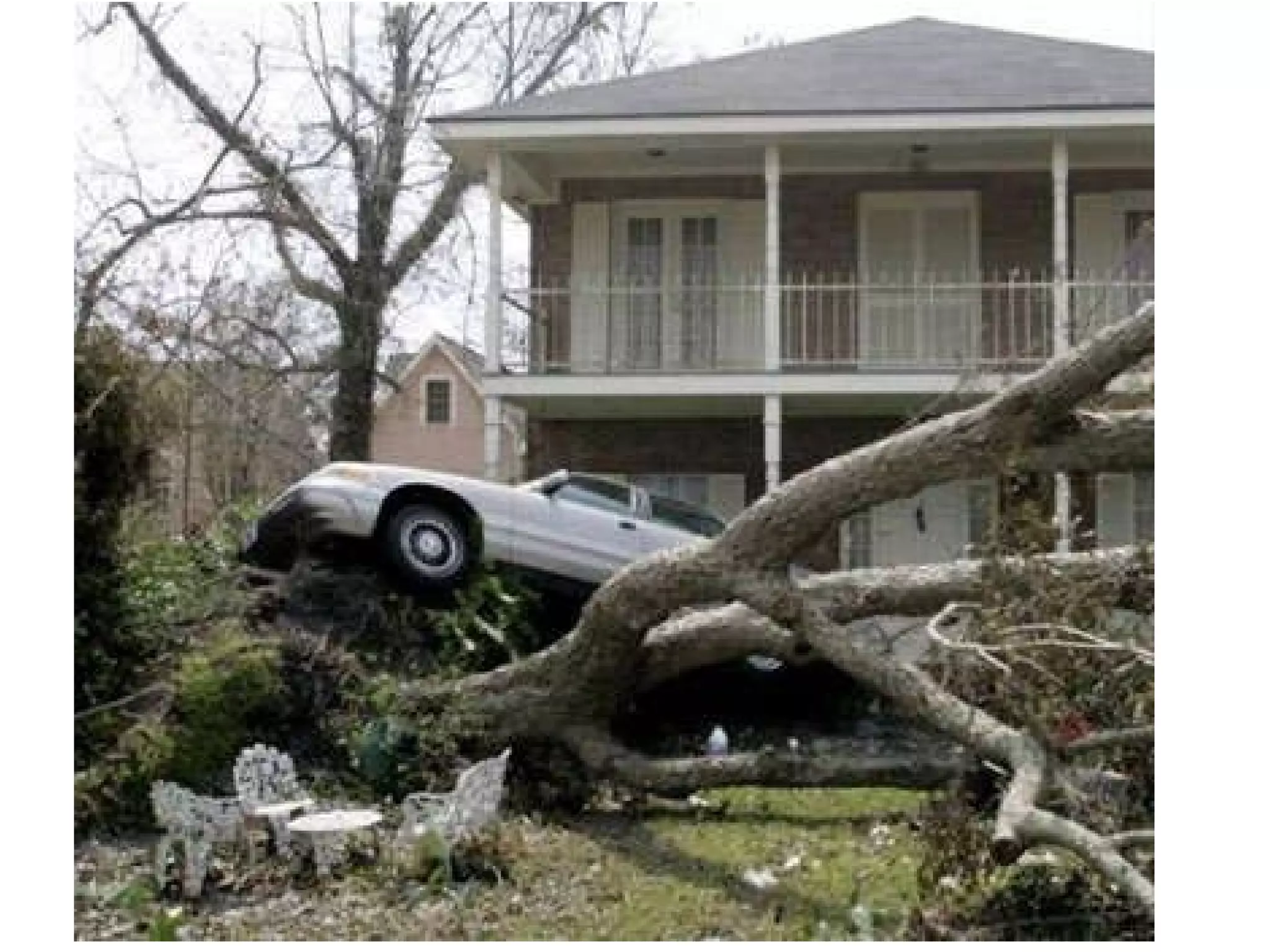
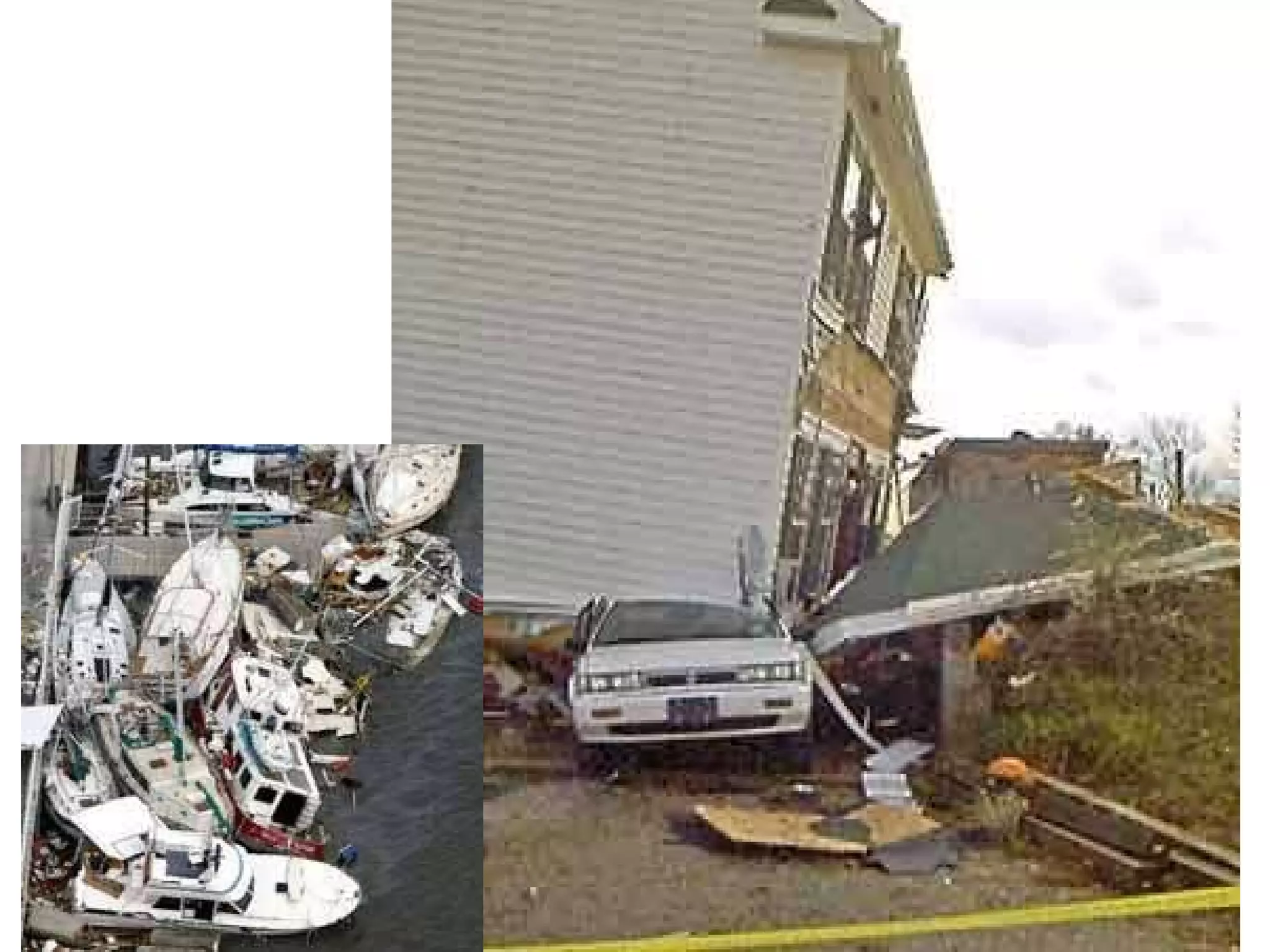
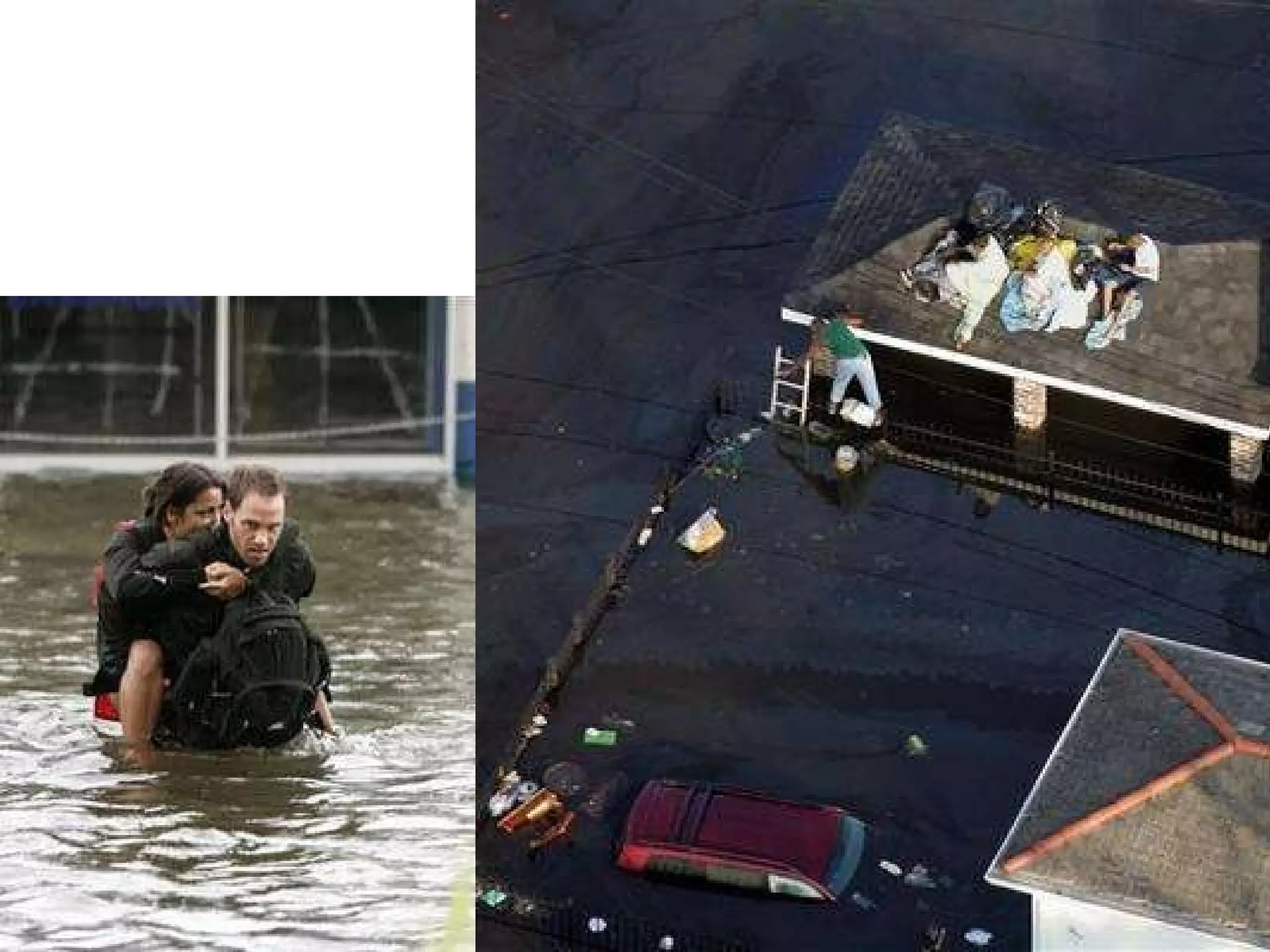
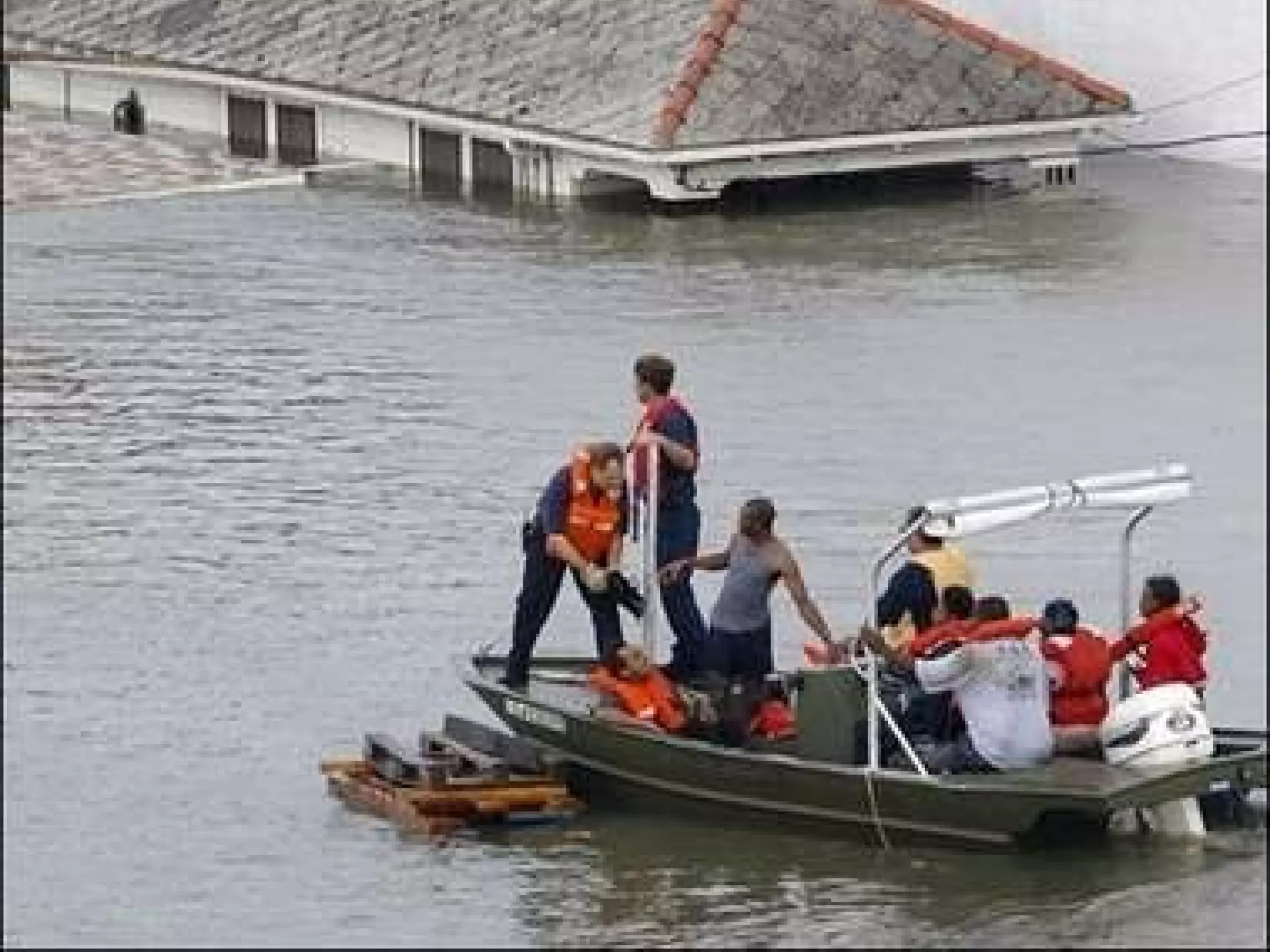
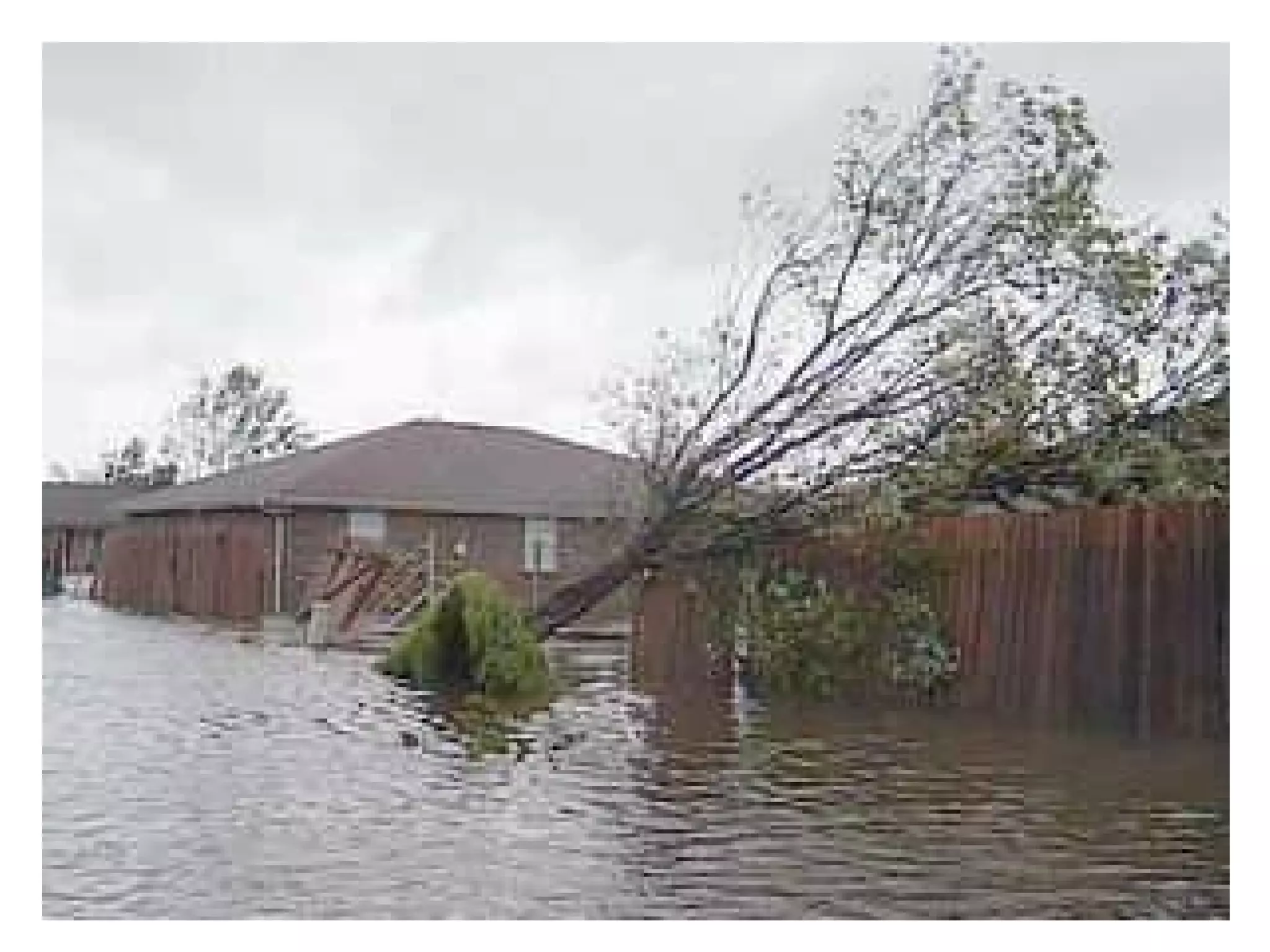
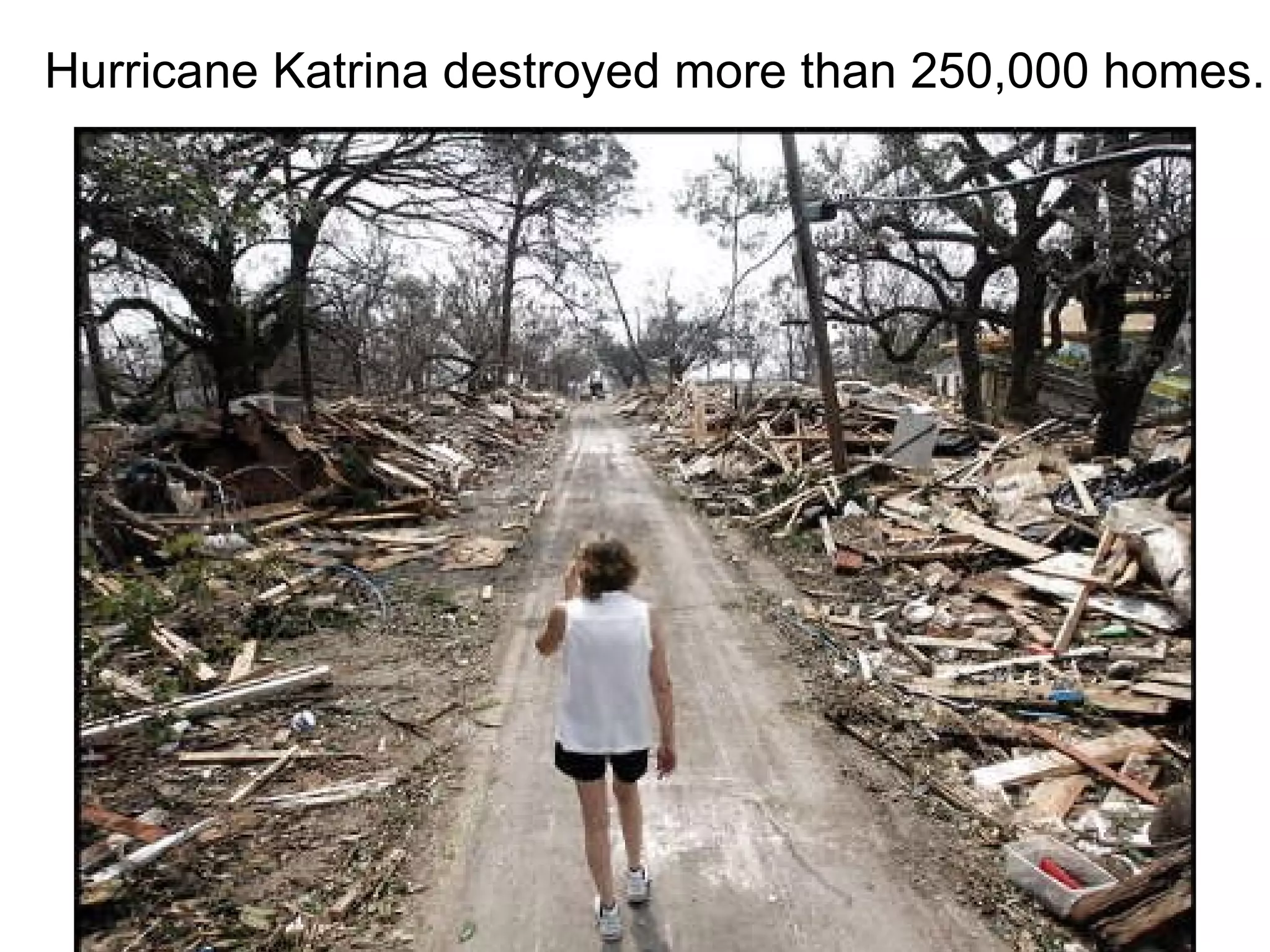
But when it first makes landfall  it can be a disaster .


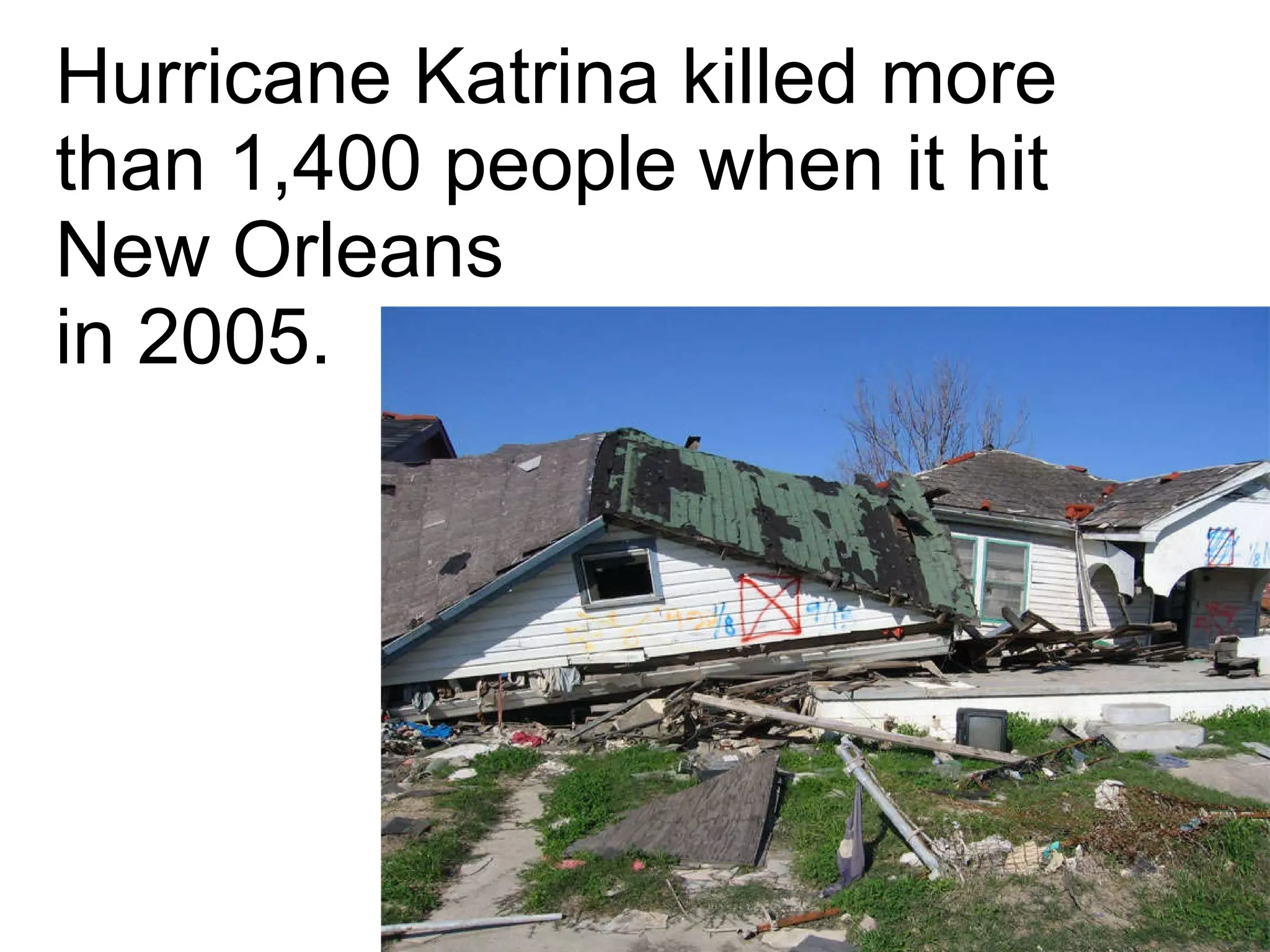
Hurricane Katrina killed more than 1,400 people when it hit New Orleans in 2005.


Hurricane Katrina destroyed more than 250,000 homes.
Hurricanes are big and always form over warm oceans.
Hurricanes lose strength quickly if they travel over land.


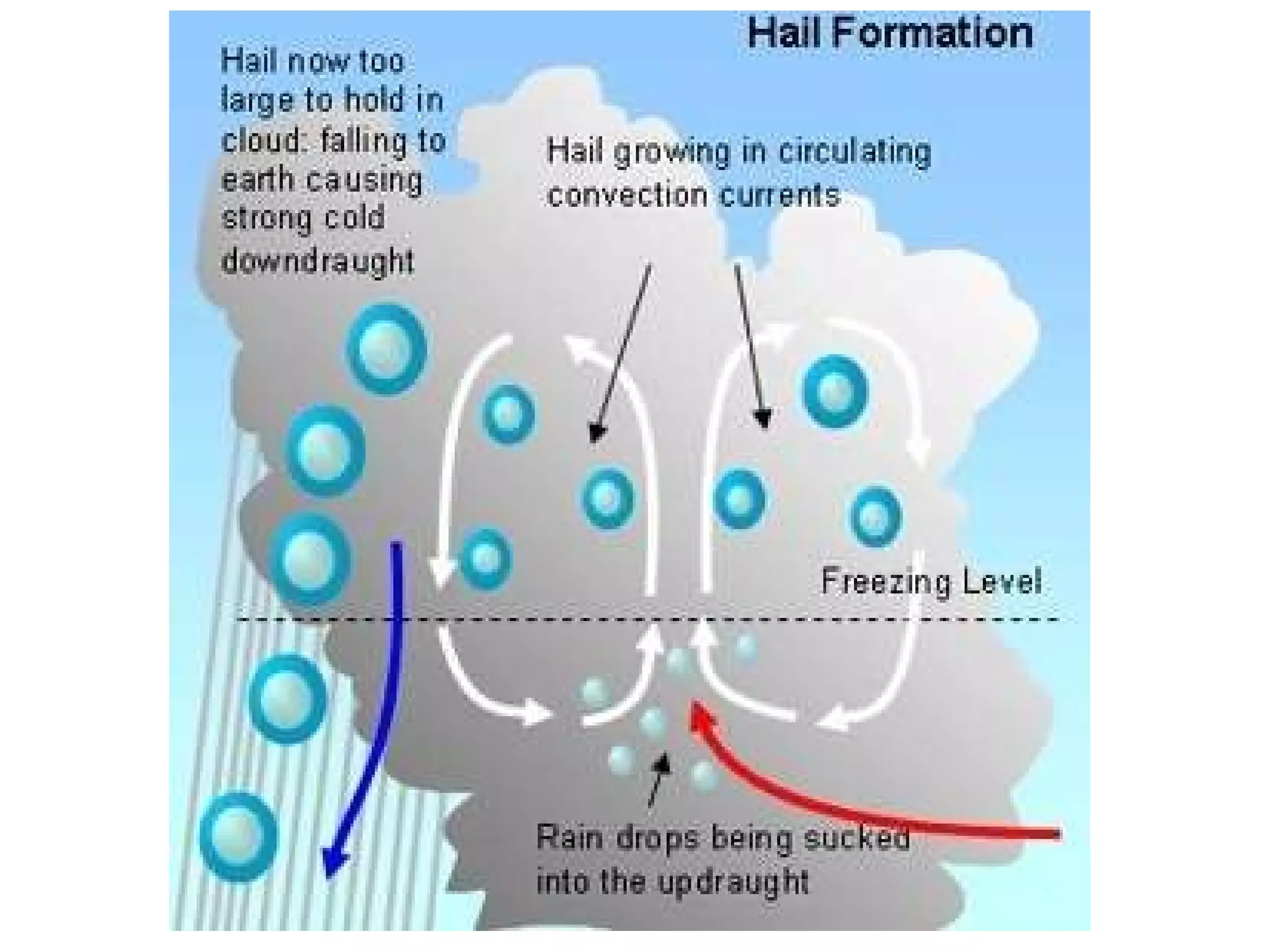
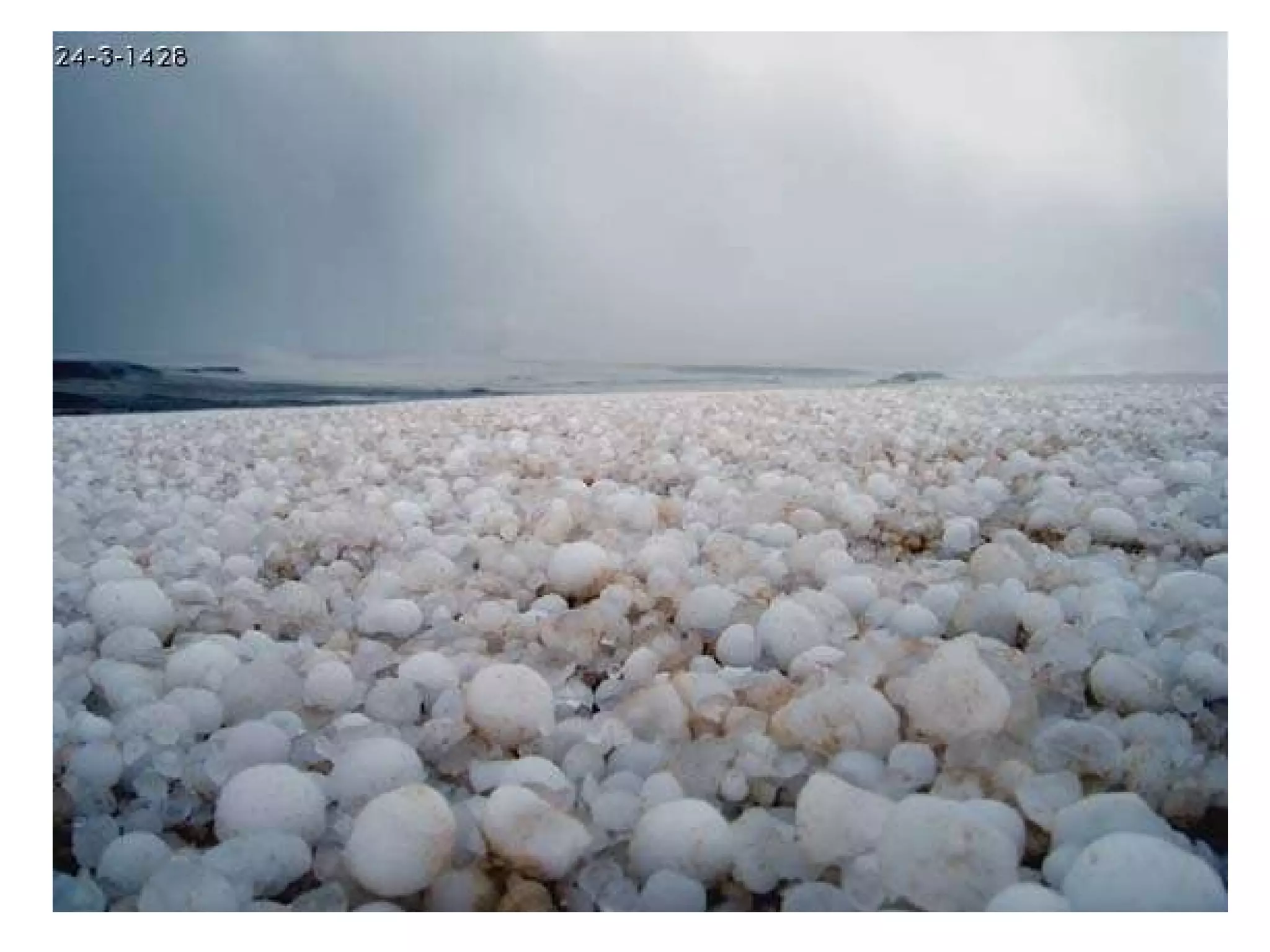
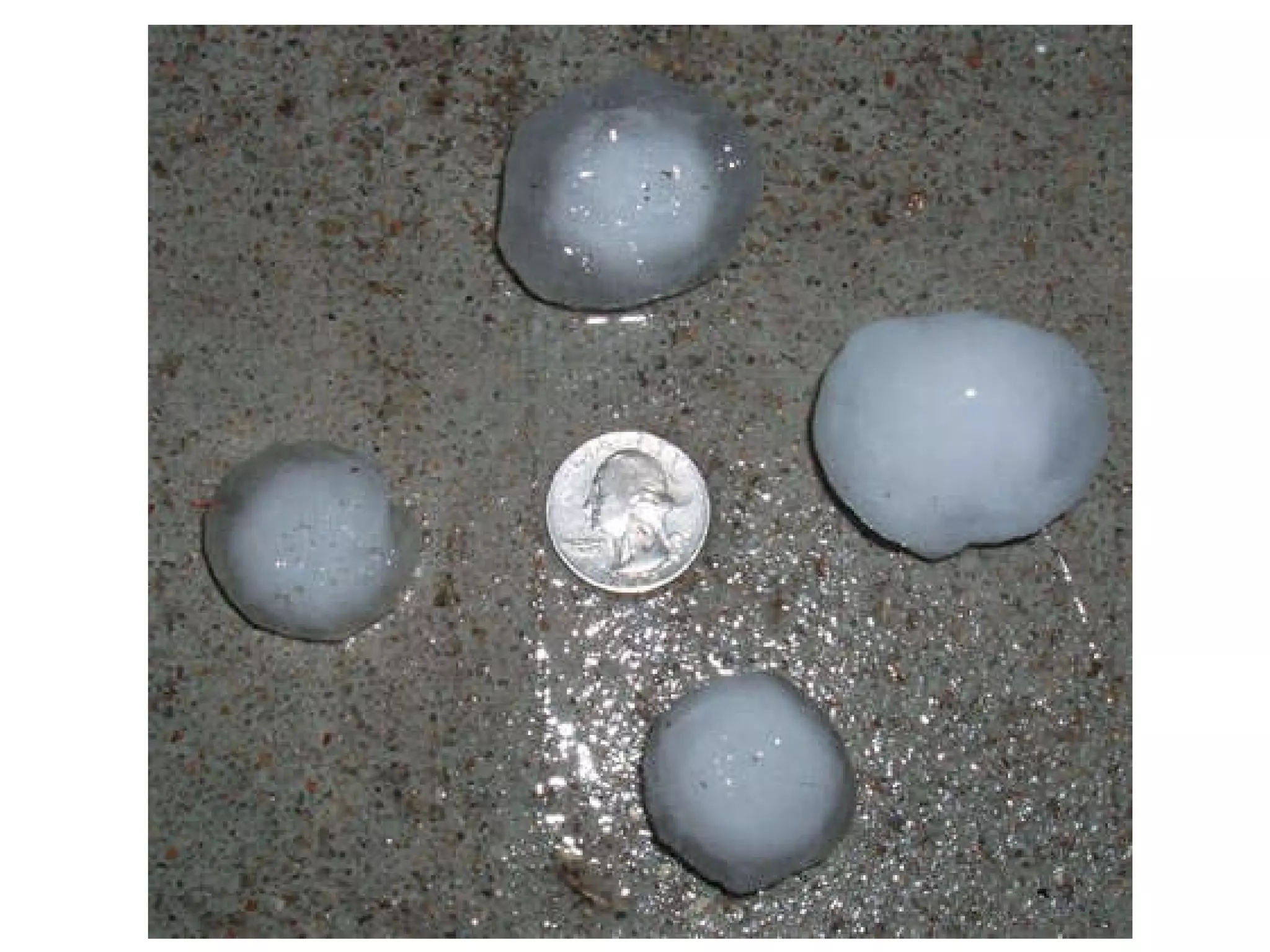
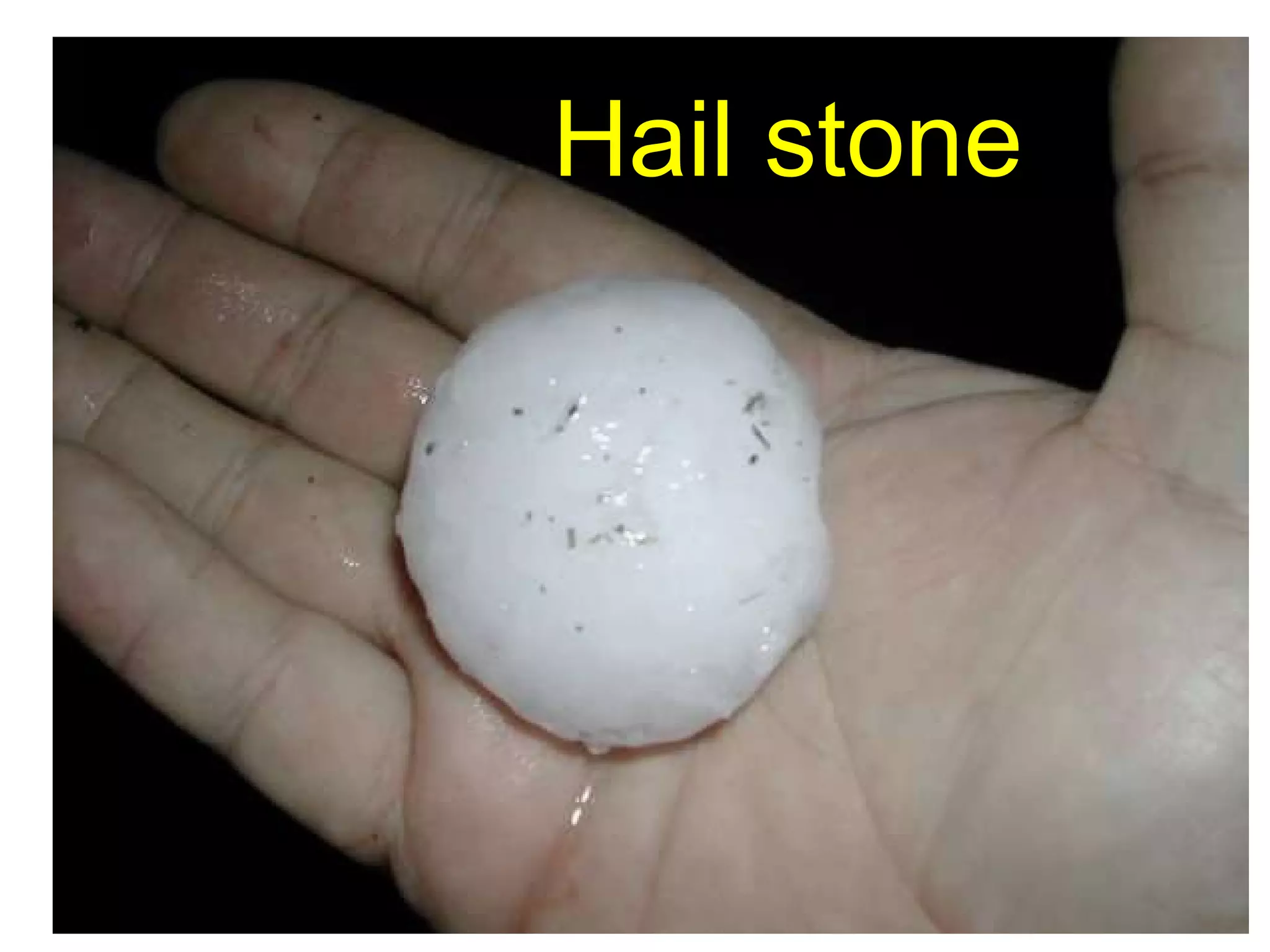
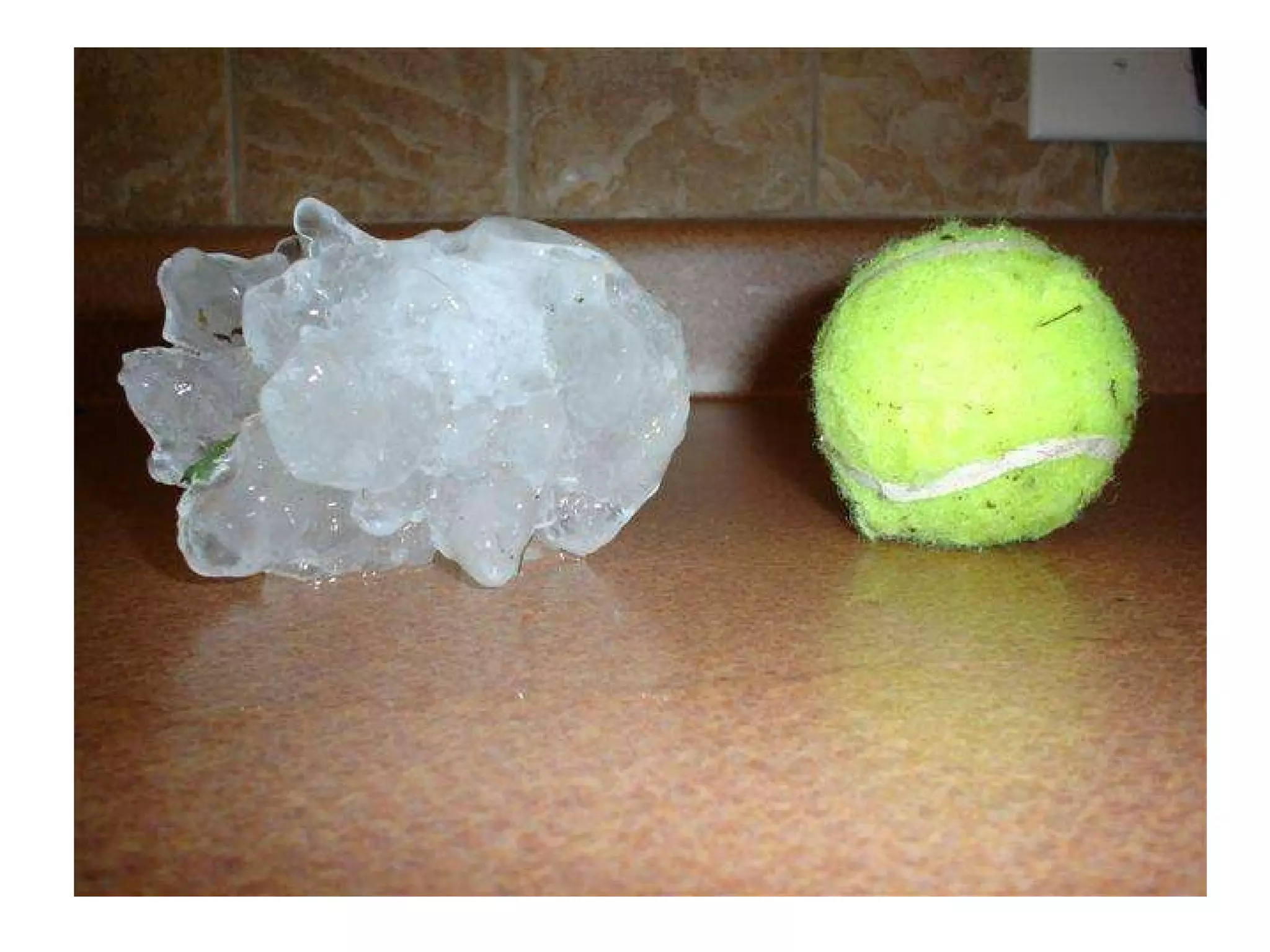
Hail stone


When a cold front collides with a warm front the warm moist is pushing upwards.


Weather Fronts, Pressure Centers And Storms