Weather Fronts and Storms 3.1 Weather changes as air masses move.
Weather Fronts and Storms The Big Idea:  The interaction of air masses causes changes in weather.  Key Concept 3.1:  Weather changes as air masses move.
Vocabulary air mass-  a large volume of air in which the temperature and humidity are nearly the same in different locations at the same altitude front-  a boundary between air masses high-pressure system-  air moving clockwise around a high-pressure center often bringing clear skies and calm winds low-pressure system-  air moving counter-clockwise around a low-pressure center often bringing rainy, stormy weather
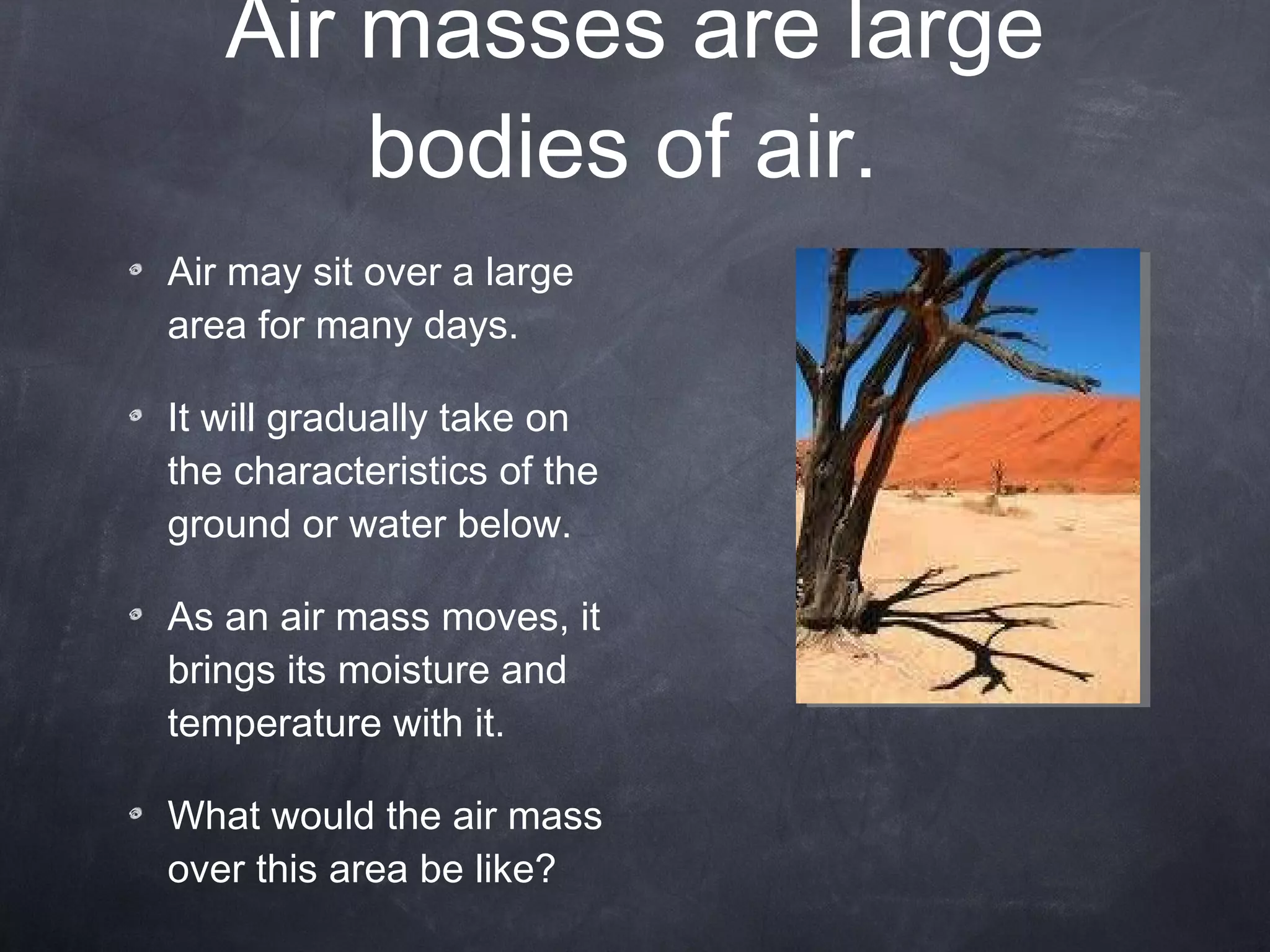
Air masses are large bodies of air.  Air may sit over a large area for many days.  It will gradually take on the characteristics of the ground or water below.  As an air mass moves, it brings its moisture and temperature with it.  What would the air mass over this area be like?
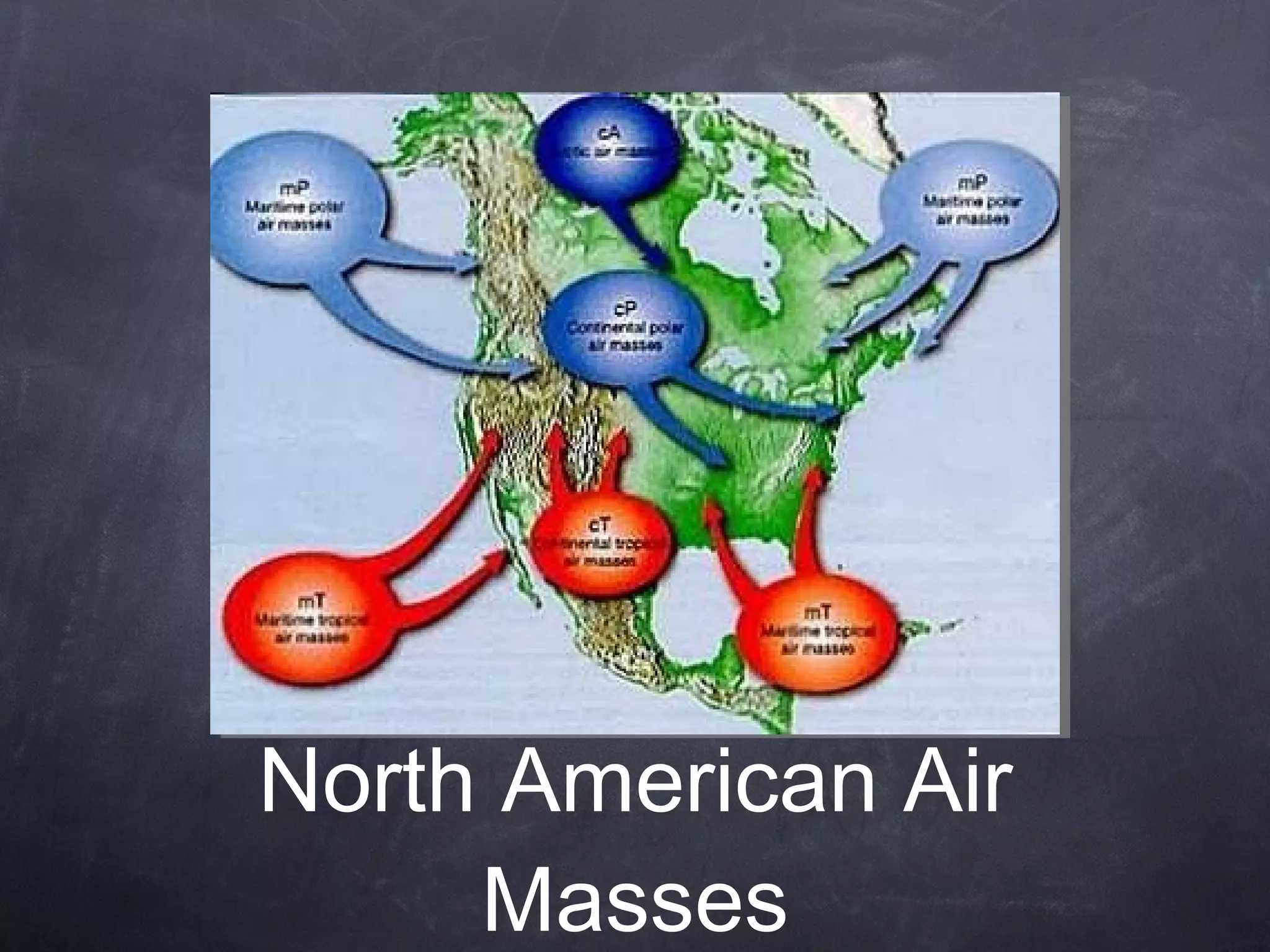
North American Air Masses The first word= formed over water or land  The second word= distance from equator the air mass formed Continental air masses: form over land; air becomes dry, loses moisture to land below.  Maritime air masses:  form over water; air becomes moist as it gains moisture from water below.  Tropical air mass: form near equator; warm air Polar air mass: form far from equator; cool air
North American Air Masses
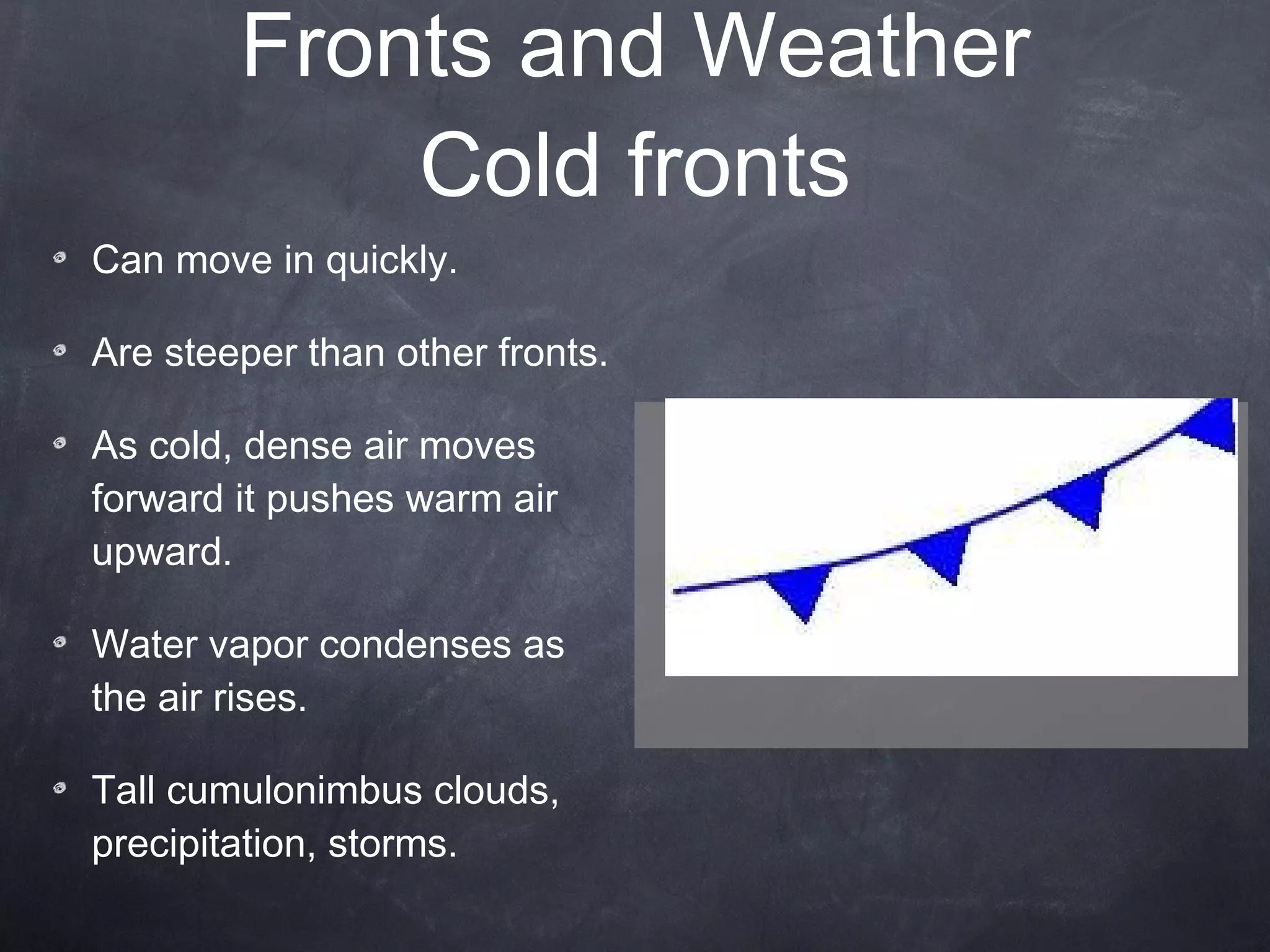
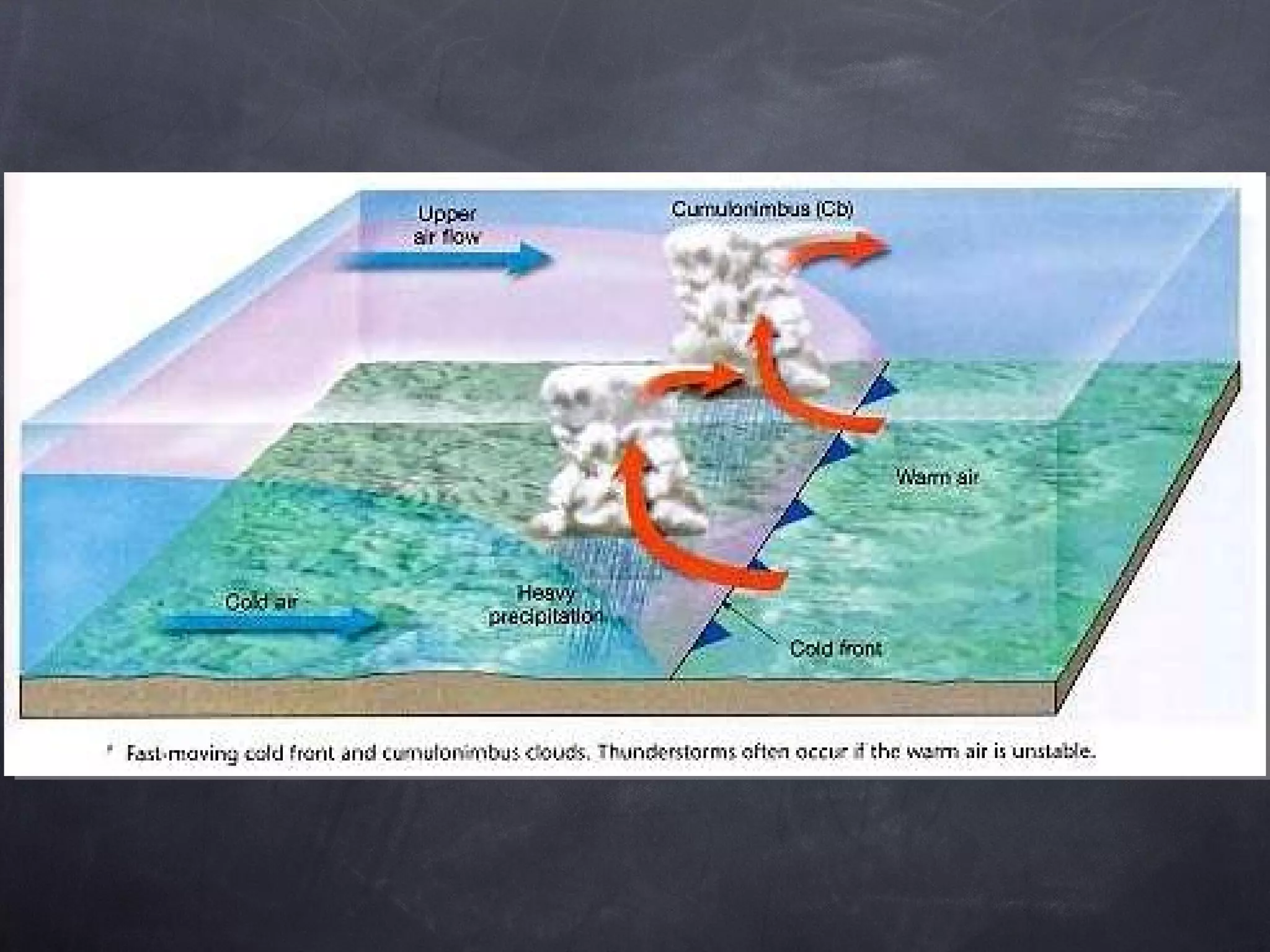
Fronts and Weather Cold fronts Can move in quickly.  Are steeper than other fronts.  As cold, dense air moves forward it pushes warm air upward.  Water vapor condenses as the air rises.  Tall cumulonimbus clouds, precipitation, storms.
 
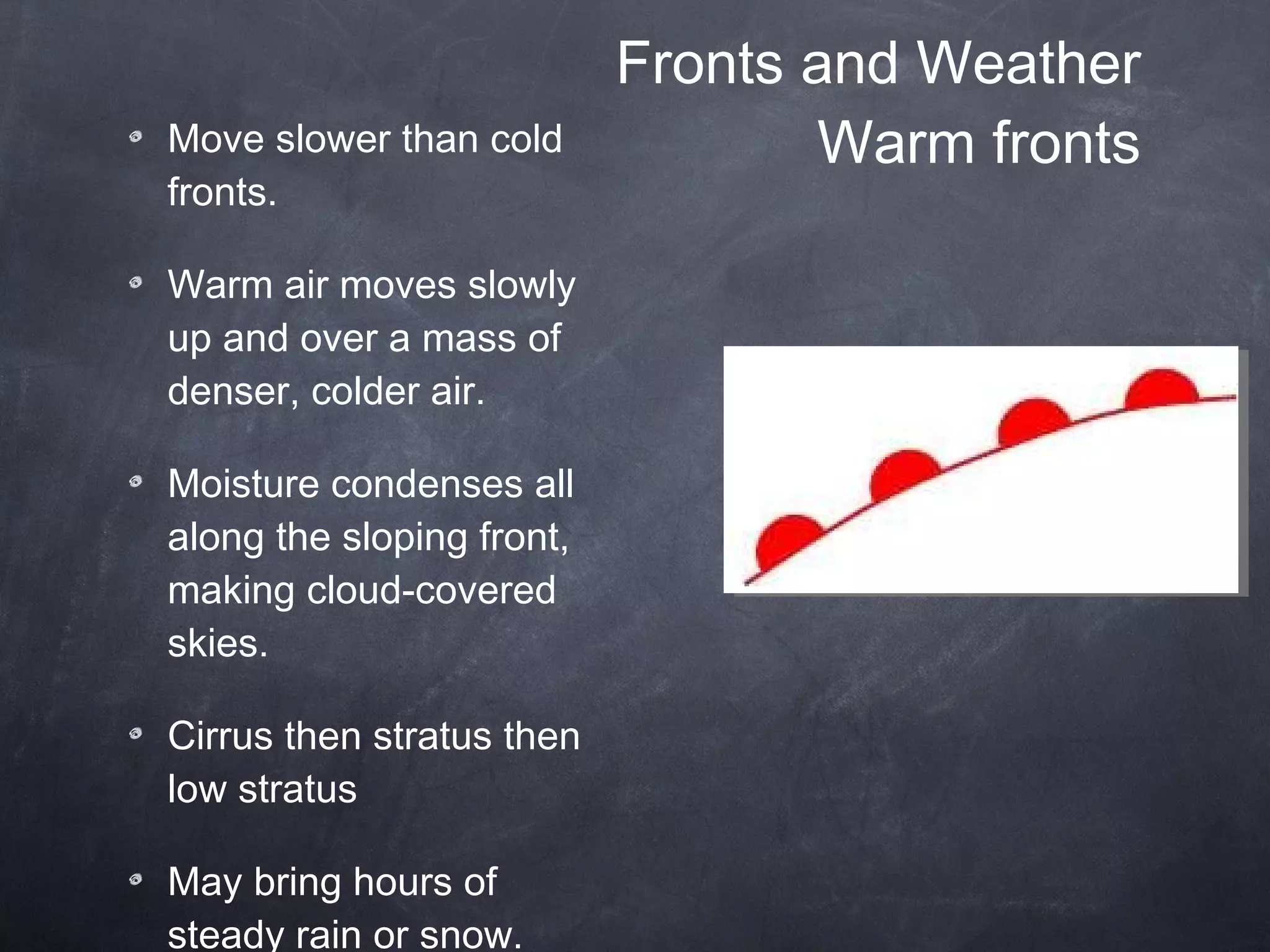
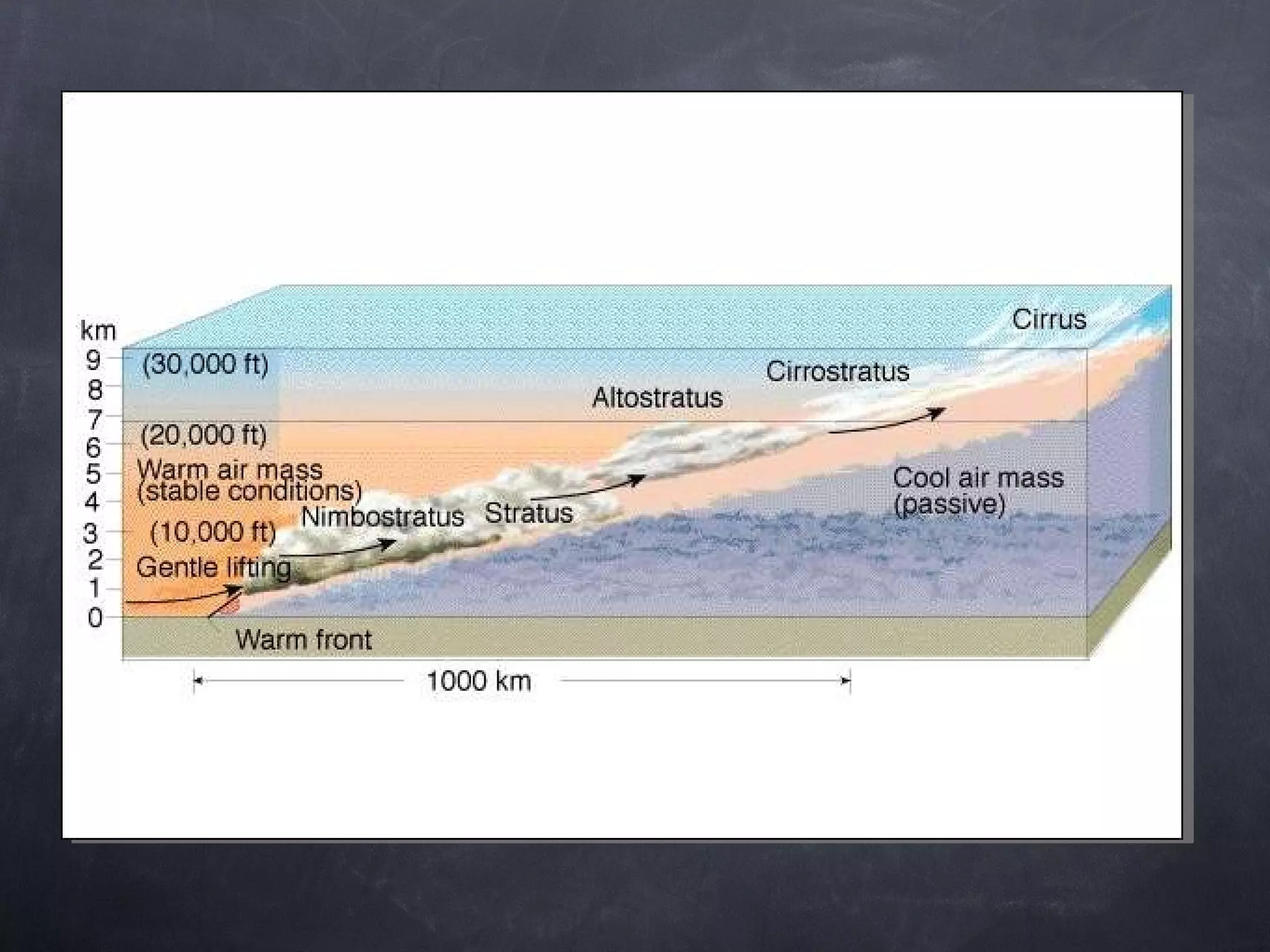
Fronts and Weather Warm fronts Move slower than cold fronts.  Warm air moves slowly up and over a mass of denser, colder air.  Moisture condenses all along the sloping front, making cloud-covered skies.  Cirrus then stratus then low stratus  May bring hours of steady rain or snow.
 
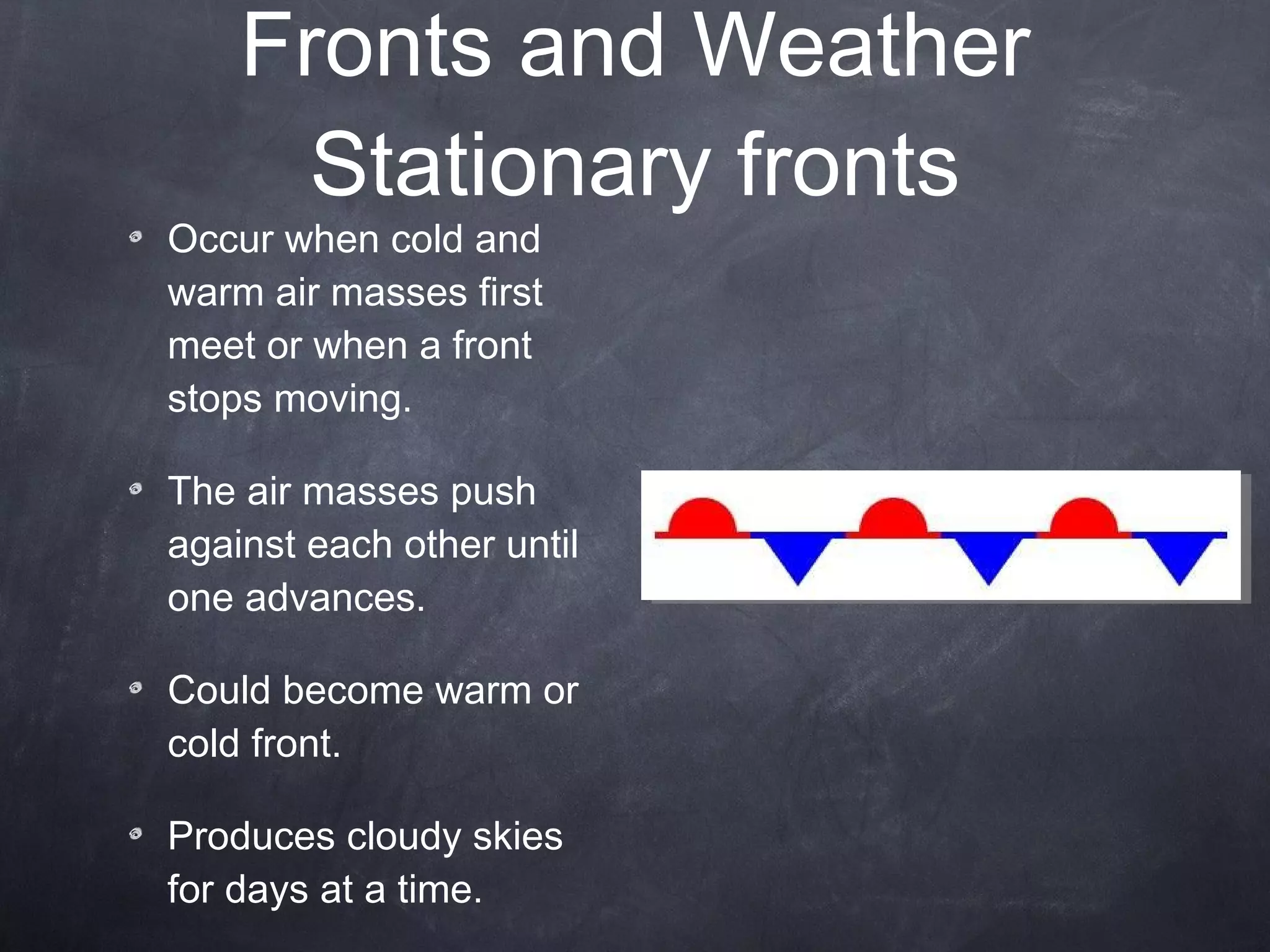
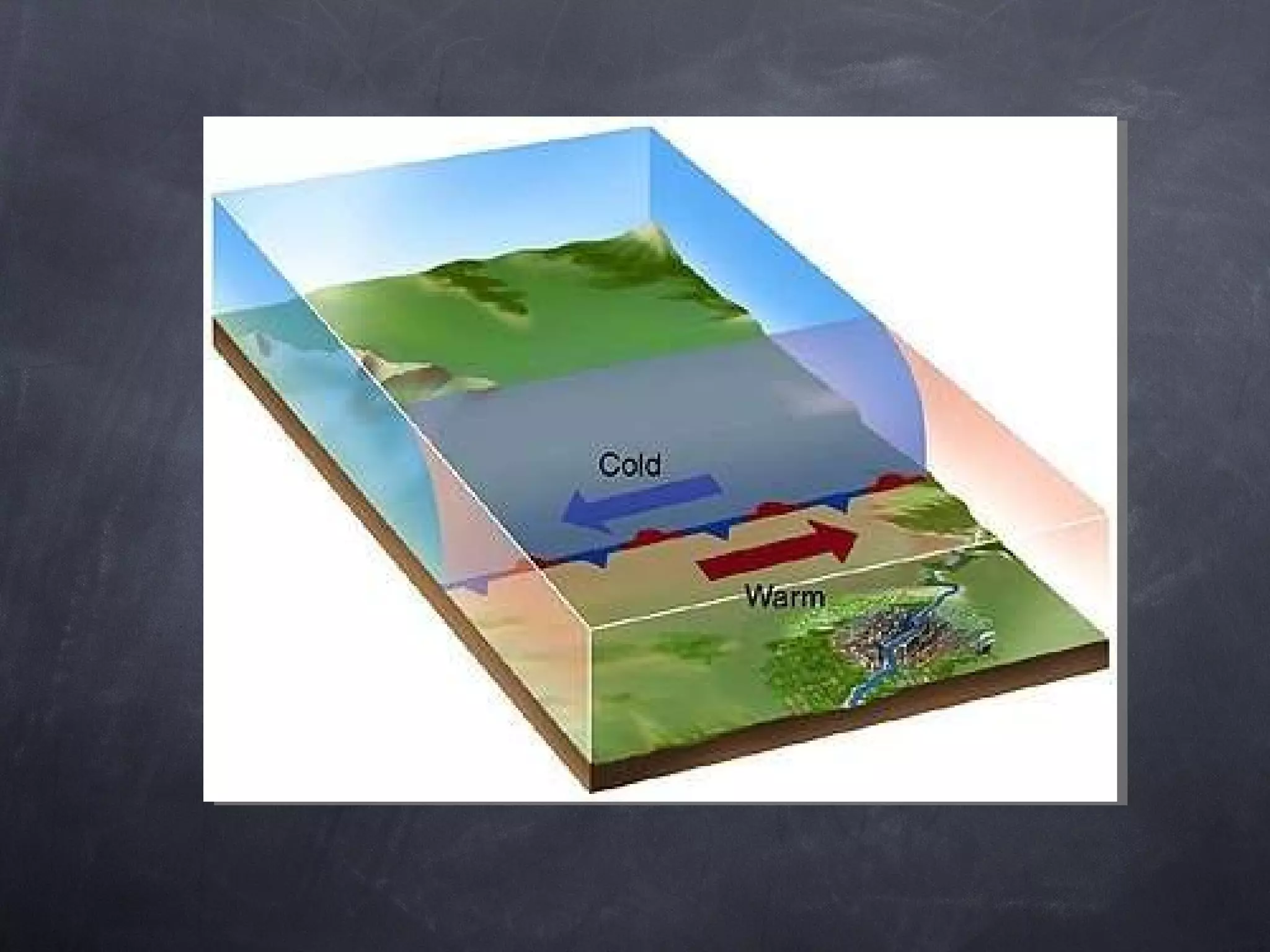
Fronts and Weather Stationary fronts Occur when cold and warm air masses first meet or when a front stops moving.  The air masses push against each other until one advances.  Could become warm or cold front.  Produces cloudy skies for days at a time.
 
The end.... Happy times!

Ea 3.1 weather fronts and storms

  • 1.
    Weather Fronts andStorms 3.1 Weather changes as air masses move.
  • 2.
    Weather Fronts andStorms The Big Idea: The interaction of air masses causes changes in weather. Key Concept 3.1: Weather changes as air masses move.
  • 3.
    Vocabulary air mass- a large volume of air in which the temperature and humidity are nearly the same in different locations at the same altitude front- a boundary between air masses high-pressure system- air moving clockwise around a high-pressure center often bringing clear skies and calm winds low-pressure system- air moving counter-clockwise around a low-pressure center often bringing rainy, stormy weather
  • 4.
    Air masses arelarge bodies of air. Air may sit over a large area for many days. It will gradually take on the characteristics of the ground or water below. As an air mass moves, it brings its moisture and temperature with it. What would the air mass over this area be like?
  • 5.
    North American AirMasses The first word= formed over water or land The second word= distance from equator the air mass formed Continental air masses: form over land; air becomes dry, loses moisture to land below. Maritime air masses: form over water; air becomes moist as it gains moisture from water below. Tropical air mass: form near equator; warm air Polar air mass: form far from equator; cool air
  • 6.
  • 7.
    Fronts and WeatherCold fronts Can move in quickly. Are steeper than other fronts. As cold, dense air moves forward it pushes warm air upward. Water vapor condenses as the air rises. Tall cumulonimbus clouds, precipitation, storms.
  • 8.
  • 9.
    Fronts and WeatherWarm fronts Move slower than cold fronts. Warm air moves slowly up and over a mass of denser, colder air. Moisture condenses all along the sloping front, making cloud-covered skies. Cirrus then stratus then low stratus May bring hours of steady rain or snow.
  • 10.
  • 11.
    Fronts and WeatherStationary fronts Occur when cold and warm air masses first meet or when a front stops moving. The air masses push against each other until one advances. Could become warm or cold front. Produces cloudy skies for days at a time.
  • 12.
  • 13.