Weather Maps
• The Earth is surrounded by a
blanket of gas about 1,000 km
thick
• It is the atmosphere that helps
keep Earth at a viable
temperature for life to be
sustained.
• What goes on with the
movement of gas in the
atmosphere also has a much
more obvious effect at local
level; it creates weather!
Weather
• The properties of the atmosphere, such as
temperature, humidity, and air pressure,
largely determine the weather.
• Scientists are able to predict the weather by
observing and measuring these properties.
• Weather often occurs as a result of differences
in temperature and pressure from one place to
another.
Local Weather
• Local Weather is influenced by
atmospheric and surface conditions in the
local area.
• Winds blow across the US from the west,
bringing rainy weather to northern states
west of the Rockies.
Local Weather
• Local weather is also influenced by global
atmospheric conditions. Changes that
occur in the atmosphere thousands of
miles away can affect the weather.
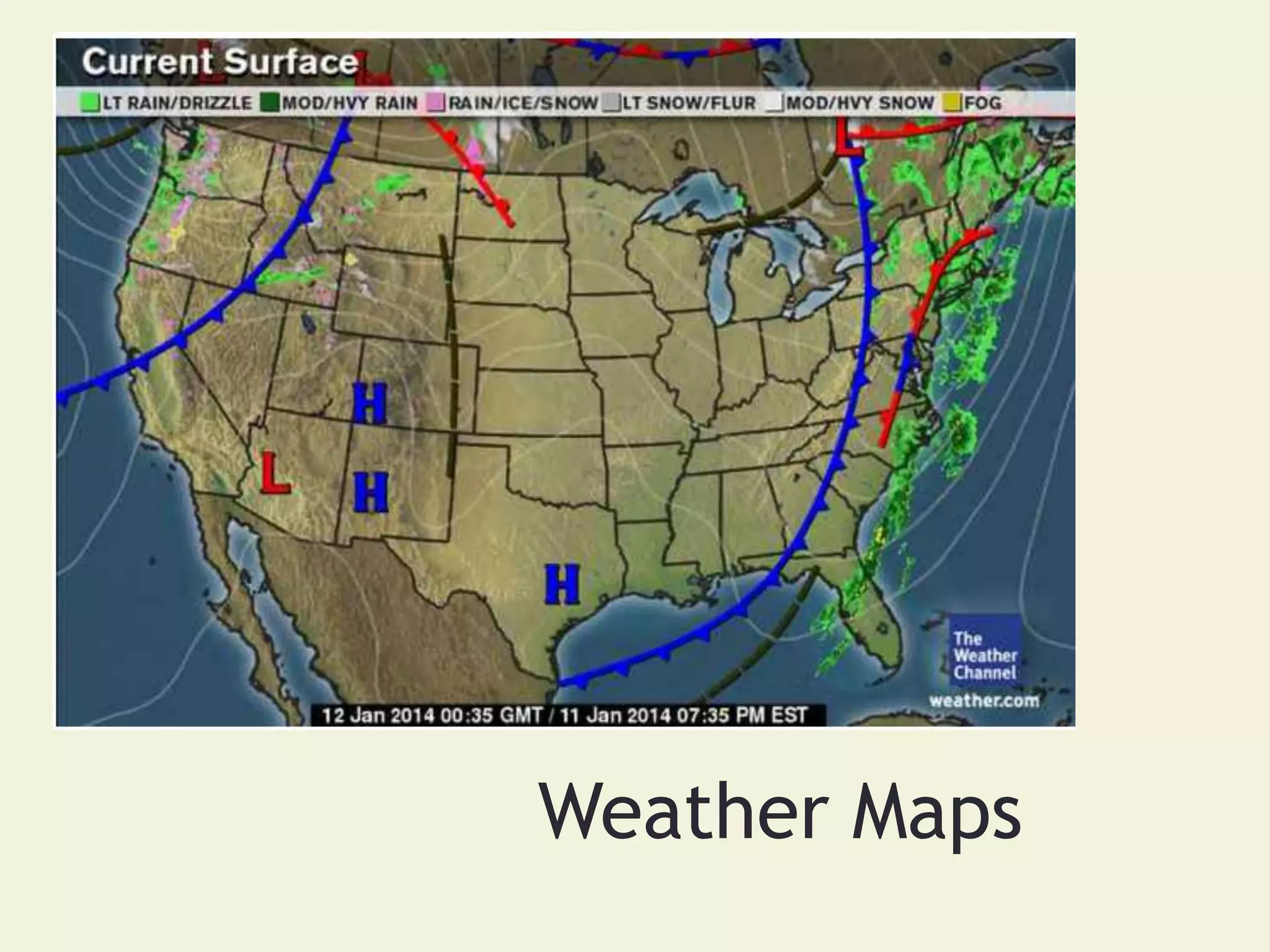
Weather Maps
• Weather maps are used to show
current weather conditions in an effort
to predict future weather conditions.
• You need to know what each symbol
means and how to interpret them to
forecast the weather.
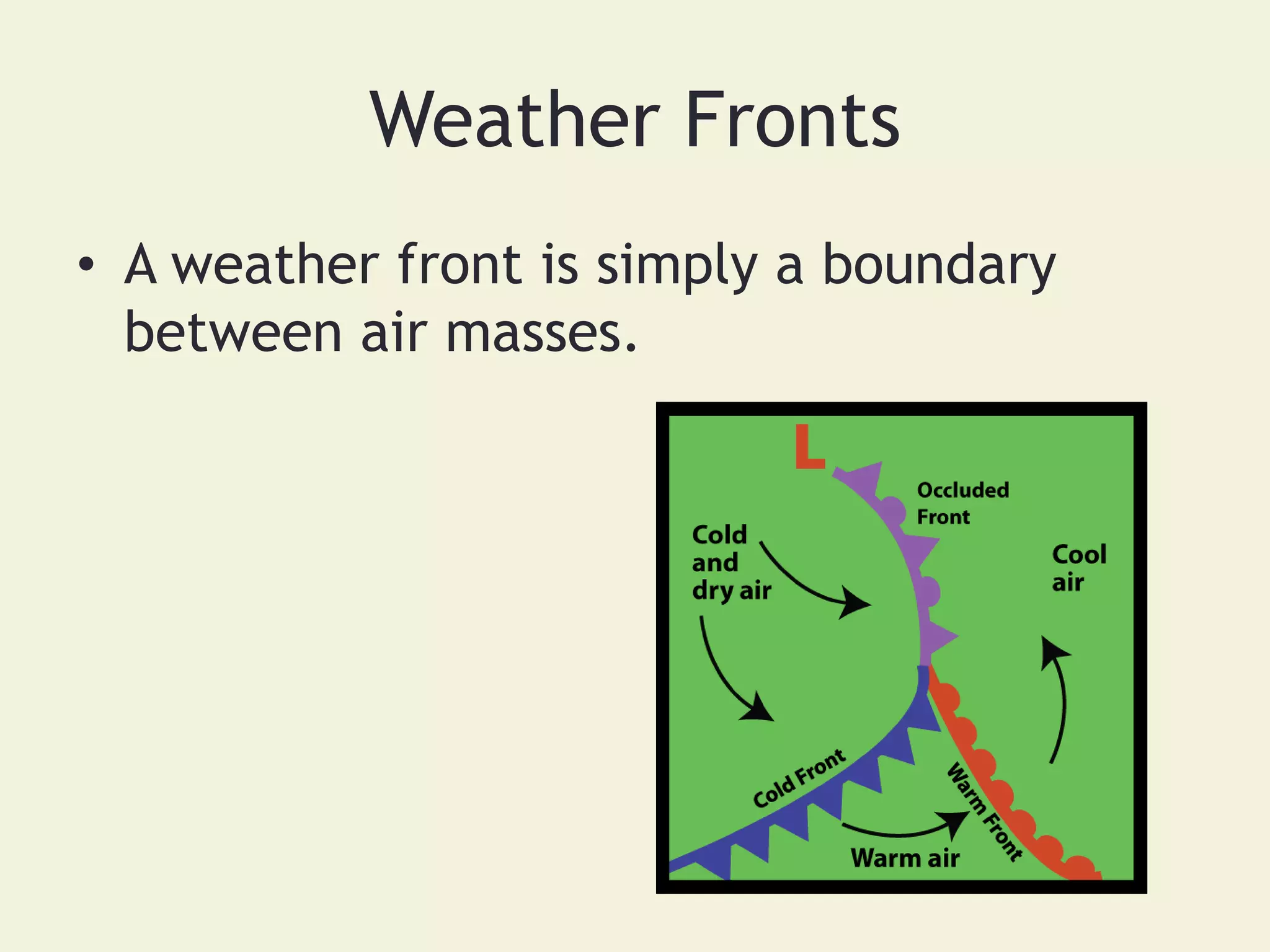
Weather Fronts
• A weather front is simply a boundary
between air masses.
Cold Front
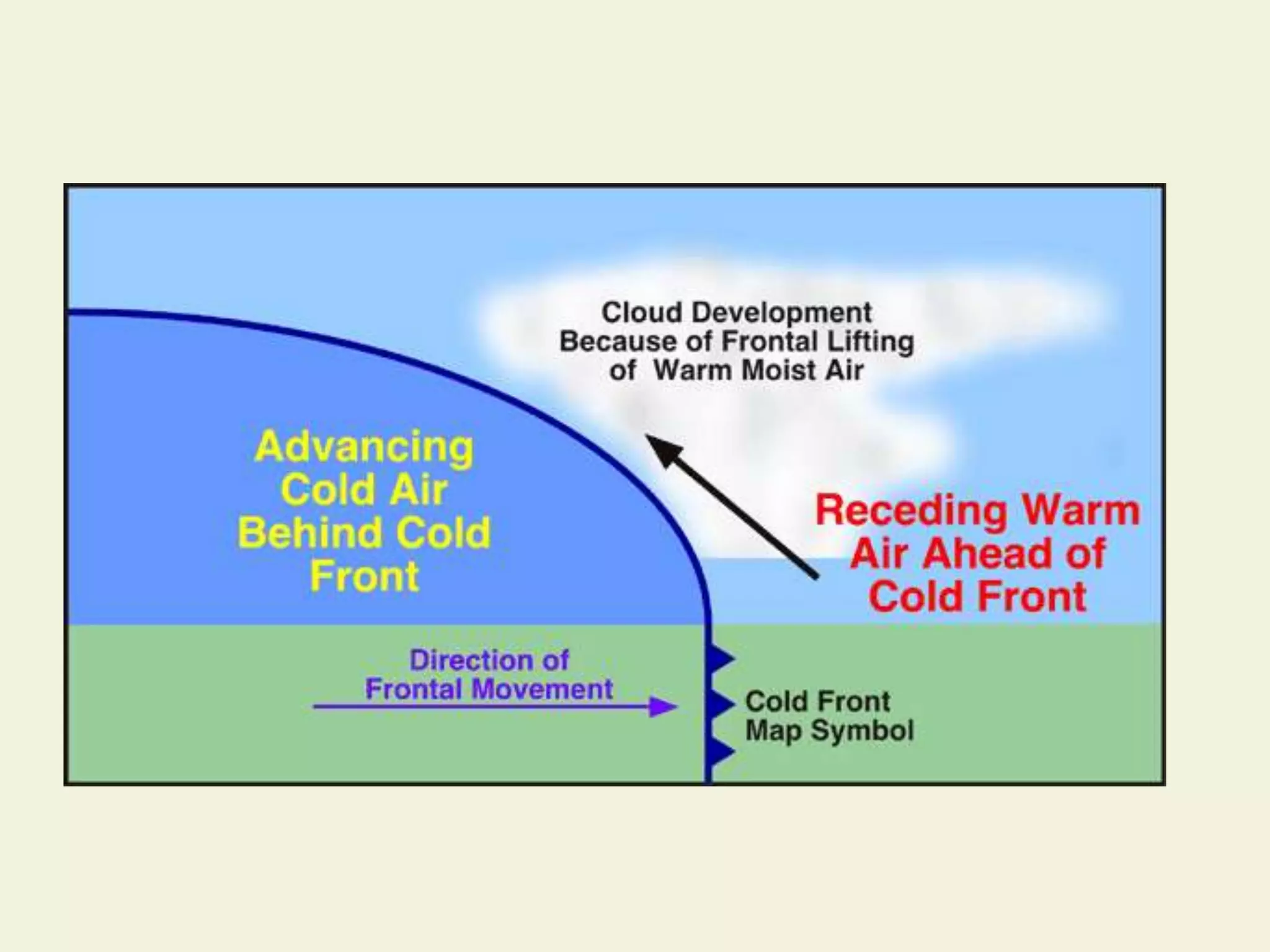
• Cold, dense air is moving toward warm, less dense air.
• The warm air is pushed up to cool and form clouds as
the cooler air replaces it.
• The air on the front side of the boundary line is warmer
than the air on the back side of the boundary line.
• These fronts are usually fast moving and bring stormy
weather and heavy precipitation followed by clearing
skies and higher pressure.
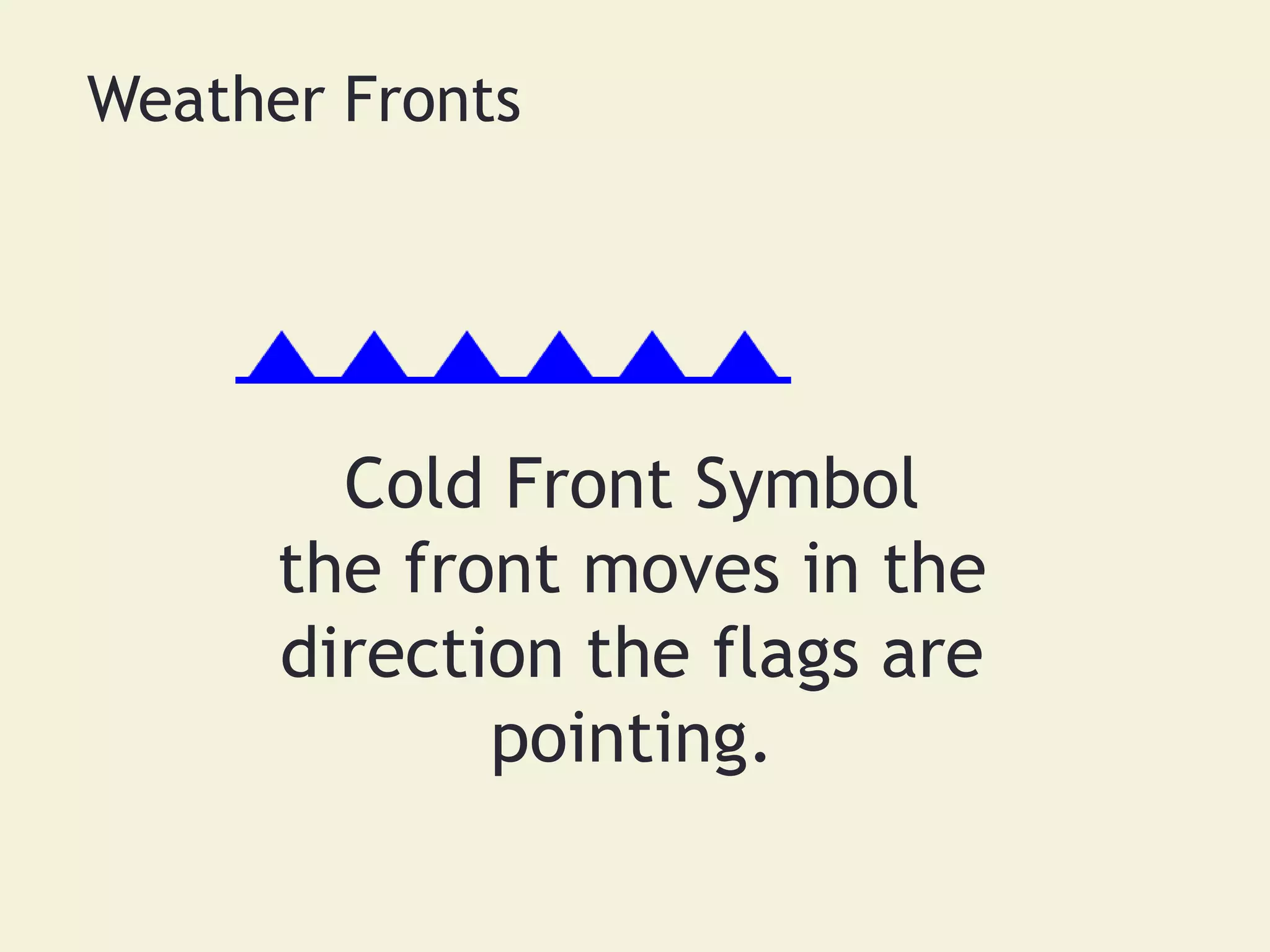
Weather Fronts

Cold Front Symbol
the front moves in the
direction the flags are
pointing.
Warm Front
• Warm air is moving toward cold air.
• The warm, less dense air slides over the cold,
more dense air.
• The air on the front side of the boundary line is
cooler than the air on the back side of the
boundary line.
These fronts usually move slowly and bring
steady rain or snow over many days.
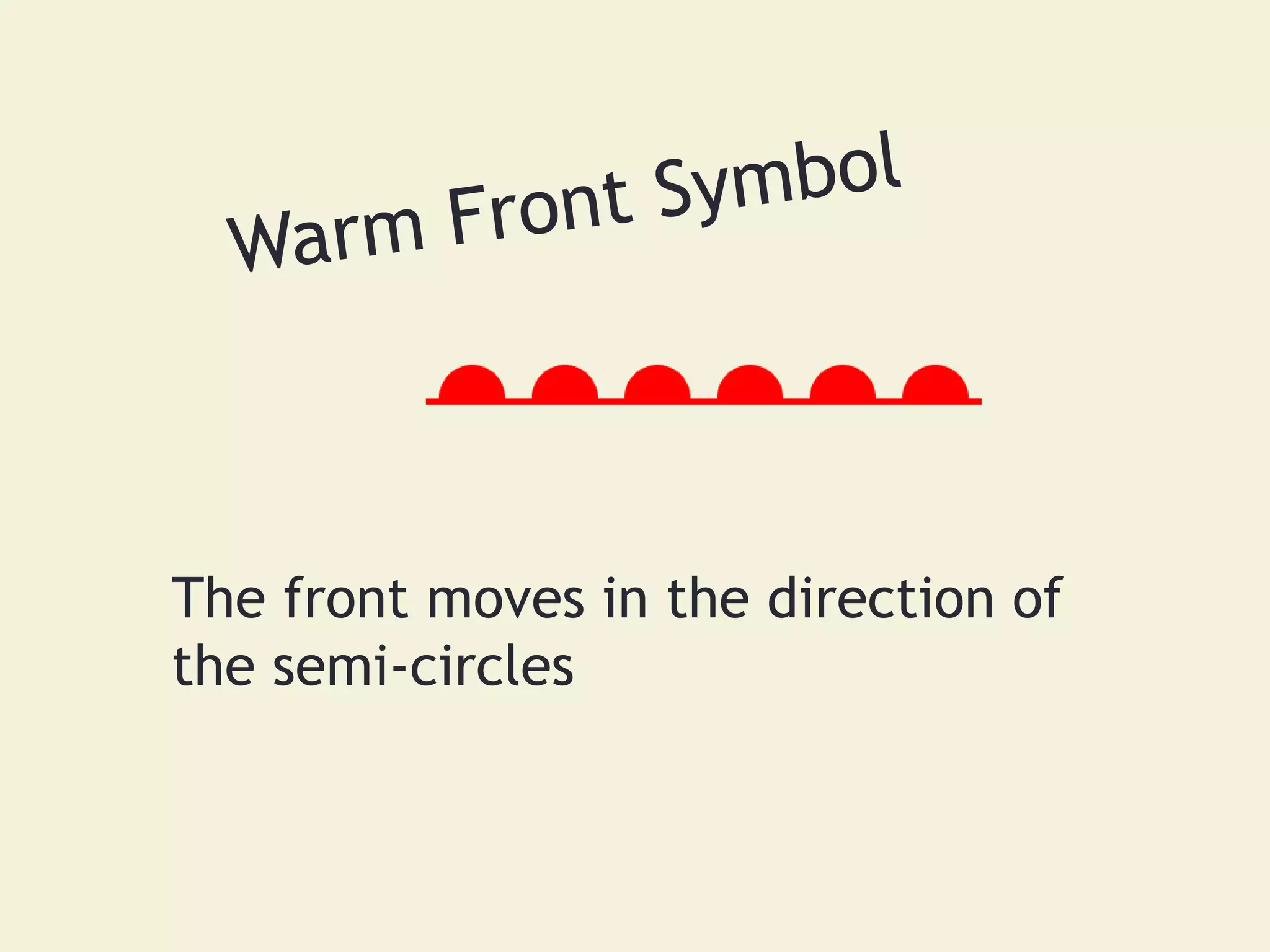
The front moves in the direction of
the semi-circles
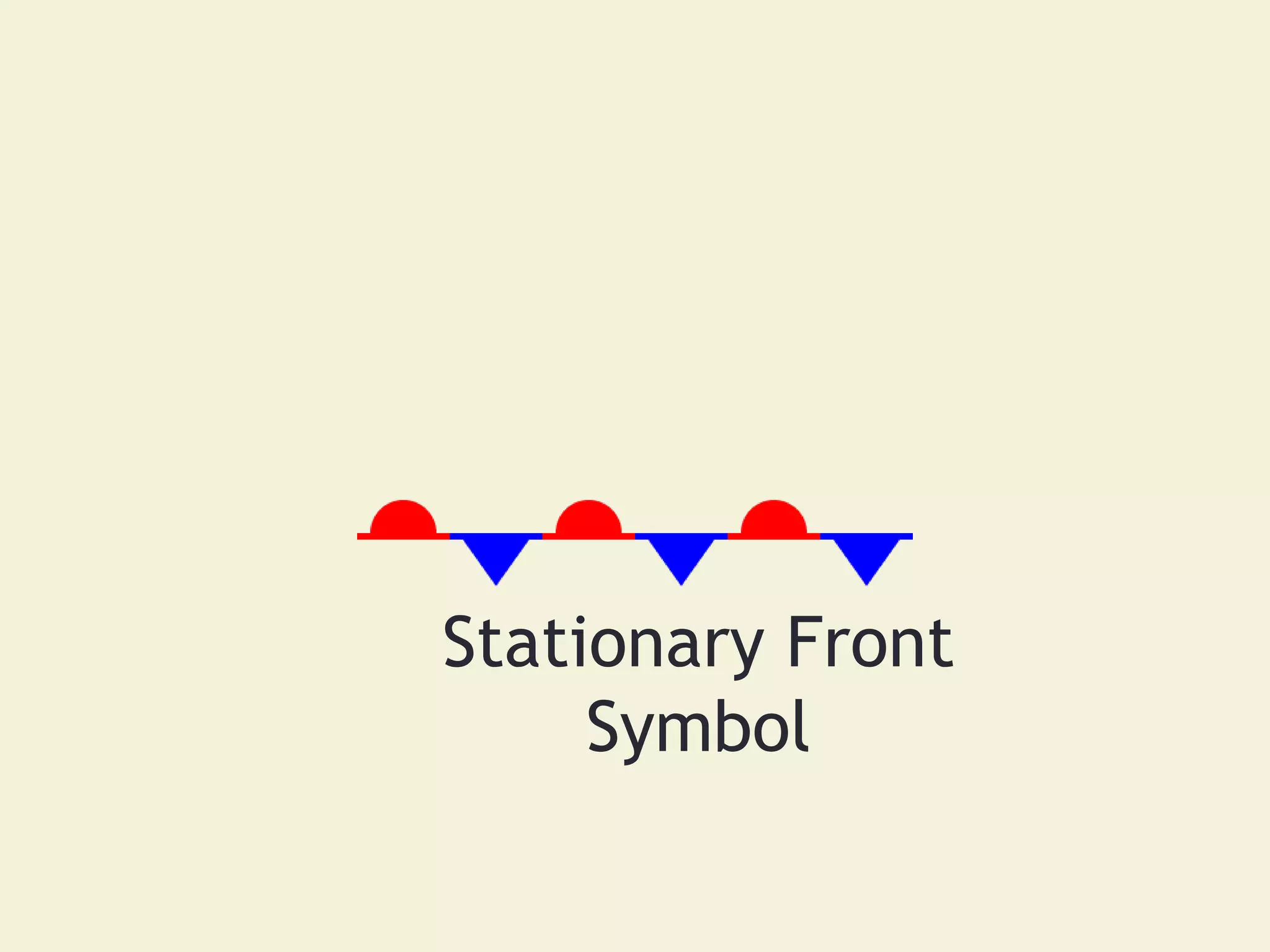
Stationary Front
Symbol
Stationary Front
• These fronts occur when neither the
cool or warm air masses are strong
enough to replace each other.
• They tend to stay in an area for a long
period of time, often bringing long
periods of precipitation and clouds.
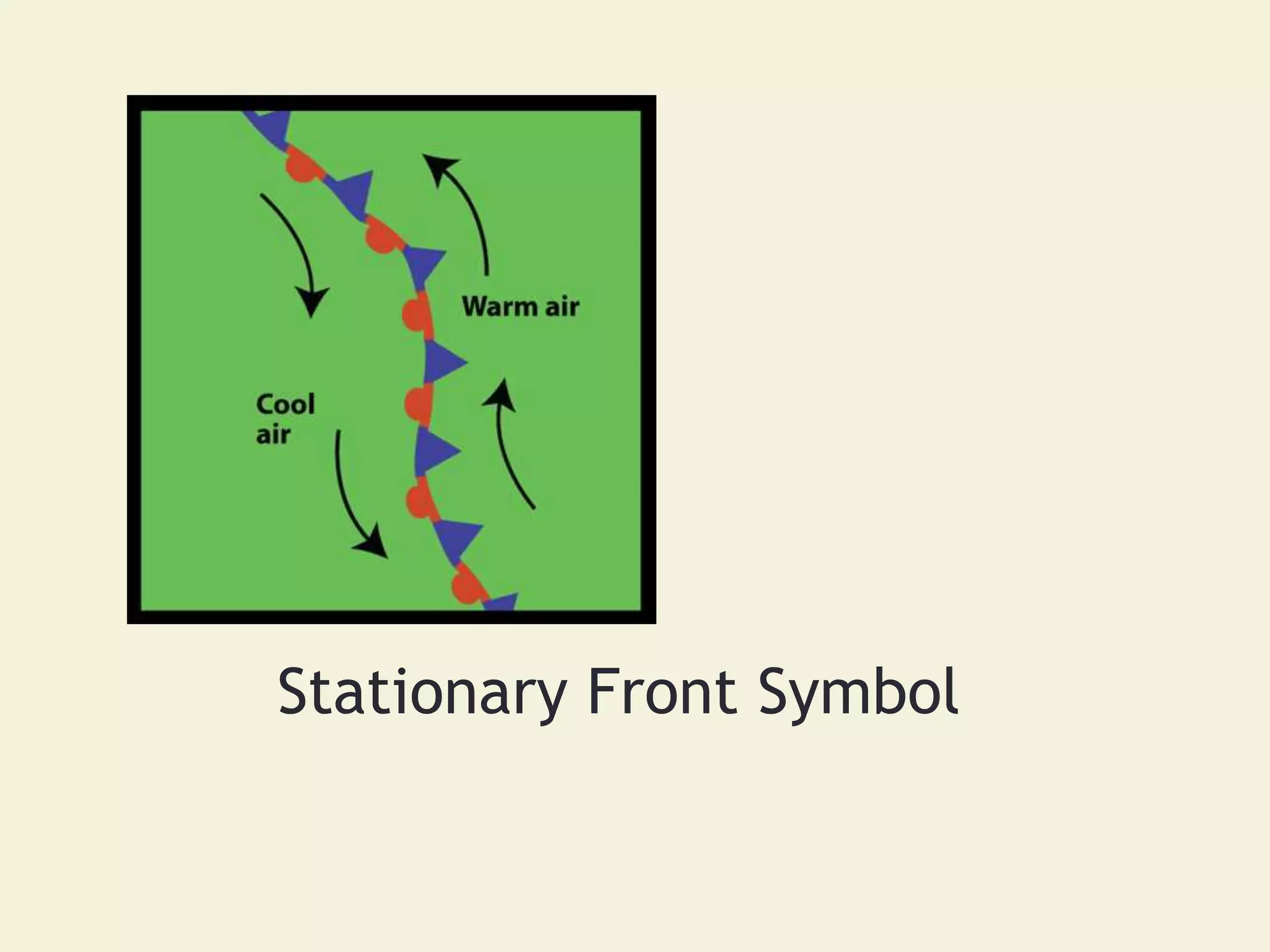
Stationary Front Symbol
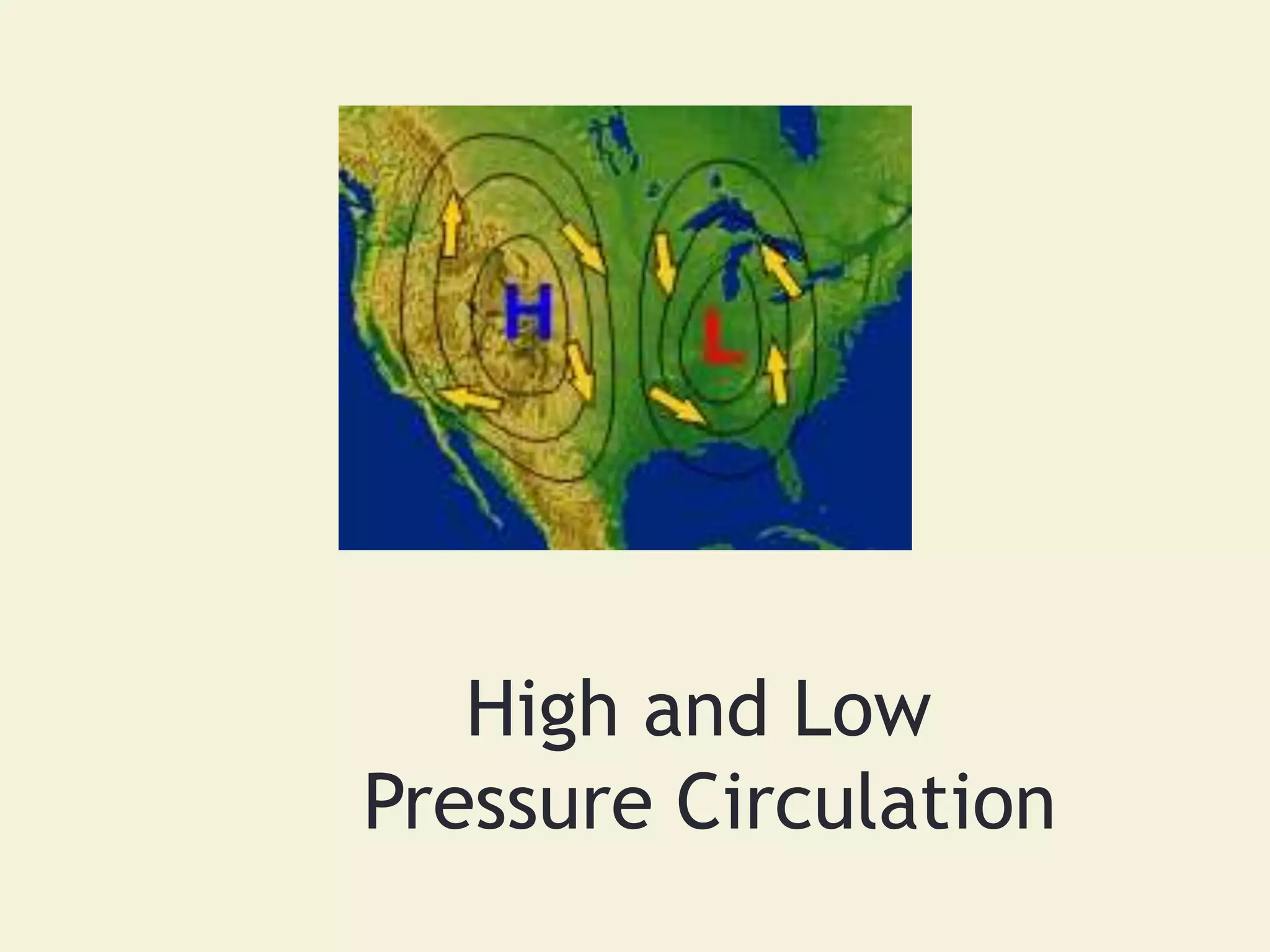
High Pressure areas are
indicated by a blue capital H
on a weather map
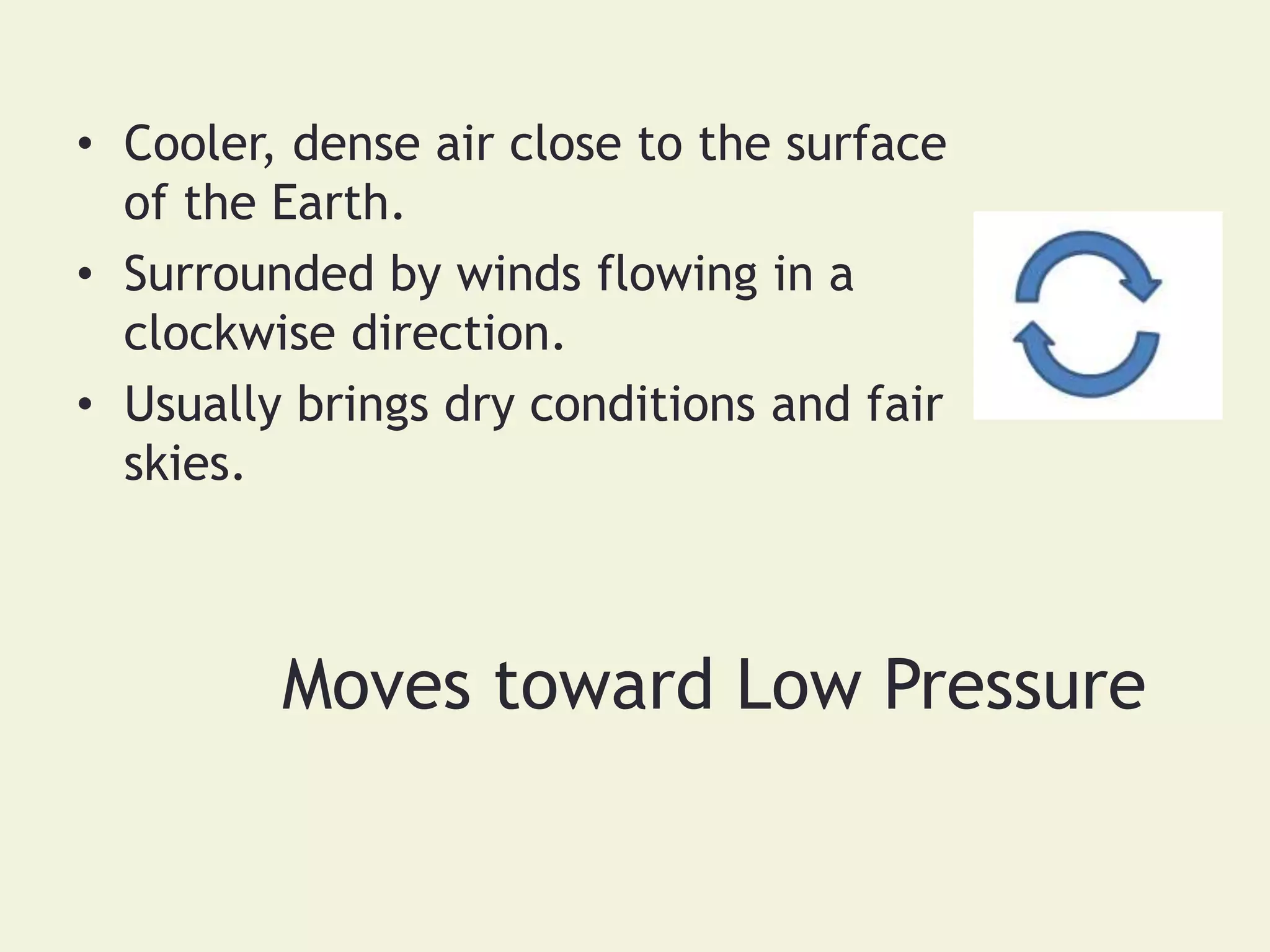
• Cooler, dense air close to the surface
of the Earth.
• Surrounded by winds flowing in a
clockwise direction.
• Usually brings dry conditions and fair
skies.

Moves toward Low Pressure
Let’s practice.
Remove the lid from the bottle.
Now, replace the lid.
What direction did you turn the lid to tighten
it?
• Did the lid move up or down?
• This is a way to remember high pressure.
•
•
•
•

High Pressure Simulation
Low Pressure
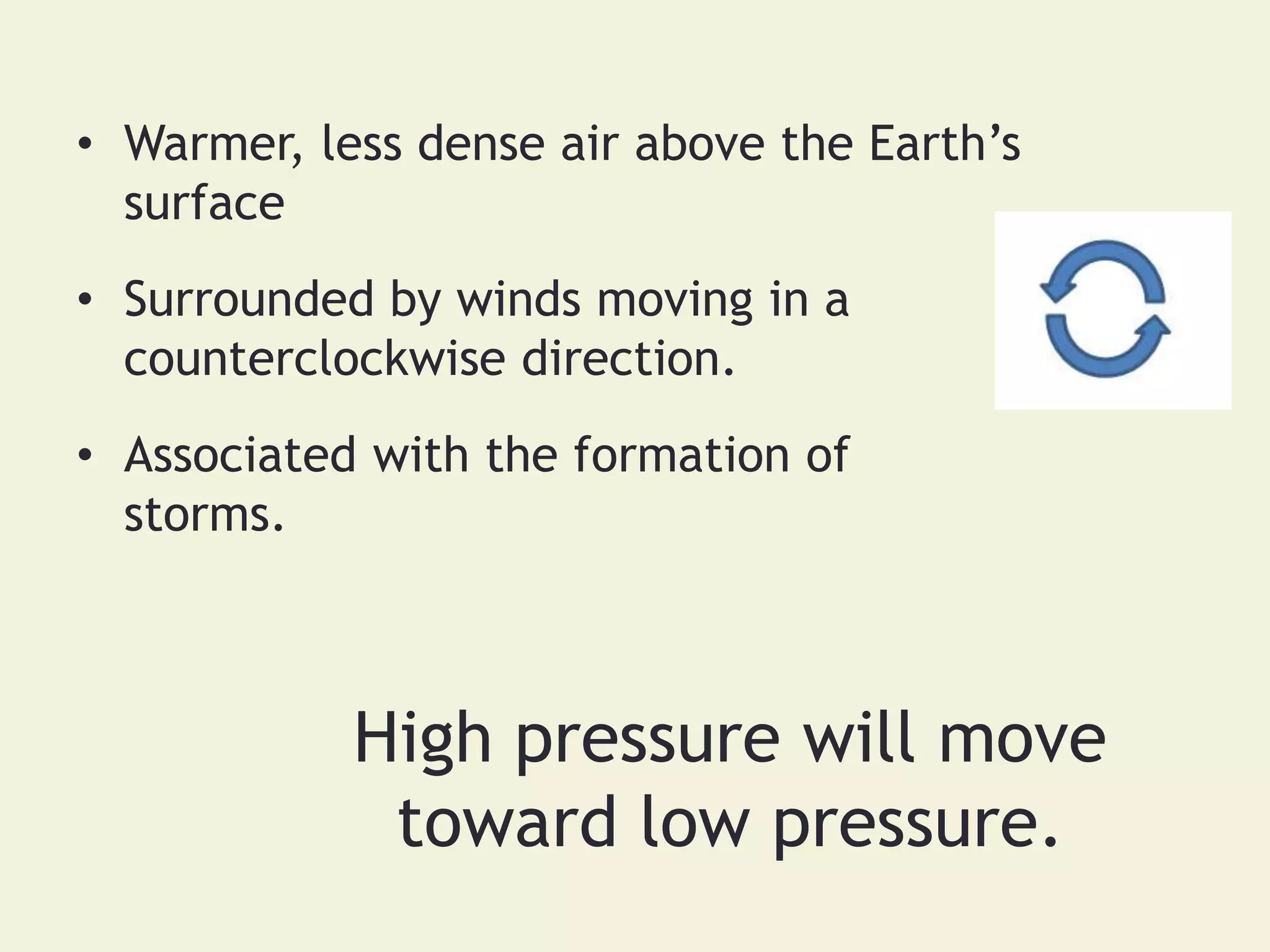
• Warmer, less dense air above the Earth’s
surface
• Surrounded by winds moving in a
counterclockwise direction.
• Associated with the formation of
storms.

High pressure will move
toward low pressure.
• Let’s practice.
• Remove the lid from the bottle.
• What direction did you turn the lid to
loosen it?
• Did the lid move up or down?
• This is a way to remember low
pressure.

Low Pressure Simulation
High and Low
Pressure Circulation
Pressure Force
Why does the Earth have weather?
How do weather maps show how
global patterns of atmospheric
movement influence local weather?

Reflection Questions

Weather maps and their symbols

  • 1.
  • 2.
    • The Earthis surrounded by a blanket of gas about 1,000 km thick • It is the atmosphere that helps keep Earth at a viable temperature for life to be sustained. • What goes on with the movement of gas in the atmosphere also has a much more obvious effect at local level; it creates weather!
  • 3.
    Weather • The propertiesof the atmosphere, such as temperature, humidity, and air pressure, largely determine the weather. • Scientists are able to predict the weather by observing and measuring these properties. • Weather often occurs as a result of differences in temperature and pressure from one place to another.
  • 4.
    Local Weather • LocalWeather is influenced by atmospheric and surface conditions in the local area. • Winds blow across the US from the west, bringing rainy weather to northern states west of the Rockies.
  • 5.
    Local Weather • Localweather is also influenced by global atmospheric conditions. Changes that occur in the atmosphere thousands of miles away can affect the weather.
  • 6.
    Weather Maps • Weathermaps are used to show current weather conditions in an effort to predict future weather conditions. • You need to know what each symbol means and how to interpret them to forecast the weather.
  • 7.
    Weather Fronts • Aweather front is simply a boundary between air masses.
  • 8.
    Cold Front • Cold,dense air is moving toward warm, less dense air. • The warm air is pushed up to cool and form clouds as the cooler air replaces it. • The air on the front side of the boundary line is warmer than the air on the back side of the boundary line. • These fronts are usually fast moving and bring stormy weather and heavy precipitation followed by clearing skies and higher pressure.
  • 9.
    Weather Fronts Cold FrontSymbol the front moves in the direction the flags are pointing.
  • 11.
    Warm Front • Warmair is moving toward cold air. • The warm, less dense air slides over the cold, more dense air. • The air on the front side of the boundary line is cooler than the air on the back side of the boundary line. These fronts usually move slowly and bring steady rain or snow over many days.
  • 12.
    The front movesin the direction of the semi-circles
  • 14.
  • 15.
    Stationary Front • Thesefronts occur when neither the cool or warm air masses are strong enough to replace each other. • They tend to stay in an area for a long period of time, often bringing long periods of precipitation and clouds.
  • 16.
  • 17.
    High Pressure areasare indicated by a blue capital H on a weather map
  • 18.
    • Cooler, denseair close to the surface of the Earth. • Surrounded by winds flowing in a clockwise direction. • Usually brings dry conditions and fair skies. Moves toward Low Pressure
  • 19.
    Let’s practice. Remove thelid from the bottle. Now, replace the lid. What direction did you turn the lid to tighten it? • Did the lid move up or down? • This is a way to remember high pressure. • • • • High Pressure Simulation
  • 20.
  • 21.
    • Warmer, lessdense air above the Earth’s surface • Surrounded by winds moving in a counterclockwise direction. • Associated with the formation of storms. High pressure will move toward low pressure.
  • 22.
    • Let’s practice. •Remove the lid from the bottle. • What direction did you turn the lid to loosen it? • Did the lid move up or down? • This is a way to remember low pressure. Low Pressure Simulation
  • 23.
  • 24.
  • 25.
    Why does theEarth have weather? How do weather maps show how global patterns of atmospheric movement influence local weather? Reflection Questions