Ways of Separating Mixtures
Have you thought of separating substances mixture?
How can you separate the mixture of pepper and salt?
Why is it important to separate substances in a mixture?
Separating mixtures in the harvested plants.
(harvesting palay)
• Threshing - separation of grains from the harvested plants
(palay)
• Winnowing – tossing the grain in the air (during windy days),
heavy grains fall down in a container of gravity, while the lighter
particle or husks are blown by the wind.
Physical Means of
Separating Mixtures
Decantation
• The process of separating the components of a mixture by pouring the liquid
component from one container to another, without disturbing the lower layer or
sediments in mixture.
• Used to separate solids, from liquids.
• Examples:
• Sand and water mixture
• Washing rice grains
• Immiscible liquids such as oil and water
Evaporation
• Process by which liquid changes to vapor or gas.
• When the temperature is raised to boiling point, the liquid becomes vapor.
• Example:
• Making rock salt from seawater
• Preserving fish by drying (water present in the body of fish will evaporate if exposed to
sunlight)
• Salt solution ( bring the solution through boiling it, the water in it will evaporate and
granules of salt remained in the container.)
Filtration
• Process of separating solid and liquid substances by using a porous filter, such ass strainer
and cloth, that allows liquid to pass through.
• In laboratory, filter paper is used in filtration.
• Example:
• Extracting coconut milk - removing fine particles from dirty water
• sand and water
• Cooking pasta in a boiling water
Sieving
• Separating differently sized solid particles.
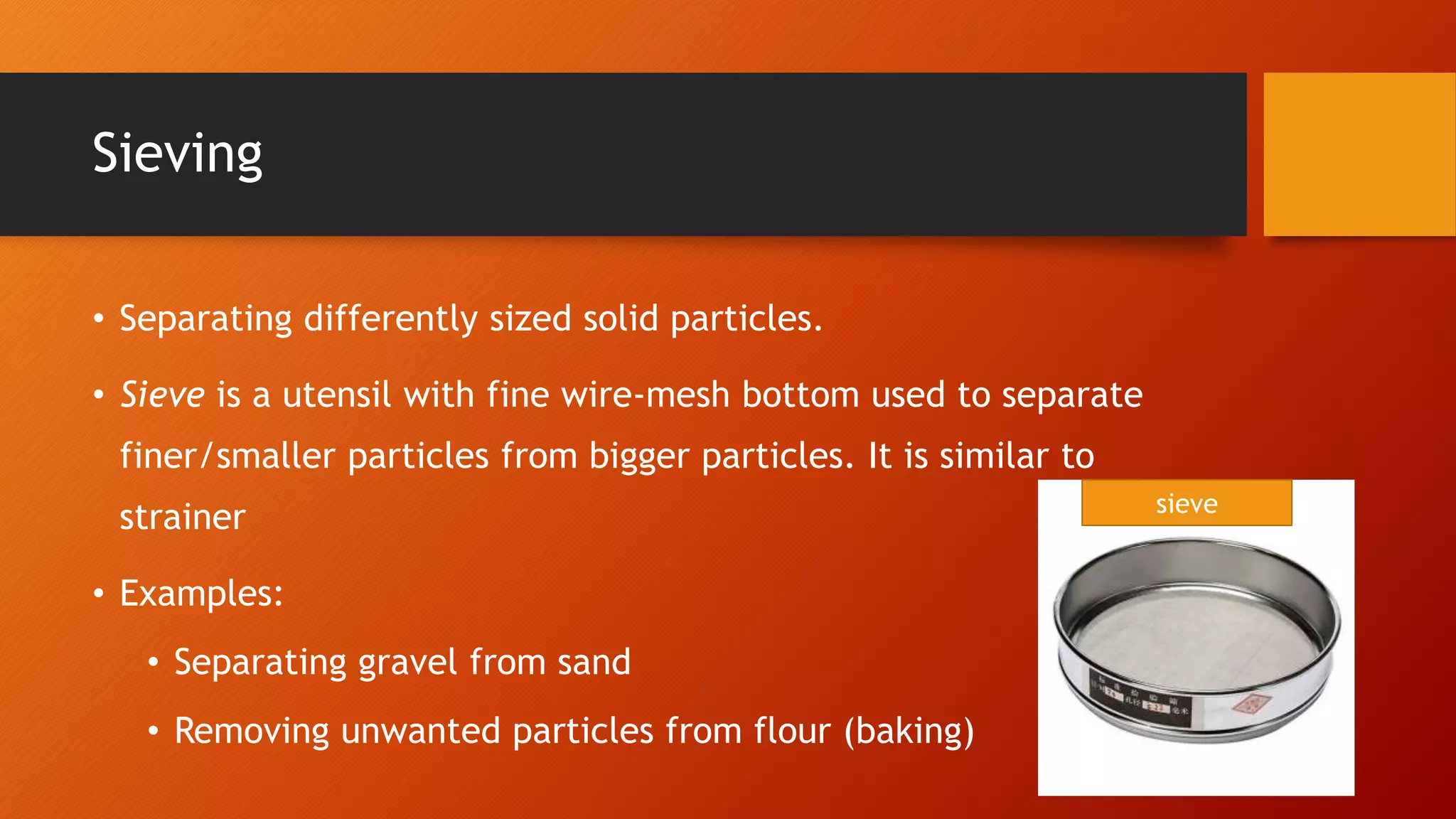
• Sieve is a utensil with fine wire-mesh bottom used to separate
finer/smaller particles from bigger particles. It is similar to
strainer
• Examples:
• Separating gravel from sand
• Removing unwanted particles from flour (baking)
sieve
Using Magnets
• Separating mixtures that is composed of materials that is attracted to
magnets.
• Examples:
• Separating nails from the pebbles or sand (place the magnet near the
mixture and let the nails cling into the magnet)
Benefits of Separating Mixtures
Purify each substance and maximize the use of each purified substance.
Protect self from diseases (water must be filtered to removed the harmful
substances)
Produce new products from mixture (crude is processed to produce diesel, and
gasoline)
Salt-making industries
Used in homes (obtaining coconut milk, extracting juice from fresh fruits, removing
of seeds or stones in a rice grains before cooking)

Ways of separating mixtures

  • 1.
    Ways of SeparatingMixtures Have you thought of separating substances mixture? How can you separate the mixture of pepper and salt? Why is it important to separate substances in a mixture?
  • 2.
    Separating mixtures inthe harvested plants. (harvesting palay) • Threshing - separation of grains from the harvested plants (palay) • Winnowing – tossing the grain in the air (during windy days), heavy grains fall down in a container of gravity, while the lighter particle or husks are blown by the wind.
  • 3.
  • 4.
    Decantation • The processof separating the components of a mixture by pouring the liquid component from one container to another, without disturbing the lower layer or sediments in mixture. • Used to separate solids, from liquids. • Examples: • Sand and water mixture • Washing rice grains • Immiscible liquids such as oil and water
  • 5.
    Evaporation • Process bywhich liquid changes to vapor or gas. • When the temperature is raised to boiling point, the liquid becomes vapor. • Example: • Making rock salt from seawater • Preserving fish by drying (water present in the body of fish will evaporate if exposed to sunlight) • Salt solution ( bring the solution through boiling it, the water in it will evaporate and granules of salt remained in the container.)
  • 6.
    Filtration • Process ofseparating solid and liquid substances by using a porous filter, such ass strainer and cloth, that allows liquid to pass through. • In laboratory, filter paper is used in filtration. • Example: • Extracting coconut milk - removing fine particles from dirty water • sand and water • Cooking pasta in a boiling water
  • 7.
    Sieving • Separating differentlysized solid particles. • Sieve is a utensil with fine wire-mesh bottom used to separate finer/smaller particles from bigger particles. It is similar to strainer • Examples: • Separating gravel from sand • Removing unwanted particles from flour (baking) sieve
  • 8.
    Using Magnets • Separatingmixtures that is composed of materials that is attracted to magnets. • Examples: • Separating nails from the pebbles or sand (place the magnet near the mixture and let the nails cling into the magnet)
  • 9.
    Benefits of SeparatingMixtures Purify each substance and maximize the use of each purified substance. Protect self from diseases (water must be filtered to removed the harmful substances) Produce new products from mixture (crude is processed to produce diesel, and gasoline) Salt-making industries Used in homes (obtaining coconut milk, extracting juice from fresh fruits, removing of seeds or stones in a rice grains before cooking)