EROSION AND
TRANSPORTATION
By: Ma. Samantha Kaye Ibanez
Mary Sheen Gregorio
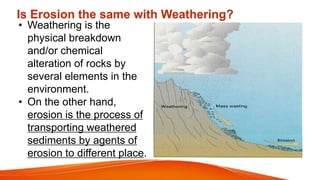
• Weathering is the
physical breakdown
and/or chemical
alteration of rocks by
several elements in the
environment.
• On the other hand,
erosion is the process of
transporting weathered
sediments by agents of
erosion to different place.
Is Erosion the same with Weathering?
 Weathered materials are moved
from the original site and transported
away by natural agents. These
agents derive the energy from the
sun through the water cycle and
through the differential heating.
AGENTS OF EROSION
WATER EROSION
• Water erosion occurs from the chemicals in the
water, and the force of the flow of water in the
river.
• There are many chemicals in the water of a river,
and those chemicals can break down certain
rocks, such as limestone or chalk. This eroded
rock is carried down the river.
There are different types of water erosion that
affects landforms:
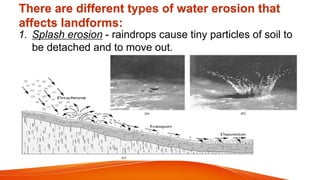
1. Splash erosion - raindrops cause tiny particles of soil to
be detached and to move out.
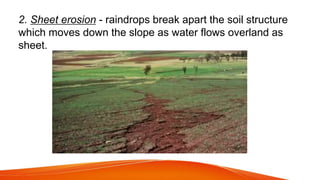
2. Sheet erosion - raindrops break apart the soil structure
which moves down the slope as water flows overland as
sheet.
3. Gully erosion - after heavy rains, water flows in narrow
channels, eroding gullies into great depth.
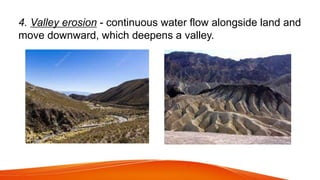
4. Valley erosion - continuous water flow alongside land and
move downward, which deepens a valley.
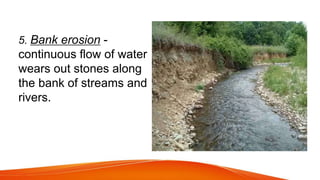
5. Bank erosion -
continuous flow of water
wears out stones along
the bank of streams and
rivers.
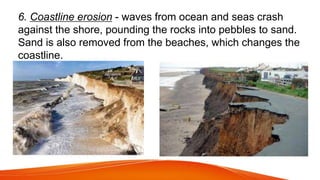
6. Coastline erosion - waves from ocean and seas crash
against the shore, pounding the rocks into pebbles to sand.
Sand is also removed from the beaches, which changes the
coastline.
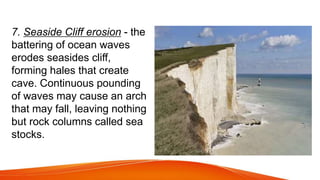
7. Seaside Cliff erosion - the
battering of ocean waves
erodes seasides cliff,
forming hales that create
cave. Continuous pounding
of waves may cause an arch
that may fall, leaving nothing
but rock columns called sea
stocks.
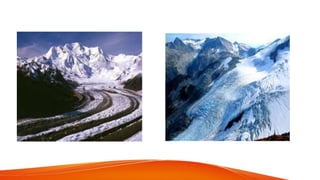
GLACIER EROSION
• A glacier is a thick large mass of ice formed hundreds or
thousands of years mostly in remote areas like in the poles or
in high mountains. They move very slowly.
• Glaciers are capable of great erosion. They can erode land
through plucking and abrasion. Plucking occurs when ice
water freezes. It expands, loosens, and pulls out the rock
fragments, becoming part of the glaciers. Abrasion
smoothens and polishes the surface below.
• The effect of glacial erosion depends on the rate of
movement, thickness of ice, shape and hardness of
fragments in the ice, and erodibility of the surface beneath
the ice.
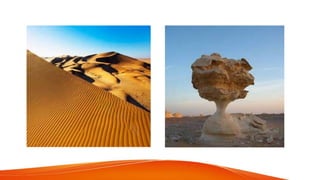
WIND EROSION
• Wind carries dust, sand, and volcanic ash from one
place to another. In dry areas, strong wind wears
away soft rocks, and also polishes rocks and cliffs
until they are smooth. Wind can also erode
materials until nothing is left. In the desert, wind
flows sand to form sand dunes.
TRANSPORTATION
• It refers to the process of taking the rock
fragments from one place to another by
any of the above mentioned agents. As
such transportation is a sub segment of
the whole process of erosion.
How are the materials transported:
• Solution - materials are described in water and carried
along by water.
• Suspension - the suspended particles are carried by a
medium (air, water, or ice).
• Traction - particles move by rolling, sliding, and shuffling
along eroded surface. These movements occur in all
erotional agents.
• Saltation - particles move from the surface to the quick
repeated cycle. The repeated cyle has enough force to
detach new particles.
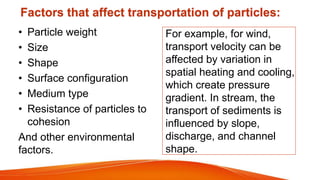
Factors that affect transportation of particles:
• Particle weight
• Size
• Shape
• Surface configuration
• Medium type
• Resistance of particles to
cohesion
And other environmental
factors.
For example, for wind,
transport velocity can be
affected by variation in
spatial heating and cooling,
which create pressure
gradient. In stream, the
transport of sediments is
influenced by slope,
discharge, and channel
shape.

Erosion and transportation

  • 1.
    EROSION AND TRANSPORTATION By: Ma.Samantha Kaye Ibanez Mary Sheen Gregorio
  • 2.
    • Weathering isthe physical breakdown and/or chemical alteration of rocks by several elements in the environment. • On the other hand, erosion is the process of transporting weathered sediments by agents of erosion to different place. Is Erosion the same with Weathering?
  • 3.
     Weathered materialsare moved from the original site and transported away by natural agents. These agents derive the energy from the sun through the water cycle and through the differential heating.
  • 4.
  • 5.
    WATER EROSION • Watererosion occurs from the chemicals in the water, and the force of the flow of water in the river. • There are many chemicals in the water of a river, and those chemicals can break down certain rocks, such as limestone or chalk. This eroded rock is carried down the river.
  • 6.
    There are differenttypes of water erosion that affects landforms: 1. Splash erosion - raindrops cause tiny particles of soil to be detached and to move out.
  • 7.
    2. Sheet erosion- raindrops break apart the soil structure which moves down the slope as water flows overland as sheet.
  • 8.
    3. Gully erosion- after heavy rains, water flows in narrow channels, eroding gullies into great depth.
  • 9.
    4. Valley erosion- continuous water flow alongside land and move downward, which deepens a valley.
  • 10.
    5. Bank erosion- continuous flow of water wears out stones along the bank of streams and rivers.
  • 11.
    6. Coastline erosion- waves from ocean and seas crash against the shore, pounding the rocks into pebbles to sand. Sand is also removed from the beaches, which changes the coastline.
  • 12.
    7. Seaside Clifferosion - the battering of ocean waves erodes seasides cliff, forming hales that create cave. Continuous pounding of waves may cause an arch that may fall, leaving nothing but rock columns called sea stocks.
  • 13.
    GLACIER EROSION • Aglacier is a thick large mass of ice formed hundreds or thousands of years mostly in remote areas like in the poles or in high mountains. They move very slowly. • Glaciers are capable of great erosion. They can erode land through plucking and abrasion. Plucking occurs when ice water freezes. It expands, loosens, and pulls out the rock fragments, becoming part of the glaciers. Abrasion smoothens and polishes the surface below. • The effect of glacial erosion depends on the rate of movement, thickness of ice, shape and hardness of fragments in the ice, and erodibility of the surface beneath the ice.
  • 15.
    WIND EROSION • Windcarries dust, sand, and volcanic ash from one place to another. In dry areas, strong wind wears away soft rocks, and also polishes rocks and cliffs until they are smooth. Wind can also erode materials until nothing is left. In the desert, wind flows sand to form sand dunes.
  • 17.
    TRANSPORTATION • It refersto the process of taking the rock fragments from one place to another by any of the above mentioned agents. As such transportation is a sub segment of the whole process of erosion.
  • 18.
    How are thematerials transported: • Solution - materials are described in water and carried along by water. • Suspension - the suspended particles are carried by a medium (air, water, or ice). • Traction - particles move by rolling, sliding, and shuffling along eroded surface. These movements occur in all erotional agents. • Saltation - particles move from the surface to the quick repeated cycle. The repeated cyle has enough force to detach new particles.
  • 19.
    Factors that affecttransportation of particles: • Particle weight • Size • Shape • Surface configuration • Medium type • Resistance of particles to cohesion And other environmental factors. For example, for wind, transport velocity can be affected by variation in spatial heating and cooling, which create pressure gradient. In stream, the transport of sediments is influenced by slope, discharge, and channel shape.

Editor's Notes

  • #3 Material broken down by different elements move downward due to gravity and transported to different places.
  • #4 Water is the primary agent of erosion on Earth. Most running water is found in stream and rivers.