A Presentation ON 
Submitted by: 
Vishwanath S 
5th sem 
ME Department
 It is the fastest growing machining process. 
 One of the most versatile machining processes. 
 Compliments other technologies such as milling, 
laser, and plasma. 
 True cold cutting process – No HAZ , mechanical 
stresses or operator and environmental hazards. 
 Not limited to machining – but also used in food 
industry applications.
 1930s: Mining Industry to remove stones and coal 
 1960s : Need to cut advanced materials for 
aerospace industry 
 1970s : First attempts were to employ WaterJet to 
cut advanced composites for aerospace 
applications. 
 1980s: First commercial AWJ machines
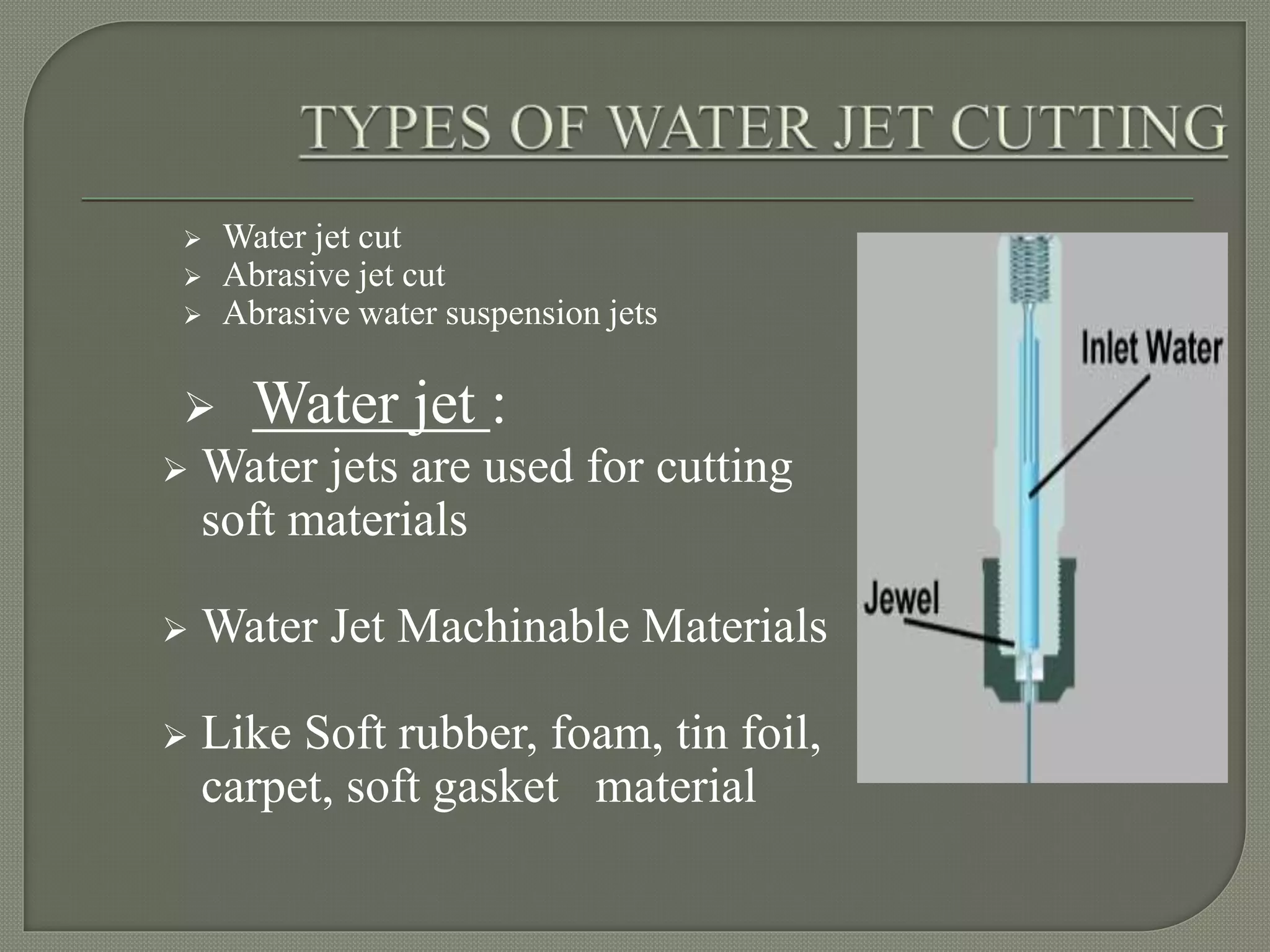
 Water jet cut 
 Abrasive jet cut 
 Abrasive water suspension jets 
 Water jet : 
 Water jets are used for cutting 
soft materials 
 Water Jet Machinable Materials 
 Like Soft rubber, foam, tin foil, 
carpet, soft gasket material
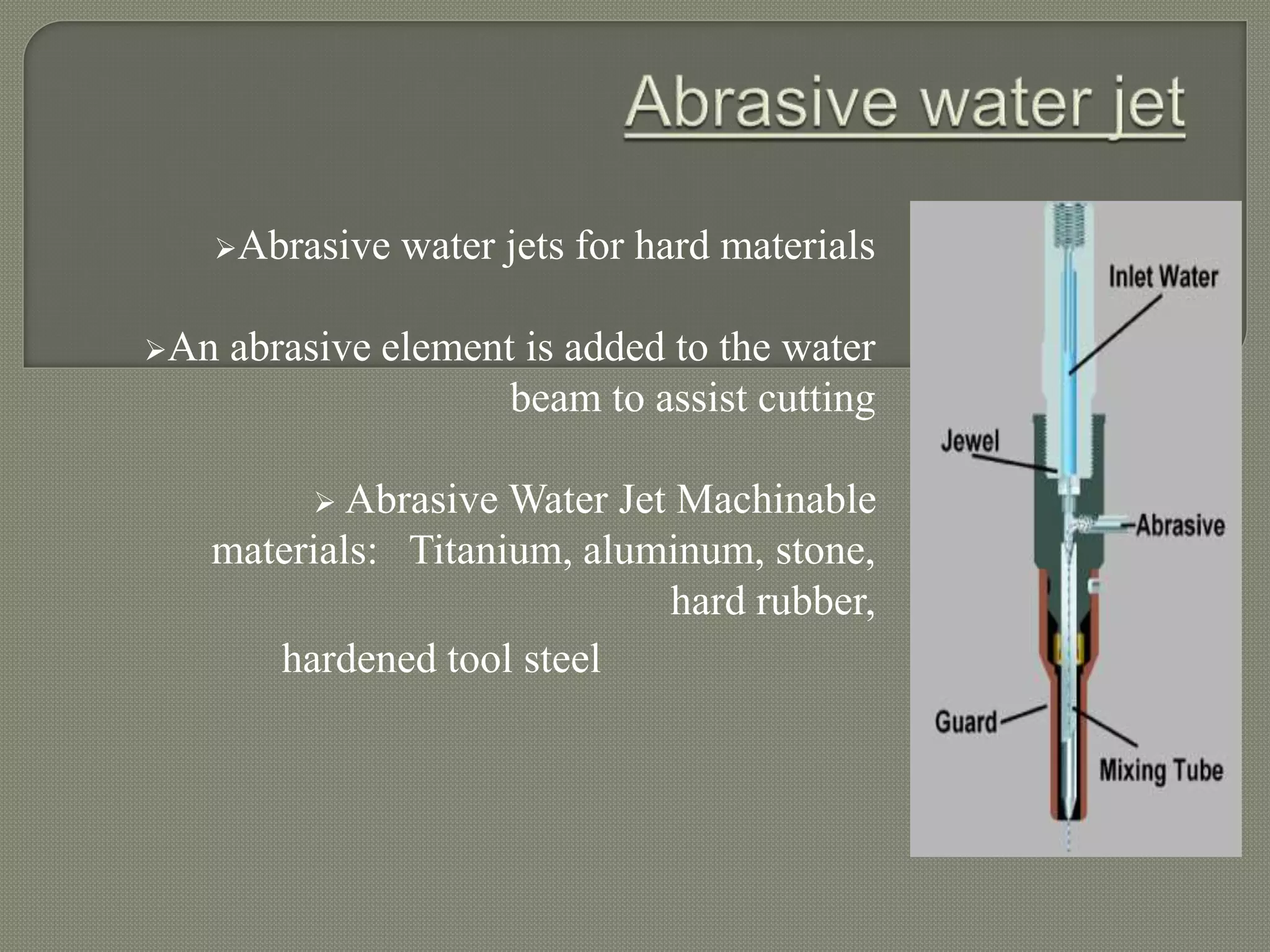
Abrasive water jets for hard materials 
An abrasive element is added to the water 
beam to assist cutting 
 Abrasive Water Jet Machinable 
materials: Titanium, aluminum, stone, 
hard rubber, 
hardened tool steel
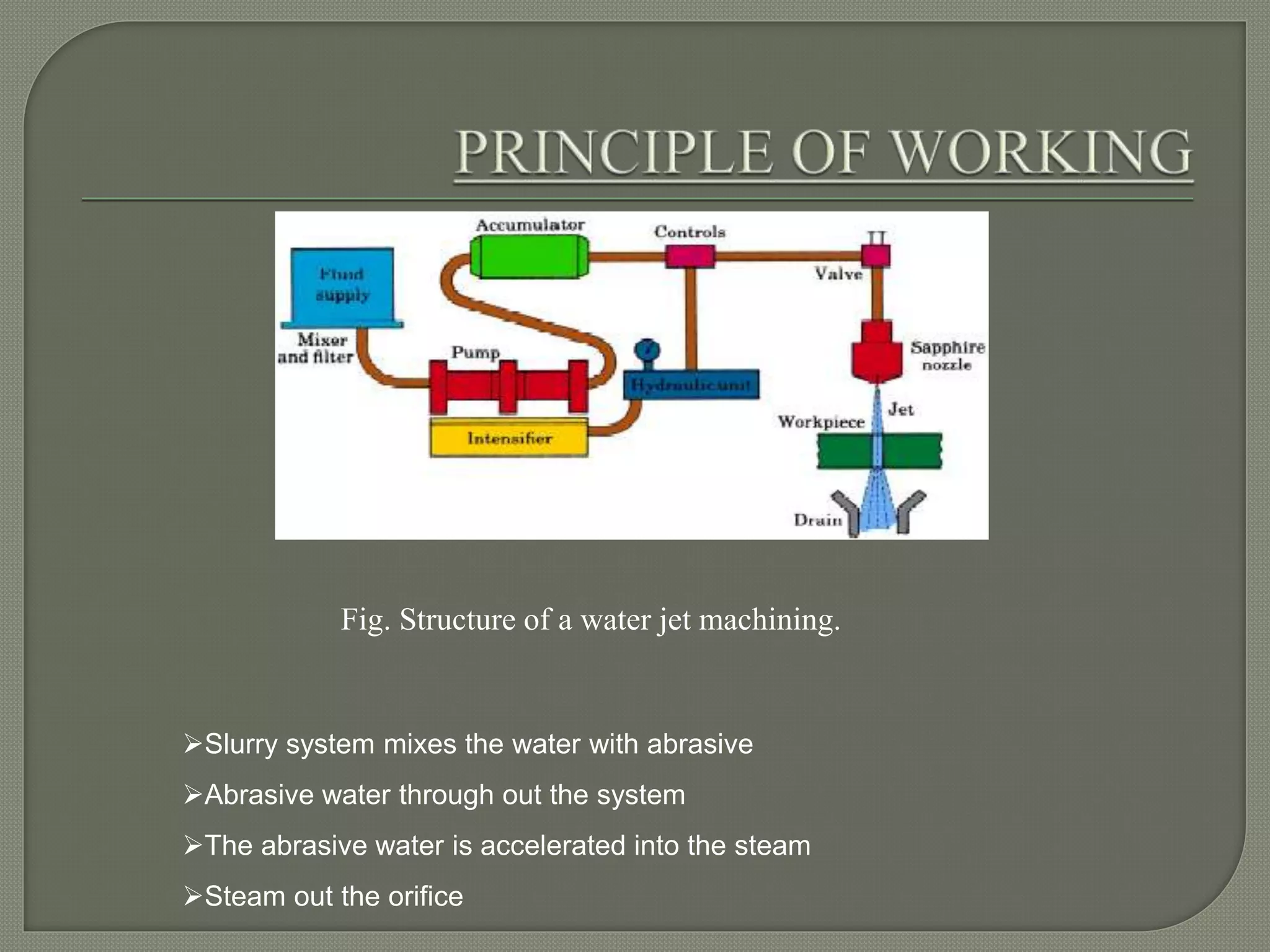
Fig. Structure of a water jet machining. 
Slurry system mixes the water with abrasive 
Abrasive water through out the system 
The abrasive water is accelerated into the steam 
Steam out the orifice
Pump 
 Nozzle 
 Orifice 
 Control System
 No heat affected zone 
 Saves the raw material 
 Wide range of materials 
 Faster than any other technique 
 Flexible Machining Integration 
 Does Not Need a Starting Hole 
 Ability to Cut in Any Direction 
 Environmentally friendly 
 No need for surface finish 
 No tool changing 
 Minimal Fixturing Required
 Limited number of materials can be cut 
economically 
 Very thick parts can not be cut with Water Jet 
 Cutting and still hold dimensional accuracy 
 Slower cutting 
 Higher entry cost
 No Heat Affected Zone 
 Can Cut Through 
Reflective Materials 
 Can Cut Uneven Surfaces 
Smoothly 
 Environmentally friendly 
 Can Cut Up to 12” in hard 
materials (Ti, SS)& 24” in 
Rubber 
 Minimal Heat Affected 
Zone 
 Reflects on Shiny 
Surfaces 
 Laser Diffracts and 
Looses its Focus 
 Produces Toxic Fumes 
 Max. Depth 0.5 – 0.75”
Aerospace 
Automotive 
Food Processing 
Electronics and 
PCBs 
Marble Industry 
Concrete
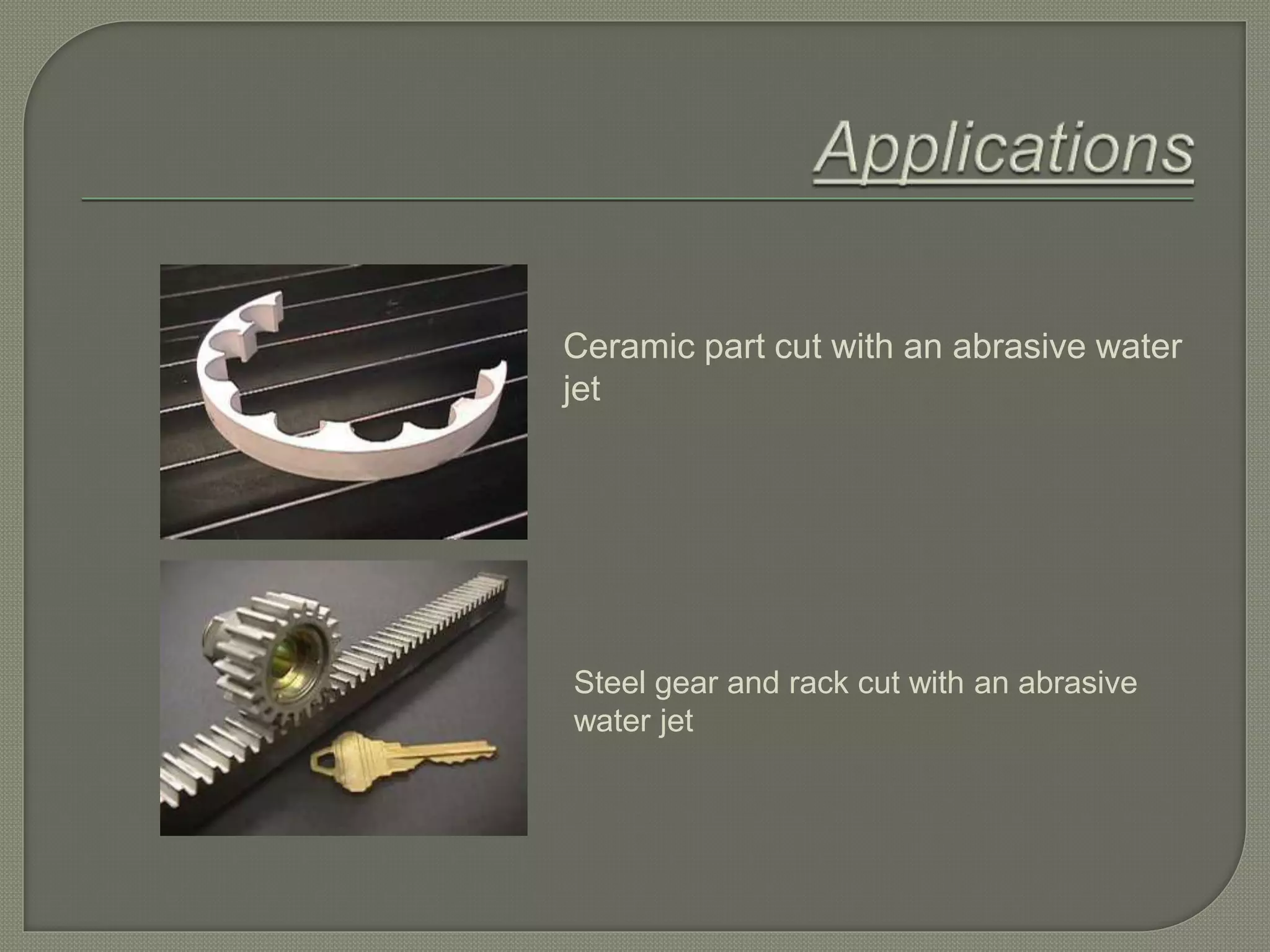
Ceramic part cut with an abrasive water 
jet 
Steel gear and rack cut with an abrasive 
water jet
 It is relatively a new technology which has caught on 
quickly and is replacing century-old methods used for 
manufacturing 
 Used not only in typical machining applications, but food 
and soft-goods industries 
 As material and pump technology advances faster cutting 
rates, longer component life and tighter tolerances will be 
achievable 
 Paves the way for new machining processes that embrace 
simplicity and have a small environmental impact
Questions……? 
THANK YOU…  

water jet cutting....

  • 1.
    A Presentation ON Submitted by: Vishwanath S 5th sem ME Department
  • 2.
     It isthe fastest growing machining process.  One of the most versatile machining processes.  Compliments other technologies such as milling, laser, and plasma.  True cold cutting process – No HAZ , mechanical stresses or operator and environmental hazards.  Not limited to machining – but also used in food industry applications.
  • 3.
     1930s: MiningIndustry to remove stones and coal  1960s : Need to cut advanced materials for aerospace industry  1970s : First attempts were to employ WaterJet to cut advanced composites for aerospace applications.  1980s: First commercial AWJ machines
  • 4.
     Water jetcut  Abrasive jet cut  Abrasive water suspension jets  Water jet :  Water jets are used for cutting soft materials  Water Jet Machinable Materials  Like Soft rubber, foam, tin foil, carpet, soft gasket material
  • 5.
    Abrasive water jetsfor hard materials An abrasive element is added to the water beam to assist cutting  Abrasive Water Jet Machinable materials: Titanium, aluminum, stone, hard rubber, hardened tool steel
  • 6.
    Fig. Structure ofa water jet machining. Slurry system mixes the water with abrasive Abrasive water through out the system The abrasive water is accelerated into the steam Steam out the orifice
  • 7.
    Pump  Nozzle  Orifice  Control System
  • 9.
     No heataffected zone  Saves the raw material  Wide range of materials  Faster than any other technique  Flexible Machining Integration  Does Not Need a Starting Hole  Ability to Cut in Any Direction  Environmentally friendly  No need for surface finish  No tool changing  Minimal Fixturing Required
  • 10.
     Limited numberof materials can be cut economically  Very thick parts can not be cut with Water Jet  Cutting and still hold dimensional accuracy  Slower cutting  Higher entry cost
  • 11.
     No HeatAffected Zone  Can Cut Through Reflective Materials  Can Cut Uneven Surfaces Smoothly  Environmentally friendly  Can Cut Up to 12” in hard materials (Ti, SS)& 24” in Rubber  Minimal Heat Affected Zone  Reflects on Shiny Surfaces  Laser Diffracts and Looses its Focus  Produces Toxic Fumes  Max. Depth 0.5 – 0.75”
  • 12.
    Aerospace Automotive FoodProcessing Electronics and PCBs Marble Industry Concrete
  • 13.
    Ceramic part cutwith an abrasive water jet Steel gear and rack cut with an abrasive water jet
  • 14.
     It isrelatively a new technology which has caught on quickly and is replacing century-old methods used for manufacturing  Used not only in typical machining applications, but food and soft-goods industries  As material and pump technology advances faster cutting rates, longer component life and tighter tolerances will be achievable  Paves the way for new machining processes that embrace simplicity and have a small environmental impact
  • 15.