Biology,
water for all.   Done by – Mrinali
                           Grade – X
Contents
• Why water?

• How do we save? *methods*

• Dams

• Water harvesting

• Video

• Thank you! 
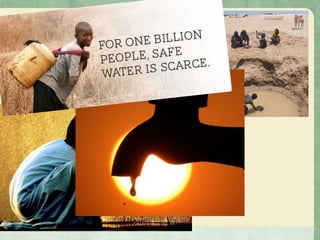
Why water? Why do we need to
save it?
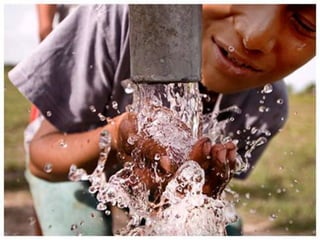
• Well, to answer that water is the most necessary
 source/ compound one needs in their life.
• All life forms require water.

• Only 0.3% of water is fresh water which is available
 to us!
• Do we pollute them too?
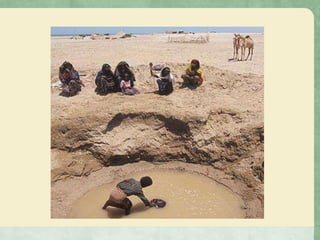
• Do we need use it and forget about the people in
 different parts of the world suffering from scarcity
 of water?
A study
• Rains in India are largely due to the monsoon.

• Rain fall is received only for a few months in the
 year.
• Failure of sustain water availability underground
 has resulted largely from loss of vegetation cover,
 diversion for high demand of crops, pollution from
 industries and also not to forget urban wastes.
• Irrigation methods like dams, tanks and canals have
 been used in various parts of India since ancient
 times.
• There were managed by the local people to meet
 their requirements for both agriculture and daily
 needs (throughout the year) .
• They would store water .

• Cropping patterns would defer due to the
 availability .
• Maintain the irrigation system.
DAMS
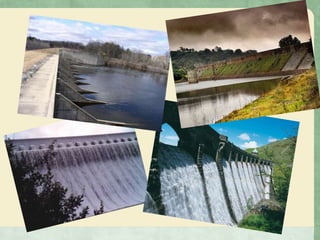
• Dams are massive barriers built across rivers and
 streams to confine and utilize the flow of water for
 human purposes such as irrigation and generation
 of hydroelectricity. This confinement of water
 creates lakes or reservoirs.
• Large dams can ensure the storage of adequate
 water not just for irrigation, but also for generating
 electricity, etc.
• Canal systems from these dams can transfer large
 amounts of water great distances.
• There is no equal distribution of water, thus people
 living close to the water resource grow water
 intensive crops like sugarcane and rice, etc.
Problems faced by man with
large dams
i.    Social problems – they displace large number of
      peasants and tribal's without adequate
      compensation.
ii.   Economic problems – they swallow up huge
      amounts of public money without the generation
      of proportionate benefits.
iii. Environmental problems – they contribute to the
      loss of deforestation and loss of biodiversity.
Water harvesting
• Watershed management emphasizes scientific soil
 and water conservation in order to increase the
 biomass production.
• aim – is to develop primary resources of land and
 water, to produce secondary resources of plants and
 animals for use in a manner which will not cause
 ecological imbalance.
• Increases the production and income of the
 watershed community, but also mitigates droughts
 and floods and increases the life of the downstream
 dam and reservoirs.
• Various organisations have been working on
 rejuvenating ancient systems of water harvesting as
 an alternative to the ‘mega-projects’ like dams.
• These communities have used hundreds of indigenous
 water saving methods to capture every trickle of
 water that had fallen on their land; dug small pits and
 lakes, put in place simple watershed systems, built
 small earthen dams, constructed dykes, sand and
 limestone reservoirs, set up rooftop water-collecting
 units.
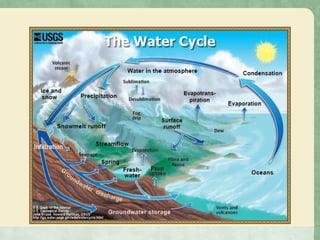
• This has recharged groundwater levels and even
 brought rivers back to life.
• The advantages of water stored in the ground are
 many.
• It does not evaporate, but spreads out to recharge
 wells and provides moisture for vegetation over a
 wide area.
• In addition, it does not provide breeding grounds
 for mosquitoes like stagnant water collected in
 ponds or artificial lakes.
• The ground-water is also relatively protected from
 contamination by human and animal waste.
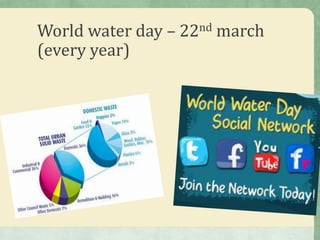
World water day – 22nd march
(every year)
THANK
YOU!


water for all

  • 1.
    Biology, water for all. Done by – Mrinali Grade – X
  • 2.
    Contents • Why water? •How do we save? *methods* • Dams • Water harvesting • Video • Thank you! 
  • 3.
    Why water? Whydo we need to save it? • Well, to answer that water is the most necessary source/ compound one needs in their life. • All life forms require water. • Only 0.3% of water is fresh water which is available to us!
  • 4.
    • Do wepollute them too?
  • 6.
    • Do weneed use it and forget about the people in different parts of the world suffering from scarcity of water?
  • 8.
    A study • Rainsin India are largely due to the monsoon. • Rain fall is received only for a few months in the year. • Failure of sustain water availability underground has resulted largely from loss of vegetation cover, diversion for high demand of crops, pollution from industries and also not to forget urban wastes.
  • 10.
    • Irrigation methodslike dams, tanks and canals have been used in various parts of India since ancient times. • There were managed by the local people to meet their requirements for both agriculture and daily needs (throughout the year) . • They would store water . • Cropping patterns would defer due to the availability . • Maintain the irrigation system.
  • 12.
    DAMS • Dams aremassive barriers built across rivers and streams to confine and utilize the flow of water for human purposes such as irrigation and generation of hydroelectricity. This confinement of water creates lakes or reservoirs.
  • 14.
    • Large damscan ensure the storage of adequate water not just for irrigation, but also for generating electricity, etc. • Canal systems from these dams can transfer large amounts of water great distances. • There is no equal distribution of water, thus people living close to the water resource grow water intensive crops like sugarcane and rice, etc.
  • 15.
    Problems faced byman with large dams i. Social problems – they displace large number of peasants and tribal's without adequate compensation. ii. Economic problems – they swallow up huge amounts of public money without the generation of proportionate benefits. iii. Environmental problems – they contribute to the loss of deforestation and loss of biodiversity.
  • 16.
    Water harvesting • Watershedmanagement emphasizes scientific soil and water conservation in order to increase the biomass production. • aim – is to develop primary resources of land and water, to produce secondary resources of plants and animals for use in a manner which will not cause ecological imbalance. • Increases the production and income of the watershed community, but also mitigates droughts and floods and increases the life of the downstream dam and reservoirs.
  • 18.
    • Various organisationshave been working on rejuvenating ancient systems of water harvesting as an alternative to the ‘mega-projects’ like dams. • These communities have used hundreds of indigenous water saving methods to capture every trickle of water that had fallen on their land; dug small pits and lakes, put in place simple watershed systems, built small earthen dams, constructed dykes, sand and limestone reservoirs, set up rooftop water-collecting units. • This has recharged groundwater levels and even brought rivers back to life.
  • 19.
    • The advantagesof water stored in the ground are many. • It does not evaporate, but spreads out to recharge wells and provides moisture for vegetation over a wide area. • In addition, it does not provide breeding grounds for mosquitoes like stagnant water collected in ponds or artificial lakes. • The ground-water is also relatively protected from contamination by human and animal waste.
  • 20.
    World water day– 22nd march (every year)
  • 21.