 FRESHWATER

 WATER SCARCITY
* Causes of water scarcity
* Needs to conserve water
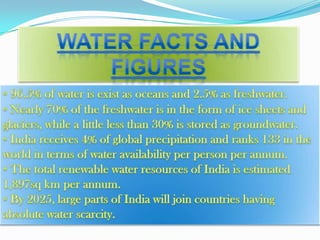
 WATER FACTS
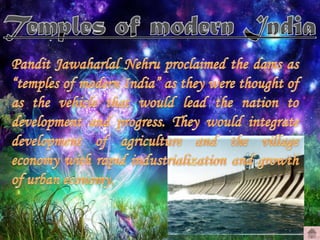
 TEMPLES OF MODERN INDIA
 MULTIPURPOSE RIVER PROJECTS
 CLASSIFICATION OF DAMS
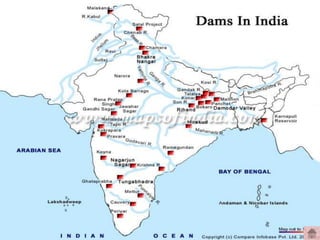
 DAMS IN INDIA (MAP)
 DISADVANTAGES OF DAMS
 RAINWATER HARVESTING
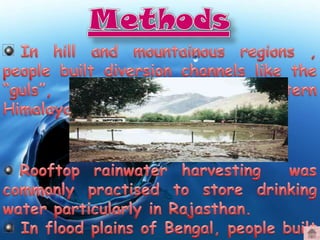
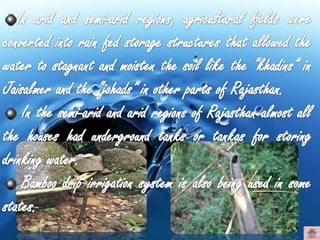
* Methods of rainwater harvesting
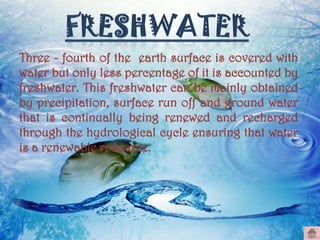
Three - fourth of the earth surface is covered with
water but only less percentage of it is accounted by
freshwater. This freshwater can be mainly obtained
by precipitation, surface run off and ground water
that is continually being renewed and recharged
through the hydrological cycle ensuring that water
is a renewable resource.
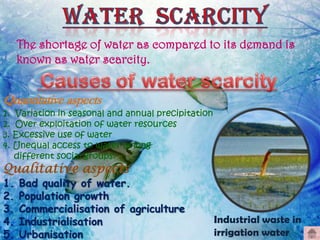
The shortage of water as compared to its demand is
known as water scarcity.

Quantitative aspects
1. Variation in seasonal and annual precipitation
2. Over exploitation of water resources
3. Excessive use of water
4. Unequal access to water among
different social groups.

Qualitative aspects
1.
2.
3.
4.
5.

Bad quality of water.
Population growth
Commercialisation of agriculture
Industrialisation
Urbanisation

Industrial waste in
irrigation water
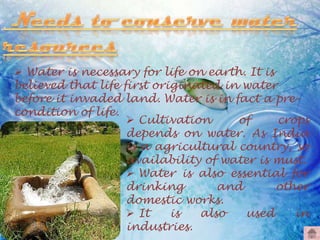
 Water is necessary for life on earth. It is
believed that life first originated in water
before it invaded land. Water is in fact a precondition of life.
 Cultivation
of
crops
depends on water. As India
is a agricultural country, so
availability of water is must.
 Water is also essential for
drinking
and
other
domestic works.
 It
is
also
used
in
industries.
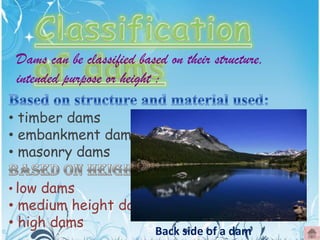
Dams can be classified based on their structure,
intended purpose or height :
• timber dams
• embankment dams
• masonry dams
• low dams

• medium height dams
• high dams

Back side of a dam
• Adverse effect on aquatic life:

• Adverse

effect on soil fertility:
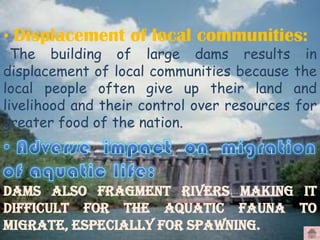
• Displacement of local communities:

The building of large dams results in
displacement of local communities because the
local people often give up their land and
livelihood and their control over resources for
greater food of the nation.

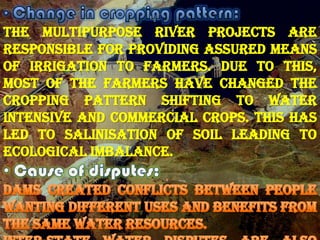
Dams also fragment rivers making it
difficult for the aquatic fauna to
migrate, especially for spawning.
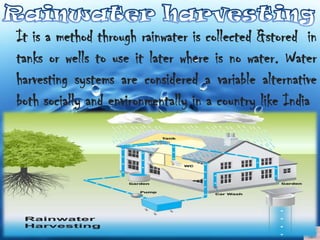
The multipurpose river projects are
responsible for providing assured means
of irrigation to farmers. Due to this,
most of the farmers have changed the
cropping pattern shifting to water
intensive and commercial crops. This has
led to salinisation of soil leading to
ecological imbalance.
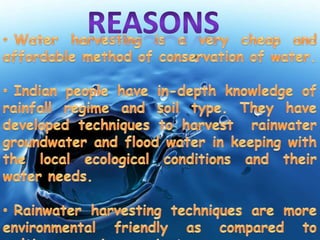
It is a method through rainwater is collected &stored in
tanks or wells to use it later where is no water. Water
harvesting systems are considered a variable alternative
both socially and environmentally in a country like India
Rainwater harvesting by
making tanks
Water resources
Water resources

Water resources

  • 3.
     FRESHWATER  WATERSCARCITY * Causes of water scarcity * Needs to conserve water  WATER FACTS  TEMPLES OF MODERN INDIA  MULTIPURPOSE RIVER PROJECTS  CLASSIFICATION OF DAMS  DAMS IN INDIA (MAP)  DISADVANTAGES OF DAMS  RAINWATER HARVESTING * Methods of rainwater harvesting
  • 4.
    Three - fourthof the earth surface is covered with water but only less percentage of it is accounted by freshwater. This freshwater can be mainly obtained by precipitation, surface run off and ground water that is continually being renewed and recharged through the hydrological cycle ensuring that water is a renewable resource.
  • 5.
    The shortage ofwater as compared to its demand is known as water scarcity. Quantitative aspects 1. Variation in seasonal and annual precipitation 2. Over exploitation of water resources 3. Excessive use of water 4. Unequal access to water among different social groups. Qualitative aspects 1. 2. 3. 4. 5. Bad quality of water. Population growth Commercialisation of agriculture Industrialisation Urbanisation Industrial waste in irrigation water
  • 6.
     Water isnecessary for life on earth. It is believed that life first originated in water before it invaded land. Water is in fact a precondition of life.  Cultivation of crops depends on water. As India is a agricultural country, so availability of water is must.  Water is also essential for drinking and other domestic works.  It is also used in industries.
  • 12.
    Dams can beclassified based on their structure, intended purpose or height : • timber dams • embankment dams • masonry dams • low dams • medium height dams • high dams Back side of a dam
  • 14.
    • Adverse effecton aquatic life: • Adverse effect on soil fertility:
  • 15.
    • Displacement oflocal communities: The building of large dams results in displacement of local communities because the local people often give up their land and livelihood and their control over resources for greater food of the nation. Dams also fragment rivers making it difficult for the aquatic fauna to migrate, especially for spawning.
  • 16.
    The multipurpose riverprojects are responsible for providing assured means of irrigation to farmers. Due to this, most of the farmers have changed the cropping pattern shifting to water intensive and commercial crops. This has led to salinisation of soil leading to ecological imbalance.
  • 17.
    It is amethod through rainwater is collected &stored in tanks or wells to use it later where is no water. Water harvesting systems are considered a variable alternative both socially and environmentally in a country like India
  • 21.