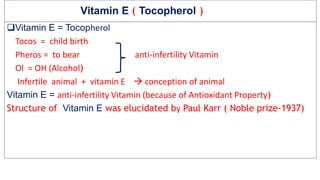
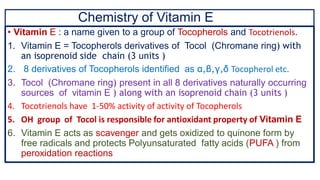
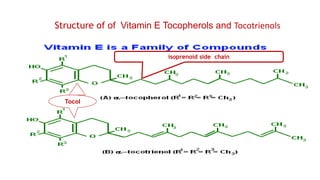
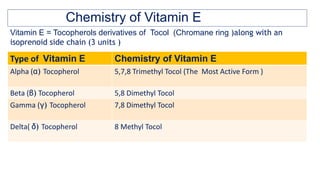
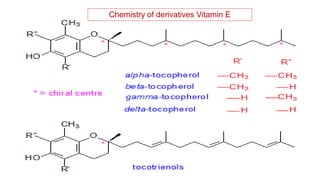
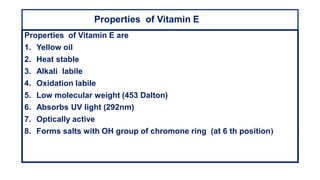
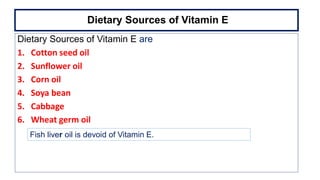
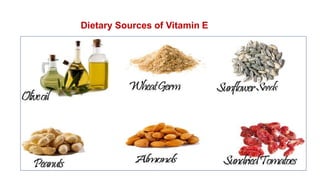
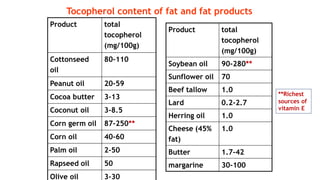
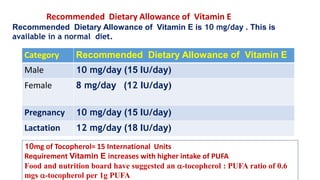
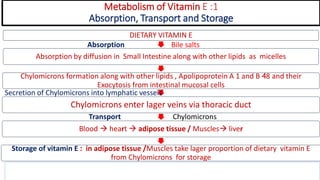
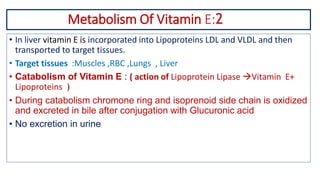
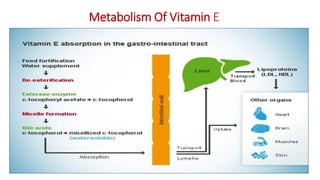
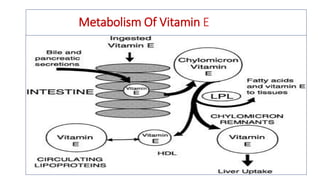
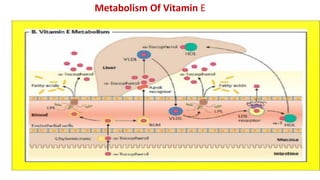
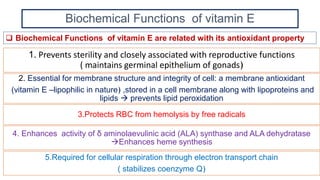
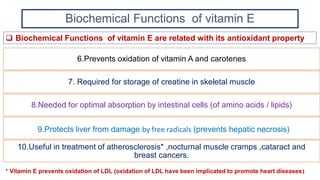
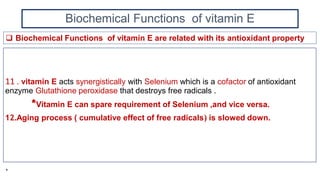
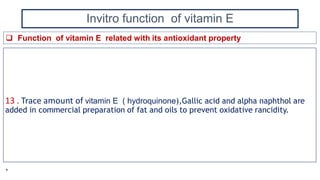
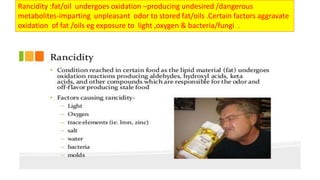
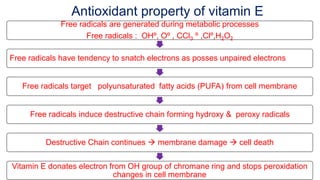
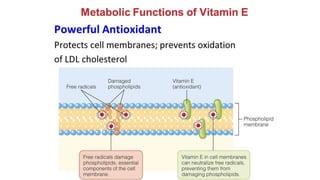
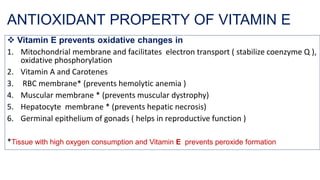
Vitamin E, primarily made up of tocopherols and tocotrienols, has significant antioxidant properties that aid in preventing infertility and protecting cell membranes from oxidative damage. It is absorbed through the intestine, stored in adipose tissues, and plays various biochemical roles, including maintaining reproductive health and preventing lipid peroxidation. Dietary sources include vegetable oils and certain foods, with recommended daily allowances of 10 mg for males and 8 mg for females.



![VITAMIN B12[CYNACOBALAMIN][COBALAMIN],SOURCES OFVITAMIN B12,VITAMIN B12 DEFIC...](https://cdn.slidesharecdn.com/ss_thumbnails/vitaminb12ravisankar-vignanpharmacy-130615121944-phpapp01-thumbnail.jpg?width=640&height=640&fit=bounds)


