Student name:
ALKOLBEE ALAA RADHI MUHSSIN
Lesson: clinical biochemistry
Yanka Kupala State University of Grodno
VitaminE
01 02
0403
05
Introduction
CHEMISTRYANDMETABOLISM BIOCHEMICALFUNCTIONS
HistoryofvitaminE
Recommendiationandsources
06
Clinicalmanifestation
Ataxiawithvit.Edeficiency Roleofvit.Einthenutritionofprematureinfants
Lapfindingandtreatment
07 08
09 TABLE OF CONTENTS
 Its called TOCOPHEROL OR VITAMIN E
the word tocopherol is derived from the word
toco meaning child birth and pheros meaning
to bear
 Vitamin E is naturally occurring anti-
oxidant. It is yellow oily liquid freely soluble
in fat solvent.
 It is known as “anti-sterility vitamin” because
it helps in normal reproduction in many
animals.
 Also known a beauty vitamin (anti-aging
factor.)
INTRODUCTION
 1922:discovery of vitamin E by Herbert M. evans
and Katharine bishop
 1922: Evans and Bishop, described Vitamin E
deficiency
 1936: Evans et al, Isolated α-tocopherol
 1960s: Vitamin E deficiency was described in
 children with fat mal absorption
syndromes
 1980s: Major symptom of vitamin E deficiency
in Human was a peripheral neuropathy. .
History of vitamin E
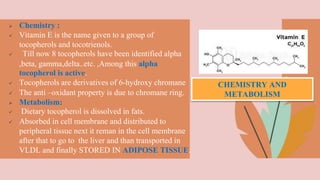
 Chemistry :
 Vitamin E is the name given to a group of
tocopherols and tocotrienols.
 Till now 8 tocopherols have been identified alpha
,beta, gamma,delta..etc. ,Among this alpha
tocopherol is active.
 Tocopherols are derivatives of 6-hydroxy chromane
 The anti –oxidant property is due to chromane ring.
 Metabolism:
 Dietary tocopherol is dissolved in fats.
 Absorbed in cell membrane and distributed to
peripheral tissue next it reman in the cell membrane
after that to go to the liver and than transported in
VLDL and finally STORED IN ADIPOSE TISSUE.
CHEMISTRY AND
METABOLISM
.
1.Vitamin E is essential for the membrane structure and integrity of
the cell ,hence it is regarded as a membrane antioxidant.
2.It prevents the peroxidation of PUFA in various tissues and
membranes .it prevents RBC from hemolysis by oxidizing agents
ex.. Hydrogenperoxide.
3.It is closely associated with reproductive functions and prevents
sterility. vit.E preserves and maintains germinal epithelium of
gonads for proper reproductive function.
BIOCHEMICAL FUNCTIONS :
4.Vitamin E protects liver from being damaged by toxic
compounds such as carbon tetrachloride.
5.It works in association with vitamin A,C and beta carotene to
delay the onset of cataract.
6.RECENT studies have shown that high intake of vitamin E
protects against the development of heart diseases. It is believed
that vit.E prevents oxidation of LDL. The oxidized LDL Have
been implicated to promote heart diseases .
 Vitamin E also inhibits the conversion of nitrites in the stomach to
nitrosamines, which are cancer promoters.
BIOCHEMICAL FUNCTIONS :
A daily consumption of
10 mg (15 IU) of alpha
tocopherol for man.
8mg 12 IU for woman is
recommended
1mg of alpha tocopherol
=1.5 IU.
Vitamin E supplement is
advised for pregnant and
lactating women.
Recommended dietary
allowance (RDA)
Recommendiation
and
sources
Eggs • Milk • Nuts,
such as almonds •
Spinach and other
green leafy vegetables•
Unheated vegetable oils
Wheat germ •
Wholegrain foods •
Dietary sources
• A severe ,progressive neurological
disorder.
• Loss of deep tendon reflexes
• Limb ataxia
• Dysarthria
• Ophthalmoplegia
• Nystagmus
• Positive romberg test
• Edema in premature infant and
hemolysis
Clinical manifestation
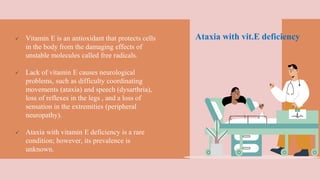
Ataxia with vit.E deficiency Vitamin E is an antioxidant that protects cells
in the body from the damaging effects of
unstable molecules called free radicals.
 Lack of vitamin E causes neurological
problems, such as difficulty coordinating
movements (ataxia) and speech (dysarthria),
loss of reflexes in the legs , and a loss of
sensation in the extremities (peripheral
neuropathy).
 Ataxia with vitamin E deficiency is a rare
condition; however, its prevalence is
unknown.
Role of vit.E in the
nutrition of
premature infants
 Vitamin E (a-tocopherol) has been credited with a variety of
beneficial effects in the premature newborn infant. It has
been thought that deficiency of vitamin E is at least partly
responsible for the anemia which often occurs 4 to 6 wk. after
premature birth, and routine dietary supplementation with
vitamin E is frequently recommended.
 In NEWBORN vitamin E acts free radical scavenger and
natural anti-oxidant that Protects the cell membranes against
lipid peroxidation.
 REQUIRED FOR PREMATURE BABY: Because there is a
significant transfer of vitamin E during the last trimester of
pregnancy.so , vitamin E is required for preventing hemolysis
,edema and anemia
 In neonates dose 25-50
units/day for 1week .
 TOXICITY :NO
TOXIC EFFECT HAS
BEEN REPORTED .
 Serum vit.E LEVEL increases in
presences of high serum lipid levels
 Ratio <.8mg/g is abnormal
 Premature infants with hemolysis
due to vit.E def. Have elevated
platelet counts
Lap finding Treatment of vit.E def.
THANKS

vitamin E

  • 1.
    Student name: ALKOLBEE ALAARADHI MUHSSIN Lesson: clinical biochemistry Yanka Kupala State University of Grodno VitaminE
  • 2.
  • 3.
     Its calledTOCOPHEROL OR VITAMIN E the word tocopherol is derived from the word toco meaning child birth and pheros meaning to bear  Vitamin E is naturally occurring anti- oxidant. It is yellow oily liquid freely soluble in fat solvent.  It is known as “anti-sterility vitamin” because it helps in normal reproduction in many animals.  Also known a beauty vitamin (anti-aging factor.) INTRODUCTION
  • 4.
     1922:discovery ofvitamin E by Herbert M. evans and Katharine bishop  1922: Evans and Bishop, described Vitamin E deficiency  1936: Evans et al, Isolated α-tocopherol  1960s: Vitamin E deficiency was described in  children with fat mal absorption syndromes  1980s: Major symptom of vitamin E deficiency in Human was a peripheral neuropathy. . History of vitamin E
  • 5.
     Chemistry : Vitamin E is the name given to a group of tocopherols and tocotrienols.  Till now 8 tocopherols have been identified alpha ,beta, gamma,delta..etc. ,Among this alpha tocopherol is active.  Tocopherols are derivatives of 6-hydroxy chromane  The anti –oxidant property is due to chromane ring.  Metabolism:  Dietary tocopherol is dissolved in fats.  Absorbed in cell membrane and distributed to peripheral tissue next it reman in the cell membrane after that to go to the liver and than transported in VLDL and finally STORED IN ADIPOSE TISSUE. CHEMISTRY AND METABOLISM
  • 6.
    . 1.Vitamin E isessential for the membrane structure and integrity of the cell ,hence it is regarded as a membrane antioxidant. 2.It prevents the peroxidation of PUFA in various tissues and membranes .it prevents RBC from hemolysis by oxidizing agents ex.. Hydrogenperoxide. 3.It is closely associated with reproductive functions and prevents sterility. vit.E preserves and maintains germinal epithelium of gonads for proper reproductive function. BIOCHEMICAL FUNCTIONS :
  • 7.
    4.Vitamin E protectsliver from being damaged by toxic compounds such as carbon tetrachloride. 5.It works in association with vitamin A,C and beta carotene to delay the onset of cataract. 6.RECENT studies have shown that high intake of vitamin E protects against the development of heart diseases. It is believed that vit.E prevents oxidation of LDL. The oxidized LDL Have been implicated to promote heart diseases .  Vitamin E also inhibits the conversion of nitrites in the stomach to nitrosamines, which are cancer promoters. BIOCHEMICAL FUNCTIONS :
  • 8.
    A daily consumptionof 10 mg (15 IU) of alpha tocopherol for man. 8mg 12 IU for woman is recommended 1mg of alpha tocopherol =1.5 IU. Vitamin E supplement is advised for pregnant and lactating women. Recommended dietary allowance (RDA) Recommendiation and sources Eggs • Milk • Nuts, such as almonds • Spinach and other green leafy vegetables• Unheated vegetable oils Wheat germ • Wholegrain foods • Dietary sources
  • 9.
    • A severe,progressive neurological disorder. • Loss of deep tendon reflexes • Limb ataxia • Dysarthria • Ophthalmoplegia • Nystagmus • Positive romberg test • Edema in premature infant and hemolysis Clinical manifestation
  • 10.
    Ataxia with vit.Edeficiency Vitamin E is an antioxidant that protects cells in the body from the damaging effects of unstable molecules called free radicals.  Lack of vitamin E causes neurological problems, such as difficulty coordinating movements (ataxia) and speech (dysarthria), loss of reflexes in the legs , and a loss of sensation in the extremities (peripheral neuropathy).  Ataxia with vitamin E deficiency is a rare condition; however, its prevalence is unknown.
  • 11.
    Role of vit.Ein the nutrition of premature infants  Vitamin E (a-tocopherol) has been credited with a variety of beneficial effects in the premature newborn infant. It has been thought that deficiency of vitamin E is at least partly responsible for the anemia which often occurs 4 to 6 wk. after premature birth, and routine dietary supplementation with vitamin E is frequently recommended.  In NEWBORN vitamin E acts free radical scavenger and natural anti-oxidant that Protects the cell membranes against lipid peroxidation.  REQUIRED FOR PREMATURE BABY: Because there is a significant transfer of vitamin E during the last trimester of pregnancy.so , vitamin E is required for preventing hemolysis ,edema and anemia
  • 12.
     In neonatesdose 25-50 units/day for 1week .  TOXICITY :NO TOXIC EFFECT HAS BEEN REPORTED .  Serum vit.E LEVEL increases in presences of high serum lipid levels  Ratio <.8mg/g is abnormal  Premature infants with hemolysis due to vit.E def. Have elevated platelet counts Lap finding Treatment of vit.E def.
  • 13.