Visual Symbols
By: ROSANNA B. SERA
Visual Symbols
Are representation of direct reality, which comes in the form of signs and
symbols.
Rules of thumbs in using visuals:
1. Visuals must be directly relevant to the audio content.
2. Redundancy between visual and audio must be avoided.
3. Visual displays should be big enough to be seen by the farthest student.
4. Visual displays must be attractive
5. Visual displays must be aesthetically presented to maintain good taste.
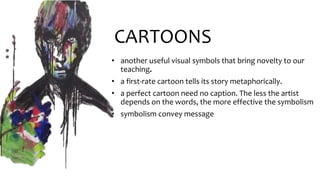
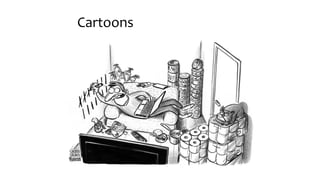
CARTOONS
• another useful visual symbols that bring novelty to our
teaching.
• a first-rate cartoon tells its story metaphorically.
• a perfect cartoon need no caption. The less the artist
depends on the words, the more effective the symbolism
• symbolism convey message
Cartoons
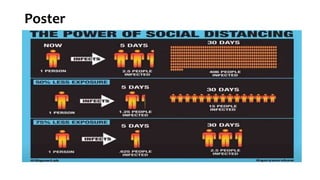
POSTERS
Is a picture with appropriate caption. Primarily
intended to catch attention and catch
attention.
Poster
Drawing and Sketches
- Crude and simple lines, which are effective in showing
what needs to be shown with sufficient clarity, to make
the meaning vivid to learners.
Drawing and sketches
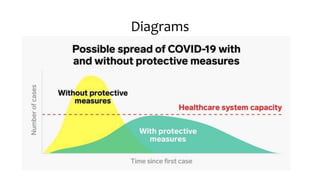
Diagrams
- are simplified drawings designed to show
interrelationship primarily by means of lines and
symbols.
- used to condense visual summaries of facts, the
ideas rely heavily on symbolic means.
Diagrams
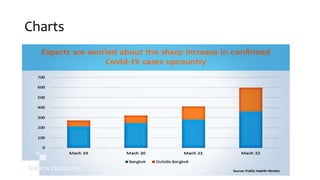
Charts
-graphic or pictorial representations of a
large mass of information or showing
progression thru time and space of
people or events, ideas and object.
Charts
Graphs
• Presents quantitative data for easier analysis and
interpretation.
• Shows comparative relationship of data involve in
size, trends and growth.
Graphs
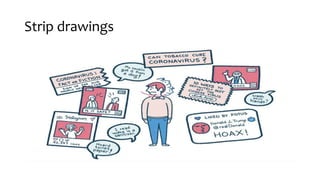
Strip Drawing
• Recommended for their story value in adaptation
of the classic
• Effective instruction not only because they are
simple, clear and easy to read but because they
deal with materials that made personal.
Strip drawings
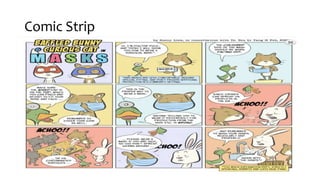
Comics strip
• Form of cartooning in which the same cast
of characters from a story in a sequence of
closely related drawings designed to
entertain.
Comic Strip
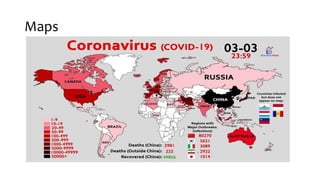
Maps
Is a representation of the surface of the
earth or some part of it.
Maps
Visual Symbols
Summary
Summary:
• Like a picture, a graph and all other visual symbols, are worth a thousand
words. The proper use of the visual symbols will contribute to optimum
learning.
• Visual symbol come in many forms. For these visual symbols to be at your
finger tips, you ought to be patient and imaginative in making them.
• The collection, preparation and use of these various visual symbols depend on
your own resourcefulness and creativity. If you used them skillfully, your
classroom may be full enthusiastic and happy students eager to learn and
listen.
“You grow up trying to interpret,
worshipping, visual symbol. It’s a
body-soaked imagery that you’re
looking at.” Robert Gerber
By: ROSANNA B. SERA

Visual symbols by rosanna b. sera

  • 1.
  • 2.
    Visual Symbols Are representationof direct reality, which comes in the form of signs and symbols. Rules of thumbs in using visuals: 1. Visuals must be directly relevant to the audio content. 2. Redundancy between visual and audio must be avoided. 3. Visual displays should be big enough to be seen by the farthest student. 4. Visual displays must be attractive 5. Visual displays must be aesthetically presented to maintain good taste.
  • 3.
    CARTOONS • another usefulvisual symbols that bring novelty to our teaching. • a first-rate cartoon tells its story metaphorically. • a perfect cartoon need no caption. The less the artist depends on the words, the more effective the symbolism • symbolism convey message
  • 4.
  • 5.
    POSTERS Is a picturewith appropriate caption. Primarily intended to catch attention and catch attention.
  • 6.
  • 7.
    Drawing and Sketches -Crude and simple lines, which are effective in showing what needs to be shown with sufficient clarity, to make the meaning vivid to learners.
  • 8.
  • 9.
    Diagrams - are simplifieddrawings designed to show interrelationship primarily by means of lines and symbols. - used to condense visual summaries of facts, the ideas rely heavily on symbolic means.
  • 10.
  • 11.
    Charts -graphic or pictorialrepresentations of a large mass of information or showing progression thru time and space of people or events, ideas and object.
  • 12.
  • 13.
    Graphs • Presents quantitativedata for easier analysis and interpretation. • Shows comparative relationship of data involve in size, trends and growth.
  • 14.
  • 15.
    Strip Drawing • Recommendedfor their story value in adaptation of the classic • Effective instruction not only because they are simple, clear and easy to read but because they deal with materials that made personal.
  • 16.
  • 17.
    Comics strip • Formof cartooning in which the same cast of characters from a story in a sequence of closely related drawings designed to entertain.
  • 18.
  • 19.
    Maps Is a representationof the surface of the earth or some part of it.
  • 20.
  • 21.
  • 22.
    Summary: • Like apicture, a graph and all other visual symbols, are worth a thousand words. The proper use of the visual symbols will contribute to optimum learning. • Visual symbol come in many forms. For these visual symbols to be at your finger tips, you ought to be patient and imaginative in making them. • The collection, preparation and use of these various visual symbols depend on your own resourcefulness and creativity. If you used them skillfully, your classroom may be full enthusiastic and happy students eager to learn and listen.
  • 23.
    “You grow uptrying to interpret, worshipping, visual symbol. It’s a body-soaked imagery that you’re looking at.” Robert Gerber By: ROSANNA B. SERA