ADVANCED FASHION:
STANDARD 9
VISUAL MERCHANDISING
   Visual Merchandising: The physical
    display of goods in the most attractive
    and appealing ways.
       Store Layout: the interior arrangement of
        retail facilities.
       Selling areas: where merchandise is
        displayed and customers interact with sales
        personnel. (75-80% of the total space)
       Sales support areas: devoted to customer
        services, merchandise receiving and
        distribution, management offices and staff
        activities.
VISUAL MERCHANDISING
    Floor Plan: A drawing showing arrangement
     of physical space, such as showing the
     positioning of merchandise groups and
     customer services for a retail store.
    Grid Layout: A retail floor plan that has one
     of ore primary (main) aisles running through
     the store, with secondary (smaller) aisles
     intersecting with them at right angles.
    Maze Layout: A free-flowing retail floor plan
     arrangement with informal balance.
    Fixtures: Shelves, tables, rods, counters,
     stands, easels, forms, and platforms on
     which merchandise is stocked and displayed
     for sale.
MERCHANDISE
                         PRESENTATION

   Merchandise presentation includes the ways that
    goods are hung, placed on shelves, or otherwise
    made available for sale in retail stores.
       Shoulder-out presentation: The way most
        garments are hung in home closets with only one
        side showing from shoulder to bottom.
       Face-forward presentation (face-out
        presentation): Hanging of clothing with the front
        fully facing the viewer. This should always be
        done at entrances and aisles.
RETAIL FIXTURES

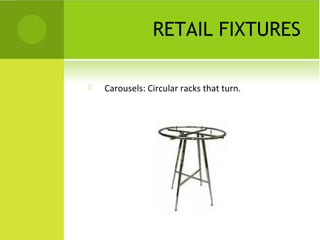
   Carousels: Circular racks that turn.
RETAIL FIXTURES

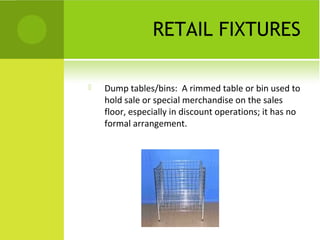
   Dump tables/bins: A rimmed table or bin used to
    hold sale or special merchandise on the sales
    floor, especially in discount operations; it has no
    formal arrangement.
RETAIL FIXTURES

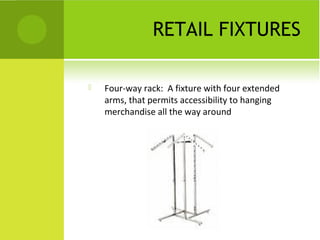
   Four-way rack: A fixture with four extended
    arms, that permits accessibility to hanging
    merchandise all the way around
RETAIL FIXTURES

   Rounders: Circular racks on which garments are
    hung around the entire circumference
RETAIL FIXTURES

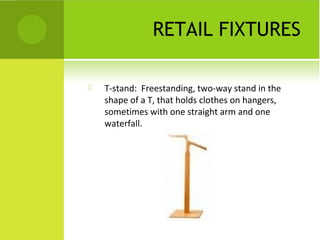
   T-stand: Freestanding, two-way stand in the
    shape of a T, that holds clothes on hangers,
    sometimes with one straight arm and one
    waterfall.
RETAIL FIXTURES

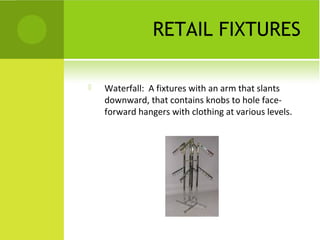
   Waterfall: A fixtures with an arm that slants
    downward, that contains knobs to hole face-
    forward hangers with clothing at various levels.
DISPLAYS
   Displays: individual and notable physical presentation
    of merchandise.
   Displays are intended to:
       Stimulate product interest
       Provide information
       Suggest merchandise coordination
       Generate traffic flow
       Remind customers of planned purchases
       Create additional sales of impulse items
       Enhance the store’s visual image
INTERIOR DISPLAYS

   Locations for interior displays:
       Just in the entrance
       Entrance to department
       Near cash/wrap
       Next to related items
       Across from elevators and escalators
       Ends of aisles
COMPONENTS OF DISPLAYS

    Merchandise
    Lighting
    Props
    Signage
MERCHANDISE
   More interesting if in odd numbers
       Groups:
           One-category, or line-of-goods
           Related groupings: go together or reinforce each
            other
           Theme groupings: event, holiday, etc.
           Variety or assortment groupings: collection of
            unrelated items all sold at the same store.
LIGHTING
   Used to direct customer’s attention to the
    display
       Use more light for dark colors, less light for light
        colors
       Beamspread; the diameter of the circle of light
       Beamspread techniques:
           Floodlighting: recessed ceiling lights to direct light
            over an entire wide display area
           Spotlighting: focuses attention on specific areas or
            targeted items of merchandise
           Pinpointing: focuses a narrow beam of light on a
            specific item
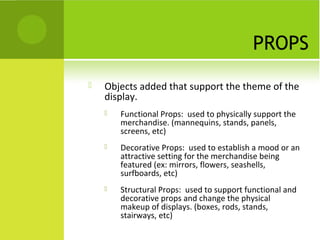
PROPS
   Objects added that support the theme of the
    display.
       Functional Props: used to physically support the
        merchandise. (mannequins, stands, panels,
        screens, etc)
       Decorative Props: used to establish a mood or an
        attractive setting for the merchandise being
        featured (ex: mirrors, flowers, seashells,
        surfboards, etc)
       Structural Props: used to support functional and
        decorative props and change the physical
        makeup of displays. (boxes, rods, stands,
        stairways, etc)
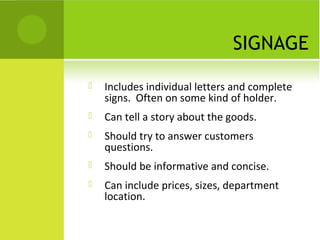
SIGNAGE
   Includes individual letters and complete
    signs. Often on some kind of holder.
   Can tell a story about the goods.
   Should try to answer customers
    questions.
   Should be informative and concise.
   Can include prices, sizes, department
    location.
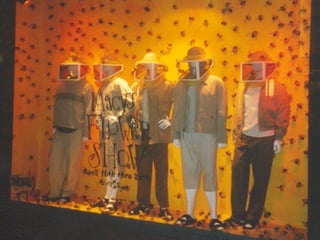
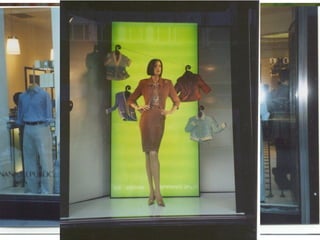
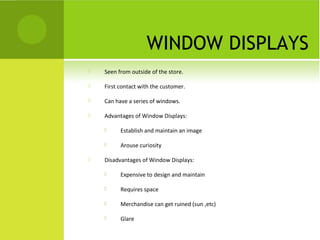
WINDOW DISPLAYS
   Seen from outside of the store.

   First contact with the customer.

   Can have a series of windows.

   Advantages of Window Displays:

         Establish and maintain an image

         Arouse curiosity

   Disadvantages of Window Displays:

         Expensive to design and maintain

         Requires space

         Merchandise can get ruined (sun ,etc)

         Glare
TYPES OF WINDOW DISPLAYS

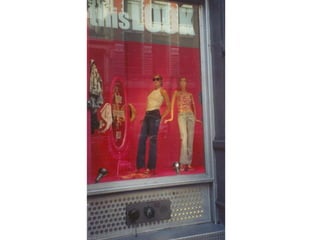
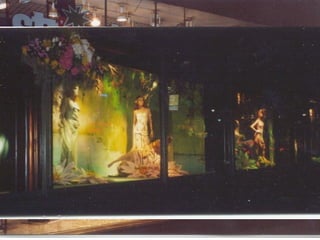
   Enclosed windows: have a full
    background and sides that completely
    separate the interior of the store from
    the display window.
       Ramped windows: floor is higher in back
        than in front
       Elevated windows: from 1 to 3 feet higher
        than sidewalk
       Shadowbox windows: small, boxlike display
        windows
TYPES OF WINDOW DISPLAYS

   Semi-closed windows: have a partial
    background that shuts out some of the
    store interior from those viewing the
    window
   Open Windows: have no background
    panel and the entire store is visible to
    people walking by
   Island windows: four-sided display
    windows that stand alone, often in
    lobbies.
Visual Merchandise

Visual Merchandise

  • 1.
  • 2.
    VISUAL MERCHANDISING  Visual Merchandising: The physical display of goods in the most attractive and appealing ways.  Store Layout: the interior arrangement of retail facilities.  Selling areas: where merchandise is displayed and customers interact with sales personnel. (75-80% of the total space)  Sales support areas: devoted to customer services, merchandise receiving and distribution, management offices and staff activities.
  • 3.
    VISUAL MERCHANDISING  Floor Plan: A drawing showing arrangement of physical space, such as showing the positioning of merchandise groups and customer services for a retail store.  Grid Layout: A retail floor plan that has one of ore primary (main) aisles running through the store, with secondary (smaller) aisles intersecting with them at right angles.  Maze Layout: A free-flowing retail floor plan arrangement with informal balance.  Fixtures: Shelves, tables, rods, counters, stands, easels, forms, and platforms on which merchandise is stocked and displayed for sale.
  • 4.
    MERCHANDISE PRESENTATION  Merchandise presentation includes the ways that goods are hung, placed on shelves, or otherwise made available for sale in retail stores.  Shoulder-out presentation: The way most garments are hung in home closets with only one side showing from shoulder to bottom.  Face-forward presentation (face-out presentation): Hanging of clothing with the front fully facing the viewer. This should always be done at entrances and aisles.
  • 5.
    RETAIL FIXTURES  Carousels: Circular racks that turn.
  • 6.
    RETAIL FIXTURES  Dump tables/bins: A rimmed table or bin used to hold sale or special merchandise on the sales floor, especially in discount operations; it has no formal arrangement.
  • 7.
    RETAIL FIXTURES  Four-way rack: A fixture with four extended arms, that permits accessibility to hanging merchandise all the way around
  • 8.
    RETAIL FIXTURES  Rounders: Circular racks on which garments are hung around the entire circumference
  • 9.
    RETAIL FIXTURES  T-stand: Freestanding, two-way stand in the shape of a T, that holds clothes on hangers, sometimes with one straight arm and one waterfall.
  • 10.
    RETAIL FIXTURES  Waterfall: A fixtures with an arm that slants downward, that contains knobs to hole face- forward hangers with clothing at various levels.
  • 11.
    DISPLAYS  Displays: individual and notable physical presentation of merchandise.  Displays are intended to:  Stimulate product interest  Provide information  Suggest merchandise coordination  Generate traffic flow  Remind customers of planned purchases  Create additional sales of impulse items  Enhance the store’s visual image
  • 12.
    INTERIOR DISPLAYS  Locations for interior displays:  Just in the entrance  Entrance to department  Near cash/wrap  Next to related items  Across from elevators and escalators  Ends of aisles
  • 13.
    COMPONENTS OF DISPLAYS  Merchandise  Lighting  Props  Signage
  • 14.
    MERCHANDISE  More interesting if in odd numbers  Groups:  One-category, or line-of-goods  Related groupings: go together or reinforce each other  Theme groupings: event, holiday, etc.  Variety or assortment groupings: collection of unrelated items all sold at the same store.
  • 15.
    LIGHTING  Used to direct customer’s attention to the display  Use more light for dark colors, less light for light colors  Beamspread; the diameter of the circle of light  Beamspread techniques:  Floodlighting: recessed ceiling lights to direct light over an entire wide display area  Spotlighting: focuses attention on specific areas or targeted items of merchandise  Pinpointing: focuses a narrow beam of light on a specific item
  • 17.
    PROPS  Objects added that support the theme of the display.  Functional Props: used to physically support the merchandise. (mannequins, stands, panels, screens, etc)  Decorative Props: used to establish a mood or an attractive setting for the merchandise being featured (ex: mirrors, flowers, seashells, surfboards, etc)  Structural Props: used to support functional and decorative props and change the physical makeup of displays. (boxes, rods, stands, stairways, etc)
  • 19.
    SIGNAGE  Includes individual letters and complete signs. Often on some kind of holder.  Can tell a story about the goods.  Should try to answer customers questions.  Should be informative and concise.  Can include prices, sizes, department location.
  • 20.
    WINDOW DISPLAYS  Seen from outside of the store.  First contact with the customer.  Can have a series of windows.  Advantages of Window Displays:  Establish and maintain an image  Arouse curiosity  Disadvantages of Window Displays:  Expensive to design and maintain  Requires space  Merchandise can get ruined (sun ,etc)  Glare
  • 21.
    TYPES OF WINDOWDISPLAYS  Enclosed windows: have a full background and sides that completely separate the interior of the store from the display window.  Ramped windows: floor is higher in back than in front  Elevated windows: from 1 to 3 feet higher than sidewalk  Shadowbox windows: small, boxlike display windows
  • 23.
    TYPES OF WINDOWDISPLAYS  Semi-closed windows: have a partial background that shuts out some of the store interior from those viewing the window  Open Windows: have no background panel and the entire store is visible to people walking by  Island windows: four-sided display windows that stand alone, often in lobbies.