Visual
merchandising
prepared by: tinsaye asfaw
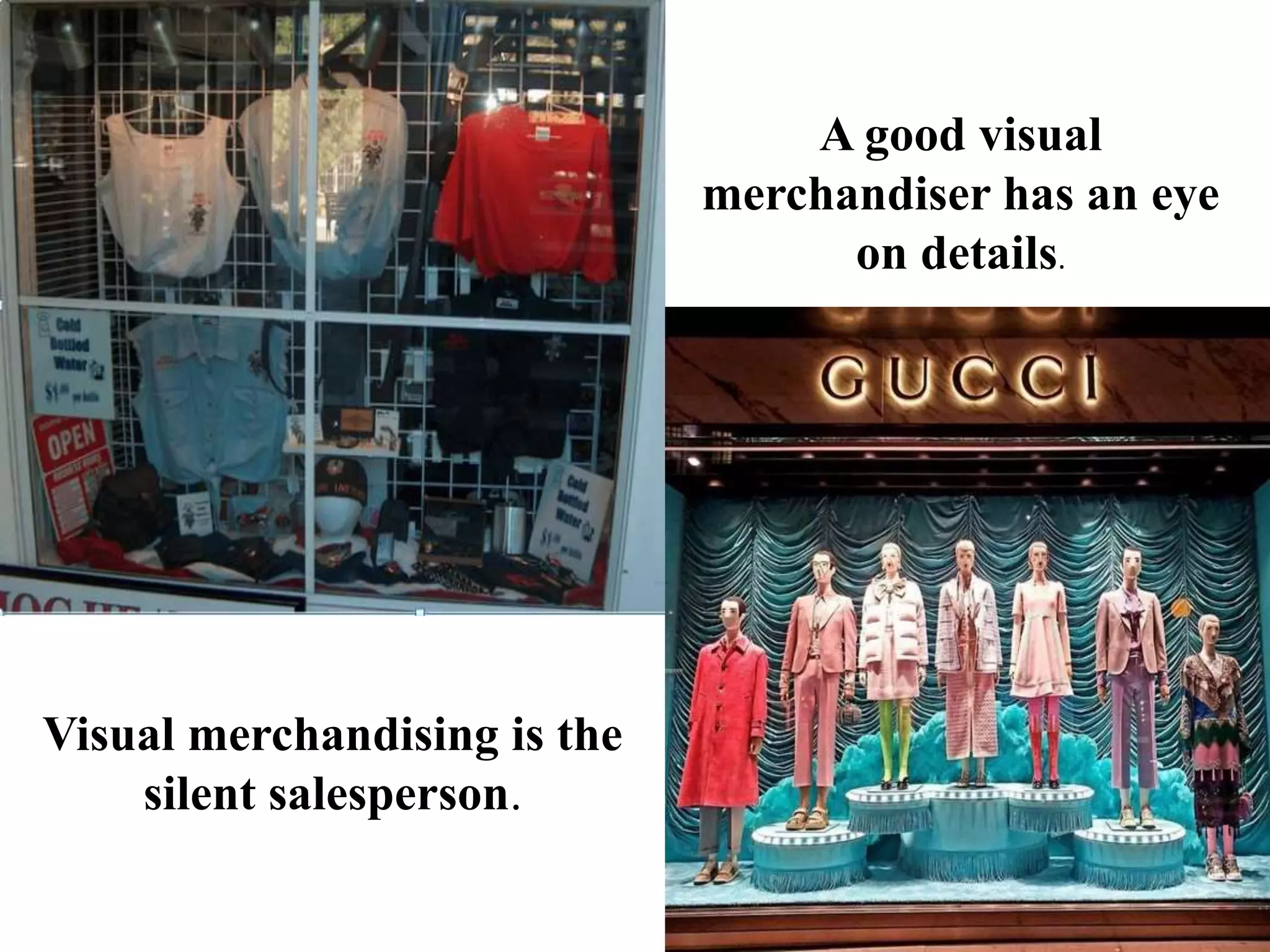
A good visual
merchandiser has an eye
on details.
Visual merchandising is the
silent salesperson.
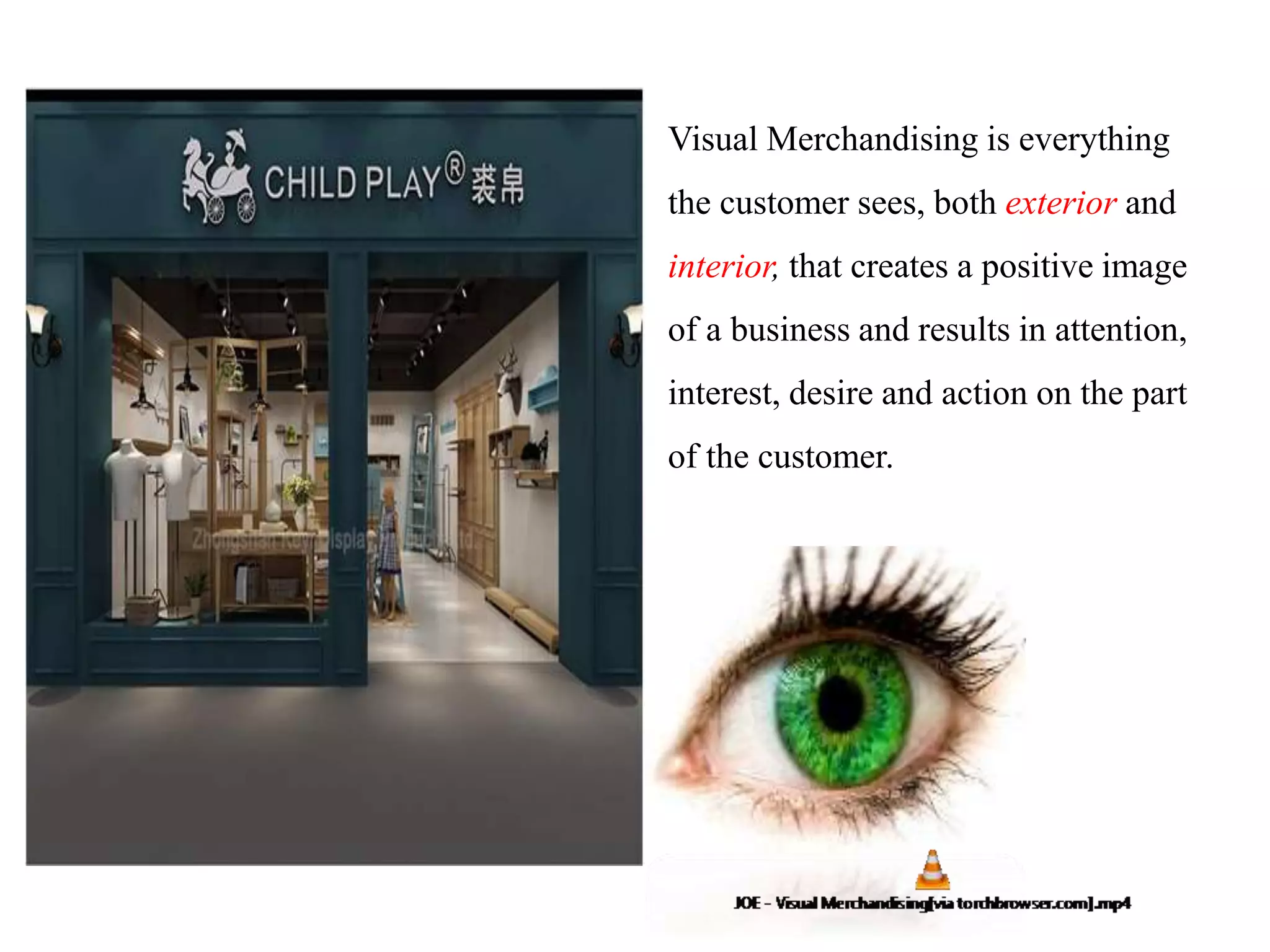
Visual Merchandising is everything
the customer sees, both exterior and
interior, that creates a positive image
of a business and results in attention,
interest, desire and action on the part
of the customer.
Principles of visual merchandising
• Make the merchandise
visible.
• Make the merchandise
tangible and accessible.
• Give the shoppers good
choice.
ELEMENTS OF
DESIGN
1. Space
Area provided for particular
purpose
Distance between components
• Positive(the object)
• Negative(the space)
2. LINE
• Continuous movement
of a long surface.
• Have length, dimension
and thickness
• Polka dot: is a pattern
consisting of an array of
large field circle.
e.g. Vertical, horizontal,
diagonal and zigzag.
PSYCHOLOGY OF
LINE
Vertical line: strength,
height, pride, majesty and
dignity
Horizontal: Easy, rest full
and elegant
Curved: Grace and
feminist
Diagonal: Forceful, strong
and dynamic
3. COLOR
Peoples buy color before checking
size.
Primary: red, blue and yellow
Secondary: by mixing primary colours
Orange, purple(violet),green
Tertiary: by mixing primary and
secondary color.
Red orange, red purple, blue purple,
blue green, yellow orange, yellow
green.
Complementary: opposite
each other in the color
wheel.
Analogues: side by side
Monochromatic: tint(add
white)/shade(add black)
PSYCHOLOGY OF
COLOR
Blue: blue sky, dark night, deep
sea and Trust worthy
Red: strong full of energy and
warm, Sexual, aggressive(volcano)
Yellow: sun, optimism,
confidence, creativity, Buddhism,
emotional
Green: fresh, balance, rest
Orange: positive energy
Purple: spiritual, quality expression to
cosmetic industry
White: clean, pure, simple
Grey: works for every thing
Brown: stable and reliable
Relief about someone, inflexible
4. SHAPE
• When area enclosed by lines
• Is 2D(dimensional) object
Geometric: made by humans e.g. triangle)
Organic: it is natural and asymmetrical
5. TEXTURE
Surface object feel
• Implied: only see you
can not feel
e.g. picture, photo and
drawing
• Actual(tectile): you can feel and touch
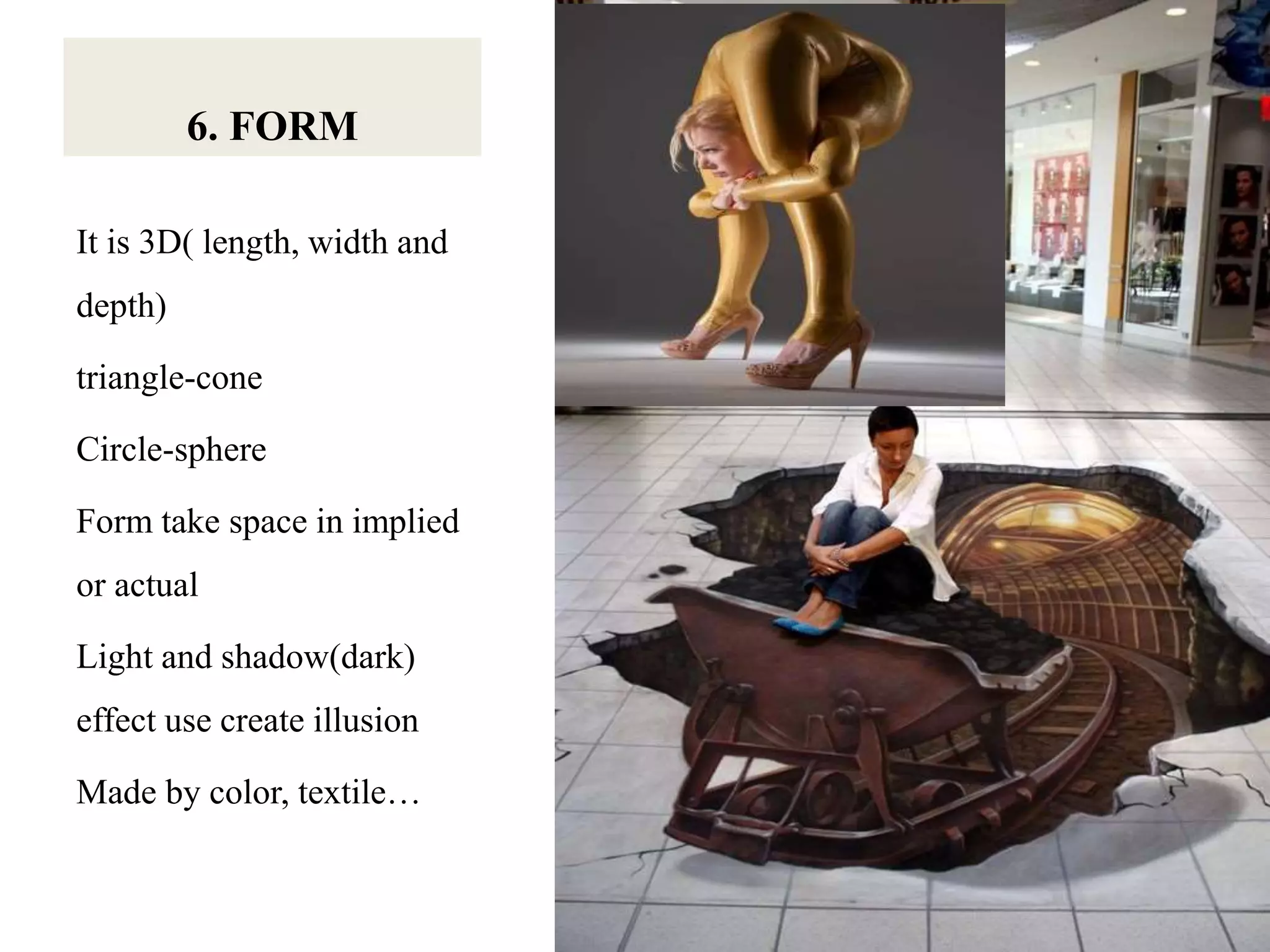
6. FORM
It is 3D( length, width and
depth)
triangle-cone
Circle-sphere
Form take space in implied
or actual
Light and shadow(dark)
effect use create illusion
Made by color, textile…
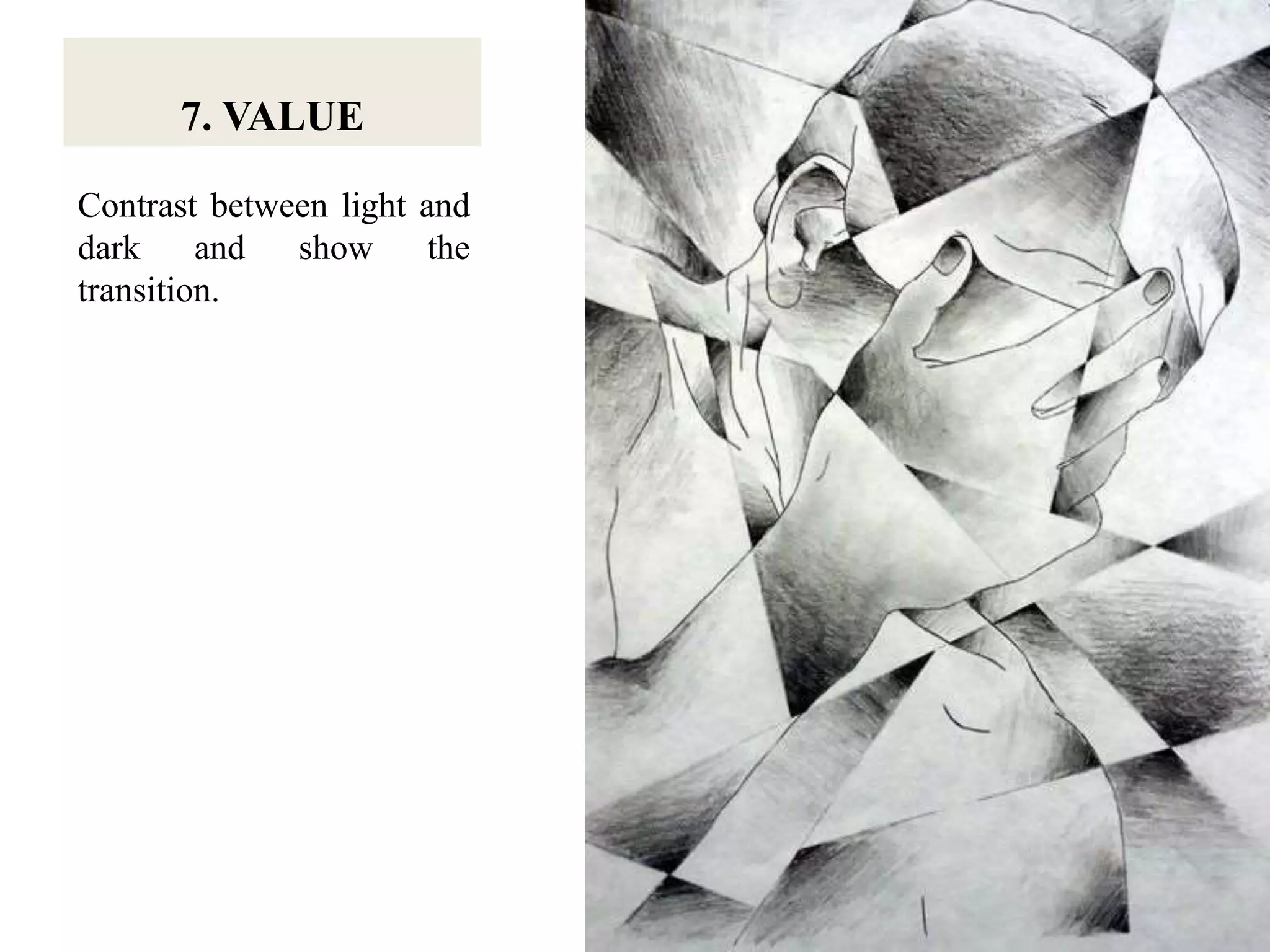
7. VALUE
Contrast between light and
dark and show the
transition.
PRINCIPLE OF
DESIGN
1. Balance
Formal: cut in half by
imaginary line.
• one is the mirror image
of other
• Similar weight and
performance
Informal: equal weight
and size but one is not the
other replica
Radial: elements
positioned around the
circle or central point
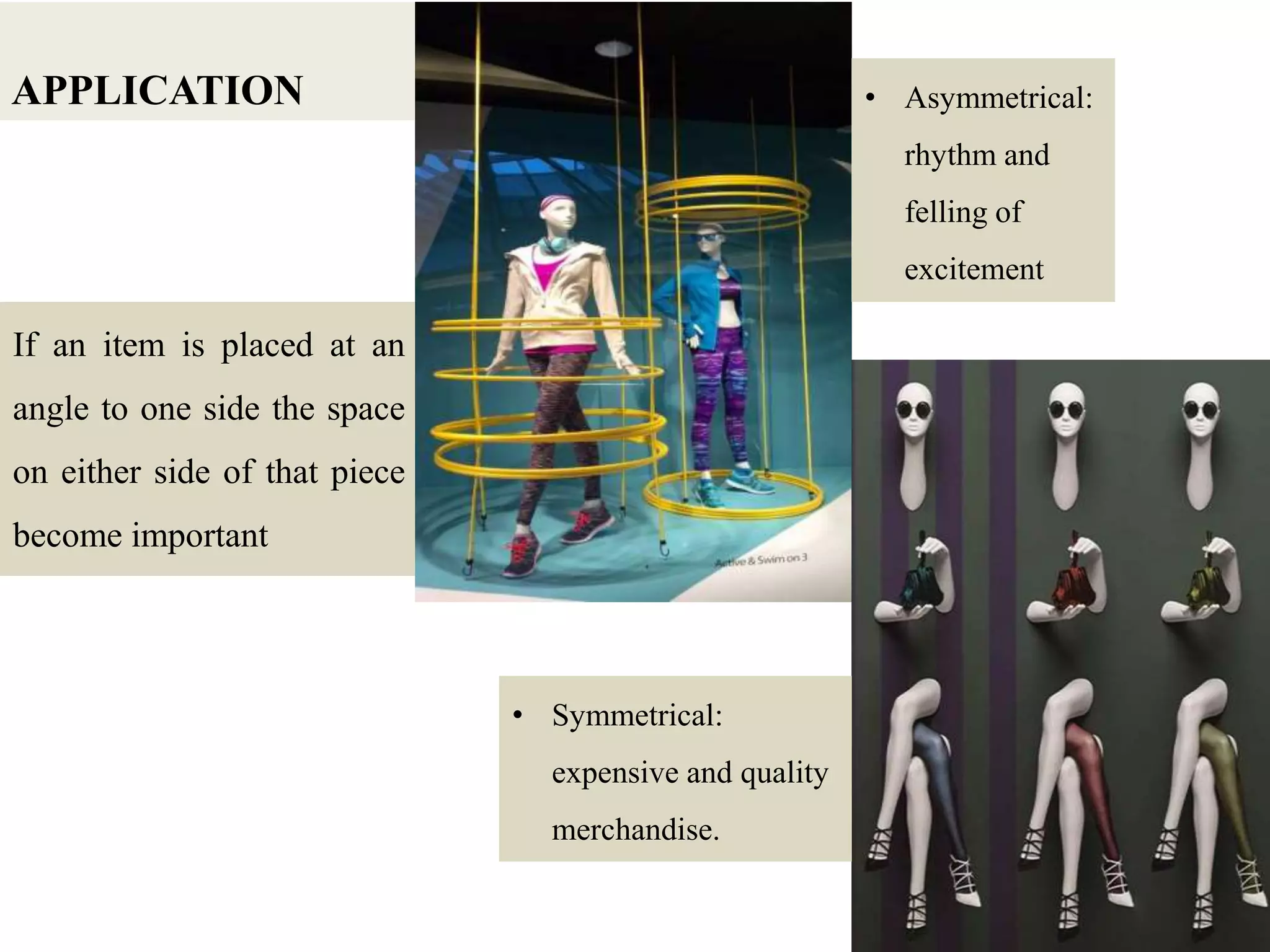
APPLICATION
If an item is placed at an
angle to one side the space
on either side of that piece
become important
• Symmetrical:
expensive and quality
merchandise.
• Asymmetrical:
rhythm and
felling of
excitement
2. EMPHASIS
• Making an element
stand out.
• Formulation of focal
point.
• Eye movement from
left to right.
• Window display
emphasis theme.
eye level
Optical centre-from
eye level to down
Left to right movement-
upper left to lower right
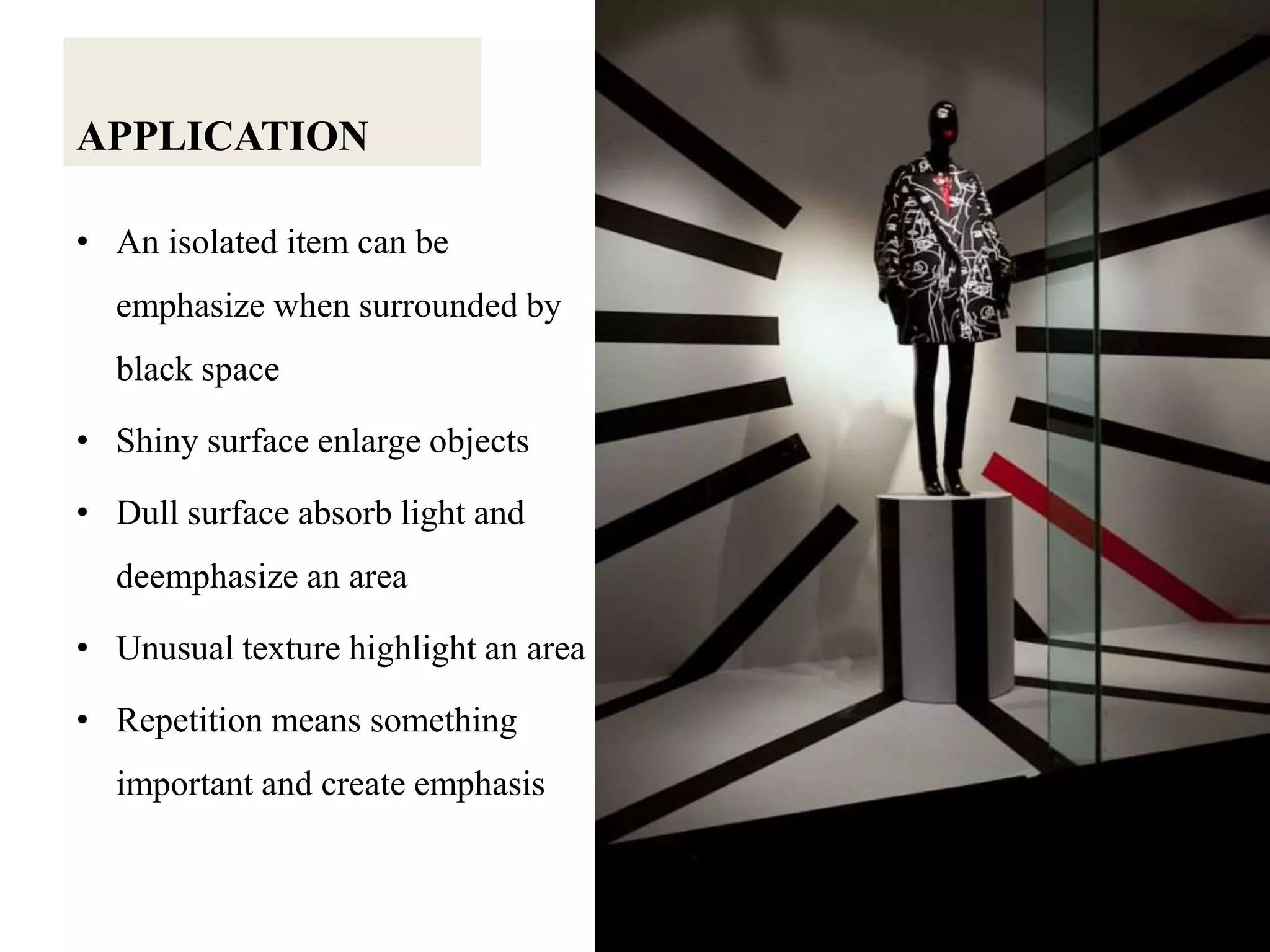
APPLICATION
• An isolated item can be
emphasize when surrounded by
black space
• Shiny surface enlarge objects
• Dull surface absorb light and
deemphasize an area
• Unusual texture highlight an area
• Repetition means something
important and create emphasis
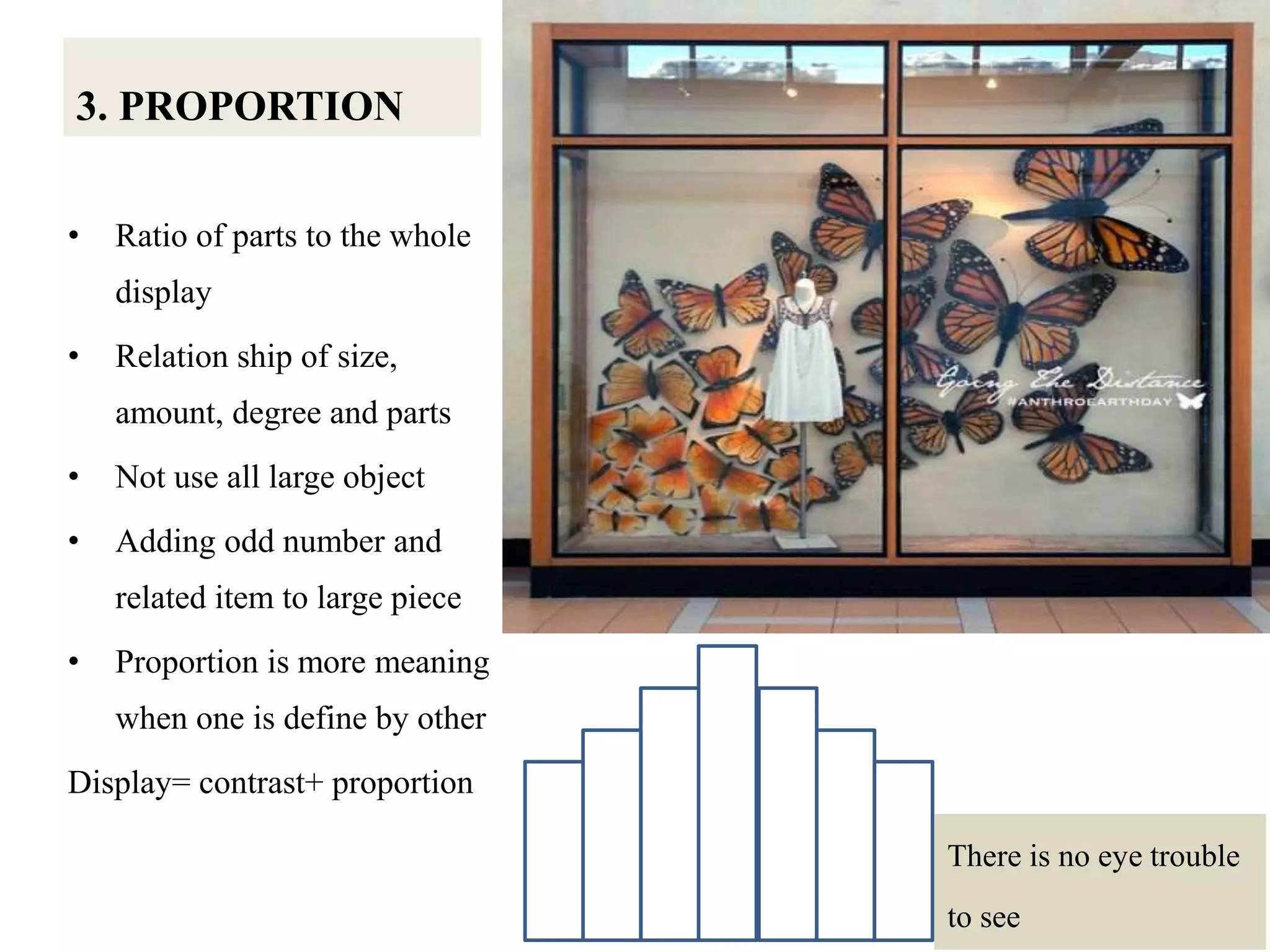
3. PROPORTION
• Ratio of parts to the whole
display
• Relation ship of size,
amount, degree and parts
• Not use all large object
• Adding odd number and
related item to large piece
• Proportion is more meaning
when one is define by other
Display= contrast+ proportion
There is no eye trouble
to see
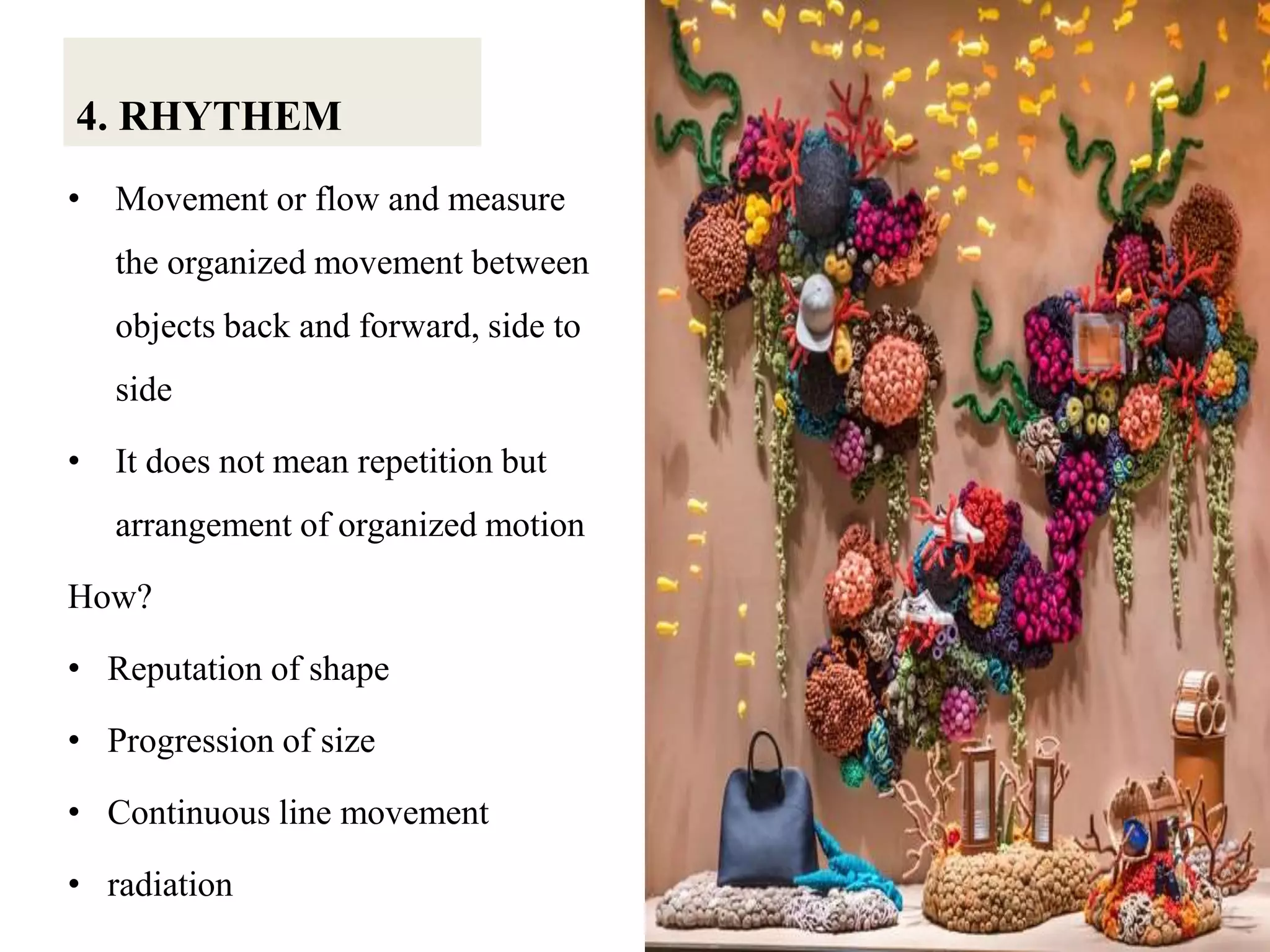
4. RHYTHEM
• Movement or flow and measure
the organized movement between
objects back and forward, side to
side
• It does not mean repetition but
arrangement of organized motion
How?
• Reputation of shape
• Progression of size
• Continuous line movement
• radiation
5. HARMONY
It incorporate every other principle
Function harmony: how something
works physically.
Structural harmony: merchandise
should not out of space display
Decorative harmony: only for
decorative purpose.
Responsibility of visual
merchandiser
• Display merchandise with visual appeals to attract customers.
• Integrate brand images in visual presentations throughout the stores.
• Innovate and implement seasonal merchandising presentations.
• Initiate unique visual presentations.
• Monitor merchandise inventories.
• Ensure replenishment of fast-selling items.
• Coordinate with stores manager on key visual merchandising
efforts.
• Design and implement key visual elements including styling of bust
forms, leg forms and Henry hangers.
• Organize and adjust lighting systems to enhance visual elements.
• Ensure compliance of brand standards in visual merchandising
efforts.
Purpose of visual merchandising
attract ,engage, motivate the customers towards making a purchase
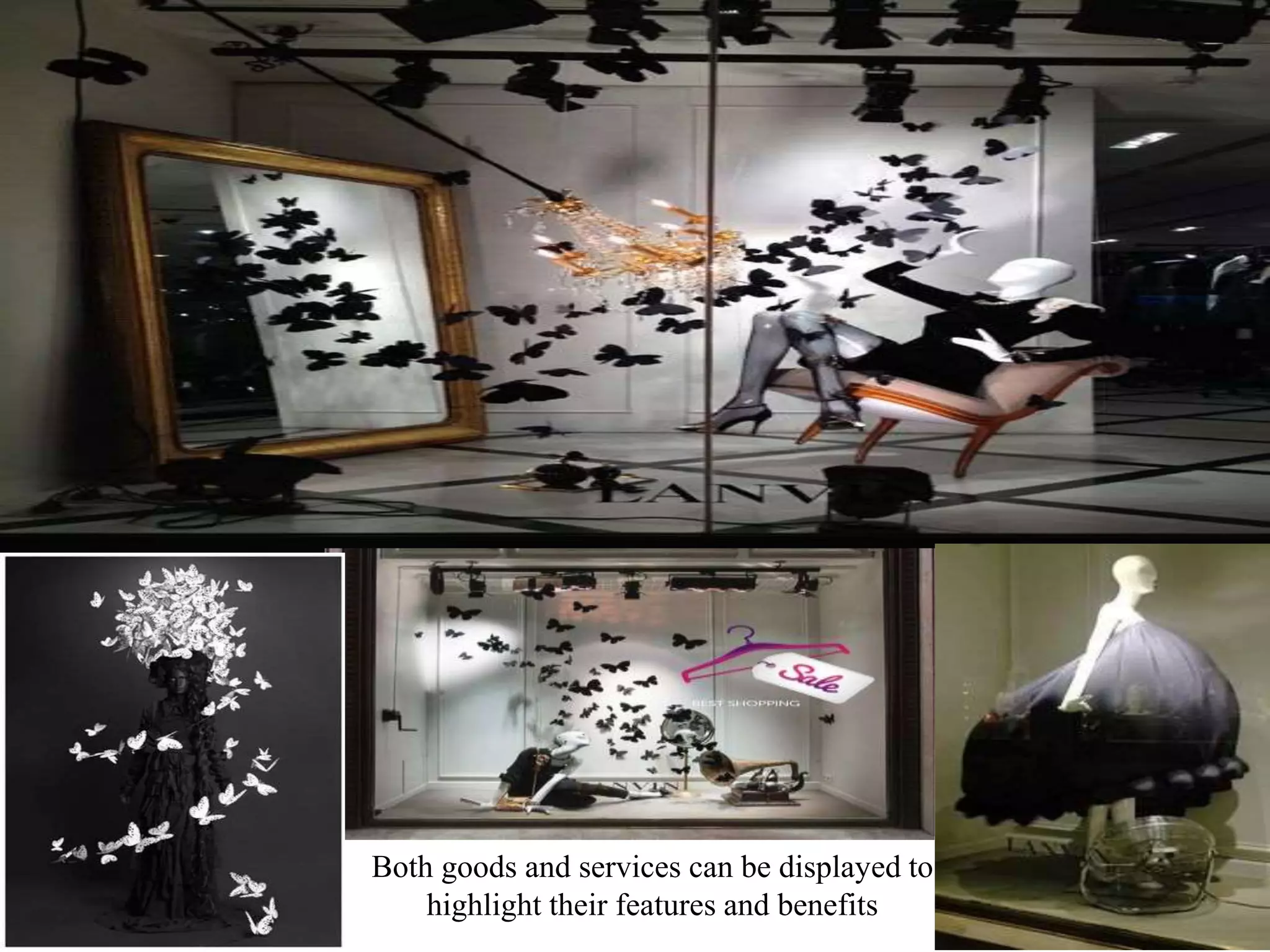
Both goods and services can be displayed to
highlight their features and benefits
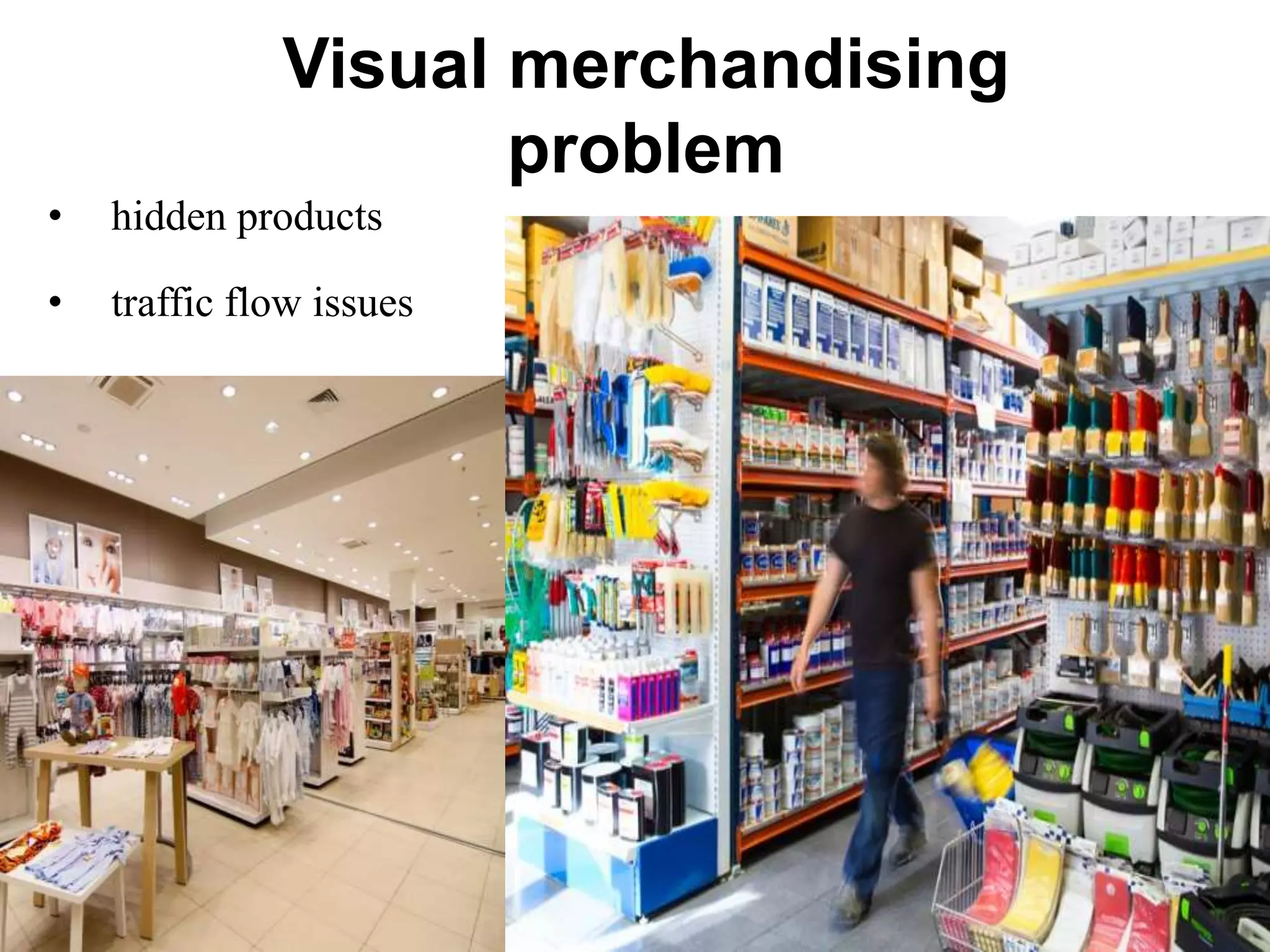
Visual merchandising
problem
• hidden products
• traffic flow issues
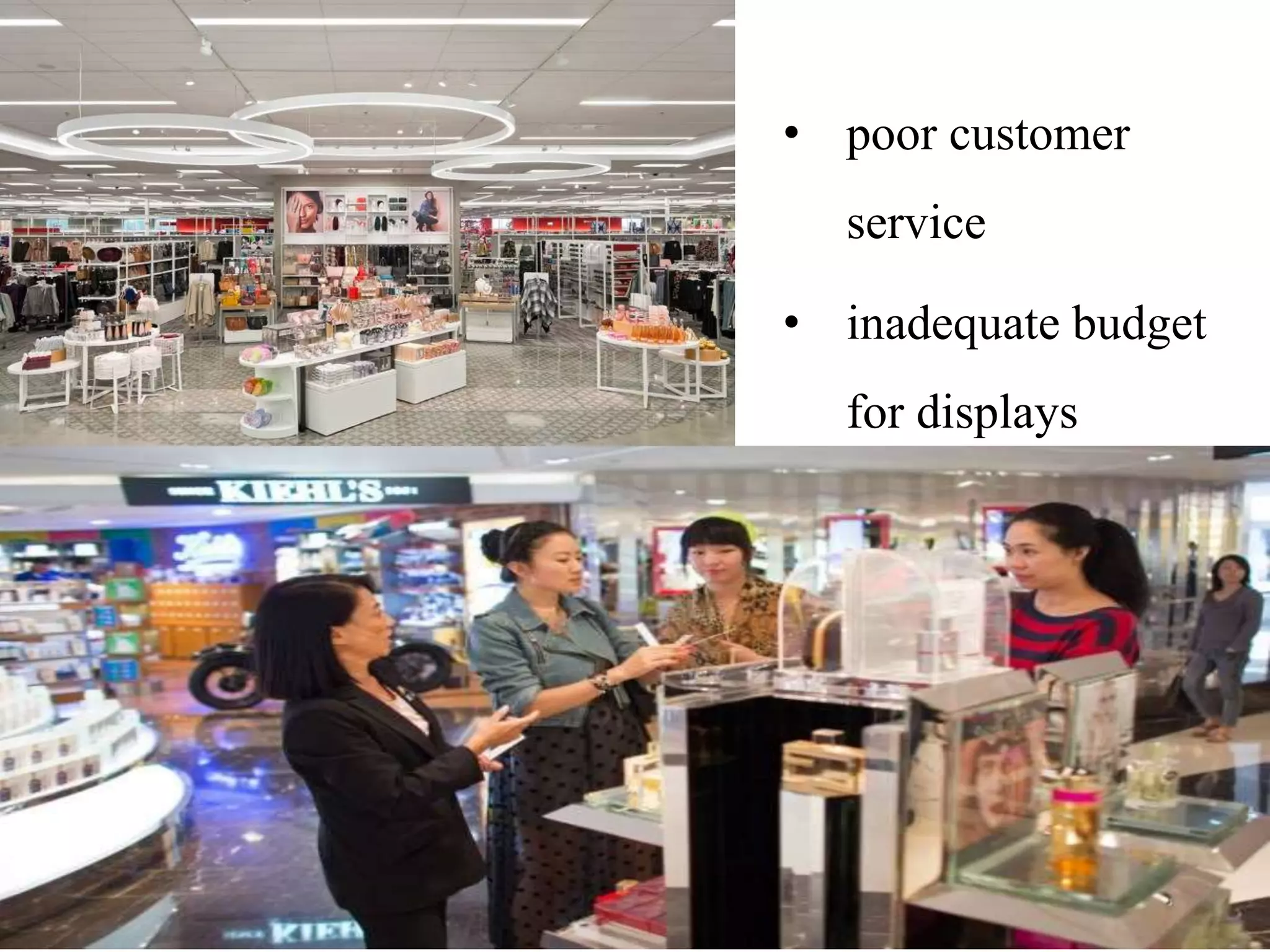
• poor customer
service
• inadequate budget
for displays
Cont’d
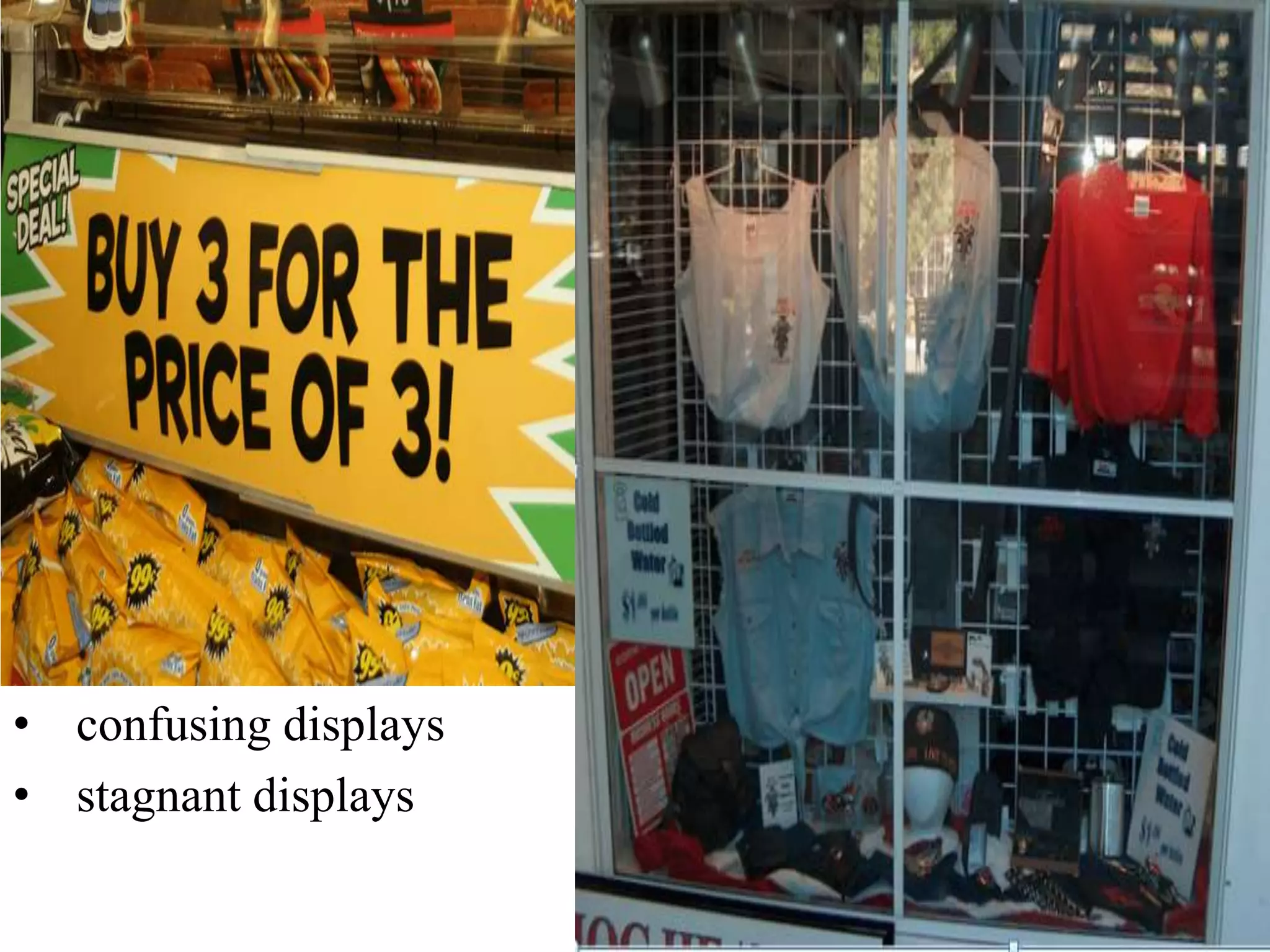
• confusing displays
• stagnant displays
Cont’d
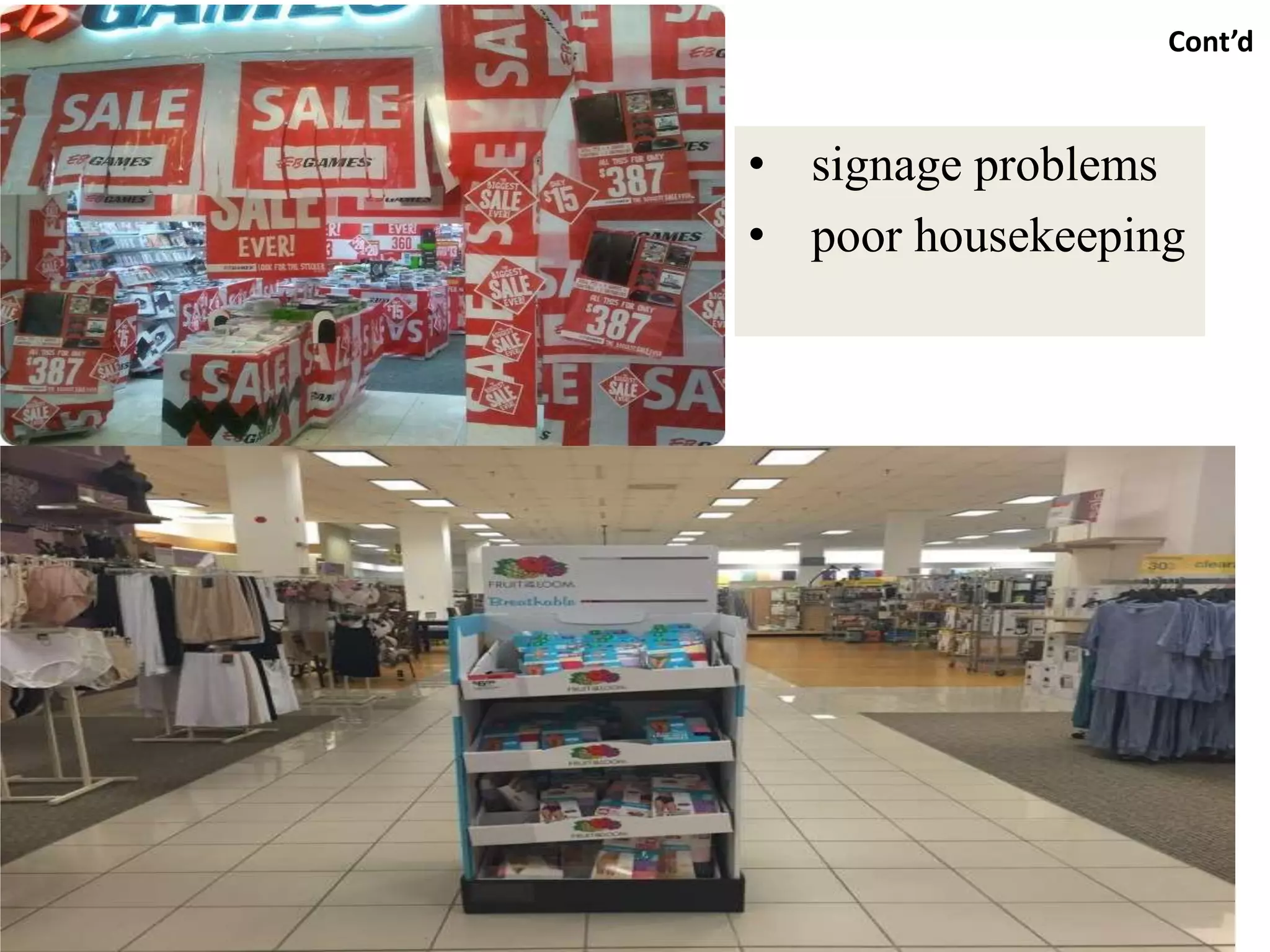
• signage problems
• poor housekeeping
Cont’d
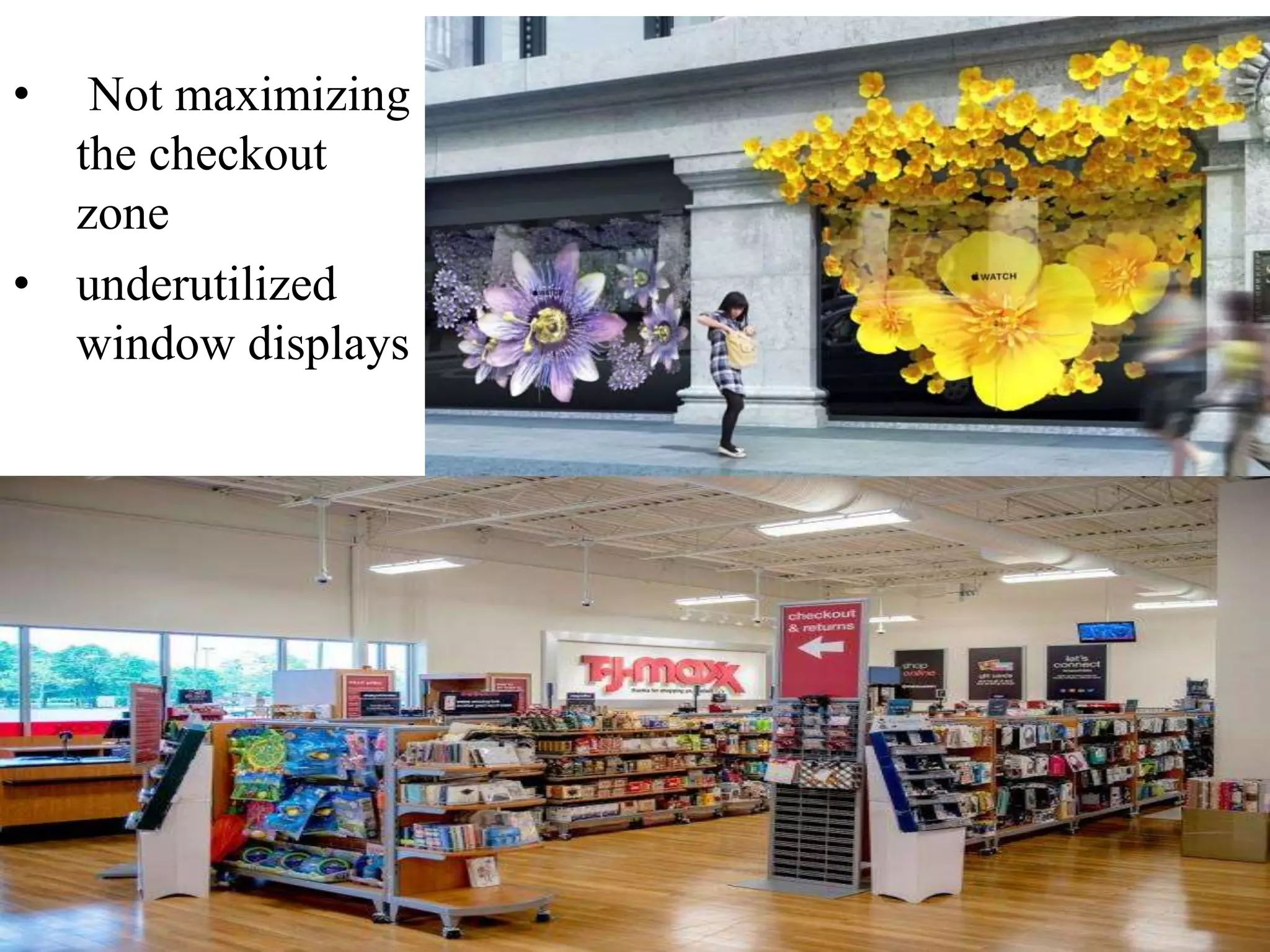
• Not maximizing
the checkout
zone
• underutilized
window displays
FOLDING
HANGING
SHELVING PEGGING
Method of
display
Elements of visual
merchandizing
STORE
FRONT
1.SIGNAGE
• Promotional Signs
• Institutional signs
Cont’d
• Location signs
• Informational signs
2.MARQUEE
• This special type
of sign is used to
display the name
of a store.
• An effective
marquee must
stand out from the
other businesses
to attract attention
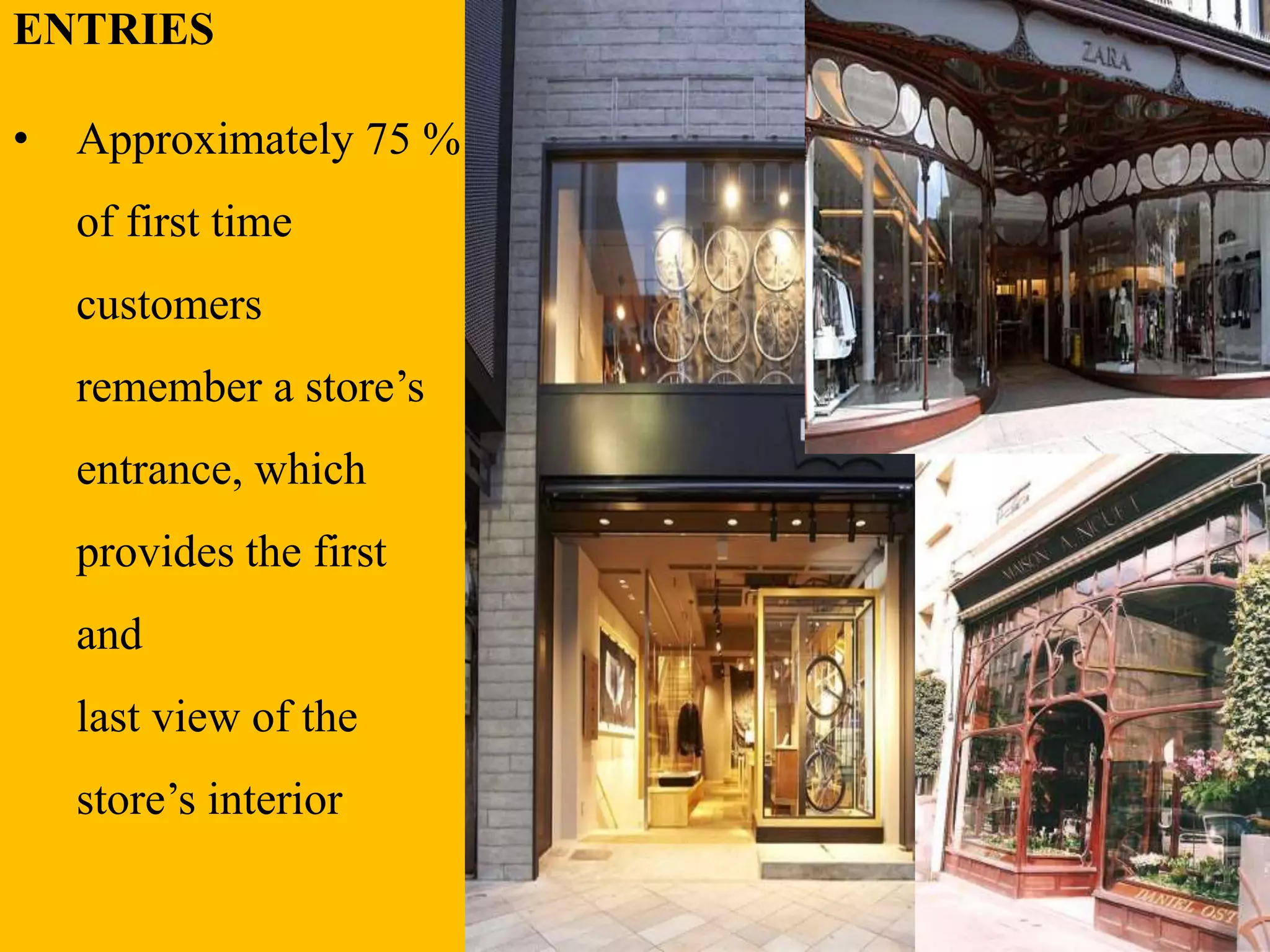
ENTRIES
• Approximately 75 %
of first time
customers
remember a store’s
entrance, which
provides the first
and
last view of the
store’s interior
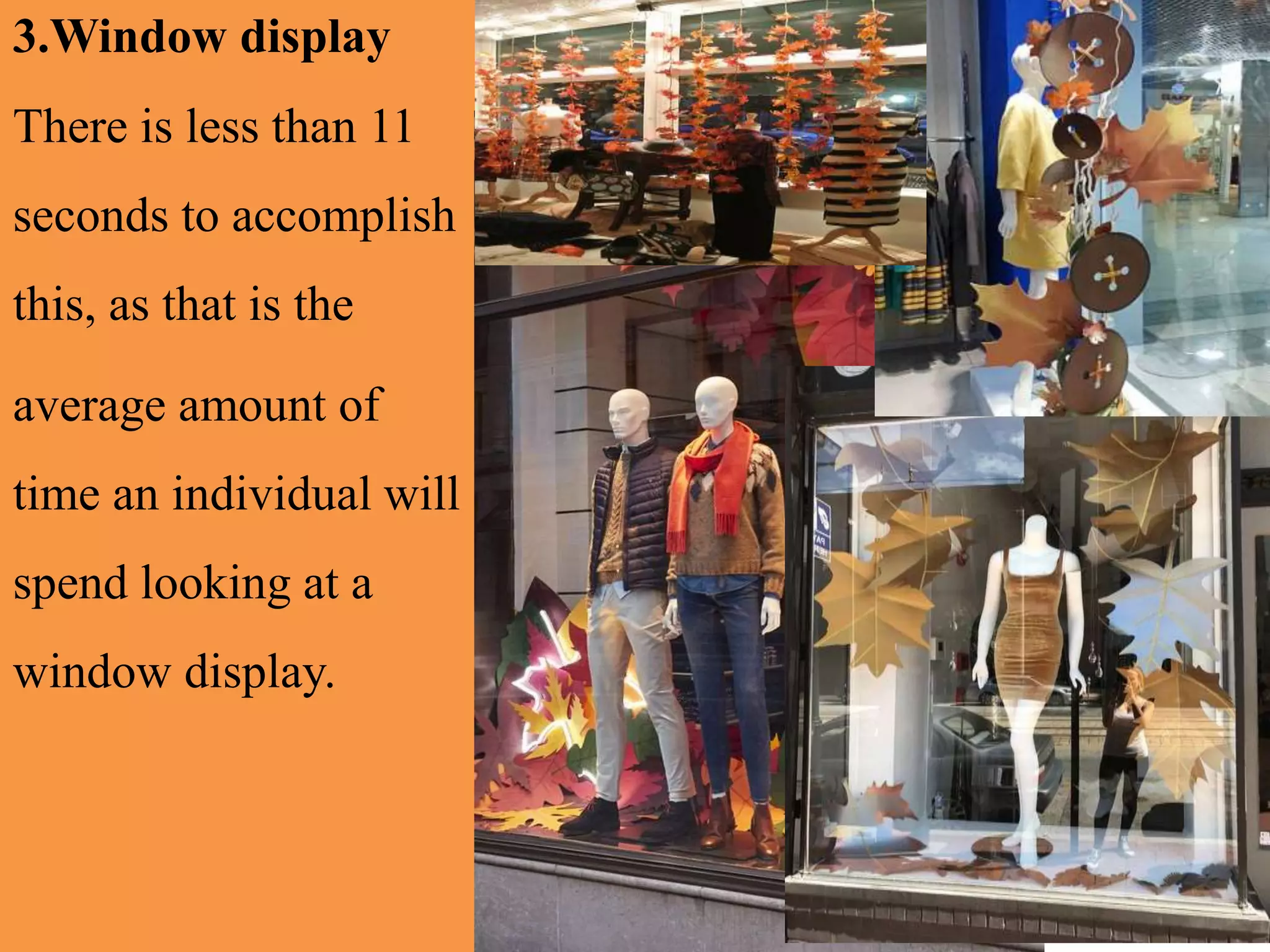
3.Window display
There is less than 11
seconds to accomplish
this, as that is the
average amount of
time an individual will
spend looking at a
window display.
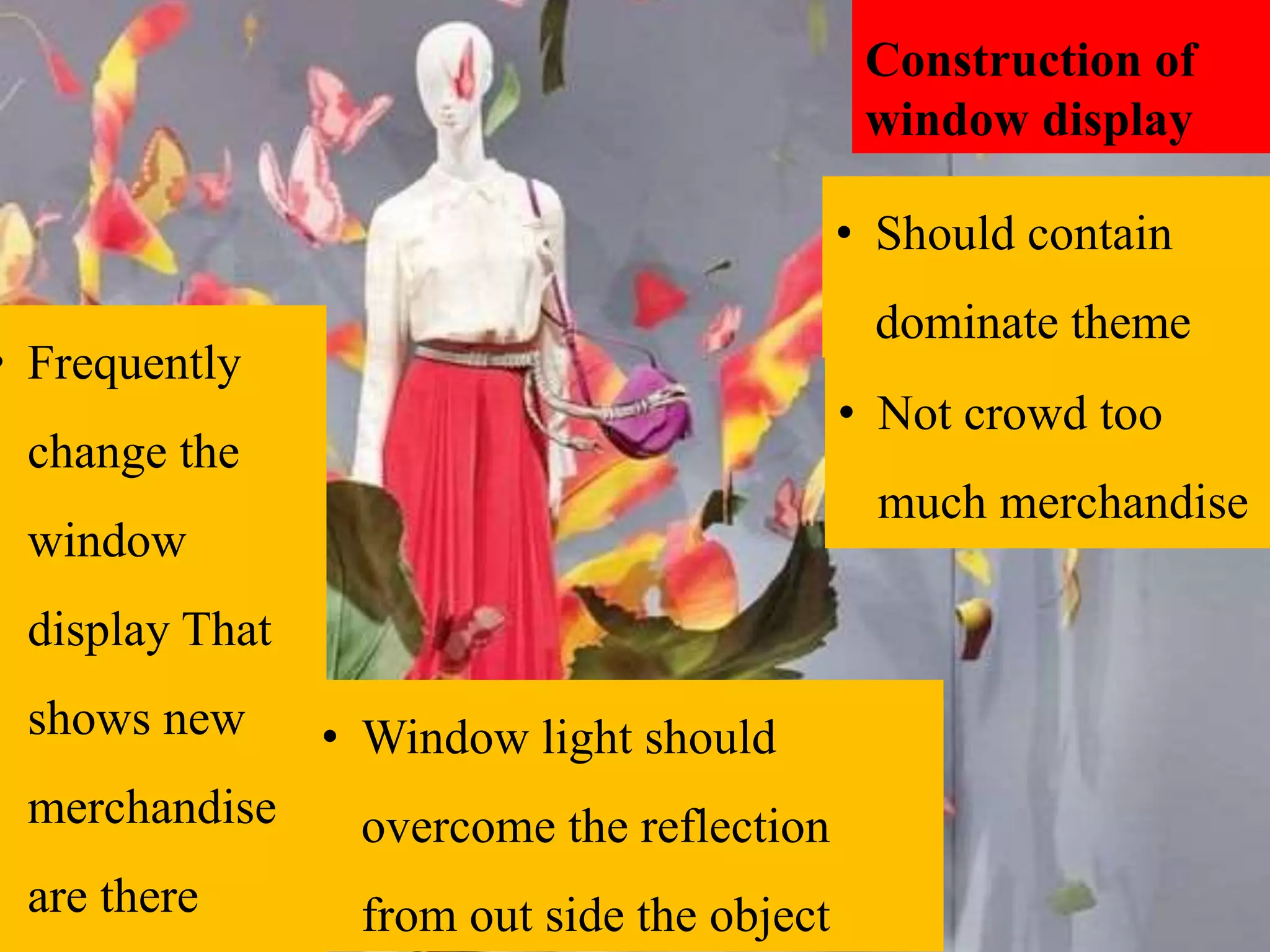
Construction of
window display
• Frequently
change the
window
display That
shows new
merchandise
are there
• Window light should
overcome the reflection
from out side the object
• Should contain
dominate theme
• Not crowd too
much merchandise
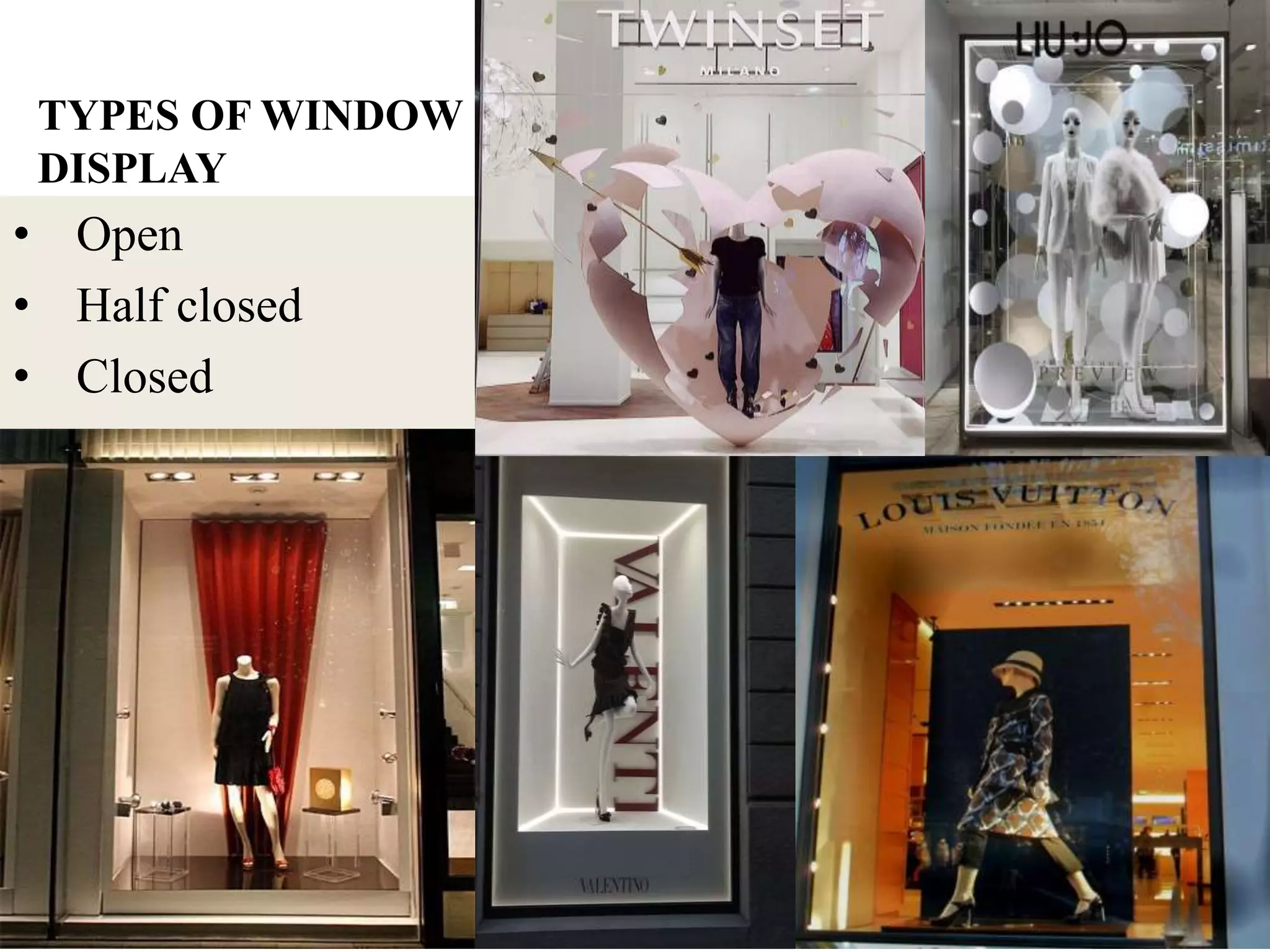
TYPES OF WINDOW
DISPLAY
• Open
• Half closed
• Closed
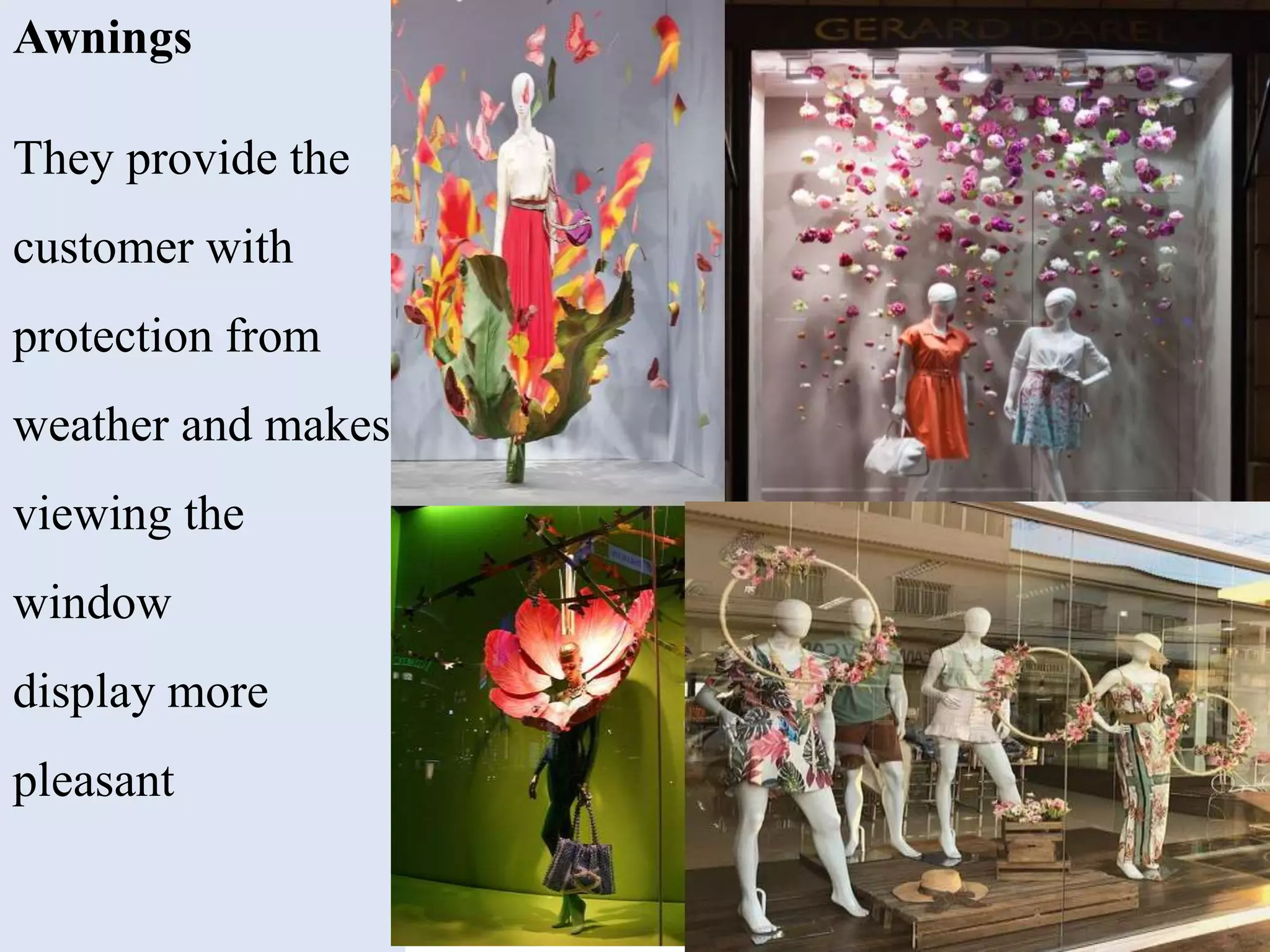
Awnings
They provide the
customer with
protection from
weather and makes
viewing the
window
display more
pleasant
Store interior
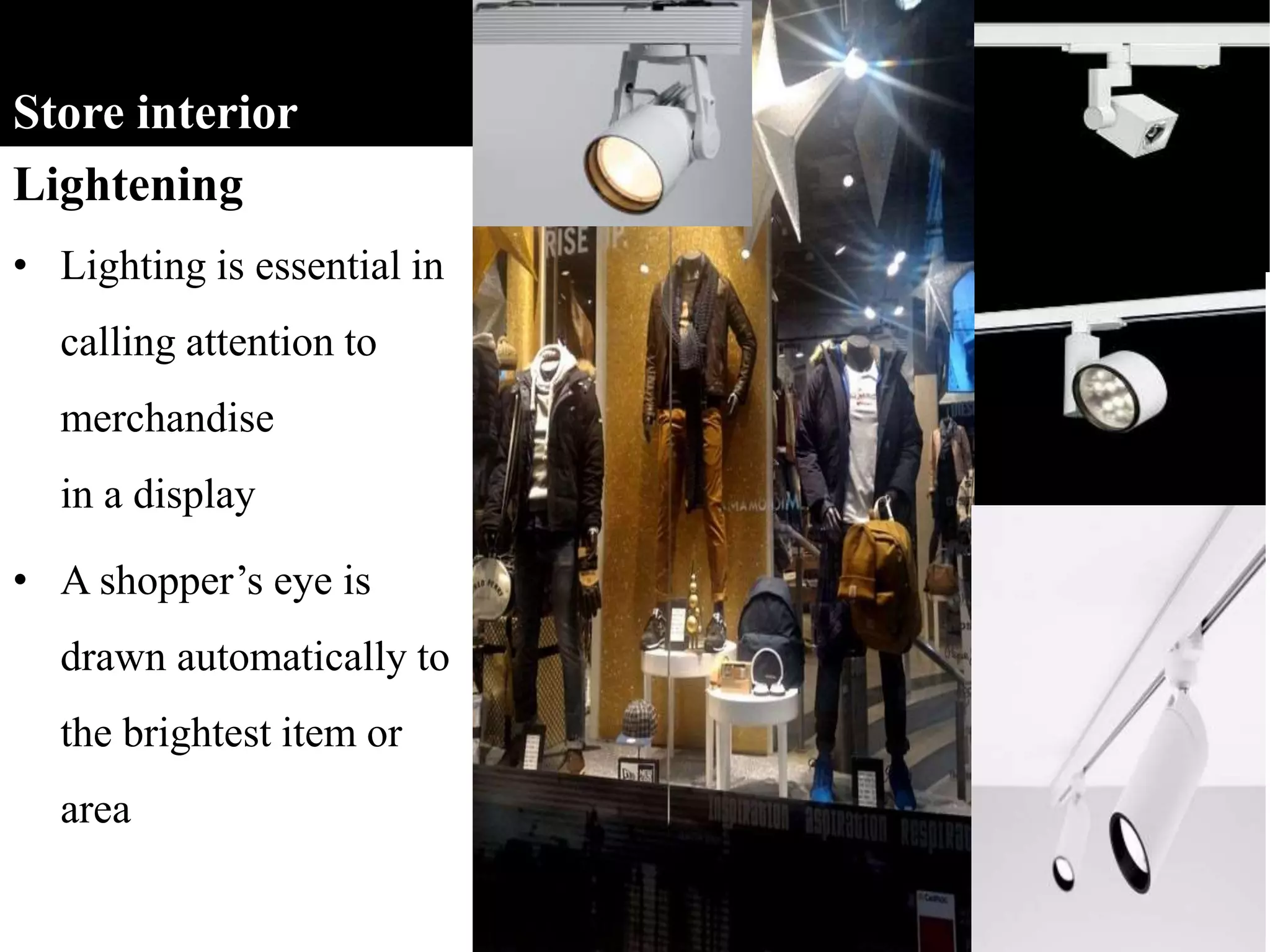
Lightening
• Lighting is essential in
calling attention to
merchandise
in a display
• A shopper’s eye is
drawn automatically to
the brightest item or
area
Types of lightening
• Primary
• secondary
• atmosphere

Visual merchandising ppt

  • 1.
  • 2.
    A good visual merchandiserhas an eye on details. Visual merchandising is the silent salesperson.
  • 3.
    Visual Merchandising iseverything the customer sees, both exterior and interior, that creates a positive image of a business and results in attention, interest, desire and action on the part of the customer.
  • 4.
    Principles of visualmerchandising • Make the merchandise visible. • Make the merchandise tangible and accessible. • Give the shoppers good choice.
  • 5.
    ELEMENTS OF DESIGN 1. Space Areaprovided for particular purpose Distance between components • Positive(the object) • Negative(the space)
  • 6.
    2. LINE • Continuousmovement of a long surface. • Have length, dimension and thickness • Polka dot: is a pattern consisting of an array of large field circle. e.g. Vertical, horizontal, diagonal and zigzag.
  • 7.
    PSYCHOLOGY OF LINE Vertical line:strength, height, pride, majesty and dignity Horizontal: Easy, rest full and elegant Curved: Grace and feminist Diagonal: Forceful, strong and dynamic
  • 8.
    3. COLOR Peoples buycolor before checking size. Primary: red, blue and yellow Secondary: by mixing primary colours Orange, purple(violet),green Tertiary: by mixing primary and secondary color. Red orange, red purple, blue purple, blue green, yellow orange, yellow green.
  • 9.
    Complementary: opposite each otherin the color wheel. Analogues: side by side Monochromatic: tint(add white)/shade(add black)
  • 10.
    PSYCHOLOGY OF COLOR Blue: bluesky, dark night, deep sea and Trust worthy Red: strong full of energy and warm, Sexual, aggressive(volcano) Yellow: sun, optimism, confidence, creativity, Buddhism, emotional
  • 11.
    Green: fresh, balance,rest Orange: positive energy Purple: spiritual, quality expression to cosmetic industry White: clean, pure, simple Grey: works for every thing Brown: stable and reliable Relief about someone, inflexible
  • 12.
    4. SHAPE • Whenarea enclosed by lines • Is 2D(dimensional) object Geometric: made by humans e.g. triangle) Organic: it is natural and asymmetrical
  • 13.
    5. TEXTURE Surface objectfeel • Implied: only see you can not feel e.g. picture, photo and drawing • Actual(tectile): you can feel and touch
  • 14.
    6. FORM It is3D( length, width and depth) triangle-cone Circle-sphere Form take space in implied or actual Light and shadow(dark) effect use create illusion Made by color, textile…
  • 15.
    7. VALUE Contrast betweenlight and dark and show the transition.
  • 16.
    PRINCIPLE OF DESIGN 1. Balance Formal:cut in half by imaginary line. • one is the mirror image of other • Similar weight and performance Informal: equal weight and size but one is not the other replica Radial: elements positioned around the circle or central point
  • 17.
    APPLICATION If an itemis placed at an angle to one side the space on either side of that piece become important • Symmetrical: expensive and quality merchandise. • Asymmetrical: rhythm and felling of excitement
  • 18.
    2. EMPHASIS • Makingan element stand out. • Formulation of focal point. • Eye movement from left to right. • Window display emphasis theme. eye level Optical centre-from eye level to down Left to right movement- upper left to lower right
  • 19.
    APPLICATION • An isolateditem can be emphasize when surrounded by black space • Shiny surface enlarge objects • Dull surface absorb light and deemphasize an area • Unusual texture highlight an area • Repetition means something important and create emphasis
  • 20.
    3. PROPORTION • Ratioof parts to the whole display • Relation ship of size, amount, degree and parts • Not use all large object • Adding odd number and related item to large piece • Proportion is more meaning when one is define by other Display= contrast+ proportion There is no eye trouble to see
  • 21.
    4. RHYTHEM • Movementor flow and measure the organized movement between objects back and forward, side to side • It does not mean repetition but arrangement of organized motion How? • Reputation of shape • Progression of size • Continuous line movement • radiation
  • 22.
    5. HARMONY It incorporateevery other principle Function harmony: how something works physically. Structural harmony: merchandise should not out of space display Decorative harmony: only for decorative purpose.
  • 23.
    Responsibility of visual merchandiser •Display merchandise with visual appeals to attract customers. • Integrate brand images in visual presentations throughout the stores. • Innovate and implement seasonal merchandising presentations. • Initiate unique visual presentations. • Monitor merchandise inventories.
  • 24.
    • Ensure replenishmentof fast-selling items. • Coordinate with stores manager on key visual merchandising efforts. • Design and implement key visual elements including styling of bust forms, leg forms and Henry hangers. • Organize and adjust lighting systems to enhance visual elements. • Ensure compliance of brand standards in visual merchandising efforts.
  • 25.
    Purpose of visualmerchandising attract ,engage, motivate the customers towards making a purchase
  • 26.
    Both goods andservices can be displayed to highlight their features and benefits
  • 27.
    Visual merchandising problem • hiddenproducts • traffic flow issues
  • 28.
    • poor customer service •inadequate budget for displays
  • 29.
  • 30.
  • 31.
    Cont’d • Not maximizing thecheckout zone • underutilized window displays
  • 32.
  • 33.
  • 34.
  • 35.
  • 36.
    2.MARQUEE • This specialtype of sign is used to display the name of a store. • An effective marquee must stand out from the other businesses to attract attention
  • 37.
    ENTRIES • Approximately 75% of first time customers remember a store’s entrance, which provides the first and last view of the store’s interior
  • 38.
    3.Window display There isless than 11 seconds to accomplish this, as that is the average amount of time an individual will spend looking at a window display.
  • 39.
    Construction of window display •Frequently change the window display That shows new merchandise are there • Window light should overcome the reflection from out side the object • Should contain dominate theme • Not crowd too much merchandise
  • 40.
    TYPES OF WINDOW DISPLAY •Open • Half closed • Closed
  • 41.
    Awnings They provide the customerwith protection from weather and makes viewing the window display more pleasant
  • 42.
    Store interior Lightening • Lightingis essential in calling attention to merchandise in a display • A shopper’s eye is drawn automatically to the brightest item or area
  • 43.
    Types of lightening •Primary • secondary • atmosphere