Module-1:Overview of NDT
1
Prepared by
Mr.M.Mani Vannan
Assistant Professor
Department of Mechanical Engineering
1.Able to identify difference between aided and unaided
inspection.
2.Able to explain the different aided inspection methods.
3.Able to explain the different unaided inspection
methods.
2Visual Inspection
Visual Inspection, or Visual Testing (VT), is the oldest
and most basic method of inspection. It is the process
of looking over a piece of equipment using the naked
eye to look for flaws. It requires no equipment except
the naked eye of a trained inspector.
 Visual inspection can be used for internal and external
surface inspection of a variety of equipment types,
including storage tanks, pressure vessels, piping, and
other equipment.
3Visual Inspection
1.Unaided Visual Inspection-Inspection without use of
any optical or mechanical instruments.
2.Aided Visual Inspection-Inspection with use of any
optical or mechanical instruments.
4Visual Inspection
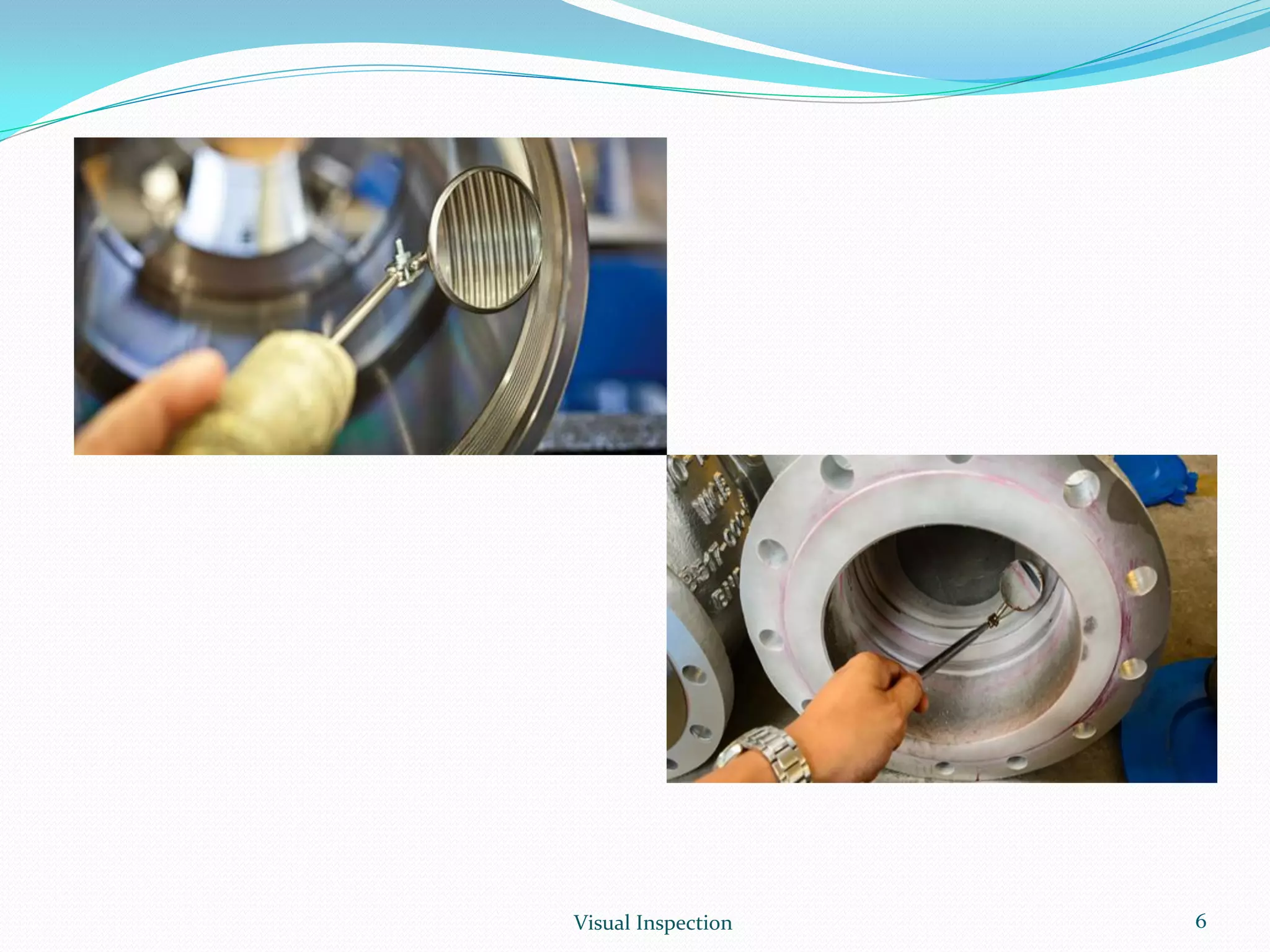
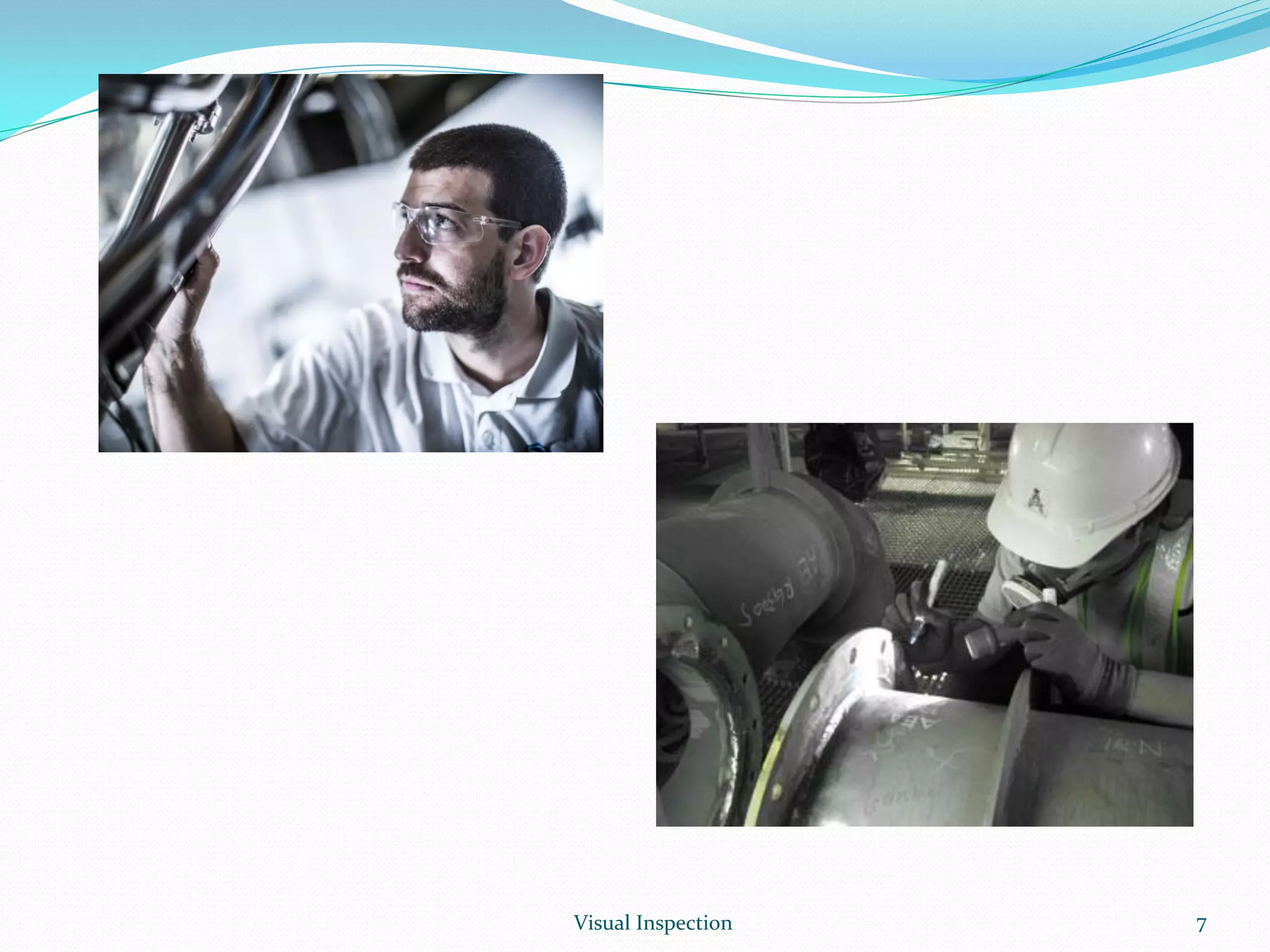
When a inspection of speciment or part is carried
without the use of any opto-electrical or electronics
devices is called unaided visual inspection.
5Visual Inspection
6Visual Inspection
7Visual Inspection
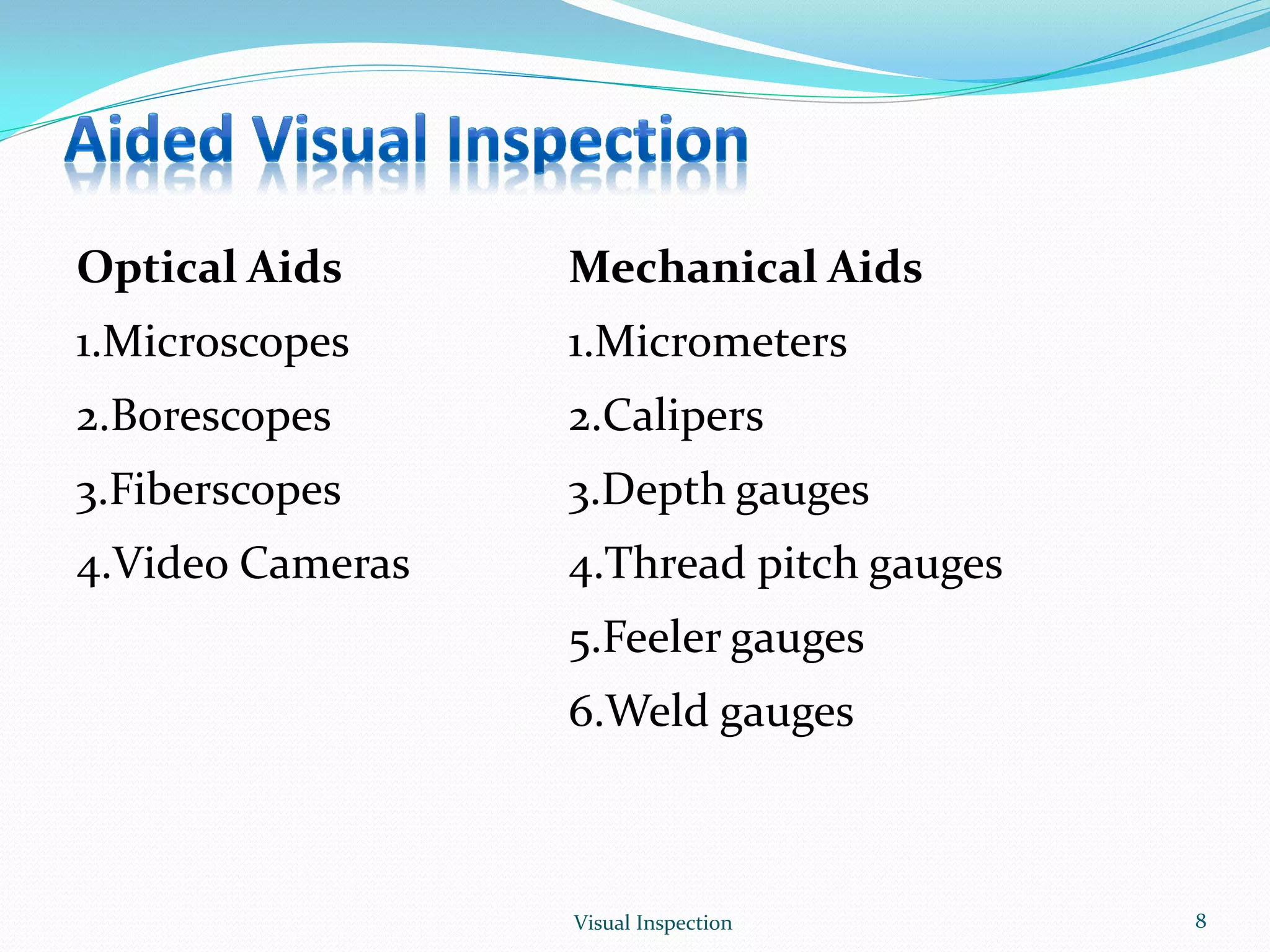
Optical Aids Mechanical Aids
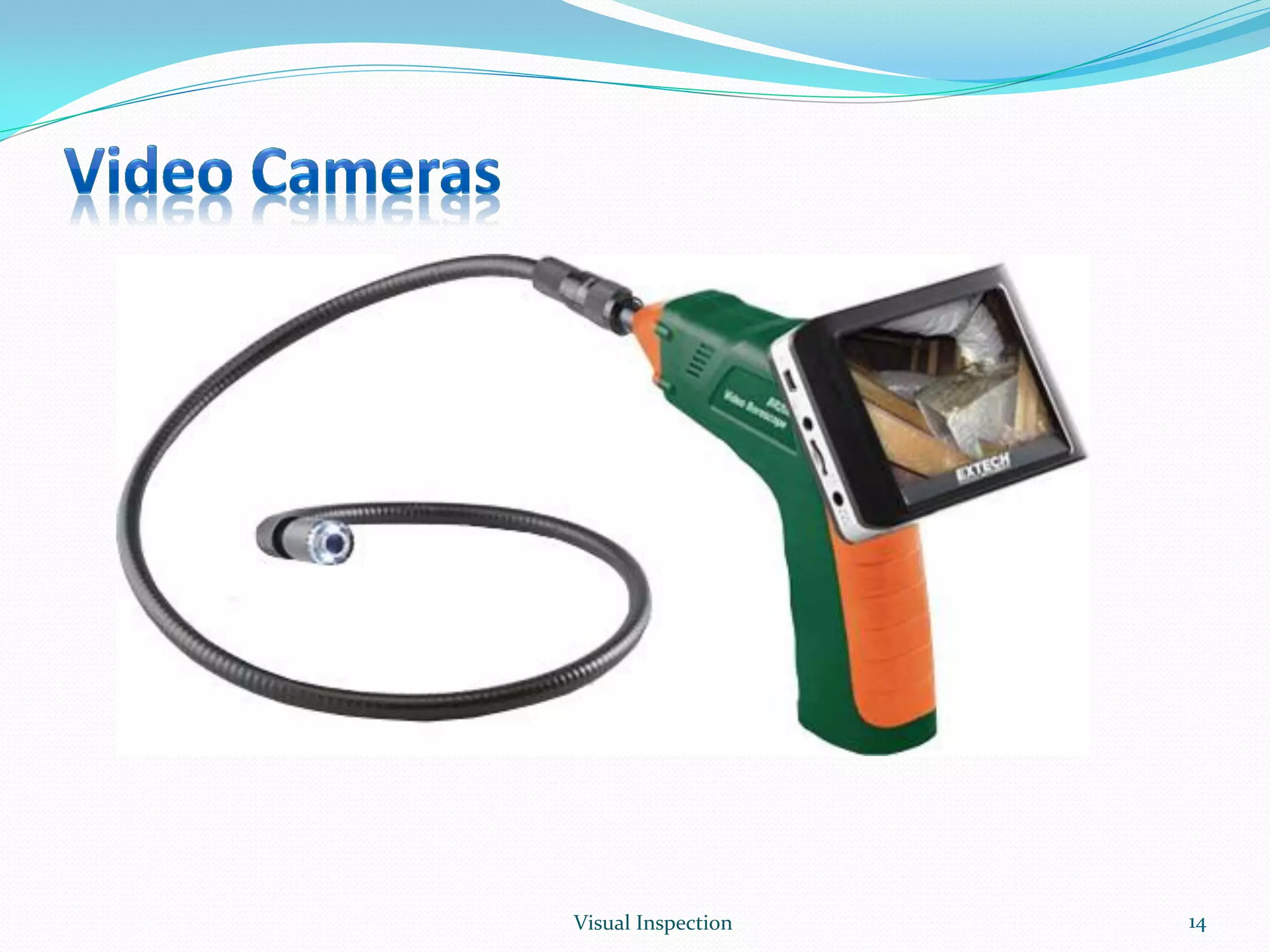
1.Microscopes 1.Micrometers
2.Borescopes 2.Calipers
3.Fiberscopes 3.Depth gauges
4.Video Cameras 4.Thread pitch gauges
5.Feeler gauges
6.Weld gauges
8Visual Inspection
9Visual Inspection
10Visual Inspection
11Visual Inspection
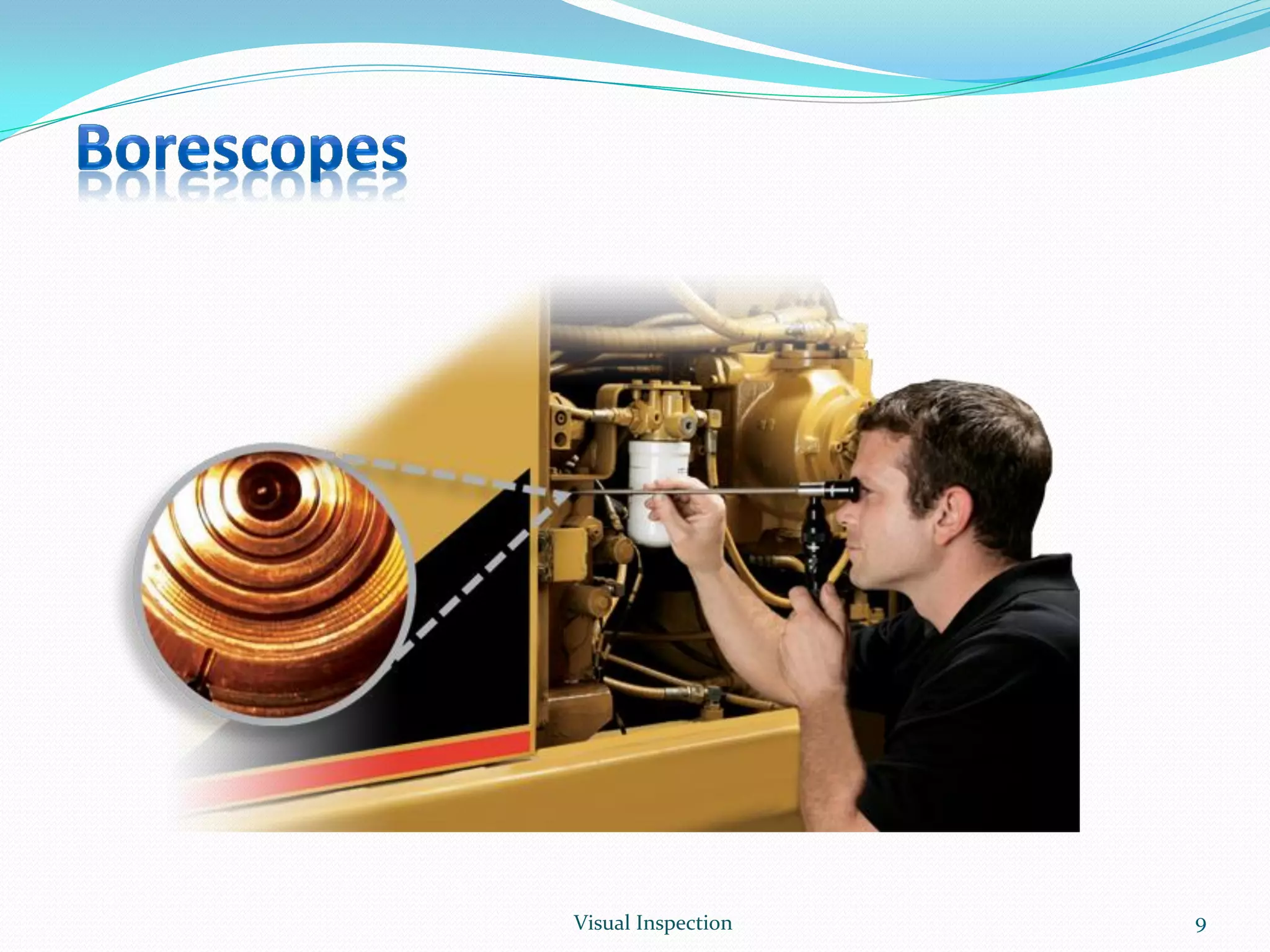
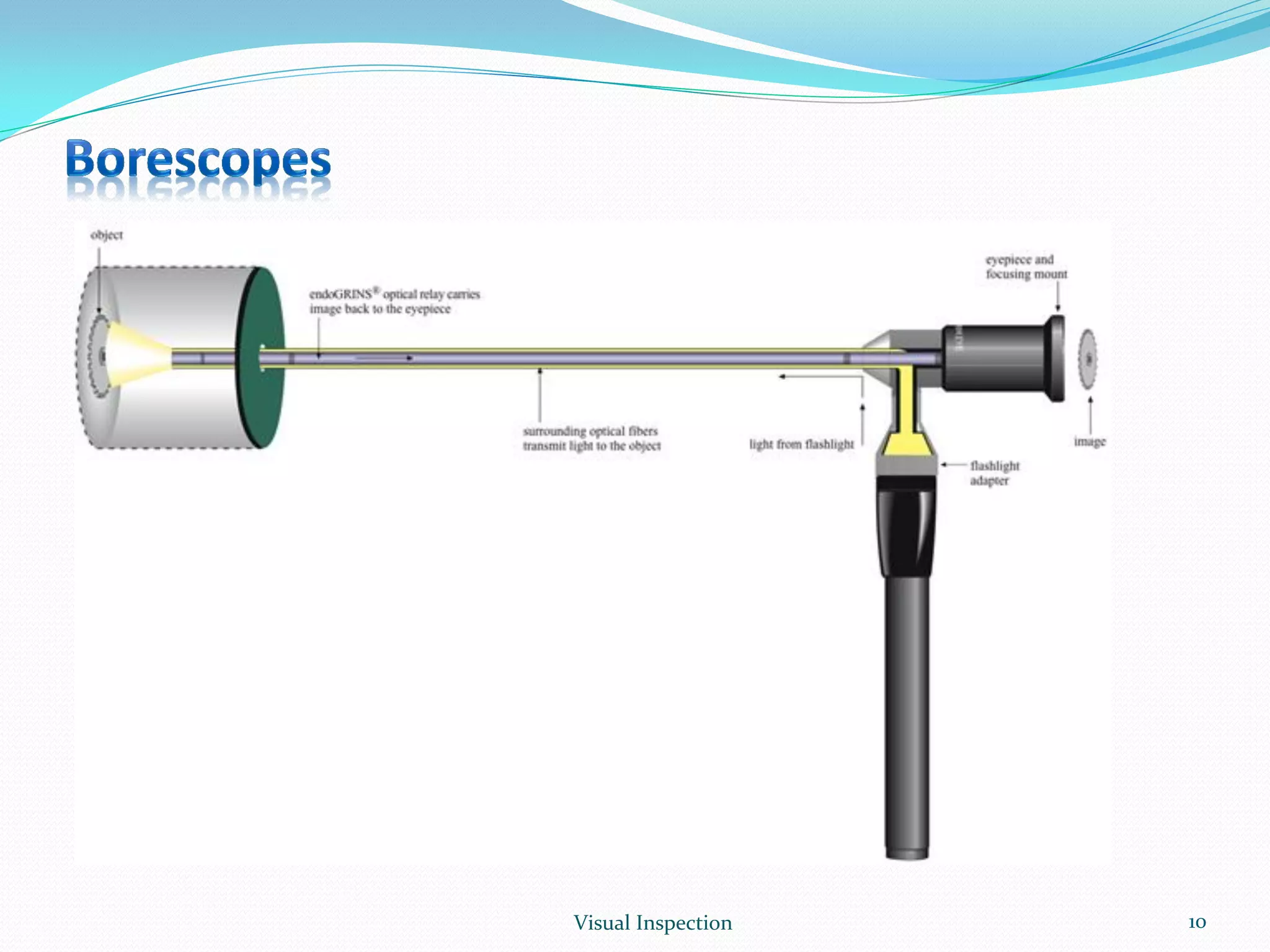
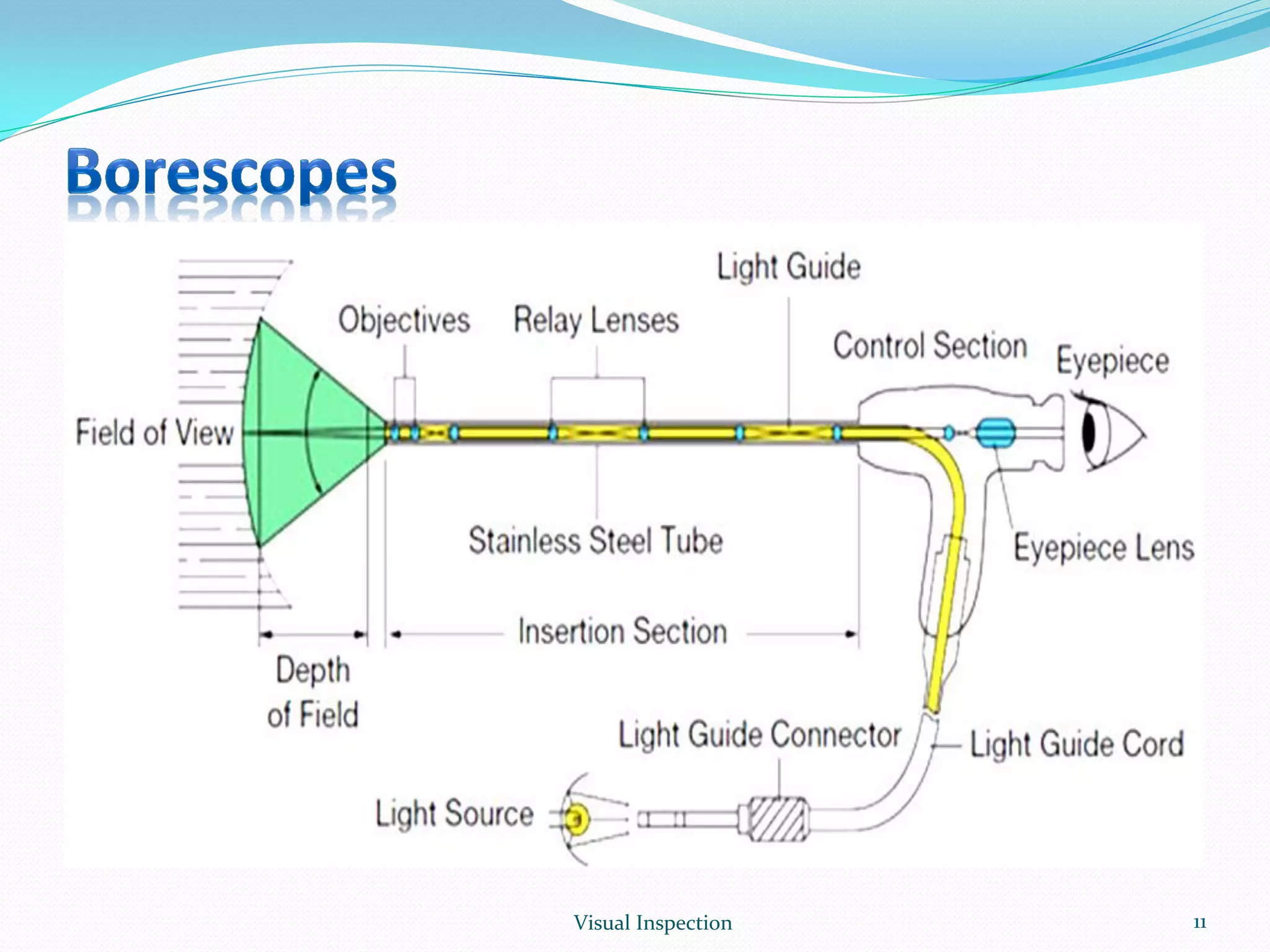
1.A borescope is an optical device consisting of a rigid or
flexible tube with an eyepiece on one end, an objective
lens on the other linked together by a relay optical
system in between.
2.The optical system in some instances is surrounded by
optical fibers used for illumination of the remote object.
3.An internal image of the illuminated object is formed
by the objective lens and magnified by the eyepiece
which presents it to the viewer's eye.
12Visual Inspection
13Visual Inspection
14Visual Inspection
1.A feeler gauge is a tool used to measure gap widths.
2.Feeler gauges are mostly used in engineering to
measure the clearance between two parts.
15Visual Inspection
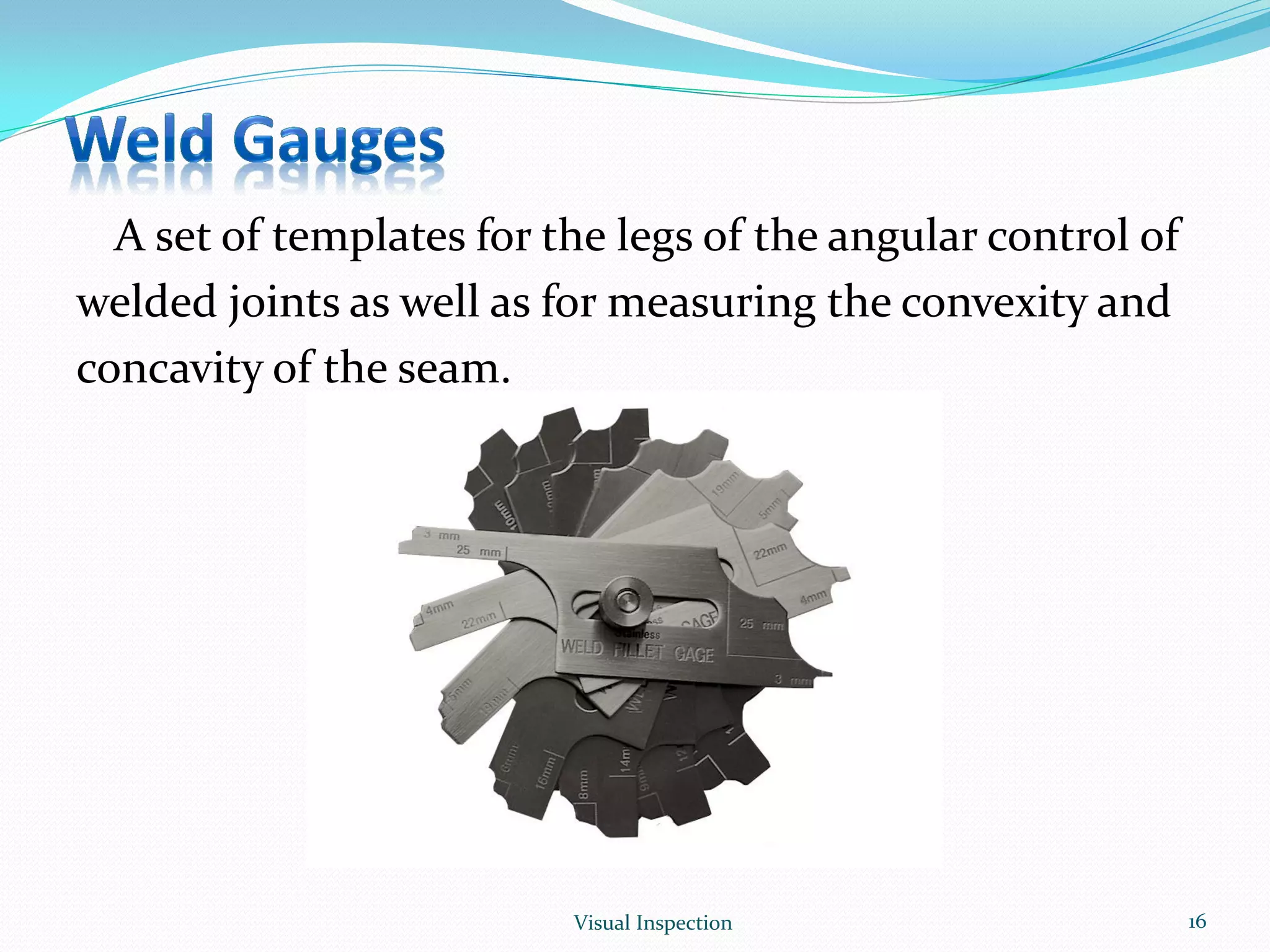
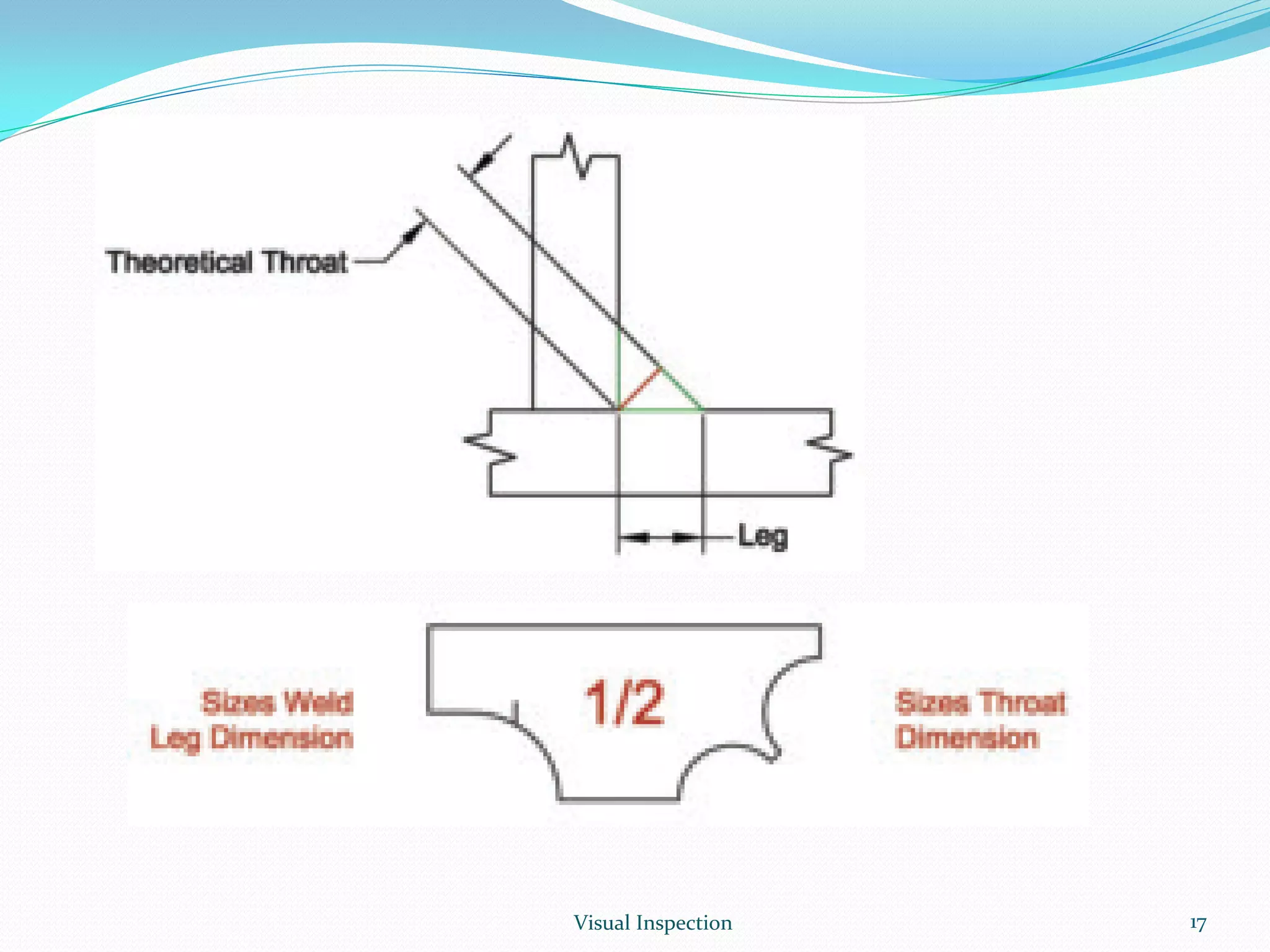
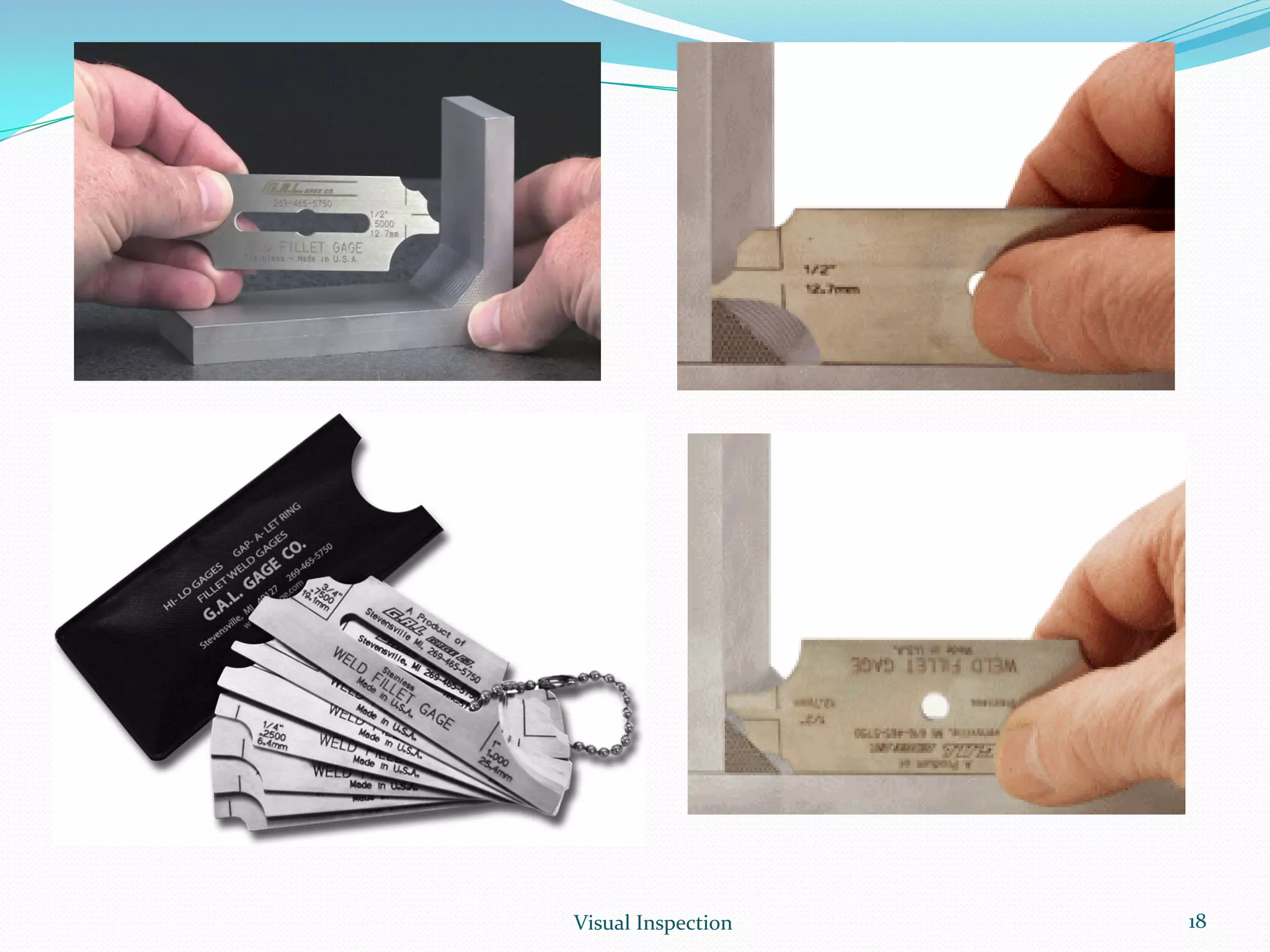
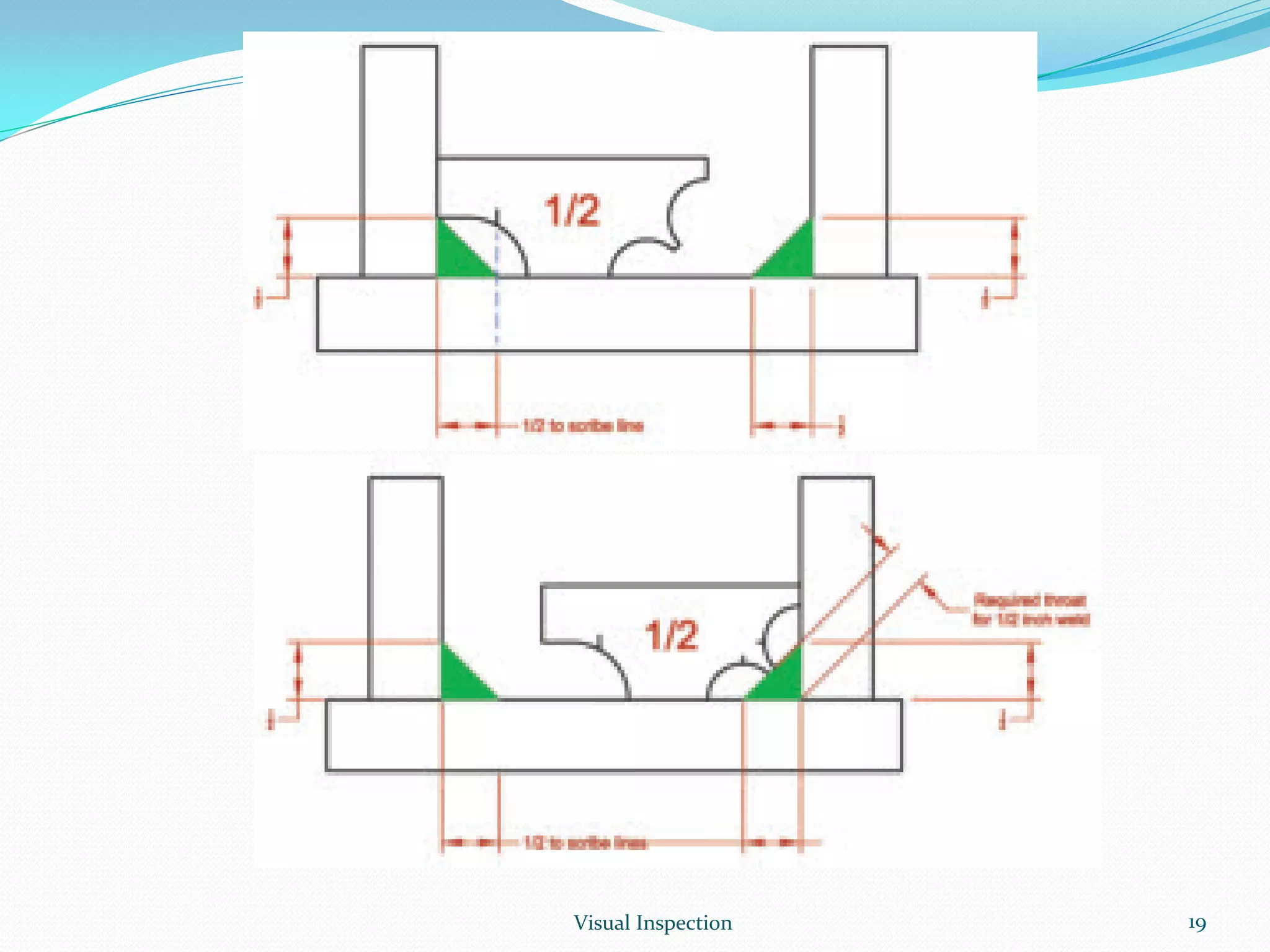
A set of templates for the legs of the angular control of
welded joints as well as for measuring the convexity and
concavity of the seam.
16Visual Inspection
17Visual Inspection
18Visual Inspection
19Visual Inspection
1.Visual Inspection
2.Types of Visual Inspection
3.Unaided visual inspection
4.Aided visual inspection
5.Instruments used in aided visual inspection
20Visual Inspection
THANK YOU
21

Visual Inspection and its types

  • 1.
    Module-1:Overview of NDT 1 Preparedby Mr.M.Mani Vannan Assistant Professor Department of Mechanical Engineering
  • 2.
    1.Able to identifydifference between aided and unaided inspection. 2.Able to explain the different aided inspection methods. 3.Able to explain the different unaided inspection methods. 2Visual Inspection
  • 3.
    Visual Inspection, orVisual Testing (VT), is the oldest and most basic method of inspection. It is the process of looking over a piece of equipment using the naked eye to look for flaws. It requires no equipment except the naked eye of a trained inspector.  Visual inspection can be used for internal and external surface inspection of a variety of equipment types, including storage tanks, pressure vessels, piping, and other equipment. 3Visual Inspection
  • 4.
    1.Unaided Visual Inspection-Inspectionwithout use of any optical or mechanical instruments. 2.Aided Visual Inspection-Inspection with use of any optical or mechanical instruments. 4Visual Inspection
  • 5.
    When a inspectionof speciment or part is carried without the use of any opto-electrical or electronics devices is called unaided visual inspection. 5Visual Inspection
  • 6.
  • 7.
  • 8.
    Optical Aids MechanicalAids 1.Microscopes 1.Micrometers 2.Borescopes 2.Calipers 3.Fiberscopes 3.Depth gauges 4.Video Cameras 4.Thread pitch gauges 5.Feeler gauges 6.Weld gauges 8Visual Inspection
  • 9.
  • 10.
  • 11.
  • 12.
    1.A borescope isan optical device consisting of a rigid or flexible tube with an eyepiece on one end, an objective lens on the other linked together by a relay optical system in between. 2.The optical system in some instances is surrounded by optical fibers used for illumination of the remote object. 3.An internal image of the illuminated object is formed by the objective lens and magnified by the eyepiece which presents it to the viewer's eye. 12Visual Inspection
  • 13.
  • 14.
  • 15.
    1.A feeler gaugeis a tool used to measure gap widths. 2.Feeler gauges are mostly used in engineering to measure the clearance between two parts. 15Visual Inspection
  • 16.
    A set oftemplates for the legs of the angular control of welded joints as well as for measuring the convexity and concavity of the seam. 16Visual Inspection
  • 17.
  • 18.
  • 19.
  • 20.
    1.Visual Inspection 2.Types ofVisual Inspection 3.Unaided visual inspection 4.Aided visual inspection 5.Instruments used in aided visual inspection 20Visual Inspection
  • 21.