VISUAL
INSPECTION
PRESENTED BY:
MANOJ PATIL M- 20MCD0038
SURAJ J R – 20MCD0050
INTRODUCTION:
 A visual inspection is an inspection of an asset made using only the naked eye.
This kind of inspection does not necessarily require any special equipment,
but it does require special training so that the inspector knows what to look
for as they visually review the asset.
 DEFINITION: Visual inspection is commonly defined as the examination of a
examination of a material, component or product for conditions of non-
conformance using light and the eyes, alone or in conjunction with various
aids.
VISUAL INSPECTION IN OTHER NDT
METHODS
 Visual inspection or visual testing is inherently part of all other NDT testing
methods.
 Visual inspection is commonly employed to compliment/ support other NDT
methods.
 Liquid penetrant testing uses dyes that rely on the inspector’s ability to
visually identify surface indications.
 Radiography technique require that the technician use a visual judgement to
determine the soundness of the object being tested.
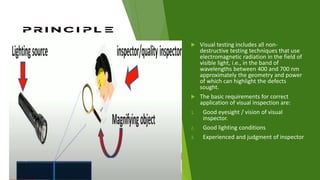
 Visual testing includes all non-
destructive testing techniques that use
electromagnetic radiation in the field of
visible light, i.e., in the band of
wavelengths between 400 and 700 nm
approximately the geometry and power
of which can highlight the defects
sought.
 The basic requirements for correct
application of visual inspection are:
1. Good eyesight / vision of visual
inspector.
2. Good lighting conditions
3. Experienced and judgment of inspector
TYPES OF VISUAL INSPECTION:
Unaided or
direct visual
testing
Aided visual
testing
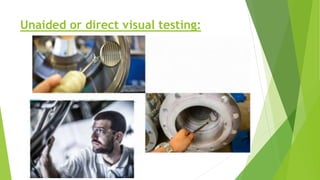
Unaided or direct visual testing:
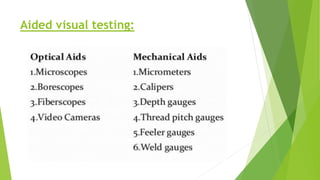
Aided visual testing:
ILLUSTRATION OF SOME APPLICATIONS :
(CASE STUDIES)
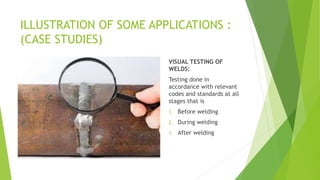
VISUAL TESTING OF
WELDS:
Testing done in
accordance with relevant
codes and standards at all
stages that is
1. Before welding
2. During welding
3. After welding
 VISUAL TESTING OF
HYDRAULIC SYSTEMS:
1. Check the oil is clean
and clear.
2. Check the system is
clean and dry.
3. Listen for unusual
noises from the motor
pump and piping
system.
Other applications of visual testing:
1. Inspection of cleaning in
machines
2. Checking for corrosion
3. Checking for erosion and
deformities of machine
components
4. Check for ruptures
5. Check for cracks and wear in
machines and its parts
6. Monitoring of manometers
7. Monitoring operating
conditions of machines
Advantages:
1. Simple and easy to use
2. Relatively inexpensive
3. Testing speed is high
4. Almost all materials can be inspected
5. Permanent records are available when latest
equipments are used.
6. Testing can be performed on components which
are in-service
7. Training period to acquire skill is less
8. Good for obvious manufacturing flaws
Limitations :
1. Limited to detection of surface flaws
2. Eye fatigue
3. The results depends upon skill and
knowledge
4. Eye resolution is weak
5. Skilled inspector required
6. Sometimes requires line of sight
7. Reliability is limited
VISUAL INSPECTION.pptx

VISUAL INSPECTION.pptx

  • 1.
    VISUAL INSPECTION PRESENTED BY: MANOJ PATILM- 20MCD0038 SURAJ J R – 20MCD0050
  • 2.
    INTRODUCTION:  A visualinspection is an inspection of an asset made using only the naked eye. This kind of inspection does not necessarily require any special equipment, but it does require special training so that the inspector knows what to look for as they visually review the asset.  DEFINITION: Visual inspection is commonly defined as the examination of a examination of a material, component or product for conditions of non- conformance using light and the eyes, alone or in conjunction with various aids.
  • 3.
    VISUAL INSPECTION INOTHER NDT METHODS  Visual inspection or visual testing is inherently part of all other NDT testing methods.  Visual inspection is commonly employed to compliment/ support other NDT methods.  Liquid penetrant testing uses dyes that rely on the inspector’s ability to visually identify surface indications.  Radiography technique require that the technician use a visual judgement to determine the soundness of the object being tested.
  • 4.
     Visual testingincludes all non- destructive testing techniques that use electromagnetic radiation in the field of visible light, i.e., in the band of wavelengths between 400 and 700 nm approximately the geometry and power of which can highlight the defects sought.  The basic requirements for correct application of visual inspection are: 1. Good eyesight / vision of visual inspector. 2. Good lighting conditions 3. Experienced and judgment of inspector
  • 5.
    TYPES OF VISUALINSPECTION: Unaided or direct visual testing Aided visual testing
  • 6.
    Unaided or directvisual testing:
  • 7.
  • 11.
    ILLUSTRATION OF SOMEAPPLICATIONS : (CASE STUDIES) VISUAL TESTING OF WELDS: Testing done in accordance with relevant codes and standards at all stages that is 1. Before welding 2. During welding 3. After welding
  • 12.
     VISUAL TESTINGOF HYDRAULIC SYSTEMS: 1. Check the oil is clean and clear. 2. Check the system is clean and dry. 3. Listen for unusual noises from the motor pump and piping system.
  • 13.
    Other applications ofvisual testing: 1. Inspection of cleaning in machines 2. Checking for corrosion 3. Checking for erosion and deformities of machine components 4. Check for ruptures 5. Check for cracks and wear in machines and its parts 6. Monitoring of manometers 7. Monitoring operating conditions of machines
  • 14.
    Advantages: 1. Simple andeasy to use 2. Relatively inexpensive 3. Testing speed is high 4. Almost all materials can be inspected 5. Permanent records are available when latest equipments are used. 6. Testing can be performed on components which are in-service 7. Training period to acquire skill is less 8. Good for obvious manufacturing flaws
  • 15.
    Limitations : 1. Limitedto detection of surface flaws 2. Eye fatigue 3. The results depends upon skill and knowledge 4. Eye resolution is weak 5. Skilled inspector required 6. Sometimes requires line of sight 7. Reliability is limited