Analysis is the process of breaking a
complex topic or substance into smaller
parts to gain a better understanding of it.
Zaqaziq University
Faculty of Engineering
Department of Architecture
What visual analysis means ?
Visual Analysis is the method to interpret information and
surroundings from visible messages reaching the eye.
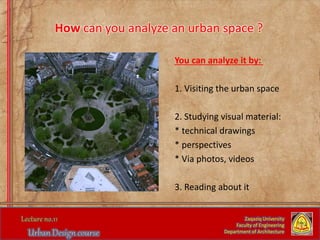
How can you analyze an urban space ?
You can analyze it by:
1. Visiting the urban space
2. Studying visual material:
* technical drawings
* perspectives
* Via photos, videos
3. Reading about it
Zaqaziq University
Faculty of Engineering
Department of Architecture
Zaqaziq University
Faculty of Engineering
Department of Architecture
visual analysis purpose
The main purpose of this study is to demonstrate the
procedure used to analyze the form, function and significance
of the urban space as an element within a given urban
context. In order to appraise the urban status we experience
…
Zaqaziq University
Faculty of Engineering
Department of Architecture
visual analysis sequences
First : Urban context : time “history” and place
“location”
Second : Morphological analysis : plans, sections “
axis, distance, height, 2d shape , …”
Third : 3d form analysis ,elevations, “proportion,
symmetry, balance, details, …”
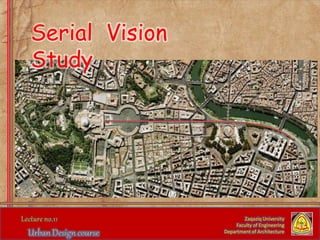
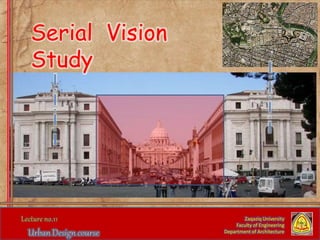
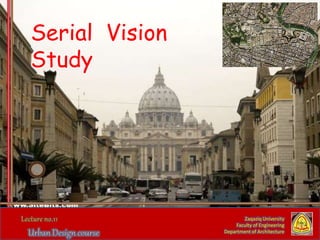
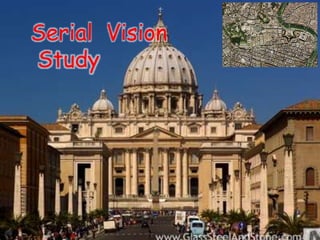
Forth: serial vision study
Fifth : urban experience “urban sense, identity,
style”
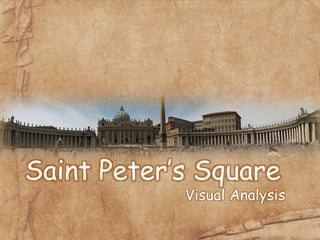
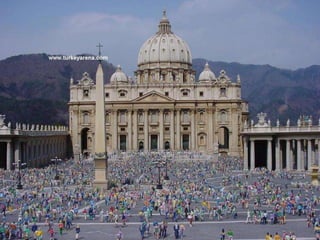
Saint Peter’s Square
Visual Analysis
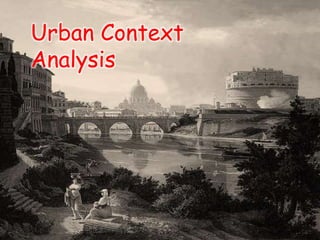
Urban Context
Analysis
Zaqaziq University
Faculty of Engineering
Department of Architecture
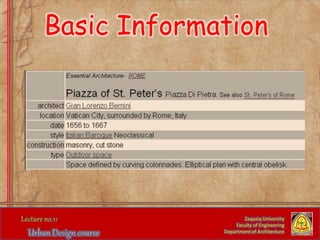
Basic Information
Location
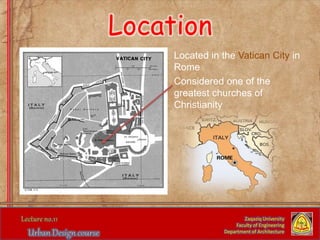
Located in the Vatican City in
Rome
Considered one of the
greatest churches of
Christianity
Zaqaziq University
Faculty of Engineering
Department of Architecture
Tiber river
Zaqaziq University
Faculty of Engineering
Department of Architecture
Location
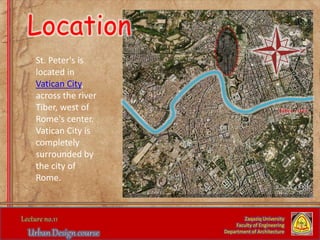
St. Peter's is
located in
Vatican City,
across the river
Tiber, west of
Rome's center.
Vatican City is
completely
surrounded by
the city of
Rome.
Location
Zaqaziq University
Faculty of Engineering
Department of Architecture
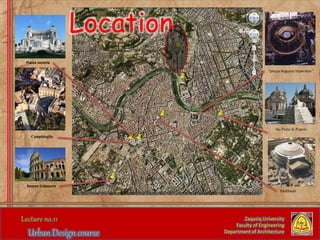
the Porto di Popolo
Roman Coloseum
Campidoglio
Piazza venezia
"piazza Augusto imperator"
Pantheon
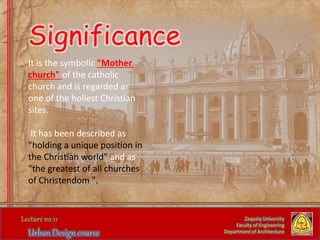
It is the symbolic "Mother
church" of the catholic
church and is regarded as
one of the holiest Christian
sites.
It has been described as
"holding a unique position in
the Christian world" and as
"the greatest of all churches
of Christendom ".
Zaqaziq University
Faculty of Engineering
Department of Architecture
Significance
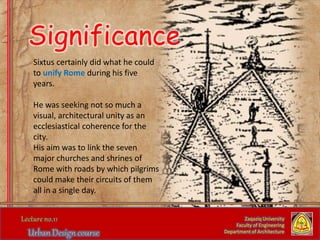
Sixtus certainly did what he could
to unify Rome during his five
years.
He was seeking not so much a
visual, architectural unity as an
ecclesiastical coherence for the
city.
His aim was to link the seven
major churches and shrines of
Rome with roads by which pilgrims
could make their circuits of them
all in a single day.
Zaqaziq University
Faculty of Engineering
Department of Architecture
Significance
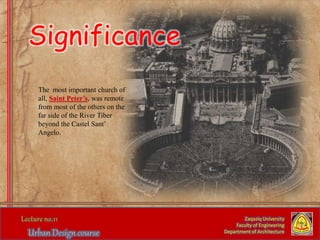
The most important church of
all, Saint Peter’s, was remote
from most of the others on the
far side of the River Tiber
beyond the Castel Sant’
Angelo.
Zaqaziq University
Faculty of Engineering
Department of Architecture
Significance
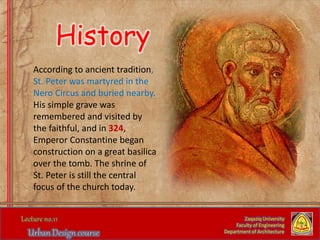
According to ancient tradition,
St. Peter was martyred in the
Nero Circus and buried nearby.
His simple grave was
remembered and visited by
the faithful, and in 324,
Emperor Constantine began
construction on a great basilica
over the tomb. The shrine of
St. Peter is still the central
focus of the church today.
Zaqaziq University
Faculty of Engineering
Department of Architecture
History
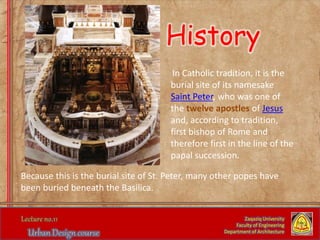
In Catholic tradition, it is the
burial site of its namesake
Saint Peter, who was one of
the twelve apostles of Jesus
and, according to tradition,
first bishop of Rome and
therefore first in the line of the
papal succession.
Zaqaziq University
Faculty of Engineering
Department of Architecture
Because this is the burial site of St. Peter, many other popes have
been buried beneath the Basilica.
History
Zaqaziq University
Faculty of Engineering
Department of Architecture
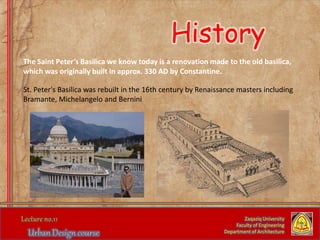
The Saint Peter’s Basilica we know today is a renovation made to the old basilica,
which was originally built in approx. 330 AD by Constantine.
St. Peter's Basilica was rebuilt in the 16th century by Renaissance masters including
Bramante, Michelangelo and Bernini
History
History of St. Peter's
Square
Zaqaziq University
Faculty of Engineering
Department of Architecture
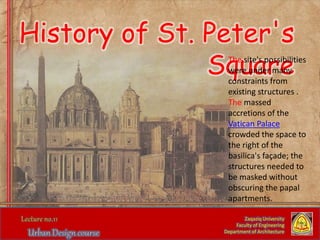
The site's possibilities
were under many
constraints from
existing structures .
The massed
accretions of the
Vatican Palace
crowded the space to
the right of the
basilica's façade; the
structures needed to
be masked without
obscuring the papal
apartments.
History of St. Peter's
Square
Zaqaziq University
Faculty of Engineering
Department of Architecture
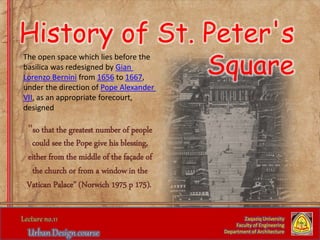
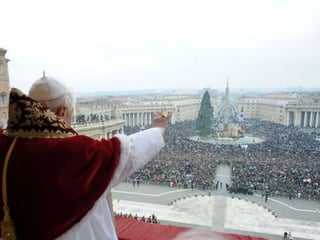
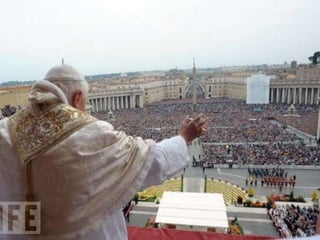
The open space which lies before the
basilica was redesigned by Gian
Lorenzo Bernini from 1656 to 1667,
under the direction of Pope Alexander
VII, as an appropriate forecourt,
designed
"so that the greatest number of people
could see the Pope give his blessing,
either from the middle of the façade of
the church or from a window in the
Vatican Palace" (Norwich 1975 p 175).
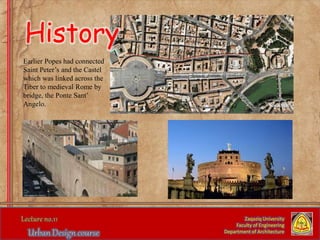
Earlier Popes had connected
Saint Peter’s and the Castel
which was linked across the
Tiber to medieval Rome by
bridge, the Ponte Sant’
Angelo.
Zaqaziq University
Faculty of Engineering
Department of Architecture
History
Morphological
Analysis
Zaqaziq University
Faculty of Engineering
Department of Architecture
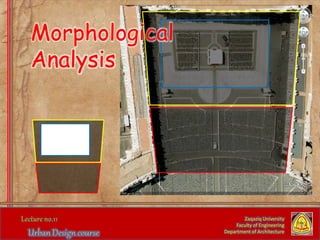
Morphological
Analysis
Zaqaziq University
Faculty of Engineering
Department of Architecture
Morphological
Analysis
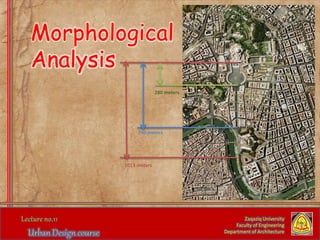
1013 meters
760 meters
280 meters
Morphological
Analysis
Zaqaziq University
Faculty of Engineering
Department of Architecture
Morphological
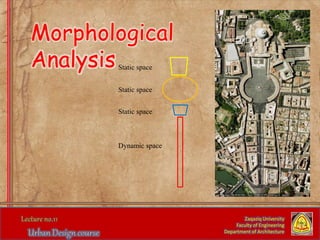
AnalysisStatic space
Static space
Static space
Dynamic space
Zaqaziq University
Faculty of Engineering
Department of Architecture
Morphological
Analysis
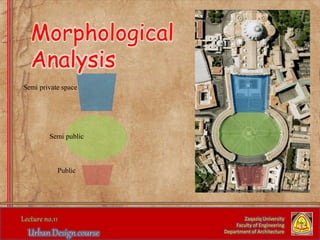
Semi private space
Semi public
Public
Zaqaziq University
Faculty of Engineering
Department of Architecture
Morphological
Analysis
Zaqaziq University
Faculty of Engineering
Department of Architecture
Morphological
Analysis
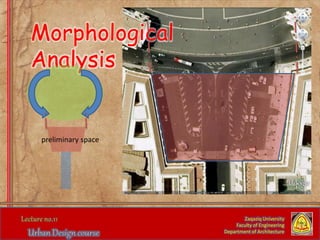
preliminary space
Zaqaziq University
Faculty of Engineering
Department of Architecture
Morphological
Analysis
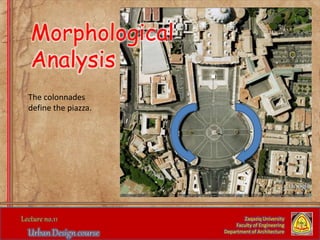
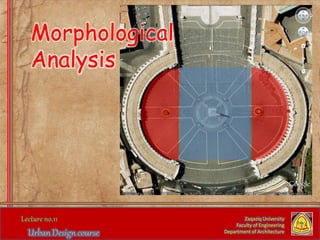
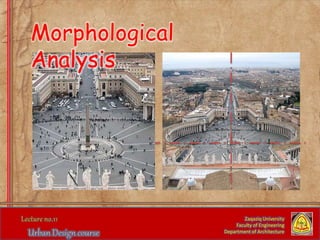
The colonnades
define the piazza.
Zaqaziq University
Faculty of Engineering
Department of Architecture
Morphological
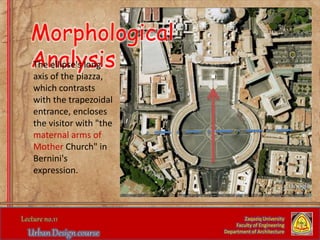
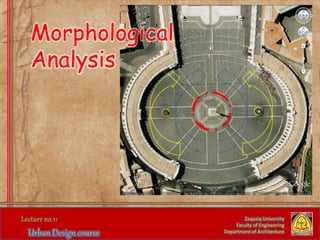
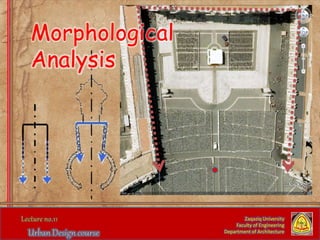
AnalysisThe ellipse's long
axis of the piazza,
which contrasts
with the trapezoidal
entrance, encloses
the visitor with "the
maternal arms of
Mother Church" in
Bernini's
expression.
Zaqaziq University
Faculty of Engineering
Department of Architecture
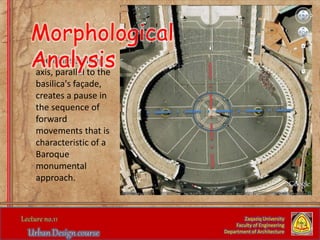
The ellipse's long
axis, parallel to the
basilica's façade,
creates a pause in
the sequence of
forward
movements that is
characteristic of a
Baroque
monumental
approach.
Morphological
Analysis
Zaqaziq University
Faculty of Engineering
Department of Architecture
Morphological
AnalysisIn the
center of
the square
is a 25.5-
meter-tall
obelisk,
If you
include the
cross on top
and the
base, the
obelisk
reaches
40m.
Zaqaziq University
Faculty of Engineering
Department of Architecture
Morphological
Analysis
Zaqaziq University
Faculty of Engineering
Department of Architecture
Morphological
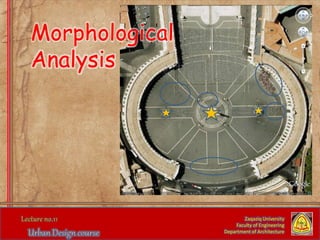
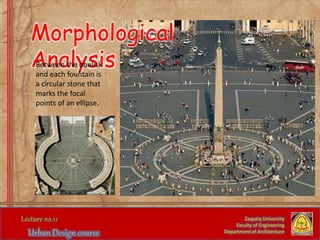
AnalysisBetween the obelisk
and each fountain is
a circular stone that
marks the focal
points of an ellipse.
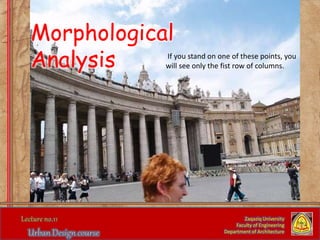
If you stand on one of these points, you
will see only the fist row of columns.
Zaqaziq University
Faculty of Engineering
Department of Architecture
Morphological
Analysis
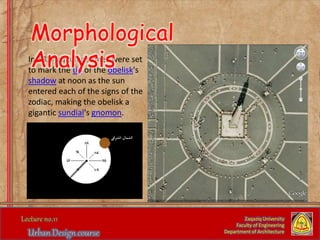
In 1817 circular stones were set
to mark the tip of the obelisk's
shadow at noon as the sun
entered each of the signs of the
zodiac, making the obelisk a
gigantic sundial's gnomon.
Zaqaziq University
Faculty of Engineering
Department of Architecture
Morphological
Analysis
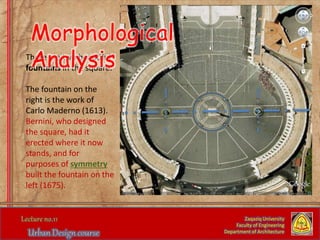
There are two beautiful
fountains in the square.
The fountain on the
right is the work of
Carlo Maderno (1613).
Bernini, who designed
the square, had it
erected where it now
stands, and for
purposes of symmetry
built the fountain on the
left (1675).
Zaqaziq University
Faculty of Engineering
Department of Architecture
Morphological
Analysis
Zaqaziq University
Faculty of Engineering
Department of Architecture
Morphological
Analysis
Zaqaziq University
Faculty of Engineering
Department of Architecture
Morphological
Analysis
Zaqaziq University
Faculty of Engineering
Department of Architecture
Morphological
Analysis
Zaqaziq University
Faculty of Engineering
Department of Architecture
Morphological
Analysis
Zaqaziq University
Faculty of Engineering
Department of Architecture
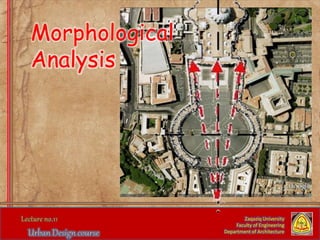
As you look at this
aerial picture of
the rounded open
plaza in front of
the cathedral, you
can see that it is
centered on an
Egyptian obelisk
with the lines of
the spokes of a
wheel radiating out
to the eight
cardinal directions
of the globe.
Morphological
Analysis
Zaqaziq University
Faculty of Engineering
Department of Architecture
Morphological
Analysis
There also is an opening
in the plaza facing east
and west.
“Here we are seeing the
“Eight Wheel Path of
Enlightenment”
centered on a circular
hub.”
The root of this symbol is in Eight Paths
of Enlightenment of Buddha corrupted
into what we call Black Magic today.
The eight levels in the path of learning
are what a young neophyte in a satanic
coven must attain before he has
reached the level of “full
enlightenment”.
.
Zaqaziq University
Faculty of Engineering
Department of Architecture
Morphological
Analysis
The root of this symbol is in Eight Paths
of Enlightenment of Buddha corrupted
into what we call Black Magic today.
The eight levels in the path of learning
are what a young neophyte in a satanic
coven must attain before he has
reached the level of “full
enlightenment”.
.
Zaqaziq University
Faculty of Engineering
Department of Architecture
Morphological
Analysis
Zaqaziq University
Faculty of Engineering
Department of Architecture
Morphological
Analysis
Zaqaziq University
Faculty of Engineering
Department of Architecture
Morphological
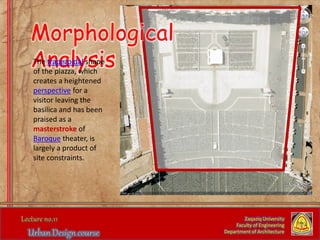
AnalysisThe trapezoidal shape
of the piazza, which
creates a heightened
perspective for a
visitor leaving the
basilica and has been
praised as a
masterstroke of
Baroque theater, is
largely a product of
site constraints.
Zaqaziq University
Faculty of Engineering
Department of Architecture
Morphological
Analysis
Zaqaziq University
Faculty of Engineering
Department of Architecture
Morphological
Analysis
Zaqaziq University
Faculty of Engineering
Department of Architecture
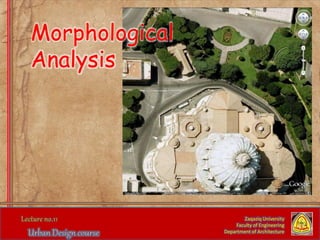
Morphological
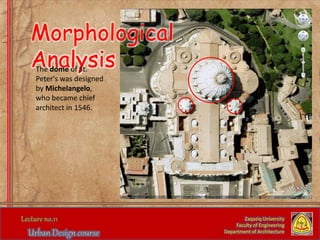
AnalysisThe dome of St.
Peter's was designed
by Michelangelo,
who became chief
architect in 1546.
Zaqaziq University
Faculty of Engineering
Department of Architecture
Morphological
Analysis
3d Form Analysis
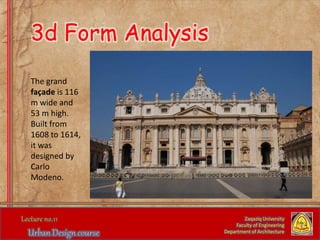
The grand
façade is 116
m wide and
53 m high.
Built from
1608 to 1614,
it was
designed by
Carlo
Modeno.
Zaqaziq University
Faculty of Engineering
Department of Architecture
3d Form Analysis
Zaqaziq University
Faculty of Engineering
Department of Architecture
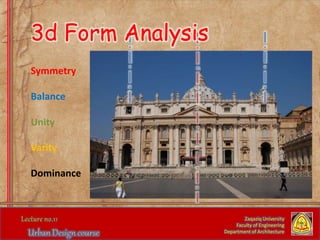
Symmetry
Balance
Unity
Varity
Dominance
3d Form Analysis
Zaqaziq University
Faculty of Engineering
Department of Architecture
3d Form Analysis
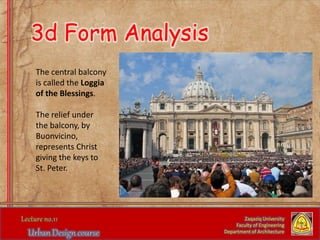
The central balcony
is called the Loggia
of the Blessings.
The relief under
the balcony, by
Buonvicino,
represents Christ
giving the keys to
St. Peter.
Zaqaziq University
Faculty of Engineering
Department of Architecture
3d Form Analysis
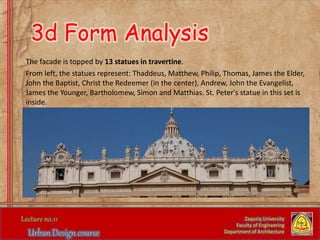
The facade is topped by 13 statues in travertine.
From left, the statues represent: Thaddeus, Matthew, Philip, Thomas, James the Elder,
John the Baptist, Christ the Redeemer (in the center), Andrew, John the Evangelist,
James the Younger, Bartholomew, Simon and Matthias. St. Peter's statue in this set is
inside.
Zaqaziq University
Faculty of Engineering
Department of Architecture
3d Form Analysis
Zaqaziq University
Faculty of Engineering
Department of Architecture
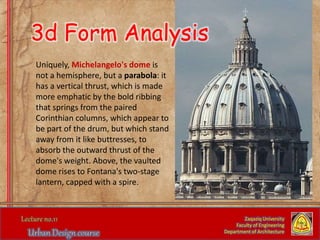
Uniquely, Michelangelo's dome is
not a hemisphere, but a parabola: it
has a vertical thrust, which is made
more emphatic by the bold ribbing
that springs from the paired
Corinthian columns, which appear to
be part of the drum, but which stand
away from it like buttresses, to
absorb the outward thrust of the
dome's weight. Above, the vaulted
dome rises to Fontana's two-stage
lantern, capped with a spire.
3d Form Analysis
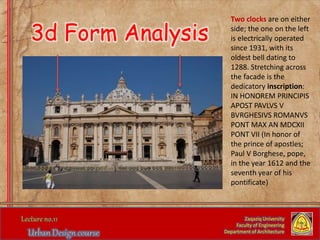
Two clocks are on either
side; the one on the left
is electrically operated
since 1931, with its
oldest bell dating to
1288. Stretching across
the facade is the
dedicatory inscription:
IN HONOREM PRINCIPIS
APOST PAVLVS V
BVRGHESIVS ROMANVS
PONT MAX AN MDCXII
PONT VII (In honor of
the prince of apostles;
Paul V Borghese, pope,
in the year 1612 and the
seventh year of his
pontificate)
Zaqaziq University
Faculty of Engineering
Department of Architecture
3d Form Analysis
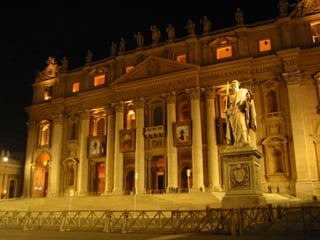
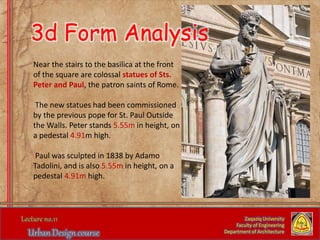
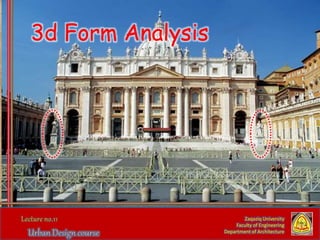
Near the stairs to the basilica at the front
of the square are colossal statues of Sts.
Peter and Paul, the patron saints of Rome.
The new statues had been commissioned
by the previous pope for St. Paul Outside
the Walls. Peter stands 5.55m in height, on
a pedestal 4.91m high.
Paul was sculpted in 1838 by Adamo
Tadolini, and is also 5.55m in height, on a
pedestal 4.91m high.
Zaqaziq University
Faculty of Engineering
Department of Architecture
3d Form Analysis
Zaqaziq University
Faculty of Engineering
Department of Architecture
3d Form Analysis
Zaqaziq University
Faculty of Engineering
Department of Architecture
3d Form Analysis
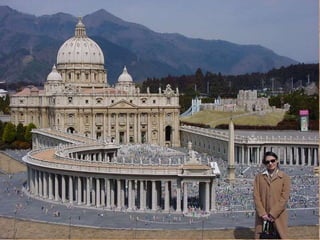
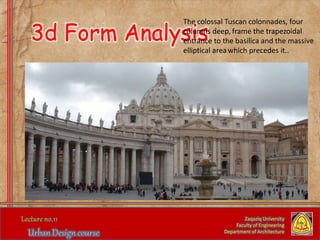
The colossal Tuscan colonnades, four
columns deep, frame the trapezoidal
entrance to the basilica and the massive
elliptical area which precedes it..
Zaqaziq University
Faculty of Engineering
Department of Architecture
Zaqaziq University
Faculty of Engineering
Department of Architecture
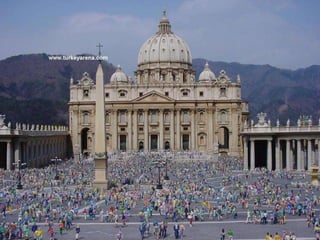
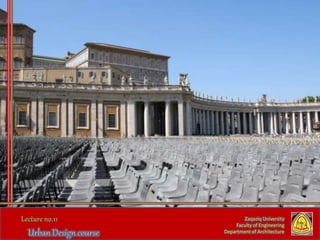
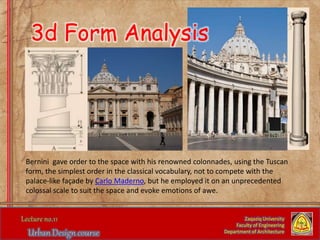
Bernini gave order to the space with his renowned colonnades, using the Tuscan
form, the simplest order in the classical vocabulary, not to compete with the
palace-like façade by Carlo Maderno, but he employed it on an unprecedented
colossal scale to suit the space and evoke emotions of awe.
3d Form Analysis
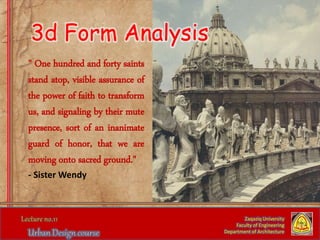
" One hundred and forty saints
stand atop, visible assurance of
the power of faith to transform
us, and signaling by their mute
presence, sort of an inanimate
guard of honor, that we are
moving onto sacred ground."
- Sister Wendy
Zaqaziq University
Faculty of Engineering
Department of Architecture
3d Form Analysis
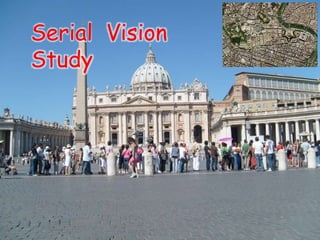
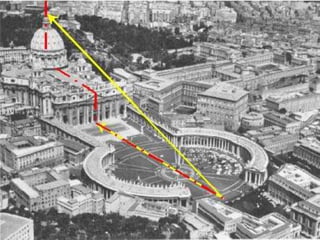
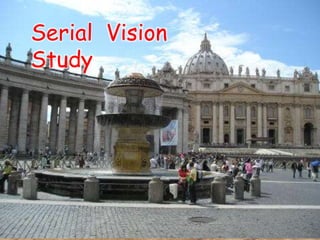
Serial Vision
Study
Zaqaziq University
Faculty of Engineering
Department of Architecture
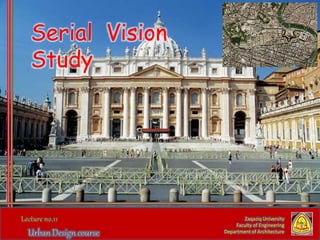
Serial Vision
Study
Zaqaziq University
Faculty of Engineering
Department of Architecture
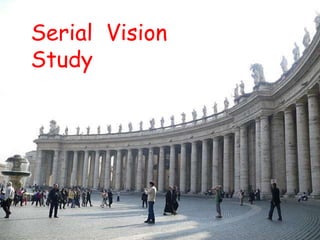
Serial Vision
Study
Zaqaziq University
Faculty of Engineering
Department of Architecture
Serial Vision
Study
Serial Vision
Study
Serial Vision
Study
Zaqaziq University
Faculty of Engineering
Department of Architecture
Serial Vision
Study
Serial Vision
Study
Serial Vision
Study
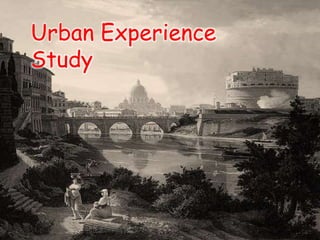
Urban Experience
Study
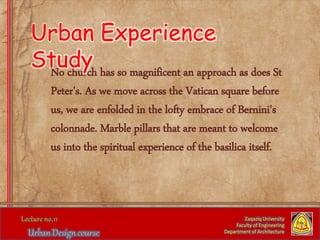
No church has so magnificent an approach as does St
Peter's. As we move across the Vatican square before
us, we are enfolded in the lofty embrace of Bernini's
colonnade. Marble pillars that are meant to welcome
us into the spiritual experience of the basilica itself.
Zaqaziq University
Faculty of Engineering
Department of Architecture
Urban Experience
Study
Thank you !!!!

Visual analysis of Saint Peter’s Square

  • 2.
    Analysis is theprocess of breaking a complex topic or substance into smaller parts to gain a better understanding of it. Zaqaziq University Faculty of Engineering Department of Architecture What visual analysis means ? Visual Analysis is the method to interpret information and surroundings from visible messages reaching the eye.
  • 3.
    How can youanalyze an urban space ? You can analyze it by: 1. Visiting the urban space 2. Studying visual material: * technical drawings * perspectives * Via photos, videos 3. Reading about it Zaqaziq University Faculty of Engineering Department of Architecture
  • 4.
    Zaqaziq University Faculty ofEngineering Department of Architecture visual analysis purpose The main purpose of this study is to demonstrate the procedure used to analyze the form, function and significance of the urban space as an element within a given urban context. In order to appraise the urban status we experience …
  • 5.
    Zaqaziq University Faculty ofEngineering Department of Architecture visual analysis sequences First : Urban context : time “history” and place “location” Second : Morphological analysis : plans, sections “ axis, distance, height, 2d shape , …” Third : 3d form analysis ,elevations, “proportion, symmetry, balance, details, …” Forth: serial vision study Fifth : urban experience “urban sense, identity, style”
  • 6.
  • 7.
  • 8.
    Zaqaziq University Faculty ofEngineering Department of Architecture Basic Information
  • 9.
    Location Located in theVatican City in Rome Considered one of the greatest churches of Christianity Zaqaziq University Faculty of Engineering Department of Architecture
  • 10.
    Tiber river Zaqaziq University Facultyof Engineering Department of Architecture Location St. Peter's is located in Vatican City, across the river Tiber, west of Rome's center. Vatican City is completely surrounded by the city of Rome.
  • 11.
    Location Zaqaziq University Faculty ofEngineering Department of Architecture the Porto di Popolo Roman Coloseum Campidoglio Piazza venezia "piazza Augusto imperator" Pantheon
  • 12.
    It is thesymbolic "Mother church" of the catholic church and is regarded as one of the holiest Christian sites. It has been described as "holding a unique position in the Christian world" and as "the greatest of all churches of Christendom ". Zaqaziq University Faculty of Engineering Department of Architecture Significance
  • 13.
    Sixtus certainly didwhat he could to unify Rome during his five years. He was seeking not so much a visual, architectural unity as an ecclesiastical coherence for the city. His aim was to link the seven major churches and shrines of Rome with roads by which pilgrims could make their circuits of them all in a single day. Zaqaziq University Faculty of Engineering Department of Architecture Significance
  • 14.
    The most importantchurch of all, Saint Peter’s, was remote from most of the others on the far side of the River Tiber beyond the Castel Sant’ Angelo. Zaqaziq University Faculty of Engineering Department of Architecture Significance
  • 15.
    According to ancienttradition, St. Peter was martyred in the Nero Circus and buried nearby. His simple grave was remembered and visited by the faithful, and in 324, Emperor Constantine began construction on a great basilica over the tomb. The shrine of St. Peter is still the central focus of the church today. Zaqaziq University Faculty of Engineering Department of Architecture History
  • 17.
    In Catholic tradition,it is the burial site of its namesake Saint Peter, who was one of the twelve apostles of Jesus and, according to tradition, first bishop of Rome and therefore first in the line of the papal succession. Zaqaziq University Faculty of Engineering Department of Architecture Because this is the burial site of St. Peter, many other popes have been buried beneath the Basilica. History
  • 18.
    Zaqaziq University Faculty ofEngineering Department of Architecture The Saint Peter’s Basilica we know today is a renovation made to the old basilica, which was originally built in approx. 330 AD by Constantine. St. Peter's Basilica was rebuilt in the 16th century by Renaissance masters including Bramante, Michelangelo and Bernini History
  • 19.
    History of St.Peter's Square Zaqaziq University Faculty of Engineering Department of Architecture The site's possibilities were under many constraints from existing structures . The massed accretions of the Vatican Palace crowded the space to the right of the basilica's façade; the structures needed to be masked without obscuring the papal apartments.
  • 20.
    History of St.Peter's Square Zaqaziq University Faculty of Engineering Department of Architecture The open space which lies before the basilica was redesigned by Gian Lorenzo Bernini from 1656 to 1667, under the direction of Pope Alexander VII, as an appropriate forecourt, designed "so that the greatest number of people could see the Pope give his blessing, either from the middle of the façade of the church or from a window in the Vatican Palace" (Norwich 1975 p 175).
  • 22.
    Earlier Popes hadconnected Saint Peter’s and the Castel which was linked across the Tiber to medieval Rome by bridge, the Ponte Sant’ Angelo. Zaqaziq University Faculty of Engineering Department of Architecture History
  • 23.
  • 24.
    Zaqaziq University Faculty ofEngineering Department of Architecture Morphological Analysis
  • 25.
    Zaqaziq University Faculty ofEngineering Department of Architecture Morphological Analysis 1013 meters 760 meters 280 meters
  • 26.
  • 27.
    Zaqaziq University Faculty ofEngineering Department of Architecture Morphological AnalysisStatic space Static space Static space Dynamic space
  • 28.
    Zaqaziq University Faculty ofEngineering Department of Architecture Morphological Analysis Semi private space Semi public Public
  • 29.
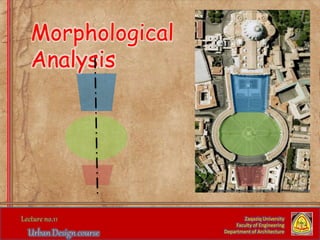
    Zaqaziq University Faculty ofEngineering Department of Architecture Morphological Analysis
  • 30.
    Zaqaziq University Faculty ofEngineering Department of Architecture Morphological Analysis preliminary space
  • 32.
    Zaqaziq University Faculty ofEngineering Department of Architecture Morphological Analysis The colonnades define the piazza.
  • 33.
    Zaqaziq University Faculty ofEngineering Department of Architecture Morphological AnalysisThe ellipse's long axis of the piazza, which contrasts with the trapezoidal entrance, encloses the visitor with "the maternal arms of Mother Church" in Bernini's expression.
  • 35.
    Zaqaziq University Faculty ofEngineering Department of Architecture The ellipse's long axis, parallel to the basilica's façade, creates a pause in the sequence of forward movements that is characteristic of a Baroque monumental approach. Morphological Analysis
  • 36.
    Zaqaziq University Faculty ofEngineering Department of Architecture Morphological AnalysisIn the center of the square is a 25.5- meter-tall obelisk, If you include the cross on top and the base, the obelisk reaches 40m.
  • 37.
    Zaqaziq University Faculty ofEngineering Department of Architecture Morphological Analysis
  • 38.
    Zaqaziq University Faculty ofEngineering Department of Architecture Morphological AnalysisBetween the obelisk and each fountain is a circular stone that marks the focal points of an ellipse.
  • 39.
    If you standon one of these points, you will see only the fist row of columns. Zaqaziq University Faculty of Engineering Department of Architecture Morphological Analysis
  • 40.
    In 1817 circularstones were set to mark the tip of the obelisk's shadow at noon as the sun entered each of the signs of the zodiac, making the obelisk a gigantic sundial's gnomon. Zaqaziq University Faculty of Engineering Department of Architecture Morphological Analysis
  • 41.
    There are twobeautiful fountains in the square. The fountain on the right is the work of Carlo Maderno (1613). Bernini, who designed the square, had it erected where it now stands, and for purposes of symmetry built the fountain on the left (1675). Zaqaziq University Faculty of Engineering Department of Architecture Morphological Analysis
  • 42.
    Zaqaziq University Faculty ofEngineering Department of Architecture Morphological Analysis
  • 43.
    Zaqaziq University Faculty ofEngineering Department of Architecture Morphological Analysis
  • 44.
    Zaqaziq University Faculty ofEngineering Department of Architecture Morphological Analysis
  • 45.
    Zaqaziq University Faculty ofEngineering Department of Architecture Morphological Analysis
  • 46.
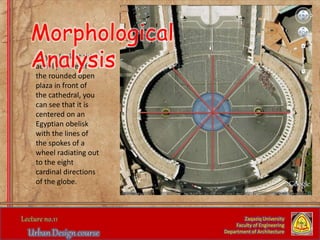
    Zaqaziq University Faculty ofEngineering Department of Architecture As you look at this aerial picture of the rounded open plaza in front of the cathedral, you can see that it is centered on an Egyptian obelisk with the lines of the spokes of a wheel radiating out to the eight cardinal directions of the globe. Morphological Analysis
  • 47.
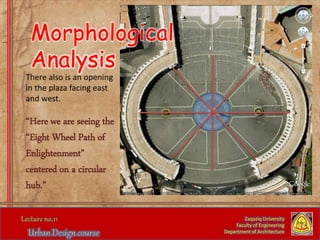
    Zaqaziq University Faculty ofEngineering Department of Architecture Morphological Analysis There also is an opening in the plaza facing east and west. “Here we are seeing the “Eight Wheel Path of Enlightenment” centered on a circular hub.”
  • 48.
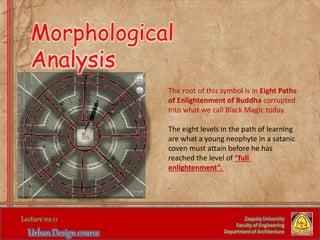
    The root ofthis symbol is in Eight Paths of Enlightenment of Buddha corrupted into what we call Black Magic today. The eight levels in the path of learning are what a young neophyte in a satanic coven must attain before he has reached the level of “full enlightenment”. . Zaqaziq University Faculty of Engineering Department of Architecture Morphological Analysis
  • 49.
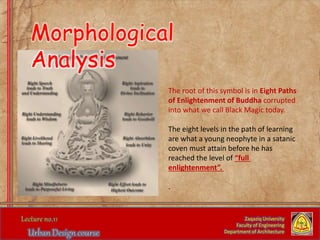
    The root ofthis symbol is in Eight Paths of Enlightenment of Buddha corrupted into what we call Black Magic today. The eight levels in the path of learning are what a young neophyte in a satanic coven must attain before he has reached the level of “full enlightenment”. . Zaqaziq University Faculty of Engineering Department of Architecture Morphological Analysis
  • 50.
    Zaqaziq University Faculty ofEngineering Department of Architecture Morphological Analysis
  • 52.
    Zaqaziq University Faculty ofEngineering Department of Architecture Morphological AnalysisThe trapezoidal shape of the piazza, which creates a heightened perspective for a visitor leaving the basilica and has been praised as a masterstroke of Baroque theater, is largely a product of site constraints.
  • 53.
    Zaqaziq University Faculty ofEngineering Department of Architecture Morphological Analysis
  • 55.
    Zaqaziq University Faculty ofEngineering Department of Architecture Morphological Analysis
  • 56.
    Zaqaziq University Faculty ofEngineering Department of Architecture Morphological AnalysisThe dome of St. Peter's was designed by Michelangelo, who became chief architect in 1546.
  • 57.
    Zaqaziq University Faculty ofEngineering Department of Architecture Morphological Analysis
  • 58.
  • 59.
    The grand façade is116 m wide and 53 m high. Built from 1608 to 1614, it was designed by Carlo Modeno. Zaqaziq University Faculty of Engineering Department of Architecture 3d Form Analysis
  • 60.
    Zaqaziq University Faculty ofEngineering Department of Architecture Symmetry Balance Unity Varity Dominance 3d Form Analysis
  • 61.
    Zaqaziq University Faculty ofEngineering Department of Architecture 3d Form Analysis
  • 62.
    The central balcony iscalled the Loggia of the Blessings. The relief under the balcony, by Buonvicino, represents Christ giving the keys to St. Peter. Zaqaziq University Faculty of Engineering Department of Architecture 3d Form Analysis
  • 63.
    The facade istopped by 13 statues in travertine. From left, the statues represent: Thaddeus, Matthew, Philip, Thomas, James the Elder, John the Baptist, Christ the Redeemer (in the center), Andrew, John the Evangelist, James the Younger, Bartholomew, Simon and Matthias. St. Peter's statue in this set is inside. Zaqaziq University Faculty of Engineering Department of Architecture 3d Form Analysis
  • 64.
    Zaqaziq University Faculty ofEngineering Department of Architecture Uniquely, Michelangelo's dome is not a hemisphere, but a parabola: it has a vertical thrust, which is made more emphatic by the bold ribbing that springs from the paired Corinthian columns, which appear to be part of the drum, but which stand away from it like buttresses, to absorb the outward thrust of the dome's weight. Above, the vaulted dome rises to Fontana's two-stage lantern, capped with a spire. 3d Form Analysis
  • 65.
    Two clocks areon either side; the one on the left is electrically operated since 1931, with its oldest bell dating to 1288. Stretching across the facade is the dedicatory inscription: IN HONOREM PRINCIPIS APOST PAVLVS V BVRGHESIVS ROMANVS PONT MAX AN MDCXII PONT VII (In honor of the prince of apostles; Paul V Borghese, pope, in the year 1612 and the seventh year of his pontificate) Zaqaziq University Faculty of Engineering Department of Architecture 3d Form Analysis
  • 66.
    Near the stairsto the basilica at the front of the square are colossal statues of Sts. Peter and Paul, the patron saints of Rome. The new statues had been commissioned by the previous pope for St. Paul Outside the Walls. Peter stands 5.55m in height, on a pedestal 4.91m high. Paul was sculpted in 1838 by Adamo Tadolini, and is also 5.55m in height, on a pedestal 4.91m high. Zaqaziq University Faculty of Engineering Department of Architecture 3d Form Analysis
  • 67.
    Zaqaziq University Faculty ofEngineering Department of Architecture 3d Form Analysis
  • 68.
    Zaqaziq University Faculty ofEngineering Department of Architecture 3d Form Analysis The colossal Tuscan colonnades, four columns deep, frame the trapezoidal entrance to the basilica and the massive elliptical area which precedes it..
  • 69.
    Zaqaziq University Faculty ofEngineering Department of Architecture
  • 70.
    Zaqaziq University Faculty ofEngineering Department of Architecture Bernini gave order to the space with his renowned colonnades, using the Tuscan form, the simplest order in the classical vocabulary, not to compete with the palace-like façade by Carlo Maderno, but he employed it on an unprecedented colossal scale to suit the space and evoke emotions of awe. 3d Form Analysis
  • 71.
    " One hundredand forty saints stand atop, visible assurance of the power of faith to transform us, and signaling by their mute presence, sort of an inanimate guard of honor, that we are moving onto sacred ground." - Sister Wendy Zaqaziq University Faculty of Engineering Department of Architecture 3d Form Analysis
  • 73.
  • 74.
    Zaqaziq University Faculty ofEngineering Department of Architecture Serial Vision Study
  • 75.
    Zaqaziq University Faculty ofEngineering Department of Architecture Serial Vision Study
  • 76.
    Zaqaziq University Faculty ofEngineering Department of Architecture Serial Vision Study
  • 77.
  • 78.
  • 80.
    Zaqaziq University Faculty ofEngineering Department of Architecture Serial Vision Study
  • 81.
  • 82.
  • 83.
  • 84.
    No church hasso magnificent an approach as does St Peter's. As we move across the Vatican square before us, we are enfolded in the lofty embrace of Bernini's colonnade. Marble pillars that are meant to welcome us into the spiritual experience of the basilica itself. Zaqaziq University Faculty of Engineering Department of Architecture Urban Experience Study
  • 85.