ST. CLEMENTE
ROME
EARLY CHRISTIANITY
• • Christianity was born in Judea – a place in eastern province
of the Roman
• empire, which spread towards the north & west even against
the backdrop of
• great opposition & ultimately accepted as state religion.
• • The formulation phase of Christianity
• & its architecture can be considered
• from Constantine period (300 AD) to
• Charlemagne (800 AD – French ruler).
• • The development of Christian
• Architecture thus can be divided into
• the following phases:
• In these phases, architectural development experienced
the formulation phase, alterations & development in
plans, profile surroundings & concluded with imitation of
classical structures & mannerism.
• The development of Christian architecture in general
proved beneficial in establishing new norms, new
construction features, new materials, different types of
façade treatments & also versatile construction analysis.
• The phases proved beneficial not only for the religious
architecture but also for secular, domestic, commercial &
Mediterranean development.
• Examples for Early Christian Architecture:
• St. Clemente, Rome
• St. Peters (Old), Rome
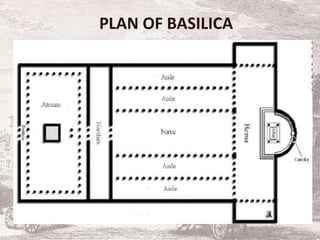
A TYPICAL BASILICAN CHURCH
• Commonest form of the early church.
• Unlike the earlier Roman phase, the interiors were give more
importance than exterior.
• Rectangular hall, timber-roofed with coffers & richly glided ceiling
(hiding the roof truss) on nave.
• Usually with one or two aisles to each side of the central nave
separated by rows of rustic marble columns, sometimes carrying flat
entablatures & sometimes, rows of arches.
• The width of aisles was half that of the central nave.
• Apse at one end facing the principal entrances at the other end.
• Bema / Transept – a raised platform where altar was placed & from
where the clergy officiated.
• A courtyard (atrium) having a central fountain for ablutions &
surrounded by colonnaded ambulatory.
• A narthex – corresponding to entrance foyer, preceding the nave.
• The nave & bema received light from clerestory above the
aisles & were pierced with windows.
• Above aisles & between clerestory windows, the walls may
be faced with marble, or mosaics made up from small
tesserae of coloured glass.
• The nave terminates into a ‘triumphal arch’, perhaps having
iridescent (brightly coloured & changing) mosaics.
• The semicircular walls of the apse ended into a dome,
whose interiors had mosaics depicting narrative scenes
from Bible or single figures seen against stylised landscapes
or plain gold grounds.
• The flooring was of grey-white & black marble, inlaid with
geometric patterns of coloured marble.
• The columns, capitals & similar features from old Roman
buildings were frequently reused to enhance the liveliness
of the interiors.
• In the new churches, arches were more often used to span
between columns of a colonnade instead of flat
entablatures.
PLAN OF BASILICA
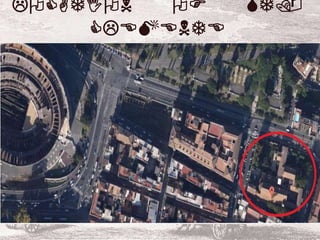
LOCATION OF ST. CLEMENTE
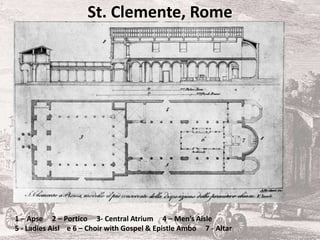
St. Clemente, Rome
Plan & Section
1 – Apse 2 – Portico 3- Central Atrium 4 – Men’s Aisle
5 - Ladies Aisl e 6 – Choir with Gospel & Epistle Ambo 7 - Altar
Basilica of San Clemente
• The Basilica of Saint Clement is a Roman Catholic
minor basillica dedicated to Pope clement I located in
Rome, Italy.
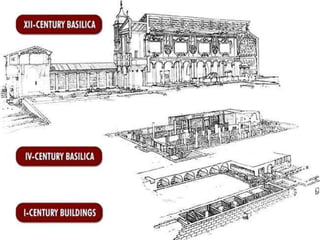
• The structure is a three-tiered complex of buildings:
(1) the present basilica built just before the year 1100
during the height of the Middle Ages ;
(2) beneath the present basilica is a 4th-century basilica
that had been converted out of the home of a Roman
nobleman, part of which had in the 1st century briefly
served as an early church, and the basement of which
had in the 2nd century briefly served as a mithraeum;
(3) the home of the Roman nobleman had been built on
the foundations of a republican era building that had
been destroyed in the Great fire of 64 AD.
TRANSFORMATION
1st century
• This ancient church was transformed over the centuries
from a private home Christian worship in the 1st
century to a grand public basilica by the 6th century
Before the 4th century
• The lowest levels of the present basilica contain
remnants of the foundation of a possibly republican
era building that might have been destroyed in
the Great fire of 64 AD
• About a hundred years later (c. 200), the central room
of the insula was remodelled for use as part of a
mithraeum, that is, as part of a sanctuary of the Cult of
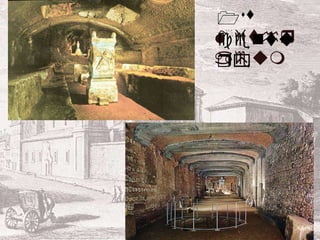
Mithras . The main cult room "cave”, which is about
9.6m long and 6m wide, was discovered in 1867 but
could not be investigated until 1914 due to lack of
drainage.
Mithraeum
1st century
4th-11th century
• At some time in the 4th century, the lower level of the
industrial building was filled in with dirt and rubble
and its second floor remodeled.
• An apse was built out over part of the domus, whose
lowest floor, with the Mithraeum, was also filled in.
The second basilica
• The current basilica was rebuilt in one campaign by
Cardinal Anastasius, 1100 AD
• An now outdated hypothesis held that the original
church had burned out during the Norman sack of the
city, but no evidence of fire damage in the lower
basilica has been found to date.
• One possible explanation is that the lower basilica was
filled in and the new church built on top due to the
close association of the lower structure with the
imperial opposition pope
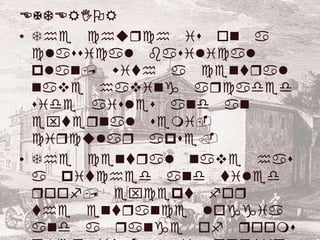
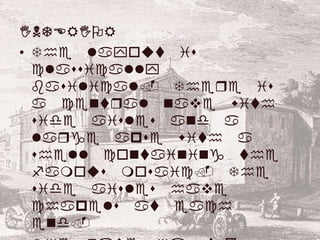
EXTERIOR
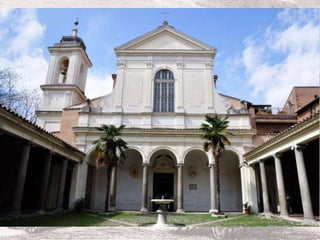
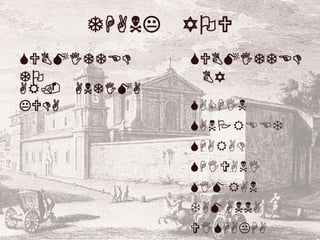
• The church is on a classical basilical plan, with
a central nave having arcaded side aisles and
an external semi-circular apse.
• The central nave has a pitched and tiled roof,
except for the entrance loggia and a range of
rooms over it. This portion is 18th century
and has its own, slightly lower roof.
• In front of the church is a large atrium or
courtyard with an entrance block, and beyond
the right hand side of the church is the
convent.
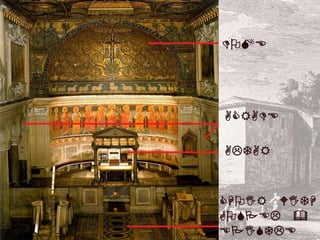
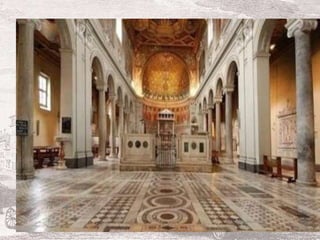
INTERIOR
• The layout is classically basilical. There is a
central nave with side aisles and a large apse
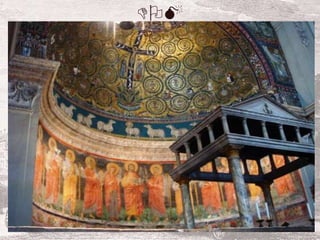
with a shell containing the famous mosaic.
The side aisles have chapels at each end.
• The nave has two arcades on each side,
separated by a wide pillar. Each arcade has
four ancient Ionic columns, making a total of
sixteen in all; the far pair are in the sanctuary,
and the near pair are incorporated into the
two side chapels flanking the entrance
DOME
ACRADE
ALTAR
CHOIR WITH GOSPEL &
EPISTLE AMBO
DOME
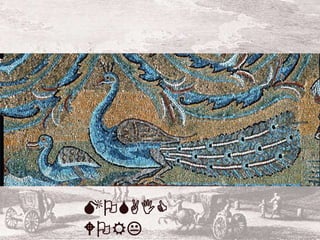
MOSAIC WORK
THANK YOU
BY-
SIMRAN

St. clemente

  • 1.
  • 2.
    EARLY CHRISTIANITY • •Christianity was born in Judea – a place in eastern province of the Roman • empire, which spread towards the north & west even against the backdrop of • great opposition & ultimately accepted as state religion. • • The formulation phase of Christianity • & its architecture can be considered • from Constantine period (300 AD) to • Charlemagne (800 AD – French ruler). • • The development of Christian • Architecture thus can be divided into • the following phases:
  • 3.
    • In thesephases, architectural development experienced the formulation phase, alterations & development in plans, profile surroundings & concluded with imitation of classical structures & mannerism. • The development of Christian architecture in general proved beneficial in establishing new norms, new construction features, new materials, different types of façade treatments & also versatile construction analysis. • The phases proved beneficial not only for the religious architecture but also for secular, domestic, commercial & Mediterranean development. • Examples for Early Christian Architecture: • St. Clemente, Rome • St. Peters (Old), Rome
  • 4.
    A TYPICAL BASILICANCHURCH • Commonest form of the early church. • Unlike the earlier Roman phase, the interiors were give more importance than exterior. • Rectangular hall, timber-roofed with coffers & richly glided ceiling (hiding the roof truss) on nave. • Usually with one or two aisles to each side of the central nave separated by rows of rustic marble columns, sometimes carrying flat entablatures & sometimes, rows of arches. • The width of aisles was half that of the central nave. • Apse at one end facing the principal entrances at the other end. • Bema / Transept – a raised platform where altar was placed & from where the clergy officiated. • A courtyard (atrium) having a central fountain for ablutions & surrounded by colonnaded ambulatory. • A narthex – corresponding to entrance foyer, preceding the nave.
  • 5.
    • The nave& bema received light from clerestory above the aisles & were pierced with windows. • Above aisles & between clerestory windows, the walls may be faced with marble, or mosaics made up from small tesserae of coloured glass. • The nave terminates into a ‘triumphal arch’, perhaps having iridescent (brightly coloured & changing) mosaics. • The semicircular walls of the apse ended into a dome, whose interiors had mosaics depicting narrative scenes from Bible or single figures seen against stylised landscapes or plain gold grounds. • The flooring was of grey-white & black marble, inlaid with geometric patterns of coloured marble. • The columns, capitals & similar features from old Roman buildings were frequently reused to enhance the liveliness of the interiors. • In the new churches, arches were more often used to span between columns of a colonnade instead of flat entablatures.
  • 6.
  • 7.
  • 8.
    St. Clemente, Rome Plan& Section 1 – Apse 2 – Portico 3- Central Atrium 4 – Men’s Aisle 5 - Ladies Aisl e 6 – Choir with Gospel & Epistle Ambo 7 - Altar
  • 9.
    Basilica of SanClemente • The Basilica of Saint Clement is a Roman Catholic minor basillica dedicated to Pope clement I located in Rome, Italy. • The structure is a three-tiered complex of buildings: (1) the present basilica built just before the year 1100 during the height of the Middle Ages ; (2) beneath the present basilica is a 4th-century basilica that had been converted out of the home of a Roman nobleman, part of which had in the 1st century briefly served as an early church, and the basement of which had in the 2nd century briefly served as a mithraeum; (3) the home of the Roman nobleman had been built on the foundations of a republican era building that had been destroyed in the Great fire of 64 AD.
  • 11.
    TRANSFORMATION 1st century • Thisancient church was transformed over the centuries from a private home Christian worship in the 1st century to a grand public basilica by the 6th century Before the 4th century • The lowest levels of the present basilica contain remnants of the foundation of a possibly republican era building that might have been destroyed in the Great fire of 64 AD • About a hundred years later (c. 200), the central room of the insula was remodelled for use as part of a mithraeum, that is, as part of a sanctuary of the Cult of Mithras . The main cult room "cave”, which is about 9.6m long and 6m wide, was discovered in 1867 but could not be investigated until 1914 due to lack of drainage.
  • 12.
  • 13.
    4th-11th century • Atsome time in the 4th century, the lower level of the industrial building was filled in with dirt and rubble and its second floor remodeled. • An apse was built out over part of the domus, whose lowest floor, with the Mithraeum, was also filled in. The second basilica • The current basilica was rebuilt in one campaign by Cardinal Anastasius, 1100 AD • An now outdated hypothesis held that the original church had burned out during the Norman sack of the city, but no evidence of fire damage in the lower basilica has been found to date. • One possible explanation is that the lower basilica was filled in and the new church built on top due to the close association of the lower structure with the imperial opposition pope
  • 15.
    EXTERIOR • The churchis on a classical basilical plan, with a central nave having arcaded side aisles and an external semi-circular apse. • The central nave has a pitched and tiled roof, except for the entrance loggia and a range of rooms over it. This portion is 18th century and has its own, slightly lower roof. • In front of the church is a large atrium or courtyard with an entrance block, and beyond the right hand side of the church is the convent.
  • 16.
    INTERIOR • The layoutis classically basilical. There is a central nave with side aisles and a large apse with a shell containing the famous mosaic. The side aisles have chapels at each end. • The nave has two arcades on each side, separated by a wide pillar. Each arcade has four ancient Ionic columns, making a total of sixteen in all; the far pair are in the sanctuary, and the near pair are incorporated into the two side chapels flanking the entrance
  • 17.
  • 19.
  • 20.
  • 21.