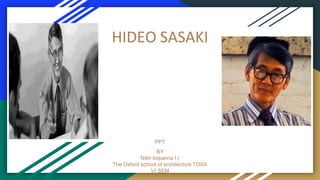
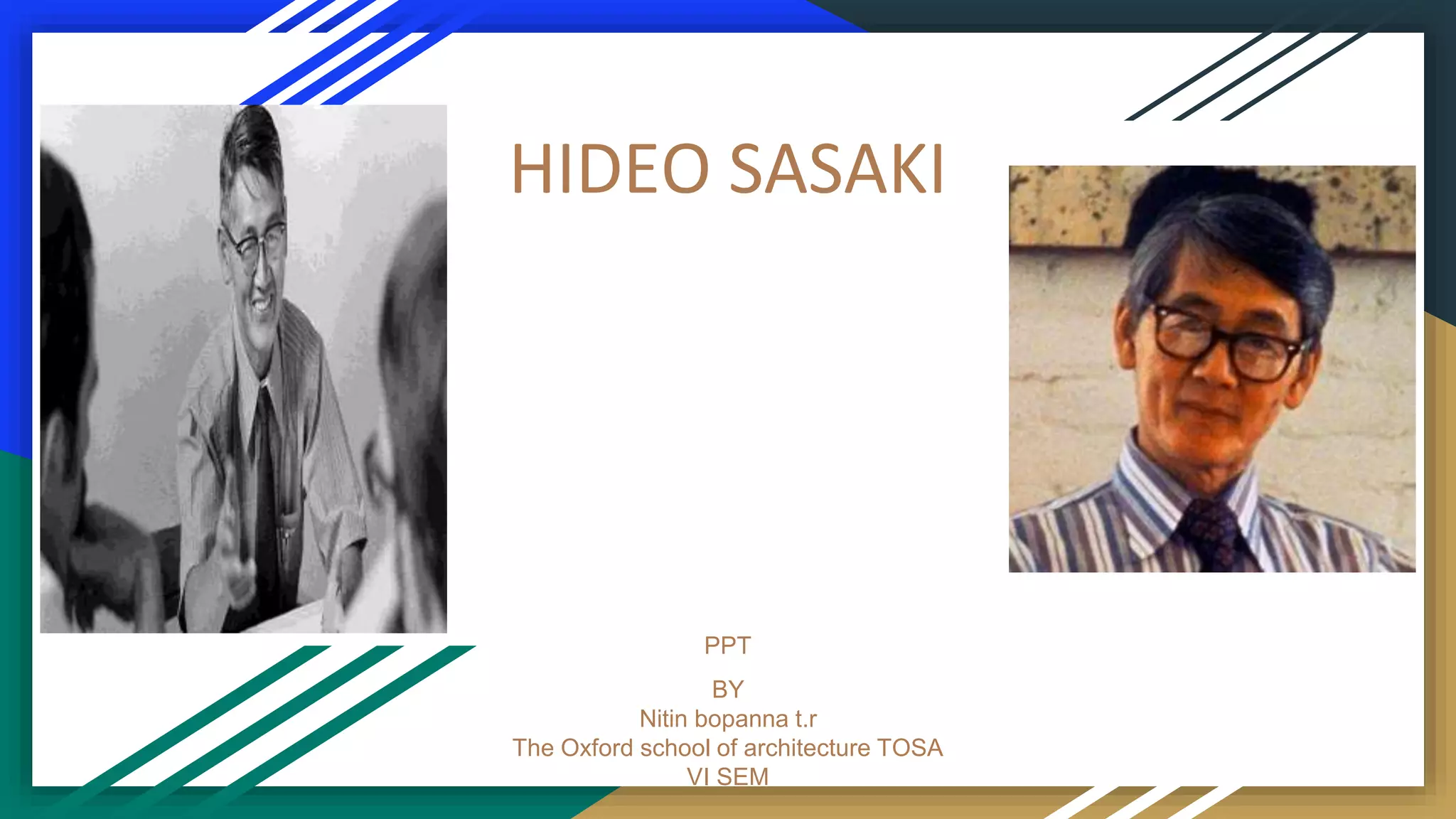
HIDEO SASAKI
PPT
BY
Nitin bopanna t.r
The Oxford school of architecture TOSA
VI SEM
INTRODUCTION
● He Was an American landscape architect.
● He received Bachelor of Fine Arts and Landscape Architecture in
1946.
● In 1948 he graduated with a Master of Landscape Architecture
from Harvard Design School.
● he became a professor and the chairman of the department of
Landscape Architecture of the Harvard Graduate School of
Design.
● In 1953, he founded Sasaki Associates, incorporated in nearby
Watertown, Massachusetts, where he was the president and
chairman until 1980.
● He led the company's architects and planners in developing many
noted commercial areas and corporate parks.
STYLE OF DESIGN
● Modernized the concepts of Landscape Architecture.
● He created a practical approach to designing a landscape.
● In his works, several characteristics are taken into account, such
as the historical, cultural, environmental, and social use of the
land .
● Sasaki became famous for developing this concept of
interdisciplinary planning.
● In all of the sites that he developed, a balance is implemented
into the design.
● One aspect that Sasaki Associates pays particular attention to is
the environmental aspect of the land.
● They have taken part in creating several "green designs.“
● These designs are created to enhance or maintain the health of
the environment.
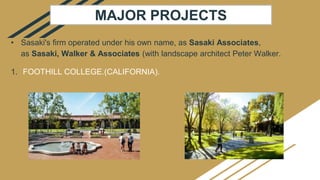
• Sasaki's firm operated under his own name, as Sasaki Associates,
as Sasaki, Walker & Associates (with landscape architect Peter Walker.
1. FOOTHILL COLLEGE.(CALIFORNIA).
MAJOR PROJECTS
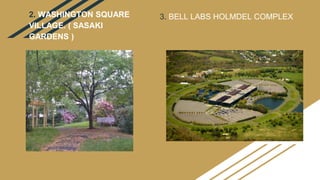
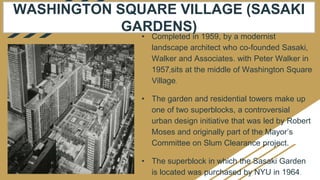
2. WASHINGTON SQUARE
VILLAGE. ( SASAKI
GARDENS )
3. BELL LABS HOLMDEL COMPLEX
• MASTER PLAN for University of Massachusetts Amherst, Amherst, Massachusetts, 1962
• JHON DEERE WORLD HEADQUARTERS, Moline, Illinois, 1964
• ONE MARINTINE PLAZA, San Francisco, California, 1964[6]
• ONE SHELL PLAZA, Houston, Texas, 1971
• URBAN DESIGN FOR PEARL STREET MALL, Boulder, Colorado, 1977
• FOREST VILLAGE, Princeton, New Jersey, 1986
• WATERFRONT PARK, South Carolina, 1990
• EURO DISNEYLAND in Paris, France, 1992
• MASTER PLAN for THE ARBORETUM in Penn state, State College, Pennsylvania, 1999
• PERFORMANCE HALL, Utah State University, Logan, Utah, 2006
• MASTER PLAN for the PUERTO RICO CONVENTION CENTRE District, 2006
• REDESIGN and RECONSTRUCTION of the ITHACA COMMONS, 2015
OTHER PROJECTS
• Completed in 1959, by a modernist
landscape architect who co-founded Sasaki,
Walker and Associates. with Peter Walker in
1957,sits at the middle of Washington Square
Village.
• The garden and residential towers make up
one of two superblocks, a controversial
urban design initiative that was led by Robert
Moses and originally part of the Mayor’s
Committee on Slum Clearance project.
• The superblock in which the Sasaki Garden
is located was purchased by NYU in 1964.
WASHINGTON SQUARE VILLAGE (SASAKI
GARDENS)
The WSV complex is said to be designed in
the Le Corbusier style.
Hideo Sasaki’s partner on the WSV Sasaki
Garden project was Peter Walker of Peter
Walker Partners, the landscape
architecture firm that designed the World
Trade Center (WTC) 911 Memorial.
The WSV Sasaki garden was “one of the
first rooftop gardens covering a parking
garage in the country”. The Sasaki garden
is 1.5 acres. It has been described as “an
excellent example of a successful
integration of landscape and hardscape in
an urban setting”
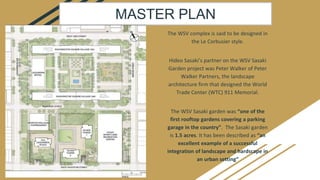
MASTER PLAN
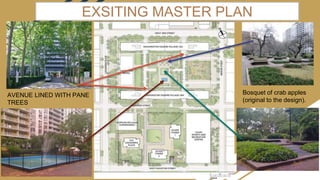
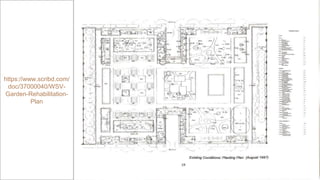
EXSITING MASTER PLAN
AVENUE LINED WITH PANE
TREES
Bosquet of crab apples
(original to the design).
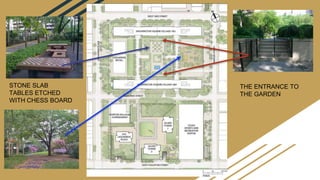
THE ENTRANCE TO
THE GARDEN
STONE SLAB
TABLES ETCHED
WITH CHESS BOARD
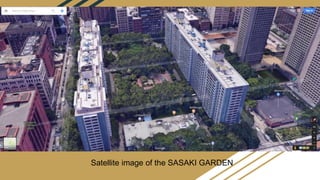
• SASAKI is a 1.5 acre roof garden above the underground parking between
the two apartments, which is the tower in the park in a standard park.
• The roof garden has successfully integrated urban space and neighborhood
parks.
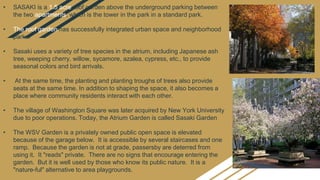
• Sasaki uses a variety of tree species in the atrium, including Japanese ash
tree, weeping cherry, willow, sycamore, azalea, cypress, etc., to provide
seasonal colors and bird arrivals.
• At the same time, the planting and planting troughs of trees also provide
seats at the same time. In addition to shaping the space, it also becomes a
place where community residents interact with each other.
• The village of Washington Square was later acquired by New York University
due to poor operations. Today, the Atrium Garden is called Sasaki Garden
• The WSV Garden is a privately owned public open space is elevated
because of the garage below. It is accessible by several staircases and one
ramp. Because the garden is not at grade, passersby are deterred from
using it. It "reads" private. There are no signs that encourage entering the
garden. But it is well used by those who know its public nature. It is a
"nature-ful" alternative to area playgrounds.
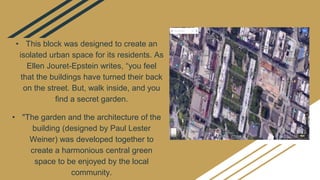
• This block was designed to create an
isolated urban space for its residents. As
Ellen Jouret-Epstein writes, “you feel
that the buildings have turned their back
on the street. But, walk inside, and you
find a secret garden.
• "The garden and the architecture of the
building (designed by Paul Lester
Weiner) was developed together to
create a harmonious central green
space to be enjoyed by the local
community.
Satellite image of the SASAKI GARDEN
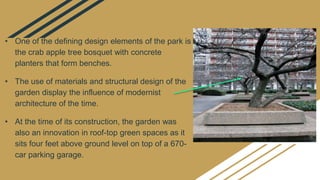
• One of the defining design elements of the park is
the crab apple tree bosquet with concrete
planters that form benches.
• The use of materials and structural design of the
garden display the influence of modernist
architecture of the time.
• At the time of its construction, the garden was
also an innovation in roof-top green spaces as it
sits four feet above ground level on top of a 670-
car parking garage.
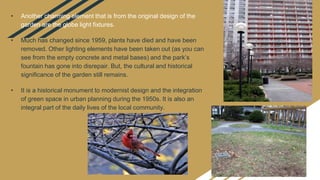
• Another charming element that is from the original design of the
garden are the globe light fixtures.
• Much has changed since 1959, plants have died and have been
removed. Other lighting elements have been taken out (as you can
see from the empty concrete and metal bases) and the park’s
fountain has gone into disrepair. But, the cultural and historical
significance of the garden still remains.
• It is a historical monument to modernist design and the integration
of green space in urban planning during the 1950s. It is also an
integral part of the daily lives of the local community.
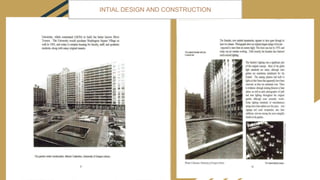
INTIAL DESIGN AND CONSTRUCTION
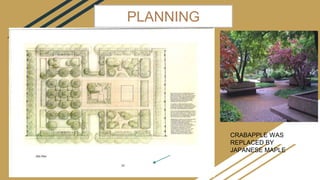
PLANNING
CRABAPPLE WAS
REPLACED BY
JAPANESE MAPLE
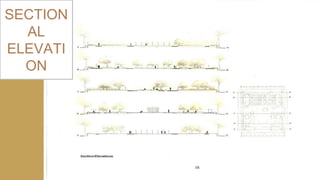
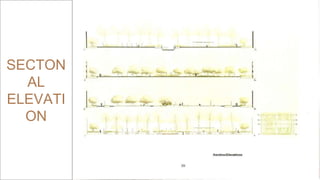
SECTION
AL
ELEVATI
ON
SECTON
AL
ELEVATI
ON
https://www.scribd.com/
doc/37000040/WSV-
Garden-Rehabilitation-
Plan
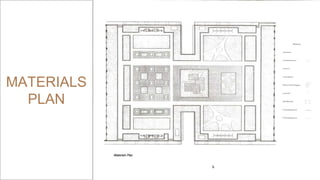
MATERIALS
PLAN
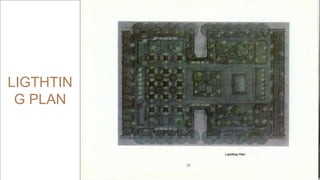
LIGTHTIN
G PLAN
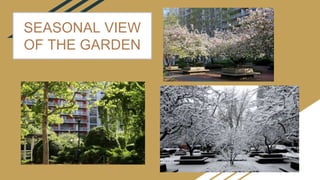
SEASONAL VIEW
OF THE GARDEN
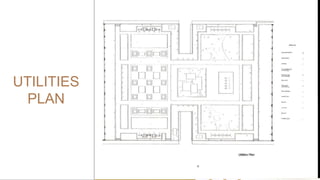
UTILITIES
PLAN
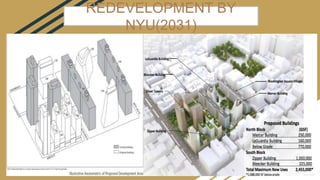
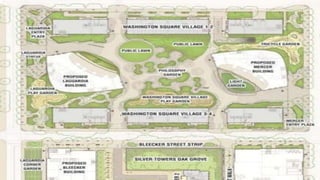
REDEVELOPMENT BY
NYU(2031)
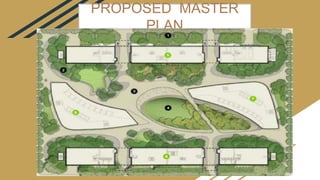
PROPOSED MASTER
PLAN
http://www.pbase.com/hjsteed/wsvg_sg_plants
http://www.localecologist.org/2011/06/hideo-sasaki-garden-in-washington.html
SOURCE
Nitin bopanna tr
The Oxford school of architecture
VI

Hideo sasaki

  • 1.
    HIDEO SASAKI PPT BY Nitin bopannat.r The Oxford school of architecture TOSA VI SEM
  • 2.
    INTRODUCTION ● He Wasan American landscape architect. ● He received Bachelor of Fine Arts and Landscape Architecture in 1946. ● In 1948 he graduated with a Master of Landscape Architecture from Harvard Design School. ● he became a professor and the chairman of the department of Landscape Architecture of the Harvard Graduate School of Design. ● In 1953, he founded Sasaki Associates, incorporated in nearby Watertown, Massachusetts, where he was the president and chairman until 1980. ● He led the company's architects and planners in developing many noted commercial areas and corporate parks.
  • 3.
    STYLE OF DESIGN ●Modernized the concepts of Landscape Architecture. ● He created a practical approach to designing a landscape. ● In his works, several characteristics are taken into account, such as the historical, cultural, environmental, and social use of the land . ● Sasaki became famous for developing this concept of interdisciplinary planning. ● In all of the sites that he developed, a balance is implemented into the design. ● One aspect that Sasaki Associates pays particular attention to is the environmental aspect of the land. ● They have taken part in creating several "green designs.“ ● These designs are created to enhance or maintain the health of the environment.
  • 4.
    • Sasaki's firmoperated under his own name, as Sasaki Associates, as Sasaki, Walker & Associates (with landscape architect Peter Walker. 1. FOOTHILL COLLEGE.(CALIFORNIA). MAJOR PROJECTS
  • 5.
    2. WASHINGTON SQUARE VILLAGE.( SASAKI GARDENS ) 3. BELL LABS HOLMDEL COMPLEX
  • 6.
    • MASTER PLANfor University of Massachusetts Amherst, Amherst, Massachusetts, 1962 • JHON DEERE WORLD HEADQUARTERS, Moline, Illinois, 1964 • ONE MARINTINE PLAZA, San Francisco, California, 1964[6] • ONE SHELL PLAZA, Houston, Texas, 1971 • URBAN DESIGN FOR PEARL STREET MALL, Boulder, Colorado, 1977 • FOREST VILLAGE, Princeton, New Jersey, 1986 • WATERFRONT PARK, South Carolina, 1990 • EURO DISNEYLAND in Paris, France, 1992 • MASTER PLAN for THE ARBORETUM in Penn state, State College, Pennsylvania, 1999 • PERFORMANCE HALL, Utah State University, Logan, Utah, 2006 • MASTER PLAN for the PUERTO RICO CONVENTION CENTRE District, 2006 • REDESIGN and RECONSTRUCTION of the ITHACA COMMONS, 2015 OTHER PROJECTS
  • 7.
    • Completed in1959, by a modernist landscape architect who co-founded Sasaki, Walker and Associates. with Peter Walker in 1957,sits at the middle of Washington Square Village. • The garden and residential towers make up one of two superblocks, a controversial urban design initiative that was led by Robert Moses and originally part of the Mayor’s Committee on Slum Clearance project. • The superblock in which the Sasaki Garden is located was purchased by NYU in 1964. WASHINGTON SQUARE VILLAGE (SASAKI GARDENS)
  • 8.
    The WSV complexis said to be designed in the Le Corbusier style. Hideo Sasaki’s partner on the WSV Sasaki Garden project was Peter Walker of Peter Walker Partners, the landscape architecture firm that designed the World Trade Center (WTC) 911 Memorial. The WSV Sasaki garden was “one of the first rooftop gardens covering a parking garage in the country”. The Sasaki garden is 1.5 acres. It has been described as “an excellent example of a successful integration of landscape and hardscape in an urban setting” MASTER PLAN
  • 9.
    EXSITING MASTER PLAN AVENUELINED WITH PANE TREES Bosquet of crab apples (original to the design).
  • 10.
    THE ENTRANCE TO THEGARDEN STONE SLAB TABLES ETCHED WITH CHESS BOARD
  • 11.
    • SASAKI isa 1.5 acre roof garden above the underground parking between the two apartments, which is the tower in the park in a standard park. • The roof garden has successfully integrated urban space and neighborhood parks. • Sasaki uses a variety of tree species in the atrium, including Japanese ash tree, weeping cherry, willow, sycamore, azalea, cypress, etc., to provide seasonal colors and bird arrivals. • At the same time, the planting and planting troughs of trees also provide seats at the same time. In addition to shaping the space, it also becomes a place where community residents interact with each other. • The village of Washington Square was later acquired by New York University due to poor operations. Today, the Atrium Garden is called Sasaki Garden • The WSV Garden is a privately owned public open space is elevated because of the garage below. It is accessible by several staircases and one ramp. Because the garden is not at grade, passersby are deterred from using it. It "reads" private. There are no signs that encourage entering the garden. But it is well used by those who know its public nature. It is a "nature-ful" alternative to area playgrounds.
  • 12.
    • This blockwas designed to create an isolated urban space for its residents. As Ellen Jouret-Epstein writes, “you feel that the buildings have turned their back on the street. But, walk inside, and you find a secret garden. • "The garden and the architecture of the building (designed by Paul Lester Weiner) was developed together to create a harmonious central green space to be enjoyed by the local community.
  • 13.
    Satellite image ofthe SASAKI GARDEN
  • 14.
    • One ofthe defining design elements of the park is the crab apple tree bosquet with concrete planters that form benches. • The use of materials and structural design of the garden display the influence of modernist architecture of the time. • At the time of its construction, the garden was also an innovation in roof-top green spaces as it sits four feet above ground level on top of a 670- car parking garage.
  • 15.
    • Another charmingelement that is from the original design of the garden are the globe light fixtures. • Much has changed since 1959, plants have died and have been removed. Other lighting elements have been taken out (as you can see from the empty concrete and metal bases) and the park’s fountain has gone into disrepair. But, the cultural and historical significance of the garden still remains. • It is a historical monument to modernist design and the integration of green space in urban planning during the 1950s. It is also an integral part of the daily lives of the local community.
  • 16.
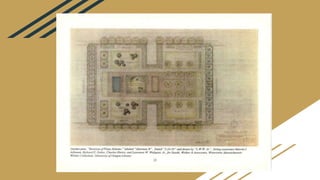
    INTIAL DESIGN ANDCONSTRUCTION
  • 17.
  • 20.
  • 21.
  • 22.
  • 23.
  • 24.
  • 25.
  • 26.
  • 27.
  • 28.
  • 30.