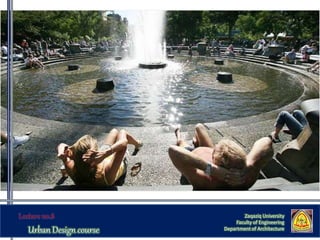
The functional dimension
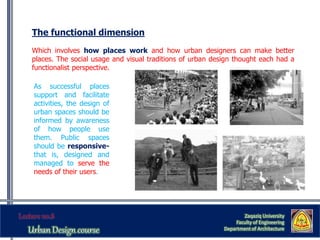
Which involves how places work and how urban designers can make better
places. The social usage and visual traditions of urban design thought each had a
functionalist perspective.
As successful places
support and facilitate
activities, the design of
urban spaces should be
informed by awareness
of how people use
them. Public spaces
should be responsive-
that is, designed and
managed to serve the
needs of their users.
Zaqaziq University
Faculty of Engineering
Department of Architecture
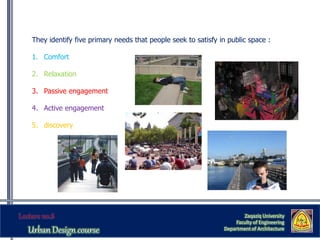
They identify five primary needs that people seek to satisfy in public space :
1. Comfort
2. Relaxation
3. Passive engagement
4. Active engagement
5. discovery
Zaqaziq University
Faculty of Engineering
Department of Architecture
They identify five primary needs that people seek to satisfy in public space :
1. Comfort
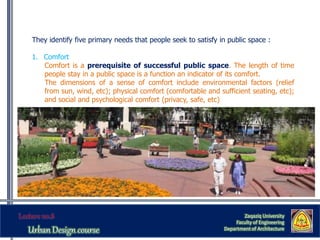
Comfort is a prerequisite of successful public space. The length of time
people stay in a public space is a function an indicator of its comfort.
The dimensions of a sense of comfort include environmental factors (relief
from sun, wind, etc); physical comfort (comfortable and sufficient seating, etc);
and social and psychological comfort (privacy, safe, etc)
Zaqaziq University
Faculty of Engineering
Department of Architecture
They identify five primary needs that people seek to satisfy in public space :
2. Relaxation
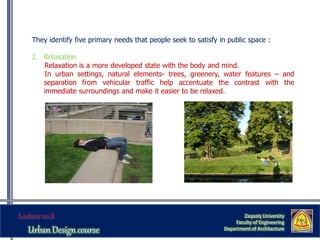
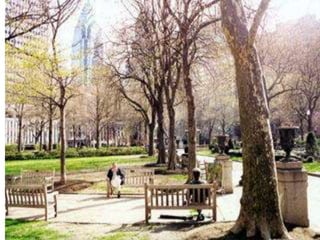
Relaxation is a more developed state with the body and mind.
In urban settings, natural elements- trees, greenery, water features – and
separation from vehicular traffic help accentuate the contrast with the
immediate surroundings and make it easier to be relaxed.
Zaqaziq University
Faculty of Engineering
Department of Architecture
They identify five primary needs that
people seek to satisfy in public space :
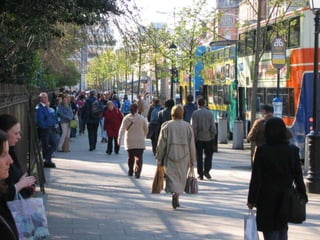
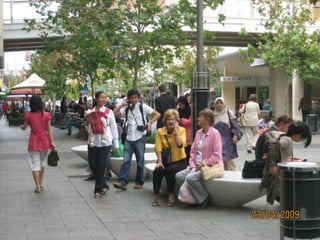
3. Passive engagement
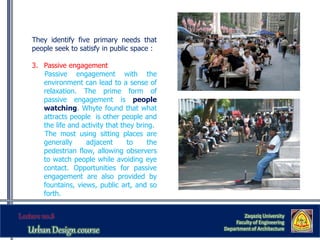
Passive engagement with the
environment can lead to a sense of
relaxation. The prime form of
passive engagement is people
watching. Whyte found that what
attracts people is other people and
the life and activity that they bring.
The most using sitting places are
generally adjacent to the
pedestrian flow, allowing observers
to watch people while avoiding eye
contact. Opportunities for passive
engagement are also provided by
fountains, views, public art, and so
forth.
Zaqaziq University
Faculty of Engineering
Department of Architecture
Zaqaziq University
Faculty of Engineering
Department of Architecture
They identify five primary needs that people seek to satisfy in public space :
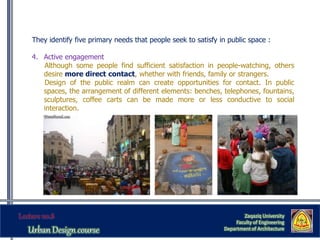
4. Active engagement
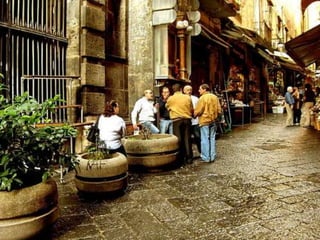
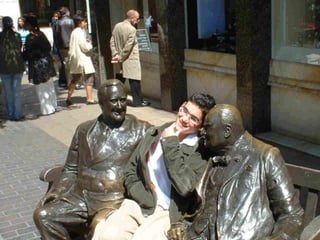
Although some people find sufficient satisfaction in people-watching, others
desire more direct contact, whether with friends, family or strangers.
Design of the public realm can create opportunities for contact. In public
spaces, the arrangement of different elements: benches, telephones, fountains,
sculptures, coffee carts can be made more or less conductive to social
interaction.
Zaqaziq University
Faculty of Engineering
Department of Architecture
They identify five primary needs that people seek to satisfy in public space :
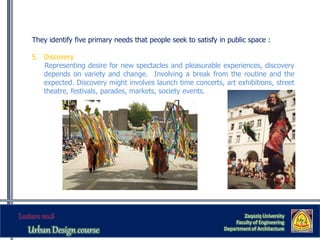
5. Discovery
Representing desire for new spectacles and pleasurable experiences, discovery
depends on variety and change. Involving a break from the routine and the
expected. Discovery might involves launch time concerts, art exhibitions, street
theatre, festivals, parades, markets, society events.
Zaqaziq University
Faculty of Engineering
Department of Architecture
The social use of space
Using photographic studies of a range of New York’s open spaces, Whyte noted
that many such spaces appeared little used, ……
Whyte noted that the most sociable spaces usually possessed the
following features:
Zaqaziq University
Faculty of Engineering
Department of Architecture
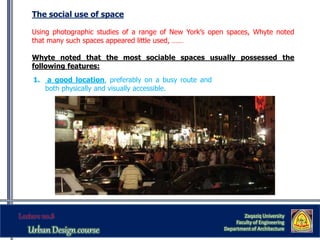
1. a good location, preferably on a busy route and
both physically and visually accessible.
The social use of space
Using photographic studies of a range of New York’s open spaces, Whyte noted
that many such spaces appeared little used, ……
Whyte noted that the most sociable spaces usually possessed the
following features:
Zaqaziq University
Faculty of Engineering
Department of Architecture
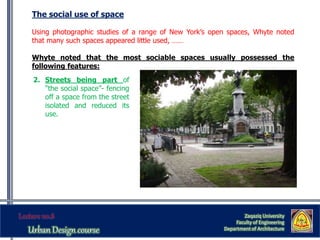
2. Streets being part of
“the social space”- fencing
off a space from the street
isolated and reduced its
use.
The social use of space
Using photographic studies of a range of New York’s open spaces, Whyte noted
that many such spaces appeared little used, ……
Whyte noted that the most sociable spaces usually possessed the
following features:
Zaqaziq University
Faculty of Engineering
Department of Architecture
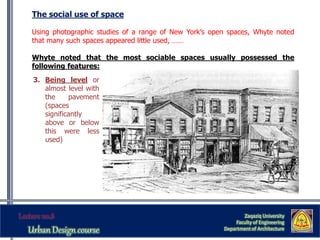
3. Being level or
almost level with
the pavement
(spaces
significantly
above or below
this were less
used)
The social use of space
Using photographic studies of a range of New York’s open spaces, Whyte noted
that many such spaces appeared little used, ……
Whyte noted that the most sociable spaces usually possessed the
following features:
Zaqaziq University
Faculty of Engineering
Department of Architecture
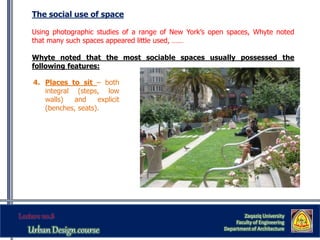
4. Places to sit – both
integral (steps, low
walls) and explicit
(benches, seats).
The social use of space
Using photographic studies of a range of New York’s open spaces, Whyte noted
that many such spaces appeared little used, ……
Whyte noted that the most sociable spaces usually possessed the
following features:
Zaqaziq University
Faculty of Engineering
Department of Architecture
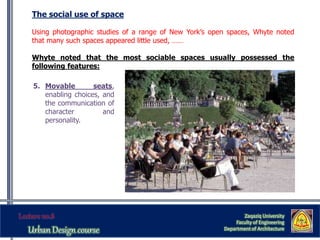
5. Movable seats,
enabling choices, and
the communication of
character and
personality.
Zaqaziq University
Faculty of Engineering
Department of Architecture
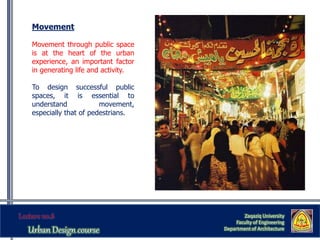
Movement
Movement through public space
is at the heart of the urban
experience, an important factor
in generating life and activity.
To design successful public
spaces, it is essential to
understand movement,
especially that of pedestrians.
Zaqaziq University
Faculty of Engineering
Department of Architecture
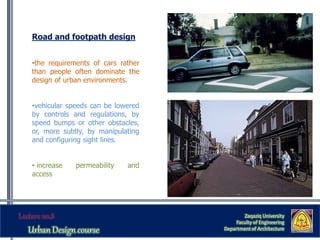
Road and footpath design
•the requirements of cars rather
than people often dominate the
design of urban environments.
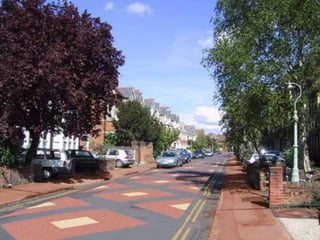
•vehicular speeds can be lowered
by controls and regulations, by
speed bumps or other obstacles,
or, more subtly, by manipulating
and configuring sight lines.
• increase permeability and
access
Zaqaziq University
Faculty of Engineering
Department of Architecture
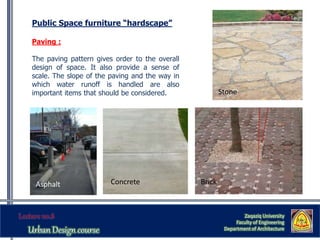
Public Space furniture “hardscape”
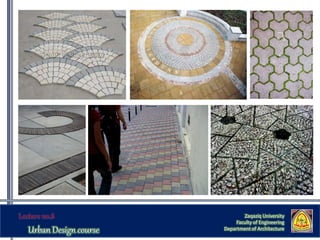
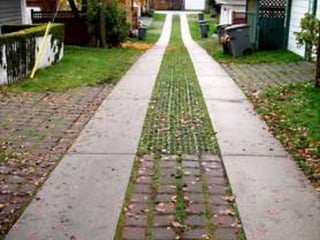
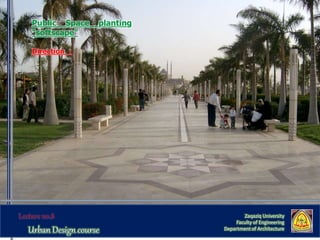
Paving :
The paving pattern gives order to the overall
design of space. It also provide a sense of
scale. The slope of the paving and the way in
which water runoff is handled are also
important items that should be considered. Stone
BrickConcreteAsphalt
Zaqaziq University
Faculty of Engineering
Department of Architecture
Zaqaziq University
Faculty of Engineering
Department of Architecture
Zaqaziq University
Faculty of Engineering
Department of Architecture
Public Space furniture “hardscape”
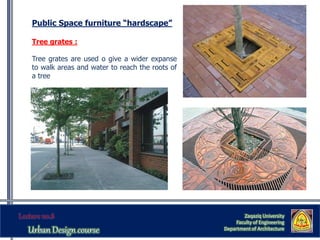
Tree grates :
Tree grates are used o give a wider expanse
to walk areas and water to reach the roots of
a tree
Zaqaziq University
Faculty of Engineering
Department of Architecture
Public Space furniture “hardscape”
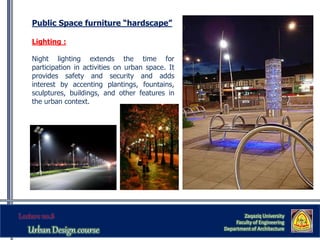
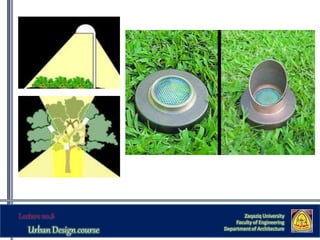
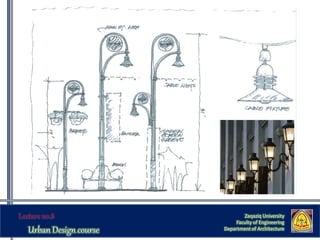
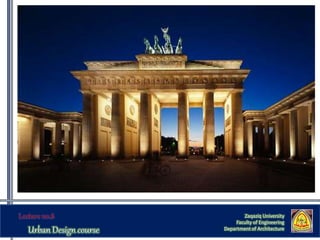
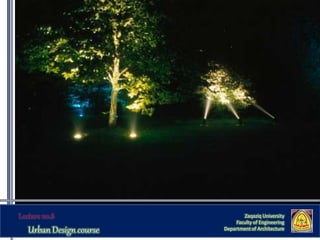
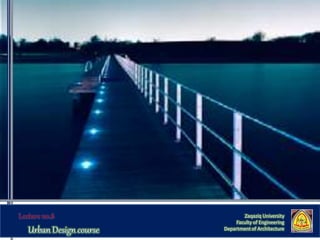
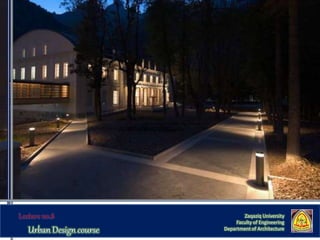
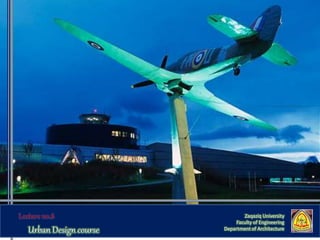
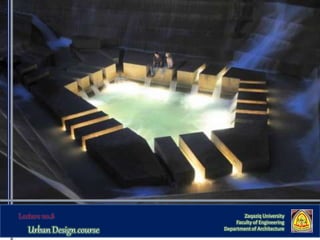
Lighting :
Night lighting extends the time for
participation in activities on urban space. It
provides safety and security and adds
interest by accenting plantings, fountains,
sculptures, buildings, and other features in
the urban context.
Zaqaziq University
Faculty of Engineering
Department of Architecture
Zaqaziq University
Faculty of Engineering
Department of Architecture
Zaqaziq University
Faculty of Engineering
Department of Architecture
Zaqaziq University
Faculty of Engineering
Department of Architecture
Zaqaziq University
Faculty of Engineering
Department of Architecture
Zaqaziq University
Faculty of Engineering
Department of Architecture
Zaqaziq University
Faculty of Engineering
Department of Architecture
Zaqaziq University
Faculty of Engineering
Department of Architecture
Public Space furniture “hardscape”
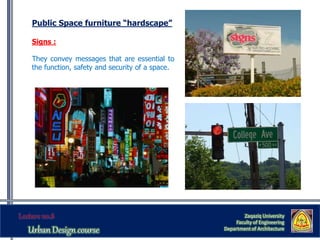
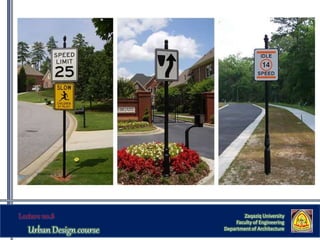
Signs :
They convey messages that are essential to
the function, safety and security of a space.
Zaqaziq University
Faculty of Engineering
Department of Architecture
Zaqaziq University
Faculty of Engineering
Department of Architecture
Public Space furniture “hardscape”
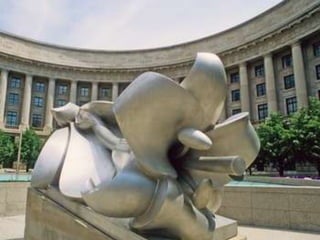
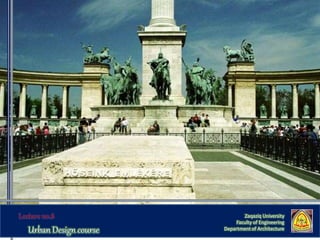
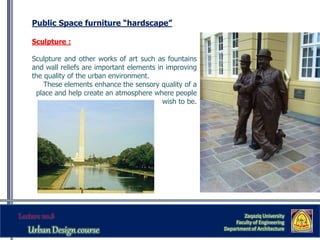
Sculpture :
Sculpture and other works of art such as fountains
and wall reliefs are important elements in improving
the quality of the urban environment.
These elements enhance the sensory quality of a
place and help create an atmosphere where people
wish to be.
Zaqaziq University
Faculty of Engineering
Department of Architecture
Zaqaziq University
Faculty of Engineering
Department of Architecture
Public Space furniture
“hardscape”
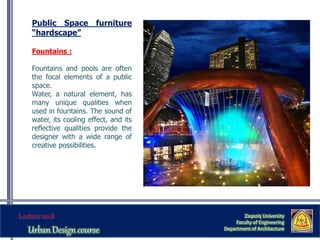
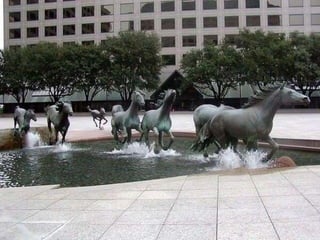
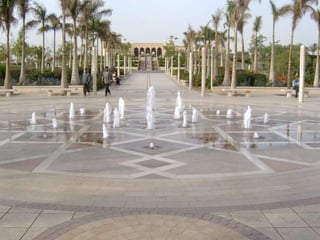
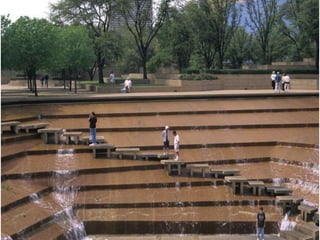
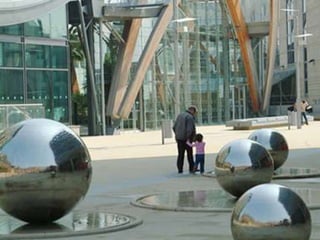
Fountains :
Fountains and pools are often
the focal elements of a public
space.
Water, a natural element, has
many unique qualities when
used in fountains. The sound of
water, its cooling effect, and its
reflective qualities provide the
designer with a wide range of
creative possibilities.
Zaqaziq University
Faculty of Engineering
Department of Architecture
Zaqaziq University
Faculty of Engineering
Department of Architecture
Zaqaziq University
Faculty of Engineering
Department of Architecture
Zaqaziq University
Faculty of Engineering
Department of Architecture
Public Space furniture
“hardscape”
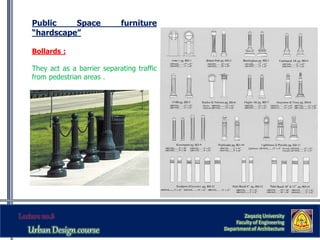
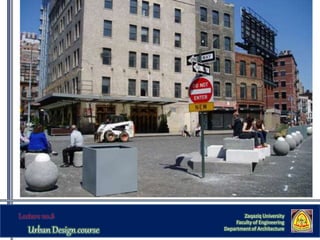
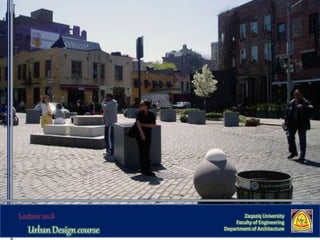
Bollards :
They act as a barrier separating traffic
from pedestrian areas .
Zaqaziq University
Faculty of Engineering
Department of Architecture
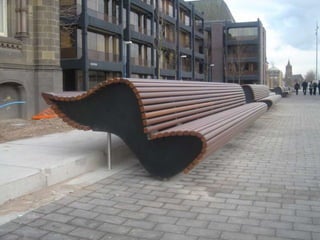
Public Space furniture “hardscape”
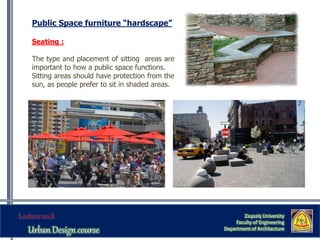
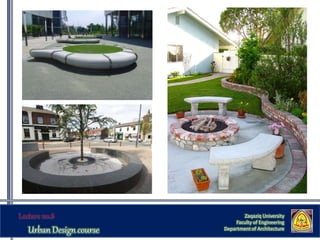
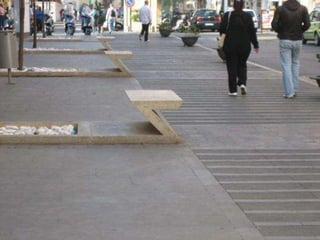
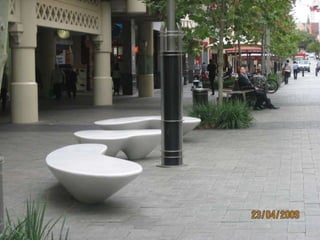
Seating :
The type and placement of sitting areas are
important to how a public space functions.
Sitting areas should have protection from the
sun, as people prefer to sit in shaded areas.
Zaqaziq University
Faculty of Engineering
Department of Architecture
Zaqaziq University
Faculty of Engineering
Department of Architecture
Zaqaziq University
Faculty of Engineering
Department of Architecture
Zaqaziq University
Faculty of Engineering
Department of Architecture
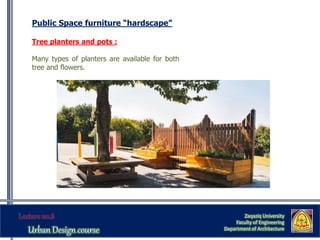
Public Space furniture “hardscape”
Tree planters and pots :
Many types of planters are available for both
tree and flowers.
Zaqaziq University
Faculty of Engineering
Department of Architecture
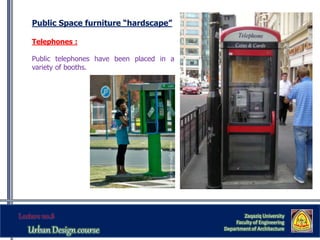
Public Space furniture “hardscape”
Telephones :
Public telephones have been placed in a
variety of booths.
Zaqaziq University
Faculty of Engineering
Department of Architecture
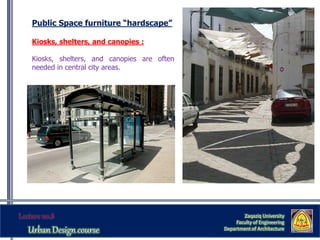
Public Space furniture “hardscape”
Kiosks, shelters, and canopies :
Kiosks, shelters, and canopies are often
needed in central city areas.
Zaqaziq University
Faculty of Engineering
Department of Architecture
Public Space furniture “hardscape”
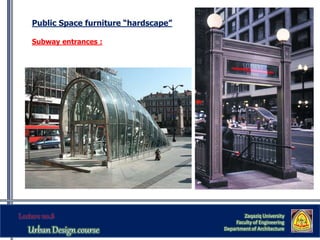
Subway entrances :
Zaqaziq University
Faculty of Engineering
Department of Architecture
Public Space furniture “hardscape”
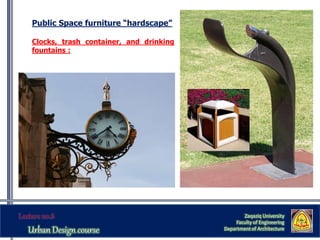
Clocks, trash container, and drinking
fountains :
Zaqaziq University
Faculty of Engineering
Department of Architecture
Public Space planting
“softscape”
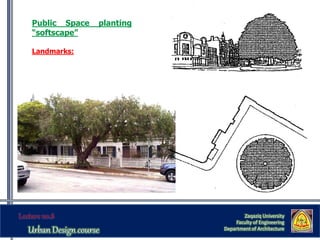
Landmarks:
Zaqaziq University
Faculty of Engineering
Department of Architecture
Public Space planting
“softscape”
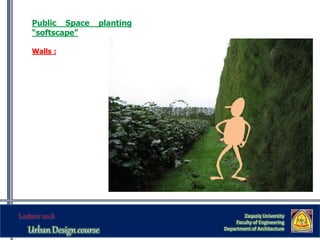
Walls :
Zaqaziq University
Faculty of Engineering
Department of Architecture
Public Space planting
“softscape”
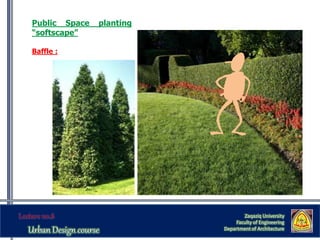
Baffle :
Zaqaziq University
Faculty of Engineering
Department of Architecture
Public Space planting
“softscape”
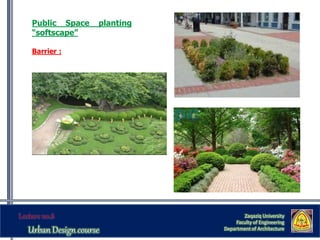
Barrier :
Zaqaziq University
Faculty of Engineering
Department of Architecture
Public Space planting
“softscape”
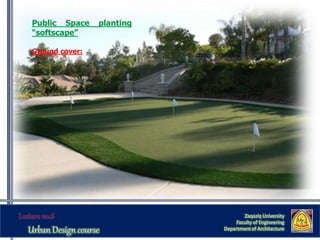
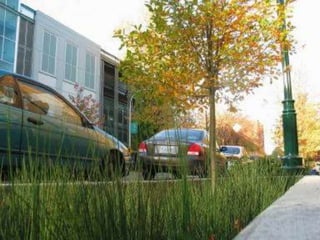
Ground cover:
Zaqaziq University
Faculty of Engineering
Department of Architecture
Public Space planting
“softscape”
Direction :
Zaqaziq University
Faculty of Engineering
Department of Architecture
Public Space planting
“softscape”
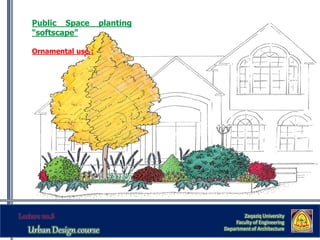
Ornamental use :
Zaqaziq University
Faculty of Engineering
Department of Architecture
Public Space planting
“softscape”
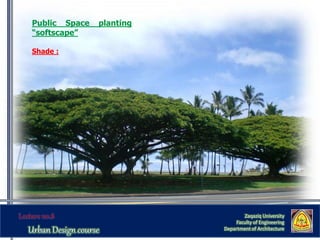
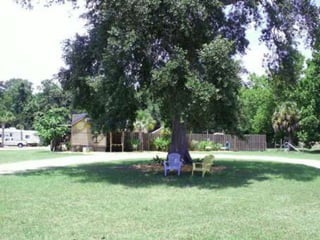
Shade :
Zaqaziq University
Faculty of Engineering
Department of Architecture
Public Space planting
“softscape”
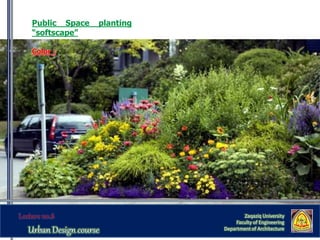
Color :
Zaqaziq University
Faculty of Engineering
Department of Architecture
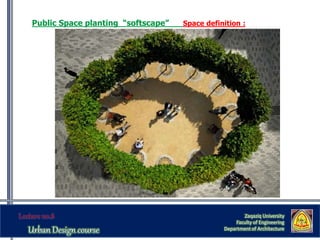
Public Space planting “softscape” Space definition :
Zaqaziq University
Faculty of Engineering
Department of Architecture
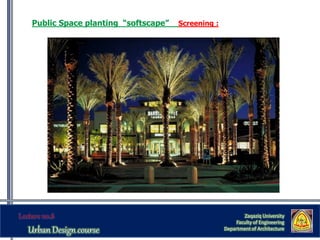
Public Space planting “softscape” Screening :
Zaqaziq University
Faculty of Engineering
Department of Architecture
Public Space planting
“softscape”
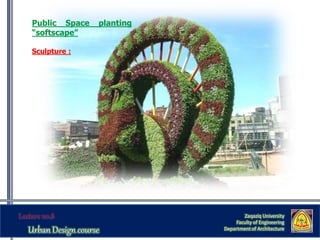
Sculpture :

Urban Design - functional dimension

  • 2.
    The functional dimension Whichinvolves how places work and how urban designers can make better places. The social usage and visual traditions of urban design thought each had a functionalist perspective. As successful places support and facilitate activities, the design of urban spaces should be informed by awareness of how people use them. Public spaces should be responsive- that is, designed and managed to serve the needs of their users. Zaqaziq University Faculty of Engineering Department of Architecture
  • 3.
    They identify fiveprimary needs that people seek to satisfy in public space : 1. Comfort 2. Relaxation 3. Passive engagement 4. Active engagement 5. discovery Zaqaziq University Faculty of Engineering Department of Architecture
  • 4.
    They identify fiveprimary needs that people seek to satisfy in public space : 1. Comfort Comfort is a prerequisite of successful public space. The length of time people stay in a public space is a function an indicator of its comfort. The dimensions of a sense of comfort include environmental factors (relief from sun, wind, etc); physical comfort (comfortable and sufficient seating, etc); and social and psychological comfort (privacy, safe, etc) Zaqaziq University Faculty of Engineering Department of Architecture
  • 5.
    They identify fiveprimary needs that people seek to satisfy in public space : 2. Relaxation Relaxation is a more developed state with the body and mind. In urban settings, natural elements- trees, greenery, water features – and separation from vehicular traffic help accentuate the contrast with the immediate surroundings and make it easier to be relaxed. Zaqaziq University Faculty of Engineering Department of Architecture
  • 7.
    They identify fiveprimary needs that people seek to satisfy in public space : 3. Passive engagement Passive engagement with the environment can lead to a sense of relaxation. The prime form of passive engagement is people watching. Whyte found that what attracts people is other people and the life and activity that they bring. The most using sitting places are generally adjacent to the pedestrian flow, allowing observers to watch people while avoiding eye contact. Opportunities for passive engagement are also provided by fountains, views, public art, and so forth. Zaqaziq University Faculty of Engineering Department of Architecture
  • 8.
    Zaqaziq University Faculty ofEngineering Department of Architecture
  • 9.
    They identify fiveprimary needs that people seek to satisfy in public space : 4. Active engagement Although some people find sufficient satisfaction in people-watching, others desire more direct contact, whether with friends, family or strangers. Design of the public realm can create opportunities for contact. In public spaces, the arrangement of different elements: benches, telephones, fountains, sculptures, coffee carts can be made more or less conductive to social interaction. Zaqaziq University Faculty of Engineering Department of Architecture
  • 11.
    They identify fiveprimary needs that people seek to satisfy in public space : 5. Discovery Representing desire for new spectacles and pleasurable experiences, discovery depends on variety and change. Involving a break from the routine and the expected. Discovery might involves launch time concerts, art exhibitions, street theatre, festivals, parades, markets, society events. Zaqaziq University Faculty of Engineering Department of Architecture
  • 14.
    The social useof space Using photographic studies of a range of New York’s open spaces, Whyte noted that many such spaces appeared little used, …… Whyte noted that the most sociable spaces usually possessed the following features: Zaqaziq University Faculty of Engineering Department of Architecture 1. a good location, preferably on a busy route and both physically and visually accessible.
  • 15.
    The social useof space Using photographic studies of a range of New York’s open spaces, Whyte noted that many such spaces appeared little used, …… Whyte noted that the most sociable spaces usually possessed the following features: Zaqaziq University Faculty of Engineering Department of Architecture 2. Streets being part of “the social space”- fencing off a space from the street isolated and reduced its use.
  • 16.
    The social useof space Using photographic studies of a range of New York’s open spaces, Whyte noted that many such spaces appeared little used, …… Whyte noted that the most sociable spaces usually possessed the following features: Zaqaziq University Faculty of Engineering Department of Architecture 3. Being level or almost level with the pavement (spaces significantly above or below this were less used)
  • 17.
    The social useof space Using photographic studies of a range of New York’s open spaces, Whyte noted that many such spaces appeared little used, …… Whyte noted that the most sociable spaces usually possessed the following features: Zaqaziq University Faculty of Engineering Department of Architecture 4. Places to sit – both integral (steps, low walls) and explicit (benches, seats).
  • 18.
    The social useof space Using photographic studies of a range of New York’s open spaces, Whyte noted that many such spaces appeared little used, …… Whyte noted that the most sociable spaces usually possessed the following features: Zaqaziq University Faculty of Engineering Department of Architecture 5. Movable seats, enabling choices, and the communication of character and personality.
  • 19.
    Zaqaziq University Faculty ofEngineering Department of Architecture Movement Movement through public space is at the heart of the urban experience, an important factor in generating life and activity. To design successful public spaces, it is essential to understand movement, especially that of pedestrians.
  • 20.
    Zaqaziq University Faculty ofEngineering Department of Architecture Road and footpath design •the requirements of cars rather than people often dominate the design of urban environments. •vehicular speeds can be lowered by controls and regulations, by speed bumps or other obstacles, or, more subtly, by manipulating and configuring sight lines. • increase permeability and access
  • 22.
    Zaqaziq University Faculty ofEngineering Department of Architecture Public Space furniture “hardscape” Paving : The paving pattern gives order to the overall design of space. It also provide a sense of scale. The slope of the paving and the way in which water runoff is handled are also important items that should be considered. Stone BrickConcreteAsphalt
  • 23.
    Zaqaziq University Faculty ofEngineering Department of Architecture
  • 25.
    Zaqaziq University Faculty ofEngineering Department of Architecture
  • 26.
    Zaqaziq University Faculty ofEngineering Department of Architecture Public Space furniture “hardscape” Tree grates : Tree grates are used o give a wider expanse to walk areas and water to reach the roots of a tree
  • 27.
    Zaqaziq University Faculty ofEngineering Department of Architecture Public Space furniture “hardscape” Lighting : Night lighting extends the time for participation in activities on urban space. It provides safety and security and adds interest by accenting plantings, fountains, sculptures, buildings, and other features in the urban context.
  • 28.
    Zaqaziq University Faculty ofEngineering Department of Architecture
  • 29.
    Zaqaziq University Faculty ofEngineering Department of Architecture
  • 30.
    Zaqaziq University Faculty ofEngineering Department of Architecture
  • 31.
    Zaqaziq University Faculty ofEngineering Department of Architecture
  • 32.
    Zaqaziq University Faculty ofEngineering Department of Architecture
  • 33.
    Zaqaziq University Faculty ofEngineering Department of Architecture
  • 34.
    Zaqaziq University Faculty ofEngineering Department of Architecture
  • 35.
    Zaqaziq University Faculty ofEngineering Department of Architecture Public Space furniture “hardscape” Signs : They convey messages that are essential to the function, safety and security of a space.
  • 36.
    Zaqaziq University Faculty ofEngineering Department of Architecture
  • 37.
    Zaqaziq University Faculty ofEngineering Department of Architecture Public Space furniture “hardscape” Sculpture : Sculpture and other works of art such as fountains and wall reliefs are important elements in improving the quality of the urban environment. These elements enhance the sensory quality of a place and help create an atmosphere where people wish to be.
  • 40.
    Zaqaziq University Faculty ofEngineering Department of Architecture
  • 42.
    Zaqaziq University Faculty ofEngineering Department of Architecture Public Space furniture “hardscape” Fountains : Fountains and pools are often the focal elements of a public space. Water, a natural element, has many unique qualities when used in fountains. The sound of water, its cooling effect, and its reflective qualities provide the designer with a wide range of creative possibilities.
  • 44.
    Zaqaziq University Faculty ofEngineering Department of Architecture
  • 45.
    Zaqaziq University Faculty ofEngineering Department of Architecture
  • 48.
    Zaqaziq University Faculty ofEngineering Department of Architecture
  • 49.
    Zaqaziq University Faculty ofEngineering Department of Architecture Public Space furniture “hardscape” Bollards : They act as a barrier separating traffic from pedestrian areas .
  • 51.
    Zaqaziq University Faculty ofEngineering Department of Architecture Public Space furniture “hardscape” Seating : The type and placement of sitting areas are important to how a public space functions. Sitting areas should have protection from the sun, as people prefer to sit in shaded areas.
  • 52.
    Zaqaziq University Faculty ofEngineering Department of Architecture
  • 55.
    Zaqaziq University Faculty ofEngineering Department of Architecture
  • 56.
    Zaqaziq University Faculty ofEngineering Department of Architecture
  • 59.
    Zaqaziq University Faculty ofEngineering Department of Architecture Public Space furniture “hardscape” Tree planters and pots : Many types of planters are available for both tree and flowers.
  • 60.
    Zaqaziq University Faculty ofEngineering Department of Architecture Public Space furniture “hardscape” Telephones : Public telephones have been placed in a variety of booths.
  • 61.
    Zaqaziq University Faculty ofEngineering Department of Architecture Public Space furniture “hardscape” Kiosks, shelters, and canopies : Kiosks, shelters, and canopies are often needed in central city areas.
  • 63.
    Zaqaziq University Faculty ofEngineering Department of Architecture Public Space furniture “hardscape” Subway entrances :
  • 64.
    Zaqaziq University Faculty ofEngineering Department of Architecture Public Space furniture “hardscape” Clocks, trash container, and drinking fountains :
  • 65.
    Zaqaziq University Faculty ofEngineering Department of Architecture Public Space planting “softscape” Landmarks:
  • 66.
    Zaqaziq University Faculty ofEngineering Department of Architecture Public Space planting “softscape” Walls :
  • 67.
    Zaqaziq University Faculty ofEngineering Department of Architecture Public Space planting “softscape” Baffle :
  • 68.
    Zaqaziq University Faculty ofEngineering Department of Architecture Public Space planting “softscape” Barrier :
  • 69.
    Zaqaziq University Faculty ofEngineering Department of Architecture Public Space planting “softscape” Ground cover:
  • 72.
    Zaqaziq University Faculty ofEngineering Department of Architecture Public Space planting “softscape” Direction :
  • 73.
    Zaqaziq University Faculty ofEngineering Department of Architecture Public Space planting “softscape” Ornamental use :
  • 74.
    Zaqaziq University Faculty ofEngineering Department of Architecture Public Space planting “softscape” Shade :
  • 76.
    Zaqaziq University Faculty ofEngineering Department of Architecture Public Space planting “softscape” Color :
  • 77.
    Zaqaziq University Faculty ofEngineering Department of Architecture Public Space planting “softscape” Space definition :
  • 81.
    Zaqaziq University Faculty ofEngineering Department of Architecture Public Space planting “softscape” Screening :
  • 82.
    Zaqaziq University Faculty ofEngineering Department of Architecture Public Space planting “softscape” Sculpture :