Embed presentation
Downloaded 577 times
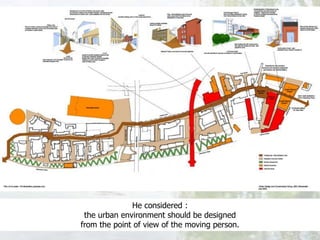
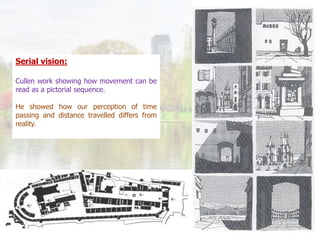
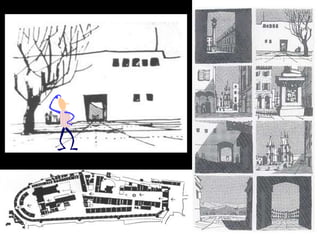
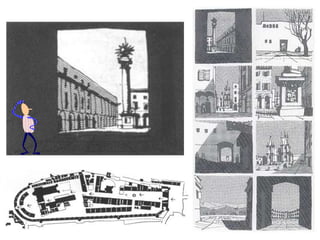
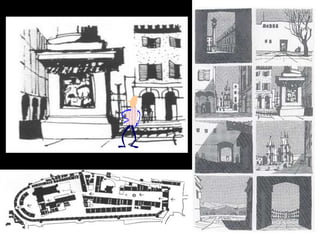
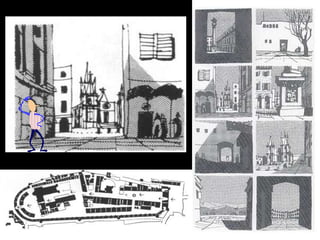
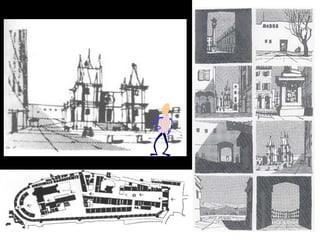
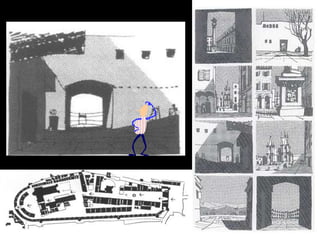
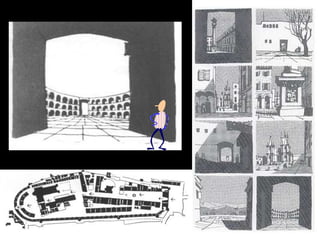
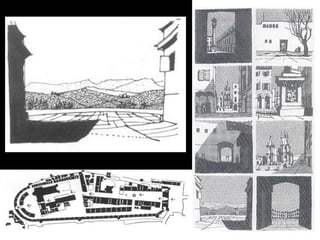

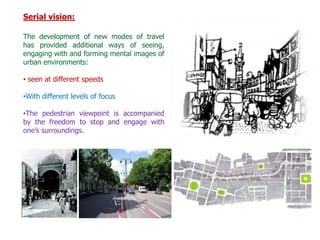

Architecture and urban design are public art forms that people experience through their daily activities in cities. While other art forms can be avoided, people cannot choose to avoid experiencing the built environment as they move through urban spaces. Aesthetic preferences in environments are influenced by both natural and learned social and cultural factors, and Jack Nasar identified five attributes of liked environments: naturalness, upkeep, openness, historical significance/content, and order. As people experience cities through movement, Gordon Cullen's concept of "serial vision" describes how urban design can create a series of revelations and contrasts that engage observers as their viewpoint changes.
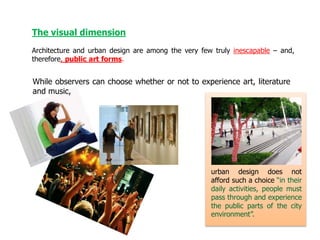
Discusses the inescapable nature of public art forms like architecture in daily urban experiences.
Explores how aesthetic appreciation includes cultural and social components beyond individual tastes.
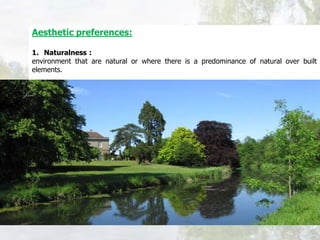
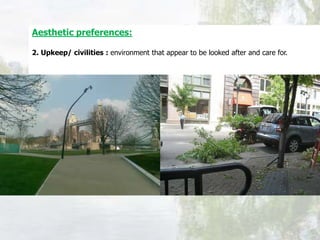
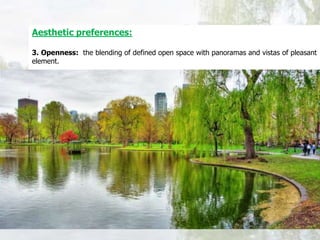
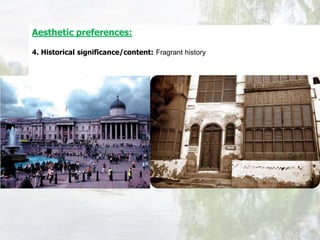
Jack Nasar identifies five attributes that characterize environments people generally like.
Describes 'Naturalness' as an aesthetic preference for environments dominated by natural elements.
Discusses the aesthetic preference for environments that appear well-maintained and cared for.
Focuses on 'Openness', blending defined open spaces with pleasing vistas in aesthetic preference.
Identifies 'Historical significance/content' as an important aesthetic preference in environments.
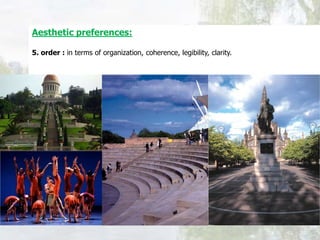
Defines 'Order' as a key aesthetic preference focusing on organization, clarity, and coherence.
Explains the dynamic nature of urban experiences and the importance of movement through space.
Introduces Gordon Cullen's 'Serial Vision' as a concept reflecting a series of urban revelations.
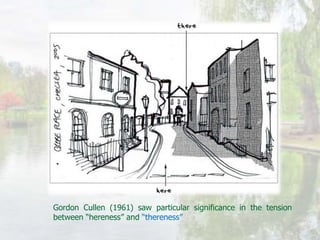
Discusses Cullen's view on the relationship between immediate and distant urban experiences.
Cullen advocates for urban design to consider the perspectives of individuals in motion.
Cullen illustrates how urban movement alters perceptions of time and distance in environments.
Explores how new travel methods influence perceptions and interactions with urban environments.
Ends the presentation with a thank you message.


