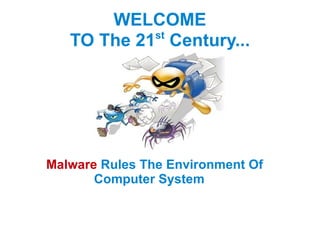
WELCOME TO The 21 st  Century... Malware   Rules The   Environment Of  Computer System
We Are The Devils Of Your Computer System
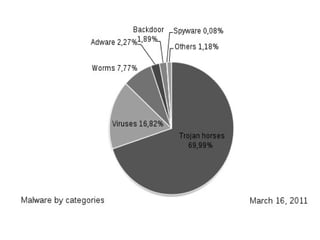
What Is Malware? Malware is a software designed to harm or secretly access a computer system without the owner's informed consent.
Malware, short for malicious software,also known as pestware.
In general term used by computer professionals to mean a variety of forms of hostile, intrusive, or annoying software or program code.
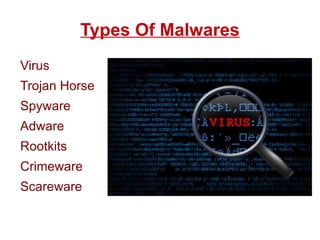
Types Of Malwares Virus
Trojan Horse
Spyware
Adware
Rootkits
Crimeware
Scareware
 
Lets Introduce The Common Ones... VIRUS: A computer virus is a small program written to alter the  way a computer operates, without the permission or knowledge of the user. With an ability to replicate itself, thus continuing to spread. Also, known as Malicious Software, a program that can cause damage to a computer. The computer viruses can damage or corrupt data, modify existing data, or degrade the performance of the system by utilizing resources such as memory or disk space.  It may spread over a network (internet), carried it on a removable medium such as a Floppy disk, CD/DVD Drive, USB Drive .
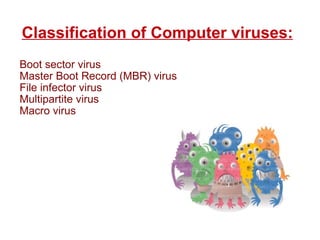
Classification of Computer viruses: Boot sector virus
Master Boot Record (MBR) virus
File infector virus
Multipartite virus
Macro virus
BOOT SECTOR VIRUS: Boot sector viruses generally hide in the boot sector, either in the bootable disk or the hard drive. It attaches itself to the primary active partition of the hard  disk that is read by the computer upon boot up. MASTER BOOT RECORD VIRUS: MBR viruses are memory-resident viruses that infect disks  in the same manner as boot sector viruses. However it,  infects the MBR of the system, gets activated when the  BIOS activates the Master boot code. MBR infectors  normally save a legitimate copy of the master boot record  in an different location.
File Infector Virus: File Infector viruses infect program files. Normally infect executable code, such as .COM, .SYS, .BAT and .EXE files. They can infect other files when an infected program is run from floppy, hard drive, or from the network. Many of these viruses are memory resident. After memory becomes infected, any uninfected executable file that runs becomes infected.  E.g. Snow.A, Jerusalem, Cascade.
Macro Virus: Macro are mini-programs which make it possible to automate series of operations so that they are performed as a single action, thereby saving the user from having to carry them out one by one. Macro viruses infect files that are created using certain applications or programs that contain macros. They are platform-independent since the virus itself are written in language of the application and not the operating system. They infect documents created from Microsoft Office Word, Excel, PowerPoint and Access files. E.g.W97M.Melissa,Bablas,WM.NiceDay,W97M.Groov.
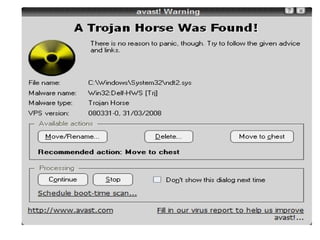
Trojan Horse   Trojan horses are impostors that claim to be something desirable but, in fact, are malicious. Trojan horse programs do not replicate themselves. Trojan horses contain malicious code that when triggered cause loss, or even theft, of data.  E.g. Trojan.Vundo Retrieving user’s critical information. i.e. name, password. Erasing or overwriting data on a computer. Spying on a user to gather his information like browsing habits, sites visited etc.
 
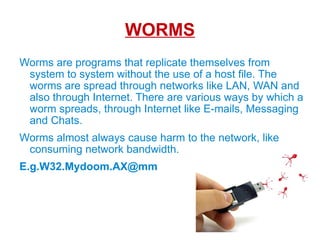
WORMS Worms are programs that replicate themselves from system to system without the use of a host file. The worms are spread through networks like LAN, WAN and also through Internet. There are various ways by which a worm spreads, through Internet like E-mails, Messaging and Chats. Worms almost always cause harm to the network, like consuming network bandwidth. E.g.W32.Mydoom.AX@mm
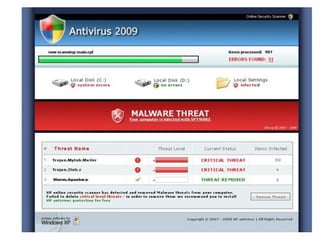
SPYWARE: It is a type of malware that can be installed on computers, and which collects small pieces of information about users without their knowledge. The presence of spyware is typically hidden from the user, and can be difficult to detect. Typically, spyware is secretly installed on the user's personal computer. ADWARE: It is any software package which automatically plays, displays, or downloads advertisements to a computer. It is a type of malware which steals information. Example  Bonzi Buddy , an application marketed as an "I ntelligent Software Agent ", corrupted many of the user's system files, forcing the display of many obscene advertisements.
Your Time Is Up, My Time Is Now....
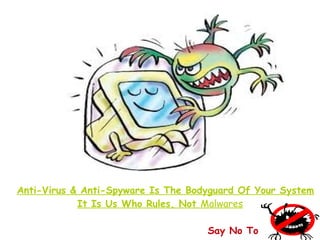
We Are The Angels Of Your Computer System. We Protect Your System Round The Clock
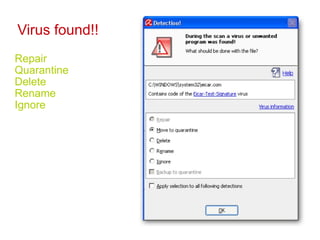
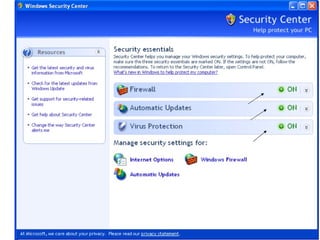
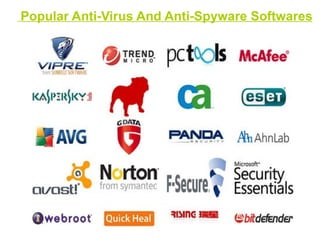
ANTIVIRUS An antivirus software is a computer program that identify and remove computer viruses, and other malicious software like Worms and Trojans from an infected computer. Not only this, an antivirus software also protects the computer from further virus attacks. We should regularly run an antivirus program to scan  and remove any possible virus attacks from a computer.

Virus and antivirus final ppt

  • 1.
    WELCOME TO The21 st Century... Malware Rules The Environment Of Computer System
  • 2.
    We Are TheDevils Of Your Computer System
  • 3.
    What Is Malware?Malware is a software designed to harm or secretly access a computer system without the owner's informed consent.
  • 4.
    Malware, short formalicious software,also known as pestware.
  • 5.
    In general termused by computer professionals to mean a variety of forms of hostile, intrusive, or annoying software or program code.
  • 6.
  • 7.
  • 8.
  • 9.
  • 10.
  • 11.
  • 12.
  • 13.
  • 14.
    Lets Introduce TheCommon Ones... VIRUS: A computer virus is a small program written to alter the way a computer operates, without the permission or knowledge of the user. With an ability to replicate itself, thus continuing to spread. Also, known as Malicious Software, a program that can cause damage to a computer. The computer viruses can damage or corrupt data, modify existing data, or degrade the performance of the system by utilizing resources such as memory or disk space. It may spread over a network (internet), carried it on a removable medium such as a Floppy disk, CD/DVD Drive, USB Drive .
  • 15.
    Classification of Computerviruses: Boot sector virus
  • 16.
    Master Boot Record(MBR) virus
  • 17.
  • 18.
  • 19.
  • 20.
    BOOT SECTOR VIRUS:Boot sector viruses generally hide in the boot sector, either in the bootable disk or the hard drive. It attaches itself to the primary active partition of the hard disk that is read by the computer upon boot up. MASTER BOOT RECORD VIRUS: MBR viruses are memory-resident viruses that infect disks in the same manner as boot sector viruses. However it, infects the MBR of the system, gets activated when the BIOS activates the Master boot code. MBR infectors normally save a legitimate copy of the master boot record in an different location.
  • 21.
    File Infector Virus:File Infector viruses infect program files. Normally infect executable code, such as .COM, .SYS, .BAT and .EXE files. They can infect other files when an infected program is run from floppy, hard drive, or from the network. Many of these viruses are memory resident. After memory becomes infected, any uninfected executable file that runs becomes infected. E.g. Snow.A, Jerusalem, Cascade.
  • 22.
    Macro Virus: Macroare mini-programs which make it possible to automate series of operations so that they are performed as a single action, thereby saving the user from having to carry them out one by one. Macro viruses infect files that are created using certain applications or programs that contain macros. They are platform-independent since the virus itself are written in language of the application and not the operating system. They infect documents created from Microsoft Office Word, Excel, PowerPoint and Access files. E.g.W97M.Melissa,Bablas,WM.NiceDay,W97M.Groov.
  • 23.
    Trojan Horse Trojan horses are impostors that claim to be something desirable but, in fact, are malicious. Trojan horse programs do not replicate themselves. Trojan horses contain malicious code that when triggered cause loss, or even theft, of data. E.g. Trojan.Vundo Retrieving user’s critical information. i.e. name, password. Erasing or overwriting data on a computer. Spying on a user to gather his information like browsing habits, sites visited etc.
  • 24.
  • 25.
    WORMS Worms areprograms that replicate themselves from system to system without the use of a host file. The worms are spread through networks like LAN, WAN and also through Internet. There are various ways by which a worm spreads, through Internet like E-mails, Messaging and Chats. Worms almost always cause harm to the network, like consuming network bandwidth. E.g.W32.Mydoom.AX@mm
  • 26.
    SPYWARE: It isa type of malware that can be installed on computers, and which collects small pieces of information about users without their knowledge. The presence of spyware is typically hidden from the user, and can be difficult to detect. Typically, spyware is secretly installed on the user's personal computer. ADWARE: It is any software package which automatically plays, displays, or downloads advertisements to a computer. It is a type of malware which steals information. Example Bonzi Buddy , an application marketed as an "I ntelligent Software Agent ", corrupted many of the user's system files, forcing the display of many obscene advertisements.
  • 27.
    Your Time IsUp, My Time Is Now....
  • 28.
    We Are TheAngels Of Your Computer System. We Protect Your System Round The Clock
  • 29.
    ANTIVIRUS An antivirussoftware is a computer program that identify and remove computer viruses, and other malicious software like Worms and Trojans from an infected computer. Not only this, an antivirus software also protects the computer from further virus attacks. We should regularly run an antivirus program to scan and remove any possible virus attacks from a computer.