PRESENTATION BY NAZNEEN NASIR
WHAT ARE SYMPTOMS?
subjective evidence of disease or physical
disturbance
Or
What the patient feels and describes it to
the doctor.
Symptoms in
ophthalmology
 Related to vision
 Pain
 Symptoms associated with external
diseases related to eyelids ,eyelashes
,conjunctiva or cornea
 Symptoms related to internal diseases
involving retina ,vitreous, vessels and
nerves related to eye
Symptoms related to
vision
 For example ;
 Blurred vision
 Decreased vision
 Vision loss
 Night blindness
 photophobia
 Floaters ,halos around light, flashes, dark
spots in vision
 Eye strain
Symptoms related to
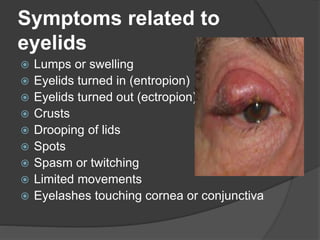
eyelids
 Lumps or swelling
 Eyelids turned in (entropion)
 Eyelids turned out (ectropion)
 Crusts
 Drooping of lids
 Spots
 Spasm or twitching
 Limited movements
 Eyelashes touching cornea or conjunctiva
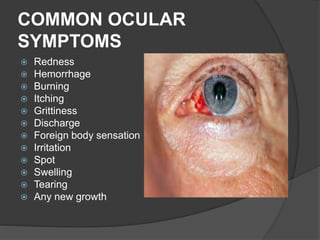
COMMON OCULAR
SYMPTOMS
 Redness
 Hemorrhage
 Burning
 Itching
 Grittiness
 Discharge
 Foreign body sensation
 Irritation
 Spot
 Swelling
 Tearing
 Any new growth
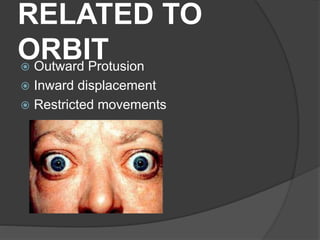
RELATED TO
ORBIT Outward Protusion
 Inward displacement
 Restricted movements
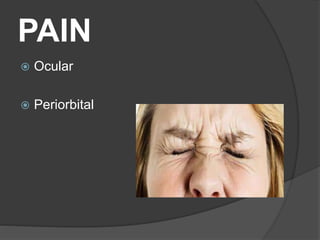
PAIN
 Ocular
 Periorbital
Symptoms related to vision
 Vision loss
 Blurring of vision
 One eye involved or both eyes.
 Mode of onset (gradual or sudden)
 Painful or painless
 Duration
 For distance or near
 Time of day when it is maximum
 Any associated symptom ( diplopia,
flashes,halos,photophobia, headache
,nausea
vomiting,blepharospasm,lacrimation)
Sudden painless vision loss
 Vitreous hemorrhage
 Retinal detachment
 Optic neuritis
 Central retinal artery occlusion
 Central retinal vein occlusion
Sudden painful vision loss
 Acute congestive glaucoma
 Trauma
 Chemical injuries
 Foreign body
 Giant cell arteritis
Gradual painless dimness of
vision
 Cataract
 Open angle glaucoma
 Age related macular degeneration
 Diabetic retinopathy
 Corneal dystrophy
 Optic atrophy
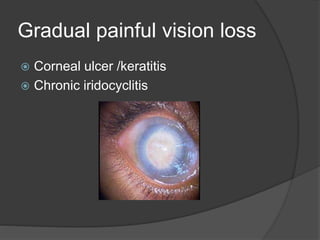
Gradual painful vision loss
 Corneal ulcer /keratitis
 Chronic iridocyclitis
Transient vision loss
(amaurosis fagax)
 Migraine
 Carotid artery disease
 Papilloedma
 Prodormal symptom of CRAO
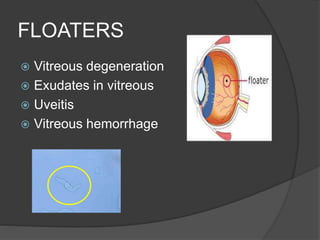
FLOATERS
 Vitreous degeneration
 Exudates in vitreous
 Uveitis
 Vitreous hemorrhage
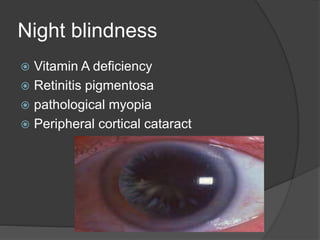
Night blindness
 Vitamin A deficiency
 Retinitis pigmentosa
 pathological myopia
 Peripheral cortical cataract
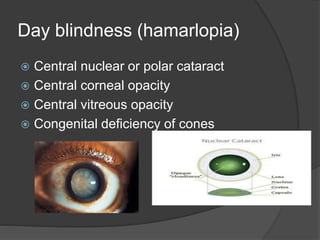
Day blindness (hamarlopia)
 Central nuclear or polar cataract
 Central corneal opacity
 Central vitreous opacity
 Congenital deficiency of cones
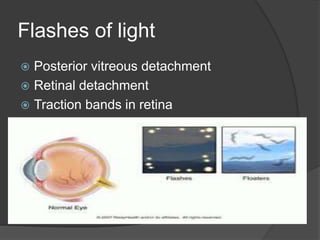
Flashes of light
 Posterior vitreous detachment
 Retinal detachment
 Traction bands in retina
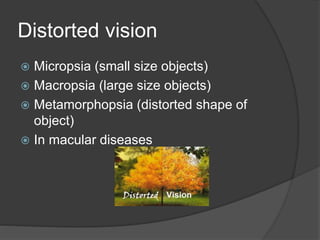
Distorted vision
 Micropsia (small size objects)
 Macropsia (large size objects)
 Metamorphopsia (distorted shape of
object)
 In macular diseases
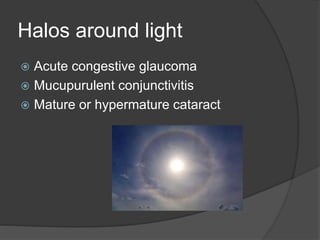
Halos around light
 Acute congestive glaucoma
 Mucupurulent conjunctivitis
 Mature or hypermature cataract
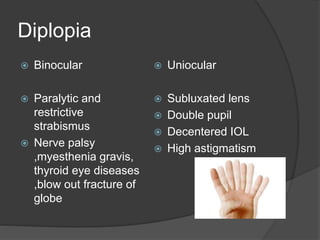
Diplopia
 Binocular
 Paralytic and
restrictive
strabismus
 Nerve palsy
,myesthenia gravis,
thyroid eye diseases
,blow out fracture of
globe
 Uniocular
 Subluxated lens
 Double pupil
 Decentered IOL
 High astigmatism
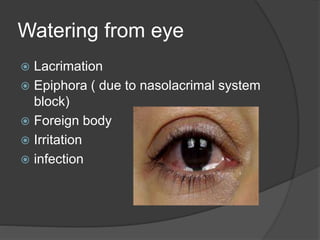
Watering from eye
 Lacrimation
 Epiphora ( due to nasolacrimal system
block)
 Foreign body
 Irritation
 infection
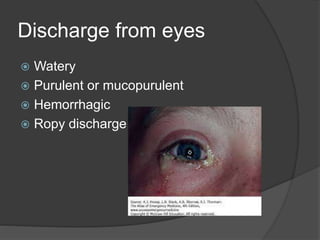
Discharge from eyes
 Watery
 Purulent or mucopurulent
 Hemorrhagic
 Ropy discharge
Itching ,burning or foreign body
sensation
 Conjunctivitis
 Trachoma
 Dry eyes
 Trichiasis
 Foreign body
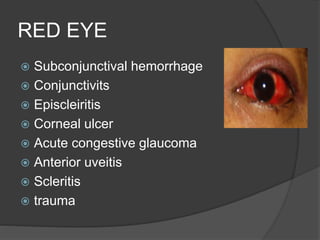
RED EYE
 Subconjunctival hemorrhage
 Conjunctivits
 Episcleiritis
 Corneal ulcer
 Acute congestive glaucoma
 Anterior uveitis
 Scleritis
 trauma
Ocular or periocular pain
 Acute congestive glaucoma
 Uveitis
 Trauma
 Giant cell arteritis
Headache
 Pseudotumor cerebri
 Refractive error ( mostly astigmatism)
 Sinusitis
 Migraine
PHOTOPHOBIA
 corneal abrasion
 uveitis
 meningitis.
 detached retina
 contact lens irritations
 sunburn
 refractive surgery.
Asthenopic symptoms or eye
strain
 Convergence or fusional insufficiency
 Refractive error
 astigmatism
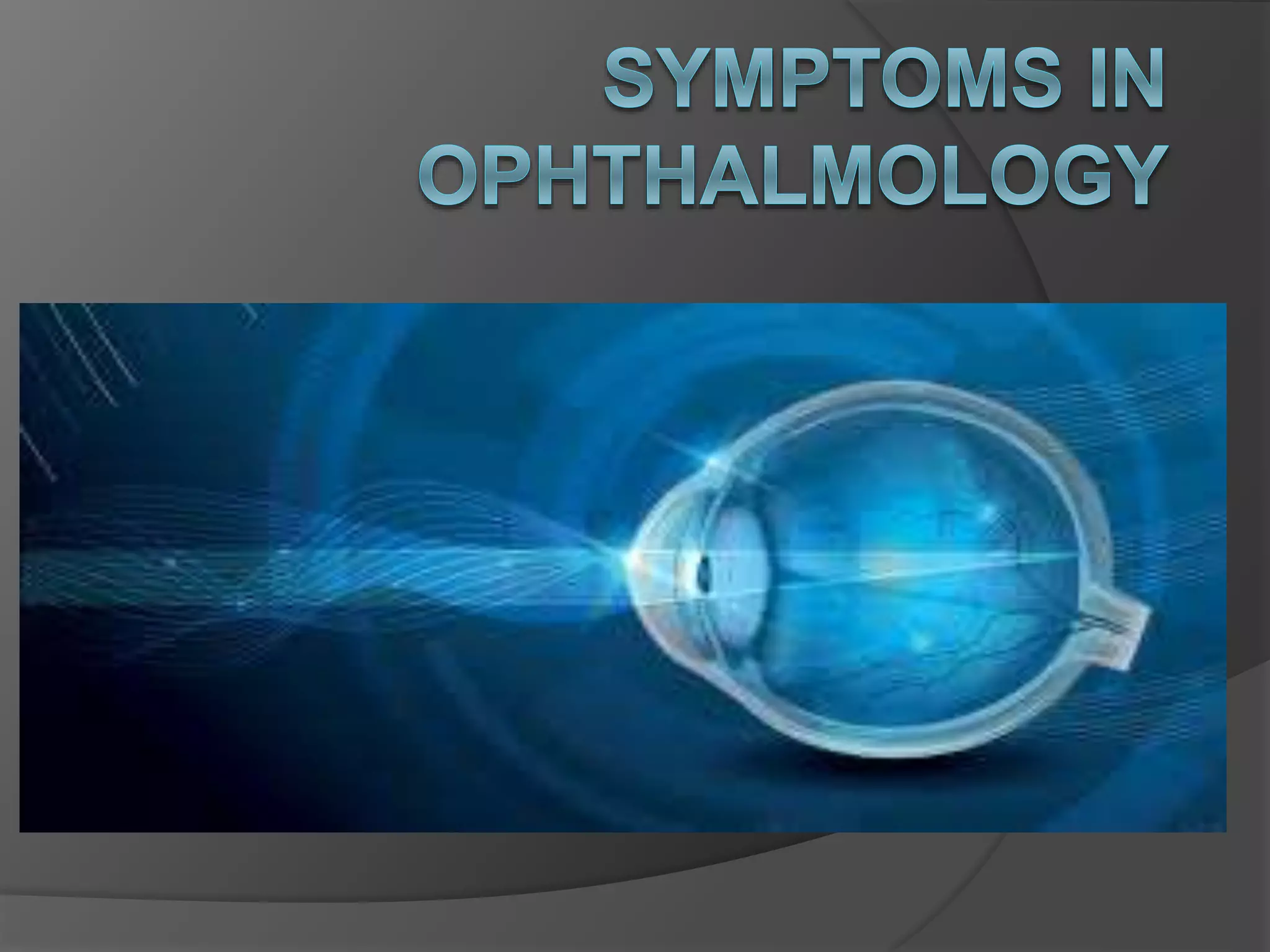
Symptoms in ophthalmology

Symptoms in ophthalmology

  • 1.
  • 2.
    WHAT ARE SYMPTOMS? subjectiveevidence of disease or physical disturbance Or What the patient feels and describes it to the doctor.
  • 3.
    Symptoms in ophthalmology  Relatedto vision  Pain  Symptoms associated with external diseases related to eyelids ,eyelashes ,conjunctiva or cornea  Symptoms related to internal diseases involving retina ,vitreous, vessels and nerves related to eye
  • 4.
    Symptoms related to vision For example ;  Blurred vision  Decreased vision  Vision loss  Night blindness  photophobia  Floaters ,halos around light, flashes, dark spots in vision  Eye strain
  • 5.
    Symptoms related to eyelids Lumps or swelling  Eyelids turned in (entropion)  Eyelids turned out (ectropion)  Crusts  Drooping of lids  Spots  Spasm or twitching  Limited movements  Eyelashes touching cornea or conjunctiva
  • 6.
    COMMON OCULAR SYMPTOMS  Redness Hemorrhage  Burning  Itching  Grittiness  Discharge  Foreign body sensation  Irritation  Spot  Swelling  Tearing  Any new growth
  • 7.
    RELATED TO ORBIT OutwardProtusion  Inward displacement  Restricted movements
  • 8.
  • 9.
    Symptoms related tovision  Vision loss  Blurring of vision  One eye involved or both eyes.  Mode of onset (gradual or sudden)  Painful or painless  Duration  For distance or near  Time of day when it is maximum  Any associated symptom ( diplopia, flashes,halos,photophobia, headache ,nausea vomiting,blepharospasm,lacrimation)
  • 10.
    Sudden painless visionloss  Vitreous hemorrhage  Retinal detachment  Optic neuritis  Central retinal artery occlusion  Central retinal vein occlusion
  • 11.
    Sudden painful visionloss  Acute congestive glaucoma  Trauma  Chemical injuries  Foreign body  Giant cell arteritis
  • 12.
    Gradual painless dimnessof vision  Cataract  Open angle glaucoma  Age related macular degeneration  Diabetic retinopathy  Corneal dystrophy  Optic atrophy
  • 13.
    Gradual painful visionloss  Corneal ulcer /keratitis  Chronic iridocyclitis
  • 14.
    Transient vision loss (amaurosisfagax)  Migraine  Carotid artery disease  Papilloedma  Prodormal symptom of CRAO
  • 15.
    FLOATERS  Vitreous degeneration Exudates in vitreous  Uveitis  Vitreous hemorrhage
  • 16.
    Night blindness  VitaminA deficiency  Retinitis pigmentosa  pathological myopia  Peripheral cortical cataract
  • 17.
    Day blindness (hamarlopia) Central nuclear or polar cataract  Central corneal opacity  Central vitreous opacity  Congenital deficiency of cones
  • 18.
    Flashes of light Posterior vitreous detachment  Retinal detachment  Traction bands in retina
  • 19.
    Distorted vision  Micropsia(small size objects)  Macropsia (large size objects)  Metamorphopsia (distorted shape of object)  In macular diseases
  • 20.
    Halos around light Acute congestive glaucoma  Mucupurulent conjunctivitis  Mature or hypermature cataract
  • 21.
    Diplopia  Binocular  Paralyticand restrictive strabismus  Nerve palsy ,myesthenia gravis, thyroid eye diseases ,blow out fracture of globe  Uniocular  Subluxated lens  Double pupil  Decentered IOL  High astigmatism
  • 22.
    Watering from eye Lacrimation  Epiphora ( due to nasolacrimal system block)  Foreign body  Irritation  infection
  • 23.
    Discharge from eyes Watery  Purulent or mucopurulent  Hemorrhagic  Ropy discharge
  • 24.
    Itching ,burning orforeign body sensation  Conjunctivitis  Trachoma  Dry eyes  Trichiasis  Foreign body
  • 25.
    RED EYE  Subconjunctivalhemorrhage  Conjunctivits  Episcleiritis  Corneal ulcer  Acute congestive glaucoma  Anterior uveitis  Scleritis  trauma
  • 26.
    Ocular or periocularpain  Acute congestive glaucoma  Uveitis  Trauma  Giant cell arteritis
  • 27.
    Headache  Pseudotumor cerebri Refractive error ( mostly astigmatism)  Sinusitis  Migraine
  • 28.
    PHOTOPHOBIA  corneal abrasion uveitis  meningitis.  detached retina  contact lens irritations  sunburn  refractive surgery.
  • 29.
    Asthenopic symptoms oreye strain  Convergence or fusional insufficiency  Refractive error  astigmatism