Conjunctivitis/ Eye Flu
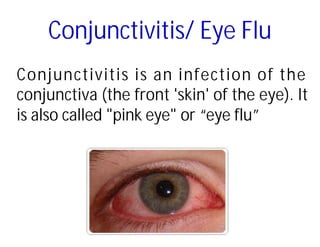
Conjunctivitis is an infection of the
conjunctiva (the front 'skin' of the eye). It
is also called "pink eye" or “eye flu”
Conjunctivitis/ Eye Flu
It is very common especially
during rainy season
Conjunctivitis/ Eye Flu
Most cases are caused by
common viruses - often the
same ones that cause coughs
and colds
Conjunctivitis/ Eye Flu
Infective conjunctivitis is not
serious and clears within a week or
so without leaving any permanent
damage to the eye
Symptoms
It usually involves both eyes
though occasionally it may start in
one eye which later spreads to the
other over a few days
Symptoms
The eye is red or pink and is
associated with grittiness
and soreness
Symptoms
The eyelids become swollen,
and are often stuck together
with gluey material
('discharge') after a sleep
Treatment
•Not treatment is an option for mild infections as it
clears on its own within 1-2 weeks.
•Bathing the eyes from inside is not recommended
as it washes off all the germ fighting proteins being
secreted in the tears.
•Lubricant eye drops may be used to reduce eye
discomfort.
Prevention
Do not wear contact lenses until
symptoms have completely gone
Prevention
Infective conjunctivitis is contagious and spreads by
touch and through objects touched by infected
hands. To prevent spread to other people:
•Wash your hands regularly, particularly after
touching your eyes.
•Do not share towels, pillows, handkerchiefs or
utensils.
When to go to Doctor
All case should be screened to confirm the
diagnosis especially when patient develops ::
•Marked eye pain.
•Intolerance to light (photophobia).
•Spots or blisters on the skin next to the eye.
•Blurring of vision which does not improve
with blinking.
Does a patient need to stay off school / work?
The safest approach to avoid
spread is to stay home until
there is no longer any
discharge from the eye(s)
Does a patient need to stay off school / work?
Viral conjunctivitis spreads
easily between people.
Younger children, who may
not remember to wash their
hands or avoid touching their
eyes, should probably not
attend school until the
discharge has resolved.
Does a patient need to stay off school / work?
Older students or
adults may choose
to attend
school/work,
although they
should limit close
contact with others
The Lifeline –Hand Washing
Hand washing is an
essential and highly
effective way to
prevent the spread
of infection
The Lifeline –Hand Washing
Hands should be wet with
water and plain soap, and
rubbed together for 15 to
30 seconds. It is not
necessary to use
antibacterial hand soap
The Lifeline –Hand Washing
Teach children to wash their
hands before and after eating
and after touching the eyes,
coughing, or sneezing.
The Lifeline –Hand Washing
Alcohol-based hand rubs are not
effective against the more common
viruses causing conjunctivitis and are
therefore not recommended for
disinfection of hands.
Care about your Precious
Gift of Sight
Thank You

Eye flu

  • 1.
    Conjunctivitis/ Eye Flu Conjunctivitisis an infection of the conjunctiva (the front 'skin' of the eye). It is also called "pink eye" or “eye flu”
  • 2.
    Conjunctivitis/ Eye Flu Itis very common especially during rainy season
  • 3.
    Conjunctivitis/ Eye Flu Mostcases are caused by common viruses - often the same ones that cause coughs and colds
  • 4.
    Conjunctivitis/ Eye Flu Infectiveconjunctivitis is not serious and clears within a week or so without leaving any permanent damage to the eye
  • 5.
    Symptoms It usually involvesboth eyes though occasionally it may start in one eye which later spreads to the other over a few days
  • 6.
    Symptoms The eye isred or pink and is associated with grittiness and soreness
  • 7.
    Symptoms The eyelids becomeswollen, and are often stuck together with gluey material ('discharge') after a sleep
  • 8.
    Treatment •Not treatment isan option for mild infections as it clears on its own within 1-2 weeks. •Bathing the eyes from inside is not recommended as it washes off all the germ fighting proteins being secreted in the tears. •Lubricant eye drops may be used to reduce eye discomfort.
  • 9.
    Prevention Do not wearcontact lenses until symptoms have completely gone
  • 10.
    Prevention Infective conjunctivitis iscontagious and spreads by touch and through objects touched by infected hands. To prevent spread to other people: •Wash your hands regularly, particularly after touching your eyes. •Do not share towels, pillows, handkerchiefs or utensils.
  • 11.
    When to goto Doctor All case should be screened to confirm the diagnosis especially when patient develops :: •Marked eye pain. •Intolerance to light (photophobia). •Spots or blisters on the skin next to the eye. •Blurring of vision which does not improve with blinking.
  • 12.
    Does a patientneed to stay off school / work? The safest approach to avoid spread is to stay home until there is no longer any discharge from the eye(s)
  • 13.
    Does a patientneed to stay off school / work? Viral conjunctivitis spreads easily between people. Younger children, who may not remember to wash their hands or avoid touching their eyes, should probably not attend school until the discharge has resolved.
  • 14.
    Does a patientneed to stay off school / work? Older students or adults may choose to attend school/work, although they should limit close contact with others
  • 15.
    The Lifeline –HandWashing Hand washing is an essential and highly effective way to prevent the spread of infection
  • 16.
    The Lifeline –HandWashing Hands should be wet with water and plain soap, and rubbed together for 15 to 30 seconds. It is not necessary to use antibacterial hand soap
  • 17.
    The Lifeline –HandWashing Teach children to wash their hands before and after eating and after touching the eyes, coughing, or sneezing.
  • 18.
    The Lifeline –HandWashing Alcohol-based hand rubs are not effective against the more common viruses causing conjunctivitis and are therefore not recommended for disinfection of hands.
  • 19.
    Care about yourPrecious Gift of Sight Thank You