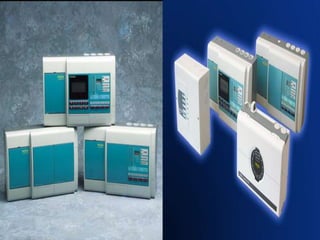
 VESDA (an abbreviation of Very Early Smoke Detection Apparatus) is a
laser based smoke detection system.
 The name VESDA has become a generic name for most air sampling
applications. The name VESDA is a trade mark of Xtralis.
 VESDA system has a proven track record and has been developed beyond
traditional fire alarms, to the point where it is recognized as the most
advanced aspirating smoke detection system within the fire industry, holding
more certifications than any other aspirating smoke detector in the world.
 VESDA can be installed anywhere that a conventional smoke detector
system can but with greater flexibility.
 A VESDA detector is much like a vacuum cleaner. It sucks air from the
protected environment via purpose built aspirating pipe and fittings and
samples the quality of air passing through the VESDA detection laser
chamber.
 Where conventional systems have to be strategically placed to provide
maximum protection, VESDA systems can be installed in easily accessible
positions as the system is complimented by a network of high grade pipe
work.
 Additional benefits of using VESDA over conventional detectors are greater
reliability and efficiency with features which include entire airflow analysis
and ignition point targeting, with the ability to work alongside existing smoke
detection and air conditioning systems symbiotically.
 VESDA installations are in the widest variety of environments thanks to the
ingenuity of the design, these including ceiling voids, cold rooms, computer
rooms, and warehousing.
 The aspirating smoke detection market has change over recent years.
VESDA smoke detection was traditionally used for specialist smoke
detection environments
 VESDA smoke detection is now used more extensively in non specialist fire
detection application and of course the traditional specialist market
 VESDA detectors are normally used where high smoke sensitivity is
required
 VESDA detection works far more efficiently in area where there is high air
flow, such as computer rooms, Telecoms etc.
VESDA detection for warehouses:
 VESDA smoke detection is a suitable replacement for conventional smoke
detection where accessibility is limited.
 For example, VESDA detection will be better suited to a warehouse with smoke
detectors situated at high levels. Conventional smoke detectors can become
faulty and access equipment will need to be deployed, this can be extremely
disruptive to operation and it is also dangerous.
 VESDA smoke detection eliminates this issue as the aspirating pipe work will be
located at high levels and the VESDA detector will be located at accessible
levels.
 Aspirating pipe will replace the smoke detectors at high level, with holes in the
aspirating pipe replacing the smoke detectors. VESDA smoke detectors have
18000 events log memory. Smoke levels can be tracked and identified against
time and density.
VESDA detection for office rooms:
 VESDA smoke detection is commonly used where temperatures are not suitable
for other types of smoke detection. For example, a cold room operating
temperatures is an ideal environment for VESDA smoke detection.
 Cold temperatures will ice up the optical chambers of conventional smoke
detectors rendering the system useless.
 VESDA detectors are located outside the cold environment, with aspirating
pipe work located within the risk or outside the risk with capillary smoke
sampling heads located within the risk! The cold air is then drawn to the VESDA
smoke detector and is naturally heated before it arrives at the VESDA laser
chamber. The condensation is collected at a condensate water trap and dry air
arrives for sampling by the VESDA detector.
VESDA detection for computer rooms:
 VESDA detection is ideal for area that have high airflow. Conventional
smoke detectors struggle to activate with bulk of air passing through their
chambers.
 VESDA detectors draw smoke from the aspirating pipe and the holes in the
pipe collectively capture the air and draw it back to the VESDA detector.
 Fire Suppression Limited have conducted test which conclusively prove that
VESDA smoke detection is far more responsive than conventional smoke
detectors
VESDA detection for Fire Suppression environments:
 VESDA detection with Fire Suppression is a fantastic combination. With
ever increasing environmental responsibilities, it is essential that a fire
suppression system should deploy unnecessarily.
 VESDA smoke detection use in conjunction with conventional smoke
detection is a perfect match.
 VESDA detection samples the air across the return plenums of the air
conditioning systems which provide primary smoke detection. An alert alarm
can be raised and human intervention can prevent the gas from
discharging.
 VESDA can also be used as a double knock system, which provides the
most suitable fire detection model for any automatic fire suppression
system.
very early smoke detection apparatus system - Vesda

very early smoke detection apparatus system - Vesda

  • 2.
     VESDA (anabbreviation of Very Early Smoke Detection Apparatus) is a laser based smoke detection system.  The name VESDA has become a generic name for most air sampling applications. The name VESDA is a trade mark of Xtralis.  VESDA system has a proven track record and has been developed beyond traditional fire alarms, to the point where it is recognized as the most advanced aspirating smoke detection system within the fire industry, holding more certifications than any other aspirating smoke detector in the world.  VESDA can be installed anywhere that a conventional smoke detector system can but with greater flexibility.
  • 3.
     A VESDAdetector is much like a vacuum cleaner. It sucks air from the protected environment via purpose built aspirating pipe and fittings and samples the quality of air passing through the VESDA detection laser chamber.
  • 4.
     Where conventionalsystems have to be strategically placed to provide maximum protection, VESDA systems can be installed in easily accessible positions as the system is complimented by a network of high grade pipe work.  Additional benefits of using VESDA over conventional detectors are greater reliability and efficiency with features which include entire airflow analysis and ignition point targeting, with the ability to work alongside existing smoke detection and air conditioning systems symbiotically.  VESDA installations are in the widest variety of environments thanks to the ingenuity of the design, these including ceiling voids, cold rooms, computer rooms, and warehousing.
  • 5.
     The aspiratingsmoke detection market has change over recent years. VESDA smoke detection was traditionally used for specialist smoke detection environments  VESDA smoke detection is now used more extensively in non specialist fire detection application and of course the traditional specialist market  VESDA detectors are normally used where high smoke sensitivity is required  VESDA detection works far more efficiently in area where there is high air flow, such as computer rooms, Telecoms etc.
  • 6.
    VESDA detection forwarehouses:  VESDA smoke detection is a suitable replacement for conventional smoke detection where accessibility is limited.  For example, VESDA detection will be better suited to a warehouse with smoke detectors situated at high levels. Conventional smoke detectors can become faulty and access equipment will need to be deployed, this can be extremely disruptive to operation and it is also dangerous.  VESDA smoke detection eliminates this issue as the aspirating pipe work will be located at high levels and the VESDA detector will be located at accessible levels.  Aspirating pipe will replace the smoke detectors at high level, with holes in the aspirating pipe replacing the smoke detectors. VESDA smoke detectors have 18000 events log memory. Smoke levels can be tracked and identified against time and density.
  • 7.
    VESDA detection foroffice rooms:  VESDA smoke detection is commonly used where temperatures are not suitable for other types of smoke detection. For example, a cold room operating temperatures is an ideal environment for VESDA smoke detection.  Cold temperatures will ice up the optical chambers of conventional smoke detectors rendering the system useless.  VESDA detectors are located outside the cold environment, with aspirating pipe work located within the risk or outside the risk with capillary smoke sampling heads located within the risk! The cold air is then drawn to the VESDA smoke detector and is naturally heated before it arrives at the VESDA laser chamber. The condensation is collected at a condensate water trap and dry air arrives for sampling by the VESDA detector.
  • 8.
    VESDA detection forcomputer rooms:  VESDA detection is ideal for area that have high airflow. Conventional smoke detectors struggle to activate with bulk of air passing through their chambers.  VESDA detectors draw smoke from the aspirating pipe and the holes in the pipe collectively capture the air and draw it back to the VESDA detector.  Fire Suppression Limited have conducted test which conclusively prove that VESDA smoke detection is far more responsive than conventional smoke detectors
  • 9.
    VESDA detection forFire Suppression environments:  VESDA detection with Fire Suppression is a fantastic combination. With ever increasing environmental responsibilities, it is essential that a fire suppression system should deploy unnecessarily.  VESDA smoke detection use in conjunction with conventional smoke detection is a perfect match.  VESDA detection samples the air across the return plenums of the air conditioning systems which provide primary smoke detection. An alert alarm can be raised and human intervention can prevent the gas from discharging.  VESDA can also be used as a double knock system, which provides the most suitable fire detection model for any automatic fire suppression system.