ACQUIRING KNOWLEDGE
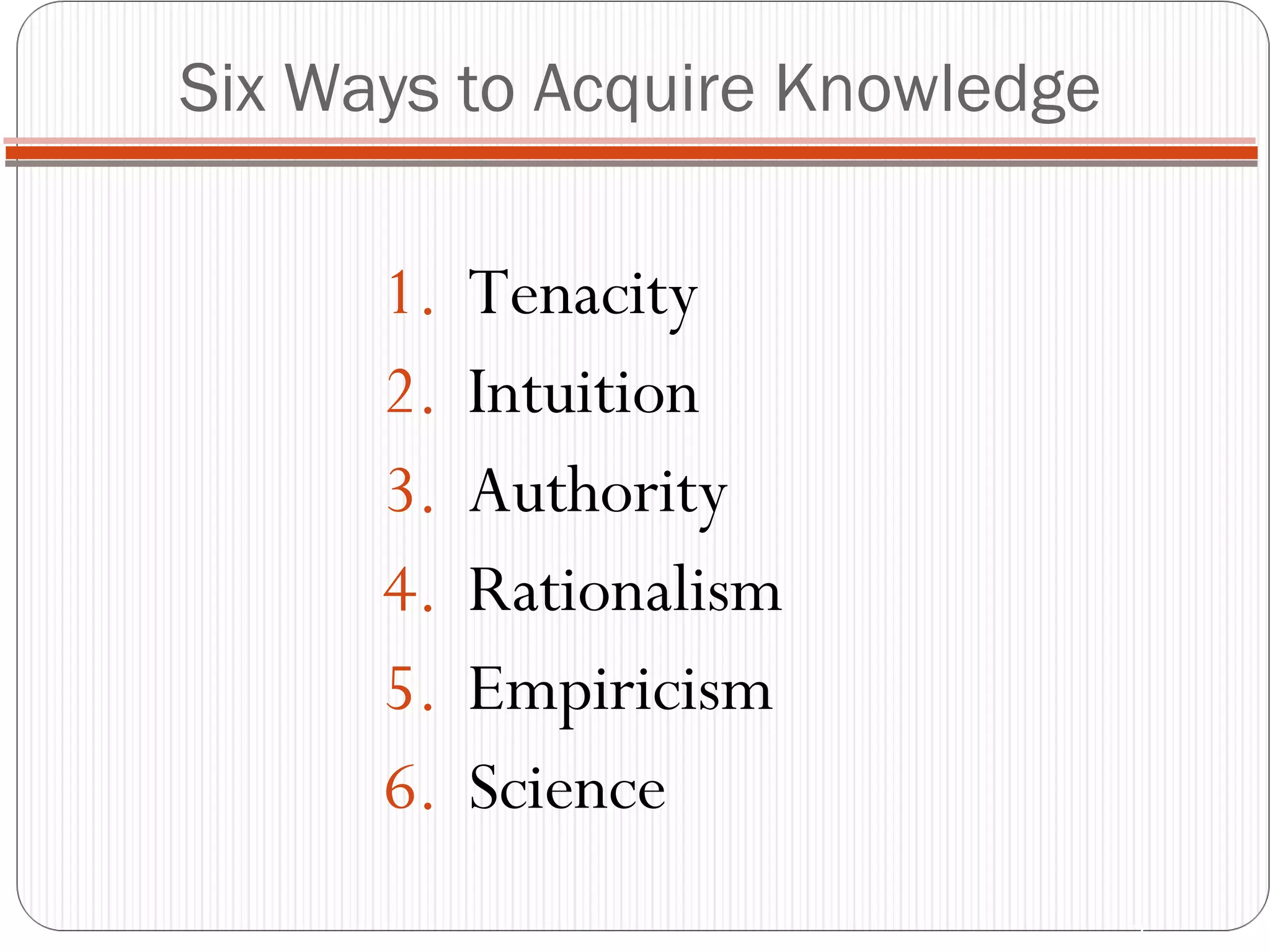
Six Ways to Acquire Knowledge Tenacity  Intuition Authority Rationalism Empiricism Science
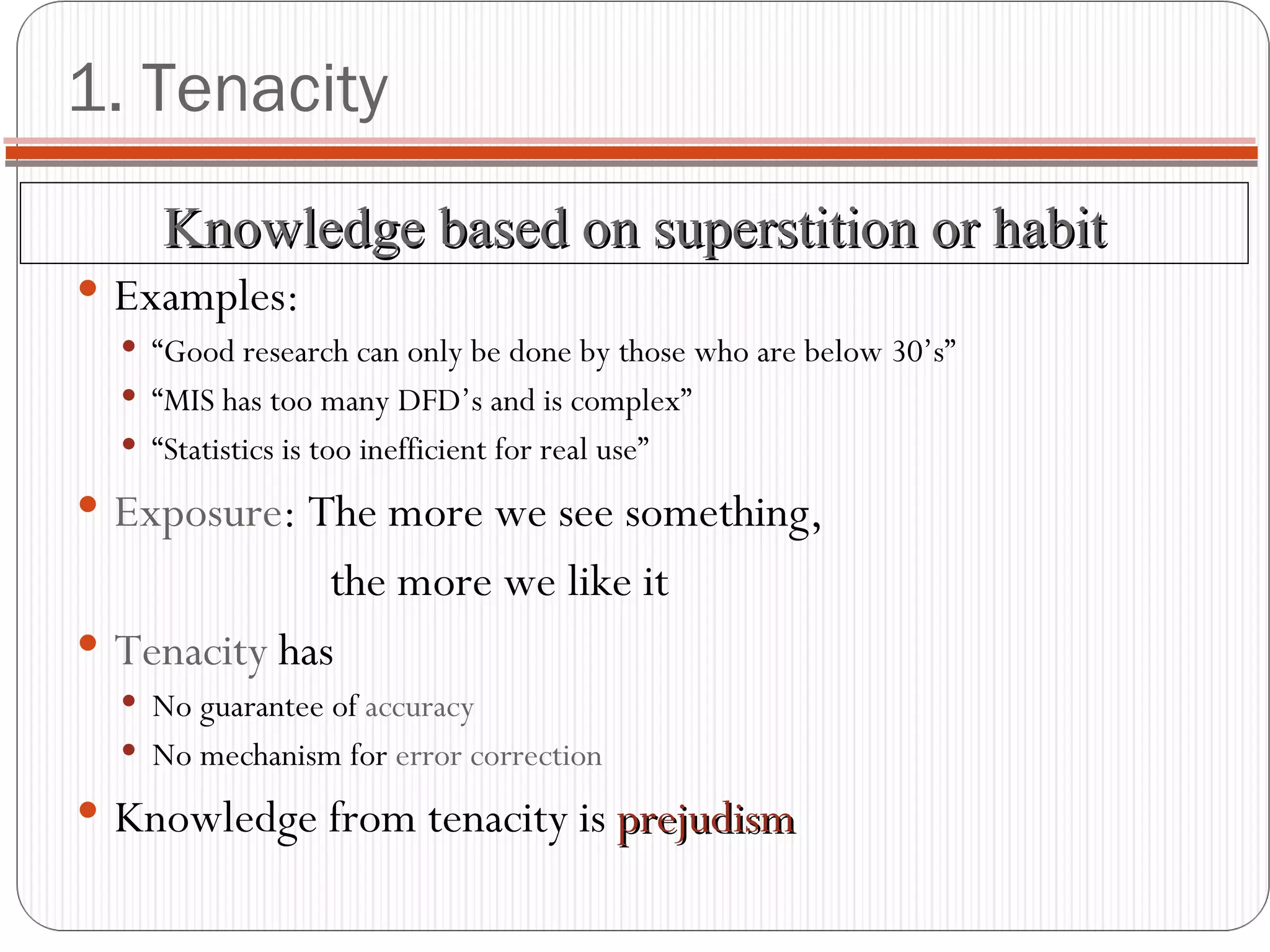
1. Tenacity Examples: “ Good research can only be done by those who are below 30’s” “ MIS has too many DFD’s and is complex” “ Statistics is too inefficient for real use” Exposure : The more we see something,  the more we like it Tenacity  has No guarantee of  accuracy No mechanism for  error correction Knowledge from tenacity is  prejudism Knowledge based on superstition or habit
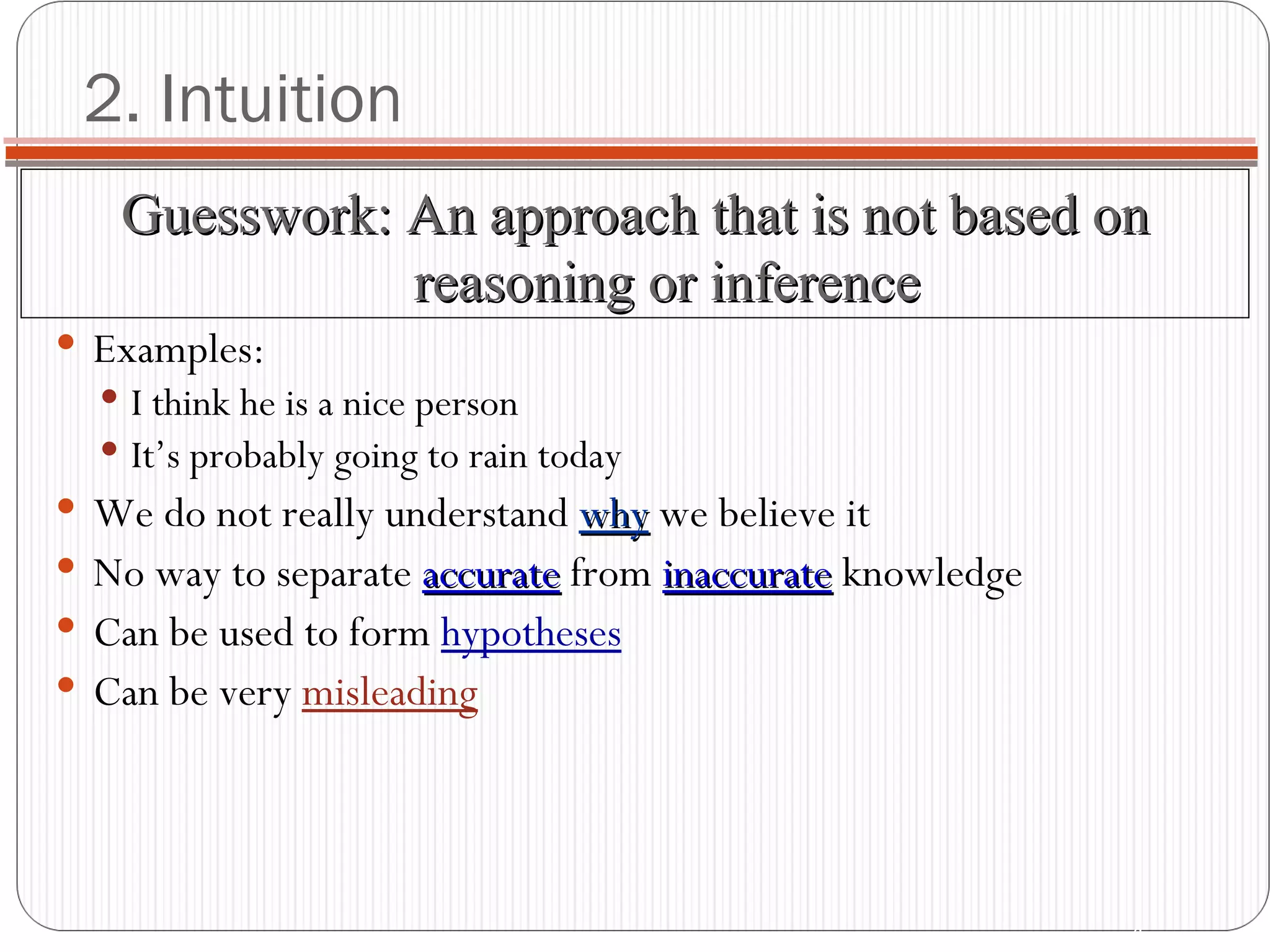
2. Intuition Examples: I think he is a nice person It’s probably going to rain today We do not really understand  why  we believe it No way to separate  accurate   from  inaccurate  knowledge Can be used to form  hypotheses Can be very  misleading Guesswork: An approach that is not based on reasoning or inference
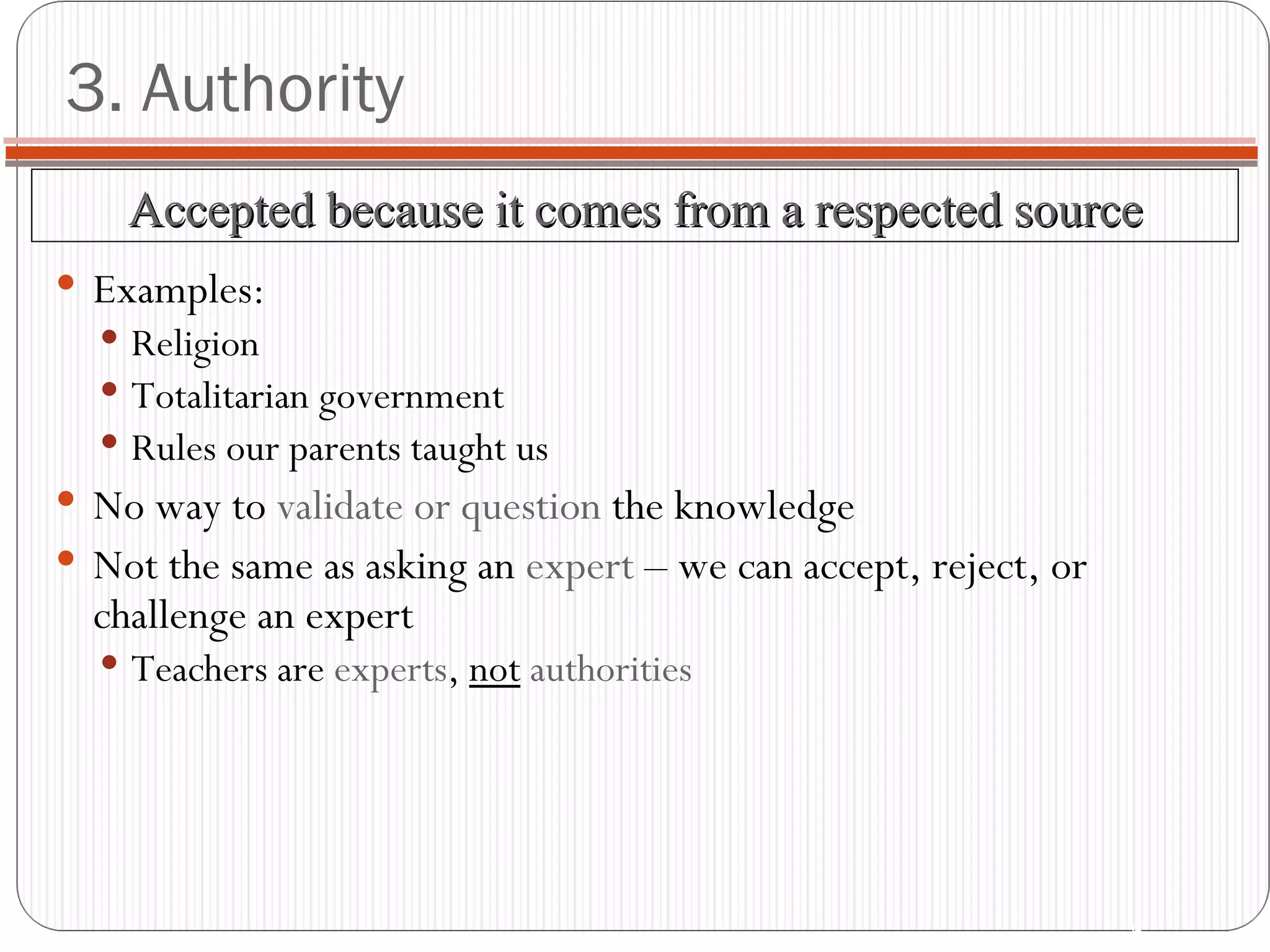
3. Authority Examples: Religion Totalitarian government Rules our parents taught us No way to  validate or question  the knowledge Not the same as asking an  expert  – we can accept, reject, or challenge an expert Teachers are  experts ,  not   authorities Accepted because it comes from a respected source
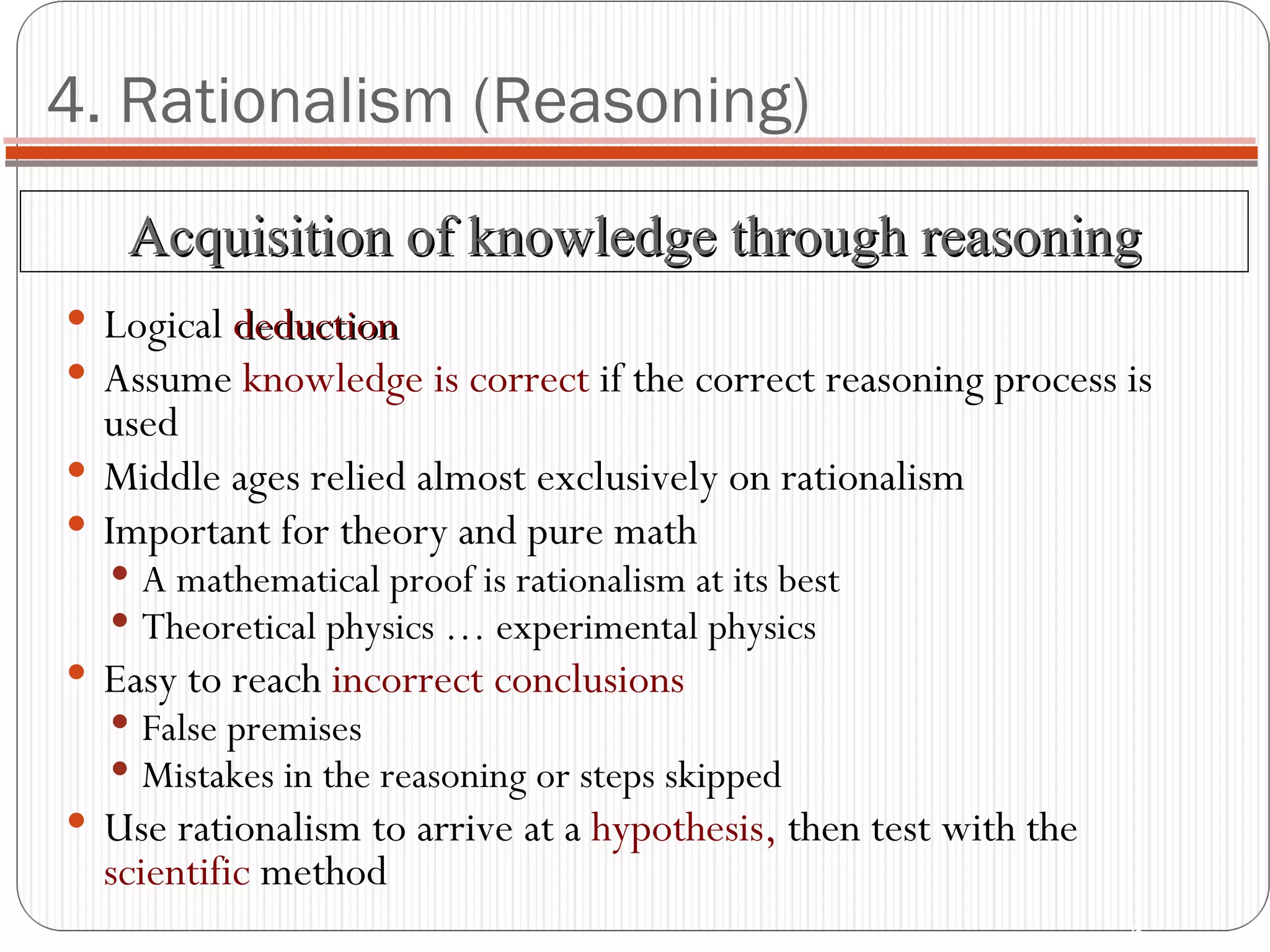
4. Rationalism (Reasoning) Logical  deduction Assume  knowledge is correct   if the correct reasoning process is used Middle ages relied almost exclusively on rationalism Important for theory and pure math A mathematical proof is rationalism at its best Theoretical physics … experimental physics Easy to reach  incorrect conclusions False premises Mistakes in the reasoning or steps skipped Use rationalism to arrive at a  hypothesis,  then test with the  scientific  method Acquisition of knowledge through reasoning
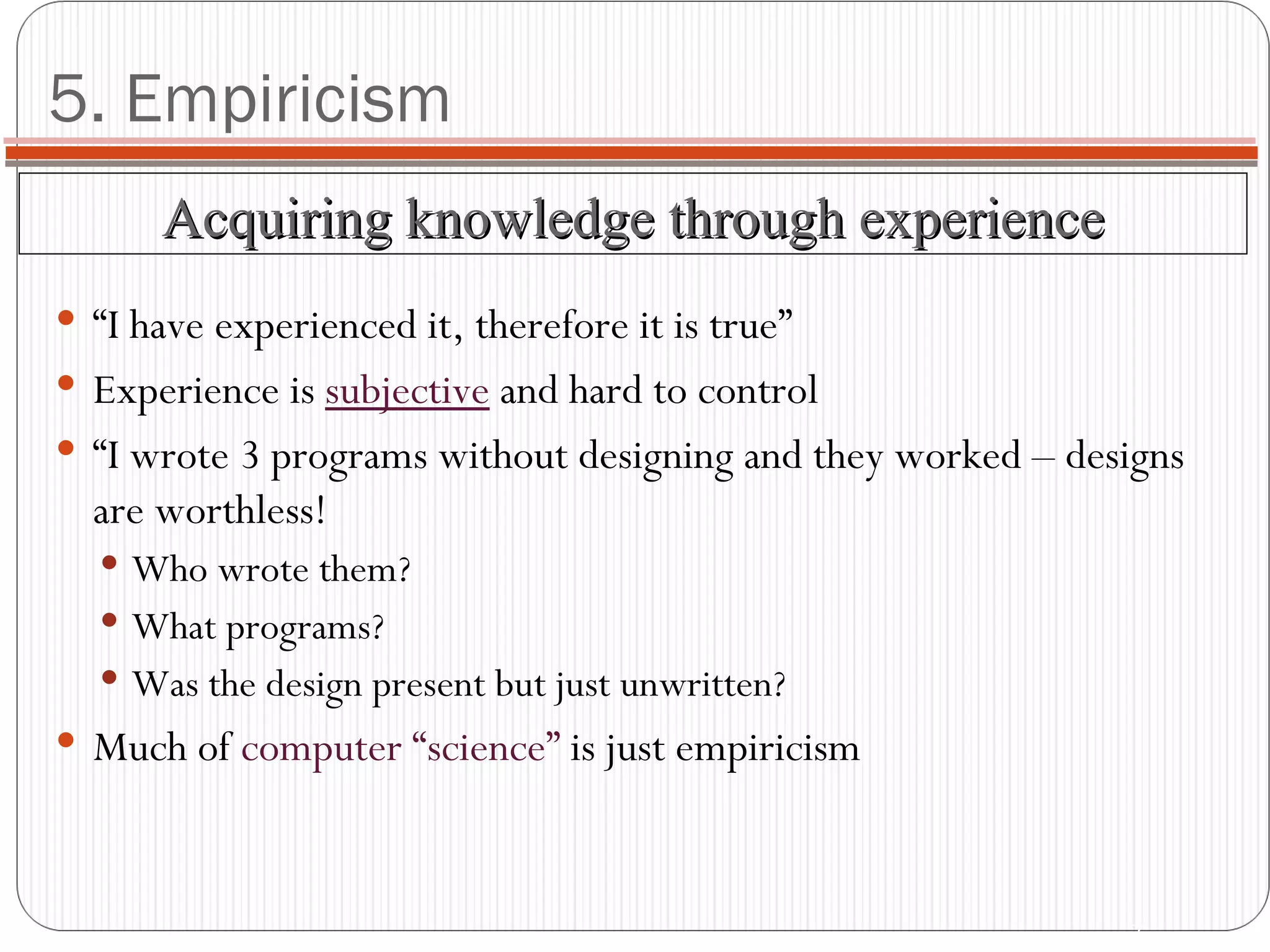
5. Empiricism “I have experienced it, therefore it is true” Experience is  subjective  and hard to control “I wrote 3 programs without designing and they worked – designs are worthless! Who wrote them? What programs? Was the design present but just unwritten? Much of  computer “science”  is just empiricism Acquiring knowledge through experience
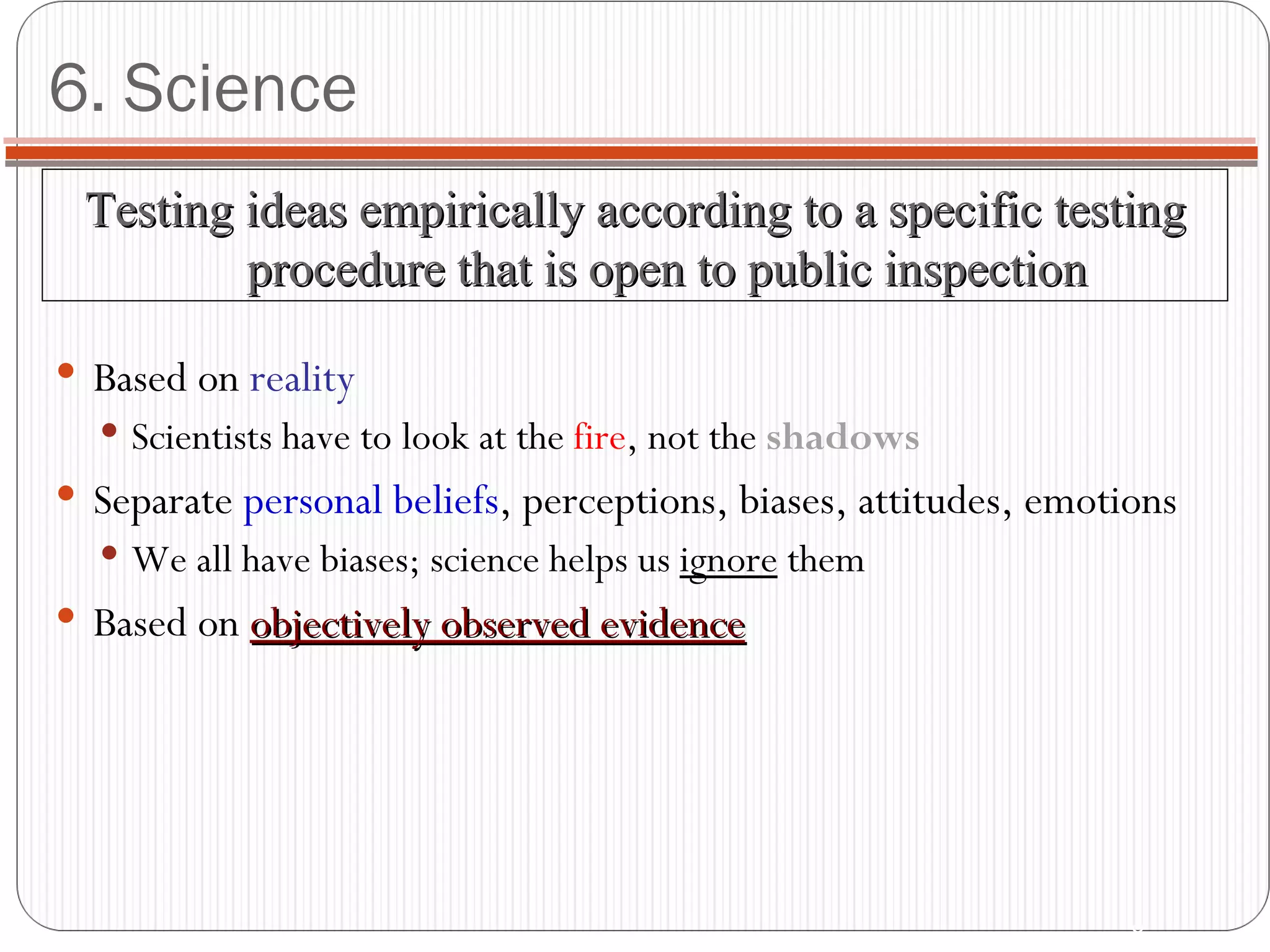
6. Science Based on  reality Scientists have to look at the  fire , not the  shadows Separate  personal beliefs , perceptions, biases, attitudes, emotions We all have biases; science helps us  ignore  them Based on  objectively observed evidence Testing ideas empirically according to a specific testing procedure that is open to public inspection
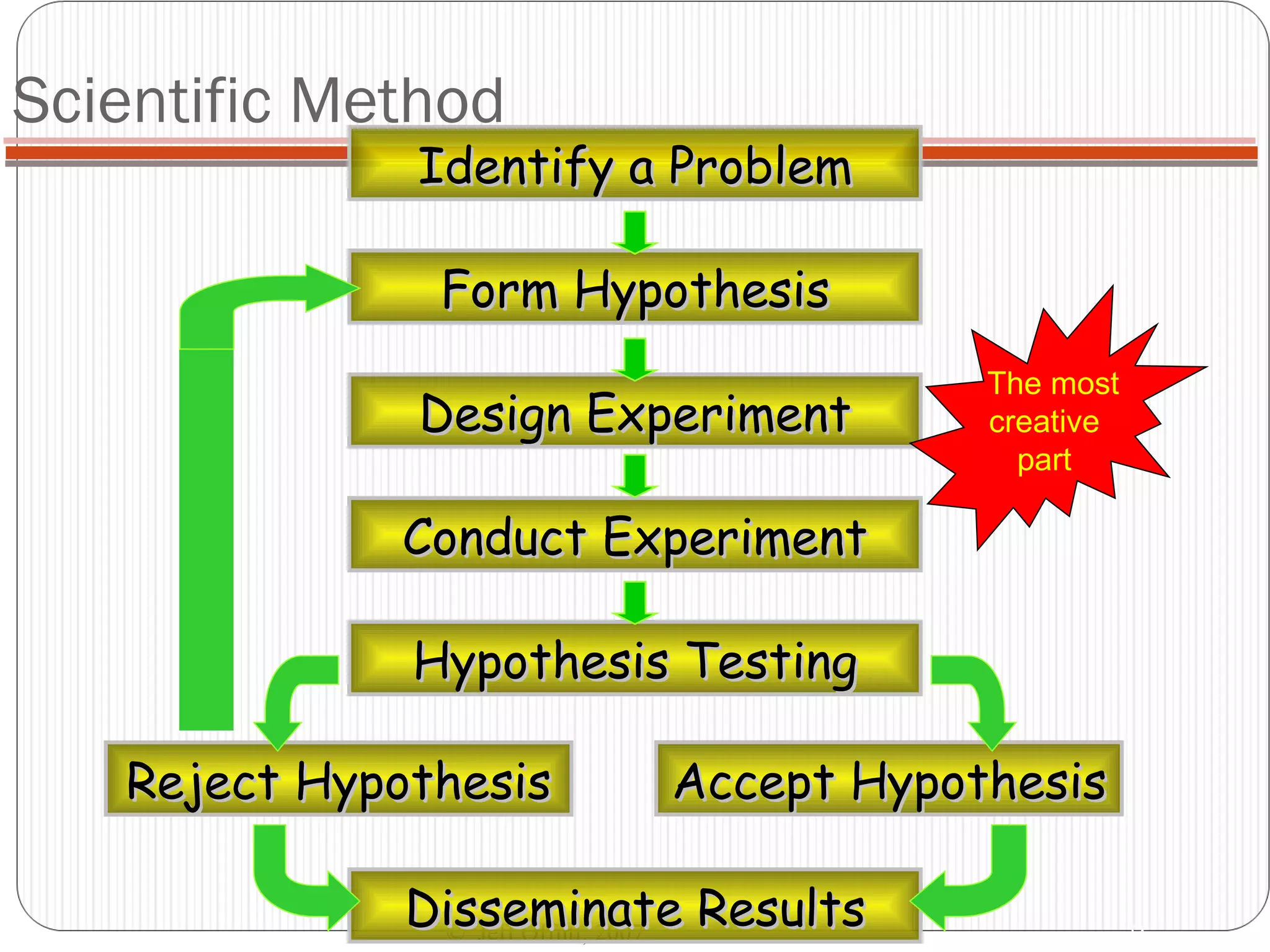
Scientific Method ©  Jeff Offutt, 2007 Identify a Problem The most creative part Form Hypothesis Design Experiment Conduct Experiment Hypothesis Testing Disseminate Results Reject Hypothesis Accept Hypothesis
Use…… Much of life is about  solving problems Education is not about  skills , it is about  knowledge Use your education knowledge to help you: Think  rationally Question  authority Solve all of  life’s problems

1 acquiring knowledge

  • 1.
  • 2.
    Six Ways toAcquire Knowledge Tenacity Intuition Authority Rationalism Empiricism Science
  • 3.
    1. Tenacity Examples:“ Good research can only be done by those who are below 30’s” “ MIS has too many DFD’s and is complex” “ Statistics is too inefficient for real use” Exposure : The more we see something, the more we like it Tenacity has No guarantee of accuracy No mechanism for error correction Knowledge from tenacity is prejudism Knowledge based on superstition or habit
  • 4.
    2. Intuition Examples:I think he is a nice person It’s probably going to rain today We do not really understand why we believe it No way to separate accurate from inaccurate knowledge Can be used to form hypotheses Can be very misleading Guesswork: An approach that is not based on reasoning or inference
  • 5.
    3. Authority Examples:Religion Totalitarian government Rules our parents taught us No way to validate or question the knowledge Not the same as asking an expert – we can accept, reject, or challenge an expert Teachers are experts , not authorities Accepted because it comes from a respected source
  • 6.
    4. Rationalism (Reasoning)Logical deduction Assume knowledge is correct if the correct reasoning process is used Middle ages relied almost exclusively on rationalism Important for theory and pure math A mathematical proof is rationalism at its best Theoretical physics … experimental physics Easy to reach incorrect conclusions False premises Mistakes in the reasoning or steps skipped Use rationalism to arrive at a hypothesis, then test with the scientific method Acquisition of knowledge through reasoning
  • 7.
    5. Empiricism “Ihave experienced it, therefore it is true” Experience is subjective and hard to control “I wrote 3 programs without designing and they worked – designs are worthless! Who wrote them? What programs? Was the design present but just unwritten? Much of computer “science” is just empiricism Acquiring knowledge through experience
  • 8.
    6. Science Basedon reality Scientists have to look at the fire , not the shadows Separate personal beliefs , perceptions, biases, attitudes, emotions We all have biases; science helps us ignore them Based on objectively observed evidence Testing ideas empirically according to a specific testing procedure that is open to public inspection
  • 9.
    Scientific Method © Jeff Offutt, 2007 Identify a Problem The most creative part Form Hypothesis Design Experiment Conduct Experiment Hypothesis Testing Disseminate Results Reject Hypothesis Accept Hypothesis
  • 10.
    Use…… Much oflife is about solving problems Education is not about skills , it is about knowledge Use your education knowledge to help you: Think rationally Question authority Solve all of life’s problems