UNIVERSAL VALUES
VALUES
- are basic and fundamental beliefs that guide or
motivate attitudes or actions. They help us to
determine what is important to us. Values describe
the personal qualities we choose to embody to guide
our actions; the sort of person we want to be; the
manner in which we treat ourselves and others, and
our interaction with the world around us. They
provide the general guidelines for conduct.
Values in a narrow sense is that which is good,
desirable, or worthwhile. Values are the motive
behind purposeful action. They are the ends to
which we act and come in many forms. Personal
values are personal beliefs about right and
wrong and may or may not be considered
moral. Cultural values are values accepted by
religions or societies and reflect what is
important in each context.
Values are essential to ethics. Ethics is concerned
with human actions, and the choice of those
actions. Ethics evaluates those actions, and the
values that underlie them. It determines which
values should be pursued, and which shouldn't.
Those who value courage are willing to stand up
for what they believe, even in the face of strong
condemnation. Courage is a moral value when it
deals with right and wrong conduct.
Values specifies a relationship between a person and a
goal. It is relational in the sense that what one person values
may not be what another person values even in the same
situation. For example, a person who values honesty might
blow the whistle on financial wrongdoing by a superior
whereas another person who values loyalty may remain
silent. This is an example of values conflict. The honest
person may believe there are limits to loyalty and keeping
quiet about a wrongful act out of loyalty might harm others.
The loyal person may believe in the importance of keeping
one’s confidence even if it might harm others because of the
trusting relationship.
Some values stand up well over the test of time; they
are always good or rightful behavior. Honesty and
kindness are two such examples. It is difficult to
imagine having a satisfying relationship without them
because they build trust in relationships. There are
always exceptions but they are rare. For example, if a
criminal out to do harm to your friend knocks on the
door and asks whether you have seen the friend, you’re
probably not going to say yes and rationalize it out of a
sense of honesty. Here, the greater good, so to speak, is
to protect your friend from harm.
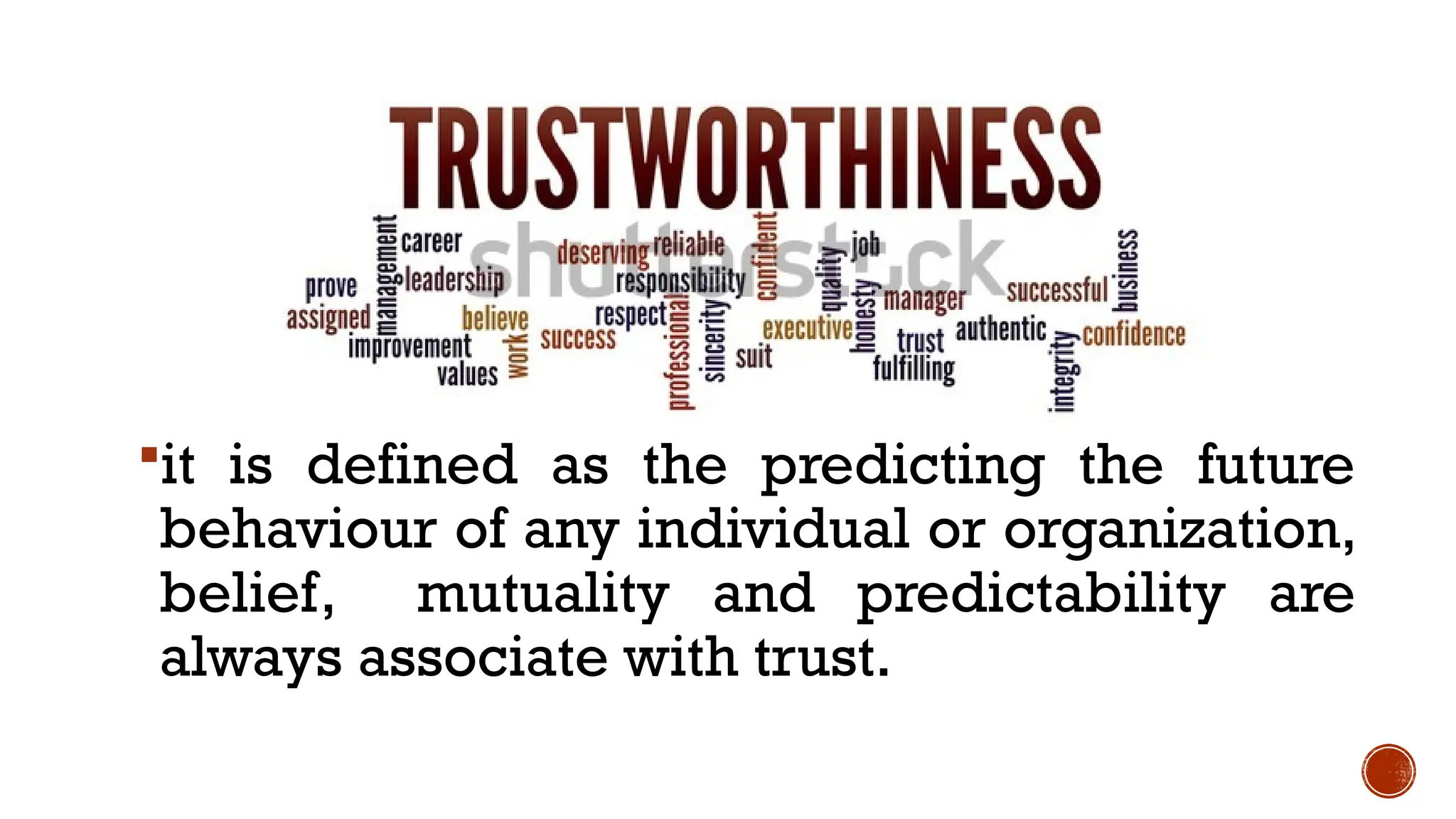
it is defined as the predicting the future
behaviour of any individual or organization,
belief, mutuality and predictability are
always associate with trust.
FOUR SUB-VALUES OF
TRUSTWORTHINESS
Honesty
Integrity
Reliability
Loyalty
- It is a facet of moral character that connotes positive and virtuous
attributes such as integrity, truthfulness, straightforwardness, including
straightforwardness of conduct, along with the absence of lying,
cheating, theft, etc. Honesty also involves being trustworthy, loyal, fair,
and sincere
HONESTY IN COMMUNICATION
- IT IS DEFINED AS NOT TO HIDE ANY INFORMATION FOR
THE PURPOSE OF DECEIVING SOMEONE
HONESTY IN ACTION
- IT IS DEFINED AS NOT TO GET INVOLVED INTO THE
PROCESS OF CHEATING OR ANY FRAUDS
- IT IS DERIVED FROM THE WORD INTEGER’S (E. SOMETHING WHICH CANNOT BE IN FRACTION
INTELLECTUAL INTEGRITY
- IT IS DEFINED AS BEING CONSISTENT ENOUGH SO THAT THE WORDS SPOKEN OR AND THE
ACTIONS PERFORMES REMAIN CONSTANT IN SIMILAR SITUATIONS
FINANCIAL INTEGRITY
- A PERSON HOLDING THE AUTHORITY OR POST SHOULD NOT USE HIS/HER POST FOR THE
FINANCIAL BENEFITS OF THE SELF OR THE FAMILY
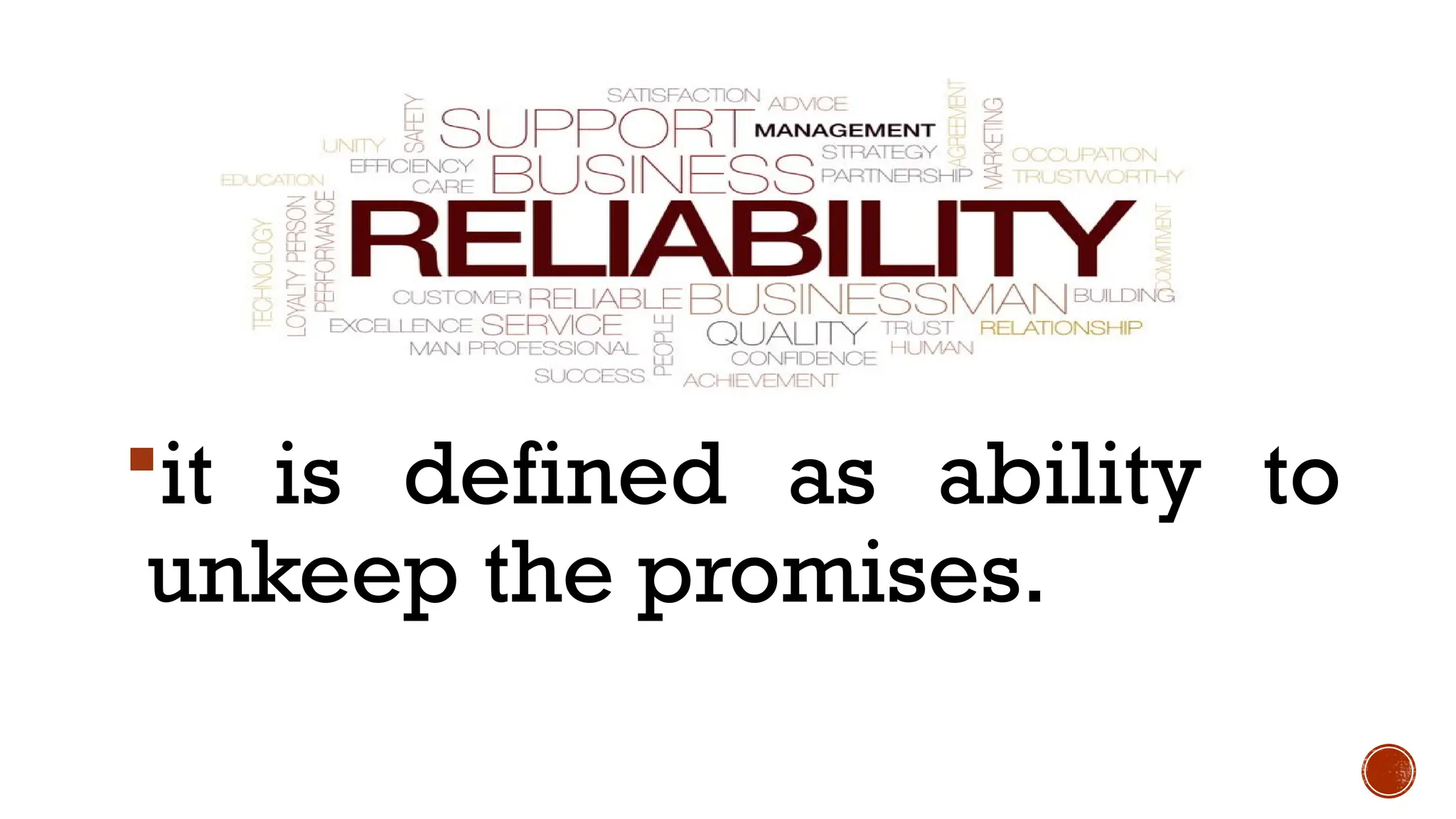
it is defined as ability to
unkeep the promises.
it is defined as ability to protect
the interests of someone beyond
the normal obligation
1. SENSORY VALUES – values that are objects of sensory feelings, and
their corresponding subjective states are delight and pain.
2. VITAL VALUES – these values are noble and vulgar. The feeling-stares
of this modality include all modes of the feeling of life: feelings of
health, sickness, aging, exhaustion, energy, vigorous and other
3. SPIRITUAL VALUES – values correspond to spiritual feelings, more
appropriately to the spiritual act of love. The realm of spiritual
values have a peculiar sphere of the lived body and the environment
HIERARCHY OF VALUES
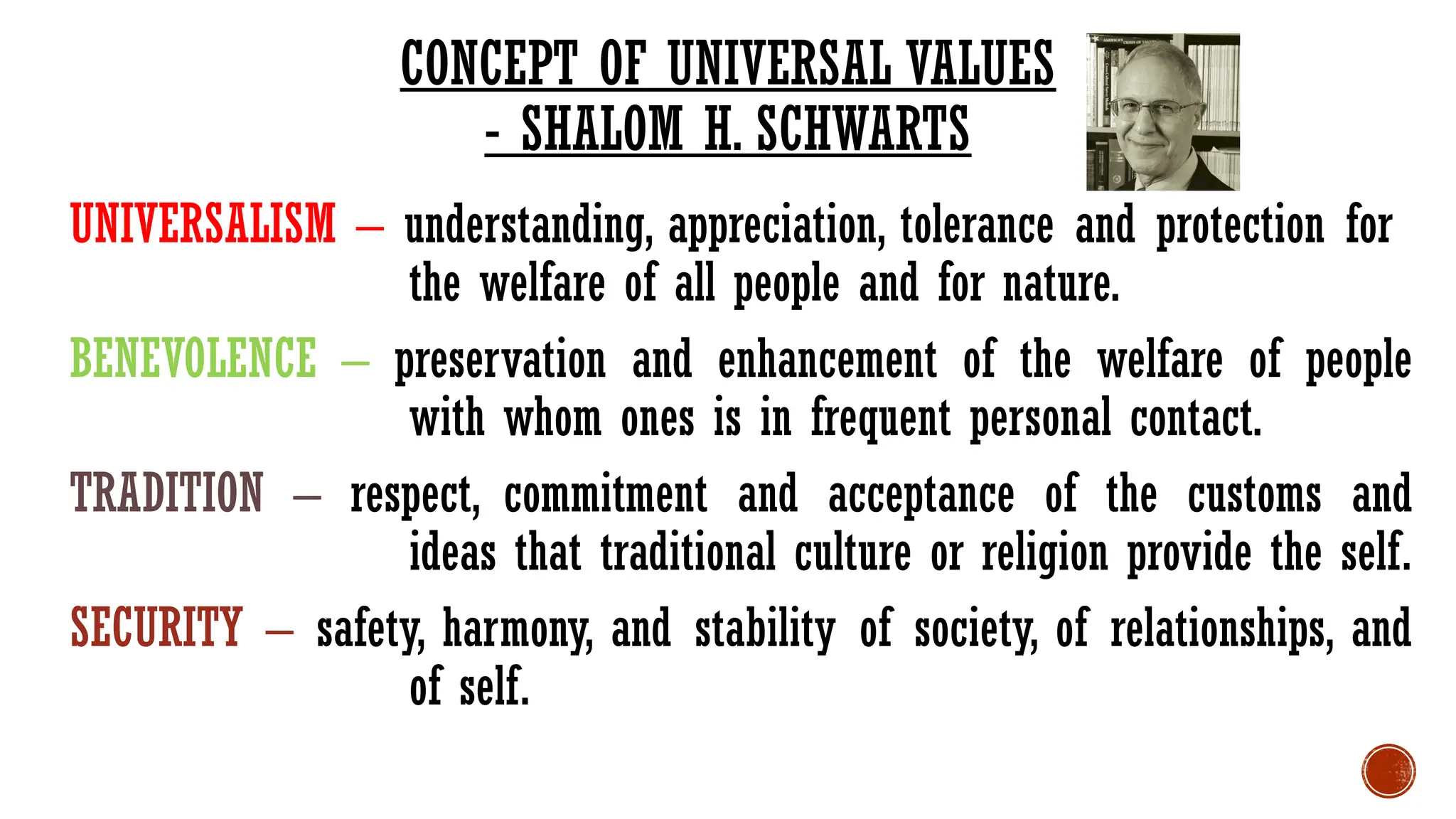
UNIVERSALISM – understanding, appreciation, tolerance and protection for
the welfare of all people and for nature.
BENEVOLENCE – preservation and enhancement of the welfare of people
with whom ones is in frequent personal contact.
TRADITION – respect, commitment and acceptance of the customs and
ideas that traditional culture or religion provide the self.
SECURITY – safety, harmony, and stability of society, of relationships, and
of self.
CONCEPT OF UNIVERSAL VALUES
- SHALOM H. SCHWARTS
POWER – social status and prestige, control or dominance over people and
resources.
ACHIEVEMENT – personal success through demonstrating competence
according to social standards.
HEDONISM – pleasure and sensuous gratification for oneself.
STIMULATION – excitement, novelty and challenge in life.
SELF-DIRECTION – independent thought and action – choosing, creating,
exploring.
CONCEPT OF UNIVERSAL VALUES
- SHALOM H. SCHWARTS
also called esteem, is a positive feeling or action
shown towards someone or something considered
important, or held in high esteem or regard. It
conveys a sense of admiration for good or valuable
qualities.
means you do the things you are supposed to do and
accept the results of your actions. A responsibility:
something you are expected to do.
Being responsible: doing the things you are
supposed to do. Accepting responsibility: taking the
praise or the blame for something you have done.
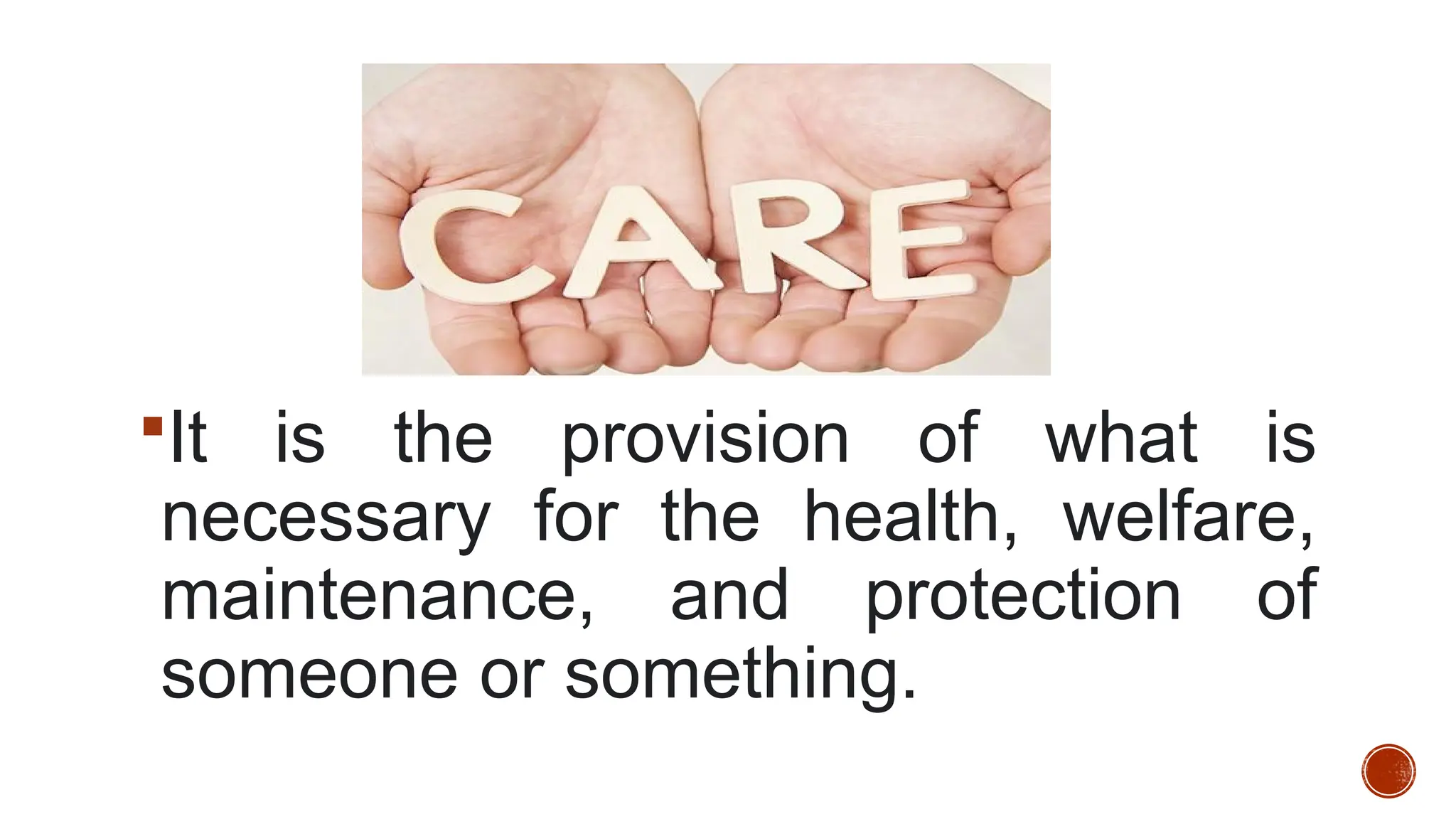
It is the provision of what is
necessary for the health, welfare,
maintenance, and protection of
someone or something.
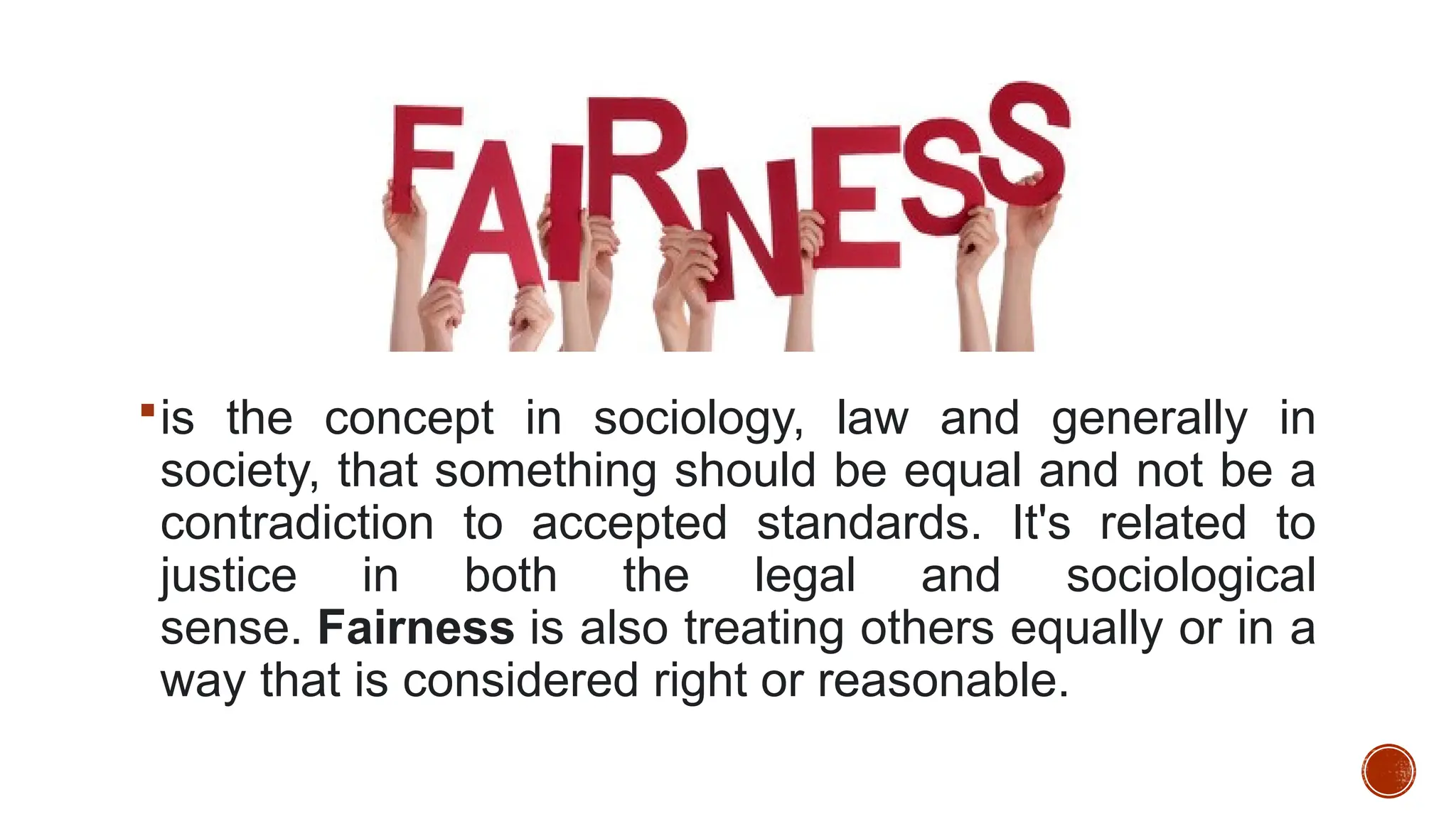
is the concept in sociology, law and generally in
society, that something should be equal and not be a
contradiction to accepted standards. It's related to
justice in both the legal and sociological
sense. Fairness is also treating others equally or in a
way that is considered right or reasonable.
 relationship between an individual and a state to which
the individual owes allegiance and in turn is entitled to
its protection. Citizenship implies the status of freedom
with accompanying responsibilities. Citizens have
certain rights, duties, and responsibilities that are
denied or only partially extended to aliens and other
noncitizens residing in a country.
BASIC UNIVERSAL HUMAN VALUES
Happiness
Peace
Love
Freedom
Safety
Intelligence
Respect
Equality
justice
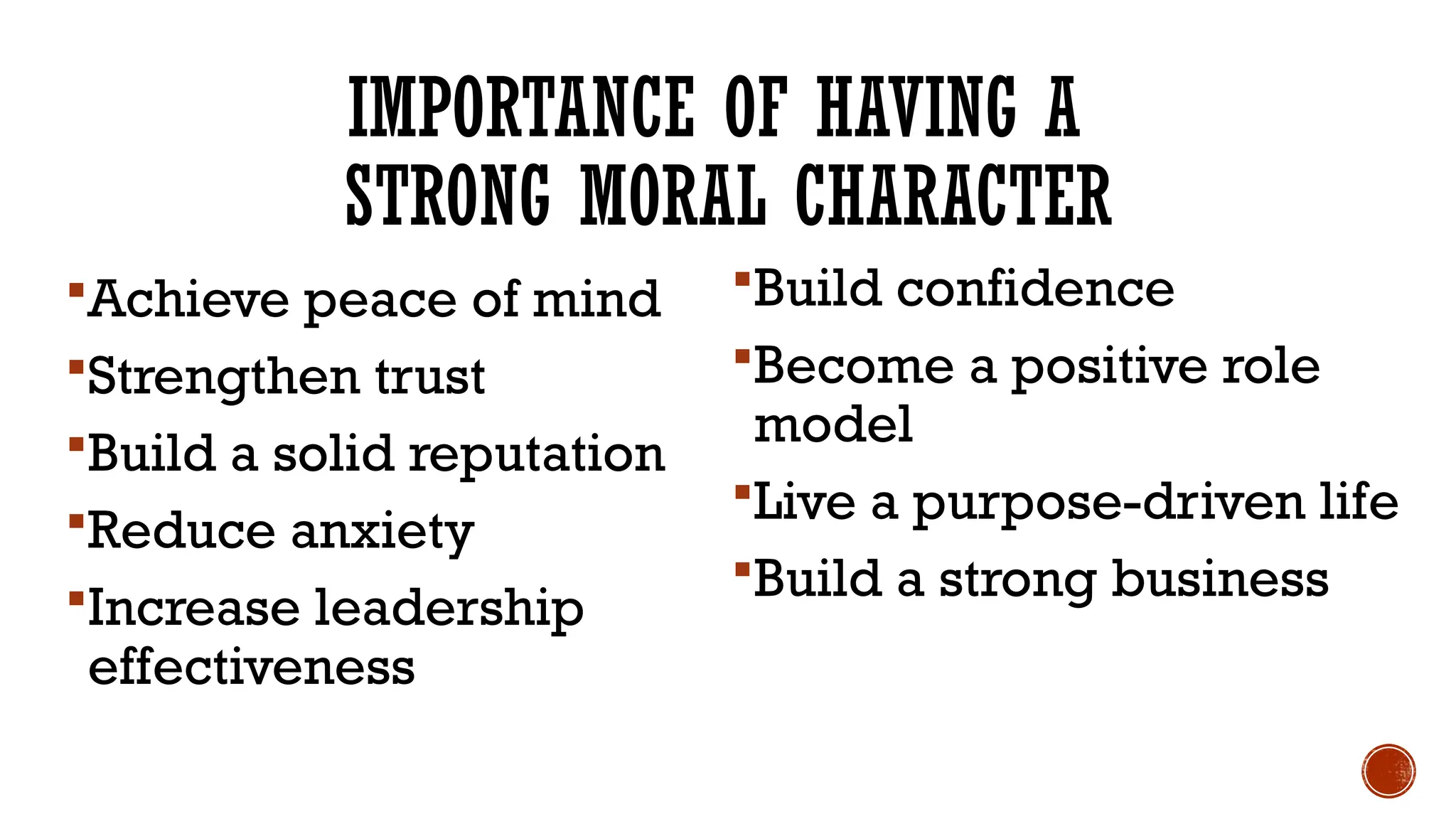
IMPORTANCE OF HAVING A
STRONG MORAL CHARACTER
Achieve peace of mind
Strengthen trust
Build a solid reputation
Reduce anxiety
Increase leadership
effectiveness
Build confidence
Become a positive role
model
Live a purpose-driven life
Build a strong business
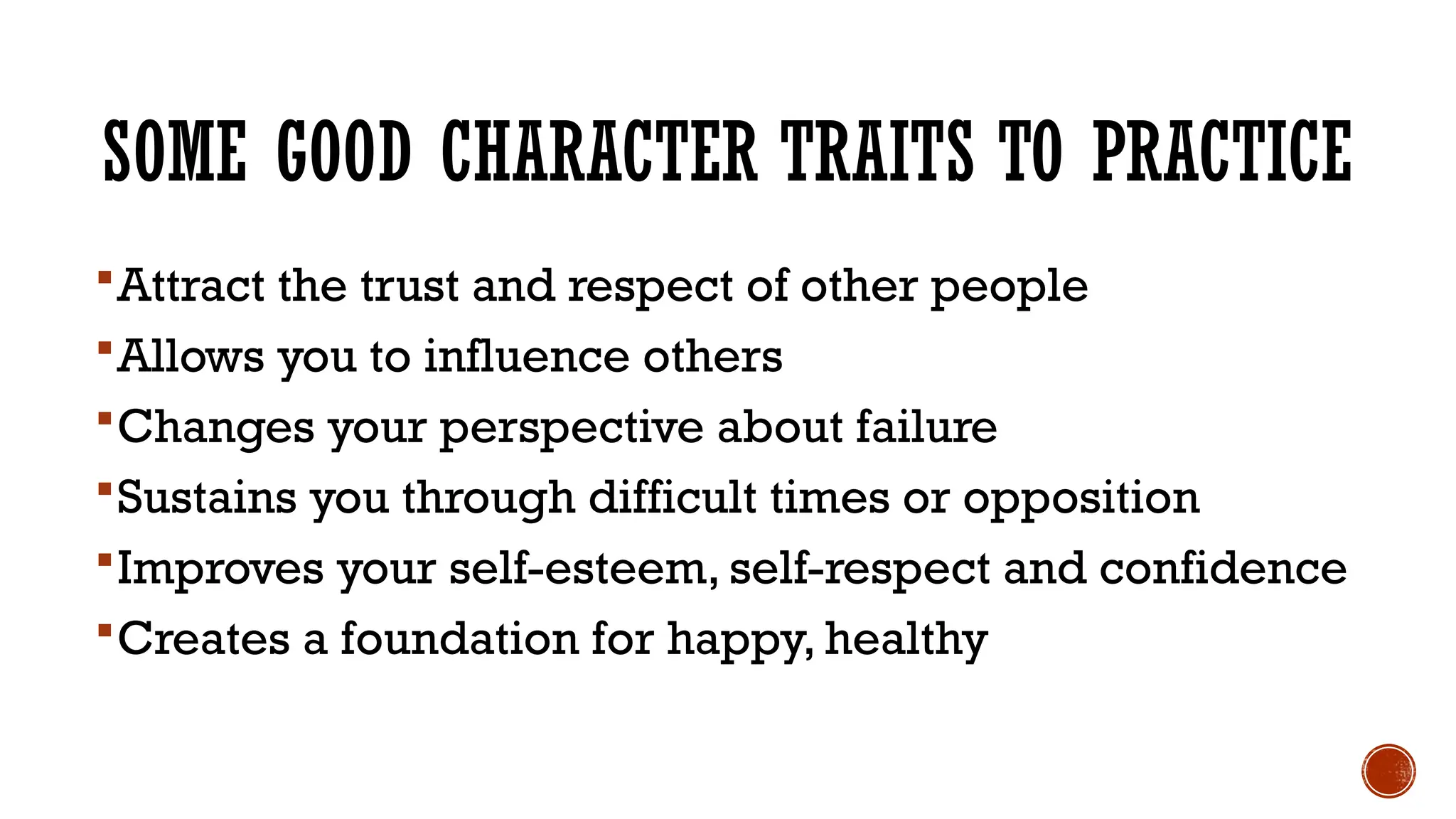
SOME GOOD CHARACTER TRAITS TO PRACTICE
Attract the trust and respect of other people
Allows you to influence others
Changes your perspective about failure
Sustains you through difficult times or opposition
Improves your self-esteem, self-respect and confidence
Creates a foundation for happy, healthy
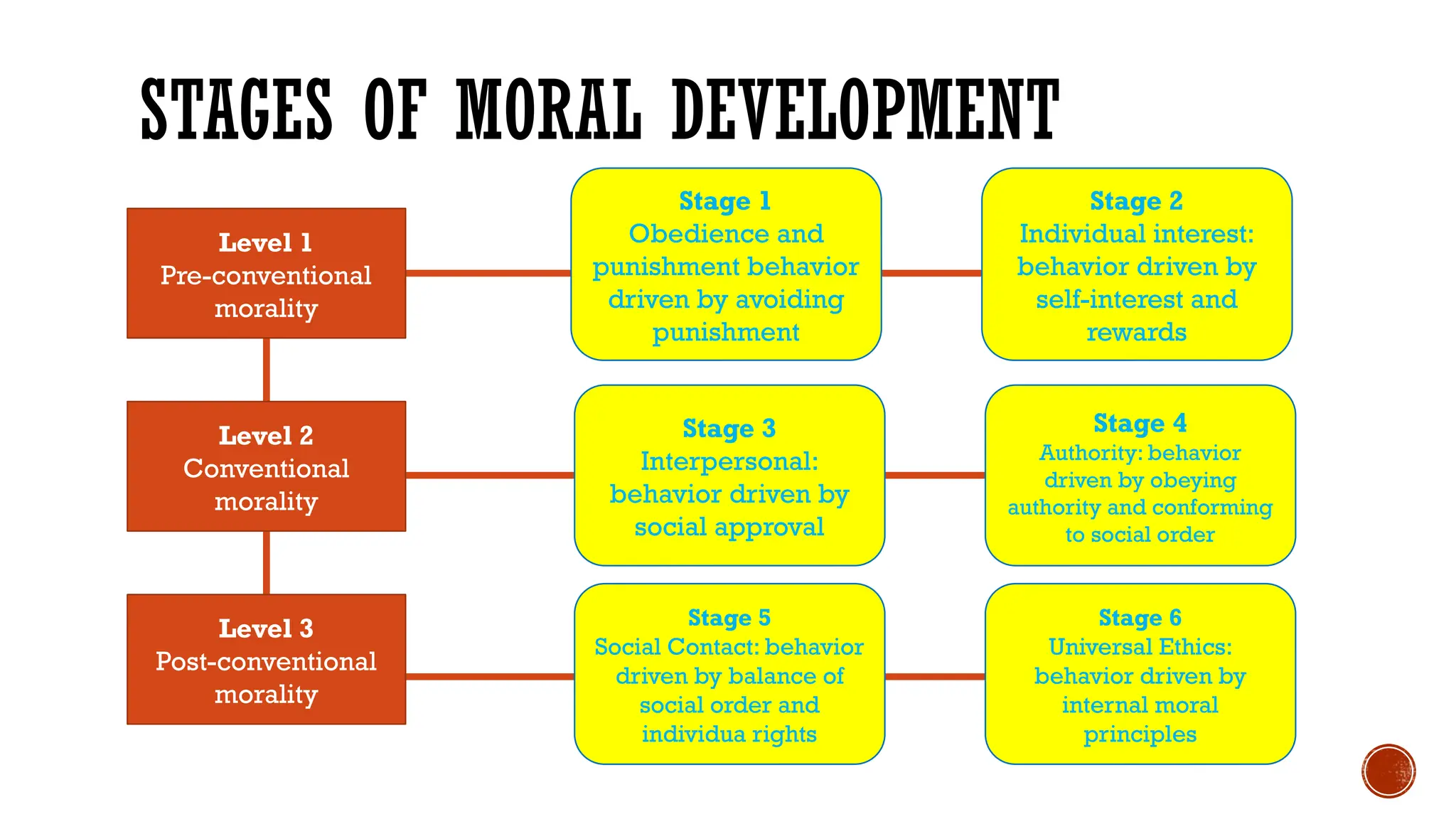
STAGES OF MORAL DEVELOPMENT
Level 1
Pre-conventional
morality
Level 2
Conventional
morality
Level 3
Post-conventional
morality
Stage 1
Obedience and
punishment behavior
driven by avoiding
punishment
Stage 3
Interpersonal:
behavior driven by
social approval
Stage 5
Social Contact: behavior
driven by balance of
social order and
individua rights
Stage 2
Individual interest:
behavior driven by
self-interest and
rewards
Stage 4
Authority: behavior
driven by obeying
authority and conforming
to social order
Stage 6
Universal Ethics:
behavior driven by
internal moral
principles
ACTIVITY
On a one whole yellow pad,
construct an essay narrating the
importance of universal values for
an individual and how it influence
the moral character of a person.

Ethics Lesson 7 - Universal Values .pptx

  • 1.
  • 2.
    VALUES - are basicand fundamental beliefs that guide or motivate attitudes or actions. They help us to determine what is important to us. Values describe the personal qualities we choose to embody to guide our actions; the sort of person we want to be; the manner in which we treat ourselves and others, and our interaction with the world around us. They provide the general guidelines for conduct.
  • 3.
    Values in anarrow sense is that which is good, desirable, or worthwhile. Values are the motive behind purposeful action. They are the ends to which we act and come in many forms. Personal values are personal beliefs about right and wrong and may or may not be considered moral. Cultural values are values accepted by religions or societies and reflect what is important in each context.
  • 4.
    Values are essentialto ethics. Ethics is concerned with human actions, and the choice of those actions. Ethics evaluates those actions, and the values that underlie them. It determines which values should be pursued, and which shouldn't. Those who value courage are willing to stand up for what they believe, even in the face of strong condemnation. Courage is a moral value when it deals with right and wrong conduct.
  • 5.
    Values specifies arelationship between a person and a goal. It is relational in the sense that what one person values may not be what another person values even in the same situation. For example, a person who values honesty might blow the whistle on financial wrongdoing by a superior whereas another person who values loyalty may remain silent. This is an example of values conflict. The honest person may believe there are limits to loyalty and keeping quiet about a wrongful act out of loyalty might harm others. The loyal person may believe in the importance of keeping one’s confidence even if it might harm others because of the trusting relationship.
  • 6.
    Some values standup well over the test of time; they are always good or rightful behavior. Honesty and kindness are two such examples. It is difficult to imagine having a satisfying relationship without them because they build trust in relationships. There are always exceptions but they are rare. For example, if a criminal out to do harm to your friend knocks on the door and asks whether you have seen the friend, you’re probably not going to say yes and rationalize it out of a sense of honesty. Here, the greater good, so to speak, is to protect your friend from harm.
  • 7.
    it is definedas the predicting the future behaviour of any individual or organization, belief, mutuality and predictability are always associate with trust.
  • 8.
  • 9.
    - It isa facet of moral character that connotes positive and virtuous attributes such as integrity, truthfulness, straightforwardness, including straightforwardness of conduct, along with the absence of lying, cheating, theft, etc. Honesty also involves being trustworthy, loyal, fair, and sincere
  • 10.
    HONESTY IN COMMUNICATION -IT IS DEFINED AS NOT TO HIDE ANY INFORMATION FOR THE PURPOSE OF DECEIVING SOMEONE HONESTY IN ACTION - IT IS DEFINED AS NOT TO GET INVOLVED INTO THE PROCESS OF CHEATING OR ANY FRAUDS
  • 11.
    - IT ISDERIVED FROM THE WORD INTEGER’S (E. SOMETHING WHICH CANNOT BE IN FRACTION INTELLECTUAL INTEGRITY - IT IS DEFINED AS BEING CONSISTENT ENOUGH SO THAT THE WORDS SPOKEN OR AND THE ACTIONS PERFORMES REMAIN CONSTANT IN SIMILAR SITUATIONS FINANCIAL INTEGRITY - A PERSON HOLDING THE AUTHORITY OR POST SHOULD NOT USE HIS/HER POST FOR THE FINANCIAL BENEFITS OF THE SELF OR THE FAMILY
  • 12.
    it is definedas ability to unkeep the promises.
  • 13.
    it is definedas ability to protect the interests of someone beyond the normal obligation
  • 14.
    1. SENSORY VALUES– values that are objects of sensory feelings, and their corresponding subjective states are delight and pain. 2. VITAL VALUES – these values are noble and vulgar. The feeling-stares of this modality include all modes of the feeling of life: feelings of health, sickness, aging, exhaustion, energy, vigorous and other 3. SPIRITUAL VALUES – values correspond to spiritual feelings, more appropriately to the spiritual act of love. The realm of spiritual values have a peculiar sphere of the lived body and the environment HIERARCHY OF VALUES
  • 15.
    UNIVERSALISM – understanding,appreciation, tolerance and protection for the welfare of all people and for nature. BENEVOLENCE – preservation and enhancement of the welfare of people with whom ones is in frequent personal contact. TRADITION – respect, commitment and acceptance of the customs and ideas that traditional culture or religion provide the self. SECURITY – safety, harmony, and stability of society, of relationships, and of self. CONCEPT OF UNIVERSAL VALUES - SHALOM H. SCHWARTS
  • 16.
    POWER – socialstatus and prestige, control or dominance over people and resources. ACHIEVEMENT – personal success through demonstrating competence according to social standards. HEDONISM – pleasure and sensuous gratification for oneself. STIMULATION – excitement, novelty and challenge in life. SELF-DIRECTION – independent thought and action – choosing, creating, exploring. CONCEPT OF UNIVERSAL VALUES - SHALOM H. SCHWARTS
  • 17.
    also called esteem,is a positive feeling or action shown towards someone or something considered important, or held in high esteem or regard. It conveys a sense of admiration for good or valuable qualities.
  • 18.
    means you dothe things you are supposed to do and accept the results of your actions. A responsibility: something you are expected to do. Being responsible: doing the things you are supposed to do. Accepting responsibility: taking the praise or the blame for something you have done.
  • 19.
    It is theprovision of what is necessary for the health, welfare, maintenance, and protection of someone or something.
  • 20.
    is the conceptin sociology, law and generally in society, that something should be equal and not be a contradiction to accepted standards. It's related to justice in both the legal and sociological sense. Fairness is also treating others equally or in a way that is considered right or reasonable.
  • 21.
     relationship betweenan individual and a state to which the individual owes allegiance and in turn is entitled to its protection. Citizenship implies the status of freedom with accompanying responsibilities. Citizens have certain rights, duties, and responsibilities that are denied or only partially extended to aliens and other noncitizens residing in a country.
  • 22.
    BASIC UNIVERSAL HUMANVALUES Happiness Peace Love Freedom Safety Intelligence Respect Equality justice
  • 23.
    IMPORTANCE OF HAVINGA STRONG MORAL CHARACTER Achieve peace of mind Strengthen trust Build a solid reputation Reduce anxiety Increase leadership effectiveness Build confidence Become a positive role model Live a purpose-driven life Build a strong business
  • 24.
    SOME GOOD CHARACTERTRAITS TO PRACTICE Attract the trust and respect of other people Allows you to influence others Changes your perspective about failure Sustains you through difficult times or opposition Improves your self-esteem, self-respect and confidence Creates a foundation for happy, healthy
  • 25.
    STAGES OF MORALDEVELOPMENT Level 1 Pre-conventional morality Level 2 Conventional morality Level 3 Post-conventional morality Stage 1 Obedience and punishment behavior driven by avoiding punishment Stage 3 Interpersonal: behavior driven by social approval Stage 5 Social Contact: behavior driven by balance of social order and individua rights Stage 2 Individual interest: behavior driven by self-interest and rewards Stage 4 Authority: behavior driven by obeying authority and conforming to social order Stage 6 Universal Ethics: behavior driven by internal moral principles
  • 26.
    ACTIVITY On a onewhole yellow pad, construct an essay narrating the importance of universal values for an individual and how it influence the moral character of a person.