


U SING C LASSROOM    PLAN
                              Workshop
   A SSESSMENT T ECHNIQUES    9/25/12


FOR FORMATIVE A SSESSMENT     Michelle
                              Rodems, Ph.D.
       AND ACTIVE L EARNING
TRADITIONAL METHODS OF INSTRUCTION

 Provide/deliver instruction, transfer knowledge
 Improve the quality of instruction
 Criteria: inputs, resources, curriculum development,
  enrollment, quality of instruction
 Structures: time constant, learning varies; one -teacher,
  one-classroom; covering materials; end -of-course
  assessment
 Learning: “out there”; cumulative and linear; teacher -
  centered and controlled; environment competitive and
  individualistic; talent and ability rare
 Roles: Faculty are lecturers, faculty and students in
  isolation
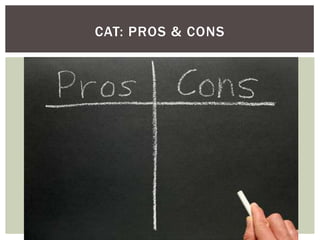
CAT: PROS & CONS
CATS
CLASSROOM ASSESSMENT TECHNIQUES
             CATS

      Classroom Assessment
 is an approach designed to help
 teachers find out what students
are learning in the classroom and
   how well they are learning it.
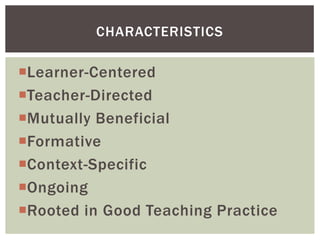
CHARACTERISTICS

Learner-Centered
Teacher-Directed
Mutually Beneficial
Formative
Context-Specific
Ongoing
Rooted in Good Teaching Practice
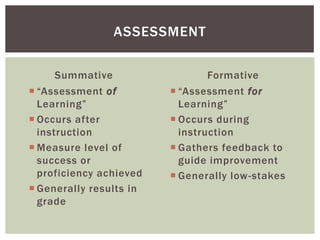
ASSESSMENT

     Summative                  Formative
 “Assessment of          “Assessment for
  Learning”                Learning”
 Occurs after            Occurs during
  instruction              instruction
 Measure level of        Gathers feedback to
  success or               guide improvement
  proficiency achieved    Generally low -stakes
 Generally results in
  grade
CAT: ONE-SENTENCE SUMMARY
“HOW TO”
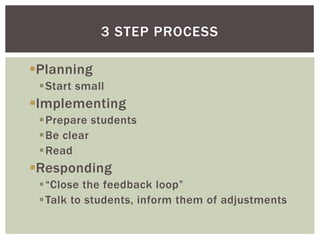
3 STEP PROCESS

Planning
 Start small
Implementing
 Prepare students
 Be clear
 Read
Responding
 “Close the feedback loop”
 Talk to students, inform them of adjustments
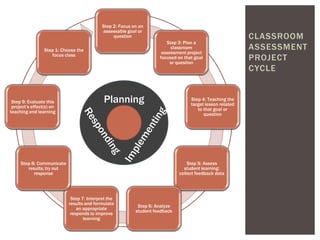
Step 2: Focus on an
                                            assessable goal or
                                                 question                                                  CLASSROOM
                                                                        Step 3: Plan a
                 Step 1: Choose the
                                                                          classroom                        ASSESSMENT
                                                                      assessment project
                    focus class
                                                                     focused on that goal
                                                                          or question
                                                                                                           PROJECT
                                                                                                           CYCLE


 Step 9: Evaluate this                       Planning                              Step 4: Teaching the
                                                                                   target lesson related
 project’s effect(s) on
                                                                                      to that goal or
teaching and learning
                                                                                         question


     Step 8: Communicate                                                          Step 5: Assess
        results; try out                                                        student learning:
           response                                                           collect feedback data


                             Step 7: Interpret the
                            results and formulate
                                                            Step 6: Analyze
                                an appropriate
                                                           student feedback
                             responds to improve
                                   learning
TEACHING GOALS INVENTORY
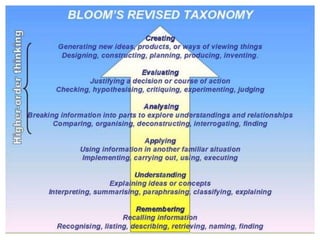
BLOOM’S TAXONOMY
CAT: NOTE-CARD NEXT STEPS

5-10 Minutes
 Select one CAT from list of examples
 Apply to course
 Work through project cycle

5-10 Minutes
 Share with group
CHECKLIST
LESSONS LEARNED

 Faculty adapt Classroom Assessment Techniques in creative
  ways
 Classroom Assessment feedback challenges teachers’
  assumptions
 Teachers respond to feedback in various ways
 Classroom Assessment increases active involvement in
  learning
 Classroom Assessment promotes metacognitive development
 Classroom Assessment increased cooperation and a sense of
  the classroom as a “learning community”
 Classroom Assessment increases student satisfaction
 Classroom Assessment may improve course completion rates
 Does it increase student learning?
CAT: MUDDIEST POINT

 What is still confusing?
 Where do you still need more information?

 Take one minute and respond to this question.
 Share with the group.
KEEP IN MIND . . .

 Start with assessable goals.
 Focus on alterable variables.
 Build in success.
 Start small.
 Get students actively involved.
 Set limits on the time and effort you will invest.
 Be flexible and willing to change.
 Work with other teachers who share your interests.
 Remember that students must first learn to give useful
  feedback – and then must practice doing so.
 Enjoy experimentation and risk-taking, not just success.
Picture Credits
 http://www.proconlists.com/list/humor/making -pro-con-
  lists/1494
 http://extollereblog.tumblr.com /
 http://www.our40th.com/get -in-touch/
 http://meandmylaptop.weebly.com/2/post/2011/4/blooms -
  taxonomy.html

Angelo, T. A ., & Cross, K. P. (1993). Classroom Assessment
Techniques: A handbook for college teachers (2 nd ed.). San
Francisco, CA: Jossey -Bass.

Using Classroom Assessment Techniques

  • 1.
    U SING CLASSROOM PLAN Workshop A SSESSMENT T ECHNIQUES 9/25/12 FOR FORMATIVE A SSESSMENT Michelle Rodems, Ph.D. AND ACTIVE L EARNING
  • 2.
    TRADITIONAL METHODS OFINSTRUCTION  Provide/deliver instruction, transfer knowledge  Improve the quality of instruction  Criteria: inputs, resources, curriculum development, enrollment, quality of instruction  Structures: time constant, learning varies; one -teacher, one-classroom; covering materials; end -of-course assessment  Learning: “out there”; cumulative and linear; teacher - centered and controlled; environment competitive and individualistic; talent and ability rare  Roles: Faculty are lecturers, faculty and students in isolation
  • 3.
  • 4.
  • 5.
    CLASSROOM ASSESSMENT TECHNIQUES CATS Classroom Assessment is an approach designed to help teachers find out what students are learning in the classroom and how well they are learning it.
  • 6.
  • 7.
    ASSESSMENT Summative Formative  “Assessment of  “Assessment for Learning” Learning”  Occurs after  Occurs during instruction instruction  Measure level of  Gathers feedback to success or guide improvement proficiency achieved  Generally low -stakes  Generally results in grade
  • 8.
  • 9.
  • 10.
    3 STEP PROCESS Planning Start small Implementing Prepare students Be clear Read Responding “Close the feedback loop” Talk to students, inform them of adjustments
  • 11.
    Step 2: Focuson an assessable goal or question CLASSROOM Step 3: Plan a Step 1: Choose the classroom ASSESSMENT assessment project focus class focused on that goal or question PROJECT CYCLE Step 9: Evaluate this Planning Step 4: Teaching the target lesson related project’s effect(s) on to that goal or teaching and learning question Step 8: Communicate Step 5: Assess results; try out student learning: response collect feedback data Step 7: Interpret the results and formulate Step 6: Analyze an appropriate student feedback responds to improve learning
  • 12.
  • 13.
  • 14.
    CAT: NOTE-CARD NEXTSTEPS 5-10 Minutes  Select one CAT from list of examples  Apply to course  Work through project cycle 5-10 Minutes  Share with group
  • 15.
  • 16.
    LESSONS LEARNED  Facultyadapt Classroom Assessment Techniques in creative ways  Classroom Assessment feedback challenges teachers’ assumptions  Teachers respond to feedback in various ways  Classroom Assessment increases active involvement in learning  Classroom Assessment promotes metacognitive development  Classroom Assessment increased cooperation and a sense of the classroom as a “learning community”  Classroom Assessment increases student satisfaction  Classroom Assessment may improve course completion rates  Does it increase student learning?
  • 17.
    CAT: MUDDIEST POINT What is still confusing?  Where do you still need more information?  Take one minute and respond to this question.  Share with the group.
  • 18.
    KEEP IN MIND. . .  Start with assessable goals.  Focus on alterable variables.  Build in success.  Start small.  Get students actively involved.  Set limits on the time and effort you will invest.  Be flexible and willing to change.  Work with other teachers who share your interests.  Remember that students must first learn to give useful feedback – and then must practice doing so.  Enjoy experimentation and risk-taking, not just success.
  • 19.
    Picture Credits  http://www.proconlists.com/list/humor/making-pro-con- lists/1494  http://extollereblog.tumblr.com /  http://www.our40th.com/get -in-touch/  http://meandmylaptop.weebly.com/2/post/2011/4/blooms - taxonomy.html Angelo, T. A ., & Cross, K. P. (1993). Classroom Assessment Techniques: A handbook for college teachers (2 nd ed.). San Francisco, CA: Jossey -Bass.

Editor's Notes

  • #2 Introductions
  • #4 CAT: Pros & Cons Grid
  • #7 Learner-CenteredHelps students take responsibility for their learning. Gives students information about their learning.Teacher-Directed“Wise and effective use of judgment and knowledge” – what to assess, how to assess, how to respond. Mutually BeneficialRequires active participation of students. Can increase motivation. “What are the essential skills and knowledge I am trying to teach?”FormativeContext-SpecificResponds to the particular needs and characteristics of the teachers, students, and disciplines.OngoingFeedback loop. Rooted in Good Teaching PracticeFeedback early and often.“An attempt to build on existing good practice by making it more systematic, more flexible, and more effective.”Can become self-assessment
  • #9 In one sentence, summarize your understanding of CATs
  • #11 Class going well. Minimize risks and variability.
  • #15 Note-Card Next Steps