Downloaded 265 times
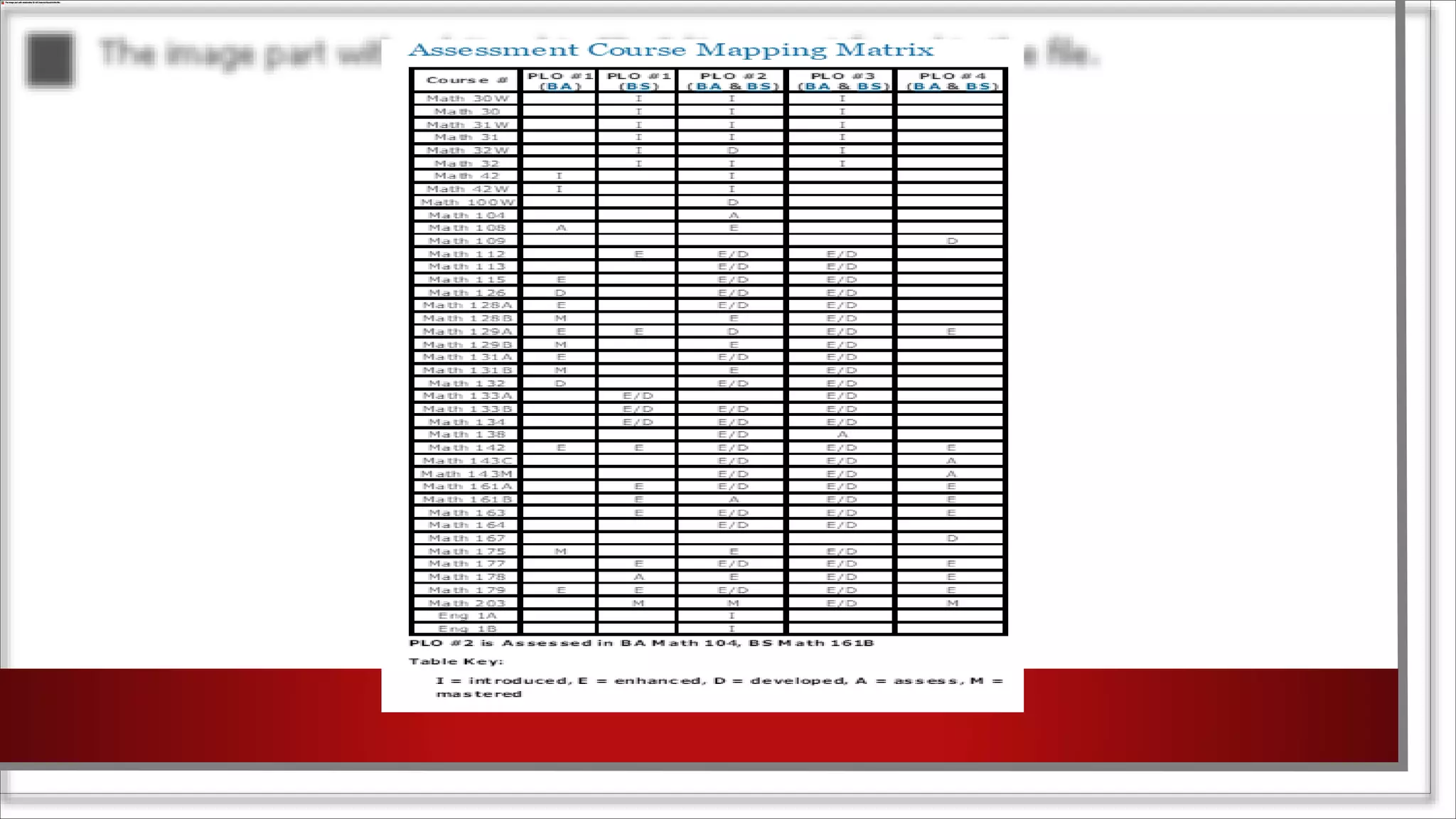


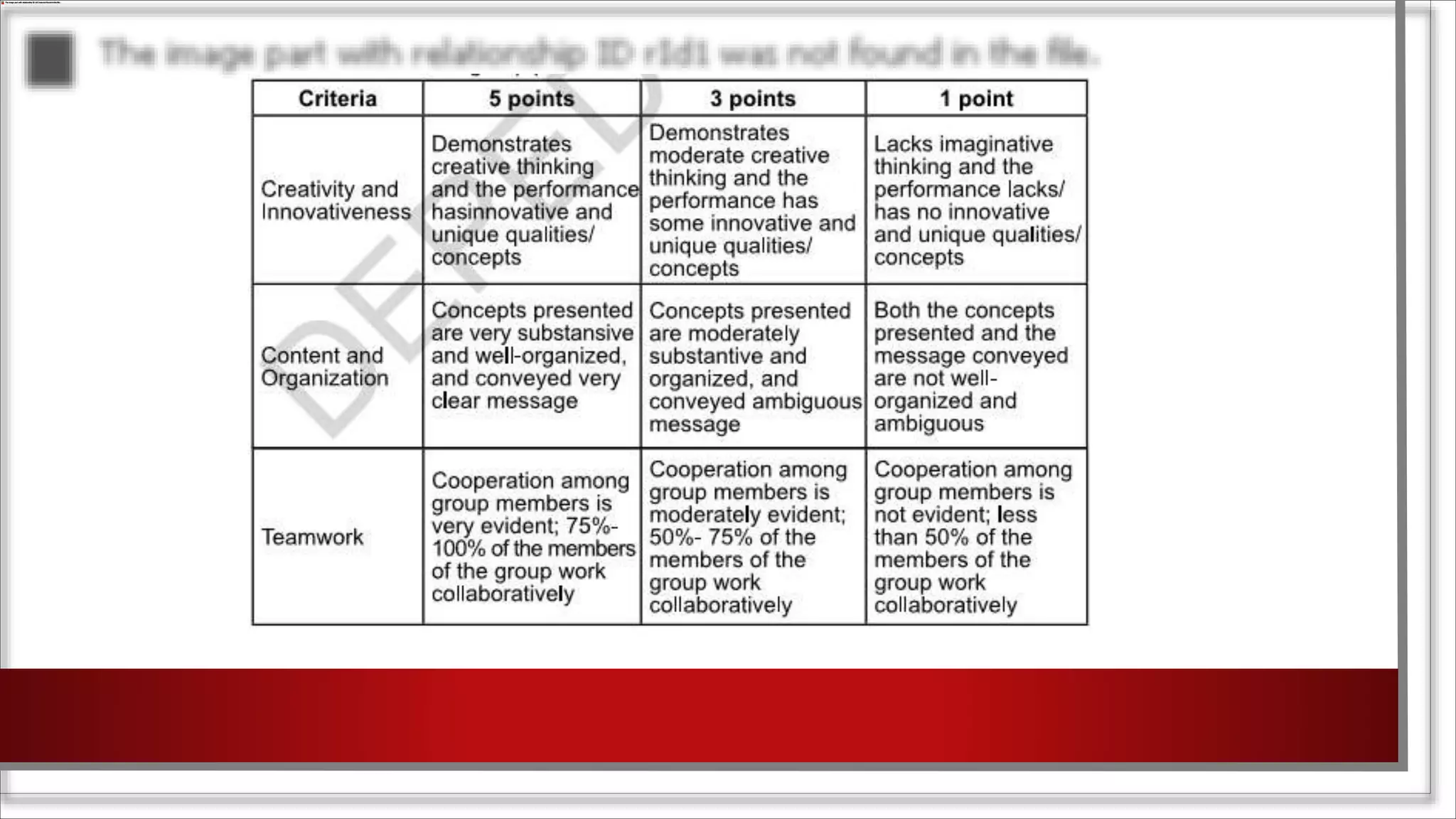






This document discusses assessment methods used to evaluate student learning outcomes. It explains that assessment methods are strategies to collect information on how well students demonstrate desired learning. Using multiple methods is important because no single method can fully reflect student achievement. Direct methods ask students to demonstrate learning while indirect methods ask students to reflect on their own learning. Examples of direct methods include capstone projects, exams, interviews, performances, portfolios, pre/post-tests, and rubrics. Indirect methods include surveys, focus groups, observations, and reflective essays. Rubrics are scoring guides that clearly define criteria and quality levels to measure student work.


