Presented by;
Mah-e-Noor
M.Yaqoob
Goals ,aims and
objectives of curriculum
Curriculum:
• It is set of activities going on inside or outside
of the school.
• It is planned set of instructions or task that
educator usually call goal objectives(Howell &
Evan).
• The activities deliberately or purposefully
planned inside or outside the school.
Aims, goals & objectives of curriculum:
• the main aim of education is to provide
education.
• Aims: the most general level.
• Goals: reflect the purpose with
outcomes in mind.
• Objectives: Reflect the most specific
levels of educational outcomes.
Aims:
• Wilson 2004 defines aim “general
statements that provide direction or
intent to educational action”.
• It gives shape to future generations.
• making ideal for good future
generation.
• Develop moral character.
• Discipline.
• encourage critical thinking.
• Technical
• Lover of humanity.
• Develop rights and duties in
citizenship.
• Awareness and respect for human
right.
• Developed ethical and spiritual values.
Aims of elementary education:
• Development of knowledge, skills,
positive attitude and development of
society.
• Changer of society.
• Love for nation.
• Developed honesty.
Aims for secondary level:
• Promotion of education.
• Discover aptitude.
• Developed skills and interest.
• Best schooling.
Aims of post secondary education:
• Promotion of identity.
• Promotion of national identity.
• Cultural, moral and spiritual identity.
• Leadership skills.
• Promotion of research and respond to
change the society.
Goals:
• According to Wilson(2005) goals are “the
statement of educational intention
which are more specific than aims”
• Purpose in general terms without criteria
of achievement.
• E.g: development of communication
skills, language skills, verbal skills.
Objectives of curriculum
Benjamin bloom and Robert magyer
defined educational objectives in two
ways:
• Explicit formulation: students are
expected to be changed by educative
process.
• Intent communicated: proposed
changed in learner.
Taba(1926) gave two types of
objectives:
• General objective:
common skills such as improving
skills.
• Specific objectives:
cognitive, affective and
psychomotor skills.
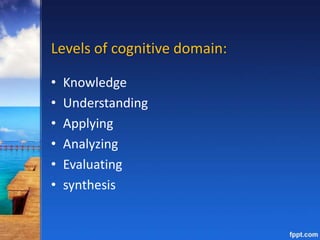
Levels of cognitive domain:
• Knowledge
• Understanding
• Applying
• Analyzing
• Evaluating
• synthesis
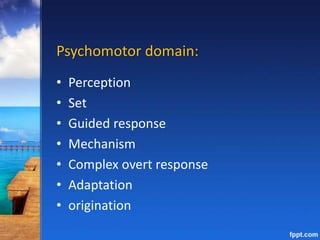
Psychomotor domain:
• Perception
• Set
• Guided response
• Mechanism
• Complex overt response
• Adaptation
• origination
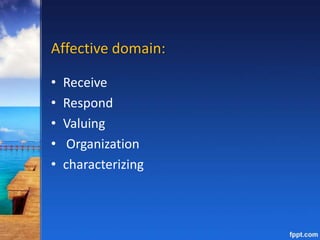
Affective domain:
• Receive
• Respond
• Valuing
• Organization
• characterizing
Thank you

Aims goals and objectives.

  • 2.
  • 3.
    Curriculum: • It isset of activities going on inside or outside of the school. • It is planned set of instructions or task that educator usually call goal objectives(Howell & Evan). • The activities deliberately or purposefully planned inside or outside the school.
  • 4.
    Aims, goals &objectives of curriculum: • the main aim of education is to provide education. • Aims: the most general level. • Goals: reflect the purpose with outcomes in mind. • Objectives: Reflect the most specific levels of educational outcomes.
  • 5.
    Aims: • Wilson 2004defines aim “general statements that provide direction or intent to educational action”. • It gives shape to future generations. • making ideal for good future generation. • Develop moral character.
  • 6.
    • Discipline. • encouragecritical thinking. • Technical • Lover of humanity. • Develop rights and duties in citizenship. • Awareness and respect for human right. • Developed ethical and spiritual values.
  • 7.
    Aims of elementaryeducation: • Development of knowledge, skills, positive attitude and development of society. • Changer of society. • Love for nation. • Developed honesty.
  • 8.
    Aims for secondarylevel: • Promotion of education. • Discover aptitude. • Developed skills and interest. • Best schooling.
  • 9.
    Aims of postsecondary education: • Promotion of identity. • Promotion of national identity. • Cultural, moral and spiritual identity. • Leadership skills. • Promotion of research and respond to change the society.
  • 10.
    Goals: • According toWilson(2005) goals are “the statement of educational intention which are more specific than aims” • Purpose in general terms without criteria of achievement. • E.g: development of communication skills, language skills, verbal skills.
  • 11.
    Objectives of curriculum Benjaminbloom and Robert magyer defined educational objectives in two ways: • Explicit formulation: students are expected to be changed by educative process. • Intent communicated: proposed changed in learner.
  • 12.
    Taba(1926) gave twotypes of objectives: • General objective: common skills such as improving skills. • Specific objectives: cognitive, affective and psychomotor skills.
  • 13.
    Levels of cognitivedomain: • Knowledge • Understanding • Applying • Analyzing • Evaluating • synthesis
  • 14.
    Psychomotor domain: • Perception •Set • Guided response • Mechanism • Complex overt response • Adaptation • origination
  • 15.
    Affective domain: • Receive •Respond • Valuing • Organization • characterizing
  • 16.