TRAINING ON OUTCOME BASED EDUCATION


            YEAR 2011
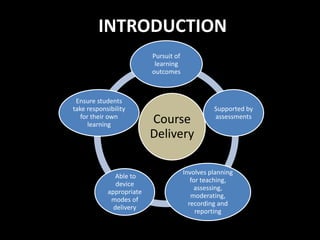
INTRODUCTION
                          Pursuit of
                           learning
                          outcomes


 Ensure students
take responsibility                              Supported by
   for their own
      learning            Course                 assessments

                          Delivery

                                       Involves planning
               Able to
                                          for teaching,
               device
                                            assessing,
            appropriate
                                          moderating,
             modes of
                                         recording and
              delivery
                                            reporting
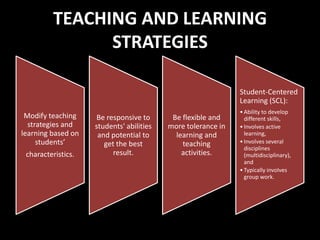
TEACHING AND LEARNING
                STRATEGIES

                                                              Student-Centered
                                                              Learning (SCL):
                                                              • Ability to develop
 Modify teaching     Be responsive to      Be flexible and      different skills,
  strategies and    students' abilities   more tolerance in   • Involves active
learning based on    and potential to       learning and        learning,
     students’         get the best           teaching        • Involves several
                                                                disciplines
 characteristics.         result.             activities.       (multidisciplinary),
                                                                and
                                                              • Typically involves
                                                                group work.
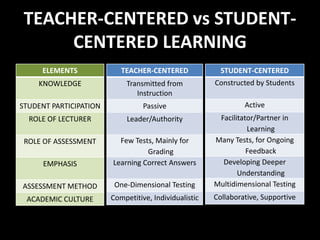
TEACHER-CENTERED vs STUDENT-
      CENTERED LEARNING
     ELEMENTS              TEACHER-CENTERED              STUDENT-CENTERED
    KNOWLEDGE                Transmitted from          Constructed by Students
                                Instruction
STUDENT PARTICIPATION             Passive                       Active
  ROLE OF LECTURER           Leader/Authority           Facilitator/Partner in
                                                                 Learning
 ROLE OF ASSESSMENT       Few Tests, Mainly for        Many Tests, for Ongoing
                                  Grading                        Feedback
      EMPHASIS          Learning Correct Answers         Developing Deeper
                                                              Understanding
ASSESSMENT METHOD        One-Dimensional Testing       Multidimensional Testing
 ACADEMIC CULTURE       Competitive, Individualistic   Collaborative, Supportive
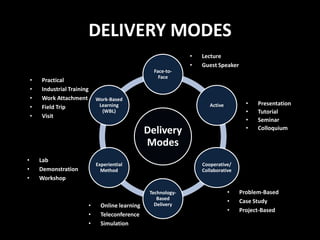
DELIVERY MODES
                                                                     •   Lecture
                                                                     •   Guest Speaker
                                                        Face-to-
                                                          Face
    •   Practical
    •   Industrial Training
    •   Work Attachment           Work-Based
                                   Learning                                 Active         •   Presentation
    •   Field Trip
                                    (WBL)                                                  •   Tutorial
    •   Visit
                                                                                           •   Seminar
                                                                                           •
                                                      Delivery                                 Colloquium

                                                      Modes
•       Lab
                                  Experiential                           Cooperative/
•       Demonstration               Method                               Collaborative
•       Workshop

                                                       Technology-                   •   Problem-Based
                                                          Based
                                                                                     •   Case Study
                              •     Online learning      Delivery
                                                                                     •   Project-Based
                              •     Teleconference
                              •     Simulation
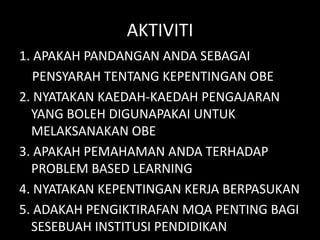
AKTIVITI
1. APAKAH PANDANGAN ANDA SEBAGAI
   PENSYARAH TENTANG KEPENTINGAN OBE
2. NYATAKAN KAEDAH-KAEDAH PENGAJARAN
  YANG BOLEH DIGUNAPAKAI UNTUK
  MELAKSANAKAN OBE
3. APAKAH PEMAHAMAN ANDA TERHADAP
  PROBLEM BASED LEARNING
4. NYATAKAN KEPENTINGAN KERJA BERPASUKAN
5. ADAKAH PENGIKTIRAFAN MQA PENTING BAGI
  SESEBUAH INSTITUSI PENDIDIKAN
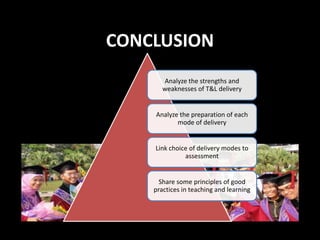
CONCLUSION
       Analyze the strengths and
       weaknesses of T&L delivery


    Analyze the preparation of each
           mode of delivery


    Link choice of delivery modes to
              assessment


      Share some principles of good
    practices in teaching and learning

T&l lo1

  • 1.
    TRAINING ON OUTCOMEBASED EDUCATION YEAR 2011
  • 2.
    INTRODUCTION Pursuit of learning outcomes Ensure students take responsibility Supported by for their own learning Course assessments Delivery Involves planning Able to for teaching, device assessing, appropriate moderating, modes of recording and delivery reporting
  • 3.
    TEACHING AND LEARNING STRATEGIES Student-Centered Learning (SCL): • Ability to develop Modify teaching Be responsive to Be flexible and different skills, strategies and students' abilities more tolerance in • Involves active learning based on and potential to learning and learning, students’ get the best teaching • Involves several disciplines characteristics. result. activities. (multidisciplinary), and • Typically involves group work.
  • 4.
    TEACHER-CENTERED vs STUDENT- CENTERED LEARNING ELEMENTS TEACHER-CENTERED STUDENT-CENTERED KNOWLEDGE Transmitted from Constructed by Students Instruction STUDENT PARTICIPATION Passive Active ROLE OF LECTURER Leader/Authority Facilitator/Partner in Learning ROLE OF ASSESSMENT Few Tests, Mainly for Many Tests, for Ongoing Grading Feedback EMPHASIS Learning Correct Answers Developing Deeper Understanding ASSESSMENT METHOD One-Dimensional Testing Multidimensional Testing ACADEMIC CULTURE Competitive, Individualistic Collaborative, Supportive
  • 5.
    DELIVERY MODES • Lecture • Guest Speaker Face-to- Face • Practical • Industrial Training • Work Attachment Work-Based Learning Active • Presentation • Field Trip (WBL) • Tutorial • Visit • Seminar • Delivery Colloquium Modes • Lab Experiential Cooperative/ • Demonstration Method Collaborative • Workshop Technology- • Problem-Based Based • Case Study • Online learning Delivery • Project-Based • Teleconference • Simulation
  • 6.
    AKTIVITI 1. APAKAH PANDANGANANDA SEBAGAI PENSYARAH TENTANG KEPENTINGAN OBE 2. NYATAKAN KAEDAH-KAEDAH PENGAJARAN YANG BOLEH DIGUNAPAKAI UNTUK MELAKSANAKAN OBE 3. APAKAH PEMAHAMAN ANDA TERHADAP PROBLEM BASED LEARNING 4. NYATAKAN KEPENTINGAN KERJA BERPASUKAN 5. ADAKAH PENGIKTIRAFAN MQA PENTING BAGI SESEBUAH INSTITUSI PENDIDIKAN
  • 7.
    CONCLUSION Analyze the strengths and weaknesses of T&L delivery Analyze the preparation of each mode of delivery Link choice of delivery modes to assessment Share some principles of good practices in teaching and learning