Chapter 1: What will I do to establish and communicate learning goals, track students’ progress, and
                                              celebrate success?
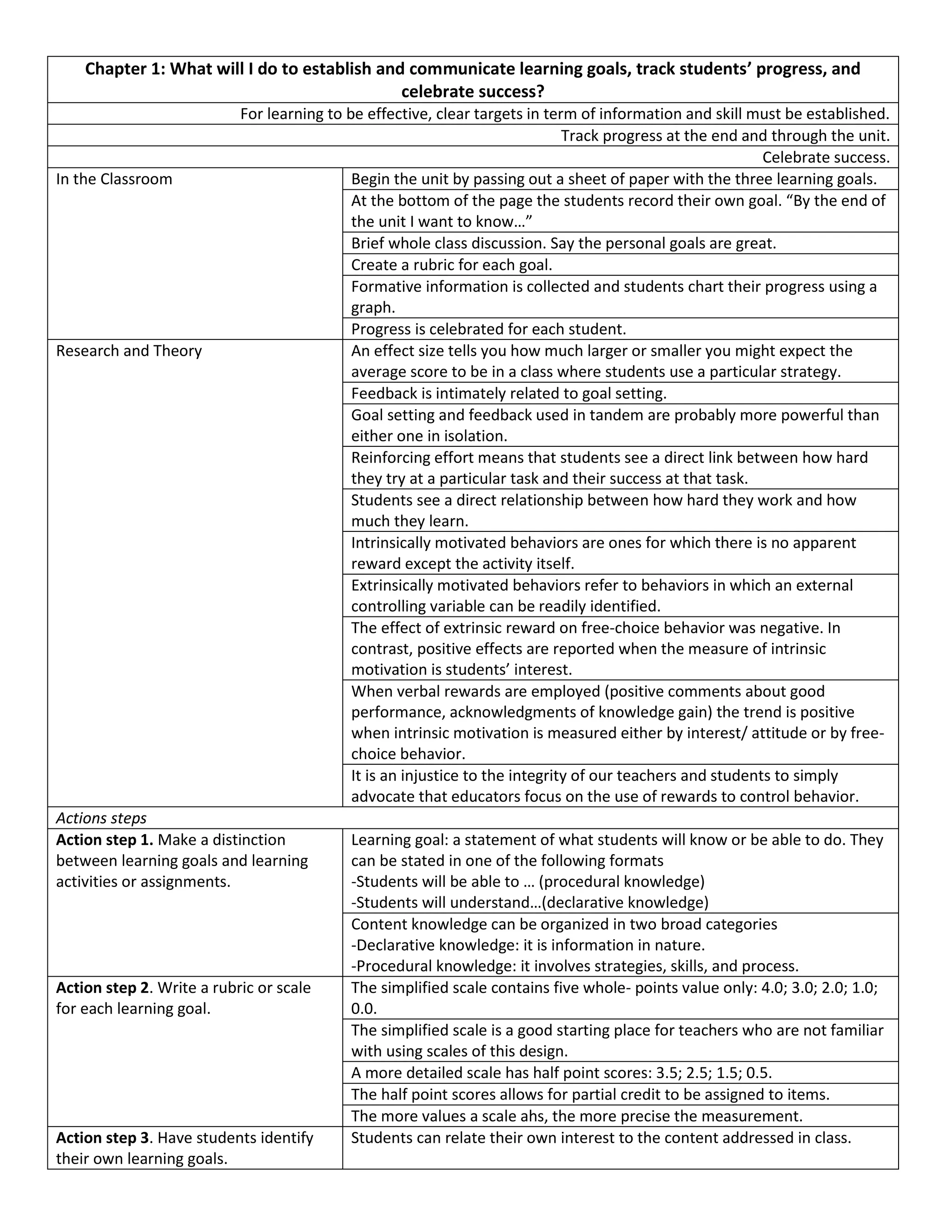
                           For learning to be effective, clear targets in term of information and skill must be established.
                                                                              Track progress at the end and through the unit.
                                                                                                           Celebrate success.
In the Classroom                            Begin the unit by passing out a sheet of paper with the three learning goals.
                                            At the bottom of the page the students record their own goal. “By the end of
                                            the unit I want to know…”
                                            Brief whole class discussion. Say the personal goals are great.
                                            Create a rubric for each goal.
                                            Formative information is collected and students chart their progress using a
                                            graph.
                                            Progress is celebrated for each student.
Research and Theory                         An effect size tells you how much larger or smaller you might expect the
                                            average score to be in a class where students use a particular strategy.
                                            Feedback is intimately related to goal setting.
                                            Goal setting and feedback used in tandem are probably more powerful than
                                            either one in isolation.
                                            Reinforcing effort means that students see a direct link between how hard
                                            they try at a particular task and their success at that task.
                                            Students see a direct relationship between how hard they work and how
                                            much they learn.
                                            Intrinsically motivated behaviors are ones for which there is no apparent
                                            reward except the activity itself.
                                            Extrinsically motivated behaviors refer to behaviors in which an external
                                            controlling variable can be readily identified.
                                            The effect of extrinsic reward on free-choice behavior was negative. In
                                            contrast, positive effects are reported when the measure of intrinsic
                                            motivation is students’ interest.
                                            When verbal rewards are employed (positive comments about good
                                            performance, acknowledgments of knowledge gain) the trend is positive
                                            when intrinsic motivation is measured either by interest/ attitude or by free-
                                            choice behavior.
                                            It is an injustice to the integrity of our teachers and students to simply
                                            advocate that educators focus on the use of rewards to control behavior.
Actions steps
Action step 1. Make a distinction          Learning goal: a statement of what students will know or be able to do. They
between learning goals and learning        can be stated in one of the following formats
activities or assignments.                 -Students will be able to … (procedural knowledge)
                                           -Students will understand…(declarative knowledge)
                                           Content knowledge can be organized in two broad categories
                                           -Declarative knowledge: it is information in nature.
                                           -Procedural knowledge: it involves strategies, skills, and process.
Action step 2. Write a rubric or scale     The simplified scale contains five whole- points value only: 4.0; 3.0; 2.0; 1.0;
for each learning goal.                    0.0.
                                           The simplified scale is a good starting place for teachers who are not familiar
                                           with using scales of this design.
                                           A more detailed scale has half point scores: 3.5; 2.5; 1.5; 0.5.
                                           The half point scores allows for partial credit to be assigned to items.
                                           The more values a scale ahs, the more precise the measurement.
Action step 3. Have students identify      Students can relate their own interest to the content addressed in class.
their own learning goals.
Students personal goals
                                            -When this unit is completed I will better understand…
                                            -When this unit is completed I will be able to…
                                            They can scale their own progress with a simplified scale.
Action step 4. Assess students using a      It allows students to observe their own progress.
formative approach.                         It is used while students are learning new content.
                                            Examining the gradual increase in knowledge for specific learning goals
                                            throughout a unit.
Action step 5. Have students chart their     Identify the progress they wish to make and willing to do to make that
progress on each learning goal.             progress.
Action step 6. Recognize and celebrate      See their progress in time.
growth                                       Focusing on knowledge gain also provides a legitimate way to recognize and
                                            celebrate (like with a round of applause).


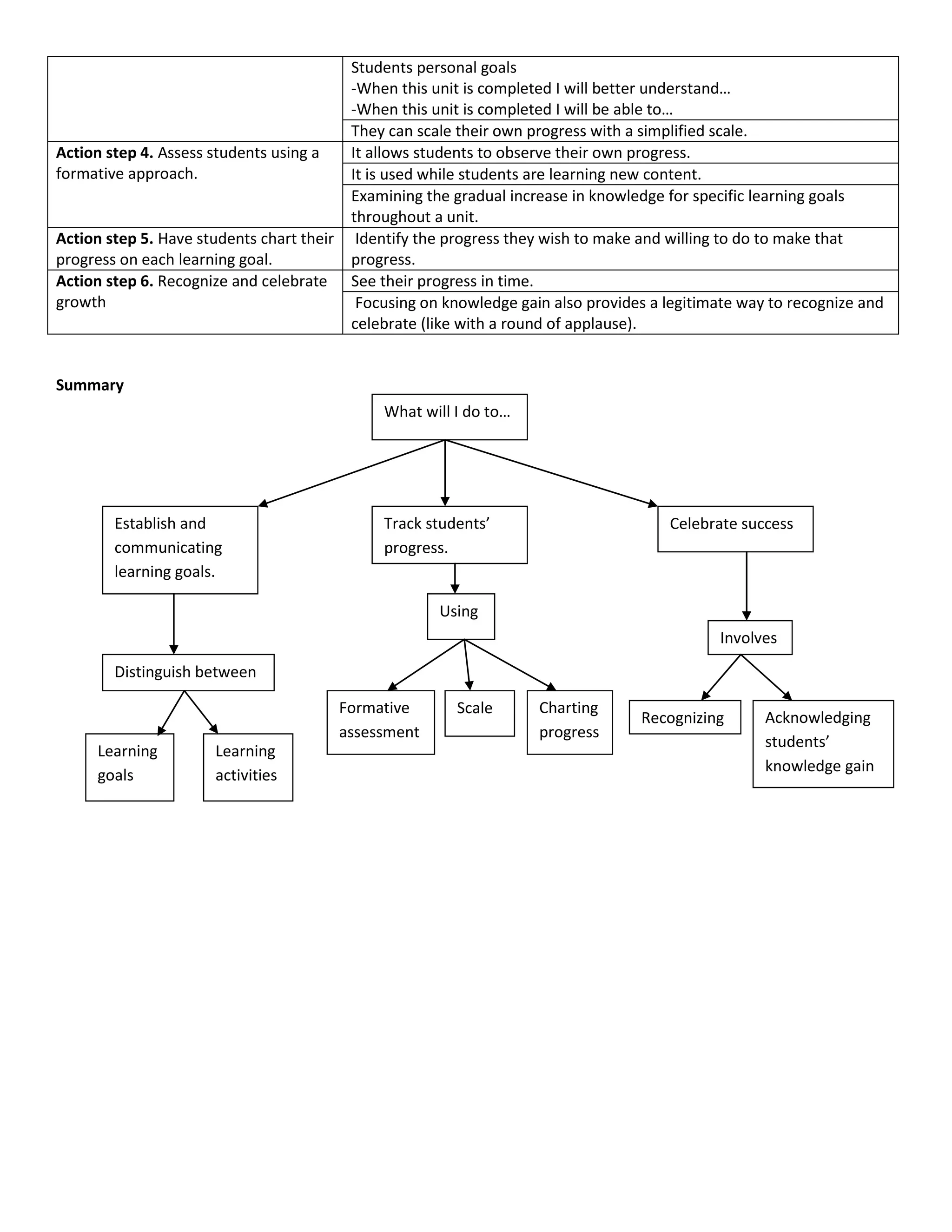
Summary
                                                What will I do to…


        Establish and                           Track students’                         Celebrate success
        communicating                           progress.
        learning goals.

                                                        Using
                                                                                               Involves
        Distinguish between

                                           Formative      Scale       Charting
                                                                                    Recognizing       Acknowledging
                                           assessment                 progress
                                                                                                      students’
      Learning        Learning
                                                                                                      knowledge gain
      goals           activities

Chapter 1 marzano

  • 1.
    Chapter 1: Whatwill I do to establish and communicate learning goals, track students’ progress, and celebrate success? For learning to be effective, clear targets in term of information and skill must be established. Track progress at the end and through the unit. Celebrate success. In the Classroom Begin the unit by passing out a sheet of paper with the three learning goals. At the bottom of the page the students record their own goal. “By the end of the unit I want to know…” Brief whole class discussion. Say the personal goals are great. Create a rubric for each goal. Formative information is collected and students chart their progress using a graph. Progress is celebrated for each student. Research and Theory An effect size tells you how much larger or smaller you might expect the average score to be in a class where students use a particular strategy. Feedback is intimately related to goal setting. Goal setting and feedback used in tandem are probably more powerful than either one in isolation. Reinforcing effort means that students see a direct link between how hard they try at a particular task and their success at that task. Students see a direct relationship between how hard they work and how much they learn. Intrinsically motivated behaviors are ones for which there is no apparent reward except the activity itself. Extrinsically motivated behaviors refer to behaviors in which an external controlling variable can be readily identified. The effect of extrinsic reward on free-choice behavior was negative. In contrast, positive effects are reported when the measure of intrinsic motivation is students’ interest. When verbal rewards are employed (positive comments about good performance, acknowledgments of knowledge gain) the trend is positive when intrinsic motivation is measured either by interest/ attitude or by free- choice behavior. It is an injustice to the integrity of our teachers and students to simply advocate that educators focus on the use of rewards to control behavior. Actions steps Action step 1. Make a distinction Learning goal: a statement of what students will know or be able to do. They between learning goals and learning can be stated in one of the following formats activities or assignments. -Students will be able to … (procedural knowledge) -Students will understand…(declarative knowledge) Content knowledge can be organized in two broad categories -Declarative knowledge: it is information in nature. -Procedural knowledge: it involves strategies, skills, and process. Action step 2. Write a rubric or scale The simplified scale contains five whole- points value only: 4.0; 3.0; 2.0; 1.0; for each learning goal. 0.0. The simplified scale is a good starting place for teachers who are not familiar with using scales of this design. A more detailed scale has half point scores: 3.5; 2.5; 1.5; 0.5. The half point scores allows for partial credit to be assigned to items. The more values a scale ahs, the more precise the measurement. Action step 3. Have students identify Students can relate their own interest to the content addressed in class. their own learning goals.
  • 2.
    Students personal goals -When this unit is completed I will better understand… -When this unit is completed I will be able to… They can scale their own progress with a simplified scale. Action step 4. Assess students using a It allows students to observe their own progress. formative approach. It is used while students are learning new content. Examining the gradual increase in knowledge for specific learning goals throughout a unit. Action step 5. Have students chart their Identify the progress they wish to make and willing to do to make that progress on each learning goal. progress. Action step 6. Recognize and celebrate See their progress in time. growth Focusing on knowledge gain also provides a legitimate way to recognize and celebrate (like with a round of applause). Summary What will I do to… Establish and Track students’ Celebrate success communicating progress. learning goals. Using Involves Distinguish between Formative Scale Charting Recognizing Acknowledging assessment progress students’ Learning Learning knowledge gain goals activities