Dept of Urology
Govt Royapettah Hospital and Kilpauk Medical College
Chennai
1
Moderators:
Professors:
 Prof. Dr. G. Sivasankar, M.S., M.Ch.,
 Prof. Dr. A. Senthilvel, M.S., M.Ch.,
Asst Professors:
 Dr. J. Sivabalan, M.S., M.Ch.,
 Dr. R. Bhargavi, M.S., M.Ch.,
 Dr. S. Raju, M.S., M.Ch.,
 Dr. K. Muthurathinam, M.S., M.Ch.,
 Dr. D. Tamilselvan, M.S., M.Ch.,
 Dr. K. Senthilkumar, M.S., M.Ch.
Dept Of Urology, KMC and GRH, Chennai 2
BOTULINUM TOXIN
 Botulinum toxin - produced by bacterium
clostridium botulinum
 Causative agent - Botulism
 Gram positive bacillus, noncapsulated, fastidious,
produce subterminal spores
 Seven antigenically distinct botulinum toxins
- A to G
Dept Of Urology, KMC and GRH, Chennai 3
 BoNT - synthesized as single chain POLYPEPTIDE
M.W -150 KD
 Cleaved to form the dichain molecule ( light and
heavy chain) with a disulfide bridge
Dept Of Urology, KMC and GRH, Chennai 4
 Light chain - acts as a zinc
endopeptidase with proteolytic activity
located at the N-terminal end
 Heavy chain - provides cholinergic
specificity and responsible for binding the
toxin to presynaptic receptors
 Promotes light-chain translocation
across the endosomal membrane.
Dept Of Urology, KMC and GRH, Chennai 5
MECHANISM OF ACTION
 Inhibit acetyl choline release at presynaptic
cholinergic nerve terminal , there by inhibit striated
& smooth muscle contractions
 Ach release from bladder parasympathetic efferent
terminals – primary target of BoNT
 Four steps - Required for toxin induced paralysis
Dept Of Urology, KMC and GRH, Chennai 6
Dept Of Urology, KMC and GRH, Chennai 7
BINDING OF TOXIN HEAVY CHAIN
TO NERVE TERMINAL RECEPTOR
 Heavy chain of the toxin
- particularly important
for targeting the toxin to
specific types of axon
terminals
 Toxin must get inside
the axon terminals to
cause paralysis
Dept Of Urology, KMC and GRH, Chennai 8
Dept Of Urology, KMC and GRH, Chennai 9
INTERNALIZATION OF TOXIN
WITHIN NERVE TERMINAL
 Following attachment of
the toxin heavy chain to
proteins on the surface
of axon terminals, the
toxin can be taken into
neurons by endocytosis
Dept Of Urology, KMC and GRH, Chennai 10
TRANSLOCATION OF LIGHT CHAIN
INTO CYTOSOL
 Light chain able to cleave endocytotic vesicles and
reach the cytoplasm
 Light chain of the toxin - protease activity.
 Type A toxin proteolytically degrades the SNAP 25
protein a type of SNARE protein
 SNAP-25 protein is required for vesicle fusion that
releases neurotransmitters from the axon endings .
Dept Of Urology, KMC and GRH, Chennai 11
Dept Of Urology, KMC and GRH, Chennai 12
INHIBIT RELEASE OF NEURO
TRANSMITTER
 Botulinum toxin cleaves SNAREs, prevents
neurosecretory vesicles fusing with the nerve synapse
plasma membrane and releasing their
neurotransmitters
Dept Of Urology, KMC and GRH, Chennai 13
 BTX reduce type Ia /II intrafusal muscle fiber afferent
conduction ,
 Affecting spinal stretch reflex
 Decrease muscle tone & contractility without affecting
muscle strength
 Direct effect on detrusor motor innervations
Dept Of Urology, KMC and GRH, Chennai 14
 Affect afferent nervous transmission via inhibition
of Ach , ATP, glutamate, nerve growth factor &
substance P
 Modulates intrinsic bladder reflexes, results in
central desensitation, decrease in urgency.
Dept Of Urology, KMC and GRH, Chennai 15
SEROTYPES
 Seven serotypes have been isolated
 Antigenically and serologically distinct but structurally
similar.
 Subtype BoTX A and B – most clinically relevant
Dept Of Urology, KMC and GRH, Chennai 16
SIDE EFFECTS
 Dysphagia
 Muscle weakness
 Allergic reactions
 Flu like syndrome
 Ptosis
 Injection site reactions
 Respiratory compromise
Dept Of Urology, KMC and GRH, Chennai 17
Commercial Preparations
 Botox - onabotulinumtoxinA
(Allergan, Irvine, CA, USA)
 Dysport - abobotulinumtoxinA
(Ipsen Biopharm Ltd,Slough, UK)
 Xeomin - incobotulinumtoxinA
(Merz Pharmaceuticals UK Ltd, Herts, UK)
 Prosigne - Lanzhou Biological Products,
Lanzhou, China
 PurTox - (Mentor Corporation, Madison, WI, USA)
Dept Of Urology, KMC and GRH, Chennai 18
USES IN UROLOGY
 Over active bladder
 Detrusor overactivity
 Detrusor sphincter dyssynergia
 Interstitial cystitis
 Benign prostatic hyperplasia
Dept Of Urology, KMC and GRH, Chennai 19
 Intrasphincter injection in suprasacral spinal cord
injury
 Chronic abacterial prostatitis
 Children with NDO , urinary incontinence & disorders
refractory to antimuscarnic therapy
Dept Of Urology, KMC and GRH, Chennai 20
Overactive bladder
 Symptom complex characterised by urinary
urgency with or without urge urinary incontinence
 Neurogenic OAB– OAB occurs in association with a
known underlying neurogenic pathology ( spinal cord
injury, multiple sclerosis)
 Idiopathic OAB – NO evidence of any identifable
neurologic disorder
Dept Of Urology, KMC and GRH, Chennai 21
DOSAGE and CONCENTRATION
 Commonly BTX-A -- 300U
(Range 100- 400u)
 Injected in 30 sites of 10U/ml
( Range – 6.7 -25U/ml)
Dept Of Urology, KMC and GRH, Chennai 22
INJECTION TECHNIQUE
 Performed under intravenous sedation or local
anaesthesia
 Prophylatic antibiotic
 Lithotomy position
 21F rigid cystoscope and- collagen injection needle -
create submuscosal bleb under vision
Dept Of Urology, KMC and GRH, Chennai 23
 Endoscopic guidance – toxin injected into 15-30 sites
evenly distributed intramural injection including
bladder base and posterolateral walls
 Bladder dome – excluded due to intraperitoneal
perforation & bowel injury
 Trigone – spared to avoid inducing vesicoureteral
reflex
Dept Of Urology, KMC and GRH, Chennai 24
Dept Of Urology, KMC and GRH, Chennai 25
Evaluation
 Before injecting botulinum Toxin
UTI and other obvious pathology - to be
excluded
 Complete urological evaluation
 Medical history, physical examination
 Bladder diary, urine analysis
 Urine culture, urinary tract ultrasonography
 Urethro-cystoscopy, bladder washing cytology
 Urodynamic investigation
Dept Of Urology, KMC and GRH, Chennai 26
INDICATIONS
 Refractory OAB( failure to respond to behavioural
treatment )
 Failed pharmacotherapy with more than one
antimuscarinic for at least 4 weeks
Dept Of Urology, KMC and GRH, Chennai 27
PATIENT PREPARATION
 UTI - to be excluded , adequately treated according to
the antibiotic sensitivity
 Avoid aminoglycosides- may potentiate the
neuromuscular blocking effects
 Local anaesthesia - lidocaine gel instilled into the
urethra , exposed for 10 min.
 Lithotomy or supine position - depending on
cystoscope used
Dept Of Urology, KMC and GRH, Chennai 28
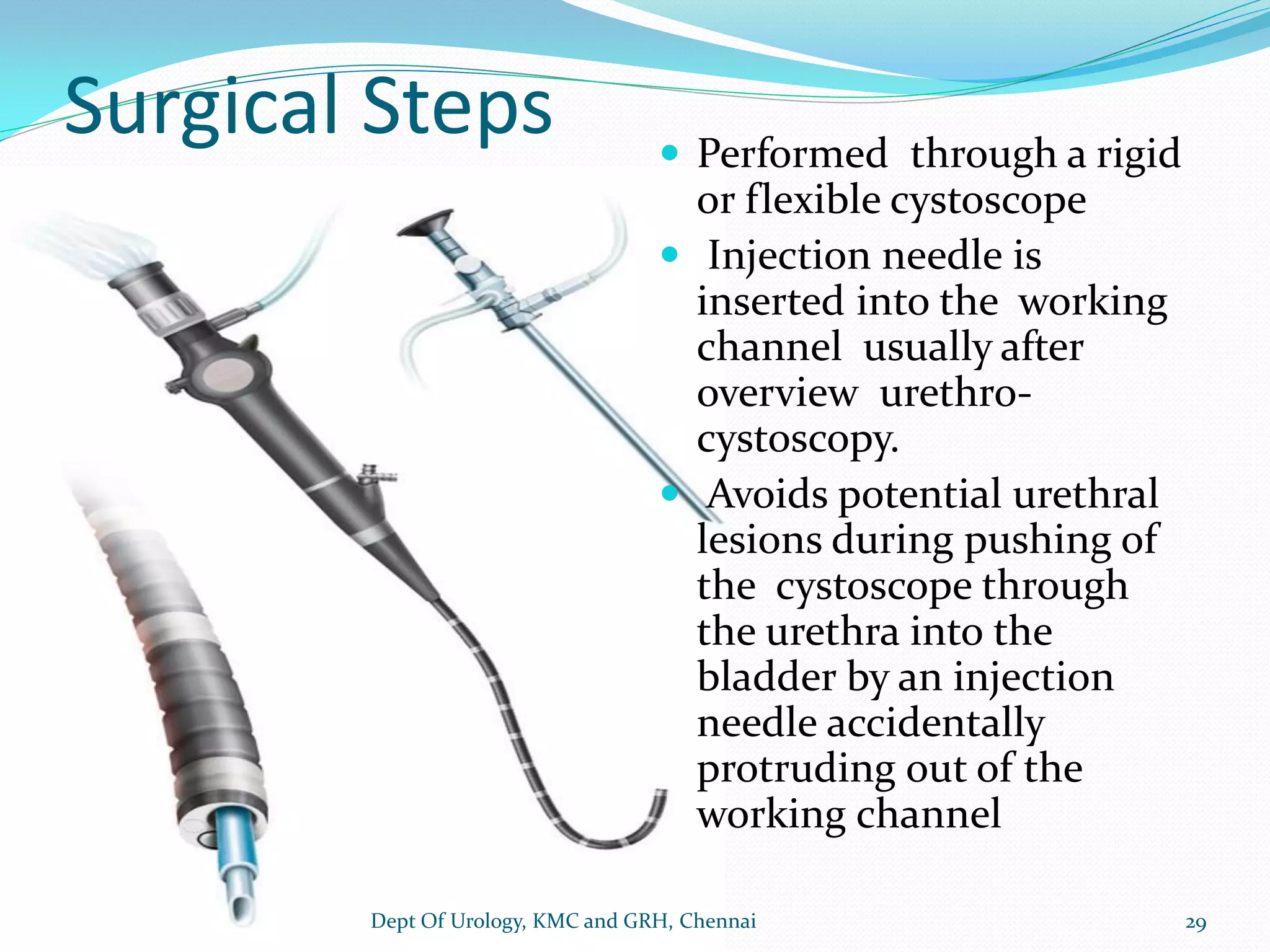
Surgical Steps  Performed through a rigid
or flexible cystoscope
 Injection needle is
inserted into the working
channel usually after
overview urethro-
cystoscopy.
 Avoids potential urethral
lesions during pushing of
the cystoscope through
the urethra into the
bladder by an injection
needle accidentally
protruding out of the
working channel
Dept Of Urology, KMC and GRH, Chennai 29
 Urethro-cystoscopy done –
exclude pathological findings
such as urethral stricture,
bladder neck sclerosis,
urethral,bladder stones, and
bladder tumours
 Addition routinely perform a
bladder washing cytology to
exclude a carcinoma in situ
Dept Of Urology, KMC and GRH, Chennai 30
 Urethrocystoscopy-
injection needle is
inserted into the
working channel and
pushed forward upon
appearance in the visual
field
Dept Of Urology, KMC and GRH, Chennai 31
 Injecting into
suburothelial layer, a
typical bubble occurs.
Dept Of Urology, KMC and GRH, Chennai 32
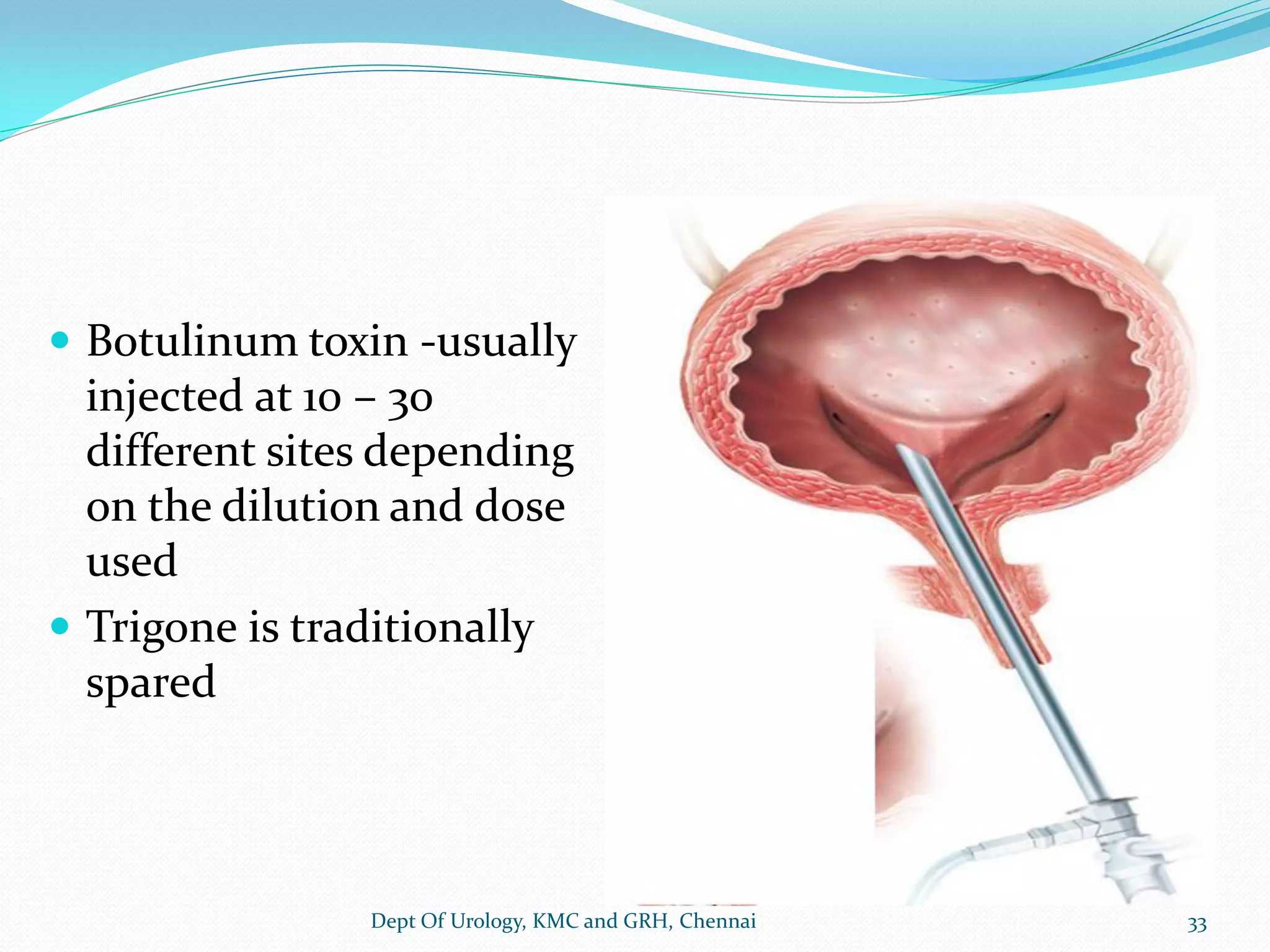
 Botulinum toxin -usually
injected at 10 – 30
different sites depending
on the dilution and dose
used
 Trigone is traditionally
spared
Dept Of Urology, KMC and GRH, Chennai 33
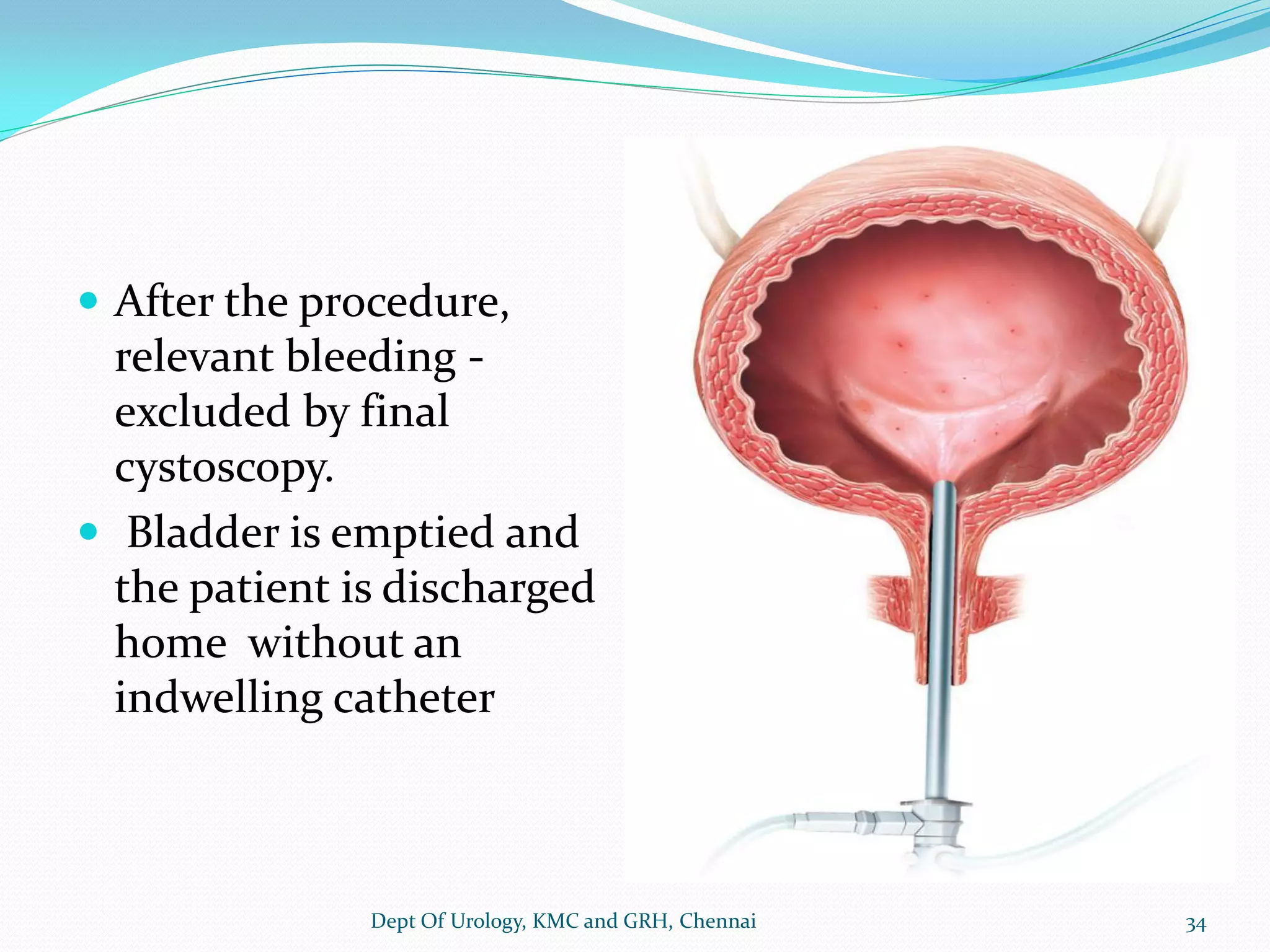
 After the procedure,
relevant bleeding -
excluded by final
cystoscopy.
 Bladder is emptied and
the patient is discharged
home without an
indwelling catheter
Dept Of Urology, KMC and GRH, Chennai 34
OUTCOMES
 Provide clinically significant benefit in adults with
neurogenic detrusor overactivity and incontinence
refractory to antimuscarnics
 Improved incontinence episodes
 Antimuscarnic agents could be discontinued in 28%
to 58 %
 Quality of life
Dept Of Urology, KMC and GRH, Chennai 35
Urodynamic outcomes
 Significant improvements
Mean cystometric bladder capacity
Mean voiding pressure
Reflex volume
Bladder compliance
Maximum detrusor pressure
Dept Of Urology, KMC and GRH, Chennai 36
 Significant response to BoTX seen early as 1week
after treatment
 Maximum effect seen between 1 to 4 week
 Efficacy appears persists - at least 3 -4 months &
upto 1 year
 Repeated injections required for continued
therapeutic effect
Dept Of Urology, KMC and GRH, Chennai 37
Neurogenic DO in children
 Most common pathology –
meningomyelocele, spinal cord tumous &
trauma
 BTX – emerged as alternative treatment to bladder
augumentation, NDO refractory to antimuscarnic
treatment
Dept Of Urology, KMC and GRH, Chennai 38
 Injection protocol – 30 to 50 inj of 5 to 12 U/kg
 Performed under GA
 similar procedure
 Follow up to 4 to 12 weeks
 Beneficial effects – clinical and urodynamic
parameters in children refractory to conservative
therapies
Dept Of Urology, KMC and GRH, Chennai 39
DETRUSOR EXTERNAL SPHINCTER
DYSSYNERGIA (DESD)
 Involuntary contraction of striated external
sphincter during detrusor contractions
 BTX – Urethralsphincteric injection
minimally invasive , decrease sustained high
voiding pressure
 Urethal BTX injections – reduces maximum urethral
pressure , maximum detrusor voiding pressure
Dept Of Urology, KMC and GRH, Chennai 40
 Chronic prostatitis/ CPPS –
injections of BoTX directly into prostate
Dept Of Urology, KMC and GRH, Chennai 41
Bladder Pain Syndrome
Interstitial cystitis
 As intravesicaL &
intradetrusor
 BoTX - useful in
refractory BPS
Dept Of Urology, KMC and GRH, Chennai 42
 BENIGN PROSTATIC HYPERPLASIA - BoNT-A
injection into prostate induced
 atrophy of the prostate by inducing apoptosis
 inhibiting proliferation
 downregulating α1A-adrenergic receptors
Dept Of Urology, KMC and GRH, Chennai 43
Suprasacral Spinal Cord Injury
 Complete lesion above the sacral spinal cord
associated
detrusor overactivity,
smooth sphincter synergia and
striated sphincter dyssynergia
 Neurologic examination - show spasticity of
skeletal muscle distal to the lesion,
hyperreflexic deep tendon reflexes
abnormal plantar responses
impairment of superficial and deep sensation
Dept Of Urology, KMC and GRH, Chennai 44
 Striated sphincter dyssynergia causes a
functional obstruction with poor emptying and
high detrusor pressure
Rx
Intrasphincteric injection of botulinum toxin
- lower the detrusor leak point
Dept Of Urology, KMC and GRH, Chennai 45
THANK YOU
THANK YOU
Dept Of Urology, KMC and GRH, Chennai 46

Uro gynacology- botox

  • 1.
    Dept of Urology GovtRoyapettah Hospital and Kilpauk Medical College Chennai 1
  • 2.
    Moderators: Professors:  Prof. Dr.G. Sivasankar, M.S., M.Ch.,  Prof. Dr. A. Senthilvel, M.S., M.Ch., Asst Professors:  Dr. J. Sivabalan, M.S., M.Ch.,  Dr. R. Bhargavi, M.S., M.Ch.,  Dr. S. Raju, M.S., M.Ch.,  Dr. K. Muthurathinam, M.S., M.Ch.,  Dr. D. Tamilselvan, M.S., M.Ch.,  Dr. K. Senthilkumar, M.S., M.Ch. Dept Of Urology, KMC and GRH, Chennai 2
  • 3.
    BOTULINUM TOXIN  Botulinumtoxin - produced by bacterium clostridium botulinum  Causative agent - Botulism  Gram positive bacillus, noncapsulated, fastidious, produce subterminal spores  Seven antigenically distinct botulinum toxins - A to G Dept Of Urology, KMC and GRH, Chennai 3
  • 4.
     BoNT -synthesized as single chain POLYPEPTIDE M.W -150 KD  Cleaved to form the dichain molecule ( light and heavy chain) with a disulfide bridge Dept Of Urology, KMC and GRH, Chennai 4
  • 5.
     Light chain- acts as a zinc endopeptidase with proteolytic activity located at the N-terminal end  Heavy chain - provides cholinergic specificity and responsible for binding the toxin to presynaptic receptors  Promotes light-chain translocation across the endosomal membrane. Dept Of Urology, KMC and GRH, Chennai 5
  • 6.
    MECHANISM OF ACTION Inhibit acetyl choline release at presynaptic cholinergic nerve terminal , there by inhibit striated & smooth muscle contractions  Ach release from bladder parasympathetic efferent terminals – primary target of BoNT  Four steps - Required for toxin induced paralysis Dept Of Urology, KMC and GRH, Chennai 6
  • 7.
    Dept Of Urology,KMC and GRH, Chennai 7
  • 8.
    BINDING OF TOXINHEAVY CHAIN TO NERVE TERMINAL RECEPTOR  Heavy chain of the toxin - particularly important for targeting the toxin to specific types of axon terminals  Toxin must get inside the axon terminals to cause paralysis Dept Of Urology, KMC and GRH, Chennai 8
  • 9.
    Dept Of Urology,KMC and GRH, Chennai 9
  • 10.
    INTERNALIZATION OF TOXIN WITHINNERVE TERMINAL  Following attachment of the toxin heavy chain to proteins on the surface of axon terminals, the toxin can be taken into neurons by endocytosis Dept Of Urology, KMC and GRH, Chennai 10
  • 11.
    TRANSLOCATION OF LIGHTCHAIN INTO CYTOSOL  Light chain able to cleave endocytotic vesicles and reach the cytoplasm  Light chain of the toxin - protease activity.  Type A toxin proteolytically degrades the SNAP 25 protein a type of SNARE protein  SNAP-25 protein is required for vesicle fusion that releases neurotransmitters from the axon endings . Dept Of Urology, KMC and GRH, Chennai 11
  • 12.
    Dept Of Urology,KMC and GRH, Chennai 12
  • 13.
    INHIBIT RELEASE OFNEURO TRANSMITTER  Botulinum toxin cleaves SNAREs, prevents neurosecretory vesicles fusing with the nerve synapse plasma membrane and releasing their neurotransmitters Dept Of Urology, KMC and GRH, Chennai 13
  • 14.
     BTX reducetype Ia /II intrafusal muscle fiber afferent conduction ,  Affecting spinal stretch reflex  Decrease muscle tone & contractility without affecting muscle strength  Direct effect on detrusor motor innervations Dept Of Urology, KMC and GRH, Chennai 14
  • 15.
     Affect afferentnervous transmission via inhibition of Ach , ATP, glutamate, nerve growth factor & substance P  Modulates intrinsic bladder reflexes, results in central desensitation, decrease in urgency. Dept Of Urology, KMC and GRH, Chennai 15
  • 16.
    SEROTYPES  Seven serotypeshave been isolated  Antigenically and serologically distinct but structurally similar.  Subtype BoTX A and B – most clinically relevant Dept Of Urology, KMC and GRH, Chennai 16
  • 17.
    SIDE EFFECTS  Dysphagia Muscle weakness  Allergic reactions  Flu like syndrome  Ptosis  Injection site reactions  Respiratory compromise Dept Of Urology, KMC and GRH, Chennai 17
  • 18.
    Commercial Preparations  Botox- onabotulinumtoxinA (Allergan, Irvine, CA, USA)  Dysport - abobotulinumtoxinA (Ipsen Biopharm Ltd,Slough, UK)  Xeomin - incobotulinumtoxinA (Merz Pharmaceuticals UK Ltd, Herts, UK)  Prosigne - Lanzhou Biological Products, Lanzhou, China  PurTox - (Mentor Corporation, Madison, WI, USA) Dept Of Urology, KMC and GRH, Chennai 18
  • 19.
    USES IN UROLOGY Over active bladder  Detrusor overactivity  Detrusor sphincter dyssynergia  Interstitial cystitis  Benign prostatic hyperplasia Dept Of Urology, KMC and GRH, Chennai 19
  • 20.
     Intrasphincter injectionin suprasacral spinal cord injury  Chronic abacterial prostatitis  Children with NDO , urinary incontinence & disorders refractory to antimuscarnic therapy Dept Of Urology, KMC and GRH, Chennai 20
  • 21.
    Overactive bladder  Symptomcomplex characterised by urinary urgency with or without urge urinary incontinence  Neurogenic OAB– OAB occurs in association with a known underlying neurogenic pathology ( spinal cord injury, multiple sclerosis)  Idiopathic OAB – NO evidence of any identifable neurologic disorder Dept Of Urology, KMC and GRH, Chennai 21
  • 22.
    DOSAGE and CONCENTRATION Commonly BTX-A -- 300U (Range 100- 400u)  Injected in 30 sites of 10U/ml ( Range – 6.7 -25U/ml) Dept Of Urology, KMC and GRH, Chennai 22
  • 23.
    INJECTION TECHNIQUE  Performedunder intravenous sedation or local anaesthesia  Prophylatic antibiotic  Lithotomy position  21F rigid cystoscope and- collagen injection needle - create submuscosal bleb under vision Dept Of Urology, KMC and GRH, Chennai 23
  • 24.
     Endoscopic guidance– toxin injected into 15-30 sites evenly distributed intramural injection including bladder base and posterolateral walls  Bladder dome – excluded due to intraperitoneal perforation & bowel injury  Trigone – spared to avoid inducing vesicoureteral reflex Dept Of Urology, KMC and GRH, Chennai 24
  • 25.
    Dept Of Urology,KMC and GRH, Chennai 25
  • 26.
    Evaluation  Before injectingbotulinum Toxin UTI and other obvious pathology - to be excluded  Complete urological evaluation  Medical history, physical examination  Bladder diary, urine analysis  Urine culture, urinary tract ultrasonography  Urethro-cystoscopy, bladder washing cytology  Urodynamic investigation Dept Of Urology, KMC and GRH, Chennai 26
  • 27.
    INDICATIONS  Refractory OAB(failure to respond to behavioural treatment )  Failed pharmacotherapy with more than one antimuscarinic for at least 4 weeks Dept Of Urology, KMC and GRH, Chennai 27
  • 28.
    PATIENT PREPARATION  UTI- to be excluded , adequately treated according to the antibiotic sensitivity  Avoid aminoglycosides- may potentiate the neuromuscular blocking effects  Local anaesthesia - lidocaine gel instilled into the urethra , exposed for 10 min.  Lithotomy or supine position - depending on cystoscope used Dept Of Urology, KMC and GRH, Chennai 28
  • 29.
    Surgical Steps Performed through a rigid or flexible cystoscope  Injection needle is inserted into the working channel usually after overview urethro- cystoscopy.  Avoids potential urethral lesions during pushing of the cystoscope through the urethra into the bladder by an injection needle accidentally protruding out of the working channel Dept Of Urology, KMC and GRH, Chennai 29
  • 30.
     Urethro-cystoscopy done– exclude pathological findings such as urethral stricture, bladder neck sclerosis, urethral,bladder stones, and bladder tumours  Addition routinely perform a bladder washing cytology to exclude a carcinoma in situ Dept Of Urology, KMC and GRH, Chennai 30
  • 31.
     Urethrocystoscopy- injection needleis inserted into the working channel and pushed forward upon appearance in the visual field Dept Of Urology, KMC and GRH, Chennai 31
  • 32.
     Injecting into suburotheliallayer, a typical bubble occurs. Dept Of Urology, KMC and GRH, Chennai 32
  • 33.
     Botulinum toxin-usually injected at 10 – 30 different sites depending on the dilution and dose used  Trigone is traditionally spared Dept Of Urology, KMC and GRH, Chennai 33
  • 34.
     After theprocedure, relevant bleeding - excluded by final cystoscopy.  Bladder is emptied and the patient is discharged home without an indwelling catheter Dept Of Urology, KMC and GRH, Chennai 34
  • 35.
    OUTCOMES  Provide clinicallysignificant benefit in adults with neurogenic detrusor overactivity and incontinence refractory to antimuscarnics  Improved incontinence episodes  Antimuscarnic agents could be discontinued in 28% to 58 %  Quality of life Dept Of Urology, KMC and GRH, Chennai 35
  • 36.
    Urodynamic outcomes  Significantimprovements Mean cystometric bladder capacity Mean voiding pressure Reflex volume Bladder compliance Maximum detrusor pressure Dept Of Urology, KMC and GRH, Chennai 36
  • 37.
     Significant responseto BoTX seen early as 1week after treatment  Maximum effect seen between 1 to 4 week  Efficacy appears persists - at least 3 -4 months & upto 1 year  Repeated injections required for continued therapeutic effect Dept Of Urology, KMC and GRH, Chennai 37
  • 38.
    Neurogenic DO inchildren  Most common pathology – meningomyelocele, spinal cord tumous & trauma  BTX – emerged as alternative treatment to bladder augumentation, NDO refractory to antimuscarnic treatment Dept Of Urology, KMC and GRH, Chennai 38
  • 39.
     Injection protocol– 30 to 50 inj of 5 to 12 U/kg  Performed under GA  similar procedure  Follow up to 4 to 12 weeks  Beneficial effects – clinical and urodynamic parameters in children refractory to conservative therapies Dept Of Urology, KMC and GRH, Chennai 39
  • 40.
    DETRUSOR EXTERNAL SPHINCTER DYSSYNERGIA(DESD)  Involuntary contraction of striated external sphincter during detrusor contractions  BTX – Urethralsphincteric injection minimally invasive , decrease sustained high voiding pressure  Urethal BTX injections – reduces maximum urethral pressure , maximum detrusor voiding pressure Dept Of Urology, KMC and GRH, Chennai 40
  • 41.
     Chronic prostatitis/CPPS – injections of BoTX directly into prostate Dept Of Urology, KMC and GRH, Chennai 41
  • 42.
    Bladder Pain Syndrome Interstitialcystitis  As intravesicaL & intradetrusor  BoTX - useful in refractory BPS Dept Of Urology, KMC and GRH, Chennai 42
  • 43.
     BENIGN PROSTATICHYPERPLASIA - BoNT-A injection into prostate induced  atrophy of the prostate by inducing apoptosis  inhibiting proliferation  downregulating α1A-adrenergic receptors Dept Of Urology, KMC and GRH, Chennai 43
  • 44.
    Suprasacral Spinal CordInjury  Complete lesion above the sacral spinal cord associated detrusor overactivity, smooth sphincter synergia and striated sphincter dyssynergia  Neurologic examination - show spasticity of skeletal muscle distal to the lesion, hyperreflexic deep tendon reflexes abnormal plantar responses impairment of superficial and deep sensation Dept Of Urology, KMC and GRH, Chennai 44
  • 45.
     Striated sphincterdyssynergia causes a functional obstruction with poor emptying and high detrusor pressure Rx Intrasphincteric injection of botulinum toxin - lower the detrusor leak point Dept Of Urology, KMC and GRH, Chennai 45
  • 46.
    THANK YOU THANK YOU DeptOf Urology, KMC and GRH, Chennai 46