Case Scenario!
•

A 45 year old man awoke from sleep with a painful and swollen right
great toe. On the previous night he had a meal of fried liver and
onions, after which he met with his poker group and drank a number
of beers.
• He saw his doctor that morning and some tests were ordered. His
serum uric acid level was elevated at 8.0 mg/dl. (What is normal
value?)
• The man recalled that his father and his grandfather, both of whom
were alcoholics, often complained of joint pain and swelling in their
feet.
•

What can be his probable diagnosis?

Gouty Arthritis
Uric Acid
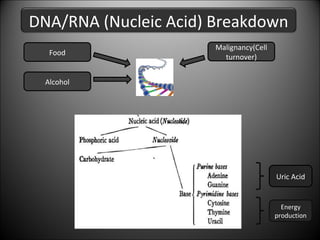
DNA/RNA (Nucleic Acid) Breakdown
Food

Malignancy(Cell
turnover)

Alcohol

Uric Acid

Energy
production
DNA/RNA (Nucleic Acid) Breakdown

pancreatic nucleases, non-specific
phosphatases , intestinal
phosphodiesterases, nucleotidase

Adenosine,
Guanosine,
Thymidine,
Cytidine,
Uridine

Intestine
Intestine
Nucleic Acid

Nucleosides
Purine Catabolism and
the necessary enzymes.
PRPP Synthetase

DNA/RNA
Breakdown

Adenine phosphoribosyl transferase (APRT)
Hypoxanthine-Guanine phosphoribosyl transferase
(HGPRT)
Degradation of Pyrimidines
1. CMP and UMP degraded to bases similarly to purines.
A. Dephosphorylation
B. Deamination
C. Glycosidic bond cleavage
2. Uracil reduced in liver, forming β-Alanine
3. Converted to malonyl-CoA
energy metabolism

fatty acid synthesis for
Important points about Uric Acid
1. Final breakdown product of purine degradation in humans.
2. Urates, the ionized forms of uric acid, predominate in
plasma extracellular fluid and synovial fluid, with ~98%
existing as monosodium urate at pH 7.4.
3. Urate is produced only in tissues that contain xanthine
oxidase, primarily the liver and small intestine.
4. Two-thirds to three-fourths of urate is excreted by the
kidneys, and most of the remainder is eliminated through
the intestines.
Important points about Uric Acid (Contd..)
1.Daily synthesis 400mg
2.Dietary sources 300mg
3.Normal uric acid pool: 1200mg in males and 600mg in
females.
4.75% excreted in urine, remainder in GIT where it’s degraded
to Allantoin by bacterial enzymes.
Hyperuricemia
Defined as a plasma urate concentration > 7.0 mg/dl
Increased production of uric acid

Primary

• Adenine phosphoribosyl
transferase (APRT)
• Hypoxanthine-Guanine
phosphoribosyl
transferase [Lesch-Nyhan
Syndrome]
• Increased phosphoribosyl
pyrophosphatase activity.

Secondary

• Myeloproliferative
disease
• Lymphoproliferative
disease
• Hemolitic anemia
• Drugs:
Low-doses
salicylate,
diuretis,
pyrazinamide,
ethambutol,
nicotinamide,
ethanol,
cytotoxic
drugs.

Decreased excretion of uric acid

• Alterated uric acid excretion could result
from decreased glomerular filtration,
decreased tubular secretion or enhanced
tubular reabsorption.
• Diabetic ketoacidosis, starvation,
lactic
acidosis, and salicylate intoxication are
accompanied by accumulations of organic
acids
(B-hydroxybutyrate, acetoacetate,
lactate or salicylates) that compete with
urate for tubular secretion.
Lesch-Nyhan Syndrome
 A defect in production or activity of HGPRT
Causes increased level of hypoxanthine and Guanine (↑ in
degradation to uric acid)
 Also,PRPP accumulates.
Stimulates production of purine nucleotides (and thereby increases
their degradation)
 Causes gout-like symptoms, but also neurological symptoms 
spasticity, aggressiveness, self-mutilation, head banging.
 First neuropsychiatric abnormality that was attributed to a single
enzyme.
 Up to 20 times the uric acid in the urine than in normal individuals.
Uric acid crystals form in the urine.
 Life expectancy is early- to mid-20s.
ADENOSINE DEAMINASE DEFICIENCY
 In purine degradation, adenosine
 ADA deficiency results
immunodeficiency”

in

inosine enzyme is ADA.
SCID

“severe

combined

 Selectively kills lymphocytes - both b- and t-cells.
 Mediate much of immune response.
 One of first diseases to be treated with gene therapy.
 ADA gene inserted into lymphocytes; then lymphocytes returned
to patient.
Glucose-6-phosphatase (G6Pase) deficiency

1. Also known as von Gierke's disease.
2. Unable to dephosphorylate G6P.
3. Glucose-6-P goes into Pentose Phosphate shut.
4. Excess production of ribose-5-phosphate.
5. Cause hypoglcemia as liver fails to form glucose from
glycogen. [Glycogen storage disease type I (GSD I)]
Colorimetric determination of uric acid in serum
SPECIMEN
• Serum is the best, heparinized plasma can be used.
•

Lipemic and increased bilirubin sample should be avoided.

•

Drugs such as thiazide and salicyclate cause elevation in uric acid. Why?

•

Uric acid levels are effected by diet esp. red meat. Why? So will you ask
your patient to fast overnight?

•

Serum should be separated quickly from whole blood. Why?
Method Used
1. Chemical method --- phosphotungstic acid method
2. Enzymatic ---- uricase methods.
Thank you very much!

Uric acid

  • 1.
    Case Scenario! • A 45year old man awoke from sleep with a painful and swollen right great toe. On the previous night he had a meal of fried liver and onions, after which he met with his poker group and drank a number of beers. • He saw his doctor that morning and some tests were ordered. His serum uric acid level was elevated at 8.0 mg/dl. (What is normal value?) • The man recalled that his father and his grandfather, both of whom were alcoholics, often complained of joint pain and swelling in their feet. • What can be his probable diagnosis? Gouty Arthritis
  • 2.
  • 4.
    DNA/RNA (Nucleic Acid)Breakdown Food Malignancy(Cell turnover) Alcohol Uric Acid Energy production
  • 5.
    DNA/RNA (Nucleic Acid)Breakdown pancreatic nucleases, non-specific phosphatases , intestinal phosphodiesterases, nucleotidase Adenosine, Guanosine, Thymidine, Cytidine, Uridine Intestine Intestine Nucleic Acid Nucleosides
  • 6.
    Purine Catabolism and thenecessary enzymes.
  • 7.
    PRPP Synthetase DNA/RNA Breakdown Adenine phosphoribosyltransferase (APRT) Hypoxanthine-Guanine phosphoribosyl transferase (HGPRT)
  • 8.
    Degradation of Pyrimidines 1.CMP and UMP degraded to bases similarly to purines. A. Dephosphorylation B. Deamination C. Glycosidic bond cleavage 2. Uracil reduced in liver, forming β-Alanine 3. Converted to malonyl-CoA energy metabolism fatty acid synthesis for
  • 9.
    Important points aboutUric Acid 1. Final breakdown product of purine degradation in humans. 2. Urates, the ionized forms of uric acid, predominate in plasma extracellular fluid and synovial fluid, with ~98% existing as monosodium urate at pH 7.4. 3. Urate is produced only in tissues that contain xanthine oxidase, primarily the liver and small intestine. 4. Two-thirds to three-fourths of urate is excreted by the kidneys, and most of the remainder is eliminated through the intestines.
  • 10.
    Important points aboutUric Acid (Contd..) 1.Daily synthesis 400mg 2.Dietary sources 300mg 3.Normal uric acid pool: 1200mg in males and 600mg in females. 4.75% excreted in urine, remainder in GIT where it’s degraded to Allantoin by bacterial enzymes.
  • 11.
    Hyperuricemia Defined as aplasma urate concentration > 7.0 mg/dl Increased production of uric acid Primary • Adenine phosphoribosyl transferase (APRT) • Hypoxanthine-Guanine phosphoribosyl transferase [Lesch-Nyhan Syndrome] • Increased phosphoribosyl pyrophosphatase activity. Secondary • Myeloproliferative disease • Lymphoproliferative disease • Hemolitic anemia • Drugs: Low-doses salicylate, diuretis, pyrazinamide, ethambutol, nicotinamide, ethanol, cytotoxic drugs. Decreased excretion of uric acid • Alterated uric acid excretion could result from decreased glomerular filtration, decreased tubular secretion or enhanced tubular reabsorption. • Diabetic ketoacidosis, starvation, lactic acidosis, and salicylate intoxication are accompanied by accumulations of organic acids (B-hydroxybutyrate, acetoacetate, lactate or salicylates) that compete with urate for tubular secretion.
  • 12.
    Lesch-Nyhan Syndrome  Adefect in production or activity of HGPRT Causes increased level of hypoxanthine and Guanine (↑ in degradation to uric acid)  Also,PRPP accumulates. Stimulates production of purine nucleotides (and thereby increases their degradation)  Causes gout-like symptoms, but also neurological symptoms  spasticity, aggressiveness, self-mutilation, head banging.  First neuropsychiatric abnormality that was attributed to a single enzyme.  Up to 20 times the uric acid in the urine than in normal individuals. Uric acid crystals form in the urine.  Life expectancy is early- to mid-20s.
  • 13.
    ADENOSINE DEAMINASE DEFICIENCY In purine degradation, adenosine  ADA deficiency results immunodeficiency” in inosine enzyme is ADA. SCID “severe combined  Selectively kills lymphocytes - both b- and t-cells.  Mediate much of immune response.  One of first diseases to be treated with gene therapy.  ADA gene inserted into lymphocytes; then lymphocytes returned to patient.
  • 14.
    Glucose-6-phosphatase (G6Pase) deficiency 1.Also known as von Gierke's disease. 2. Unable to dephosphorylate G6P. 3. Glucose-6-P goes into Pentose Phosphate shut. 4. Excess production of ribose-5-phosphate. 5. Cause hypoglcemia as liver fails to form glucose from glycogen. [Glycogen storage disease type I (GSD I)]
  • 15.
    Colorimetric determination ofuric acid in serum SPECIMEN • Serum is the best, heparinized plasma can be used. • Lipemic and increased bilirubin sample should be avoided. • Drugs such as thiazide and salicyclate cause elevation in uric acid. Why? • Uric acid levels are effected by diet esp. red meat. Why? So will you ask your patient to fast overnight? • Serum should be separated quickly from whole blood. Why?
  • 16.
    Method Used 1. Chemicalmethod --- phosphotungstic acid method 2. Enzymatic ---- uricase methods.
  • 17.