CONVENTIONAL AND SOLID STATE SPEED
CONTROL OF AC DRIVES
SPEED CONTROL OF THREE PHASE
INDUCTION MOTOR
 Stator side control
1.Stator voltage control
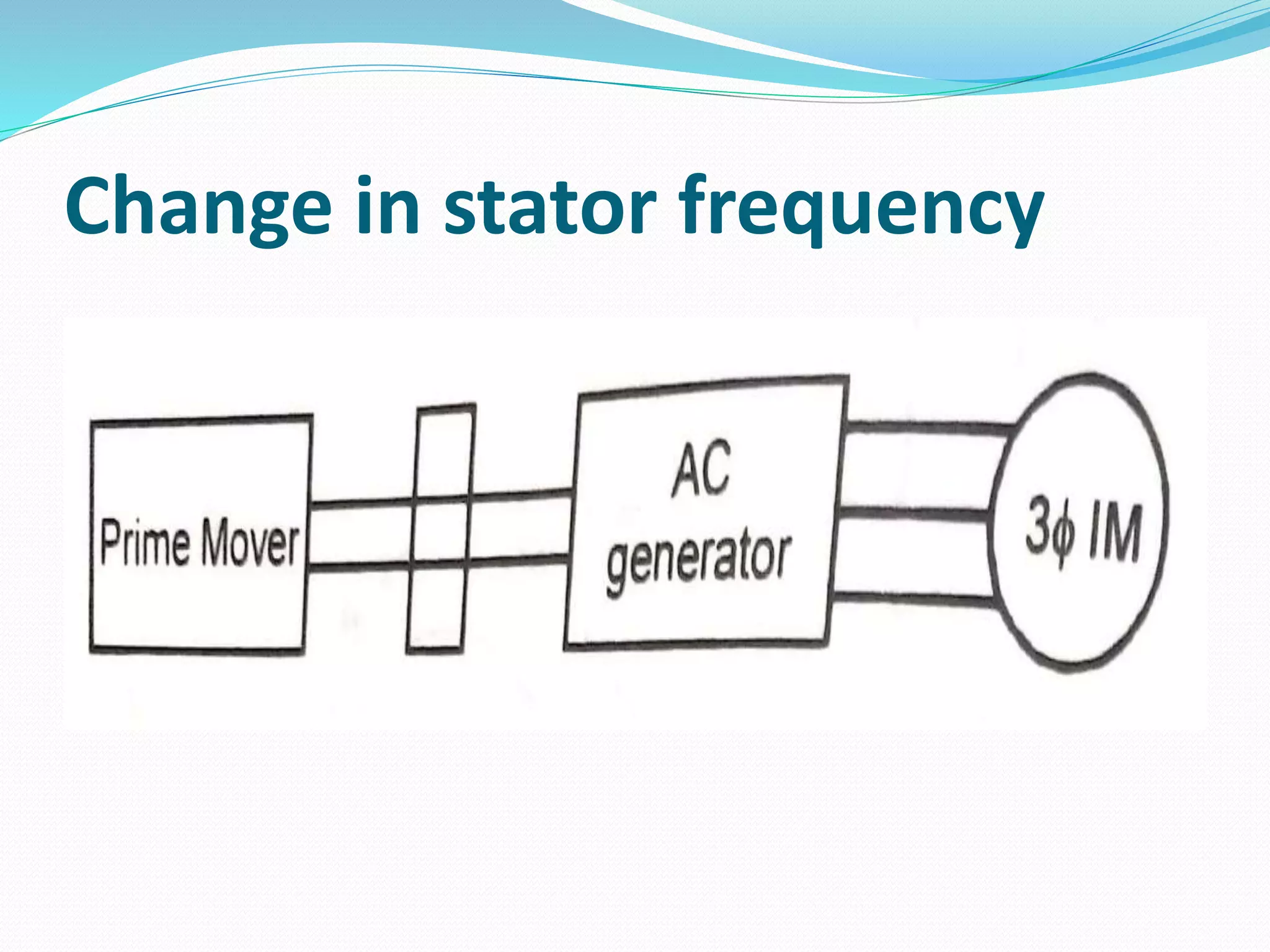
2.Stator frequency control
3.V/f control
4.Pole changing method
 Rotor side control
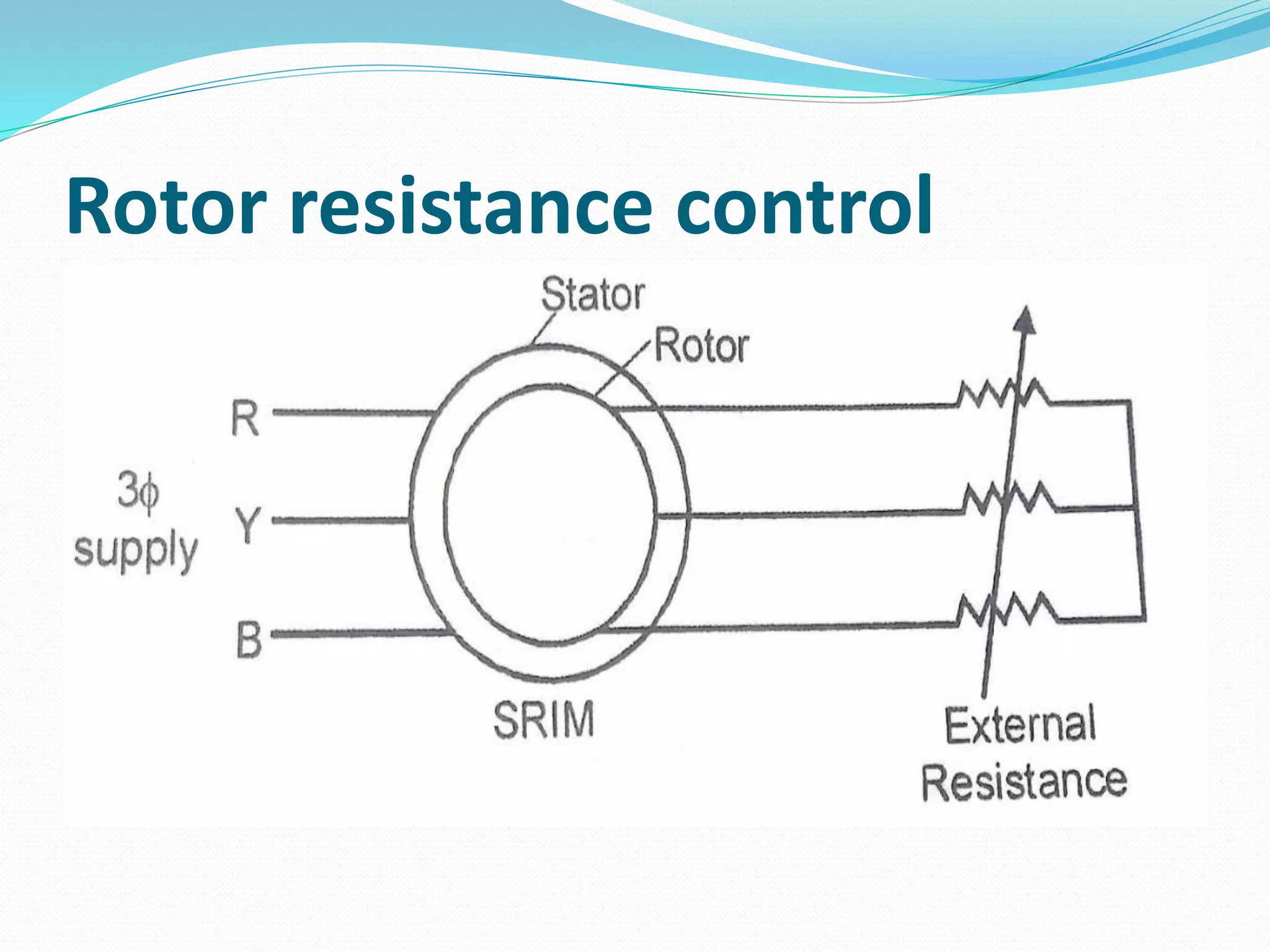
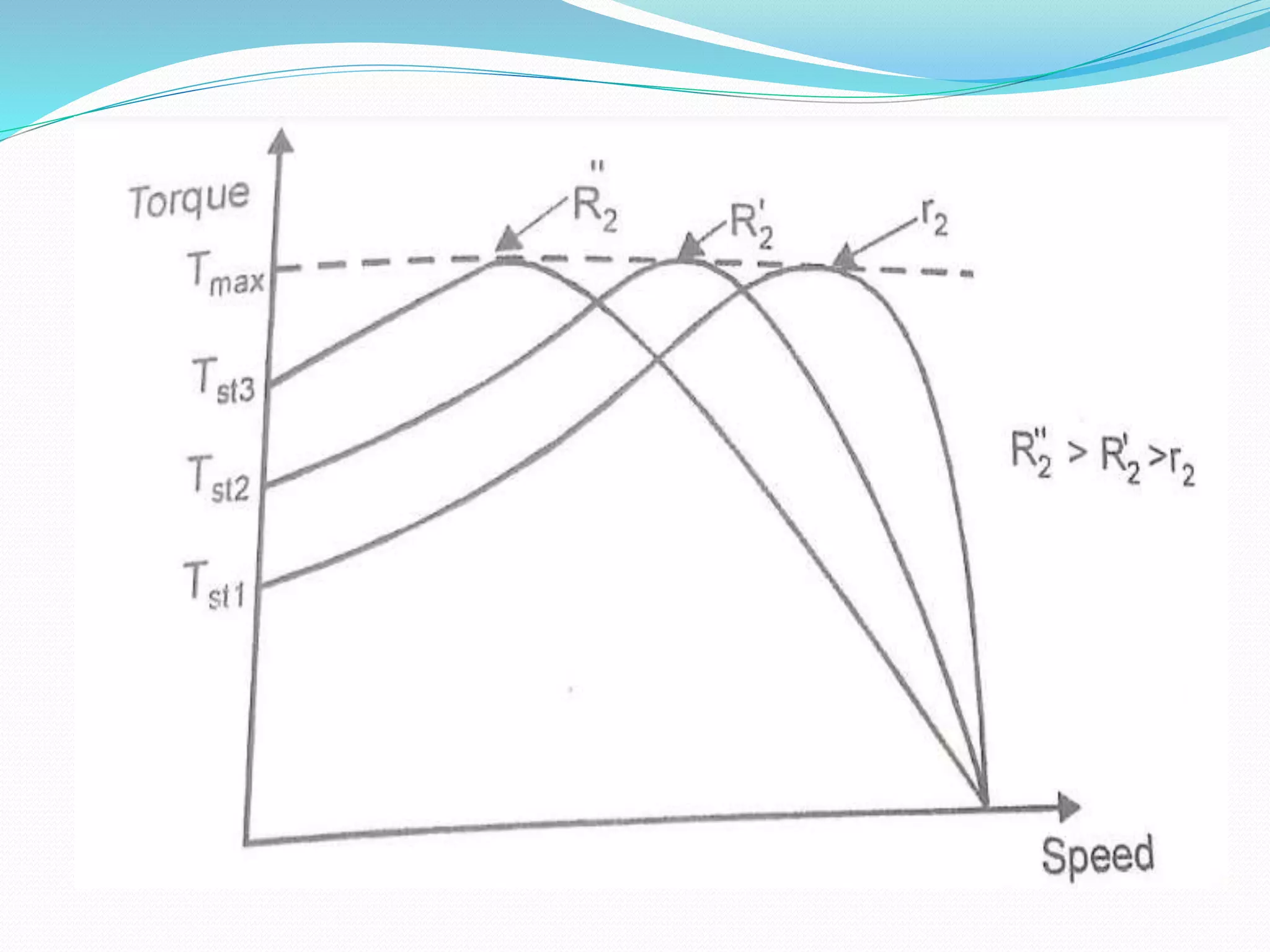
1.Adding external resistance in the rotor circuit
2.Cascade control
3.Slip power recovery scheme
Stator side control
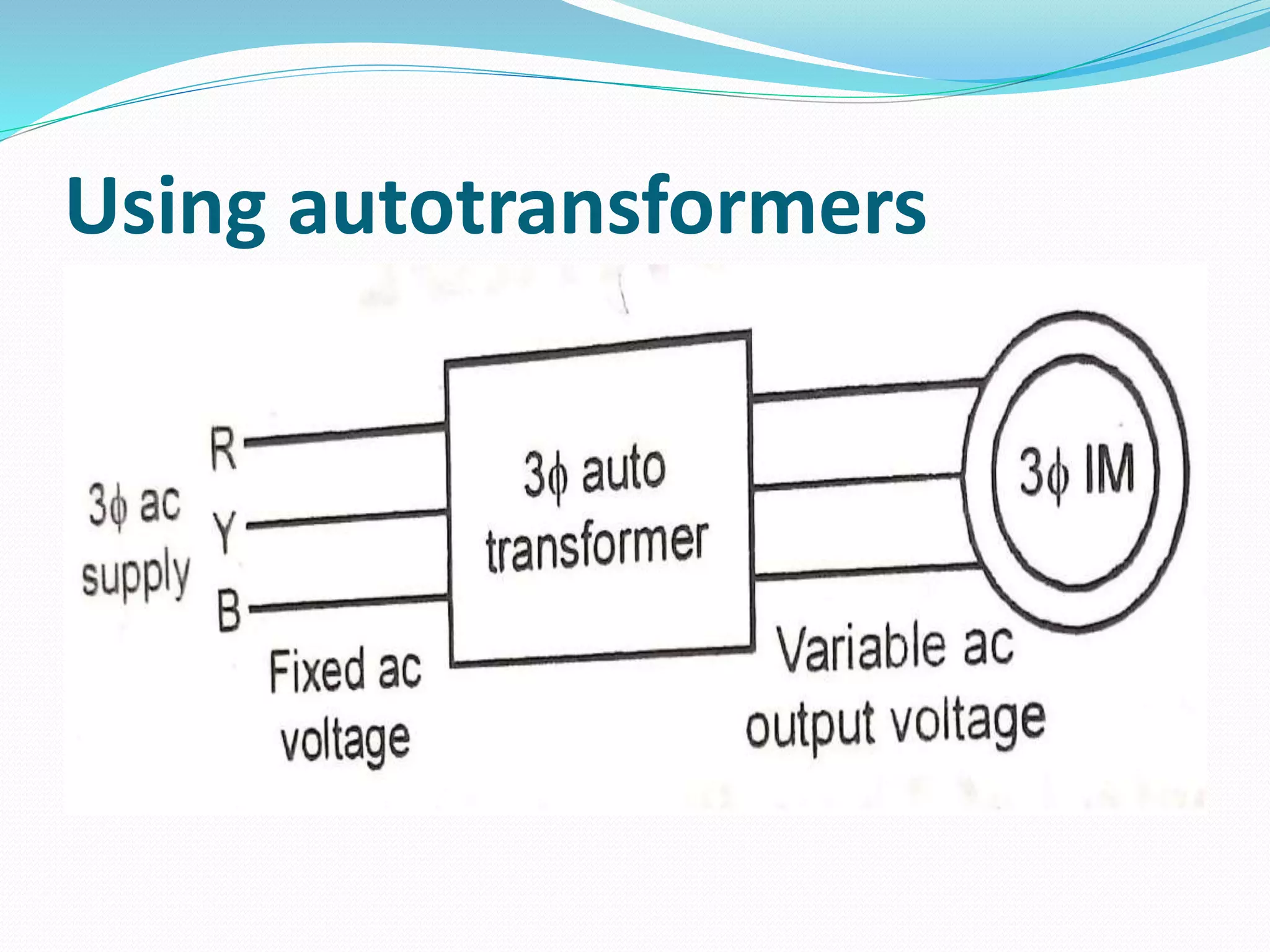
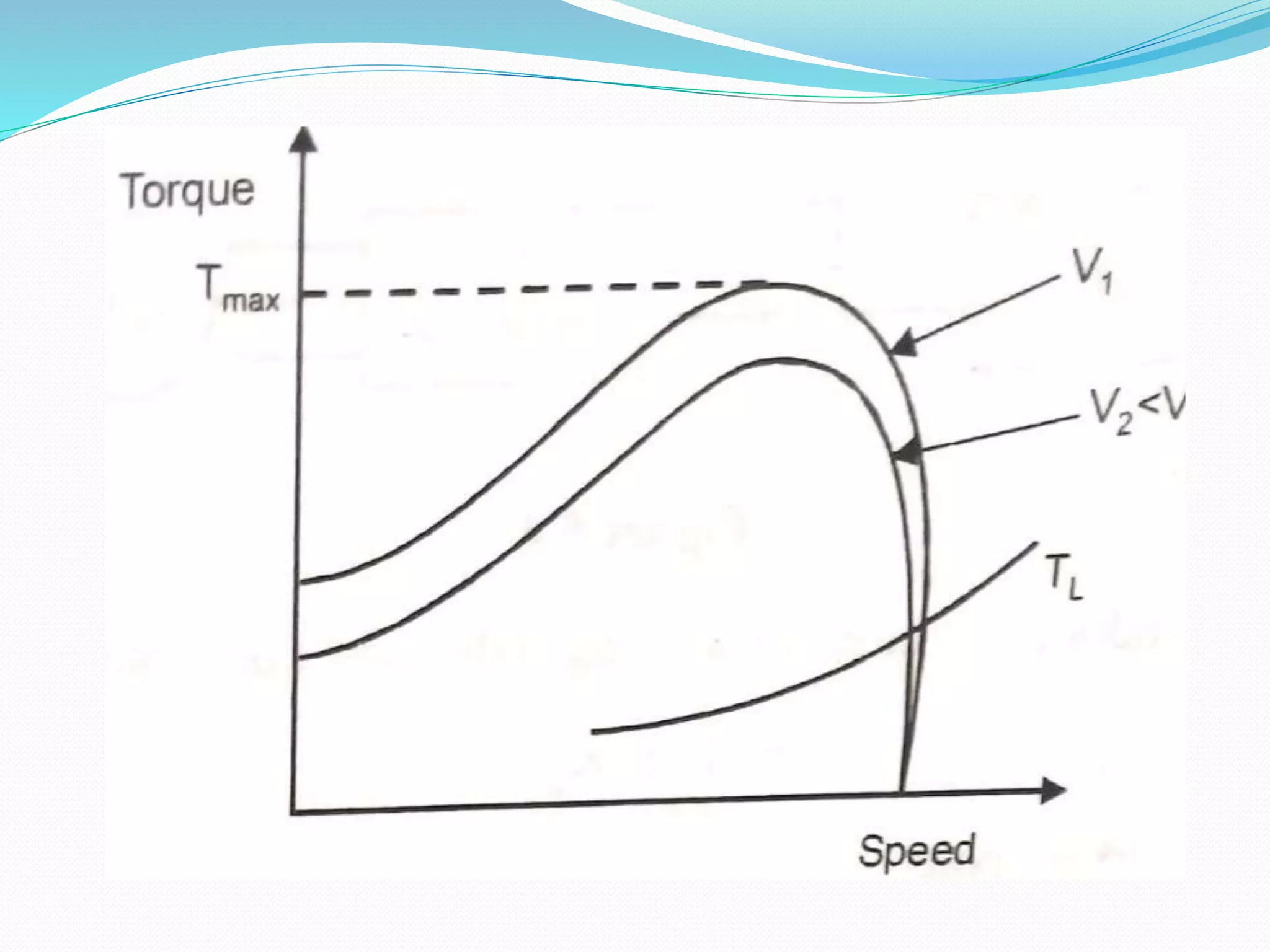
Change in stator voltage
1.Using autotransformer
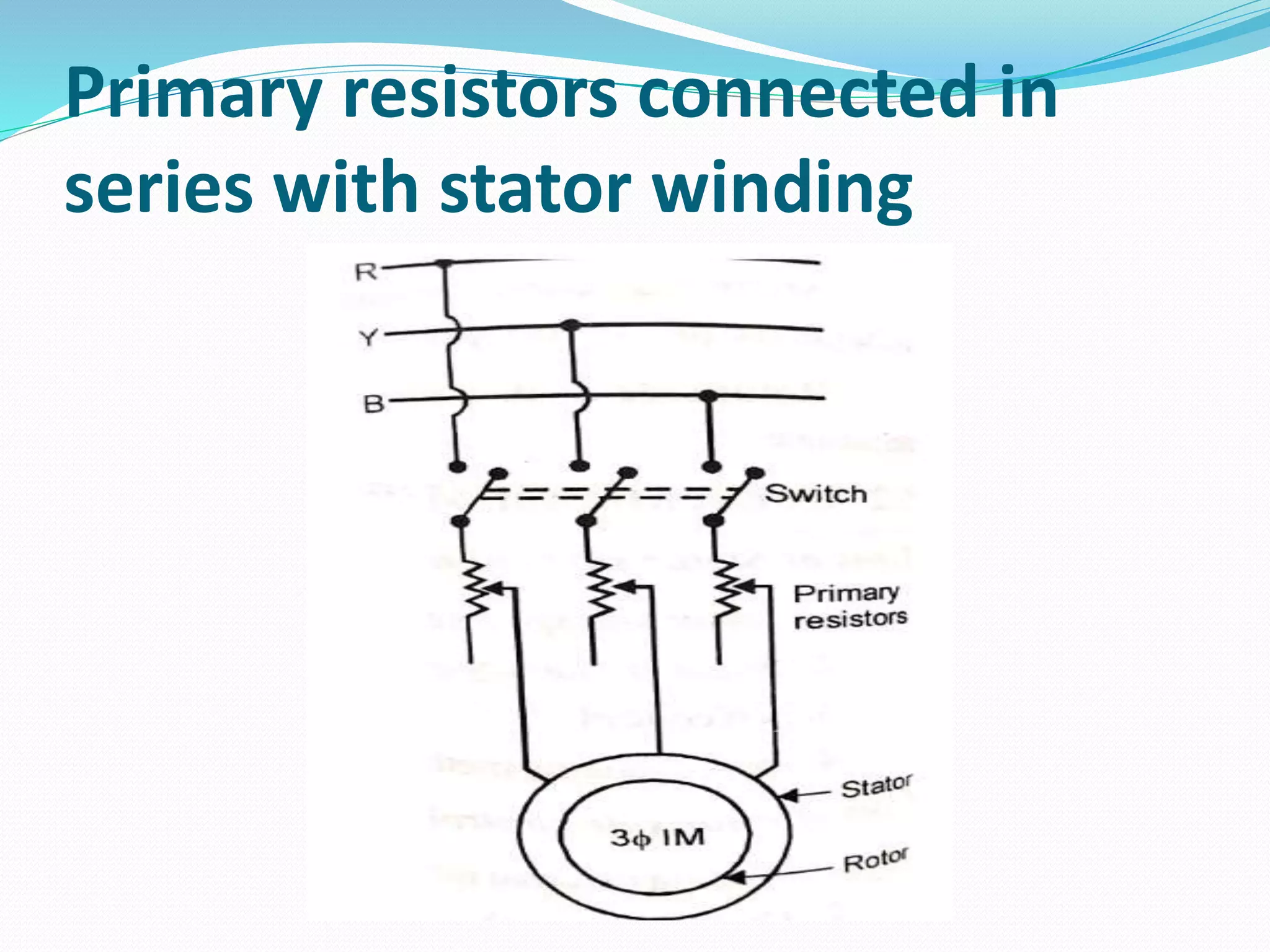
2.Primery resistors connected in series with stator
winding
Using autotransformers
Primary resistors connected in
series with stator winding
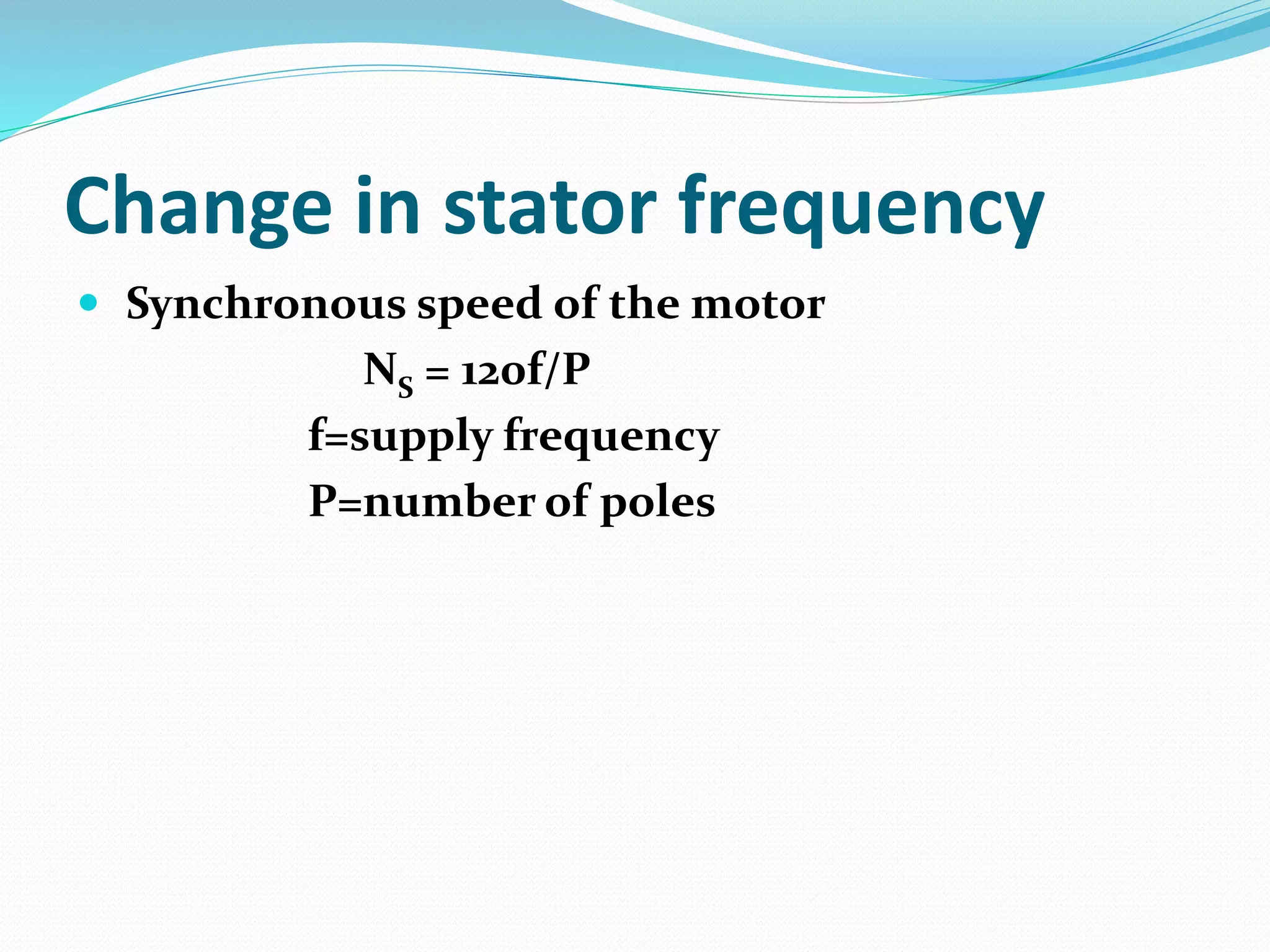
Change in stator frequency
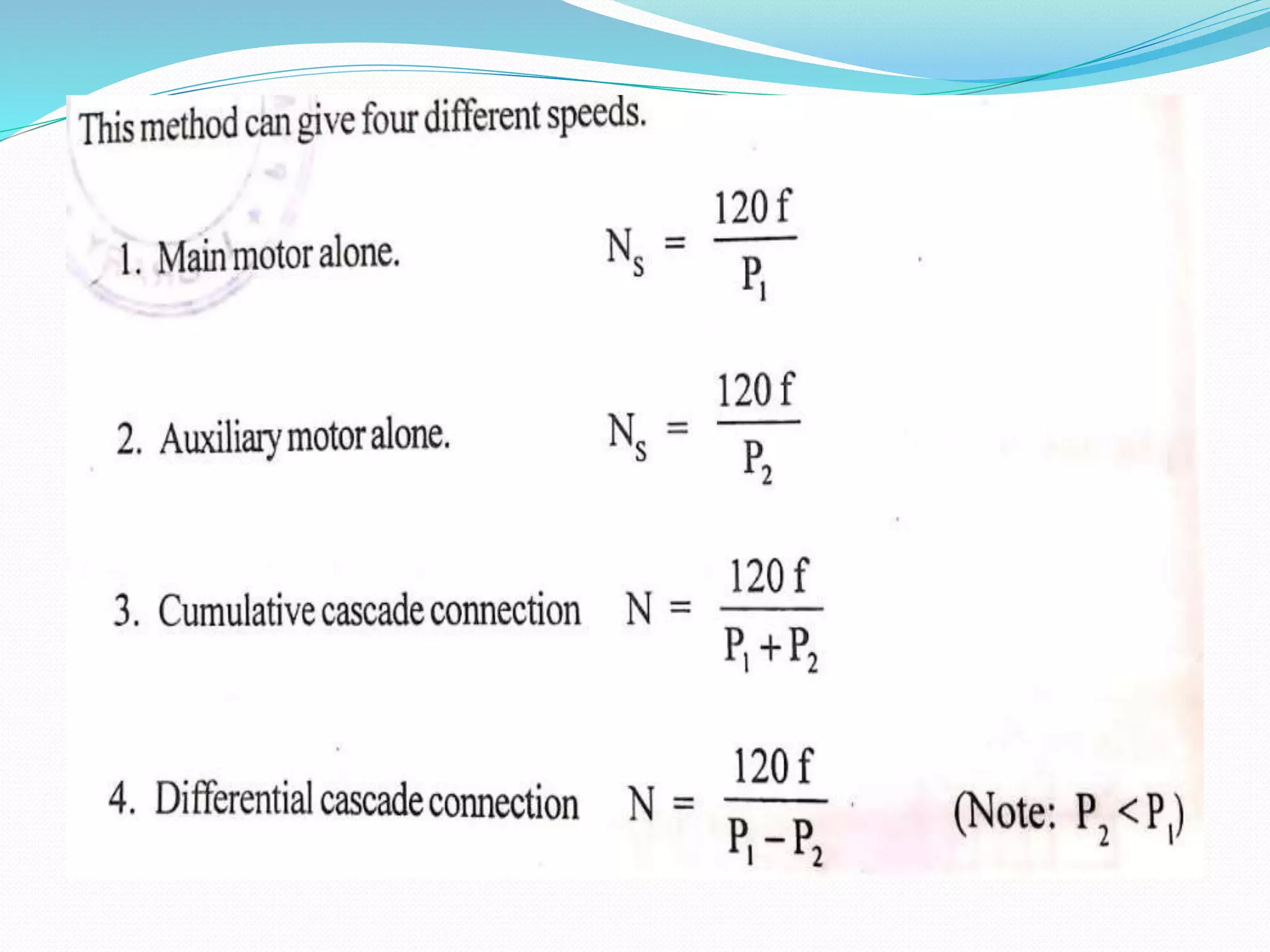
 Synchronous speed of the motor
NS = 120f/P
f=supply frequency
P=number of poles
Change in stator frequency
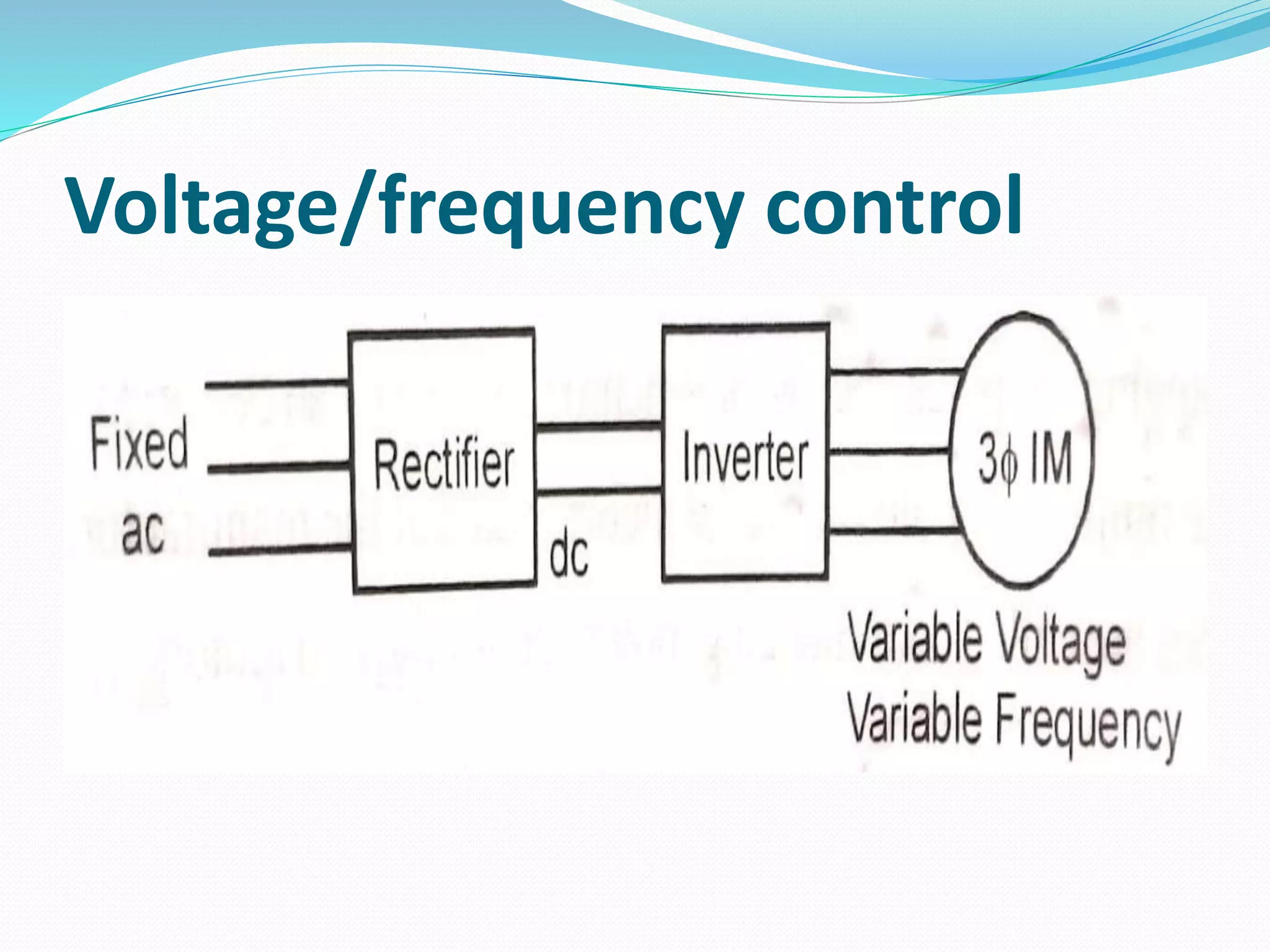
Voltage/frequency control
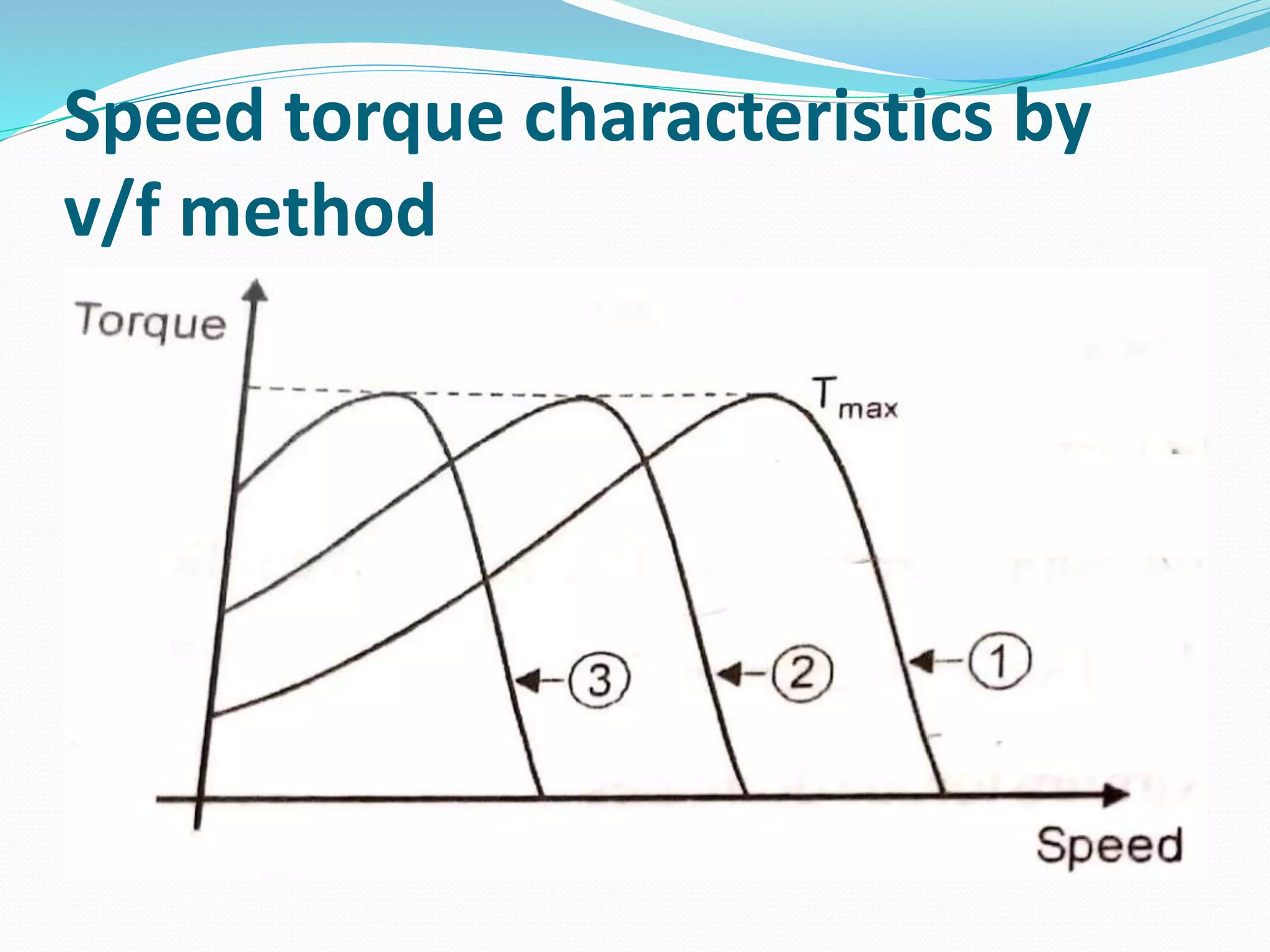
Speed torque characteristics by
v/f method
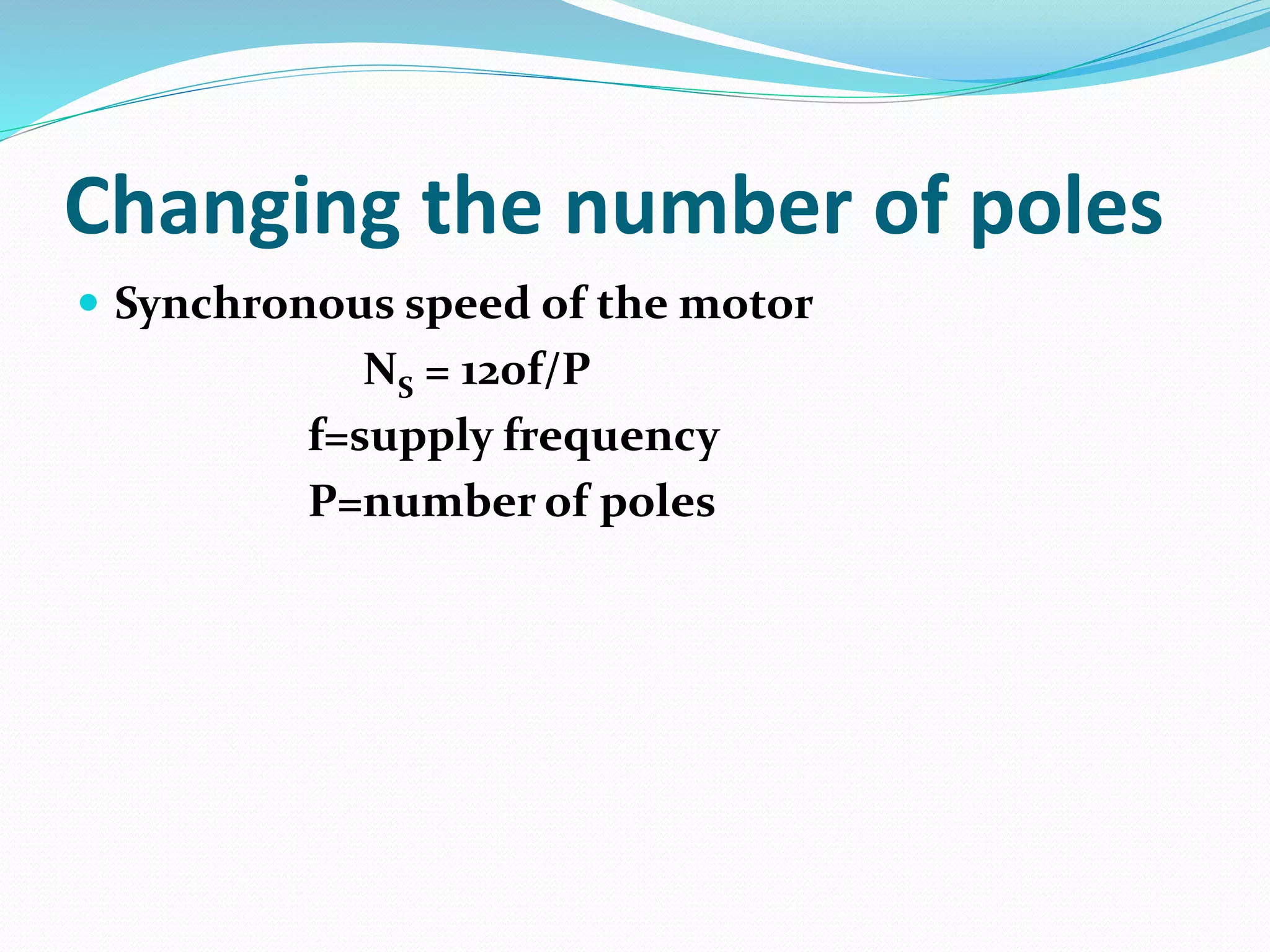
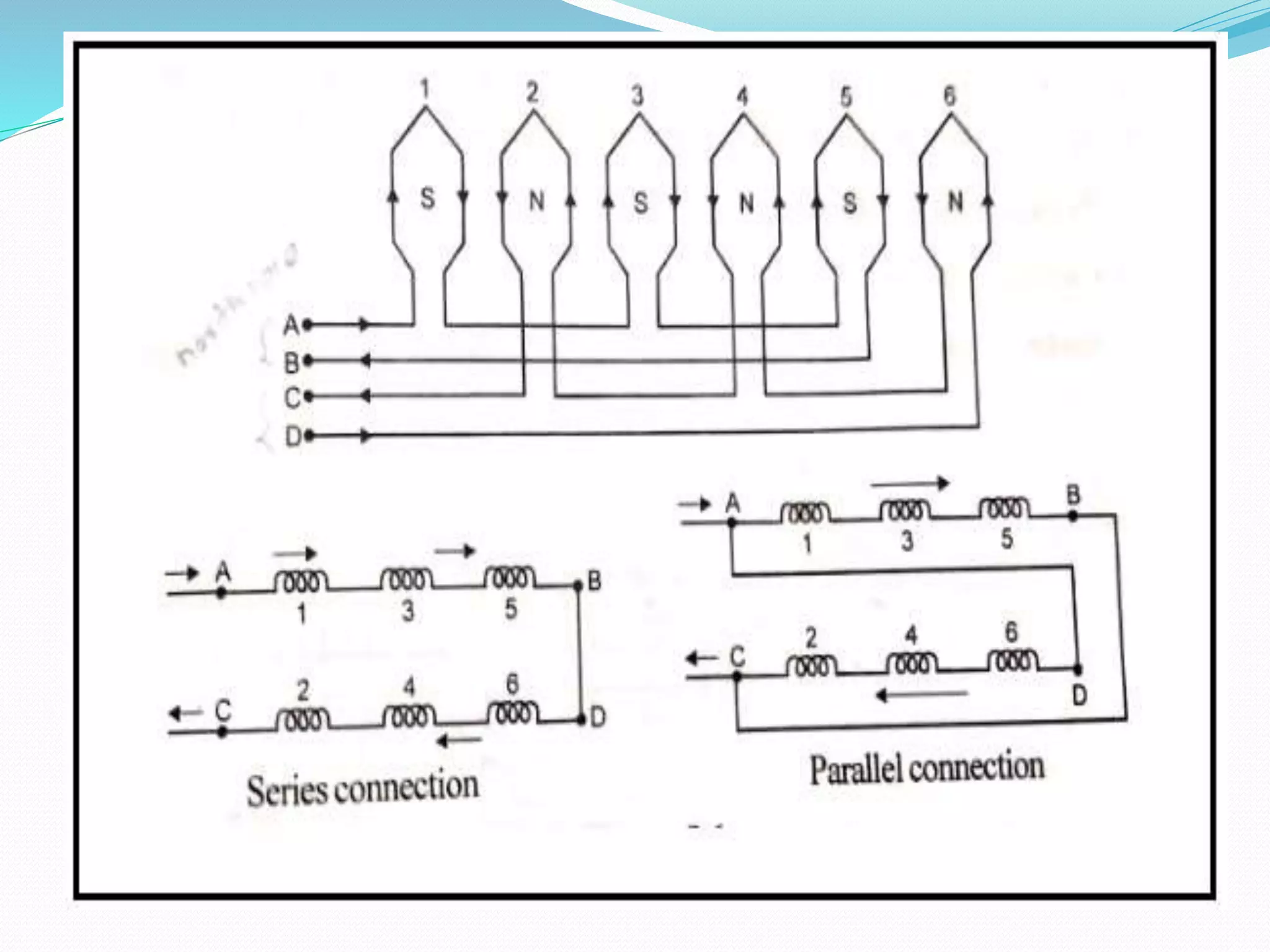
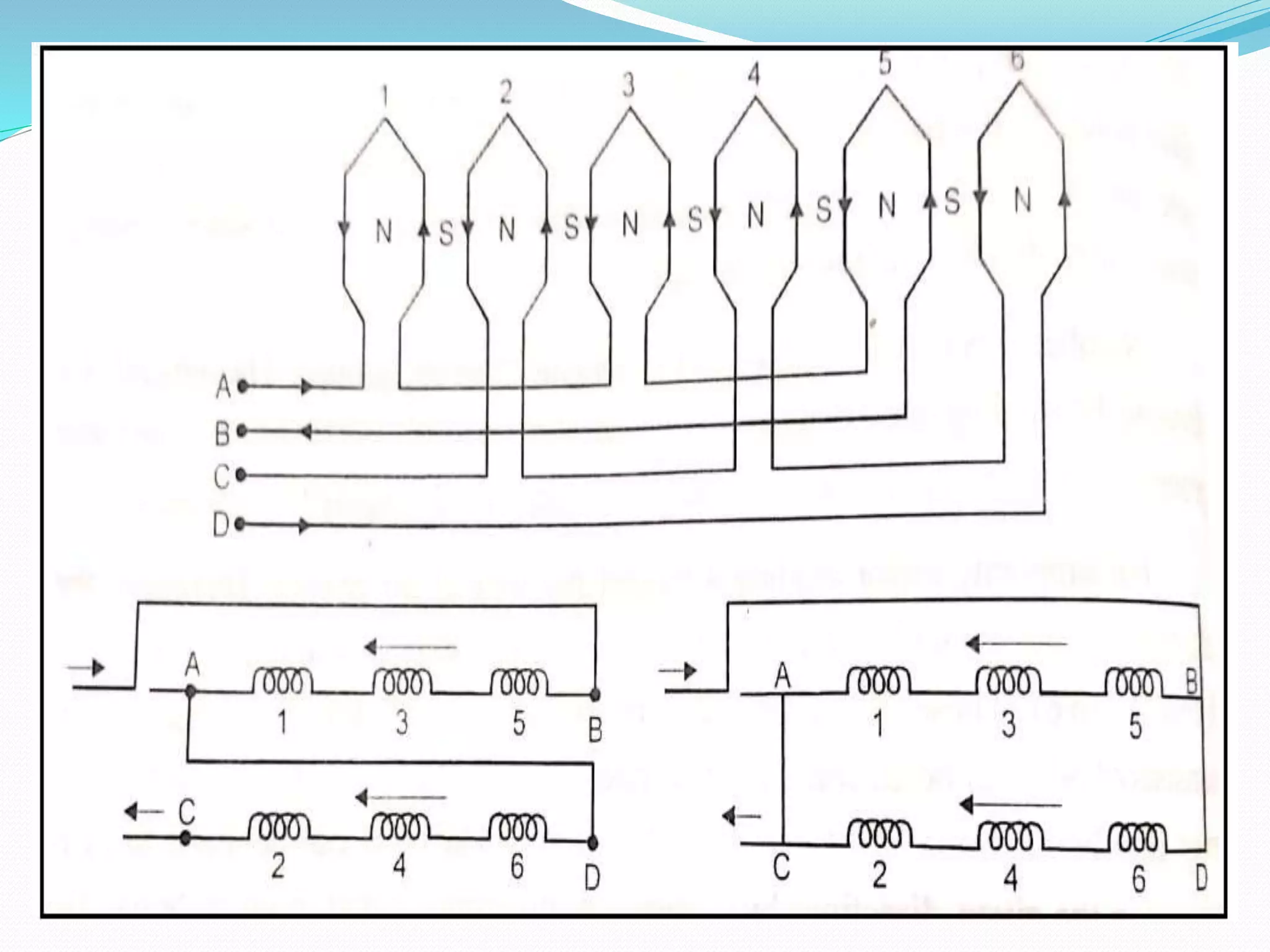
Changing the number of poles
 Synchronous speed of the motor
NS = 120f/P
f=supply frequency
P=number of poles
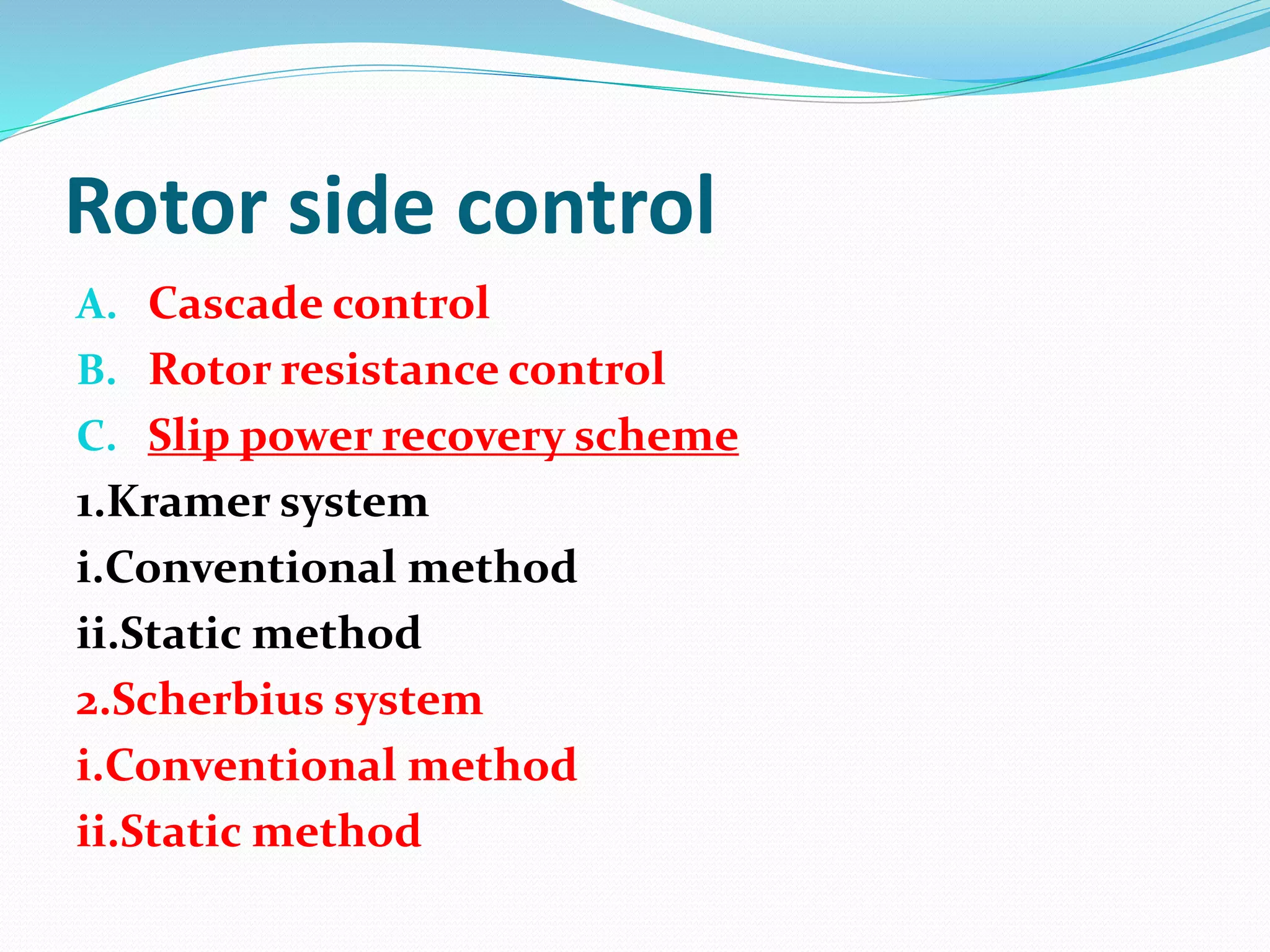
Rotor side control
A. Cascade control
B. Rotor resistance control
C. Slip power recovery scheme
1.Kramer system
i.Conventional method
ii.Static method
2.Scherbius system
i.Conventional method
ii.Static method
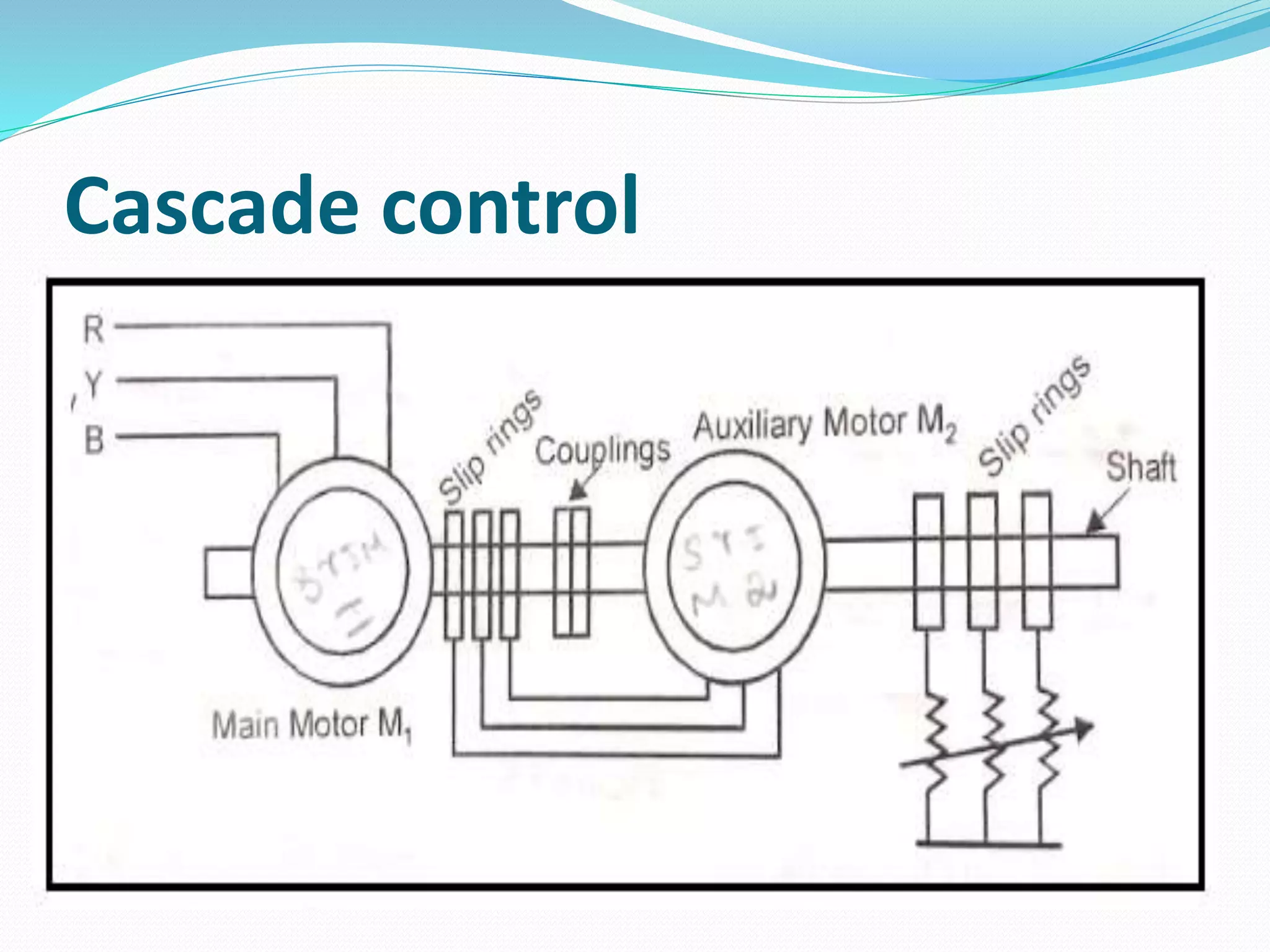
Cascade control
DISADVANTAGES OF CASCADE CONTROL
 This method requires two motors
 More expensive
 Wide range of speed control is not possible
 It cannot be operated when
P1=P2 or P1<P2
Rotor resistance control
Slip power recovery scheme
 Used to speed control the slip ring induction motor
 Speed control by varying the stator voltage or
by controlling the power flow in the rotor circuit
Types of Slip power recovery scheme
1.Kramer system
i.Conventional method
ii.Static method
2.Scherbius system
i.Conventional method
ii.Static method
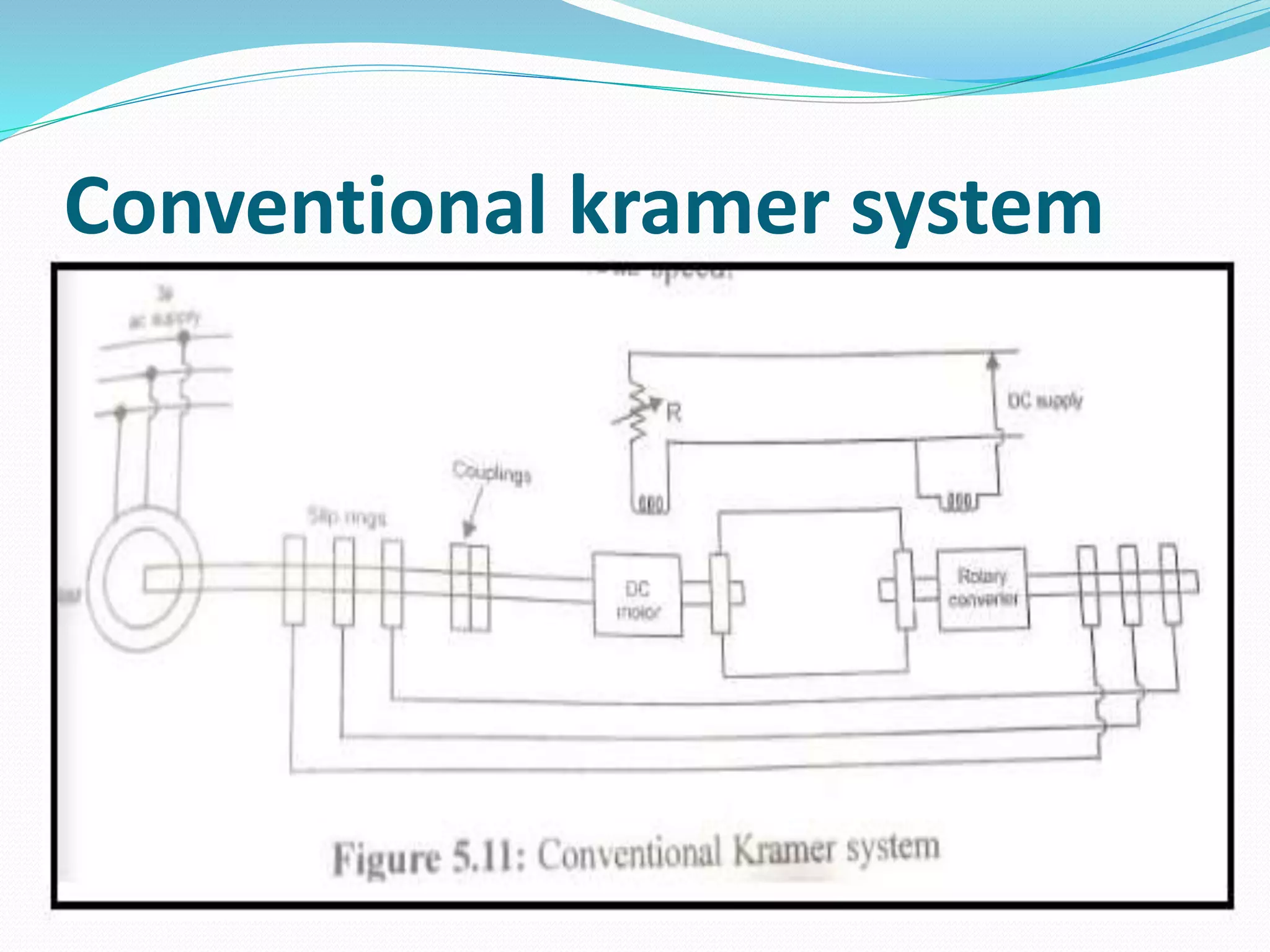
Conventional kramer system
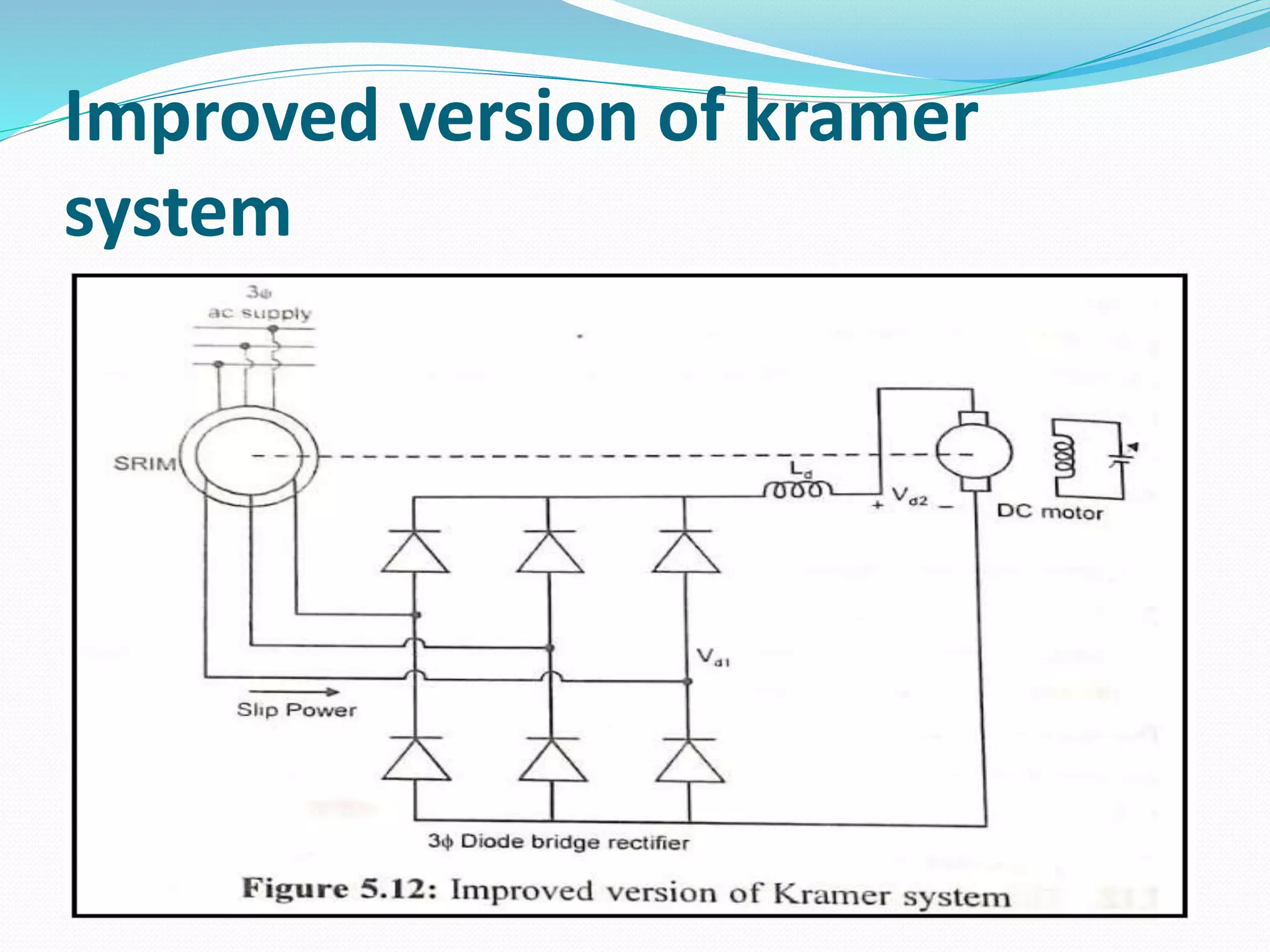
Improved version of kramer
system
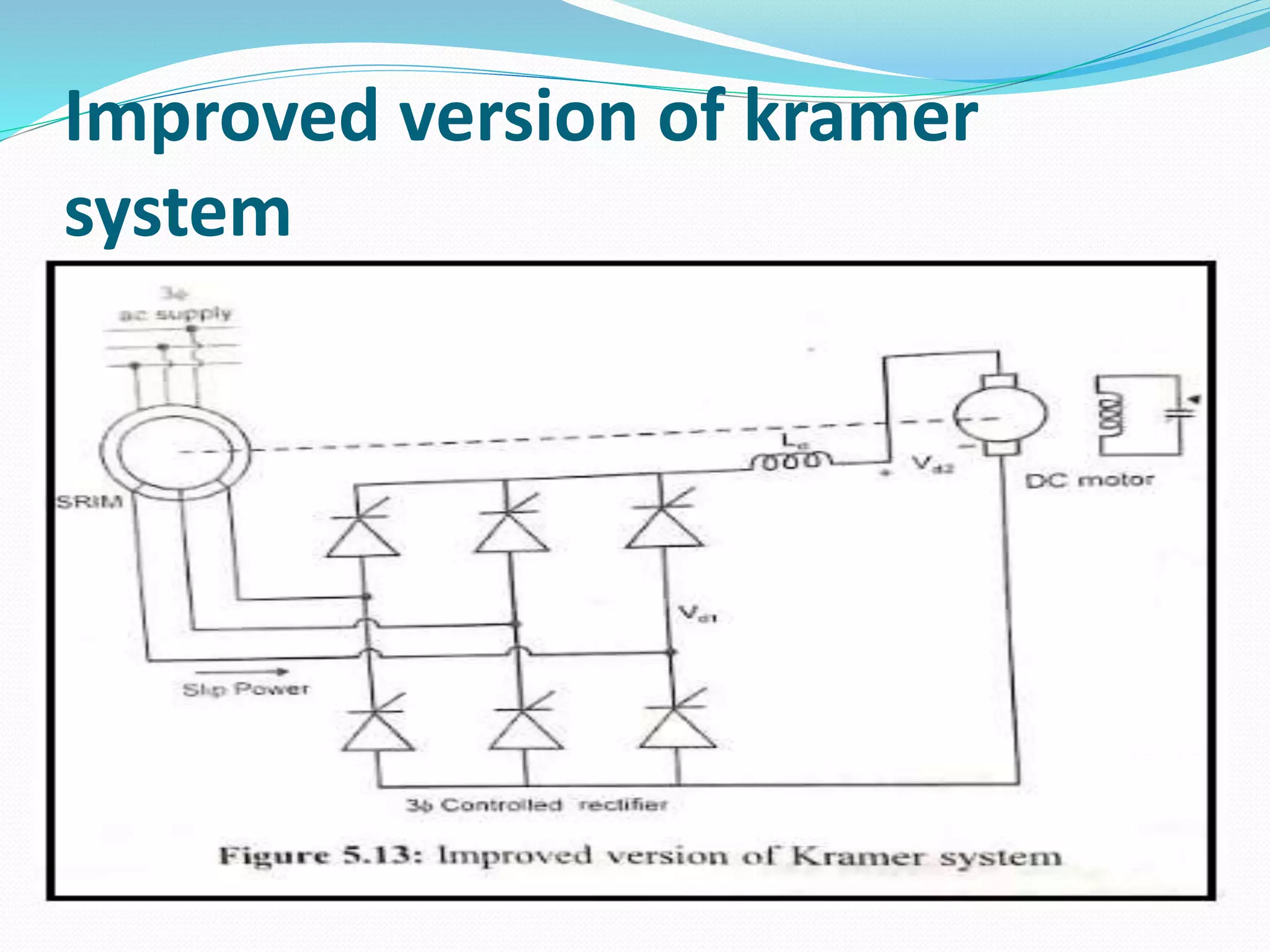
Improved version of kramer
system
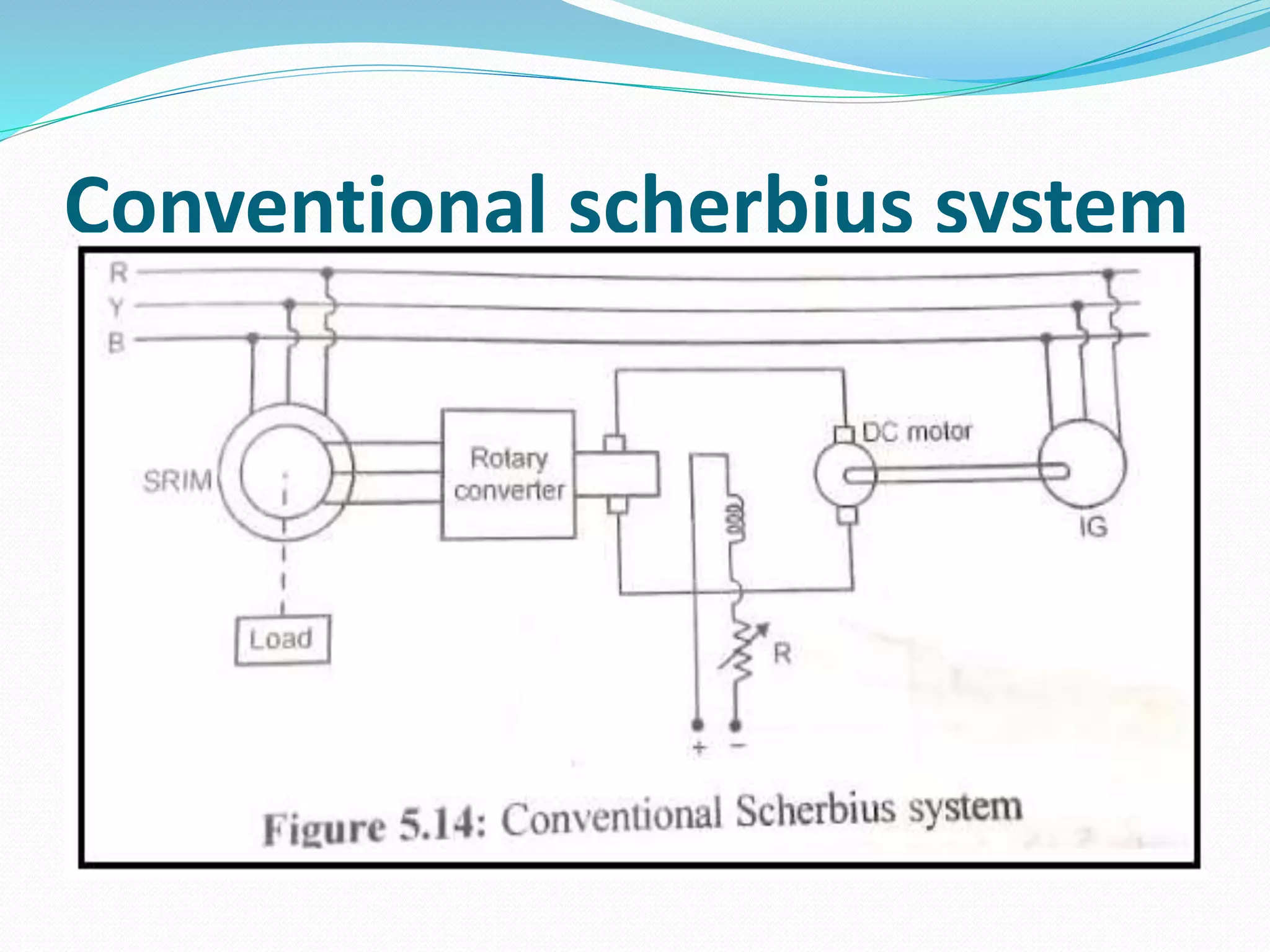
Conventional scherbius system

Unit v conventional and solid state speed control of ac drives