Unit 5
The Industrial Revolution
Social Studies – ESO-4
2
The Industrial Revolution
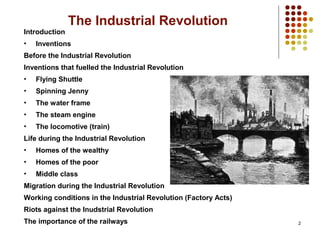
Introduction
• Inventions
Before the Industrial Revolution
Inventions that fuelled the Industrial Revolution
• Flying Shuttle
• Spinning Jenny
• The water frame
• The steam engine
• The locomotive (train)
Life during the Industrial Revolution
• Homes of the wealthy
• Homes of the poor
• Middle class
Migration during the Industrial Revolution
Working conditions in the Industrial Revolution (Factory Acts)
Riots against the Inudstrial Revolution
The importance of the railways
3
The Industrial Revolution
 Introduction
➔
New inventions for better iron:
➔
Coke
➔
Steam engine
➔
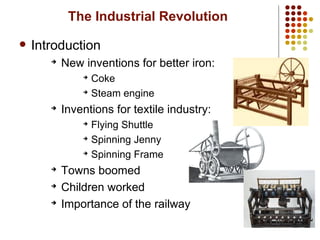
Inventions for textile industry:
➔
Flying Shuttle
➔
Spinning Jenny
➔
Spinning Frame
➔
Towns boomed
➔
Children worked
➔
Importance of the railway
4
The Industrial Revolution
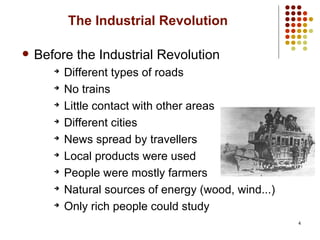
 Before the Industrial Revolution
➔
Different types of roads
➔
No trains
➔
Little contact with other areas
➔
Different cities
➔
News spread by travellers
➔
Local products were used
➔
People were mostly farmers
➔
Natural sources of energy (wood, wind...)
➔
Only rich people could study
5
The Industrial Revolution
 Key inventions for the Revolution:
➔
Spinning Jenny
➔
Water Frame
➔
Steam Engine
➔
The locomotive (train)
6
The Industrial Revolution
 Life during the Industrial Revolution
➔
Only rich people could study
➔
The rich were really wealthy
➔
Large homes and estates
➔
They could study
➔
The poor were very poor
➔
Small, damp houses in crowded streets
➔
Shared toilets
➔
Middle class
➔
Their homes became better
7
The Industrial Revolution
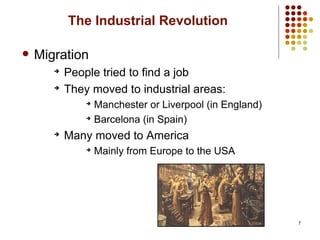
 Migration
➔
People tried to find a job
➔
They moved to industrial areas:
➔
Manchester or Liverpool (in England)
➔
Barcelona (in Spain)
➔
Many moved to America
➔
Mainly from Europe to the USA
8
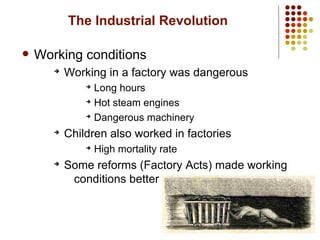
The Industrial Revolution
 Working conditions
➔
Working in a factory was dangerous
➔
Long hours
➔
Hot steam engines
➔
Dangerous machinery
➔
Children also worked in factories
➔
High mortality rate
➔
Some reforms (Factory Acts) made working
conditions better
9
The Industrial Revolution
 Riots against the Industrial Revolution
➔
People were afraid of losing their jobs:
➔
Common land was enclosed: no land
➔
New machines and working methods
➔
Better transport
➔
Wages were low & food was expensive
➔
Soldiers had no job
➔
Luddites started riots
10
The Industrial Revolution
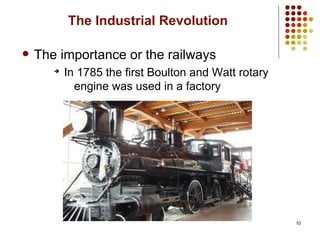
 The importance or the railways
➔
In 1785 the first Boulton and Watt rotary
engine was used in a factory
11
The Industrial Revolution
 The second industrial revolution
➔
From the end of the 19th
century to World War I
➔
Where:
➔
Britain
➔
Germany
➔
France
➔
Low Countries
➔
Denmark
➔
the US
➔
Japan
12
The Industrial Revolution
 The second industrial revolution
➔
Changes in steel, railroads, electricity & chemicals
➔
Relevant facts:
➔
Bessemer steel from molten iron
➔
Petroleum industry→kerosene
➔
Electricity → assembly line & lighting
➔
Mass production in Ford factory
➔
Cheap electrochemicals
➔
Steel →railroads
➔
Telegraph and telephone lines
13
The Industrial Revolution
 The second industrial revolution
➔
Socioeconomic impact:
➔
Better living standards
➔
Cheap food
➔
Crop failures→less relevant
➔
Tractors
➔
Ships could carry more weight→more trade
➔
Lower prices
➔
Social changes
➔
More professional working class
➔
Larger middle class
14
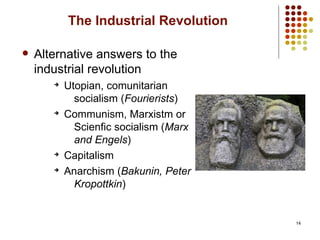
The Industrial Revolution
 Alternative answers to the
industrial revolution
➔
Utopian, comunitarian
socialism (Fourierists)
➔
Communism, Marxistm or
Scienfic socialism (Marx
and Engels)
➔
Capitalism
➔
Anarchism (Bakunin, Peter
Kropottkin)
15
The Industrial Revolution
 The second industrial revolution
➔
Final situation:
➔
World industrial leaders→US, Britain,
Germany, Russia and France
➔
Most industrial inventions were from this
period
16
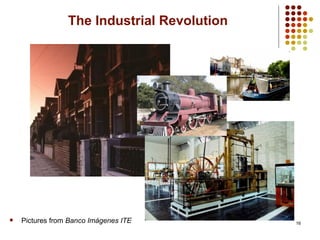
The Industrial Revolution
 Pictures from Banco Imágenes ITE

Unit 5 - The Industrial Revolution

  • 1.
    Unit 5 The IndustrialRevolution Social Studies – ESO-4
  • 2.
    2 The Industrial Revolution Introduction •Inventions Before the Industrial Revolution Inventions that fuelled the Industrial Revolution • Flying Shuttle • Spinning Jenny • The water frame • The steam engine • The locomotive (train) Life during the Industrial Revolution • Homes of the wealthy • Homes of the poor • Middle class Migration during the Industrial Revolution Working conditions in the Industrial Revolution (Factory Acts) Riots against the Inudstrial Revolution The importance of the railways
  • 3.
    3 The Industrial Revolution Introduction ➔ New inventions for better iron: ➔ Coke ➔ Steam engine ➔ Inventions for textile industry: ➔ Flying Shuttle ➔ Spinning Jenny ➔ Spinning Frame ➔ Towns boomed ➔ Children worked ➔ Importance of the railway
  • 4.
    4 The Industrial Revolution Before the Industrial Revolution ➔ Different types of roads ➔ No trains ➔ Little contact with other areas ➔ Different cities ➔ News spread by travellers ➔ Local products were used ➔ People were mostly farmers ➔ Natural sources of energy (wood, wind...) ➔ Only rich people could study
  • 5.
    5 The Industrial Revolution Key inventions for the Revolution: ➔ Spinning Jenny ➔ Water Frame ➔ Steam Engine ➔ The locomotive (train)
  • 6.
    6 The Industrial Revolution Life during the Industrial Revolution ➔ Only rich people could study ➔ The rich were really wealthy ➔ Large homes and estates ➔ They could study ➔ The poor were very poor ➔ Small, damp houses in crowded streets ➔ Shared toilets ➔ Middle class ➔ Their homes became better
  • 7.
    7 The Industrial Revolution Migration ➔ People tried to find a job ➔ They moved to industrial areas: ➔ Manchester or Liverpool (in England) ➔ Barcelona (in Spain) ➔ Many moved to America ➔ Mainly from Europe to the USA
  • 8.
    8 The Industrial Revolution Working conditions ➔ Working in a factory was dangerous ➔ Long hours ➔ Hot steam engines ➔ Dangerous machinery ➔ Children also worked in factories ➔ High mortality rate ➔ Some reforms (Factory Acts) made working conditions better
  • 9.
    9 The Industrial Revolution Riots against the Industrial Revolution ➔ People were afraid of losing their jobs: ➔ Common land was enclosed: no land ➔ New machines and working methods ➔ Better transport ➔ Wages were low & food was expensive ➔ Soldiers had no job ➔ Luddites started riots
  • 10.
    10 The Industrial Revolution The importance or the railways ➔ In 1785 the first Boulton and Watt rotary engine was used in a factory
  • 11.
    11 The Industrial Revolution The second industrial revolution ➔ From the end of the 19th century to World War I ➔ Where: ➔ Britain ➔ Germany ➔ France ➔ Low Countries ➔ Denmark ➔ the US ➔ Japan
  • 12.
    12 The Industrial Revolution The second industrial revolution ➔ Changes in steel, railroads, electricity & chemicals ➔ Relevant facts: ➔ Bessemer steel from molten iron ➔ Petroleum industry→kerosene ➔ Electricity → assembly line & lighting ➔ Mass production in Ford factory ➔ Cheap electrochemicals ➔ Steel →railroads ➔ Telegraph and telephone lines
  • 13.
    13 The Industrial Revolution The second industrial revolution ➔ Socioeconomic impact: ➔ Better living standards ➔ Cheap food ➔ Crop failures→less relevant ➔ Tractors ➔ Ships could carry more weight→more trade ➔ Lower prices ➔ Social changes ➔ More professional working class ➔ Larger middle class
  • 14.
    14 The Industrial Revolution Alternative answers to the industrial revolution ➔ Utopian, comunitarian socialism (Fourierists) ➔ Communism, Marxistm or Scienfic socialism (Marx and Engels) ➔ Capitalism ➔ Anarchism (Bakunin, Peter Kropottkin)
  • 15.
    15 The Industrial Revolution The second industrial revolution ➔ Final situation: ➔ World industrial leaders→US, Britain, Germany, Russia and France ➔ Most industrial inventions were from this period
  • 16.
    16 The Industrial Revolution Pictures from Banco Imágenes ITE