WHAT WAS THE 
INDUSTRIAL 
REVOLUTION? 
A revolution is a 
big change that 
has lasting 
effects. 
Modern World History 
David Peal
What was the Industrial 
Revolution? 
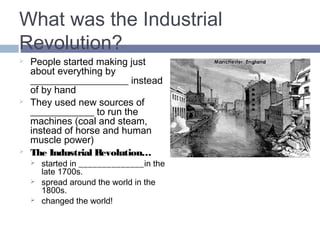
 People started making just 
about everything by HAND 
instead of by hand 
 They used new sources of 
ENERGY to run the 
machines (coal and steam, 
instead of horse and human 
muscle power) 
 The Industrial Revolution… 
 started in ENGLAND_in the 
late 1700s. 
 spread around the world in the 
1800s. 
 changed the world!
Why did it start in England? 
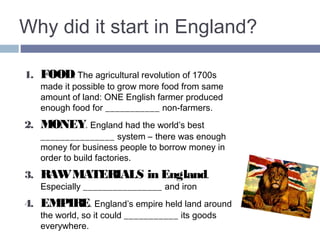
1. FOOD. The agricultural revolution of 1700s 
made it possible to grow more food from same 
amount of land: ONE English farmer produced 
enough food for TWO non-farmers. 
2. MONEY. England had the world’s best 
BANKING system – there was enough money for 
business people to borrow money in order to build 
factories. 
3. RAW MATERIALS in England. 
Especially COAL and iron 
4. EMPIRE. England’s empire held land around 
the world, so it could SELL its goods everywhere.
England had a stable 
government 
A strong parliament… 
…limited monarchy 
With a strong parliament 
and limited ROYAL 
POWER, England had a 
stable government that 
allowed for change and 
avoided EXTREMES of 
wealth and poverty as in 
FRANCE and Russia.
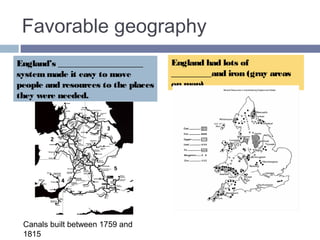
Favorable geography 
England’s CANAL system made it 
easy to move people and 
resources to the places they were 
needed. 
England had lots of COAL_and 
iron (gray areas on map). 
This map shows canals built 
between 1759 and 1815.
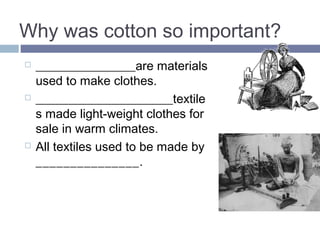
Why was cotton so important in the 
Industrial Revolution? 
 TEXTILES are materials 
used to make clothes. 
 COTTON_ textiles made 
light-weight clothes for sale 
in warm climates. 
 All textiles used to be made 
by HAND.
Machines in the textile industry 
Starting in the late 1700s, new machines 
changed everything: 
Cotton gin – removed SEEDS from raw 
cotton. 
Spinning JENNY_ – spun thin strands of 
cotton into strong threads; one person could 
now do the same work with a machine that 
16 could do by hand. 
Power LOOM – wove thread into cloth, 
replacing skilled, male weavers.
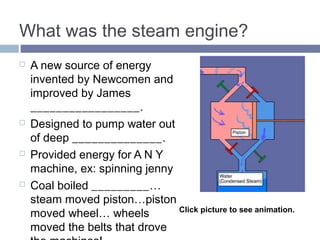
What was the steam engine? 
 A new source of energy 
invented by Newcomen and 
improved by James WATT. 
 Designed to pump water out 
of deep MINES. 
 Provided energy for A N Y 
machine, ex: spinning jenny 
 Coal boiled WATER…steam 
moved piston…piston moved 
wheel… wheels moved the 
belts that drove the 
machines! 
Click picture to see animation.
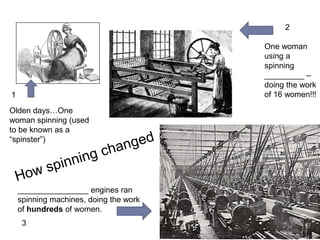
How spinning changed 
1 
Before machines…one 
woman did the spinning 
using a spinning 
WHEEL (used to be 
known as a “spinster”) 
Industrial 
Revolution: One 
woman using a 
spinning JENNY – 
doing the work of 
16 women!!! 
STEAM engines ran spinning 
machines, doing the work of 
hundreds of women. Notice there 
are no people in this picture! 
2 
3
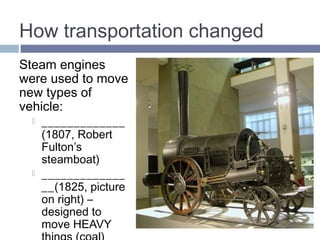
How transportation changed 
Steam engines 
were used to move 
new types of 
vehicle: 
 STEAMSHIP __ 
(1807, Robert 
Fulton’s 
steamboat) 
 RAILROAD_(18 
25, picture on 
right) – designed 
to move HEAVY 
things (coal)
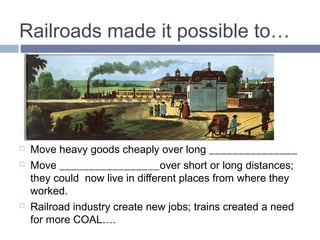
Railroads made it possible to… 
 Move heavy goods cheaply over long DISTANCES 
 Move PEOPLE over short or long distances; they could 
now live in different places from where they worked. 
 Railroad industry create new jobs; trains created a need 
for more COAL….
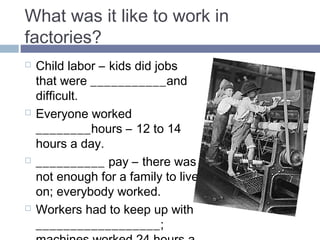
What was it like to work in 
factories? 
 Child labor – kids did jobs 
that were DANGEROUS and 
difficult. 
 Everyone worked 
LONG_hours – 12 to 14 
hours a day. 
 LOW pay – there was not 
enough for a family to live on; 
everybody worked. 
 Workers had to keep up with 
MACHINE; machines worked 
24 hours a day.
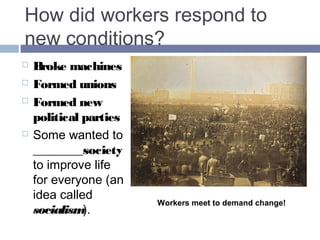
How did workers respond to 
new conditions? 
 Broke machines 
 Formed unions 
 Formed new 
political parties 
 Some wanted to 
CHANGE 
society to 
improve life for 
everyone (an 
idea called 
socialism). 
Workers meet to demand change!
What was so revolutionary 
about the Industrial Revolution? 
1. Change led to MORE change, 
and the changes continue 
today! 
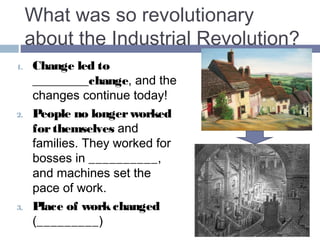
2. People no longer worked for 
themselves and families. They 
now worked for bosses in 
FACTORIES, and machines 
set the pace of work. Society 
changed in many ways. 
3. Place of work changed 
(FACTORIES), and factories 
were concentrated in CITIES. 
4. Some workers wanted to 
change society BY

Industrial revolution

  • 1.
    WHAT WAS THE INDUSTRIAL REVOLUTION? A revolution is a big change that has lasting effects. Modern World History David Peal
  • 2.
    What was theIndustrial Revolution?  People started making just about everything by HAND instead of by hand  They used new sources of ENERGY to run the machines (coal and steam, instead of horse and human muscle power)  The Industrial Revolution…  started in ENGLAND_in the late 1700s.  spread around the world in the 1800s.  changed the world!
  • 3.
    Why did itstart in England? 1. FOOD. The agricultural revolution of 1700s made it possible to grow more food from same amount of land: ONE English farmer produced enough food for TWO non-farmers. 2. MONEY. England had the world’s best BANKING system – there was enough money for business people to borrow money in order to build factories. 3. RAW MATERIALS in England. Especially COAL and iron 4. EMPIRE. England’s empire held land around the world, so it could SELL its goods everywhere.
  • 4.
    England had astable government A strong parliament… …limited monarchy With a strong parliament and limited ROYAL POWER, England had a stable government that allowed for change and avoided EXTREMES of wealth and poverty as in FRANCE and Russia.
  • 5.
    Favorable geography England’sCANAL system made it easy to move people and resources to the places they were needed. England had lots of COAL_and iron (gray areas on map). This map shows canals built between 1759 and 1815.
  • 6.
    Why was cottonso important in the Industrial Revolution?  TEXTILES are materials used to make clothes.  COTTON_ textiles made light-weight clothes for sale in warm climates.  All textiles used to be made by HAND.
  • 7.
    Machines in thetextile industry Starting in the late 1700s, new machines changed everything: Cotton gin – removed SEEDS from raw cotton. Spinning JENNY_ – spun thin strands of cotton into strong threads; one person could now do the same work with a machine that 16 could do by hand. Power LOOM – wove thread into cloth, replacing skilled, male weavers.
  • 8.
    What was thesteam engine?  A new source of energy invented by Newcomen and improved by James WATT.  Designed to pump water out of deep MINES.  Provided energy for A N Y machine, ex: spinning jenny  Coal boiled WATER…steam moved piston…piston moved wheel… wheels moved the belts that drove the machines! Click picture to see animation.
  • 9.
    How spinning changed 1 Before machines…one woman did the spinning using a spinning WHEEL (used to be known as a “spinster”) Industrial Revolution: One woman using a spinning JENNY – doing the work of 16 women!!! STEAM engines ran spinning machines, doing the work of hundreds of women. Notice there are no people in this picture! 2 3
  • 10.
    How transportation changed Steam engines were used to move new types of vehicle:  STEAMSHIP __ (1807, Robert Fulton’s steamboat)  RAILROAD_(18 25, picture on right) – designed to move HEAVY things (coal)
  • 11.
    Railroads made itpossible to…  Move heavy goods cheaply over long DISTANCES  Move PEOPLE over short or long distances; they could now live in different places from where they worked.  Railroad industry create new jobs; trains created a need for more COAL….
  • 12.
    What was itlike to work in factories?  Child labor – kids did jobs that were DANGEROUS and difficult.  Everyone worked LONG_hours – 12 to 14 hours a day.  LOW pay – there was not enough for a family to live on; everybody worked.  Workers had to keep up with MACHINE; machines worked 24 hours a day.
  • 13.
    How did workersrespond to new conditions?  Broke machines  Formed unions  Formed new political parties  Some wanted to CHANGE society to improve life for everyone (an idea called socialism). Workers meet to demand change!
  • 14.
    What was sorevolutionary about the Industrial Revolution? 1. Change led to MORE change, and the changes continue today! 2. People no longer worked for themselves and families. They now worked for bosses in FACTORIES, and machines set the pace of work. Society changed in many ways. 3. Place of work changed (FACTORIES), and factories were concentrated in CITIES. 4. Some workers wanted to change society BY