Downloaded 13 times


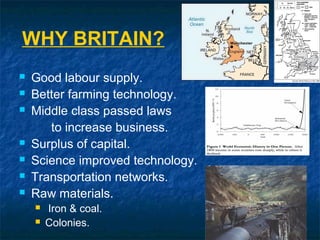
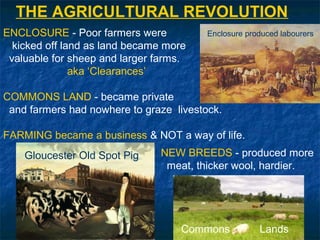
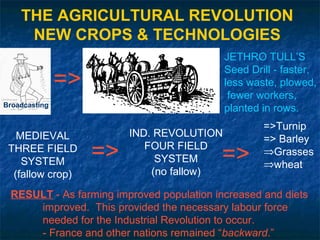


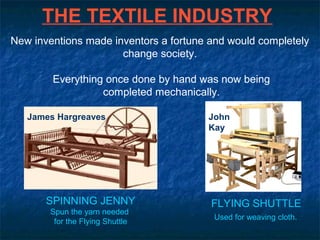
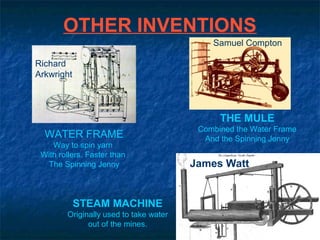
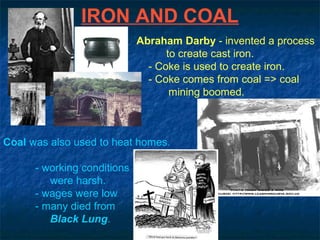
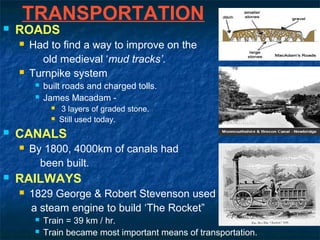
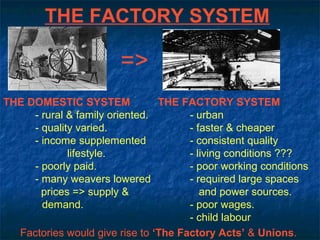

The document summarizes key factors that enabled the Industrial Revolution in Britain, including abundant natural resources like iron, coal and water power as well as developments in agriculture, transportation, and technology. Agricultural improvements in the 1700s increased crop yields and the labor supply. Inventions like the spinning jenny, water frame and steam engine mechanized textile production. New transportation networks including canals and railroads facilitated trade and distribution. The factory system replaced domestic production with larger, mechanized facilities that employed many workers.


