Unit 2.3 
Communication and professional 
relationships with children, young 
people and adults
Outcome One 
Know how to interact with and respond to 
children and young people.
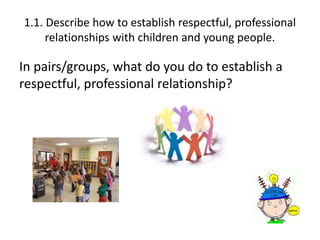
1.1. Describe how to establish respectful, professional 
relationships with children and young people. 
In pairs/groups, what do you do to establish a 
respectful, professional relationship?
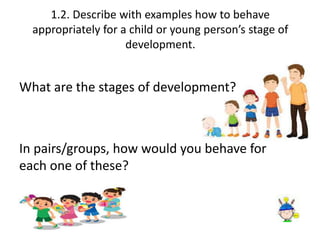
1.2. Describe with examples how to behave 
appropriately for a child or young person’s stage of 
development. 
What are the stages of development? 
In pairs/groups, how would you behave for 
each one of these?
1.3. Describe how to deal with disagreements 
between children and young people. 
Take a moment to think of a time where you have dealt 
with a disagreement. How did you deal with it? Did 
you feel it was effective? What may you have changed? 
When dealing with a disagreement what do you need 
to do first?
1.4. Describe how own behaviour could: 
‱ promote effective interactions with children and young people 
‱ impact negatively on interactions with children and young 
people. 
How would you own behaviour promote effective 
interactions? 
How would you own behaviour impact negatively on 
interactions?
Outcome Two 
Know how to interact with and respond to 
adults.
2.1. Describe how to establish respectful, 
professional relationships with adults. 
Take five minutes to note down what adults you may 
establish a professional relationship with at your 
setting? 
The support you may be required to give may be on 
several levels - PIPE 
Practical 
Informative 
Professional 
Emotional
2.2. Describe the importance of adult 
relationships as role models for children and 
young people. 
Why is it important to be a role model ? 
How do you go about this?
Outcome Three 
Know how to communicate with children, young 
people and adults.
3.1. Describe how communication with children and 
young people differs across different age ranges and 
stages of development. 
In pairs/groups take five minutes to look at the 
different age ranges and stages of children and 
young people that you may experience? 
What are the methods of communication that 
you may use and differentiate?
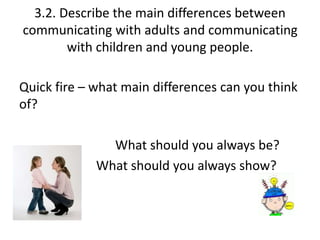
3.2. Describe the main differences between 
communicating with adults and communicating 
with children and young people. 
Quick fire – what main differences can you think 
of? 
What should you always be? 
What should you always show?
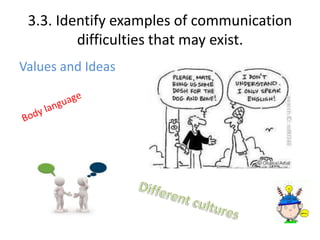
3.3. Identify examples of communication 
difficulties that may exist. 
Values and Ideas
3.4. Describe how to adapt communication to 
meet different communication needs. 
In groups, what different communication needs 
have you experienced or know of? 
How would you adapt the way in which you 
communicate to accommodate these?
3.5. Describe how to deal with disagreements between: 
‱ the practitioner and children and young people 
‱ the practitioner and other adults. 
Why do children argue? 
Do you have any experience of disagreements between 
children/young people? 
What experience do you have of disagreements 
between adults?
Outcome Four 
Know about current legislation, policies and 
procedures for confidentiality and sharing 
information, including data protection.
4.1. Identify relevant legal requirements and 
procedures covering confidentiality, data protection 
and the disclosure of information. 
In groups discuss what legal requirements and 
procedures you are aware of for; 
Confidentiality 
Data Protection 
Disclosure of information
4.2. Describe the importance of reassuring children, 
young people and adults of the confidentiality of 
shared information and the limits of this. 
Can you give examples of why it is important to 
reassure people of confidentiality? 
When and for what reason would there be a 
limit to this?
4.3. Identify the kinds of situations when 
confidentiality protocols must be breached. 
In what kind of situations should confidentiality 
be breached?

Unit 2.3 cache

  • 1.
    Unit 2.3 Communicationand professional relationships with children, young people and adults
  • 2.
    Outcome One Knowhow to interact with and respond to children and young people.
  • 3.
    1.1. Describe howto establish respectful, professional relationships with children and young people. In pairs/groups, what do you do to establish a respectful, professional relationship?
  • 4.
    1.2. Describe withexamples how to behave appropriately for a child or young person’s stage of development. What are the stages of development? In pairs/groups, how would you behave for each one of these?
  • 5.
    1.3. Describe howto deal with disagreements between children and young people. Take a moment to think of a time where you have dealt with a disagreement. How did you deal with it? Did you feel it was effective? What may you have changed? When dealing with a disagreement what do you need to do first?
  • 6.
    1.4. Describe howown behaviour could: ‱ promote effective interactions with children and young people ‱ impact negatively on interactions with children and young people. How would you own behaviour promote effective interactions? How would you own behaviour impact negatively on interactions?
  • 7.
    Outcome Two Knowhow to interact with and respond to adults.
  • 8.
    2.1. Describe howto establish respectful, professional relationships with adults. Take five minutes to note down what adults you may establish a professional relationship with at your setting? The support you may be required to give may be on several levels - PIPE Practical Informative Professional Emotional
  • 9.
    2.2. Describe theimportance of adult relationships as role models for children and young people. Why is it important to be a role model ? How do you go about this?
  • 10.
    Outcome Three Knowhow to communicate with children, young people and adults.
  • 11.
    3.1. Describe howcommunication with children and young people differs across different age ranges and stages of development. In pairs/groups take five minutes to look at the different age ranges and stages of children and young people that you may experience? What are the methods of communication that you may use and differentiate?
  • 12.
    3.2. Describe themain differences between communicating with adults and communicating with children and young people. Quick fire – what main differences can you think of? What should you always be? What should you always show?
  • 13.
    3.3. Identify examplesof communication difficulties that may exist. Values and Ideas
  • 14.
    3.4. Describe howto adapt communication to meet different communication needs. In groups, what different communication needs have you experienced or know of? How would you adapt the way in which you communicate to accommodate these?
  • 15.
    3.5. Describe howto deal with disagreements between: ‱ the practitioner and children and young people ‱ the practitioner and other adults. Why do children argue? Do you have any experience of disagreements between children/young people? What experience do you have of disagreements between adults?
  • 16.
    Outcome Four Knowabout current legislation, policies and procedures for confidentiality and sharing information, including data protection.
  • 17.
    4.1. Identify relevantlegal requirements and procedures covering confidentiality, data protection and the disclosure of information. In groups discuss what legal requirements and procedures you are aware of for; Confidentiality Data Protection Disclosure of information
  • 18.
    4.2. Describe theimportance of reassuring children, young people and adults of the confidentiality of shared information and the limits of this. Can you give examples of why it is important to reassure people of confidentiality? When and for what reason would there be a limit to this?
  • 19.
    4.3. Identify thekinds of situations when confidentiality protocols must be breached. In what kind of situations should confidentiality be breached?