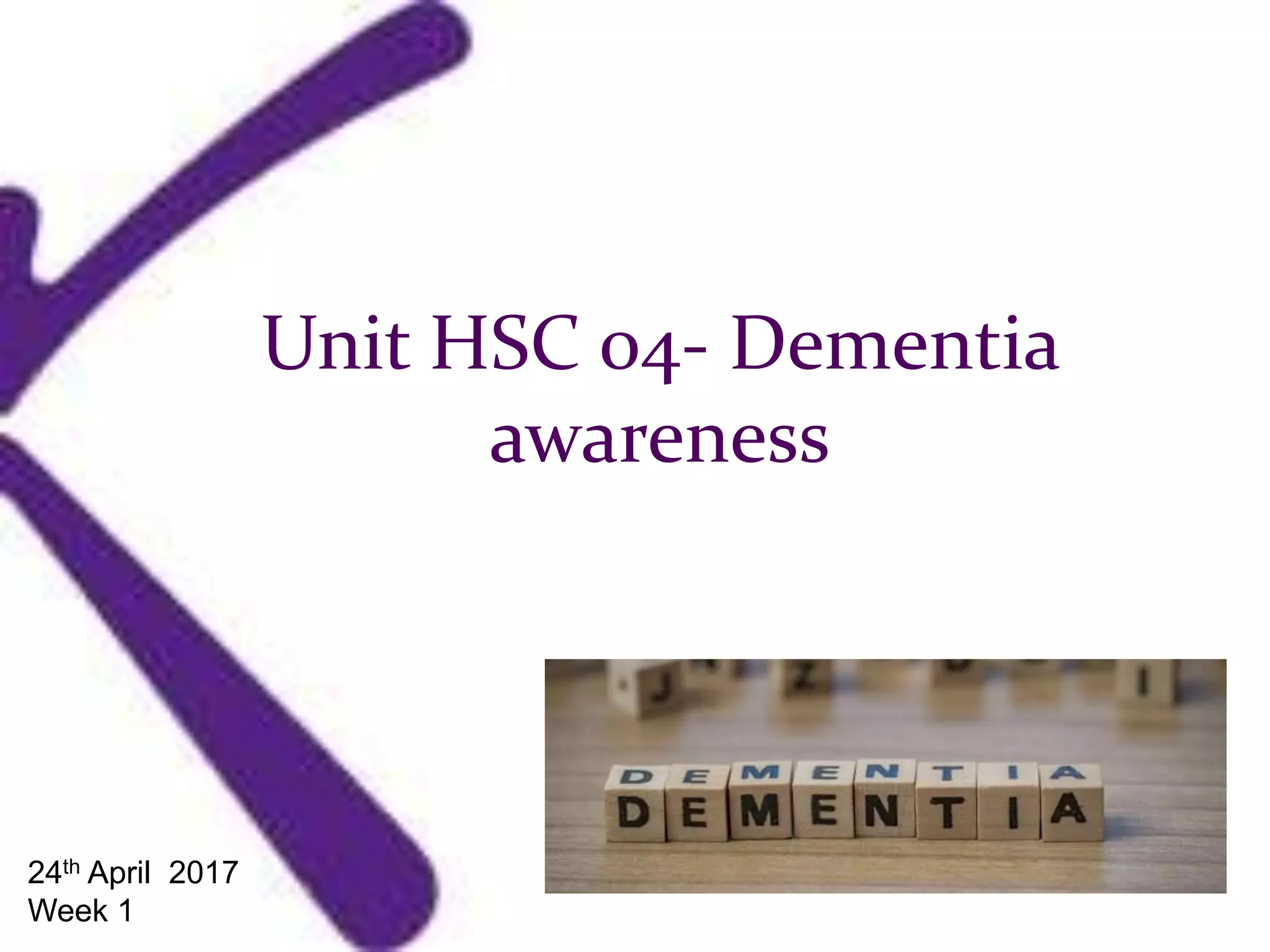
Unit HSC 04- Dementia
awareness
24th April 2017
Week 1
Time to think……..
• Words from the letters in:
• hallucinations
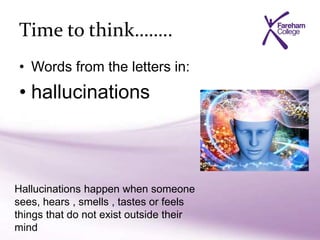
Hallucinations happen when someone
sees, hears , smells , tastes or feels
things that do not exist outside their
mind
HSC 04-Unit Aim
• The aim of this unit is to provide learners
with knowledge and understanding of
dementia.
• Assignment hand-in date:
Wednesday 7th June
Learning Outcomes
• Describe what is meant by the term
dementia
• Identify four parts of the brain
• Summarise the key functions of the brain
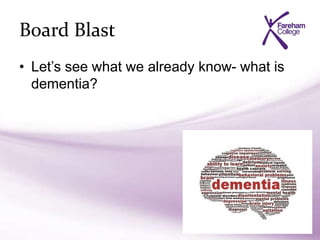
Board Blast
• Let’s see what we already know- what is
dementia?
Dementia
Definitions
• ‘Dementia is a syndrome (a group of related
symptoms) that is associated with an ongoing decline
of the brain and its abilities. These include: thinking,
language, memory, understanding and judgement.’
• (Source: www.nhs.uk/conditions/dementia)
• The brain is part of the body’s nervous system.
• When the brain becomes damaged, causing a person
to have problems such as not remembering things, not
thinking clearly or even losing the ability to speak
Have you met your
objectives?
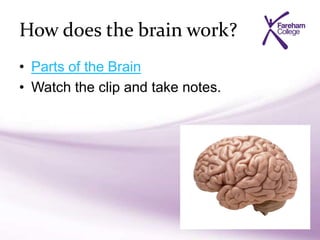
How does the brain work?
• Parts of the Brain
• Watch the clip and take notes.
Matching Game
Match the description to parts of the brain.
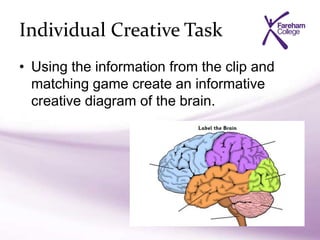
Individual Creative Task
• Using the information from the clip and
matching game create an informative
creative diagram of the brain.
Have you met your
objectives?
Task
• Small group research activity.
• Using the Nursing Times or Newspaper
Article read through and pick out
important facts about dementia.
• Bibliography example:- Nursing Times Vol
112 ( no 43/44 November ) pp 19
Unit HSC 04- Dementia
awareness
25th April 2017
Learning Outcomes
• Research the likely signs and symptoms
of a common type of dementia.
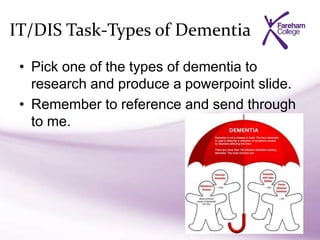
IT/DIS Task-Types of Dementia
• Pick one of the types of dementia to
research and produce a powerpoint slide.
• Remember to reference and send through
to me.
Unit HSC 04- Dementia
awareness
26th April 2017
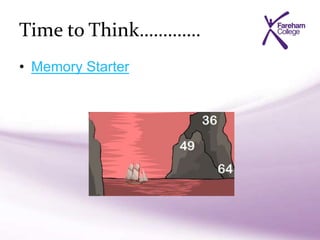
Time to Think………….
• Memory Starter
Learning Outcomes
• Outline the likely signs and symptoms of
the most common causes of dementia
• Describe six types of dementia
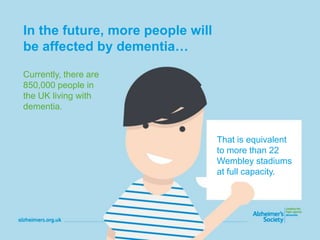
In the future, more people will
be affected by dementia…
Currently, there are
850,000 people in
the UK living with
dementia.
That is equivalent
to more than 22
Wembley stadiums
at full capacity.
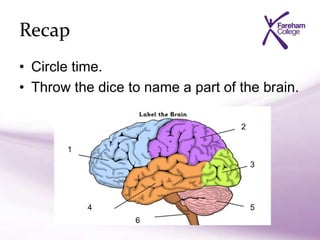
Recap
• Circle time.
• Throw the dice to name a part of the brain.
1
2
3
4 5
6
Presentations
• Students presentations
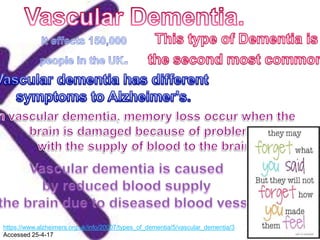
https://www.alzheimers.org.uk/info/20007/types_of_dementia/5/vascular_dementia/3
Accessed 25-4-17
Dementia With Lewy Bodies
 Shares symptoms with both Alzheimer’s disease
and Parkinsons disease.
 Accounts for 10-15% of all cases of dementia
 Lewy bodies affect the brain and nervous
system
 Lewy bodies at the base of the brain are closely
linked to problems with movement.
 Lewy bodies in the outer layers of the
brain are linked to problems with mental
abilities
Individual Task Nursing times
• Research signs and symptoms of
Alzheimer’s disease.
• Read and make notes from your research.
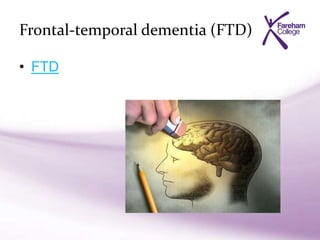
Frontal-temporal dementia (FTD)
• FTD
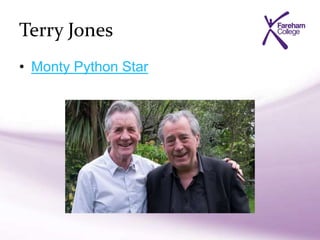
Terry Jones
• Monty Python Star
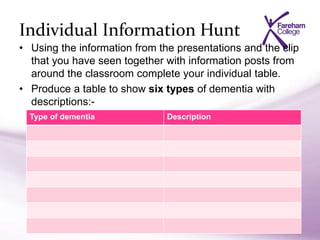
Individual Information Hunt
• Using the information from the presentations and the clip
that you have seen together with information posts from
around the classroom complete your individual table.
• Produce a table to show six types of dementia with
descriptions:-
Type of dementia Description
Unit HSC 04- Dementia
awareness
27th April 2017
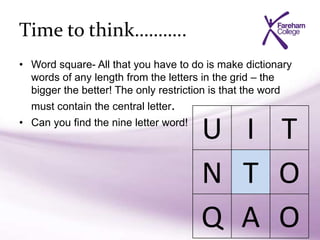
Time to think………..
• Word square- All that you have to do is make dictionary
words of any length from the letters in the grid – the
bigger the better! The only restriction is that the word
must contain the central letter.
• Can you find the nine letter word!
U I T
N T O
Q A O
QUOTATION
A piece of writing exactly as it was
written in the story or poem. It must
not be changed in any way.
Have you used a quotation
within your work today to
justify your ideas?
Learning Outcomes
• Describe the likely signs and symptoms of
the most common causes of dementia
• Outline the key functions of the brain that
are affected by dementia
• Discuss why it is important to recognise
and value a service user with dementia
Did you know?
• 64% of people living in care homes have a
form of dementia
• 33% of people over the age of 95 have
dementia
• An unhealthy lifestyle, including heavy
smoking, drinking and obesity, can affect
the circulation and therefore the blood
supply to the brain causing damage.
Recap
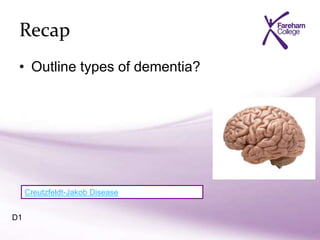
• Outline types of dementia?
Creutzfeldt-Jakob Disease
D1
Have you met your
objectives?
Graffiti Boards
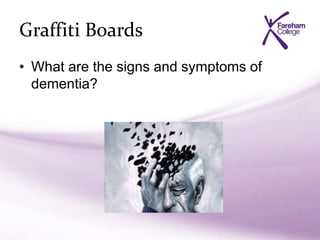
• What are the signs and symptoms of
dementia?
Loss of Memory
• This is the most common feature of
dementia and can cause the most
difficulties and anxieties for the person
living with dementia.
• In short-term memory, the memories are
the most recent and help us to remember
new experiences.
• In long-term memory, the memories are
from past events.
Individual Creative Task
Put together a poster which describes
and highlights signs and symptoms of
dementia. You need to explain the
symptoms using full sentences. For
example, interpreting the world means
dementia suffers may not
understand……….
Have you met your
objectives?
Review
• Kahoot!!

Unit hsc 04 week 1

  • 1.
    Unit HSC 04-Dementia awareness 24th April 2017 Week 1
  • 2.
    Time to think…….. •Words from the letters in: • hallucinations Hallucinations happen when someone sees, hears , smells , tastes or feels things that do not exist outside their mind
  • 3.
    HSC 04-Unit Aim •The aim of this unit is to provide learners with knowledge and understanding of dementia. • Assignment hand-in date: Wednesday 7th June
  • 4.
    Learning Outcomes • Describewhat is meant by the term dementia • Identify four parts of the brain • Summarise the key functions of the brain
  • 5.
    Board Blast • Let’ssee what we already know- what is dementia?
  • 6.
    Dementia Definitions • ‘Dementia isa syndrome (a group of related symptoms) that is associated with an ongoing decline of the brain and its abilities. These include: thinking, language, memory, understanding and judgement.’ • (Source: www.nhs.uk/conditions/dementia) • The brain is part of the body’s nervous system. • When the brain becomes damaged, causing a person to have problems such as not remembering things, not thinking clearly or even losing the ability to speak
  • 7.
    Have you metyour objectives?
  • 8.
    How does thebrain work? • Parts of the Brain • Watch the clip and take notes.
  • 9.
    Matching Game Match thedescription to parts of the brain.
  • 10.
    Individual Creative Task •Using the information from the clip and matching game create an informative creative diagram of the brain.
  • 11.
    Have you metyour objectives?
  • 12.
    Task • Small groupresearch activity. • Using the Nursing Times or Newspaper Article read through and pick out important facts about dementia. • Bibliography example:- Nursing Times Vol 112 ( no 43/44 November ) pp 19
  • 13.
    Unit HSC 04-Dementia awareness 25th April 2017
  • 14.
    Learning Outcomes • Researchthe likely signs and symptoms of a common type of dementia.
  • 15.
    IT/DIS Task-Types ofDementia • Pick one of the types of dementia to research and produce a powerpoint slide. • Remember to reference and send through to me.
  • 16.
    Unit HSC 04-Dementia awareness 26th April 2017
  • 17.
  • 18.
    Learning Outcomes • Outlinethe likely signs and symptoms of the most common causes of dementia • Describe six types of dementia
  • 19.
    In the future,more people will be affected by dementia… Currently, there are 850,000 people in the UK living with dementia. That is equivalent to more than 22 Wembley stadiums at full capacity.
  • 20.
    Recap • Circle time. •Throw the dice to name a part of the brain. 1 2 3 4 5 6
  • 21.
  • 22.
  • 23.
    Dementia With LewyBodies  Shares symptoms with both Alzheimer’s disease and Parkinsons disease.  Accounts for 10-15% of all cases of dementia  Lewy bodies affect the brain and nervous system  Lewy bodies at the base of the brain are closely linked to problems with movement.  Lewy bodies in the outer layers of the brain are linked to problems with mental abilities
  • 24.
    Individual Task Nursingtimes • Research signs and symptoms of Alzheimer’s disease. • Read and make notes from your research.
  • 25.
  • 26.
  • 27.
    Individual Information Hunt •Using the information from the presentations and the clip that you have seen together with information posts from around the classroom complete your individual table. • Produce a table to show six types of dementia with descriptions:- Type of dementia Description
  • 28.
    Unit HSC 04-Dementia awareness 27th April 2017
  • 29.
    Time to think……….. •Word square- All that you have to do is make dictionary words of any length from the letters in the grid – the bigger the better! The only restriction is that the word must contain the central letter. • Can you find the nine letter word! U I T N T O Q A O
  • 30.
    QUOTATION A piece ofwriting exactly as it was written in the story or poem. It must not be changed in any way. Have you used a quotation within your work today to justify your ideas?
  • 31.
    Learning Outcomes • Describethe likely signs and symptoms of the most common causes of dementia • Outline the key functions of the brain that are affected by dementia • Discuss why it is important to recognise and value a service user with dementia
  • 32.
    Did you know? •64% of people living in care homes have a form of dementia • 33% of people over the age of 95 have dementia • An unhealthy lifestyle, including heavy smoking, drinking and obesity, can affect the circulation and therefore the blood supply to the brain causing damage.
  • 33.
    Recap • Outline typesof dementia? Creutzfeldt-Jakob Disease D1
  • 35.
    Have you metyour objectives?
  • 36.
    Graffiti Boards • Whatare the signs and symptoms of dementia?
  • 38.
    Loss of Memory •This is the most common feature of dementia and can cause the most difficulties and anxieties for the person living with dementia. • In short-term memory, the memories are the most recent and help us to remember new experiences. • In long-term memory, the memories are from past events.

  • 39.
    Individual Creative Task Puttogether a poster which describes and highlights signs and symptoms of dementia. You need to explain the symptoms using full sentences. For example, interpreting the world means dementia suffers may not understand……….

  • 40.
    Have you metyour objectives?
  • 41.