Unit CYP Core 3.3 
Understand how to safeguard the 
well-being of children and young 
people
This unit provides the knowledge and 
understanding required to support the 
safeguarding of children and young people. The 
unit contains material on e-safety.
Outcome one 
Understand the main legislation, guidelines, 
policies and procedures for safeguarding 
children and young people.
1.1. Outline current legislation, guidelines, policies and 
procedures within own UK Home Nation affecting the 
safeguarding of children and young people.
1.2. Explain child protection within the wider concept 
of safeguarding children and young people. 
In groups what do you feel child protection is? 
How does it fit within safeguarding?
1.3. Analyse how national and local guidelines, 
policies and procedures for safeguarding affect day to 
day work with children and young people.
1.4. Explain when and why inquiries and serious case 
reviews are required and how the sharing of the 
findings informs practice.
1.5. Explain how the processes used by own work setting or 
service comply with legislation that covers data protection, 
information handling and sharing.
Outcome two 
Understand the importance of working in 
partnership with other organisations to 
safeguard children and young people
2.1. Explain the importance of safeguarding 
children and young people. 
Why is it important to safeguard children and 
YP? 
We have a duty of care to children and YP. 
What could you prevent?
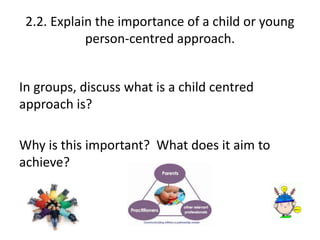
2.2. Explain the importance of a child or young 
person-centred approach. 
In groups, discuss what is a child centred 
approach is? 
Why is this important? What does it aim to 
achieve?
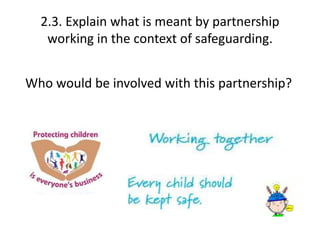
2.3. Explain what is meant by partnership 
working in the context of safeguarding. 
Who would be involved with this partnership?
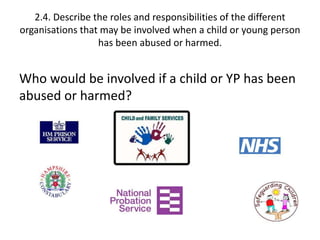
2.4. Describe the roles and responsibilities of the different 
organisations that may be involved when a child or young person 
has been abused or harmed. 
Who would be involved if a child or YP has been 
abused or harmed?
Outcome three 
Understand the importance of ensuring children 
and young people’s safety and protection in the 
work setting.
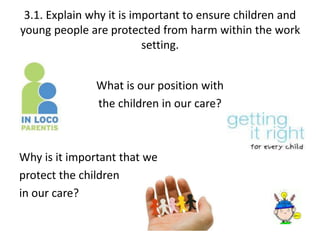
3.1. Explain why it is important to ensure children and 
young people are protected from harm within the work 
setting. 
What is our position with 
the children in our care? 
Why is it important that we 
protect the children 
in our care?
3.2. Explain policies and procedures that are in place to protect 
children and young people and adults who work with them. 
In groups what polices and procedures do you 
know that are in place in your setting to protect 
children and YP and yourselves?
3.3. Evaluate ways in which concerns about poor 
practice can be reported whilst ensuring that whistle-blowers 
and those whose practice or behaviour is being 
questioned are protected.
3.4. Explain how practitioners can take steps to protect 
themselves within their everyday practice in the work setting 
and on off site visits. 
How do you protect yourself in your work 
setting? 
What things do you do or not do to ensure your 
safety and protection on off site visits?
Outcome four 
Understand how to respond to evidence or 
concerns that a child or young person has been 
abused or harmed.
4.1. Describe the possible signs, symptoms, indicators 
and behaviours that may cause concern in the context 
of safeguarding. 
What are the four types of abuse? 
In four groups describe what signs, symptoms, 
indicators and behaviours you may see.
4.2. Describe the actions to take if a child or 
young person alleges harm or abuse in line with 
policies and procedures of own setting. 
Research the policies and procedures of your 
setting. 
Describe the actions you would take in line with 
these.
4.3. Explain the rights that children, young 
people and their carers have in situations where 
harm or abuse is suspected or alleged. 
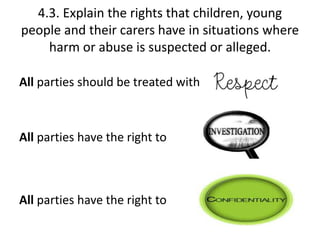
All parties should be treated with 
All parties have the right to 
All parties have the right to
Outcome five 
Understand how to respond to evidence or 
concerns that a child or young person has been 
bullied.
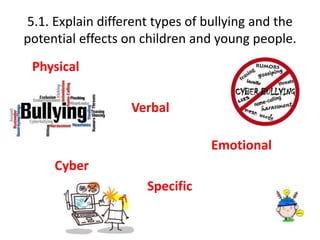
5.1. Explain different types of bullying and the 
potential effects on children and young people. 
Physical 
Verbal 
Emotional 
Cyber 
Specific
5.2. Outline the policies and procedures that should be 
followed in response to concerns or evidence of 
bullying and explain the reasons why they are in place. 
Do you know what your settings policy and procedure 
is with regards to bullying? 
Under the School Standards and Framework Act 1998 
head teachers are obliged to draw up procedures. 
Why are these in place?
5.3. Explain how to support a child or young person 
and/or their family when bullying is suspected or alleged. 
What does your settings policy say? 
What have you previously done? 
What may you do if you find you need to give support?
Outcome Six 
Understand how to work with children and 
young people to support their safety and 
wellbeing.
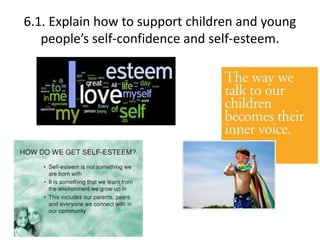
6.1. Explain how to support children and young 
people’s self-confidence and self-esteem.
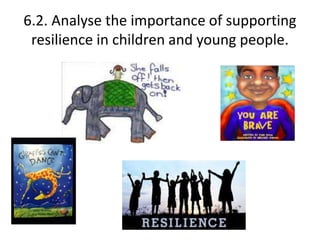
6.2. Analyse the importance of supporting 
resilience in children and young people.
6.3. Explain why it is important to work with the child 
or young person to ensure they have strategies to 
protect themselves and make decisions about safety. 
All children have a right to be safe and feel 
protected. 
The UN Convention on the Rights of the Child
6.4. Explain ways of empowering children and young 
people to make positive and informed choices that 
support their well-being and safety. 
Does you school have procedures to encourage 
this? 
How do you do this? 
f
Outcome Seven 
Understand the importance of e-safety for 
children and young people.
7.1. Explain the risks and possible consequences for 
children and young people of being online and of using 
a mobile phone.
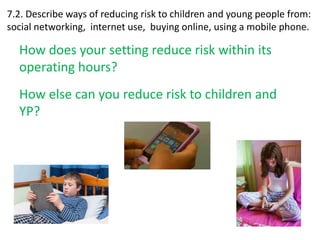
7.2. Describe ways of reducing risk to children and young people from: 
social networking, internet use, buying online, using a mobile phone. 
How does your setting reduce risk within its 
operating hours? 
How else can you reduce risk to children and 
YP?

Cyp core 3.3 (333) safeguarding

  • 1.
    Unit CYP Core3.3 Understand how to safeguard the well-being of children and young people
  • 2.
    This unit providesthe knowledge and understanding required to support the safeguarding of children and young people. The unit contains material on e-safety.
  • 3.
    Outcome one Understandthe main legislation, guidelines, policies and procedures for safeguarding children and young people.
  • 4.
    1.1. Outline currentlegislation, guidelines, policies and procedures within own UK Home Nation affecting the safeguarding of children and young people.
  • 5.
    1.2. Explain childprotection within the wider concept of safeguarding children and young people. In groups what do you feel child protection is? How does it fit within safeguarding?
  • 6.
    1.3. Analyse hownational and local guidelines, policies and procedures for safeguarding affect day to day work with children and young people.
  • 7.
    1.4. Explain whenand why inquiries and serious case reviews are required and how the sharing of the findings informs practice.
  • 8.
    1.5. Explain howthe processes used by own work setting or service comply with legislation that covers data protection, information handling and sharing.
  • 9.
    Outcome two Understandthe importance of working in partnership with other organisations to safeguard children and young people
  • 10.
    2.1. Explain theimportance of safeguarding children and young people. Why is it important to safeguard children and YP? We have a duty of care to children and YP. What could you prevent?
  • 11.
    2.2. Explain theimportance of a child or young person-centred approach. In groups, discuss what is a child centred approach is? Why is this important? What does it aim to achieve?
  • 12.
    2.3. Explain whatis meant by partnership working in the context of safeguarding. Who would be involved with this partnership?
  • 13.
    2.4. Describe theroles and responsibilities of the different organisations that may be involved when a child or young person has been abused or harmed. Who would be involved if a child or YP has been abused or harmed?
  • 14.
    Outcome three Understandthe importance of ensuring children and young people’s safety and protection in the work setting.
  • 15.
    3.1. Explain whyit is important to ensure children and young people are protected from harm within the work setting. What is our position with the children in our care? Why is it important that we protect the children in our care?
  • 16.
    3.2. Explain policiesand procedures that are in place to protect children and young people and adults who work with them. In groups what polices and procedures do you know that are in place in your setting to protect children and YP and yourselves?
  • 17.
    3.3. Evaluate waysin which concerns about poor practice can be reported whilst ensuring that whistle-blowers and those whose practice or behaviour is being questioned are protected.
  • 18.
    3.4. Explain howpractitioners can take steps to protect themselves within their everyday practice in the work setting and on off site visits. How do you protect yourself in your work setting? What things do you do or not do to ensure your safety and protection on off site visits?
  • 19.
    Outcome four Understandhow to respond to evidence or concerns that a child or young person has been abused or harmed.
  • 20.
    4.1. Describe thepossible signs, symptoms, indicators and behaviours that may cause concern in the context of safeguarding. What are the four types of abuse? In four groups describe what signs, symptoms, indicators and behaviours you may see.
  • 21.
    4.2. Describe theactions to take if a child or young person alleges harm or abuse in line with policies and procedures of own setting. Research the policies and procedures of your setting. Describe the actions you would take in line with these.
  • 22.
    4.3. Explain therights that children, young people and their carers have in situations where harm or abuse is suspected or alleged. All parties should be treated with All parties have the right to All parties have the right to
  • 23.
    Outcome five Understandhow to respond to evidence or concerns that a child or young person has been bullied.
  • 24.
    5.1. Explain differenttypes of bullying and the potential effects on children and young people. Physical Verbal Emotional Cyber Specific
  • 25.
    5.2. Outline thepolicies and procedures that should be followed in response to concerns or evidence of bullying and explain the reasons why they are in place. Do you know what your settings policy and procedure is with regards to bullying? Under the School Standards and Framework Act 1998 head teachers are obliged to draw up procedures. Why are these in place?
  • 26.
    5.3. Explain howto support a child or young person and/or their family when bullying is suspected or alleged. What does your settings policy say? What have you previously done? What may you do if you find you need to give support?
  • 27.
    Outcome Six Understandhow to work with children and young people to support their safety and wellbeing.
  • 28.
    6.1. Explain howto support children and young people’s self-confidence and self-esteem.
  • 29.
    6.2. Analyse theimportance of supporting resilience in children and young people.
  • 30.
    6.3. Explain whyit is important to work with the child or young person to ensure they have strategies to protect themselves and make decisions about safety. All children have a right to be safe and feel protected. The UN Convention on the Rights of the Child
  • 31.
    6.4. Explain waysof empowering children and young people to make positive and informed choices that support their well-being and safety. Does you school have procedures to encourage this? How do you do this? f
  • 32.
    Outcome Seven Understandthe importance of e-safety for children and young people.
  • 33.
    7.1. Explain therisks and possible consequences for children and young people of being online and of using a mobile phone.
  • 34.
    7.2. Describe waysof reducing risk to children and young people from: social networking, internet use, buying online, using a mobile phone. How does your setting reduce risk within its operating hours? How else can you reduce risk to children and YP?