Unit 2.2 
Safeguarding the welfare of children 
and young people
Outcome One 
Know about the legislation, guidelines, policies 
and procedures for safeguarding the welfare of 
children and young people including e-safety.
1.1 Identify the current legislation, guidelines, policies and 
procedures for safeguarding the welfare of children and young 
people including e- safety. 
In pairs, what current legislation do you know 
of?
1.2. Describe the roles of different agencies 
involved in safeguarding the welfare of children 
and young people. 
What agencies are you aware of involved in the 
safeguarding and welfare of C&YP?
Outcome Two 
Know what to do when children or young people 
are ill or injured, including emergency 
procedures.
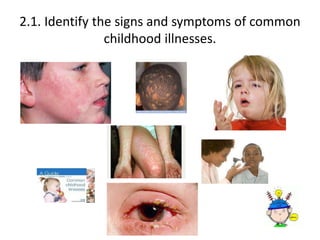
2.1. Identify the signs and symptoms of common 
childhood illnesses.
2.2. Describe the actions to take when 
children or young people are ill or injured.
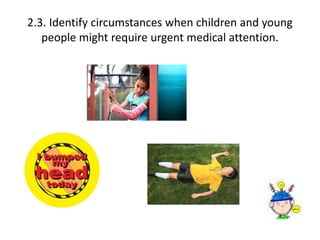
2.3. Identify circumstances when children and young 
people might require urgent medical attention.
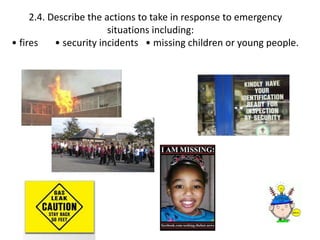
2.4. Describe the actions to take in response to emergency 
situations including: 
• fires • security incidents • missing children or young people.
Outcome Three 
Know how to respond to evidence or concerns 
that a child or young person has been abused, 
harmed or bullied.
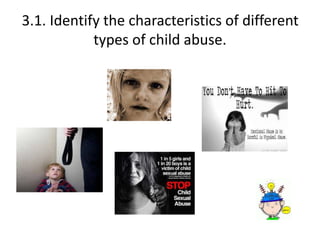
3.1. Identify the characteristics of different 
types of child abuse.
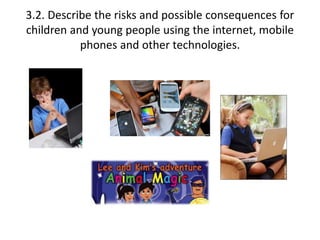
3.2. Describe the risks and possible consequences for 
children and young people using the internet, mobile 
phones and other technologies.
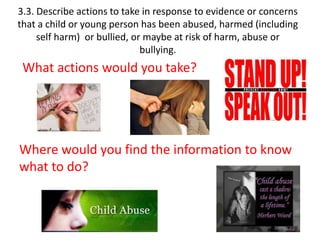
3.3. Describe actions to take in response to evidence or concerns 
that a child or young person has been abused, harmed (including 
self harm) or bullied, or maybe at risk of harm, abuse or 
bullying. 
What actions would you take? 
Where would you find the information to know 
what to do?
3.4. Describe the actions to take in response to concerns that a colleague may 
be: 
• failing to comply with safeguarding procedures 
• harming, abusing or bullying a child or young person. 
What action would you take?
3.5. Describe the principles and boundaries 
of confidentiality and when to share 
information. 
Is confidentiality essential? 
What would you say the principles are? 
When would you share information?

Unit 2.2 Safeguarding the welfare of children and young people

  • 1.
    Unit 2.2 Safeguardingthe welfare of children and young people
  • 2.
    Outcome One Knowabout the legislation, guidelines, policies and procedures for safeguarding the welfare of children and young people including e-safety.
  • 3.
    1.1 Identify thecurrent legislation, guidelines, policies and procedures for safeguarding the welfare of children and young people including e- safety. In pairs, what current legislation do you know of?
  • 4.
    1.2. Describe theroles of different agencies involved in safeguarding the welfare of children and young people. What agencies are you aware of involved in the safeguarding and welfare of C&YP?
  • 5.
    Outcome Two Knowwhat to do when children or young people are ill or injured, including emergency procedures.
  • 6.
    2.1. Identify thesigns and symptoms of common childhood illnesses.
  • 7.
    2.2. Describe theactions to take when children or young people are ill or injured.
  • 8.
    2.3. Identify circumstanceswhen children and young people might require urgent medical attention.
  • 9.
    2.4. Describe theactions to take in response to emergency situations including: • fires • security incidents • missing children or young people.
  • 10.
    Outcome Three Knowhow to respond to evidence or concerns that a child or young person has been abused, harmed or bullied.
  • 11.
    3.1. Identify thecharacteristics of different types of child abuse.
  • 12.
    3.2. Describe therisks and possible consequences for children and young people using the internet, mobile phones and other technologies.
  • 13.
    3.3. Describe actionsto take in response to evidence or concerns that a child or young person has been abused, harmed (including self harm) or bullied, or maybe at risk of harm, abuse or bullying. What actions would you take? Where would you find the information to know what to do?
  • 14.
    3.4. Describe theactions to take in response to concerns that a colleague may be: • failing to comply with safeguarding procedures • harming, abusing or bullying a child or young person. What action would you take?
  • 15.
    3.5. Describe theprinciples and boundaries of confidentiality and when to share information. Is confidentiality essential? What would you say the principles are? When would you share information?