
UNIT 1. LIVING
ORGANISMS
WHAT TO LEARN
 Chemical composition of living organisms.
 The vital functions
 The structure of cells
 The type of cells
 The cell theory
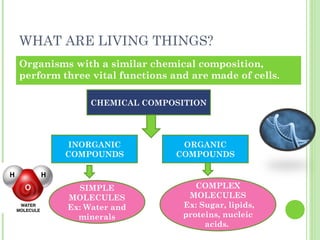
WHAT ARE LIVING THINGS?
Organisms with a similar chemical composition,
perform three vital functions and are made of cells.
CHEMICAL COMPOSITION
INORGANIC
COMPOUNDS
ORGANIC
COMPOUNDS
SIMPLE
MOLECULES
Ex: Water and
minerals
COMPLEX
MOLECULES
Ex: Sugar, lipids,
proteins, nucleic
acids.
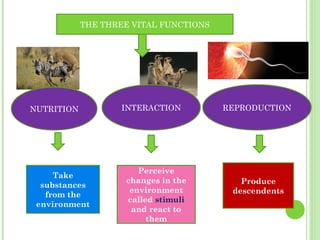
THE THREE VITAL FUNCTIONS
NUTRITION INTERACTION REPRODUCTION
Take
substances
from the
environment
Perceive
changes in the
environment
called stimuli
and react to
them
Produce
descendents
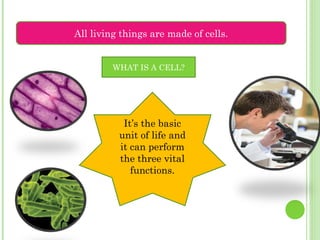
WHAT IS A CELL?
All living things are made of cells.
It’s the basic
unit of life and
it can perform
the three vital
functions.
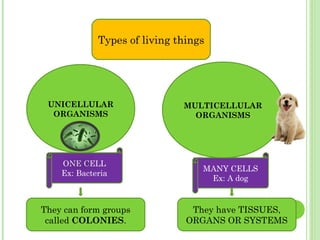
Types of living things
UNICELLULAR
ORGANISMS
MULTICELLULAR
ORGANISMS
ONE CELL
Ex: Bacteria
MANY CELLS
Ex: A dog
They can form groups
called COLONIES.
They have TISSUES,
ORGANS OR SYSTEMS
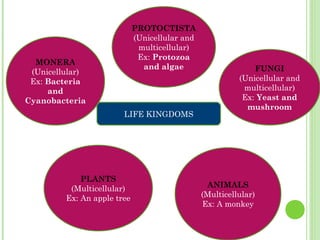
LIFE KINGDOMS
MONERA
(Unicellular)
Ex: Bacteria
and
Cyanobacteria
PROTOCTISTA
(Unicellular and
multicellular)
Ex: Protozoa
and algae FUNGI
(Unicellular and
multicellular)
Ex: Yeast and
mushroom
ANIMALS
(Multicellular)
Ex: A monkey
PLANTS
(Multicellular)
Ex: An apple tree
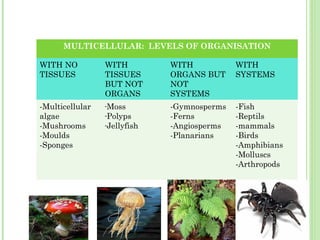
MULTICELLULAR: LEVELS OF ORGANISATION
WITH NO
TISSUES
WITH
TISSUES
BUT NOT
ORGANS
WITH
ORGANS BUT
NOT
SYSTEMS
WITH
SYSTEMS
-Multicellular
algae
-Mushrooms
-Moulds
-Sponges
-Moss
-Polyps
-Jellyfish
-Gymnosperms
-Ferns
-Angiosperms
-Planarians
-Fish
-Reptils
-mammals
-Birds
-Amphibians
-Molluscs
-Arthropods
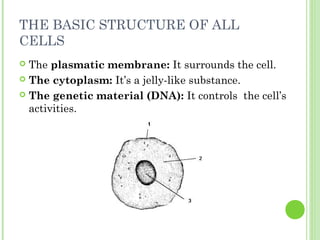
THE BASIC STRUCTURE OF ALL
CELLS
 The plasmatic membrane: It surrounds the cell.
 The cytoplasm: It’s a jelly-like substance.
 The genetic material (DNA): It controls the cell’s
activities.
TYPES OF CELLS
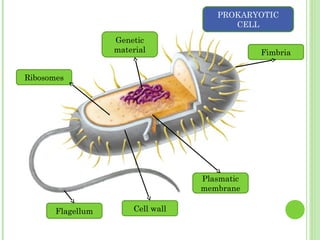
 PROKARYOTIC CELLS: (Monera Kingdom)
 The DNA floats in the citoplasm.
 They have a cell wall.
 Sometimes they have flagella.
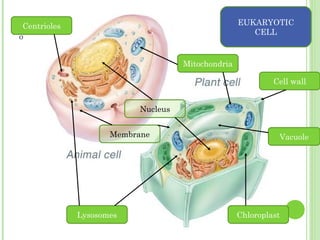
 EUKARYOTIC CELLS (Protoctist, Fungi, Plant, Animal
Kingdom)
 The DNA is in the nucleus.
 They have a lot of organelles, like mitochondria.
 Two types:
 Plant cells: They have chloroplasts to perform
photosynthesis and a rigid cell wall.
 Animal cells: They have centrioles to divide the
cell. They have cilia and flagella to move around.
Flagellum Cell wall
Plasmatic
membrane
Genetic
material Fimbria
Ribosomes
PROKARYOTIC
CELL
º
EUKARYOTIC
CELL
Chloroplast
Mitochondria
Membrane
Centrioles
Vacuole
Lysosomes
Nucleus
Cell wall
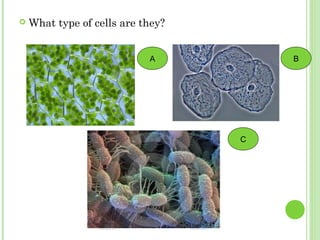
 What type of cells are they?
C
A B
ACTIVITIES
1. The following sentences are false, correct
them in your notebook.
a)All the living things except bacteria are made of cells.
b)All cells have plasmatic membrane, cytoplasm and a
nucleus.
c)Eukaryotic cells have a nucleus, but they do not have any
other organelles.
d)Eukaryotic plant cells have chloroplasts, but they do not
have mitochondria.
2. Why was the microscope important in the
discovery of cells?
3. Classify the following compounds as
organic or inorganic:
Glucids:
Water:
Vitamins:
Proteins:
Lipids:
Nucleic acids:
Mineral salts:
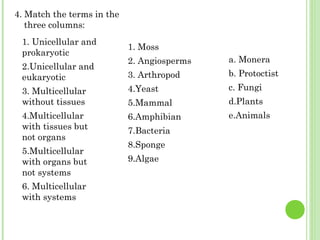
4. Match the terms in the
three columns:
1. Unicellular and
prokaryotic
2.Unicellular and
eukaryotic
3. Multicellular
without tissues
4.Multicellular
with tissues but
not organs
5.Multicellular
with organs but
not systems
6. Multicellular
with systems
1. Moss
2. Angiosperms
3. Arthropod
4.Yeast
5.Mammal
6.Amphibian
7.Bacteria
8.Sponge
9.Algae
a. Monera
b. Protoctist
c. Fungi
d.Plants
e.Animals
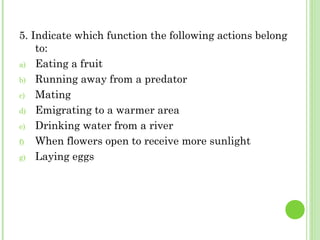
5. Indicate which function the following actions belong
to:
a) Eating a fruit
b) Running away from a predator
c) Mating
d) Emigrating to a warmer area
e) Drinking water from a river
f) When flowers open to receive more sunlight
g) Laying eggs
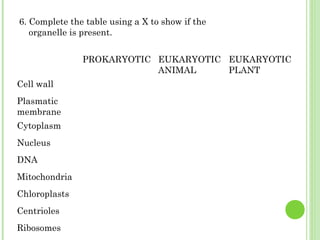
6. Complete the table using a X to show if the
organelle is present.
PROKARYOTIC EUKARYOTIC
ANIMAL
EUKARYOTIC
PLANT
Cell wall
Plasmatic
membrane
Cytoplasm
Nucleus
DNA
Mitochondria
Chloroplasts
Centrioles
Ribosomes

Unit 1 Living organisms

  • 1.
  • 2.
    WHAT TO LEARN Chemical composition of living organisms.  The vital functions  The structure of cells  The type of cells  The cell theory
  • 3.
    WHAT ARE LIVINGTHINGS? Organisms with a similar chemical composition, perform three vital functions and are made of cells. CHEMICAL COMPOSITION INORGANIC COMPOUNDS ORGANIC COMPOUNDS SIMPLE MOLECULES Ex: Water and minerals COMPLEX MOLECULES Ex: Sugar, lipids, proteins, nucleic acids.
  • 4.
    THE THREE VITALFUNCTIONS NUTRITION INTERACTION REPRODUCTION Take substances from the environment Perceive changes in the environment called stimuli and react to them Produce descendents
  • 5.
    WHAT IS ACELL? All living things are made of cells. It’s the basic unit of life and it can perform the three vital functions.
  • 6.
    Types of livingthings UNICELLULAR ORGANISMS MULTICELLULAR ORGANISMS ONE CELL Ex: Bacteria MANY CELLS Ex: A dog They can form groups called COLONIES. They have TISSUES, ORGANS OR SYSTEMS
  • 7.
    LIFE KINGDOMS MONERA (Unicellular) Ex: Bacteria and Cyanobacteria PROTOCTISTA (Unicellularand multicellular) Ex: Protozoa and algae FUNGI (Unicellular and multicellular) Ex: Yeast and mushroom ANIMALS (Multicellular) Ex: A monkey PLANTS (Multicellular) Ex: An apple tree
  • 9.
    MULTICELLULAR: LEVELS OFORGANISATION WITH NO TISSUES WITH TISSUES BUT NOT ORGANS WITH ORGANS BUT NOT SYSTEMS WITH SYSTEMS -Multicellular algae -Mushrooms -Moulds -Sponges -Moss -Polyps -Jellyfish -Gymnosperms -Ferns -Angiosperms -Planarians -Fish -Reptils -mammals -Birds -Amphibians -Molluscs -Arthropods
  • 10.
    THE BASIC STRUCTUREOF ALL CELLS  The plasmatic membrane: It surrounds the cell.  The cytoplasm: It’s a jelly-like substance.  The genetic material (DNA): It controls the cell’s activities.
  • 11.
    TYPES OF CELLS PROKARYOTIC CELLS: (Monera Kingdom)  The DNA floats in the citoplasm.  They have a cell wall.  Sometimes they have flagella.  EUKARYOTIC CELLS (Protoctist, Fungi, Plant, Animal Kingdom)  The DNA is in the nucleus.  They have a lot of organelles, like mitochondria.  Two types:  Plant cells: They have chloroplasts to perform photosynthesis and a rigid cell wall.  Animal cells: They have centrioles to divide the cell. They have cilia and flagella to move around.
  • 12.
  • 13.
  • 14.
     What typeof cells are they? C A B
  • 15.
    ACTIVITIES 1. The followingsentences are false, correct them in your notebook. a)All the living things except bacteria are made of cells. b)All cells have plasmatic membrane, cytoplasm and a nucleus. c)Eukaryotic cells have a nucleus, but they do not have any other organelles. d)Eukaryotic plant cells have chloroplasts, but they do not have mitochondria. 2. Why was the microscope important in the discovery of cells?
  • 16.
    3. Classify thefollowing compounds as organic or inorganic: Glucids: Water: Vitamins: Proteins: Lipids: Nucleic acids: Mineral salts:
  • 17.
    4. Match theterms in the three columns: 1. Unicellular and prokaryotic 2.Unicellular and eukaryotic 3. Multicellular without tissues 4.Multicellular with tissues but not organs 5.Multicellular with organs but not systems 6. Multicellular with systems 1. Moss 2. Angiosperms 3. Arthropod 4.Yeast 5.Mammal 6.Amphibian 7.Bacteria 8.Sponge 9.Algae a. Monera b. Protoctist c. Fungi d.Plants e.Animals
  • 18.
    5. Indicate whichfunction the following actions belong to: a) Eating a fruit b) Running away from a predator c) Mating d) Emigrating to a warmer area e) Drinking water from a river f) When flowers open to receive more sunlight g) Laying eggs
  • 19.
    6. Complete thetable using a X to show if the organelle is present. PROKARYOTIC EUKARYOTIC ANIMAL EUKARYOTIC PLANT Cell wall Plasmatic membrane Cytoplasm Nucleus DNA Mitochondria Chloroplasts Centrioles Ribosomes