Unidad 8 ~ La Comuidad 
Vocabulario Nuevo, Venir de, Acabar de, the 
Present Progressive Tense & Adverbs
¿Preguntas? ~ Questions 
When did you attend (provide date and time)? 
Who was the teacher/presenter? 
What did you cover/learn? (You should include a complete copy of your notes with at 
least 10 specific things discussed/covered.) 
What do you still have questions about? (You should always have questions, so do 
NOT put "none.") 
What do you need to work on/improve? (This should be specific, regarding at least 
one thing that was discussed in the session.) 
How do you plan to improve in the area/s listed above? (Again, be as specific as 
possible.) 
How can I (your teacher) help you? (Again, be as specific as possible.) 
Please use COMPLETE SENTENCES in your responses and submit this at the 
bottom of the RSS Assignment page.
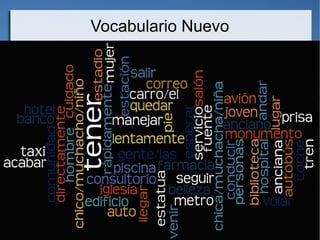
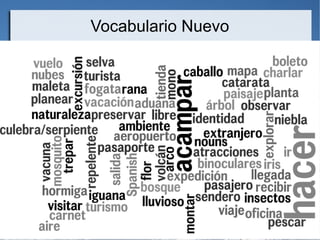
Vocabulario Nuevo
Vocabulario Nuevo
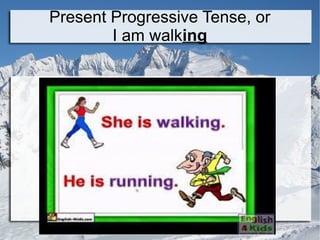
Present Progressive Tense, or 
I am walking
Present Progressive Tense 
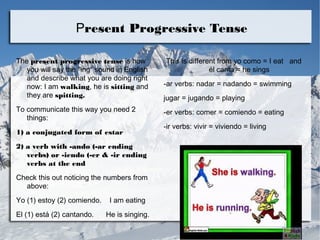
The present progressive tense is how 
you will say the "ing" sound in English 
and describe what you are doing right 
now: I am walking, he is sitting and 
they are spitting. 
To communicate this way you need 2 
things: 
1) a conjugated form of estar 
2) a verb with -ando (-ar ending 
verbs) or -iendo (-er & -ir ending 
verbs at the end 
Check this out noticing the numbers from 
above: 
Yo (1) estoy (2) comiendo. I am eating 
El (1) está (2) cantando. He is singing. 
This is different from yo como = I eat and 
él canta = he sings 
-ar verbs: nadar = nadando = swimming 
jugar = jugando = playing 
-er verbs: comer = comiendo = eating 
-ir verbs: vivir = viviendo = living
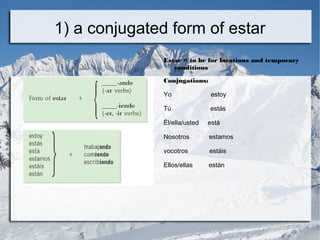
1) a conjugated form of estar 
Estar = to be for locations and temporary 
conditions 
Conjugations: 
Yo estoy 
Tú estás 
Èl/ella/usted está 
Nosotros estamos 
vocotros estáis 
Ellos/ellas están
Ejemplos 
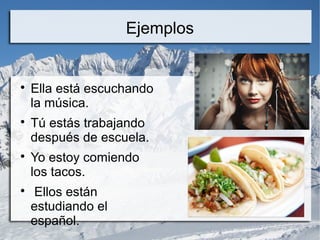
 Ella está escuchando 
la música. 
 Tú estás trabajando 
después de escuela. 
 Yo estoy comiendo 
los tacos. 
 Ellos están 
estudiando el 
español.
Ejemplos 
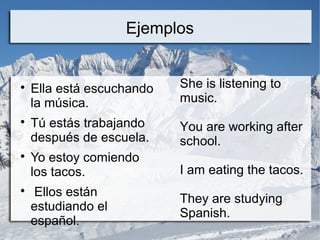
 Ella está escuchando 
la música. 
 Tú estás trabajando 
después de escuela. 
 Yo estoy comiendo 
los tacos. 
 Ellos están 
estudiando el 
español. 
She is listening to 
music. 
You are working after 
school. 
I am eating the tacos. 
They are studying 
Spanish.
Review 
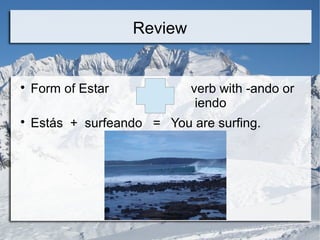
 Form of Estar verb with -ando or 
iendo 
 Estás + surfeando = You are surfing.
Review 
 Form of Estar verb with -ando or 
iendo 
 Estoy + hablando español. = I am speaking 
Spanish.
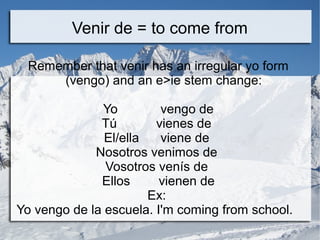
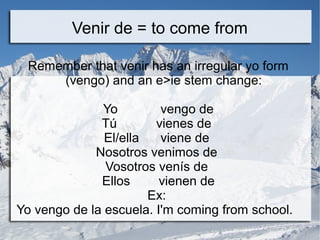
Venir de = to come from 
Remember that venir has an irregular yo form 
(vengo) and an e>ie stem change: 
Yo vengo de 
Tú vienes de 
El/ella viene de 
Nosotros venimos de 
Vosotros venís de 
Ellos vienen de 
Ex: 
Yo vengo de la escuela. I'm coming from school.
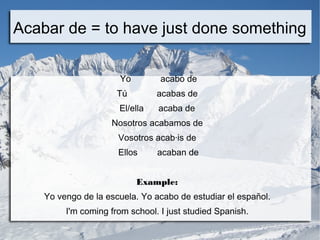
Acabar de = to have just done something 
Yo acabo de 
Tú acabas de 
El/ella acaba de 
Nosotros acabamos de 
Vosotros acab·is de 
Ellos acaban de 
Example: 
Yo vengo de la escuela. Yo acabo de estudiar el español. 
I'm coming from school. I just studied Spanish.
Venir de = to come from 
Remember that venir has an irregular yo form 
(vengo) and an e>ie stem change: 
Yo vengo de 
Tú vienes de 
El/ella viene de 
Nosotros venimos de 
Vosotros venís de 
Ellos vienen de 
Ex: 
Yo vengo de la escuela. I'm coming from school.
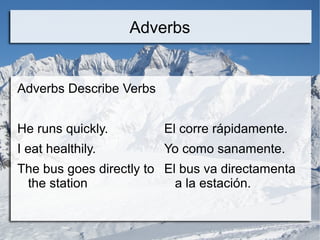
Adverbs 
Adverbs Describe Verbs 
He runs quickly. 
I eat healthily. 
The bus goes directly to 
the station 
El corre rápidamente. 
Yo como sanamente. 
El bus va directamenta 
a la estación.
Observar = to observe 
Take off the -ar at the end and add: 
Yo -o observo 
Tú -as observas 
El/ella/usted -a observa 
nosotros -amos observamos 
vosotros -áis observáis 
ellos/ellas/ustedes -an observan
ar verb endings for visitar = to visit 
Take off the -ar at the end and add: 
Yo -o visito 
Tú -as visitas 
El/ella/usted -a visita 
nosotros -amos visitamos 
vosotros -áis visitáis 
ellos/ellas/ustedes -an visitan
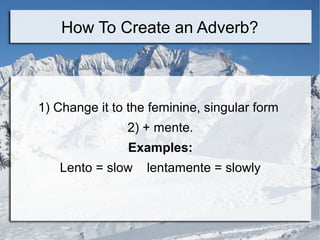
How To Create an Adverb? 
1) Change it to the feminine, singular form 
2) + mente. 
Examples: 
Lento = slow lentamente = slowly
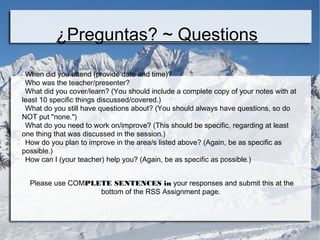
¿Preguntas? ~ Questions 
When did you attend (provide date and time)? 
Who was the teacher/presenter? 
What did you cover/learn? (You should include a complete copy of your notes with at 
least 10 specific things discussed/covered.) 
What do you still have questions about? (You should always have questions, so do 
NOT put "none.") 
What do you need to work on/improve? (This should be specific, regarding at least 
one thing that was discussed in the session.) 
How do you plan to improve in the area/s listed above? (Again, be as specific as 
possible.) 
How can I (your teacher) help you? (Again, be as specific as possible.) 
Please use COMPLETE SENTENCES in your responses and submit this at the 
bottom of the RSS Assignment page.

Unidad 8 ~ La Comunidad

  • 1.
    Unidad 8 ~La Comuidad Vocabulario Nuevo, Venir de, Acabar de, the Present Progressive Tense & Adverbs
  • 2.
    ¿Preguntas? ~ Questions When did you attend (provide date and time)? Who was the teacher/presenter? What did you cover/learn? (You should include a complete copy of your notes with at least 10 specific things discussed/covered.) What do you still have questions about? (You should always have questions, so do NOT put "none.") What do you need to work on/improve? (This should be specific, regarding at least one thing that was discussed in the session.) How do you plan to improve in the area/s listed above? (Again, be as specific as possible.) How can I (your teacher) help you? (Again, be as specific as possible.) Please use COMPLETE SENTENCES in your responses and submit this at the bottom of the RSS Assignment page.
  • 3.
  • 4.
  • 5.
  • 6.
    Present Progressive Tense The present progressive tense is how you will say the "ing" sound in English and describe what you are doing right now: I am walking, he is sitting and they are spitting. To communicate this way you need 2 things: 1) a conjugated form of estar 2) a verb with -ando (-ar ending verbs) or -iendo (-er & -ir ending verbs at the end Check this out noticing the numbers from above: Yo (1) estoy (2) comiendo. I am eating El (1) está (2) cantando. He is singing. This is different from yo como = I eat and él canta = he sings -ar verbs: nadar = nadando = swimming jugar = jugando = playing -er verbs: comer = comiendo = eating -ir verbs: vivir = viviendo = living
  • 7.
    1) a conjugatedform of estar Estar = to be for locations and temporary conditions Conjugations: Yo estoy Tú estás Èl/ella/usted está Nosotros estamos vocotros estáis Ellos/ellas están
  • 8.
    Ejemplos  Ellaestá escuchando la música.  Tú estás trabajando después de escuela.  Yo estoy comiendo los tacos.  Ellos están estudiando el español.
  • 9.
    Ejemplos  Ellaestá escuchando la música.  Tú estás trabajando después de escuela.  Yo estoy comiendo los tacos.  Ellos están estudiando el español. She is listening to music. You are working after school. I am eating the tacos. They are studying Spanish.
  • 10.
    Review  Formof Estar verb with -ando or iendo  Estás + surfeando = You are surfing.
  • 11.
    Review  Formof Estar verb with -ando or iendo  Estoy + hablando español. = I am speaking Spanish.
  • 12.
    Venir de =to come from Remember that venir has an irregular yo form (vengo) and an e>ie stem change: Yo vengo de Tú vienes de El/ella viene de Nosotros venimos de Vosotros venís de Ellos vienen de Ex: Yo vengo de la escuela. I'm coming from school.
  • 13.
    Acabar de =to have just done something Yo acabo de Tú acabas de El/ella acaba de Nosotros acabamos de Vosotros acab·is de Ellos acaban de Example: Yo vengo de la escuela. Yo acabo de estudiar el español. I'm coming from school. I just studied Spanish.
  • 14.
    Venir de =to come from Remember that venir has an irregular yo form (vengo) and an e>ie stem change: Yo vengo de Tú vienes de El/ella viene de Nosotros venimos de Vosotros venís de Ellos vienen de Ex: Yo vengo de la escuela. I'm coming from school.
  • 15.
    Adverbs Adverbs DescribeVerbs He runs quickly. I eat healthily. The bus goes directly to the station El corre rápidamente. Yo como sanamente. El bus va directamenta a la estación.
  • 16.
    Observar = toobserve Take off the -ar at the end and add: Yo -o observo Tú -as observas El/ella/usted -a observa nosotros -amos observamos vosotros -áis observáis ellos/ellas/ustedes -an observan
  • 17.
    ar verb endingsfor visitar = to visit Take off the -ar at the end and add: Yo -o visito Tú -as visitas El/ella/usted -a visita nosotros -amos visitamos vosotros -áis visitáis ellos/ellas/ustedes -an visitan
  • 18.
    How To Createan Adverb? 1) Change it to the feminine, singular form 2) + mente. Examples: Lento = slow lentamente = slowly
  • 19.
    ¿Preguntas? ~ Questions When did you attend (provide date and time)? Who was the teacher/presenter? What did you cover/learn? (You should include a complete copy of your notes with at least 10 specific things discussed/covered.) What do you still have questions about? (You should always have questions, so do NOT put "none.") What do you need to work on/improve? (This should be specific, regarding at least one thing that was discussed in the session.) How do you plan to improve in the area/s listed above? (Again, be as specific as possible.) How can I (your teacher) help you? (Again, be as specific as possible.) Please use COMPLETE SENTENCES in your responses and submit this at the bottom of the RSS Assignment page.