Downloaded 50 times
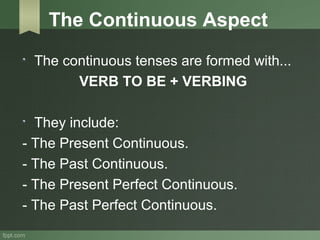
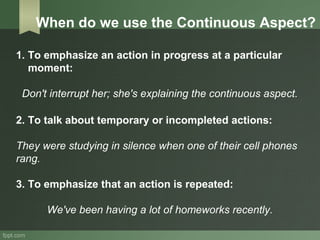
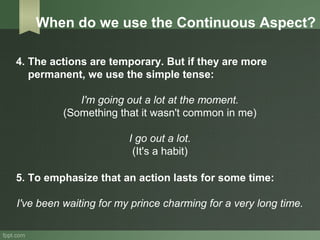
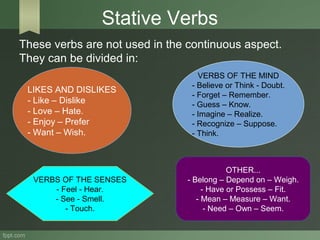
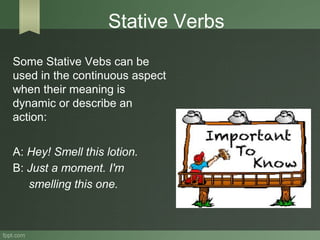
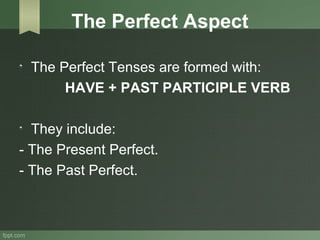
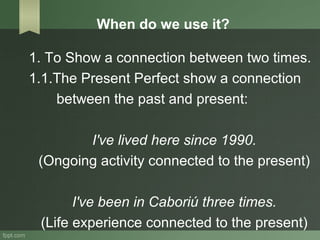
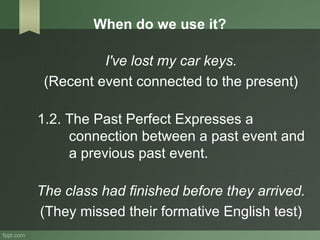
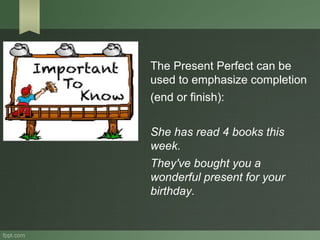


The document summarizes the continuous and perfect aspects in English grammar. It discusses how the continuous aspect is formed using a verb to be plus the verb-ing form, and provides examples of its uses to emphasize actions in progress, temporary actions, and repeated actions. It notes some stative verbs like "like" cannot be used in the continuous aspect. The perfect aspect is formed using have/has plus the past participle, and is used to show a connection between two time periods, such as the present perfect connecting the past to the present.


