UNITED NATIONS
Subject: Politics
Lecturer: Gary Giss
Group’s members
• Đặng Kim Hiếu - 1258020
• Trần Quang Khôi - 1258027
• Đào Ngọc Lan Đài - 1258007
• Nguyễn Trọng Tấn- 1258068
• Nguyễn Thị Trà My- 1258034
Outline
• Introduction
• What they do
• UN Failures & Scandals
• Conclusion
INTRODUCTION
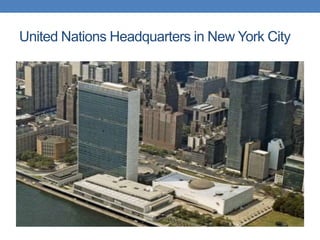
United Nations Headquarters in New York City
LOGO
Flag
Background and creation of UN
• The name "United Nations" coined by United States
President Franklin D. Roosevelt
• The forerunner of the United Nations was the League of
Nations (1919 - under the Treaty of Versailles)
• The United Nations – 24 October 1945
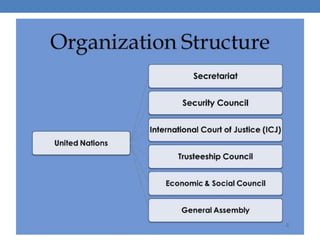
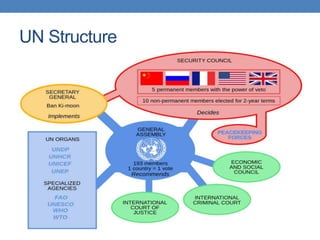
General Assembly
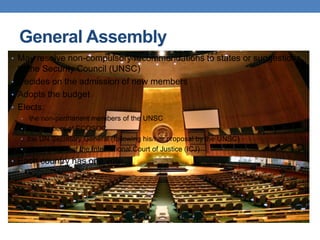
• May resolve non-compulsory recommendations to states or suggestions
to the Security Council (UNSC)
• Decides on the admission of new members
• Adopts the budget
• Elects:
• the non-permanent members of the UNSC
• all members of ECOSOC
• the UN Secretary General (following his/her proposal by the UNSC)
• the 15 judges of the International Court of Justice (ICJ)
• Each country has one vote.
Security Council
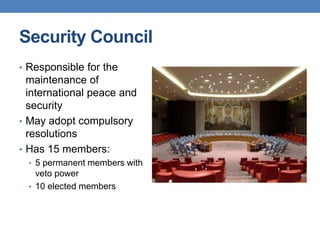
• Responsible for the
maintenance of
international peace and
security
• May adopt compulsory
resolutions
• Has 15 members:
• 5 permanent members with
veto power
• 10 elected members
Secretariat
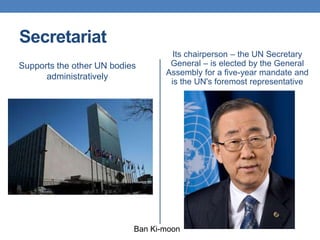
Supports the other UN bodies
administratively
Its chairperson – the UN Secretary
General – is elected by the General
Assembly for a five-year mandate and
is the UN's foremost representative
Ban Ki-moon
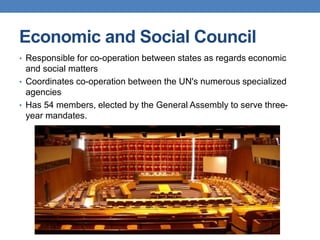
Economic and Social Council
• Responsible for co-operation between states as regards economic
and social matters
• Coordinates co-operation between the UN's numerous specialized
agencies
• Has 54 members, elected by the General Assembly to serve three-
year mandates.
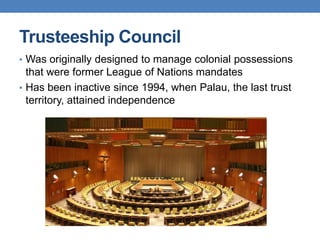
Trusteeship Council
• Was originally designed to manage colonial possessions
that were former League of Nations mandates
• Has been inactive since 1994, when Palau, the last trust
territory, attained independence
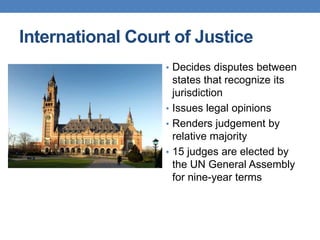
International Court of Justice
• Decides disputes between
states that recognize its
jurisdiction
• Issues legal opinions
• Renders judgement by
relative majority
• 15 judges are elected by
the UN General Assembly
for nine-year terms
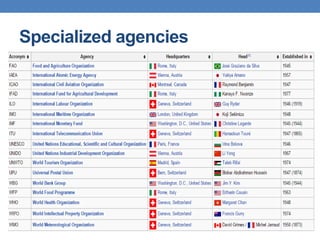
Specialized agencies
WHAT THEY DO
Objectives
• Human Rights
• Maintain International Peace and Security
• Justice and International Law
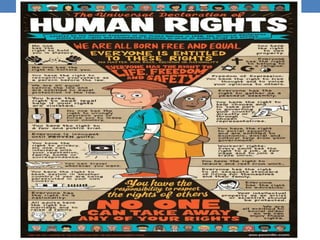
Human Rights
• One of the UN's primary purposes is "promoting and
encouraging respect for human rights and for fundamental
freedoms for all without distinction as to race, sex,
language, or religion", and member states pledge to
undertake "joint and separate action" to protect these
rights.
Human Rights
Universal
Declaration of
Human Rights
1948
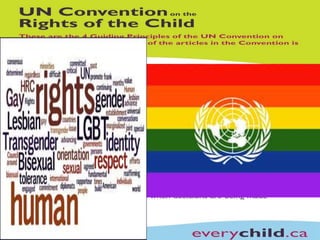
Convention on
the Elimination
of All Forms of
Discrimination
against Women
1979
the General
Assembly
adopted the
Convention on
the Rights of
the Childs
1989 2006
Declaration
on the
Rights of
Indigenous
Peoples
2011
first
resolution
recognizin
g the
Rights of
LGBT
Peoples
1993
The United
Commission on
Human Rights
was formed
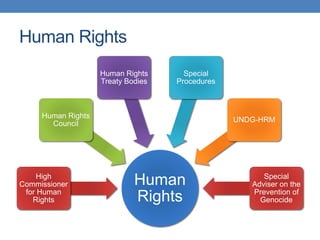
Human Rights
Human
Rights
High
Commissioner
for Human
Rights
Human Rights
Council
Human Rights
Treaty Bodies
Special
Procedures
UNDG-HRM
Special
Adviser on the
Prevention of
Genocide
CEDAW
• 19th Amendment which granted women the right to vote
• Working conditions and wages were better for women
• Women had more job opportunities
• Women could be in politics
• Birth control
• Better lives for women
UNICEF
Child
protection
and social
inclusion
Child
survival
Education
Gender
quality
UNICEF
UNITED NATIONS
PEACEKEEPING
Process and structure
Formation
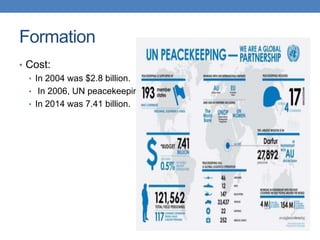
• Cost:
• In 2004 was $2.8 billion.
• In 2006, UN peacekeeping costs were about 5.03 billion.
• In 2014 was 7.41 billion.
UN Structure
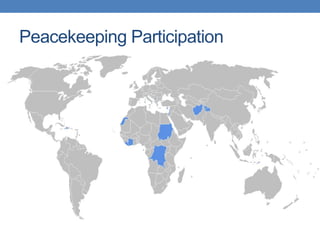
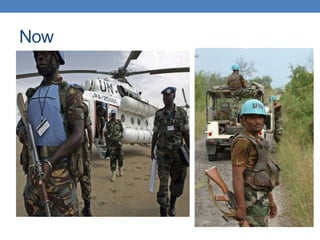
Peacekeeping Participation
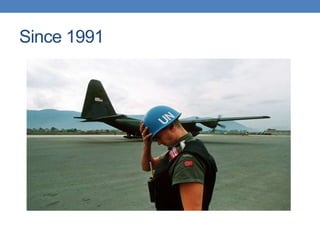
Since 1991
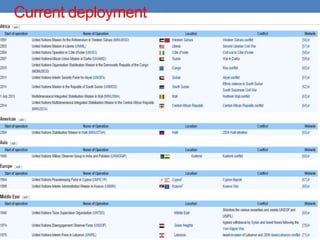
Now
Current deployment
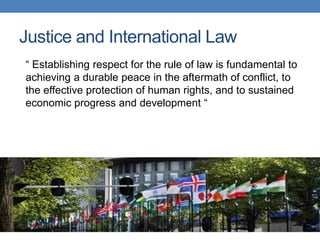
Justice and International Law
“ Establishing respect for the rule of law is fundamental to
achieving a durable peace in the aftermath of conflict, to
the effective protection of human rights, and to sustained
economic progress and development “
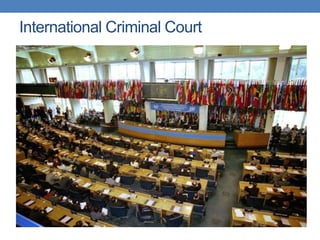
International Criminal Court
UN FAILURES &
SCANDALS
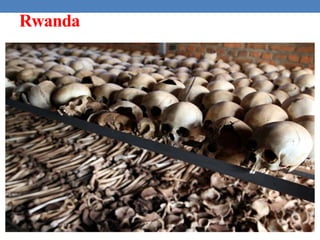
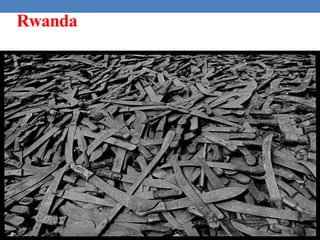
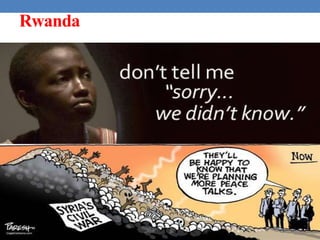
Rwanda
Rwanda
Rwanda
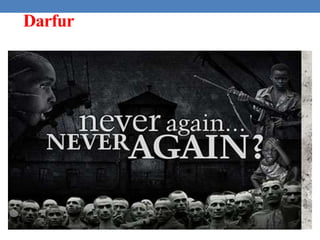
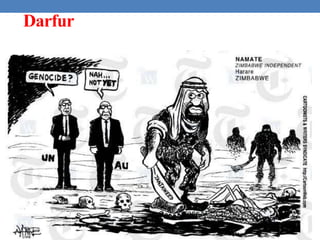
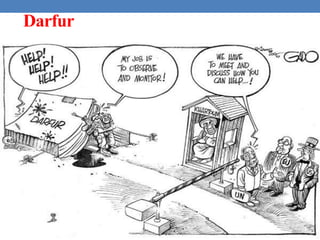
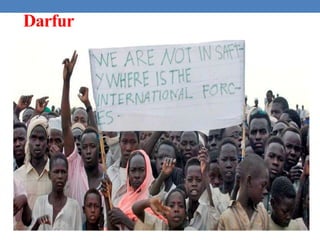
Darfur
Darfur
Darfur
Darfur
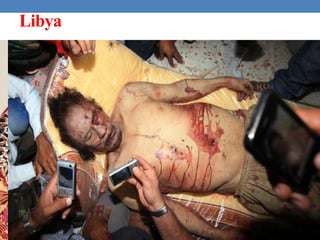
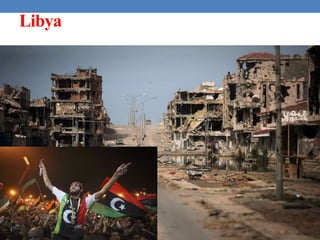
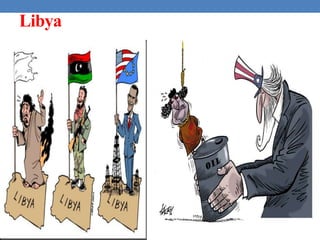
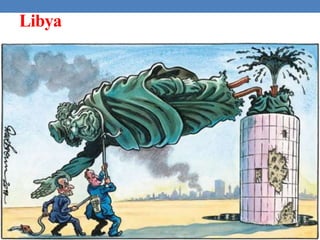
Libya
Libya
Libya
Libya
UN SCANDALS
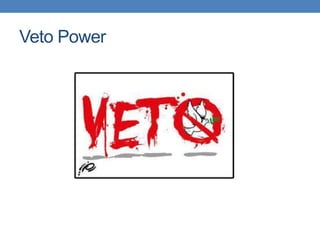
Veto Power
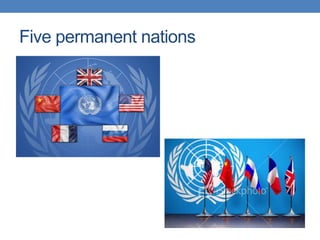
Five permanent nations
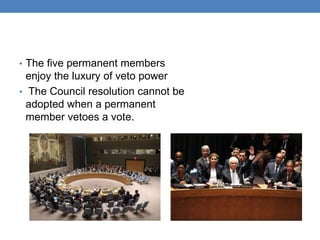
• The five permanent members
enjoy the luxury of veto power
• The Council resolution cannot be
adopted when a permanent
member vetoes a vote.
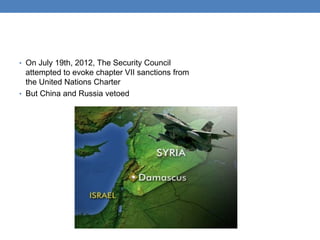
• On July 19th, 2012, The Security Council
attempted to evoke chapter VII sanctions from
the United Nations Charter
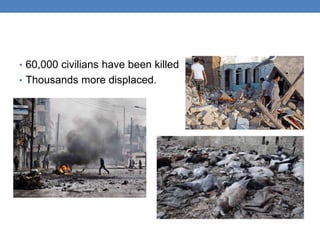
• But China and Russia vetoed
• 60,000 civilians have been killed
• Thousands more displaced.
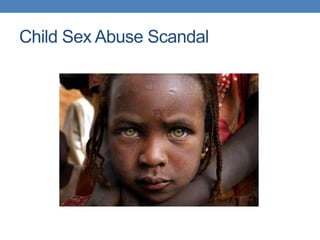
Child Sex Abuse Scandal
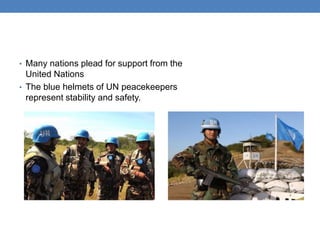
• Many nations plead for support from the
United Nations
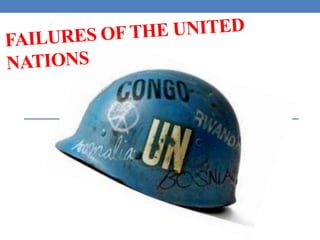
• The blue helmets of UN peacekeepers
represent stability and safety.
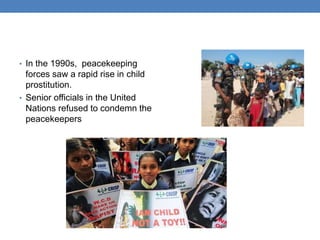
• In the 1990s, peacekeeping
forces saw a rapid rise in child
prostitution.
• Senior officials in the United
Nations refused to condemn the
peacekeepers
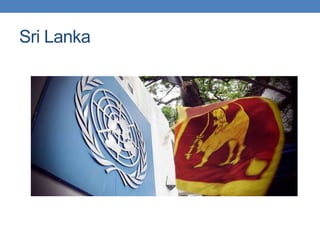
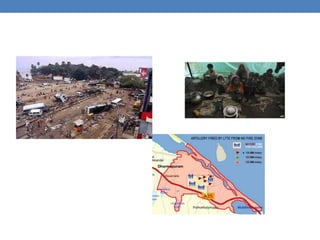
Sri Lanka
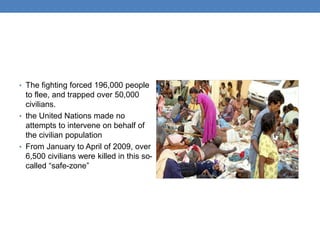
• The fighting forced 196,000 people
to flee, and trapped over 50,000
civilians.
• the United Nations made no
attempts to intervene on behalf of
the civilian population
• From January to April of 2009, over
6,500 civilians were killed in this so-
called “safe-zone”
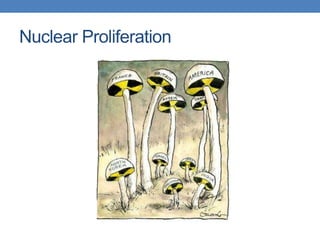
Nuclear Proliferation
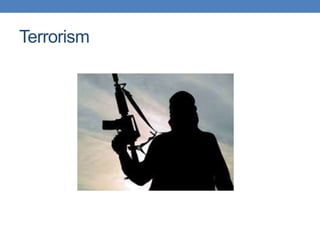
Terrorism
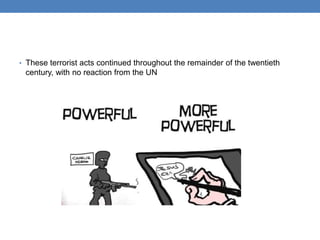
• These terrorist acts continued throughout the remainder of the twentieth
century, with no reaction from the UN
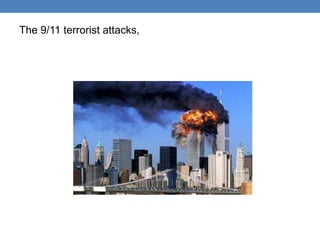
The 9/11 terrorist attacks,
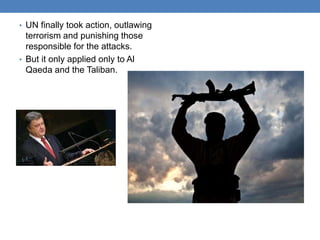
• UN finally took action, outlawing
terrorism and punishing those
responsible for the attacks.
• But it only applied only to Al
Qaeda and the Taliban.
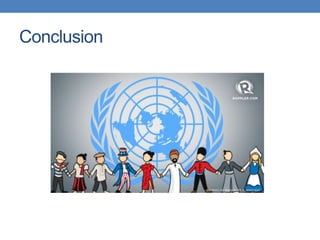
CONCLUSION
Conclusion
THANK YOU FOR
LISTENING

UN - Success & Scandals