The United Nations
The United Nations
• The UN was established with the signing of the
UN Charter in 1945, following World War II.
• Currently 193 member states
• Main focus is promotion and protection of
human rights
• greatest achievements - creation of a body of
International human rights laws over 70 HR
treaties and declarations focused on vulnerable
groups e.g. children, disabled, minorities and
indigenous peoples
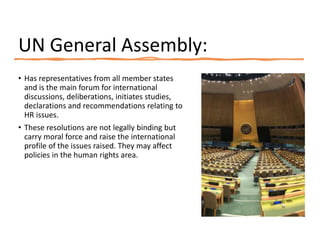
UN General Assembly:
• Has representatives from all member states
and is the main forum for international
discussions, deliberations, initiates studies,
declarations and recommendations relating to
HR issues.
• These resolutions are not legally binding but
carry moral force and raise the international
profile of the issues raised. They may affect
policies in the human rights area.
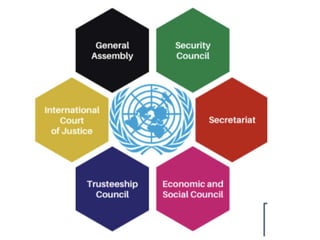
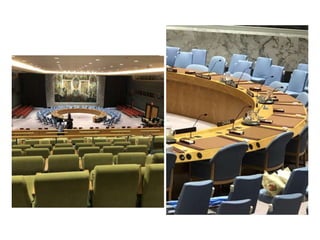
Security
Council:
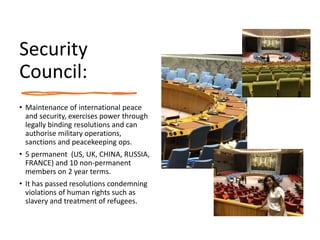
• Maintenance of international peace
and security, exercises power through
legally binding resolutions and can
authorise military operations,
sanctions and peacekeeping ops.
• 5 permanent (US, UK, CHINA, RUSSIA,
FRANCE) and 10 non-permanent
members on 2 year terms.
• It has passed resolutions condemning
violations of human rights such as
slavery and treatment of refugees.
Security Council:
• It has been involved in humanitarian actions in the wake of
the collapse and subsequent break-up of Yugoslavia, the civil
war in Somalia and the ongoing conflict between Israel and
Palestine.
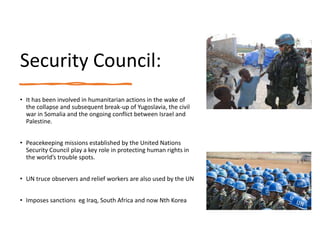
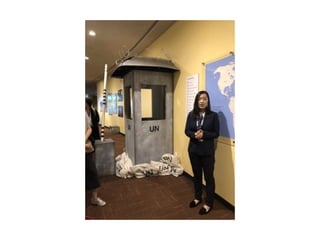
• Peacekeeping missions established by the United Nations
Security Council play a key role in protecting human rights in
the world’s trouble spots.
• UN truce observers and relief workers are also used by the UN
• Imposes sanctions eg Iraq, South Africa and now Nth Korea
United Nations
Secretariat:
• main admin body of the UN and provides
info, studies and facilities needed for the
UN. Headed by UN Secretary General
Antonio Guterres
• The Office of the UN High Commissioner for
Human Rights is under the Secretariat and
works to promote and protect the human
rights contained in the UDHR and
international law
Economic and
Social Council
(ECOSOC)
• 54 rotating members
meeting annually; includes
various committees and acts
as the central forum for
discussion of economic,
social, environmental and
humanitarian issues.
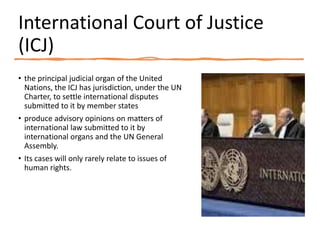
International Court of Justice
(ICJ)
• the principal judicial organ of the United
Nations, the ICJ has jurisdiction, under the UN
Charter, to settle international disputes
submitted to it by member states
• produce advisory opinions on matters of
international law submitted to it by
international organs and the UN General
Assembly.
• Its cases will only rarely relate to issues of
human rights.
United nations Yr10.pptx

United nations Yr10.pptx

  • 1.
  • 3.
    The United Nations •The UN was established with the signing of the UN Charter in 1945, following World War II. • Currently 193 member states • Main focus is promotion and protection of human rights • greatest achievements - creation of a body of International human rights laws over 70 HR treaties and declarations focused on vulnerable groups e.g. children, disabled, minorities and indigenous peoples
  • 4.
    UN General Assembly: •Has representatives from all member states and is the main forum for international discussions, deliberations, initiates studies, declarations and recommendations relating to HR issues. • These resolutions are not legally binding but carry moral force and raise the international profile of the issues raised. They may affect policies in the human rights area.
  • 5.
    Security Council: • Maintenance ofinternational peace and security, exercises power through legally binding resolutions and can authorise military operations, sanctions and peacekeeping ops. • 5 permanent (US, UK, CHINA, RUSSIA, FRANCE) and 10 non-permanent members on 2 year terms. • It has passed resolutions condemning violations of human rights such as slavery and treatment of refugees.
  • 6.
    Security Council: • Ithas been involved in humanitarian actions in the wake of the collapse and subsequent break-up of Yugoslavia, the civil war in Somalia and the ongoing conflict between Israel and Palestine. • Peacekeeping missions established by the United Nations Security Council play a key role in protecting human rights in the world’s trouble spots. • UN truce observers and relief workers are also used by the UN • Imposes sanctions eg Iraq, South Africa and now Nth Korea
  • 7.
    United Nations Secretariat: • mainadmin body of the UN and provides info, studies and facilities needed for the UN. Headed by UN Secretary General Antonio Guterres • The Office of the UN High Commissioner for Human Rights is under the Secretariat and works to promote and protect the human rights contained in the UDHR and international law
  • 8.
    Economic and Social Council (ECOSOC) •54 rotating members meeting annually; includes various committees and acts as the central forum for discussion of economic, social, environmental and humanitarian issues.
  • 9.
    International Court ofJustice (ICJ) • the principal judicial organ of the United Nations, the ICJ has jurisdiction, under the UN Charter, to settle international disputes submitted to it by member states • produce advisory opinions on matters of international law submitted to it by international organs and the UN General Assembly. • Its cases will only rarely relate to issues of human rights.