SCHOOL OF STUDIES IN ZOOLOGY
JIWAJI UNIVERSITY, GWALIOR
Dr. Lodhi, R.K.
Conservation Biology
Lab
School of Studies in
Zoology
TAXONOMIC PROCEDURES: Taxonomic collection, Preservation,
Curetting and Identification
Synopsis
Introduction of Taxonomy
Taxonomic procedures
Collection
Preservation of collected material
Curetting
Identification
Conclusion
References
Introduction
 Taxonomy is a science of classification of organisms i.e. biological
classification.
 The term taxonomy is derived from the Greek word taxis which
means ‘arrangement’ and nomo's which means ‘law’.
 Therefore, taxonomy is the principle of systematic zoology and
botany and sets up arrangements of the different types of organisms
(plants and animals) in their hierarchical order.
 Taxonomy term was coined by Condelle (1817)
 According to Ernst Mayr (1982):“Taxonomy is the theory and practice
of classifying organisms”
Taxonomic procedures
 Taxonomy deals with in collection of individuals, organisms,
which includes the classification, Identification, proper
preservation, publication etc.
 Taxonomic collection involves four major and important steps.
Which are:
1) Collection
2) Preservation
3) Curetting
4) Identification
Collection
 Collection of specimen is the foremost but different task for a
taxonomist.
 It deals with the collection of specimens from different areas.
 The collection can either be borrowed from the museum,
institutions or collected by specialist by himself.
 There are various collecting methods to collect animals.
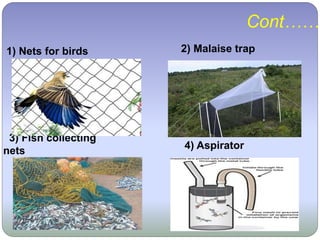
 Various equipment's are employed for collection e.g. nets for birds
and fish collecting, ultra violet lamps for insect collecting.
Techniques of Animal Collection
Catching by hand.
Netting : Frogs, fishes etc.
Digging and draining : Most of burrowing animals like
Amphioxus, can be collected by digging and draining.
Shooting : Specimens like snakes, birds fast running
rodents and carnivorous mammals collected by shooting
with a small gun or pistil.
1) Nets for birds
3) Fish collecting
nets
Cont……
2) Malaise trap
4) Aspirator
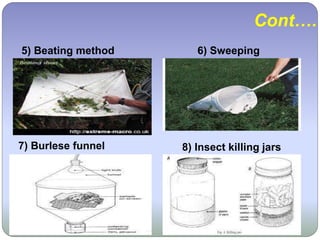
Cont….
5) Beating method 6) Sweeping
7) Burlese funnel 8) Insect killing jars
Preservation of collected
material
 The method of preservation varies from group to group.
 The specimens are preserved in such a way that they are not
destroyed, either through the action of insect pests, mold,
oxidation, dying out, protein decay.
 It is essential for the collection to know in advance the various
technique as already in use for the group.
 The chemicals or preservatives used for preservation of
specimens are as:
Formalin, Acetic acid,DDT ,and Carbon disulphide
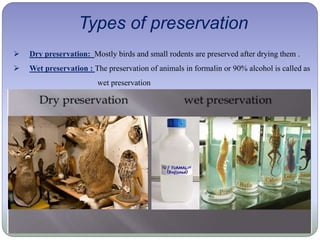
Types of preservation
 Dry preservation: Mostly birds and small rodents are preserved after drying them .
 Wet preservation : The preservation of animals in formalin or 90% alcohol is called as
wet preservation
Curetting
This method involves the assembling, managing and
presenting same type of collection over a long period
of time.
Once the animals are collected, labeled and
preserved, the next job is of their safe custody,
cataloguing etc.
A curator knows the function of his collection the
groups of animals in which collection are needed
areas which need to be urgently sampled.
Curators primary responsibility is to preserve the
collection to maintain and conserve a documented
record of his collection.
Identification
The purpose of identification is basically to
determine what kind of organism a given specimen
is.
Organism are identified on the basis of species
level.
All the Information concerning the morphology, an
organism are essential for classifying and
identifying.
After the animals are collected they are first stored
out and are identified up-to order, family or if
possible genetic level. When this is done the
collection is ready to be studied.
Conclusion
 Taxonomy helps us categorize organisms so
we can more easily communicate biological
information.
 Taxonomy uses hierarchical classification as a
way to help in understanding and organize the
diversity of life.
 Taxonomic collection involves four major and
important steps. Which are;
 Collection
 Preservation
 Curetting and
 Identification
Animal taxonomy and Museology
Dalela Sharma
Theory and practice of Animal Taxonomy
V.C Kapoor
TAXONOMIC PROCEDURES.pptx

TAXONOMIC PROCEDURES.pptx

  • 1.
    SCHOOL OF STUDIESIN ZOOLOGY JIWAJI UNIVERSITY, GWALIOR Dr. Lodhi, R.K. Conservation Biology Lab School of Studies in Zoology TAXONOMIC PROCEDURES: Taxonomic collection, Preservation, Curetting and Identification
  • 2.
    Synopsis Introduction of Taxonomy Taxonomicprocedures Collection Preservation of collected material Curetting Identification Conclusion References
  • 3.
    Introduction  Taxonomy isa science of classification of organisms i.e. biological classification.  The term taxonomy is derived from the Greek word taxis which means ‘arrangement’ and nomo's which means ‘law’.  Therefore, taxonomy is the principle of systematic zoology and botany and sets up arrangements of the different types of organisms (plants and animals) in their hierarchical order.  Taxonomy term was coined by Condelle (1817)  According to Ernst Mayr (1982):“Taxonomy is the theory and practice of classifying organisms”
  • 4.
    Taxonomic procedures  Taxonomydeals with in collection of individuals, organisms, which includes the classification, Identification, proper preservation, publication etc.  Taxonomic collection involves four major and important steps. Which are: 1) Collection 2) Preservation 3) Curetting 4) Identification
  • 5.
    Collection  Collection ofspecimen is the foremost but different task for a taxonomist.  It deals with the collection of specimens from different areas.  The collection can either be borrowed from the museum, institutions or collected by specialist by himself.  There are various collecting methods to collect animals.  Various equipment's are employed for collection e.g. nets for birds and fish collecting, ultra violet lamps for insect collecting.
  • 6.
    Techniques of AnimalCollection Catching by hand. Netting : Frogs, fishes etc. Digging and draining : Most of burrowing animals like Amphioxus, can be collected by digging and draining. Shooting : Specimens like snakes, birds fast running rodents and carnivorous mammals collected by shooting with a small gun or pistil.
  • 7.
    1) Nets forbirds 3) Fish collecting nets Cont…… 2) Malaise trap 4) Aspirator
  • 8.
    Cont…. 5) Beating method6) Sweeping 7) Burlese funnel 8) Insect killing jars
  • 9.
    Preservation of collected material The method of preservation varies from group to group.  The specimens are preserved in such a way that they are not destroyed, either through the action of insect pests, mold, oxidation, dying out, protein decay.  It is essential for the collection to know in advance the various technique as already in use for the group.  The chemicals or preservatives used for preservation of specimens are as: Formalin, Acetic acid,DDT ,and Carbon disulphide
  • 10.
    Types of preservation Dry preservation: Mostly birds and small rodents are preserved after drying them .  Wet preservation : The preservation of animals in formalin or 90% alcohol is called as wet preservation
  • 11.
    Curetting This method involvesthe assembling, managing and presenting same type of collection over a long period of time. Once the animals are collected, labeled and preserved, the next job is of their safe custody, cataloguing etc. A curator knows the function of his collection the groups of animals in which collection are needed areas which need to be urgently sampled. Curators primary responsibility is to preserve the collection to maintain and conserve a documented record of his collection.
  • 12.
    Identification The purpose ofidentification is basically to determine what kind of organism a given specimen is. Organism are identified on the basis of species level. All the Information concerning the morphology, an organism are essential for classifying and identifying. After the animals are collected they are first stored out and are identified up-to order, family or if possible genetic level. When this is done the collection is ready to be studied.
  • 13.
    Conclusion  Taxonomy helpsus categorize organisms so we can more easily communicate biological information.  Taxonomy uses hierarchical classification as a way to help in understanding and organize the diversity of life.  Taxonomic collection involves four major and important steps. Which are;  Collection  Preservation  Curetting and  Identification
  • 14.
    Animal taxonomy andMuseology Dalela Sharma Theory and practice of Animal Taxonomy V.C Kapoor