
TYPES OF WHOLESALERS
Prof Jayashree Vispute
DEFINITIONS
 Wholesaling
 All activities involved in selling goods and services to
those buying for resale or business use.
 Wholesaler
 A firm engaged primarily in wholesaling activity.
WHOLESALING
 Wholesalers add value by performing the
following functions:
 Selling and promoting
 Buying and assortment building
 Bulk-breaking
 Warehousing
 Transportation
 Financing
 Risk bearing
 Market information
 Management services and advice
 Merchant Wholesalers
1. Full-service wholesalers
2. Limited-service wholesalers
 Brokers and Agents
 Manufacturers’ and retailers’ branches and offices
FULL SERVICE W/SALERS
 Buying
 Creating assortments
 Subdividing
 Selling
 Transportation
 Warehousing
 Financing
 Risk taking
 Market Information
 Management assistance
LIMITED-SERVICE WHOLESALERS
 Cash-and-carry wholesalers -Sell a limited
line of fast moving goods to small retailers for
cash
 Truck wholesalers (jobbers) – sell and
deliver a limited line of semi perishable goods to
supermarkets, grocery
stores, hospitals, restaurants and hotels
 Drop shippers – serve bulk industries such as
coal, lumber, heavy equipment. They assume
title and risk from the time an order is accepted
to its delivery.
 Rack jobbers – serve grocery retailers in non
food items. Delivery people set up
displays, price goods, keep inventory
records, they retain title to goods and bill
retailers only for goods sold by the retailer.
 Producer’s cooperatives – assemble farm
produce to sell in local markets.
 Mail-order wholesalers – send catalogs to
retail, industrial and institutional
customers, orders are filled and sent by
mail, rail, plane or truck
BROKERS AND AGENTS
 Brokers and agents do not take title of the goods.
 Brokers
 Bring buyers and sellers together and assist in negotiation
 Agents
 Manufacturers’ agents
 Selling agents
 Purchasing agents
 Commission merchants
MANUFACTURERS’ AND RETAILERS’
BRANCHES AND OFFICES
Wholesaling operations conduced by
sellers or buyers themselves rather
than through independent wholesalers.
Major retailers set up purchasing
offices in major marketing centers.
Purchasing officers - Perform roles
similar to brokers and agents;
however, these individuals are employees
of the organization
WHOLESALING
 Trends in Wholesaling
 Price competition is still intense
 Successful wholesalers must add value by
increasing efficiency and effectiveness
 The distinction between large retailers and
wholesalers continues to blur
 More services will be provided to retailers
 Many wholesalers are going global
FRANCHISING
 A privilege or right granted to a person or a
group by a government, state or sovereign.
Authorisation granted by a manufacturer to a
distributor or dealer to sell his products.
 Franchising is a method used by business for the
marketing and distribution of products and
services.
FRANCHISING
 The two parties involved are:
1. The Franchisor: The Franchisor is the
provider of the franchise. Typically he
owns the trademark/product/service and
licenses the trademark to another party.
He may provide support for the running of
the franchise. In exchange, he receives a
fee, commonly known as the royalty or
franchise fee. This fee varies from
industry to industry.
FRANCHISING
 Franchisee
Franchisee is the person who pays for and
purchases a franchise from a franchisor and
operates a business using the
name, product, business format and other items
provided by the franchisor. The franchisor helps
the franchisee in setting up the business and
managing it.
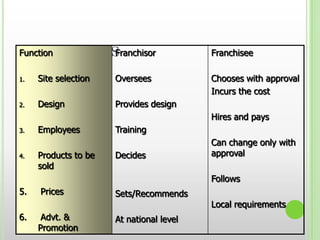
ROLESFunction
1. Site selection
2. Design
3. Employees
4. Products to be
sold
5. Prices
6. Advt. &
Promotion
Franchisor
Oversees
Provides design
Training
Decides
Sets/Recommends
At national level
Franchisee
Chooses with approval
Incurs the cost
Hires and pays
Can change only with
approval
Follows
Local requirements
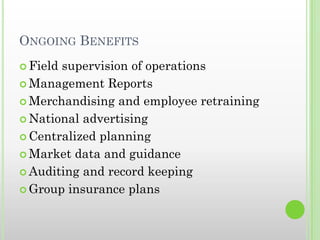
ONGOING BENEFITS
 Field supervision of operations
 Management Reports
 Merchandising and employee retraining
 National advertising
 Centralized planning
 Market data and guidance
 Auditing and record keeping
 Group insurance plans
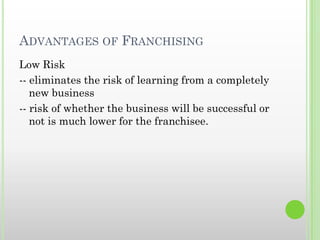
ADVANTAGES OF FRANCHISING
Low Risk
-- eliminates the risk of learning from a completely
new business
-- risk of whether the business will be successful or
not is much lower for the franchisee.

Types of ws

  • 1.
    TYPES OF WHOLESALERS ProfJayashree Vispute
  • 2.
    DEFINITIONS  Wholesaling  Allactivities involved in selling goods and services to those buying for resale or business use.  Wholesaler  A firm engaged primarily in wholesaling activity.
  • 3.
    WHOLESALING  Wholesalers addvalue by performing the following functions:  Selling and promoting  Buying and assortment building  Bulk-breaking  Warehousing  Transportation  Financing  Risk bearing  Market information  Management services and advice
  • 4.
     Merchant Wholesalers 1.Full-service wholesalers 2. Limited-service wholesalers  Brokers and Agents  Manufacturers’ and retailers’ branches and offices
  • 5.
    FULL SERVICE W/SALERS Buying  Creating assortments  Subdividing  Selling  Transportation  Warehousing  Financing  Risk taking  Market Information  Management assistance
  • 6.
    LIMITED-SERVICE WHOLESALERS  Cash-and-carrywholesalers -Sell a limited line of fast moving goods to small retailers for cash  Truck wholesalers (jobbers) – sell and deliver a limited line of semi perishable goods to supermarkets, grocery stores, hospitals, restaurants and hotels  Drop shippers – serve bulk industries such as coal, lumber, heavy equipment. They assume title and risk from the time an order is accepted to its delivery.
  • 7.
     Rack jobbers– serve grocery retailers in non food items. Delivery people set up displays, price goods, keep inventory records, they retain title to goods and bill retailers only for goods sold by the retailer.  Producer’s cooperatives – assemble farm produce to sell in local markets.  Mail-order wholesalers – send catalogs to retail, industrial and institutional customers, orders are filled and sent by mail, rail, plane or truck
  • 8.
    BROKERS AND AGENTS Brokers and agents do not take title of the goods.  Brokers  Bring buyers and sellers together and assist in negotiation  Agents  Manufacturers’ agents  Selling agents  Purchasing agents  Commission merchants
  • 9.
    MANUFACTURERS’ AND RETAILERS’ BRANCHESAND OFFICES Wholesaling operations conduced by sellers or buyers themselves rather than through independent wholesalers. Major retailers set up purchasing offices in major marketing centers. Purchasing officers - Perform roles similar to brokers and agents; however, these individuals are employees of the organization
  • 10.
    WHOLESALING  Trends inWholesaling  Price competition is still intense  Successful wholesalers must add value by increasing efficiency and effectiveness  The distinction between large retailers and wholesalers continues to blur  More services will be provided to retailers  Many wholesalers are going global
  • 11.
    FRANCHISING  A privilegeor right granted to a person or a group by a government, state or sovereign. Authorisation granted by a manufacturer to a distributor or dealer to sell his products.  Franchising is a method used by business for the marketing and distribution of products and services.
  • 12.
    FRANCHISING  The twoparties involved are: 1. The Franchisor: The Franchisor is the provider of the franchise. Typically he owns the trademark/product/service and licenses the trademark to another party. He may provide support for the running of the franchise. In exchange, he receives a fee, commonly known as the royalty or franchise fee. This fee varies from industry to industry.
  • 13.
    FRANCHISING  Franchisee Franchisee isthe person who pays for and purchases a franchise from a franchisor and operates a business using the name, product, business format and other items provided by the franchisor. The franchisor helps the franchisee in setting up the business and managing it.
  • 14.
    ROLESFunction 1. Site selection 2.Design 3. Employees 4. Products to be sold 5. Prices 6. Advt. & Promotion Franchisor Oversees Provides design Training Decides Sets/Recommends At national level Franchisee Chooses with approval Incurs the cost Hires and pays Can change only with approval Follows Local requirements
  • 15.
    ONGOING BENEFITS  Fieldsupervision of operations  Management Reports  Merchandising and employee retraining  National advertising  Centralized planning  Market data and guidance  Auditing and record keeping  Group insurance plans
  • 16.
    ADVANTAGES OF FRANCHISING LowRisk -- eliminates the risk of learning from a completely new business -- risk of whether the business will be successful or not is much lower for the franchisee.