Concept and Types of Market Testing
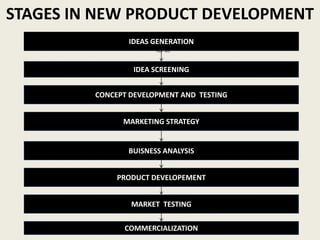
STAGES IN NEW PRODUCT DEVELOPMENT
GE
IDEAS GENERATION
IDEA SCREENING
CONCEPT DEVELOPMENT AND TESTING
MARKETING STRATEGY
BUISNESS ANALYSIS
MARKET TESTING
PRODUCT DEVELOPEMENT
COMMERCIALIZATION
MARKET TESTING
• This is the stage where the product has to be
tried out in selected market segments.
• Market test is basically done as a risk control
tool.
• It is experimental marketing at minimum cost
and risk.
TYPES OF MARKET TESTING
• SALES WAVE RESEARCH
• SIMULATED TEST MARKETING
• CONTROLLED TEST MARKETING
• TEST MARKETS
SALES WAVE MARKET TEST
o New product is placed into the hands of
customers, free of cost.
o Reoffer the product or the competitors
product as many as three to four times( sales
wave)
o Main advantage- Company can estimate the
repeat-purchase of their product in
comparison with their competitors.
SIMULATED TEST MARKETING
• STM’s ,involve mathematical estimates of the
market share based on initial consumer
reaction to the new product.
• E.g.:- Pillsbury
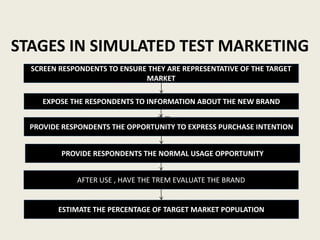
STAGES IN SIMULATED TEST MARKETING
GE
SCREEN RESPONDENTS TO ENSURE THEY ARE REPRESENTATIVE OF THE TARGET
MARKET
EXPOSE THE RESPONDENTS TO INFORMATION ABOUT THE NEW BRAND
PROVIDE RESPONDENTS THE OPPORTUNITY TO EXPRESS PURCHASE INTENTION
AFTER USE , HAVE THE TREM EVALUATE THE BRAND
ESTIMATE THE PERCENTAGE OF TARGET MARKET POPULATION
SCREEN RESPONDENTS TO ENSURE THEY ARE REPRESENTATIVE OF THE TARGET
MARKET
PROVIDE RESPONDENTS THE NORMAL USAGE OPPORTUNITY
CONTROLLED TEST MARKETING
• Research firm manages the panel of stores
that will carry a product for a fee.
• It allows the company to estimate the item’s
sales potential in the real world environment
with real consumers making real purchases.
TEST MARKETS
• The company chooses the few representative
cities and the sales force tries to sell the
product and give it a good shelf exposure.
• Here the research firm consider following
factors:-
1. Number of test cities
2. Decision of selecting cities
3. Length of test
4. Kind of information/Feedback
5. Mode of action.
References
• MARKETING MANAGEMENT
- DEBRAJ DATTA AND MAHUA DATTA
• MARKETING RESEARCH
- DONALD S. TULL AND DEL I. HAWKINS
THANK YOU

Test marketing techniques

  • 1.
    Concept and Typesof Market Testing
  • 2.
    STAGES IN NEWPRODUCT DEVELOPMENT GE IDEAS GENERATION IDEA SCREENING CONCEPT DEVELOPMENT AND TESTING MARKETING STRATEGY BUISNESS ANALYSIS MARKET TESTING PRODUCT DEVELOPEMENT COMMERCIALIZATION
  • 3.
    MARKET TESTING • Thisis the stage where the product has to be tried out in selected market segments. • Market test is basically done as a risk control tool. • It is experimental marketing at minimum cost and risk.
  • 4.
    TYPES OF MARKETTESTING • SALES WAVE RESEARCH • SIMULATED TEST MARKETING • CONTROLLED TEST MARKETING • TEST MARKETS
  • 5.
    SALES WAVE MARKETTEST o New product is placed into the hands of customers, free of cost. o Reoffer the product or the competitors product as many as three to four times( sales wave) o Main advantage- Company can estimate the repeat-purchase of their product in comparison with their competitors.
  • 6.
    SIMULATED TEST MARKETING •STM’s ,involve mathematical estimates of the market share based on initial consumer reaction to the new product. • E.g.:- Pillsbury
  • 7.
    STAGES IN SIMULATEDTEST MARKETING GE SCREEN RESPONDENTS TO ENSURE THEY ARE REPRESENTATIVE OF THE TARGET MARKET EXPOSE THE RESPONDENTS TO INFORMATION ABOUT THE NEW BRAND PROVIDE RESPONDENTS THE OPPORTUNITY TO EXPRESS PURCHASE INTENTION AFTER USE , HAVE THE TREM EVALUATE THE BRAND ESTIMATE THE PERCENTAGE OF TARGET MARKET POPULATION SCREEN RESPONDENTS TO ENSURE THEY ARE REPRESENTATIVE OF THE TARGET MARKET PROVIDE RESPONDENTS THE NORMAL USAGE OPPORTUNITY
  • 8.
    CONTROLLED TEST MARKETING •Research firm manages the panel of stores that will carry a product for a fee. • It allows the company to estimate the item’s sales potential in the real world environment with real consumers making real purchases.
  • 9.
    TEST MARKETS • Thecompany chooses the few representative cities and the sales force tries to sell the product and give it a good shelf exposure. • Here the research firm consider following factors:- 1. Number of test cities 2. Decision of selecting cities 3. Length of test 4. Kind of information/Feedback 5. Mode of action.
  • 10.
    References • MARKETING MANAGEMENT -DEBRAJ DATTA AND MAHUA DATTA • MARKETING RESEARCH - DONALD S. TULL AND DEL I. HAWKINS
  • 11.

Editor's Notes

  • #10 286Mm by debrajdatta and mahuadatta