PRANJAL SAO
 Depending on the relative position of intake
and return airways, ventilation systems in
mines can be broadly divided into the
following
 BOUNDARY OR UNIDIRECTIONAL
 CENTRAL OR BI DIRECTIONAL
 COMBINED
 The boundary ventilation system where the air
flow unidirectional from the intake to the
return through the working is by far the most
efficient system necessitating the least use of
ventilation control devices and thus resulting
in a high volumetric efficiency of
ventilation(70-80%).
 It is commonly adopted in metal mines
working steep lodes in the simplest form ,the
intake and return shaft are located at the strike
boundaries of the mine.
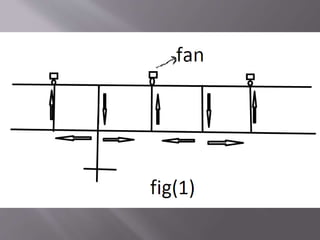
 This method is limited to mines having a small
lateral extent only .sometimes at shallow levels
of a developing mine having a relatively large
lateral extent, small fans may be installed on
top of winzes as shown in fig(1).
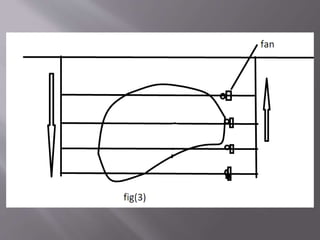
 When air requirement varies widely from level
to level ,each level may ventilated by an
independent u/g fan as shown fig (3).
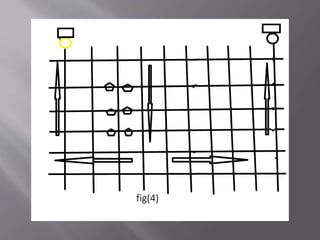
 With larger lateral extent, it is preferable to
have a central intake shaft with two return
shaft or winzes at either boundary of the
property fitted with two exhaust fan.(fig4)
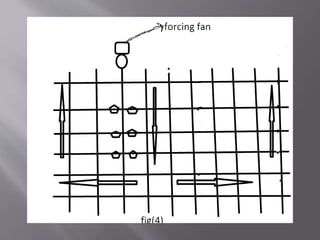
 Sometime a single forcing fan may be used on
the top of intake shaft (fig5).
 But this necessitates air lock on a hoisting shaft
which is not very desirable.
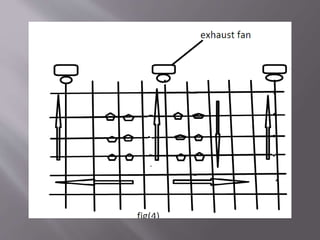
 When the mine is extensive on the strick,it may
be divided into several lateral sections with
separate fans as shown in fig(6).
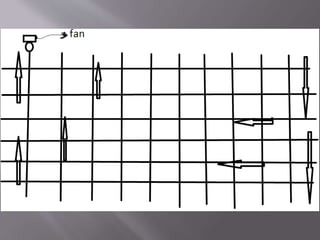
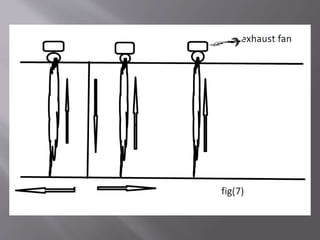
 Mines having workings in multiple parallel
lodes are generally ventilated by separate
exhaust fans installed on each lode ,though
there may be a common intake.(fig7).
 A less desirable alternative with a single
forcing fan in shown in fig (8)
 1. the boundary ventilation system necessitates
the minimum use of ventilation control
devices. This apart form saving the capital
invested on them as well as the cost of their
operation and maintenance, reduces leakage
and result in a high volumetric efficiency.
 2.different sections of the mine can be
independently ventilated by separate fans. This
reduces the total flow handled by a single fan
and hence its head requirement .lower head
results in less leakage . Airways of smaller
cross-section can handle the flow . ventilation
of each individual section can be
independently controlled and a section can be
isolated easily in the times of emergency.
3. There is greater safety because of larger number
of outlets to the surface.
4.Since developments have to be extended to the
boundary right in the beginning in this system .
the mine characteristic remains almost constant
throughout the life of the mine thus resulting in
a uniformly efficient operation of the fan. On
the other hand ,the mine resistance goes on
changing with the workings progressing
towards
The boundary of the property in the central
system of ventilation where the fan has to
negotiate a wider variation of mine
characteristics.
 1. reversal of air flow is more complex.
 2. separate fan installations increase the cost of
their operation ,supervision and maintenance.
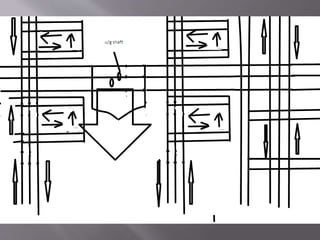
The system is commonly adopted in in-the seam of
coal mines where both intake and return shaft are
located close by at the centre of the property .
intake and return air from any district travel in
opposite directions through parallel roadways
usually separated by stopping erected in the cross-
section between them . also return air from a
district has to cross the intake in order to join the
main return. Obviously the central ventilation
system allows a substantial leakage because of the
number of stopping and air crossing used so that
volumetric efficiency is only 40-50% with this
system .
 1.the deposit can be worked after short
development leading to a quicker start of
production.
 2.long development headings are not necessary
and hence there is no associated problem of
their ventilation.
 3.central pits cause less loss of minerals in shaft
pillers.
 4. sinking of deep pits close together
economizes the cost of sinking as certain
common facilities can be shared by the pit. On
the other hand , boundary pit which are far off
necessitate building of road, extension of
power lines etc to the sinking site involving
extra cost.
 5.both the central shafts can be used for
hoisting ,but boundary shaft are rarely used for
hoisting as this would required extension of
surface transport to these pits. they how ever
serve well as stowing pits (with hydraulic
stowing pipes installed in them) if located on
the rise side.

Types of ventilation system

  • 1.
  • 2.
     Depending onthe relative position of intake and return airways, ventilation systems in mines can be broadly divided into the following  BOUNDARY OR UNIDIRECTIONAL  CENTRAL OR BI DIRECTIONAL  COMBINED
  • 3.
     The boundaryventilation system where the air flow unidirectional from the intake to the return through the working is by far the most efficient system necessitating the least use of ventilation control devices and thus resulting in a high volumetric efficiency of ventilation(70-80%).  It is commonly adopted in metal mines working steep lodes in the simplest form ,the intake and return shaft are located at the strike boundaries of the mine.
  • 4.
     This methodis limited to mines having a small lateral extent only .sometimes at shallow levels of a developing mine having a relatively large lateral extent, small fans may be installed on top of winzes as shown in fig(1).  When air requirement varies widely from level to level ,each level may ventilated by an independent u/g fan as shown fig (3).
  • 5.
     With largerlateral extent, it is preferable to have a central intake shaft with two return shaft or winzes at either boundary of the property fitted with two exhaust fan.(fig4)  Sometime a single forcing fan may be used on the top of intake shaft (fig5).  But this necessitates air lock on a hoisting shaft which is not very desirable.
  • 6.
     When themine is extensive on the strick,it may be divided into several lateral sections with separate fans as shown in fig(6).  Mines having workings in multiple parallel lodes are generally ventilated by separate exhaust fans installed on each lode ,though there may be a common intake.(fig7).  A less desirable alternative with a single forcing fan in shown in fig (8)
  • 14.
     1. theboundary ventilation system necessitates the minimum use of ventilation control devices. This apart form saving the capital invested on them as well as the cost of their operation and maintenance, reduces leakage and result in a high volumetric efficiency.
  • 15.
     2.different sectionsof the mine can be independently ventilated by separate fans. This reduces the total flow handled by a single fan and hence its head requirement .lower head results in less leakage . Airways of smaller cross-section can handle the flow . ventilation of each individual section can be independently controlled and a section can be isolated easily in the times of emergency.
  • 16.
    3. There isgreater safety because of larger number of outlets to the surface. 4.Since developments have to be extended to the boundary right in the beginning in this system . the mine characteristic remains almost constant throughout the life of the mine thus resulting in a uniformly efficient operation of the fan. On the other hand ,the mine resistance goes on changing with the workings progressing towards
  • 17.
    The boundary ofthe property in the central system of ventilation where the fan has to negotiate a wider variation of mine characteristics.
  • 18.
     1. reversalof air flow is more complex.  2. separate fan installations increase the cost of their operation ,supervision and maintenance.
  • 19.
    The system iscommonly adopted in in-the seam of coal mines where both intake and return shaft are located close by at the centre of the property . intake and return air from any district travel in opposite directions through parallel roadways usually separated by stopping erected in the cross- section between them . also return air from a district has to cross the intake in order to join the main return. Obviously the central ventilation system allows a substantial leakage because of the number of stopping and air crossing used so that volumetric efficiency is only 40-50% with this system .
  • 21.
     1.the depositcan be worked after short development leading to a quicker start of production.  2.long development headings are not necessary and hence there is no associated problem of their ventilation.  3.central pits cause less loss of minerals in shaft pillers.
  • 22.
     4. sinkingof deep pits close together economizes the cost of sinking as certain common facilities can be shared by the pit. On the other hand , boundary pit which are far off necessitate building of road, extension of power lines etc to the sinking site involving extra cost.
  • 23.
     5.both thecentral shafts can be used for hoisting ,but boundary shaft are rarely used for hoisting as this would required extension of surface transport to these pits. they how ever serve well as stowing pits (with hydraulic stowing pipes installed in them) if located on the rise side.

Editor's Notes